SOUTH KOREA: Seoul – Gwanak-gu – Nambusunhwan Urban Art Alleys

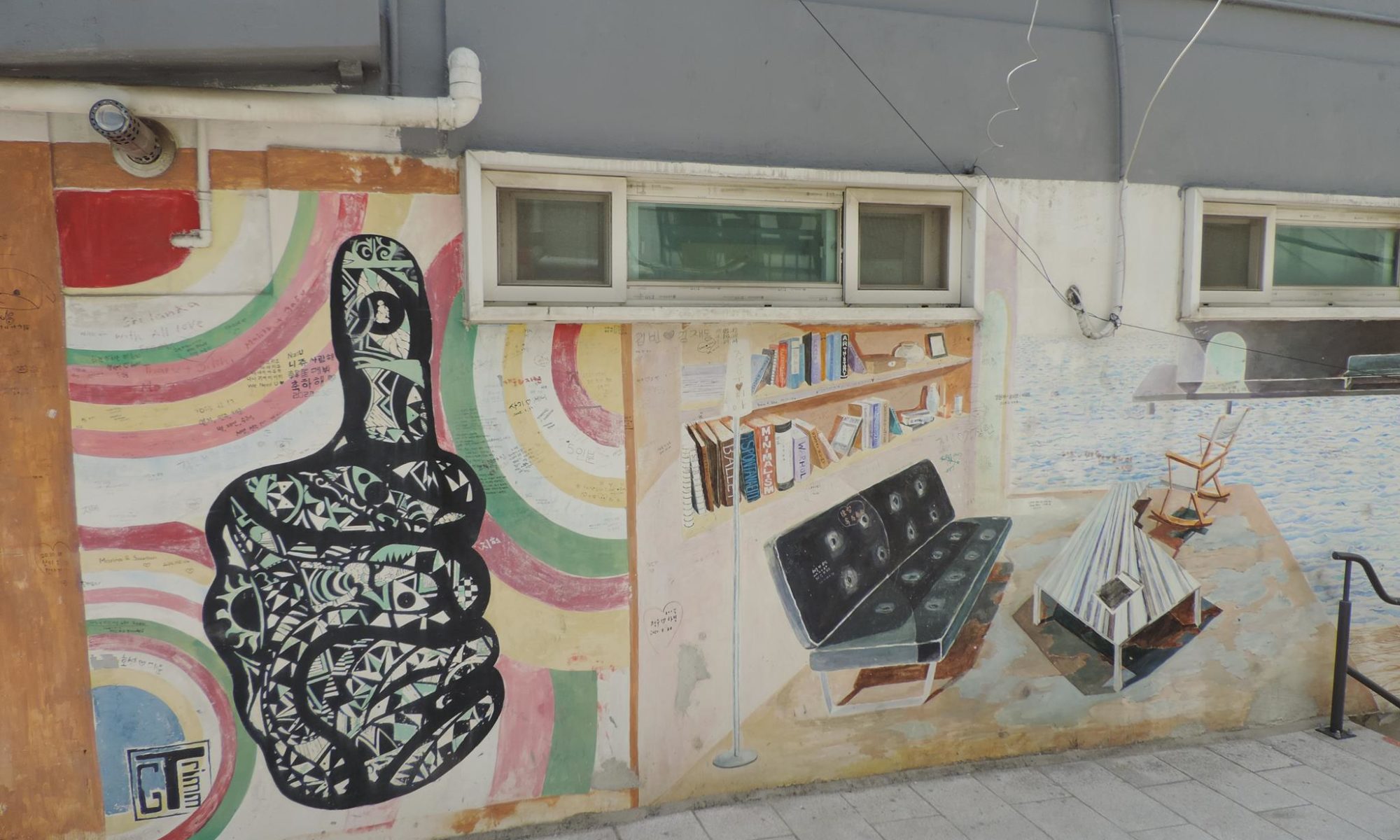
The Nambusunhwan Urban Art Alley in Seoul’s Gwanak-gu district is a vibrant example of public urban art. Located at 1563 Nambusunhwan-ro, the alley features colorful murals, graffiti, and creative art installations that transform ordinary walls into an open-air gallery. Reflecting Seoul’s contemporary culture and artistic spirit, it offers visitors unique photo opportunities and an authentic glimpse into the city’s dynamic local art scene. Also in the little streets around you can find several more artworks.

>>> READ MORE

SOUTH KOREA: Streetart Daegu – Suseong – Muhak Mural Alleys

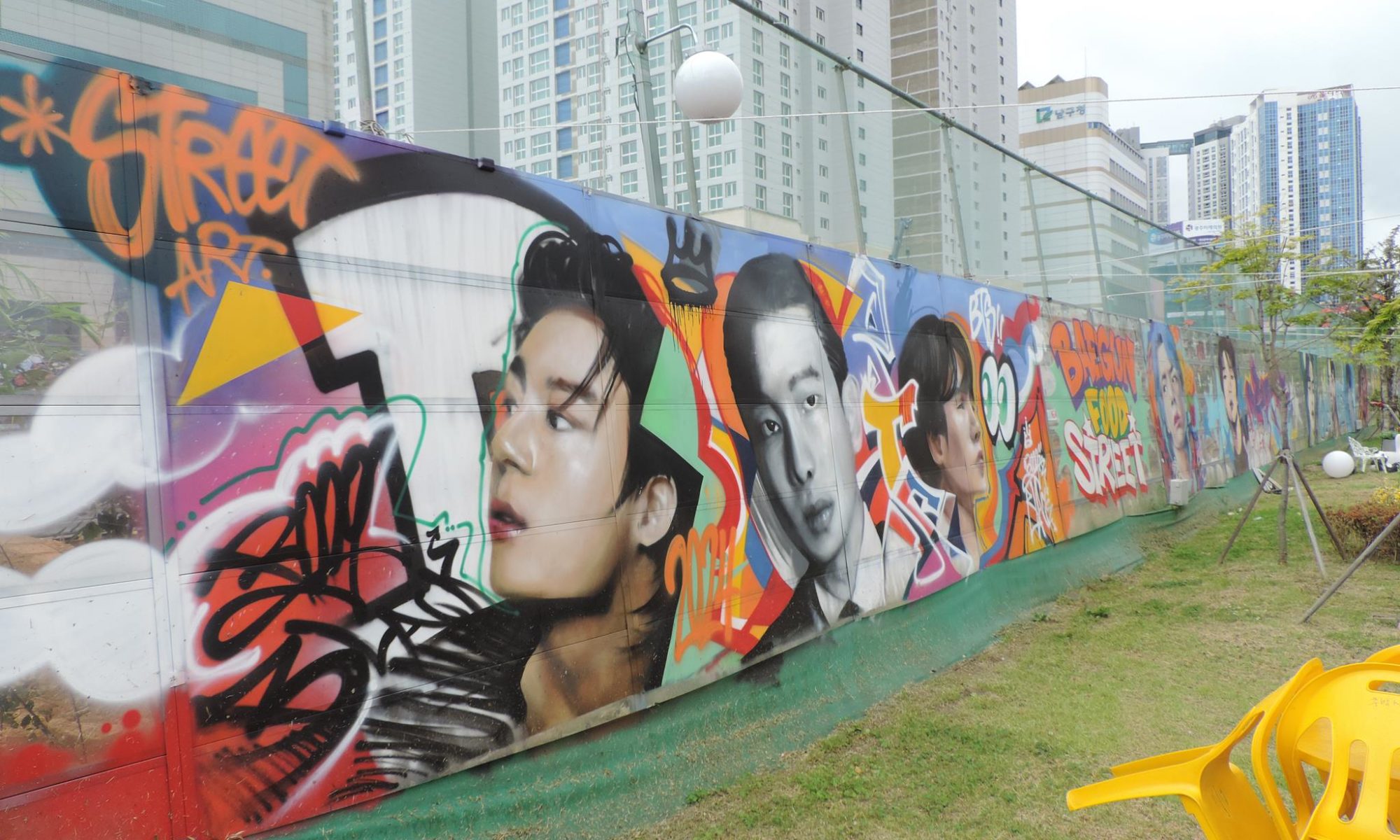
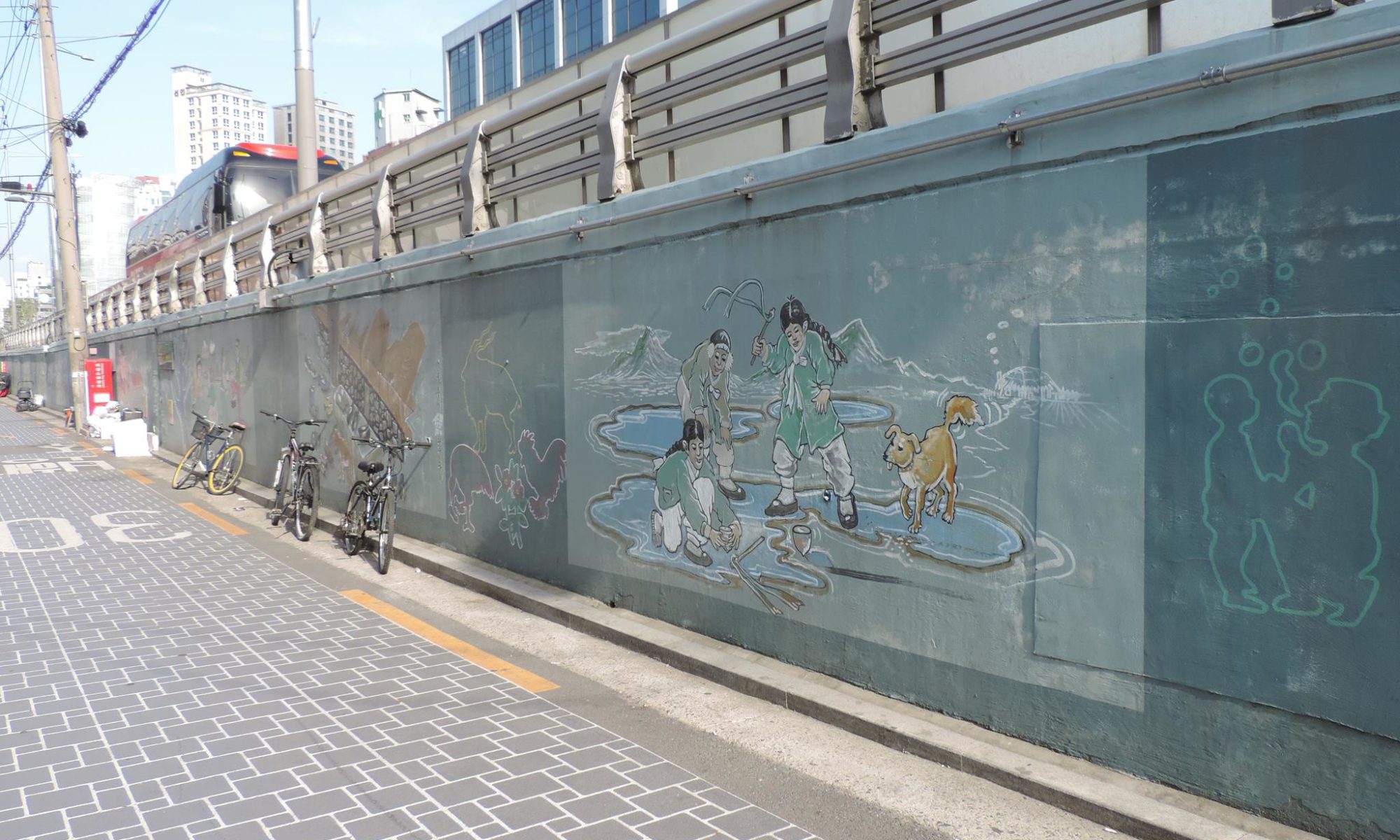
Suseong, or Suseong-gu, is a district in eastern Daegu and is considered one of the city’s most affluent and modern areas and is often referred to as the “Gangnam of Daegu”, with the Suseongmot Lake and the Suseong Valley. For art lovers, Suseong Artpia is highly recommended – a major center for the performing and visual arts. But you’ll also find plenty of urban art in the streets, including entire concept walls and extended open-air galleries. There’s especially much to discover around Muhak-ro Street, which runs through the neighborhoods of Dusan-dong and Jisan-dong.

>>> READ MORE

SOUTH KOREA: Gwangju – Penguin Village – Yangnim-dong – Creative Neighborhood

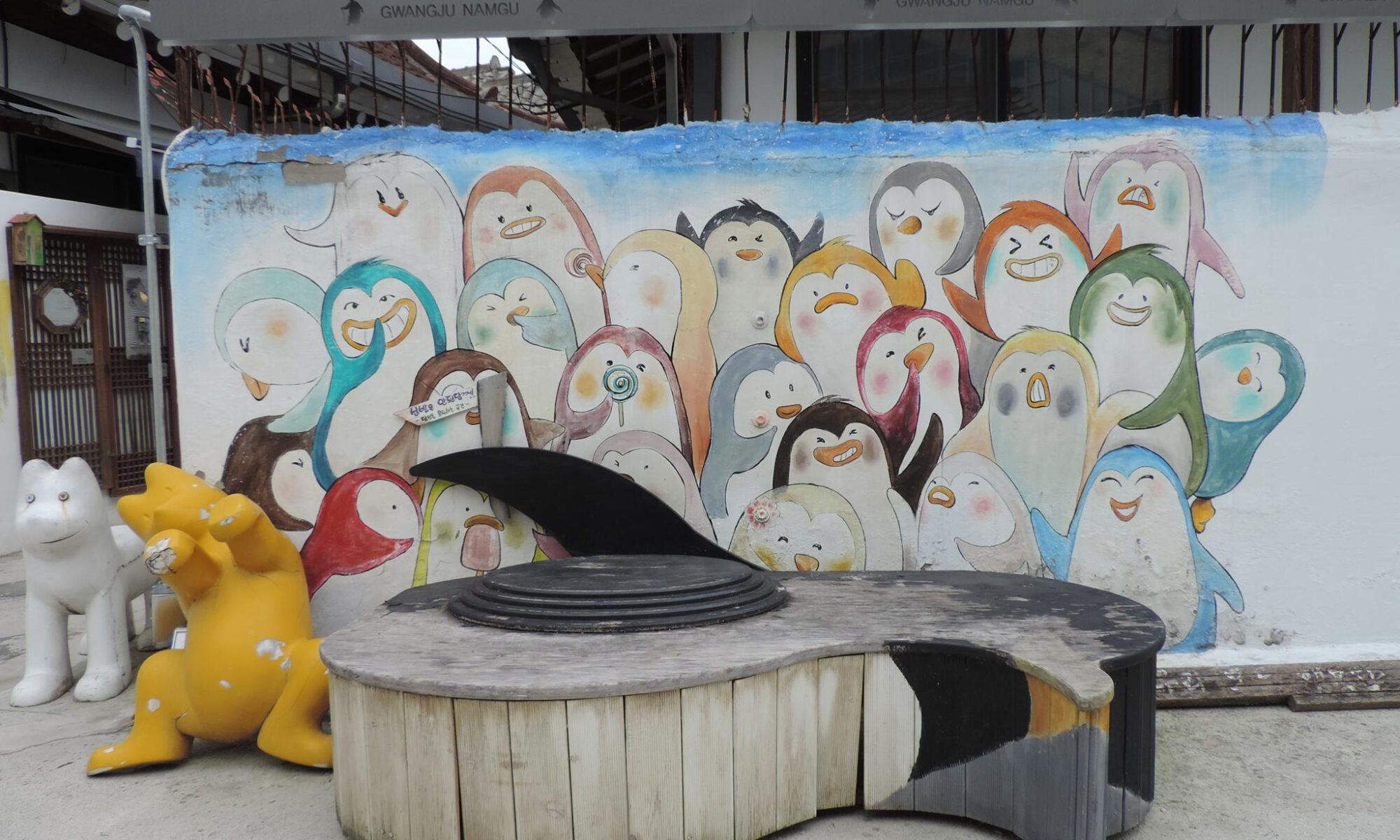
The Yangnim-dong neighborhood in Gwangju, better known as Penguin Village is a creative art space close to the west bank of the Gwangjucheon river. The community is a small, creative enclave in Gwangju. It emerged from an old residential area dating back to the 1970s and 1980s, which residents transformed into a sort of open-air exhibition. The name “Penguin Village” comes from the fact that older residents with knee problems resembled penguins when they walked. Today, the village is known for its colorful murals, artwork made from recycled objects, and an unusual, nostalgic atmosphere.

>>> READ MORE

SOUTH KOREA: Streetart Jeonju – Omokdae – Jaman Mural Village – Urban Art Open Air Gallery

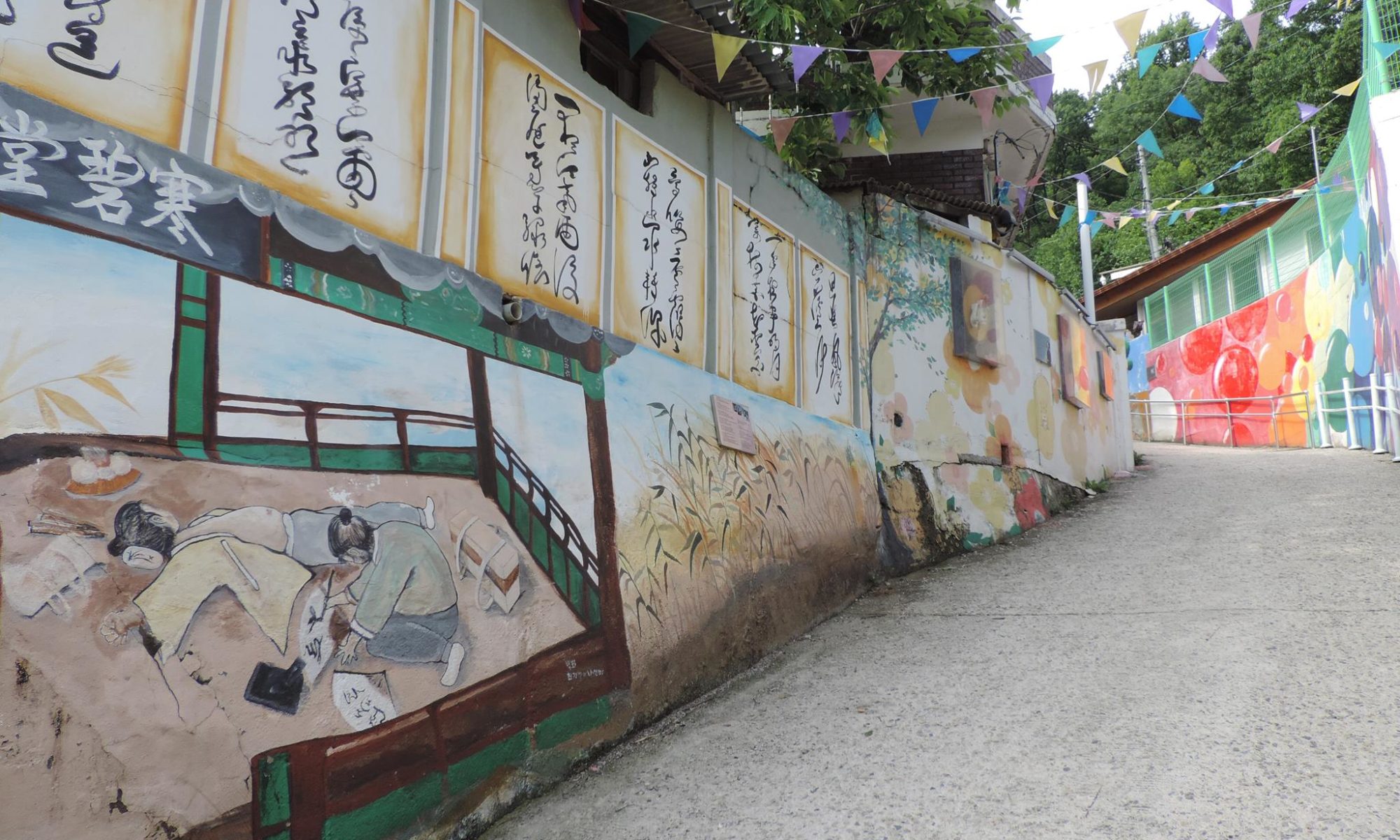
The JAMAN MURAL VILLAGE is located on a hillside opposite the famous HANOK VILLAGE in Jeonju and was originally a modest residential area for lower-income families. Starting in the 2010s, the neighborhood was transformed through urban art and revitalization projects, with murals painted by local artists, students, and volunteers. This resulted in a wide variety of styles, ranging from traditional Korean themes to modern pop culture and interactive 3D artworks. The murals are constantly changing and some are repainted or replaced, making the village a dynamic and ever-evolving artistic space.

>>> READ MORE

SOUTH KOREA: Streetart Seoul – Wausan Urban Art Wall – Hongik University Graffiti

North of Hongik University, a small, inconspicuous alley leads eastward from the main street Wausan-ro into Wausan-ro 24-gil. Looking down the rather narrow street, you would think it enters to a residential area and would hardly guess that there is a beautiful open-air urban art gallery here with almost 30 magnificent murals. In 2012 and 2013, more than 70 students created fantastic works here as part of a streetart project. Check out the great artworks!

>>> READ MORE

SOUTH KOREA: Jeonju – Dashi Rock Media Festival – National Intangible Heritage Center – BBUREKA, MUTO & HAEPAARY

From 16th to 18th May 2025, the DASHI ROCK MEDIA FESTIVAL took place in the South Korean city of Jeonju, featuring fantastic live performances by musicians and DJs. The venue was at the National Intangible Heritage Center, where an extensive artists‘ market was also held, showcasing handicrafts and creative products as part of the Korean Craft Week. We were able to attend the event on Saturday and watched some of the acts, including BBUREKA, MUTO and HAEPAARY. The spectacle was breathtaking and grandly orchestrated with perfect sound and visual effects on huge stage screens.

>>> READ MORE

SOUTH KOREA: Seoul – Banpo-daero – Underground Urban Art – Pablo Picasso Tribute – LALONE

Below the surface of the Korean captial Seoul a vibrant Spanish experience has come to life and since its inauguration during the „Picasso Mural Opening Ceremony“ on 9th July 2024 you can admire this impressive 65-meter-long mural in the underground tunnel One Bayley Public Walking Passage. This spectacular project was brought to life by Spanish artist LALONE, who painted in 17 days the artworks with motifs of Pablo Picasso and typical elements of his works, also sceneries from his life and sights from the city of Malaga.

>>> READ MORE

SOUTH KOREA: Gwangju – Chosun College of Art & Design – Professors SEONG-MIN YUN & RYU BEOMEOL

The Korean city of Gwangju is home to one of the country’s most important educational institutions, a center of knowledge for innovation and creativity. The Chosun University opened its doors in 1946 and has currently enrolled around 33.000 students. All of the faculties are certainly exciting, but we are particularly interested in the College of Art and Design. We visited the different themed levels and give you an insight into this interesting world, where fantastic works get created on each floor. In two interviews we spoke with professor SEONG-MIN YUN for Korean painting and RYU BEOMEOL, professor for animation and comic.

>>> READ MORE


SOUTH KOREA: Seoul – Itaewon District – Graffiti, Throw Ups & Bombings

We already showed you the streetart and figurative works from Itaewon, this time it is now about the graffiti. The district is one of the city’s party neighbourhood, with countless bars, clubs, and restaurants, and there is always something going on here around the clock. Compared to the more conservative cityscape, this district looks a little different and you can clearly see the international influences of the former US military base Yongsan. Accordingly, there is also a lot of graffiti and lettering pieces here, much more than anywhere else in the city, where graffiti is rather rare. Check out the great collection!

>>> READ MORE

SOUTH KOREA: Seoul – Itaewon District – Streetart, Characters & Portraits

Itaewon in the center of Seoul is considered a symbol of internationalism, openness, and cultural exchange. The district owes its special character to the closeby former US military base Yongsan, which was active until 2018. After the Korean War, the neighborhood attracted many American soldiers, diplomats, and business people, creating an unusually international environment. While other parts of Seoul remained strongly influenced by tradition, Itaewon opened up to the West early on with bars, secondhand stores, trendy cafes, and international restaurants. Accordingly, you’ll also find many urban artworks here, ranging from small to large and created by local artists as well as international visitors.

>>> READ MORE