Exhibition: „Vögel im Wasser – Fische auf Bäumen“ – AXEL HEIL
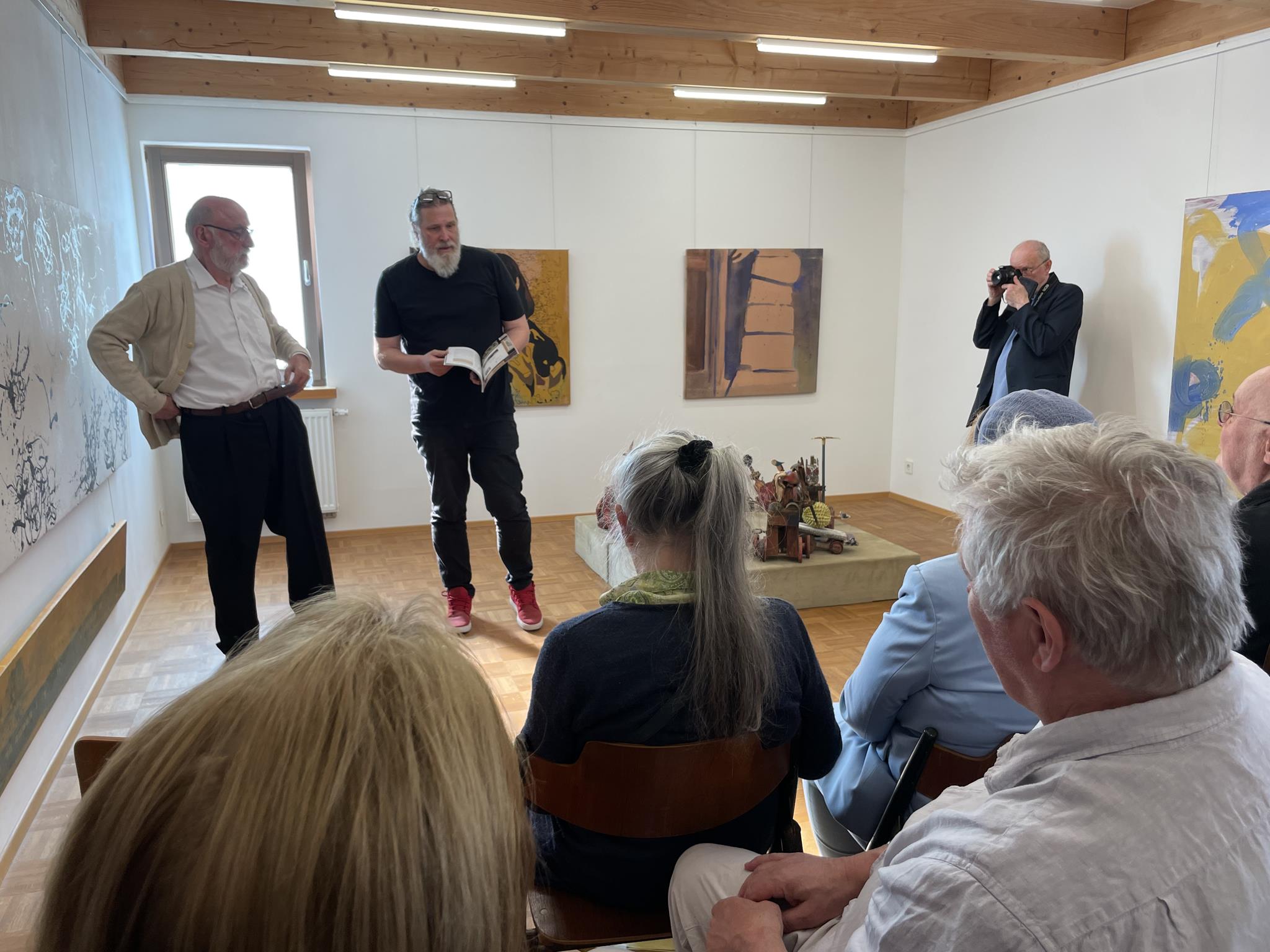
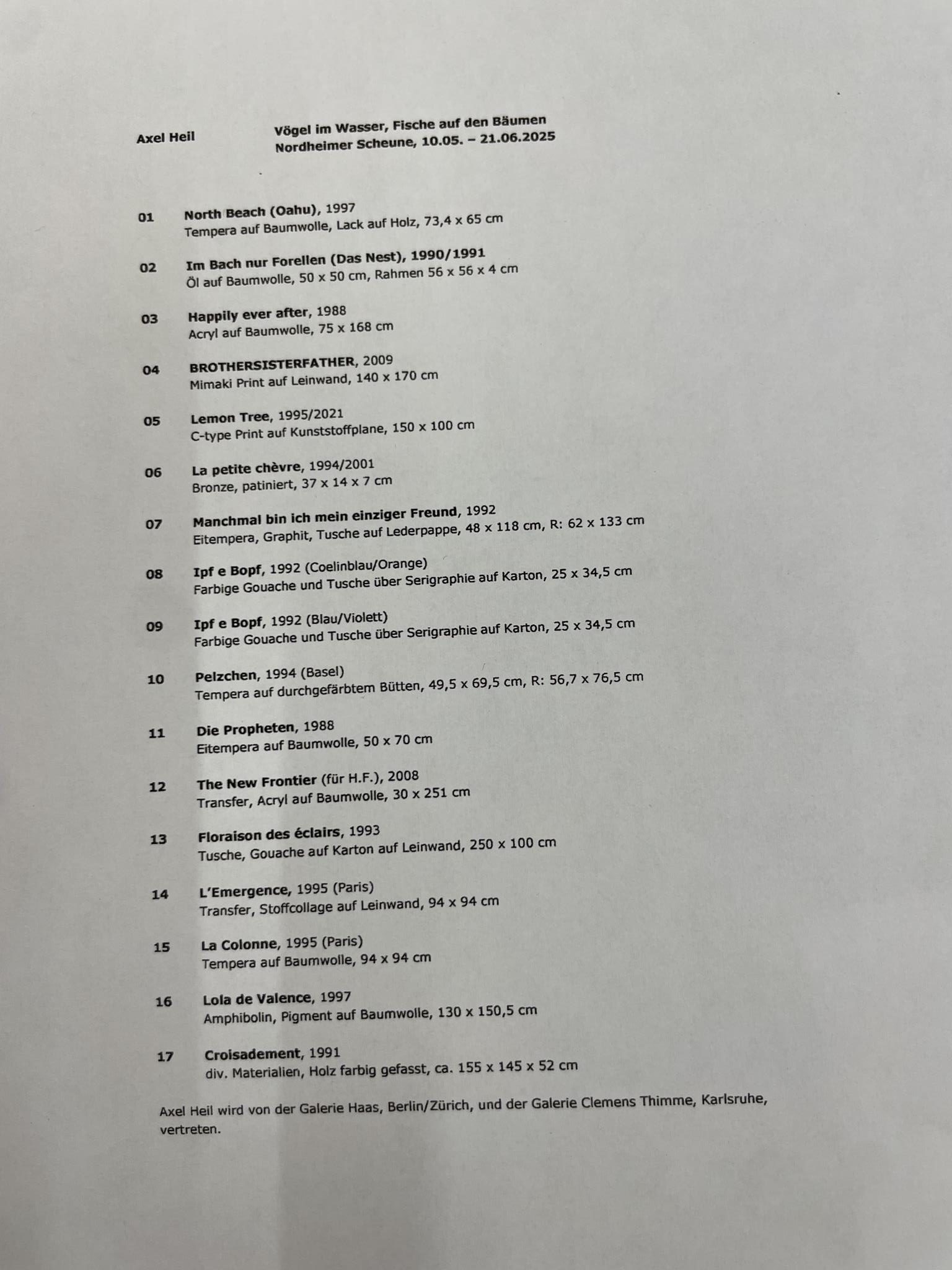
From 10th May till 21th June 2025 the fascinating artworks of AXEL HEIL could be admired in the exhibition “Vögel im Wasser – Fische auf Bäumen” in the NORDHEIMER SCHEUNE. The title would mean in English „Birds in the Water – Fish on the Trees“. In this article here you will see several of here interesting creations from the solo exhibition in Nordheim, which is a beautiful village located between the cities Heilbronn and Stuttgart.
Curator HELMUT ALBERT MÜLLER about the exhibition: AXEL HEIL was born in Karlsruhe in 1965 and is a versatile artist, profound connoisseur of African sculpture, sought-after author, curator, designer, and producer of countless catalogs, posters, and invitations, university professor, artist-researcher, founder and editor of „fluid editions,“ a production platform for diverse artistic projects. According to all the curators, gallery owners, and museum directors with whom he has worked, he cannot be reduced to a single definition. The artist and author Wolf Pehlke, ten years his senior, born in Sinzheim near Baden-Baden and deceased in Karlsbad in 2013, nevertheless rightly compared him in the Karlsruhe Art Academy’s catalog „Ten Years Later“ to the coyote revered by the Navajo Indians, who distorts people’s most vain efforts and teaches them lessons in humility.
The aforementioned catalog includes three photographic works from Axel Heil’s 1995 performance „Ein Teil der Beute“ (Part of the Prey). Heil wears brown boots, striking red-and-black striped trousers, a dark brown coat, a light brown cap, and carries a guitar, an earth-colored duffel bag, and a replica yellow child’s bicycle on his back. Heil also holds a roll of wrapping paper, a tool halfway between a spear and a whisk—perhaps a crosier—under his left arm, and a blue-white-and-red striped linen shopping bag and an axe in his left hand. With his right hand, he pulls a four-wheeled cart on a rope, bearing a female figure with blond hair and a second staff comparable to the spear, staff, or whisk under Heil’s left arm. Heil’s cart resembles the carts he chained together in the 1991 installation „Croisadement.“
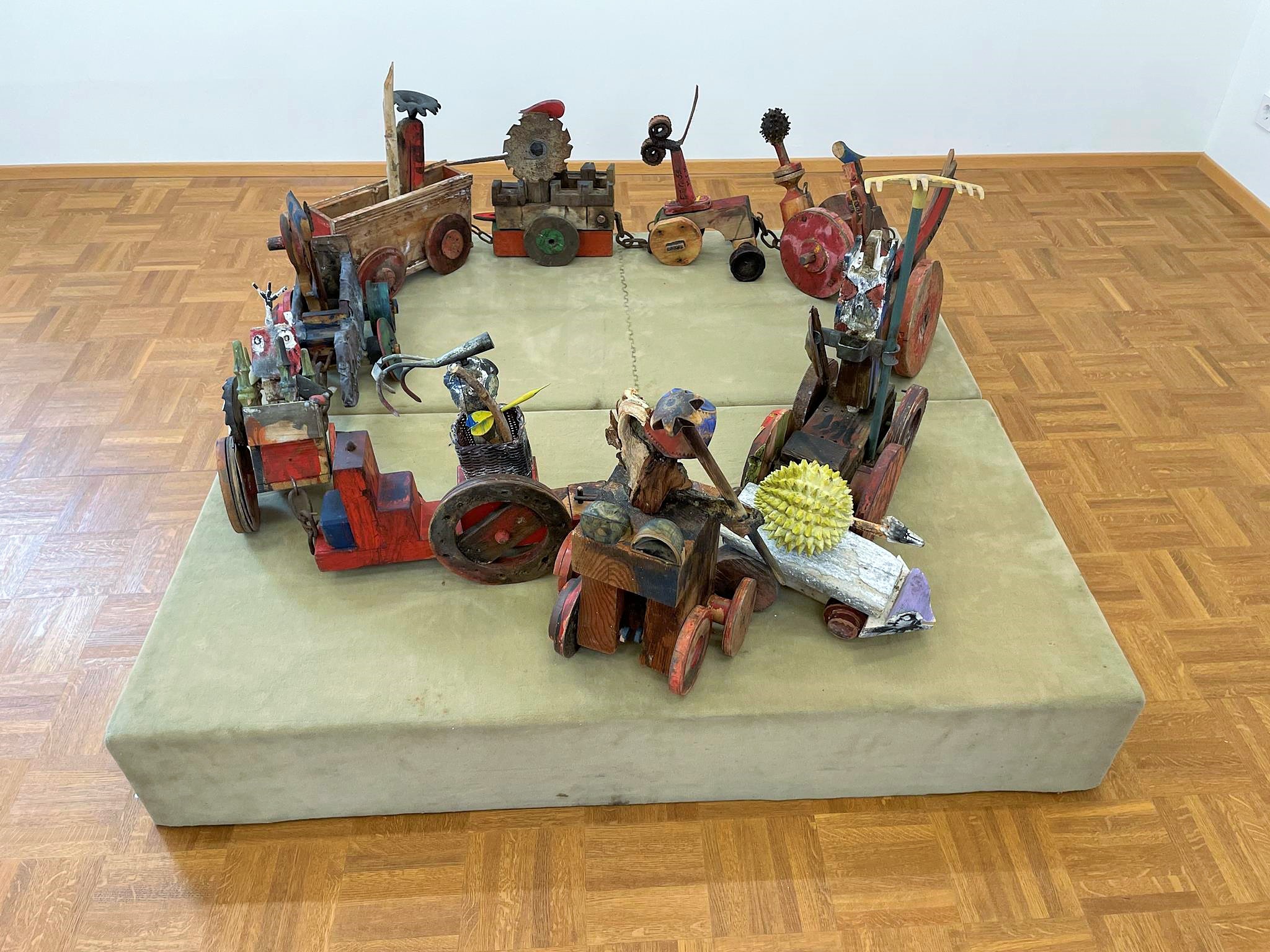
The French word ‚croisadement‘ means crossroads, way of the cross, or fork in the road. At the beginning of his artistic journey, Heil, like Heracles at a crossroads, finds himself faced with the question of whether he should choose the direct path in his artistic career, oriented toward his own early success, but effortless and morally questionable, or the more difficult path in life and art, repeatedly interrupted by detours, side paths, and side trips, marked by numerous new beginnings, but more in keeping with his own interests and thus more authentic and, in the long run, more fulfilling.
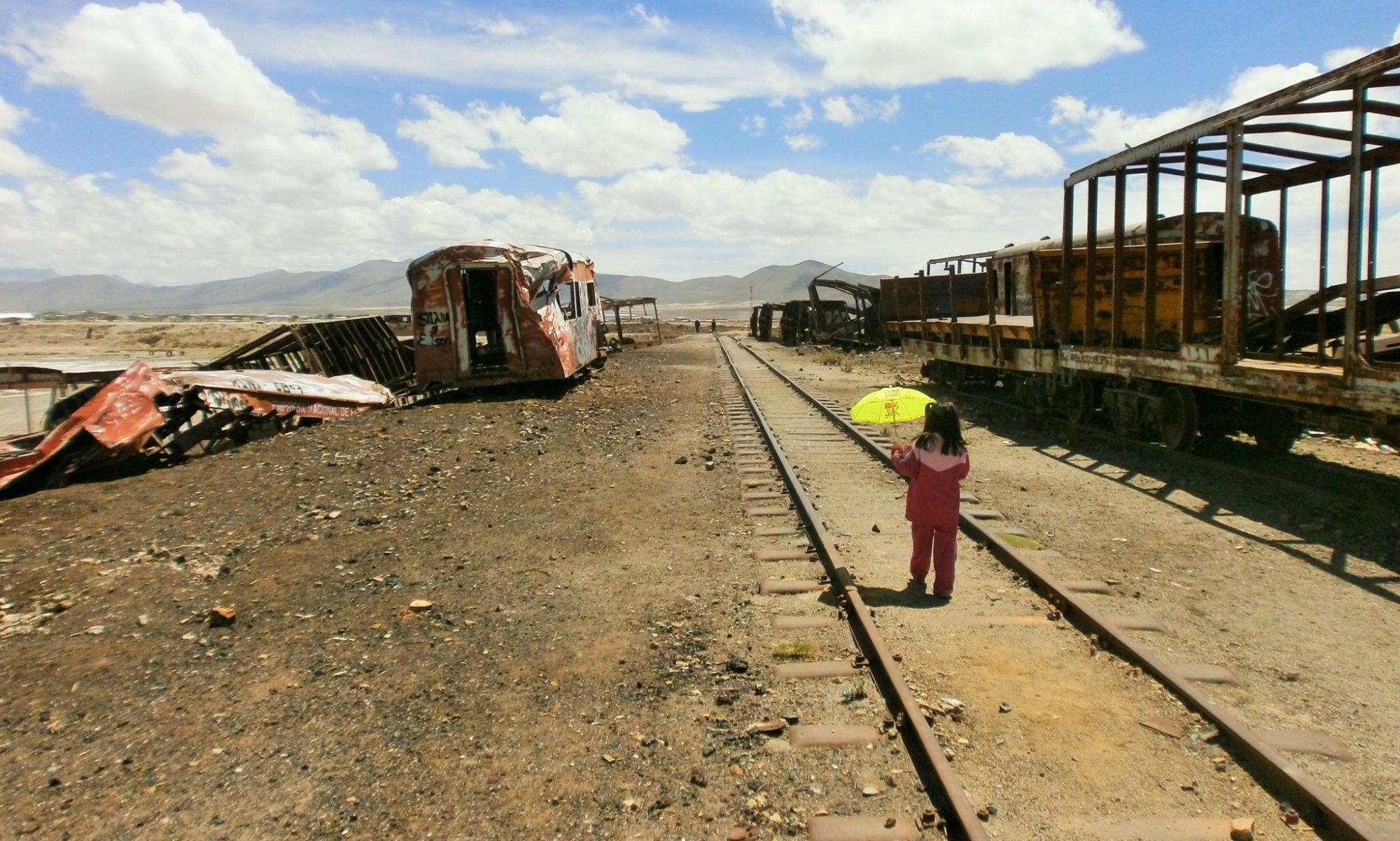
He takes his time to consider this central question, steps aside, and sits, as his 1996 photographic work „To Be as if“ shows, on the roof of a dilapidated and urgently needing repair garden shed next to a railway line. He reflects, notices that the world looks completely different when he turns around on the perforated roof and watches the freight trains rattle by. He gains perspective and comes to the conclusion that he must take the longer and more difficult path because it gives him the freedom to wander, to look around, to listen, to rummage through the literature he loves, and to take up the themes, genres, and methods that are relevant to him at any given time. In doing so, he realizes that art history contains a treasure trove of innovations that is almost unattainable, and that he therefore does not want to peddle the idea of ??genius that is so often cultivated in artistic circles. He would rather broaden the field in which he moves artistically: He affirms the insight that art comes from art and that none of the artists working today is at the beginning of the artistic path.
But he also wanted to demonstrate that everything in the world that caught his eye and seemed interesting could become art. Therefore, in his early years, the house walls that had been torn apart and opened after a pipe burst in the series of five photographic works entitled „Summer Holidays (The Roaring Twenties)“ became art for him, as did the four photographic works depicting the partial demolition of a house entitled „Bingo Revisited“ and his spatial installation „Open up your tired eyes,“ shown at the Ettlingen Art Association, in which he clings to the brightly lit neon tube under the ceiling with one arm and hovers above the floor. Only those who opened their tired eyes wide would realized that it wasn’t the artist hanging from the ceiling, but a lifelike cast of his body. His face and hands were cast in wax and painted in lifelike colors. The installed cast of Heil wore Heil’s worn clothes, and his head was adorned with well over 10,000 original Heil hairs.
In his subsequent career, Heil repeatedly evaded the usual expectations of the art market, relying on free roaming, the construction of situations, enduring contradictions, and barely exhausted new artistic inventions. What he shows emerges from seeing and knowing – and often poses more questions than it provides answers. This is one reason why, alongside the moment of authenticity, the method of the „unfinished“ has become central to Axel Heil’s work: the void that still leaves something open. While painting and drawing form the natural foundation of his endeavors, their manifestations are characterized more by collage, montage, and transfers from one field to another, as well as by transfers into newer and more recent forms of artistic expression.
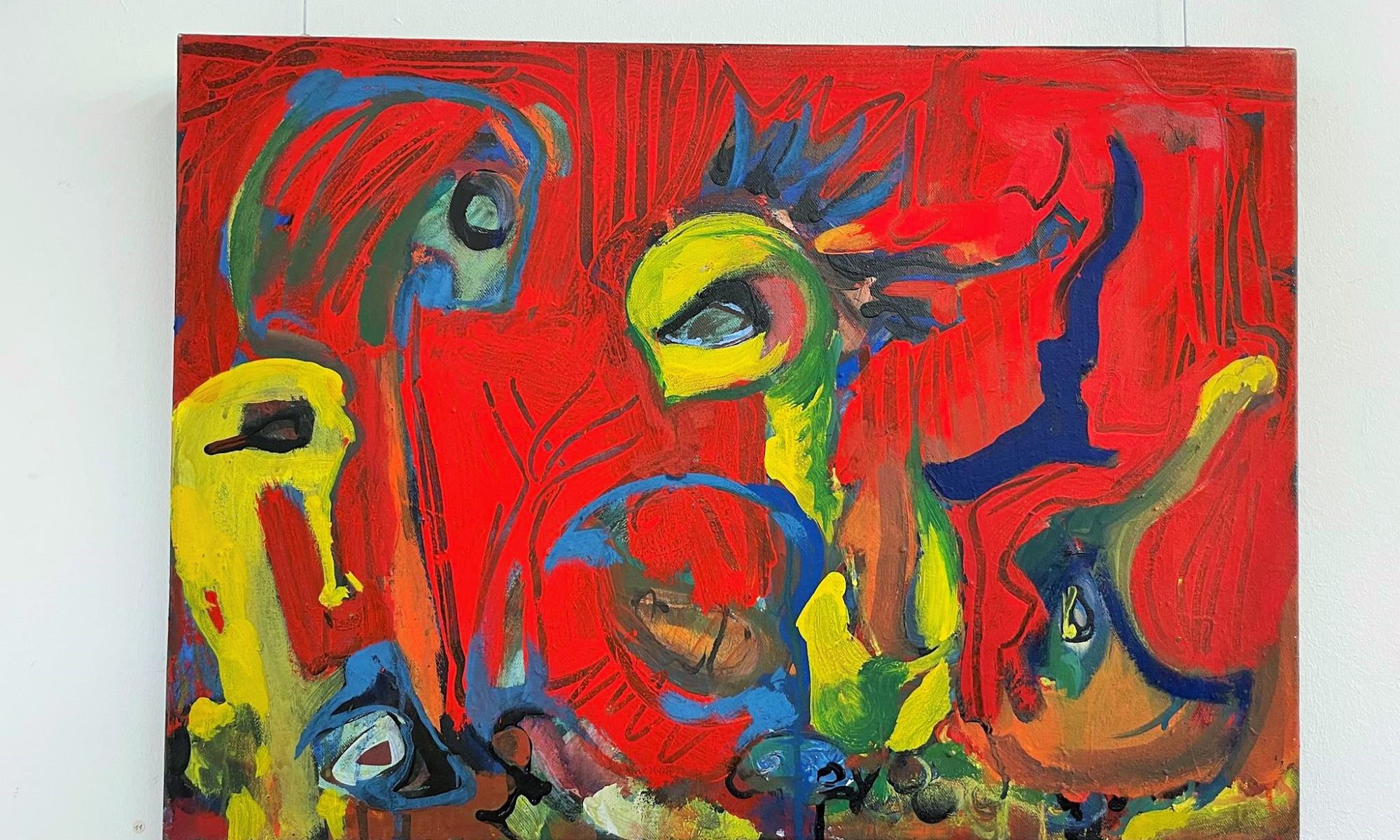
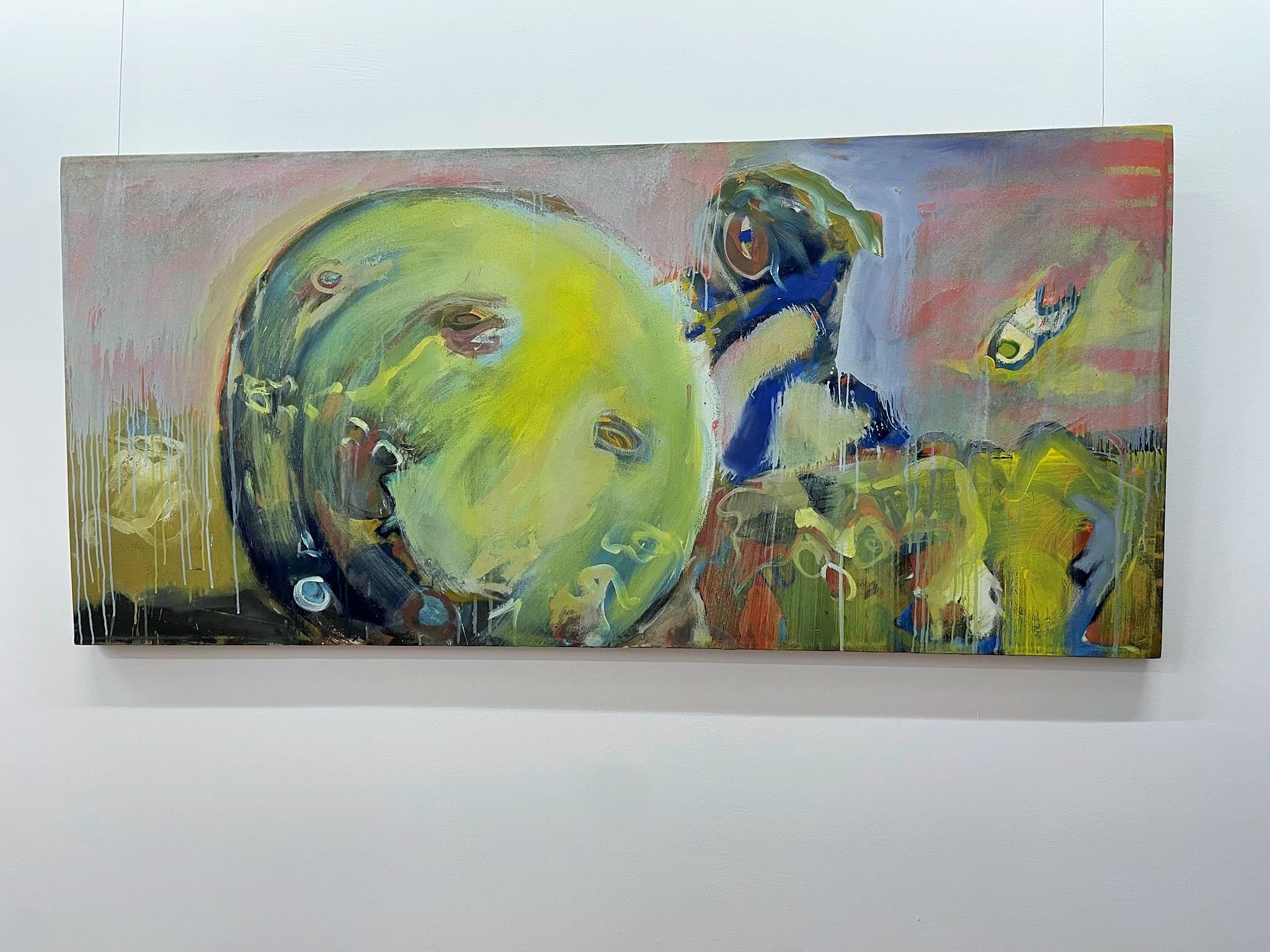
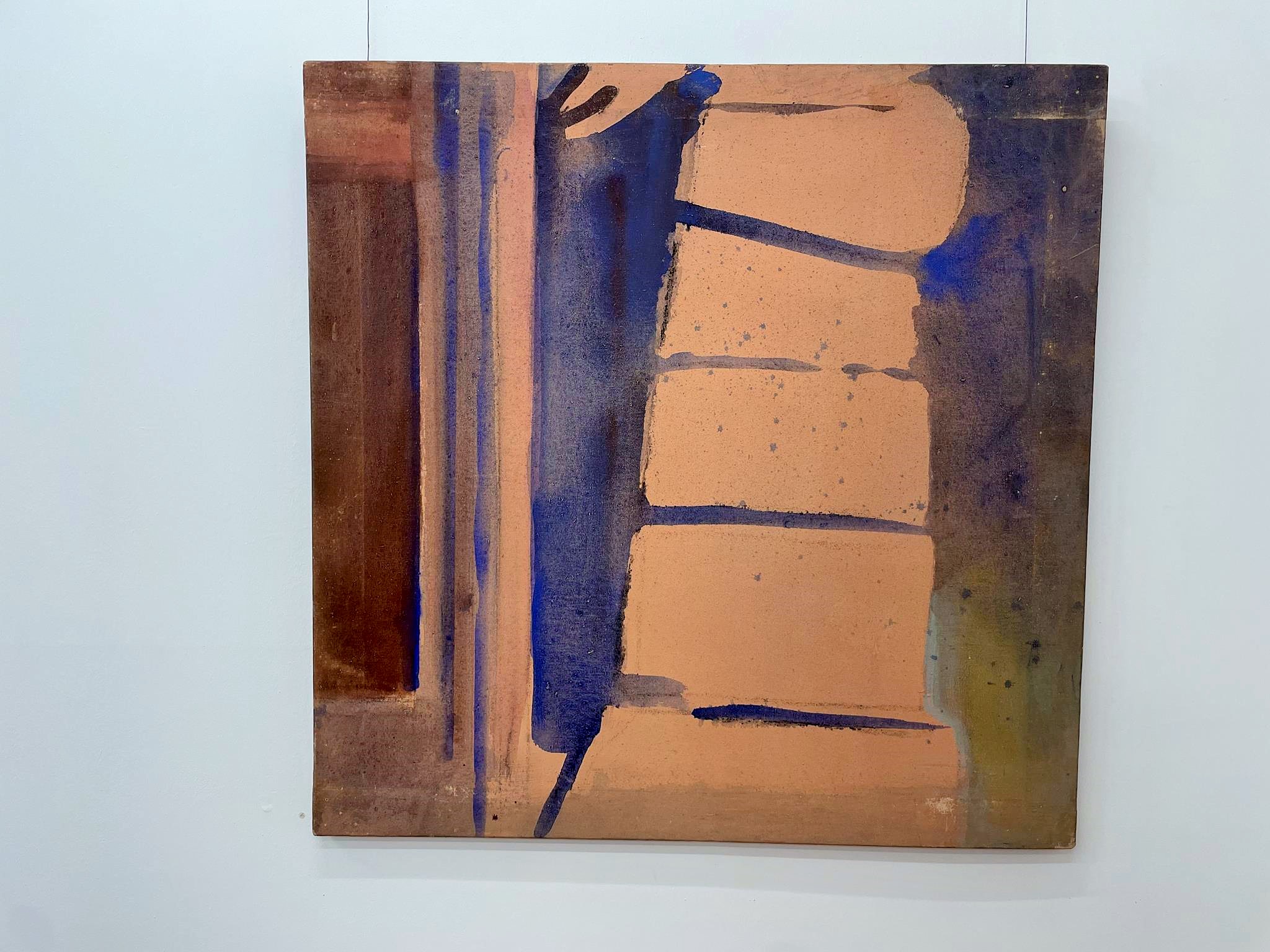
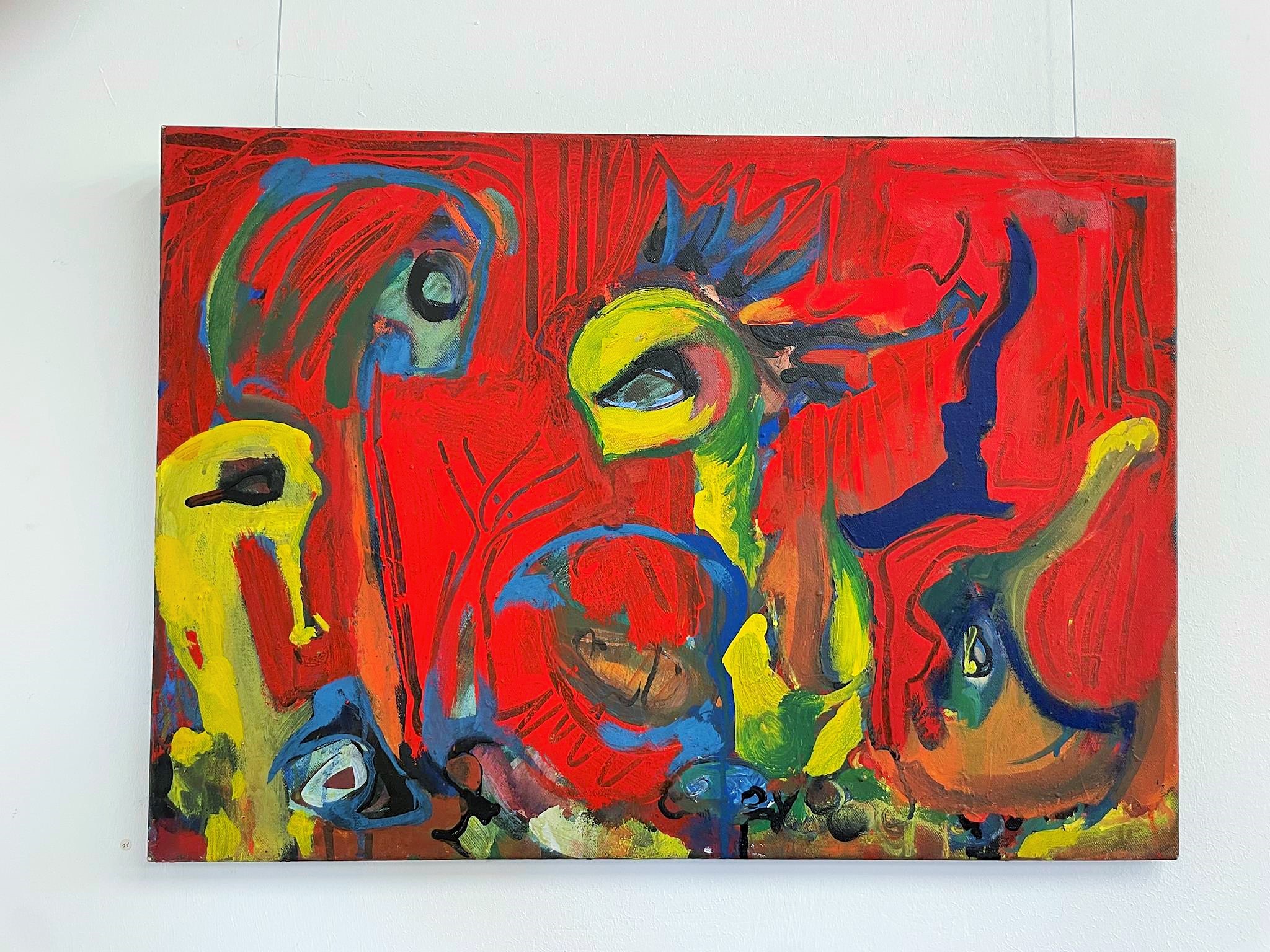
This is also evident in the works spanning almost 40 years gathered in the Nordheim barn. Anyone who approaches them wonders whether they could actually have been created by one and the same artist. Each work has its own expression. Each stands on its own. Thus, Sisyphus, rolling his yellow ball, penetrating blue, down the mountain in the earthy green painting „Happily Ever After“ from 1988, still appears clearly as a clearly recognizable male figure. The two yellow and the blue „Prophets,“ painted in the spirit of fantastic realism on a fiery red ground at the end of his studies, appear more enigmatic. They demand significantly greater empathy, a greater capacity for imagination, and a more vivid fantasy. In his medium-format oil painting „Im Bach nur Trout,“ painted in 1990/91, a good two years later during his time as a master student, Heil relies on dark red and violet and chooses an even stronger abstraction. If you look at the image for a while, you’ll see a face reminiscent of African sculptures and blue- and white-rimmed pupils, searching for the trout in the stream announced in the title. But the trout have apparently hidden themselves.
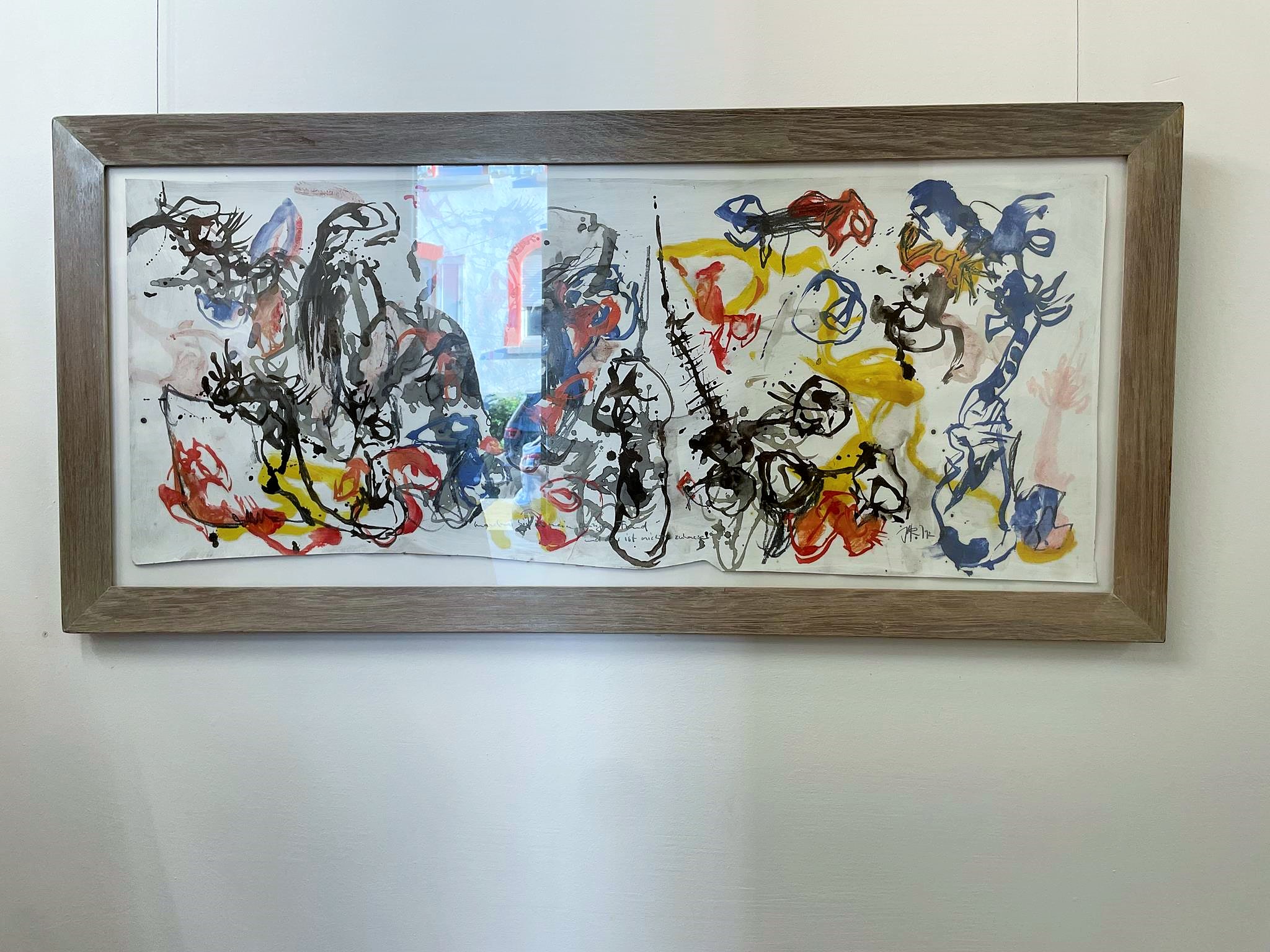
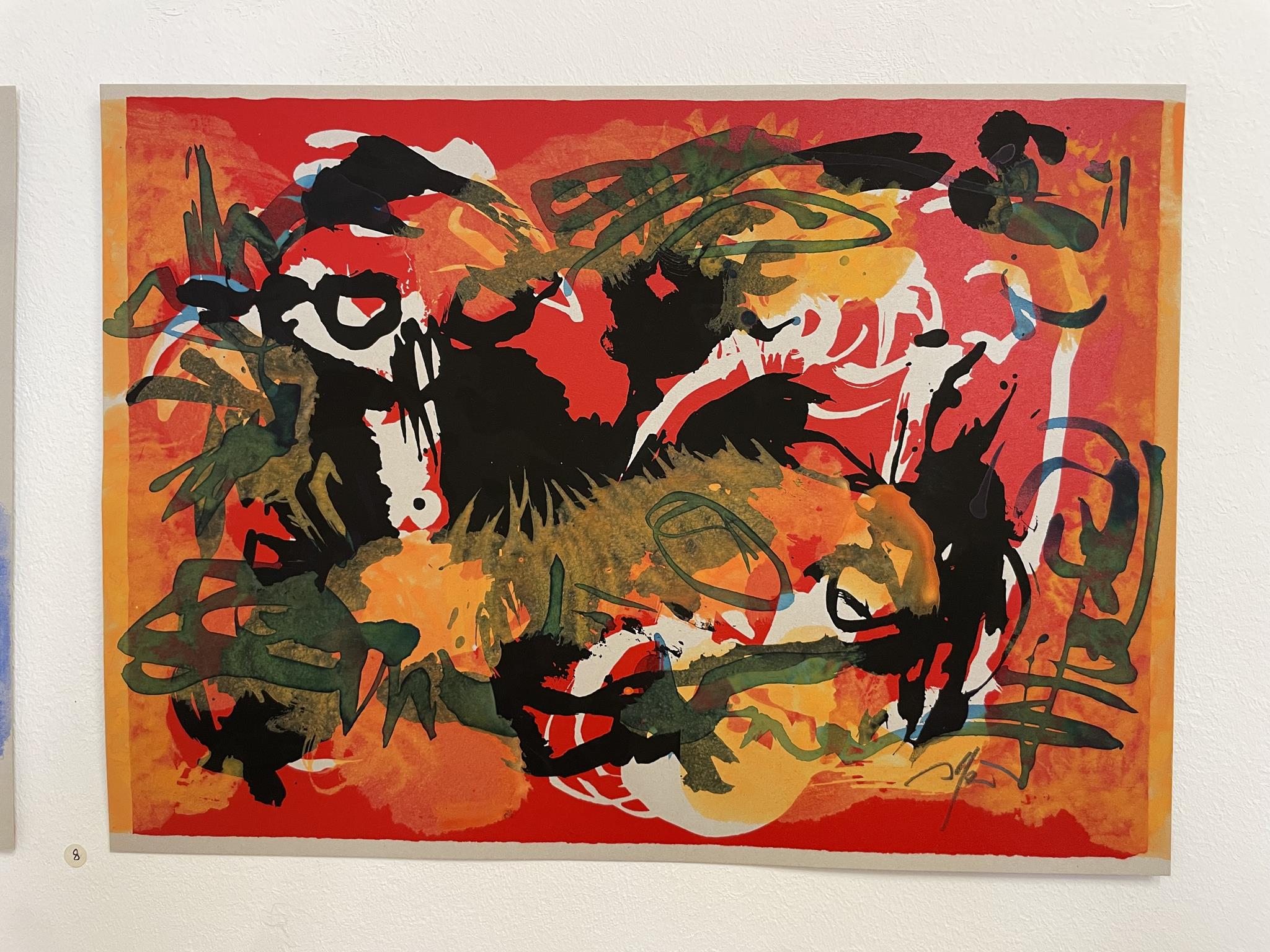
A good year later, Heil found a taste for Art Informel in his 1992 landscape painting „Sometimes I’m my only friend and he’s not at home.“ With this work, painted in egg tempera, graphite, and ink on leatherboard, Heil seemingly abandoned figuration and classical form and composition, opting for free and spontaneous painting. In the dynamic scenery of brick-red, lemon-yellow, black, gray, and blue painterly abbreviations, one can nevertheless recognize a pair of lovers, a rider with erect hair, an eagle, a stork, a giraffe, and a mouse.
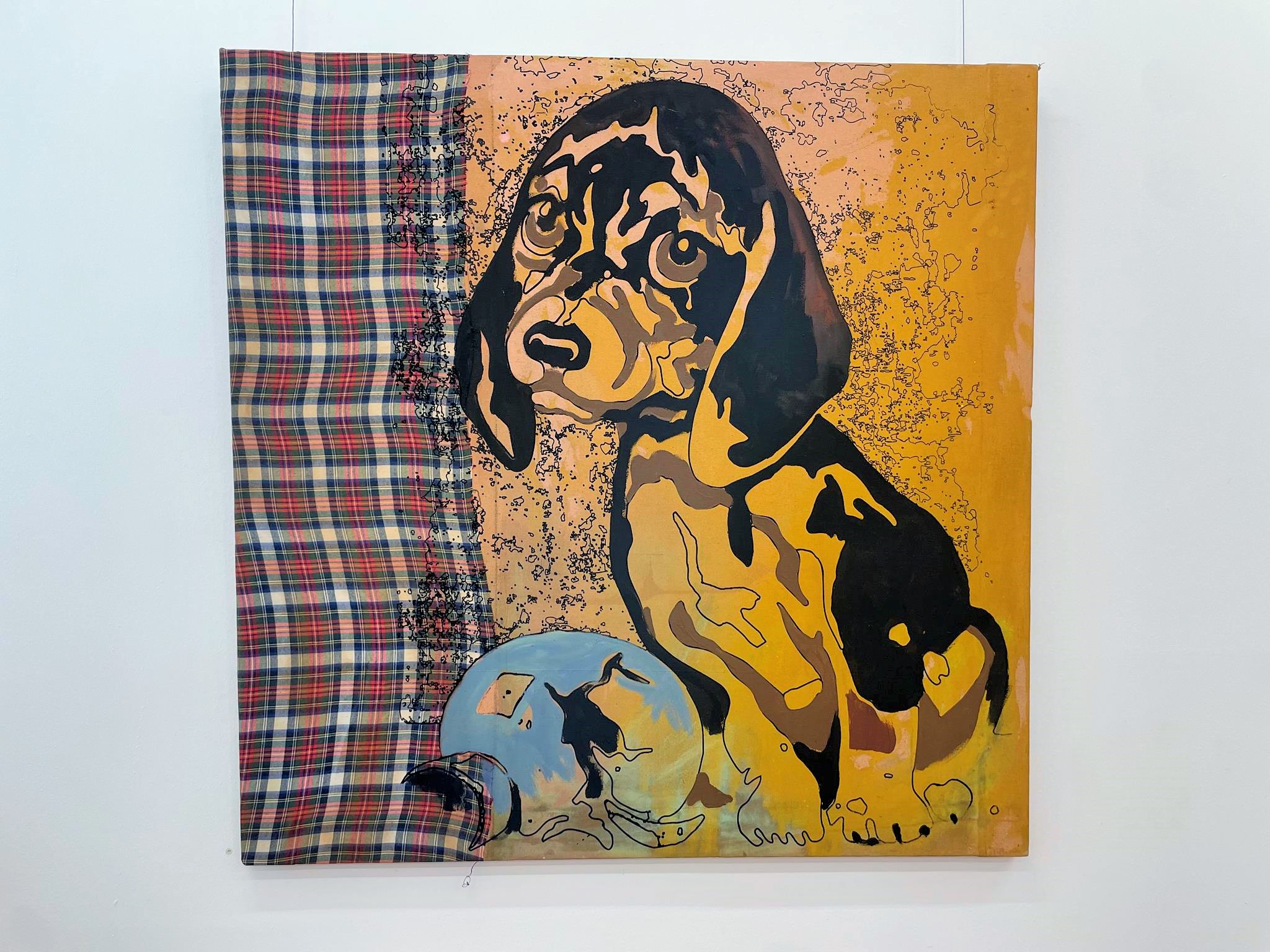
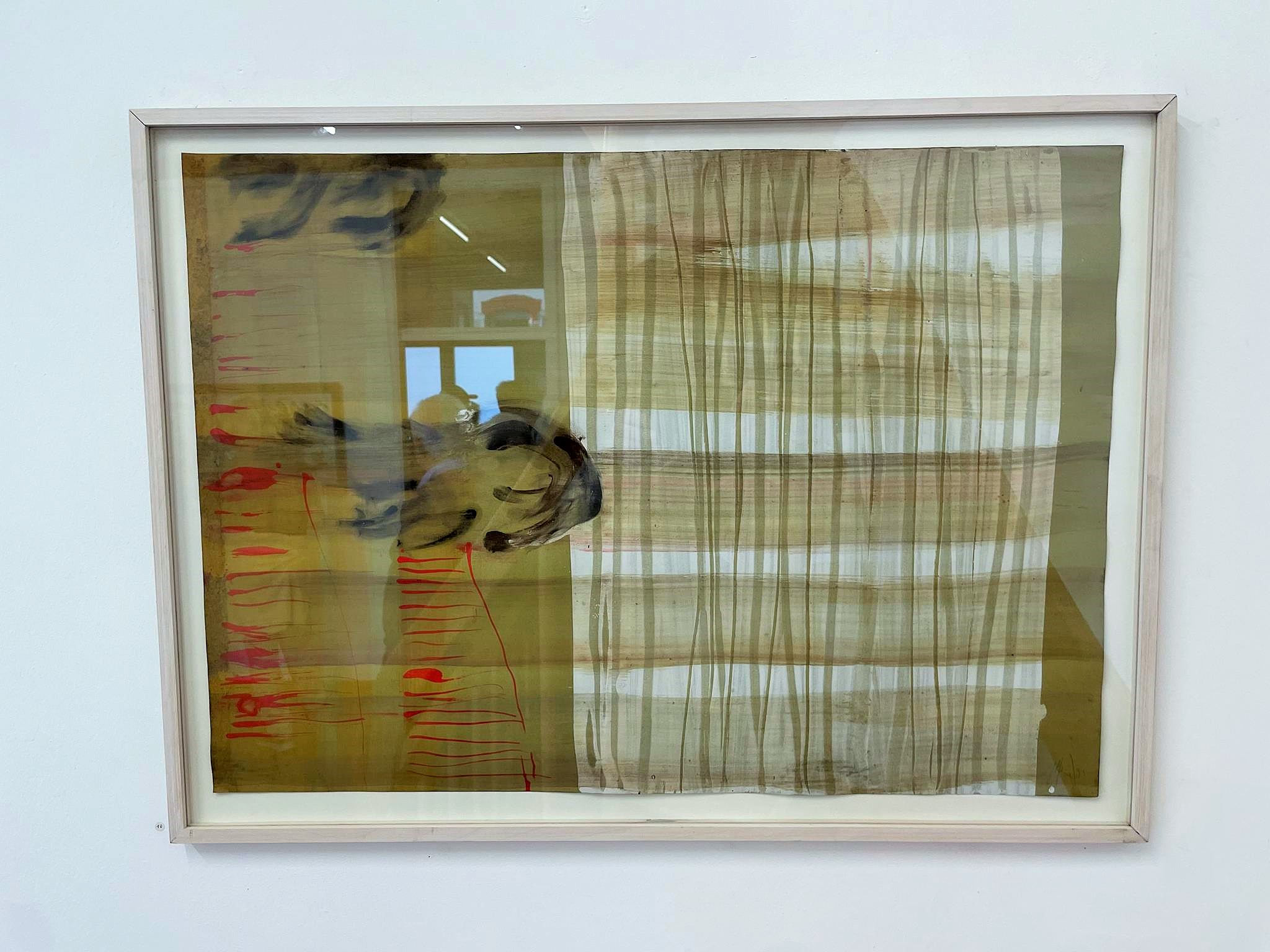
He juxtaposed his dog „Waldi II,“ painted in Paris in 1995 in classically realistic tempera with a somewhat distorted tartan and called the work „L’Emergence.“ The dog stands on tiny islands that perhaps mark its territory. But the title of the work, which translates as „The Emergence,“ broadens the horizon. He points to the philosophical problem that things—and in this case, the dog Waldi and his territory—do not merge into their appearance before our eyes, and certainly not into dualities like those of humans and animals. The dog and its environment retain their own transcendent reality, their emergent side. Works like „L’Emergence“ could therefore transfer overly simplistic thought patterns to higher levels of perception.
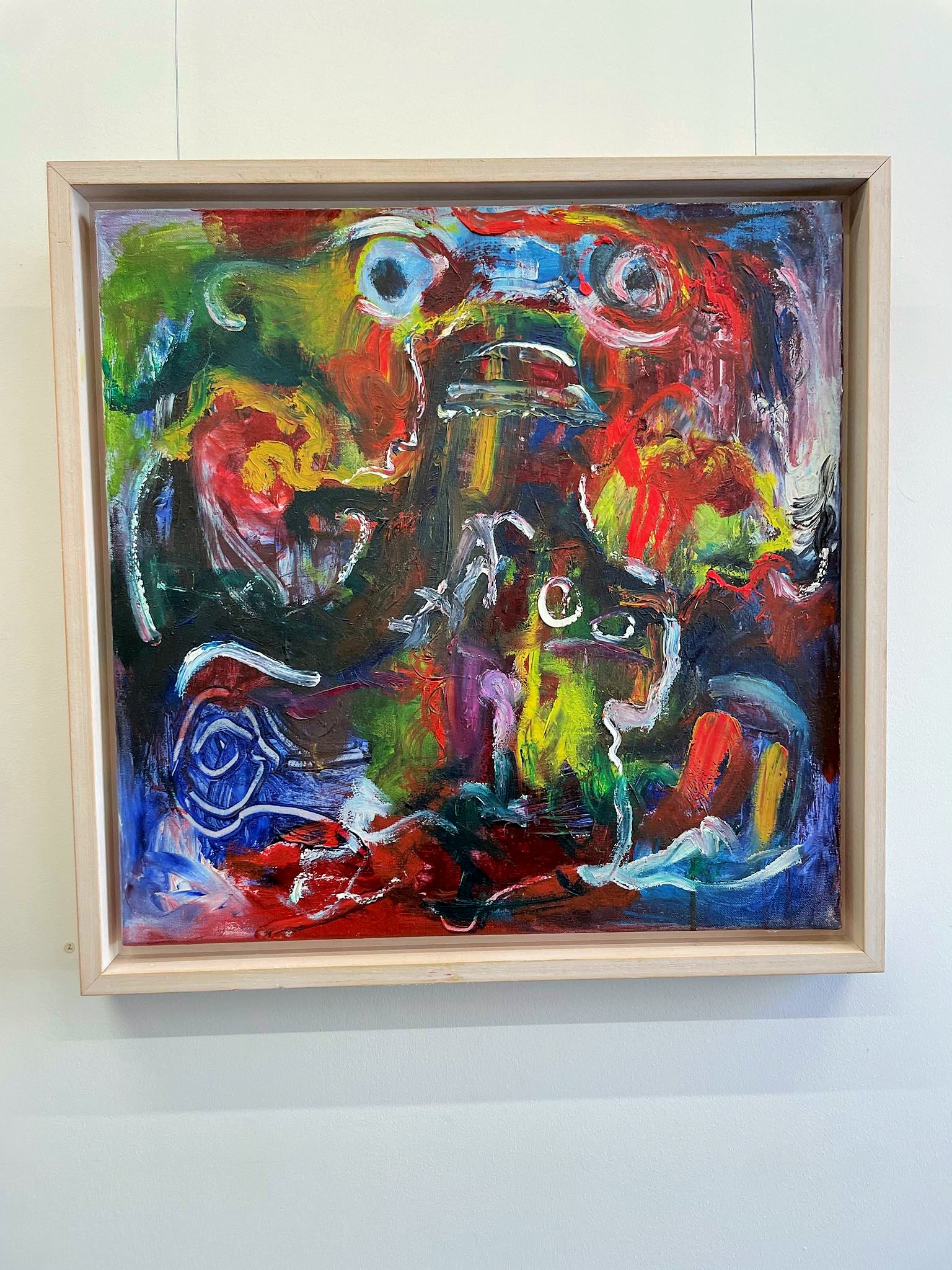
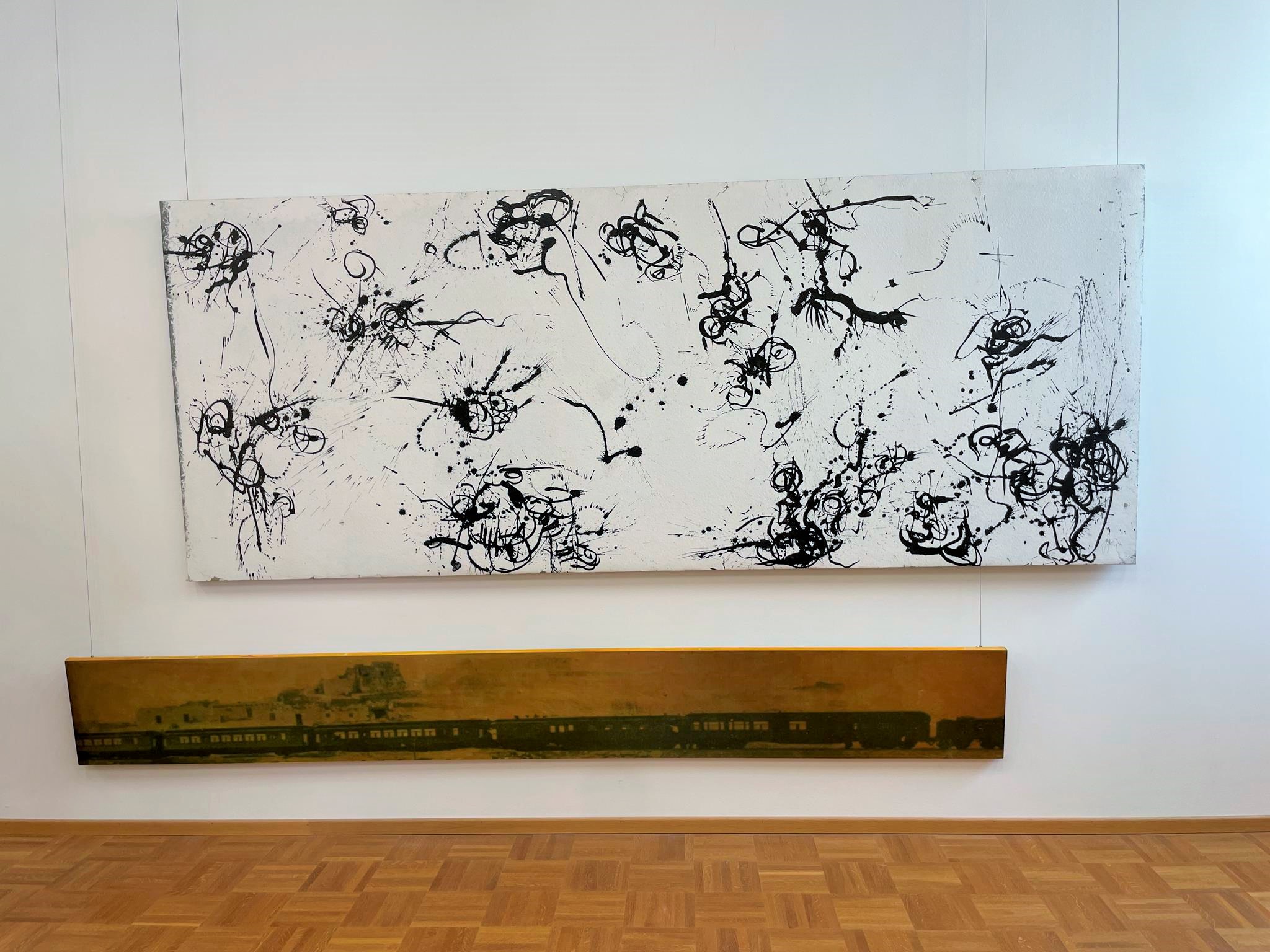
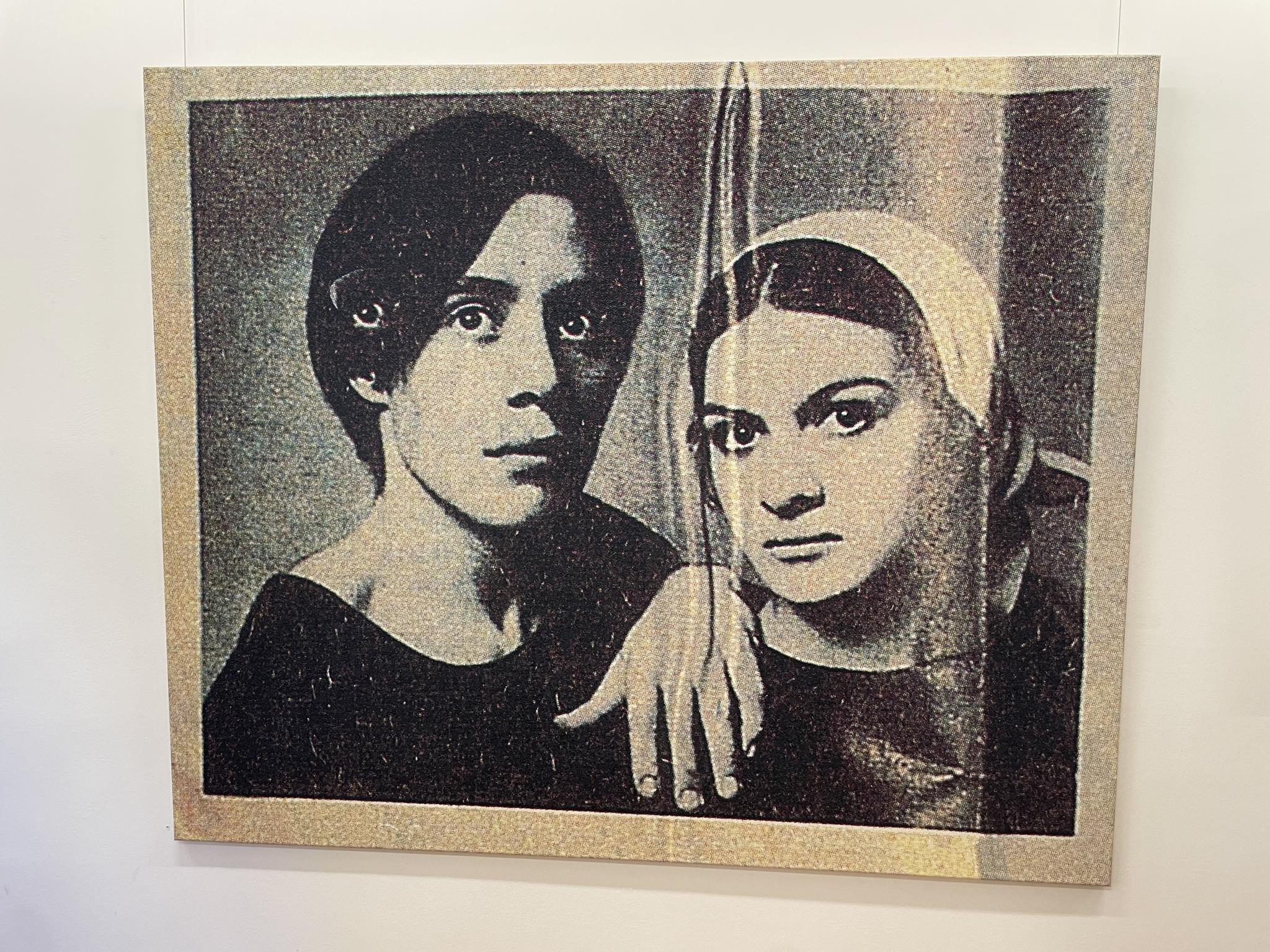
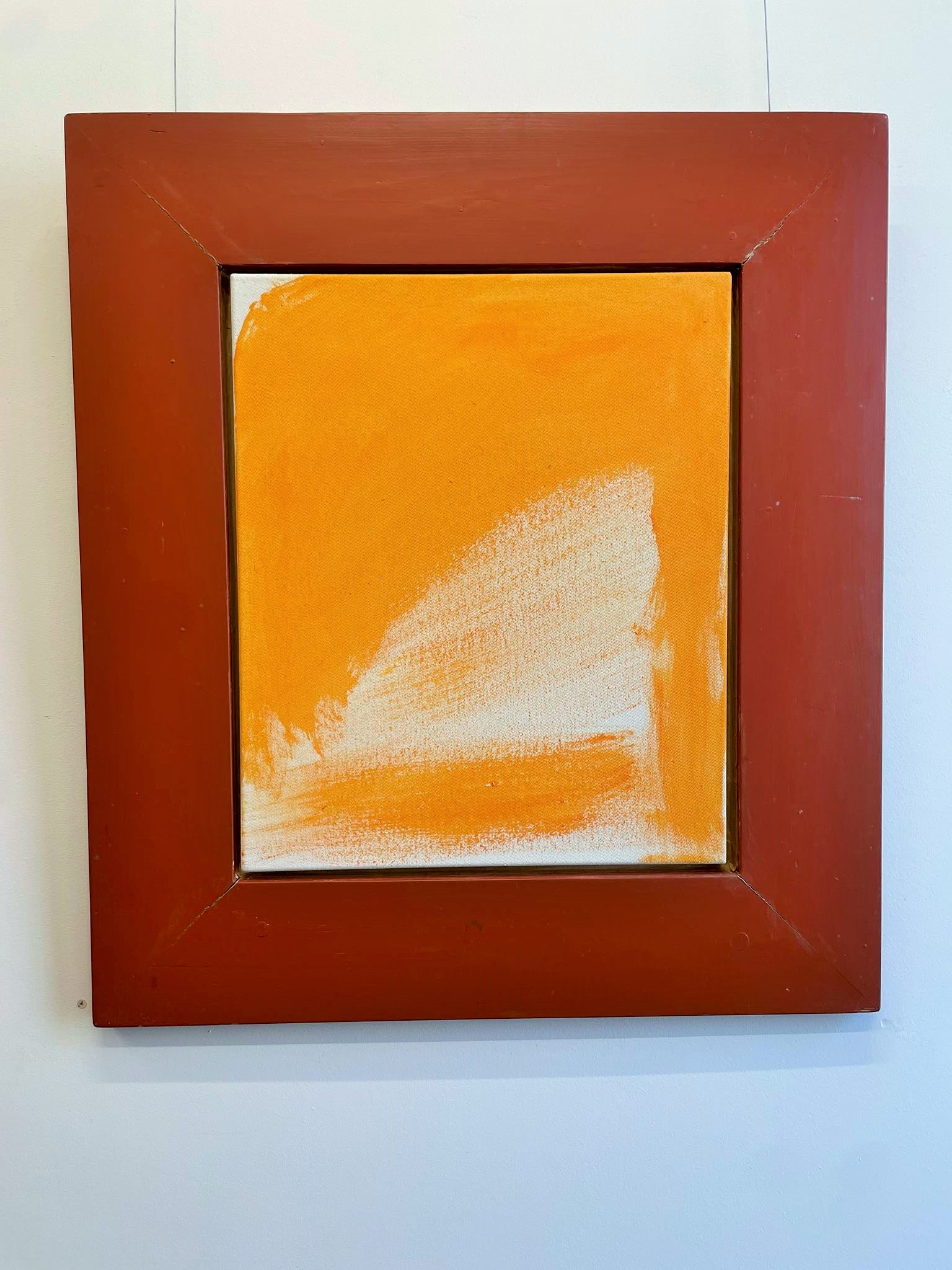
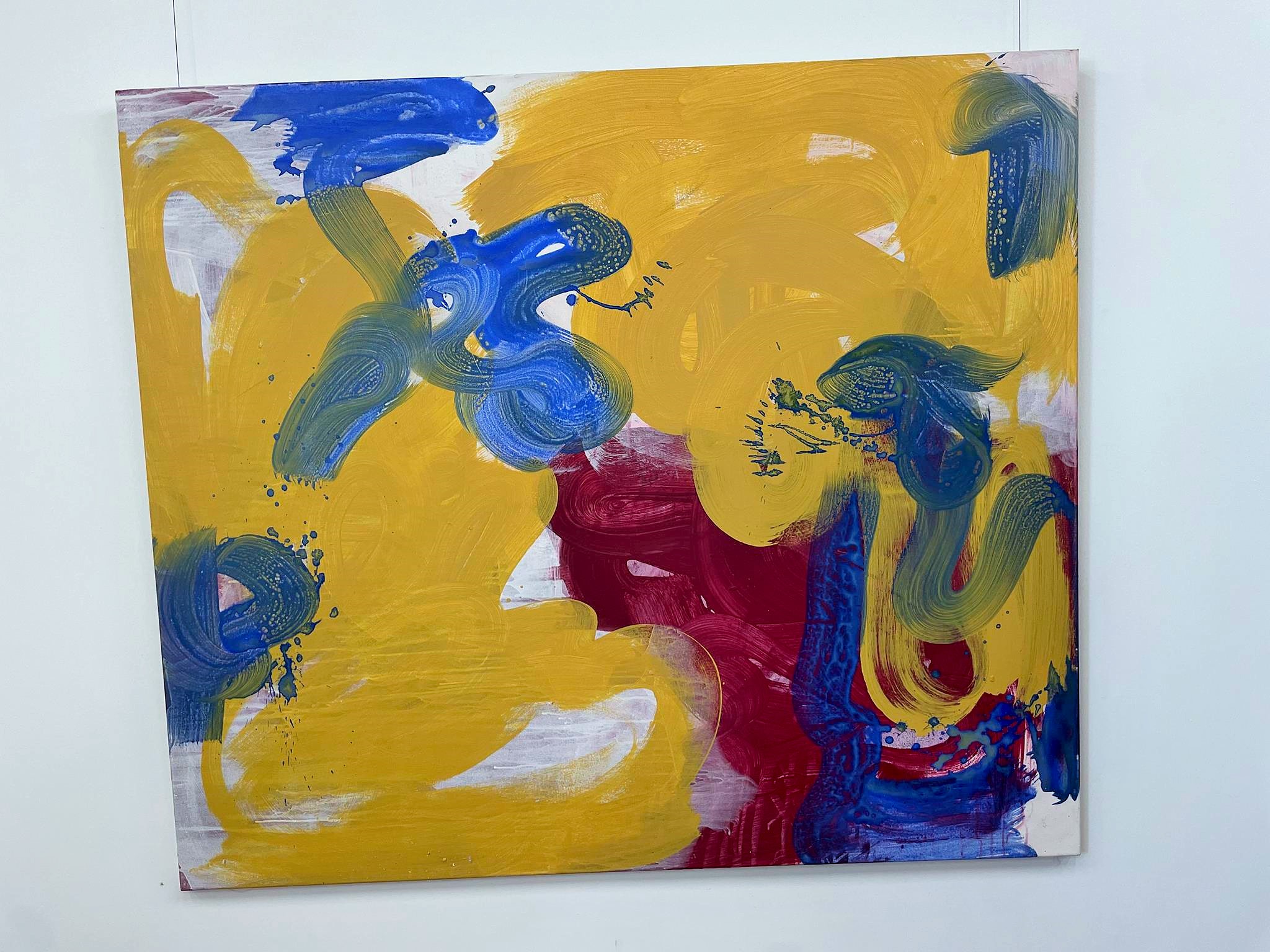
With the ochre-colored tempera painting „North Beach (Oahu)“ from 1997, Heil lands on abstraction. After a long period of practice, he appears to have placed it in three or four brushstrokes, filling the picture space, in the 48 x 40 cm portrait format, which flows into the extra-wide dark brown frame. Picture and frame are interdependent. They belong together. „The New Frontier (for H.F.)“ from 2008, under „Floraison des éclairs,“ transfers the train, photographed in Portugal and used for Western scenes in Western films, onto the cotton using an emulsion process. In „Brothersisterfather“ from 2009, Heil starts with a black-and-white newspaper photograph of Pablo Picasso’s children Paloma and Claude. He wets it, thereby blackening the photograph, and folds it like a curtain. On the computer, he collages Pablo Picasso’s eye into the original photo, transforming the black dot pattern of the photograph into a red-yellow-blue one. The original is then printed on canvas using a kind of spray-paint technique.
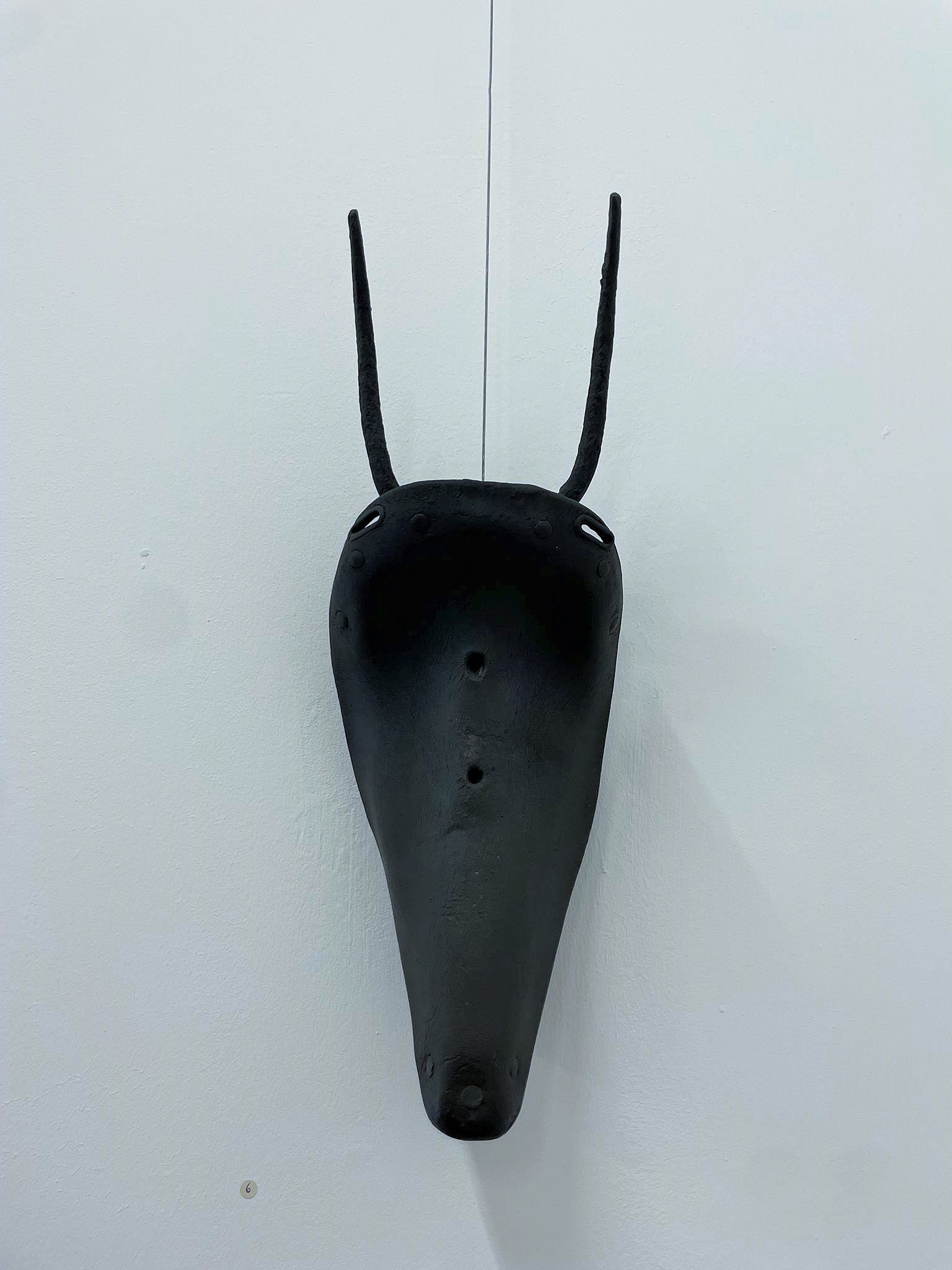
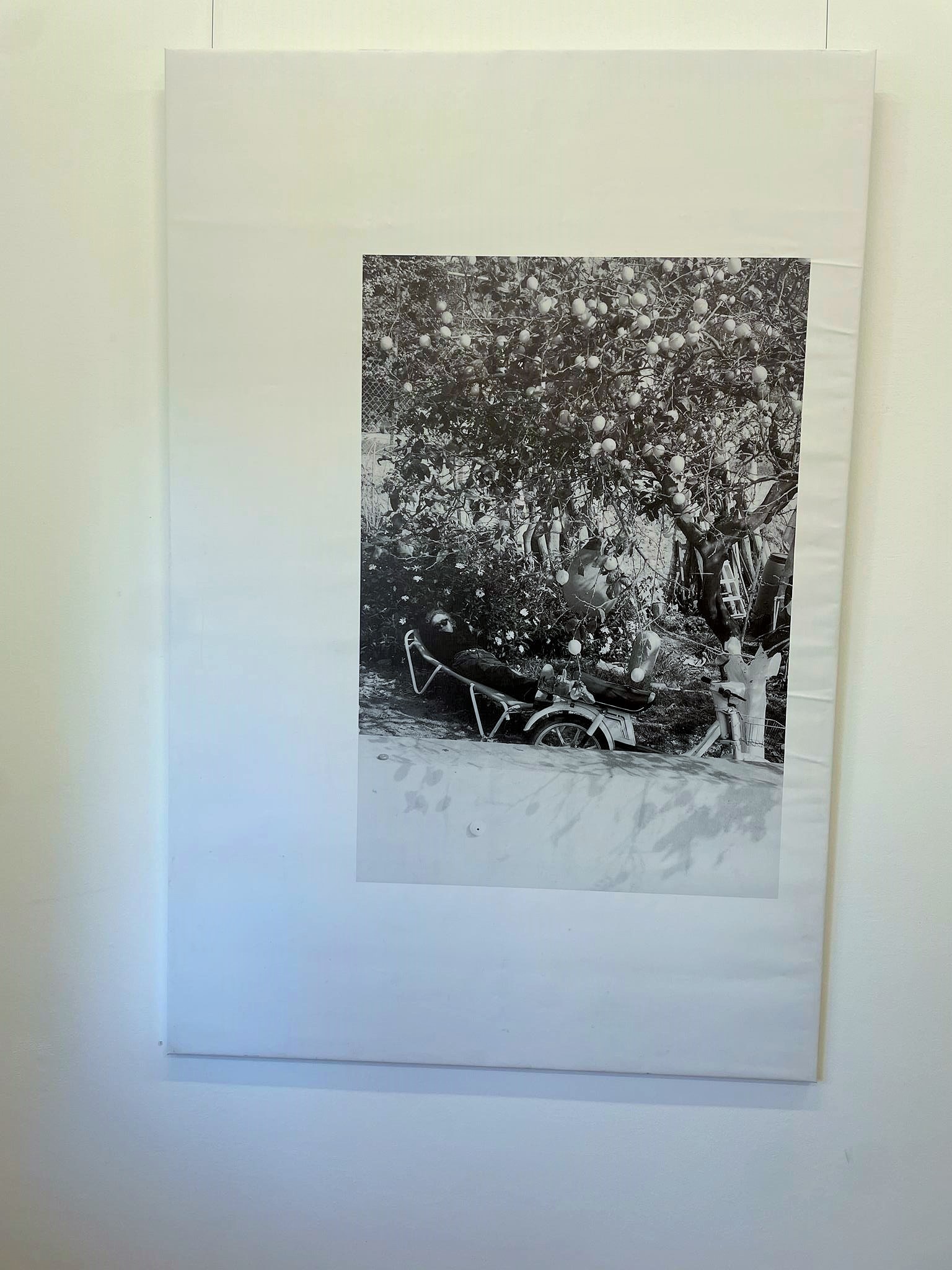
The sculpture „La petite chèvre“ (The Little Goat), composed of a fork, a two-pronged fork, and a saddle, references Picasso’s „Tête de taureau,“ the bull’s skull, which he invented in 1941 and cast in bronze in 1942. The skull was assembled from a bicycle saddle and handlebars. In the Surrealist scene, this sculpture has become a symbol of the gliding back and forth between worlds. Axel Heil found and purchased his goat’s head at a flea market in Paris. His little goat illustrates another variant of artistic transfer. Axel Heil himself would be best advised to explain how the photograph of the Mallorcan lemon tree came to be on the white plastic sheet of the work „Lemon Tree“ from 1995/2021, as well as the questions of what distinguishes his work as a professor for experimental transfer processes from his work as a professor for artistic research, and what interests him so much about Aby Warburg’s Mnemosyne that he has devoted over a decade of his artistic and professorial life to it. – Curator Helmut Albert Müller
INFOTHEK
 Artist: AXEL HEIL
 Zentrum für Kunst und Medien: https://zkm.de/de/person/axel-heil
Künstlerbund Baden-Württemberg: https://kuenstlerbund-bawue.de/profil/Axel.Heil
Biography: http://www.galeriemargithaupt.de/B_heil.html
Curator: HELMUT ALBERT MÜLLER
Website: https://helmut-a-mueller.de
 Facebook: https://www.facebook.com/profile.php?id=100005265189390
 Gallery: NORDHEIMER SCHEUNE
Website: https://www.nordheim.de/website/de/freizeit/tourismus/kultur/nordheimer-scheune
 Scheune Main Page: https://vagabundler.com/germany/streetart-map-heilbronx/nordheimer-scheune
 Photographer: ANTON MICHELS
Website: http://banater-schwaben-heilbronn.de
Facebook: https://www.facebook.com/toni.michels.7
 Instagram: https://www.instagram.com/tonimichels
RECOMMENDABLE GRAFFITI SPOTS IN HEILBRONX
>>> Maschinenfabrik Yard <<<
>>> Maschinenfabrik Parking <<<
>>> Neckarhalde <<<
>>> Edison Graffiti Walls <<<
>>> Erwin Fuchs Skatepark <<<
>>> Stedinger 1 <<<
>>> Sülmer 68 <<<
>>> Hasengasse 2 <<<
RECOMMENDABLE EXHIBITION SPACES
>>> Nordheimer Scheune <<<
>>> Kunstverein Heilbronn <<<
>>> Altes Rathaus Leingarten <<<
MORE STREETART MAPS FROM GERMANY
>>> Streetart Map Berlin <<<
>>> Streetart Map Braunschweig <<<
>>> Streetart Map Bremerhaven <<<
>>> Streetart Map Dortmund <<<
>>> Streetart Map Dresden <<<
>>> Streetart Map Frankfurt <<<
>>> Streetart Map Hamburg <<<
>>> Streetart Map Insel Poel <<<
>>> Streetart Map Hannover <<<
>>> Streetart Map Heilbronn <<<
>>> Streetart Map Munich <<<
>>> Streetart Map Rheine <<<
>>> Streetart Map Wiesbaden <<<
MORE ARTICLES ABOUT GERMANY
>>> Graffiti Mag MAINSTYLE <<<
>>> Stencil Artist TONA <<<
>>> Das Dreckige Dutzend <<<
>>> Sculptor Pit Ruge <<<
>>> Dosenkunst – Jörg Rudolph <<<
>>> Sprayer CESAR ONE <<<
>>> Filmmaker Bernd Lützeler <<<
>>> Lupus Alpha – Calligraffiti <<<
>>> Firedancer Cassiopeia <<<
>>> Collagist DeePee <<<
>>> Sprayer ARTMOS4 <<<
>>> Painter Serkan Goeren <<<
>>> ElectroClassics – THE OHOHOHS <<<
>>> Painter Frau Fenster <<<
>>> Photographer Niko Neuwirth <<<
>>> Performance – Dirk Baumanns <<<
>>> Graffiti Artist RAWS <<<
>>> Hannover Glocksee <<<
>>> TO5Z <<<
>>> Andreas Weingärtner <<<
>>> Sprayer BERK <<<
>>> Nashi Young Cho Jazz <<<
>>> AnniMalisch Techno <<<
>>> Tula Trash’s Trashland <<<
>>> Performer Tamara Zippel <<<
>>> Painter Angelika Grünberg <<<
>>> Kreativnomade Sam Khayari <<<
>>> Toy of the Ape <<<
>>> Painter Jay Gnomenfrau <<<
>>> Photographer Tom Hoenig <<<
>>> Frankfurt – Pillar Paradise <<<
>>> Graffiti Weißwasser N3M <<<
>>> Bochum Kings Wall <<<
>>> Asylum Domjüch – Artbase <<<
>>> CD Kaserne Celle <<<
>>> Combo Karlsruhe <<<
>>> Hidden Treasure Festival Bremen <<<
>>> Urban Art Düsseldorf <<<
>>> Bergwerk Grube Wohlfahrt <<<
>>> Völklinger Hütte <<<
>>> Summa Madnezz <<<
>>> IBUG Flöha <<<
>>> Fritten Freddie <<<
>>> Dave the Chimp <<<
>>> AJZ Talschock Chemnitz <<<
>>> Abandoned N*Dorphinclub <<<
>>> Wolfsburg Graffiti Jam <<<
>>> Hola Utopia! Festival <<<
>>> Braunschweig Westbahnhof <<<
>>> Fürth – Europakanal <<<
>>> Hamburg – Heimfeld Hall <<<
>>> Dortmund – Speicher Hall <<<