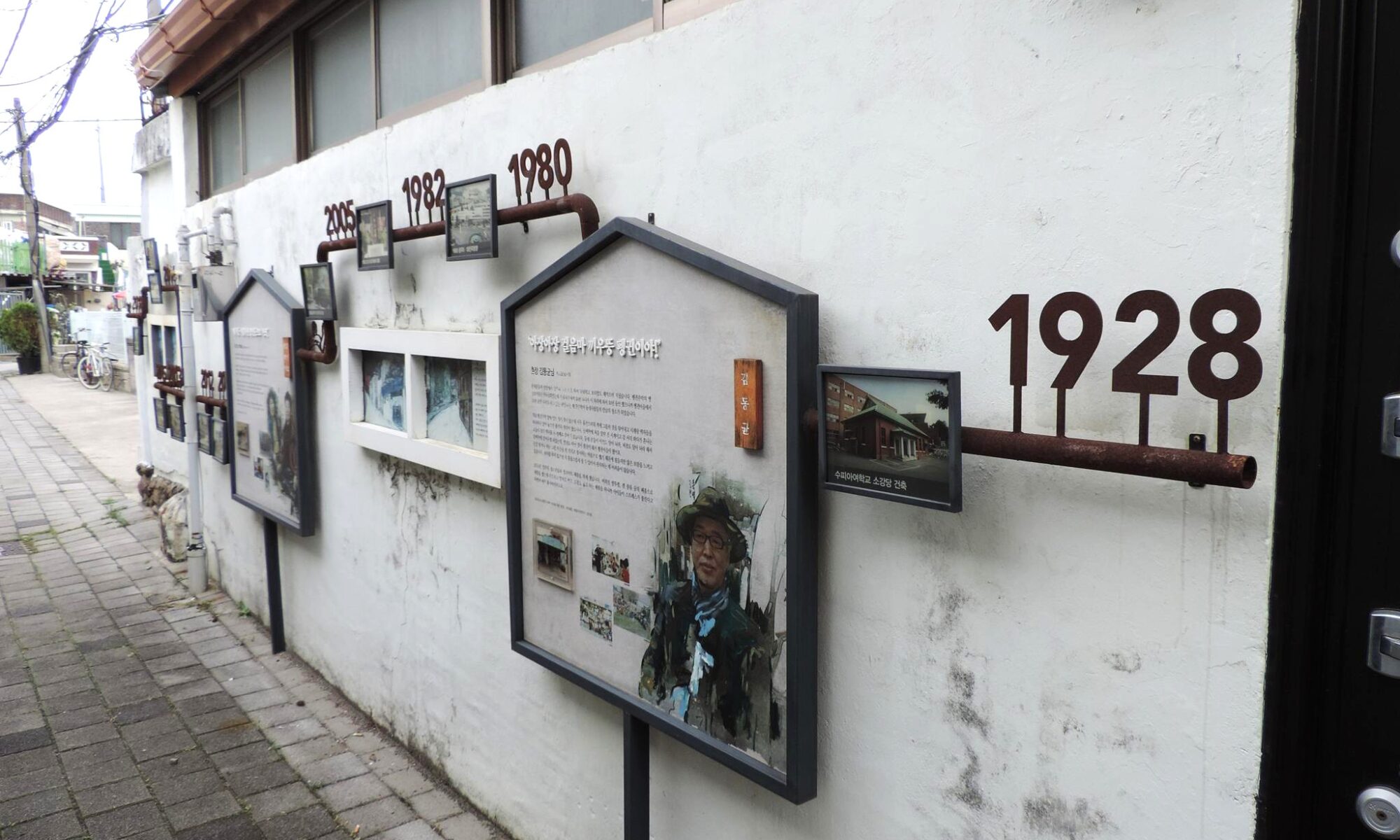
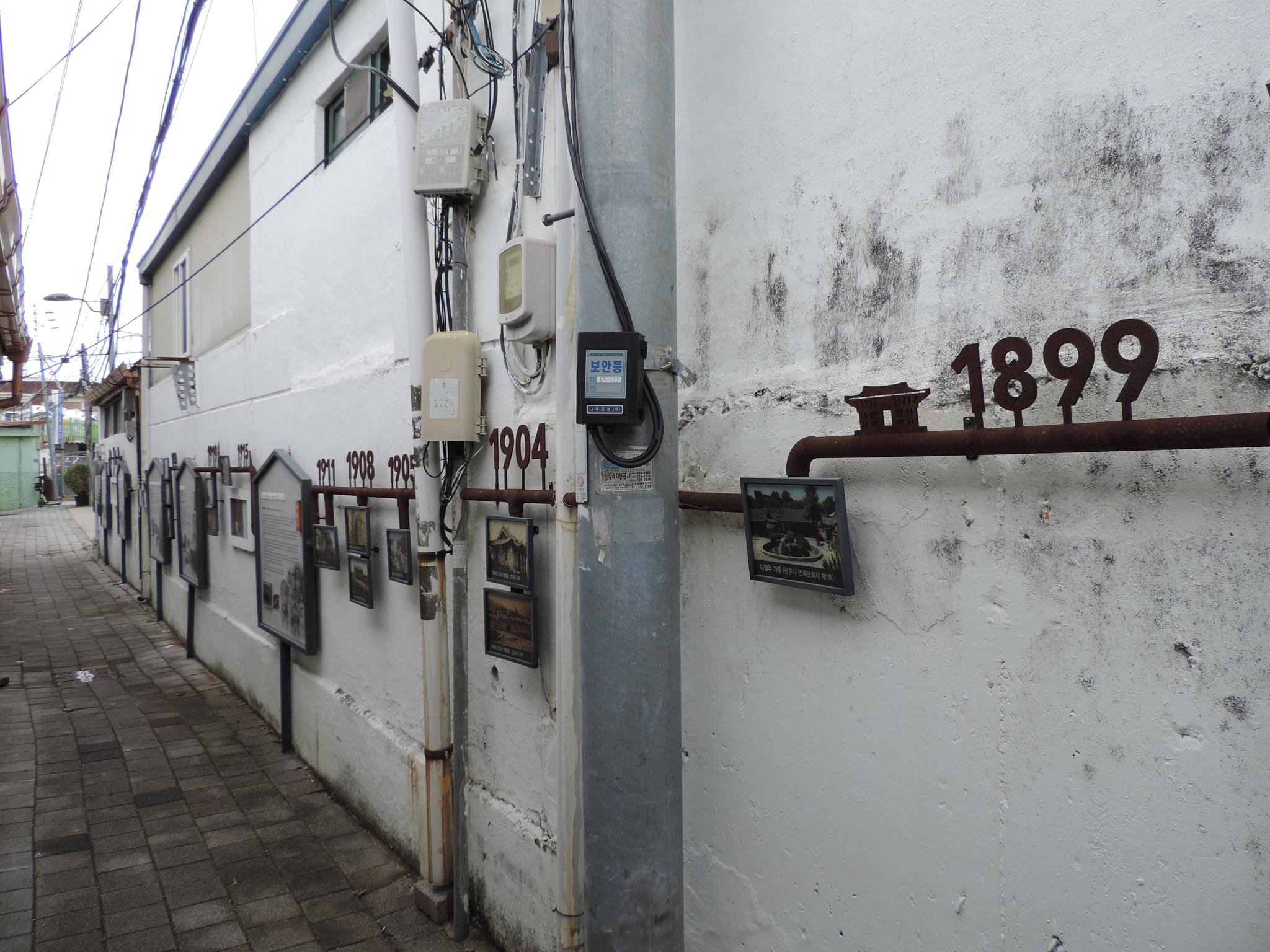
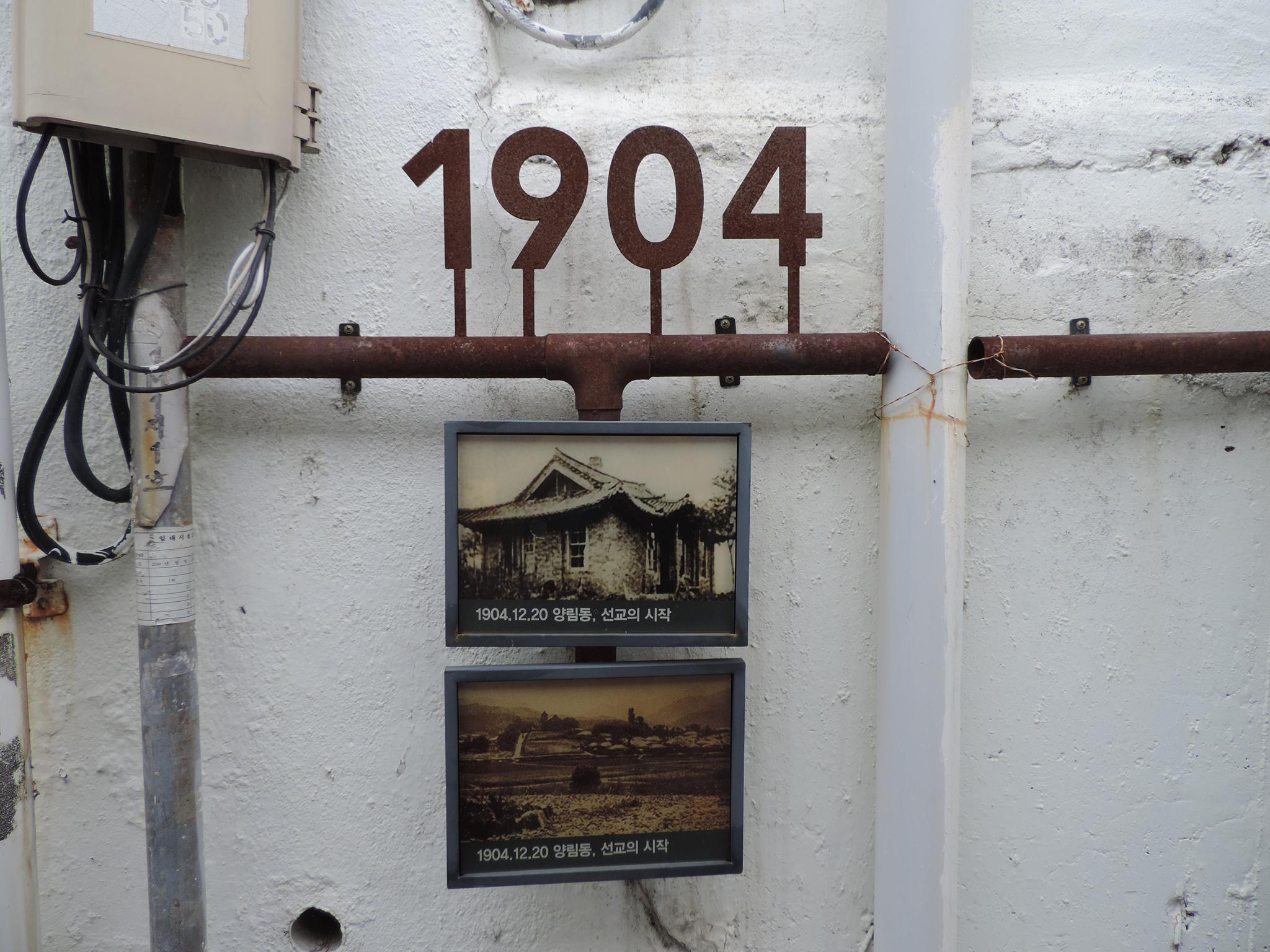
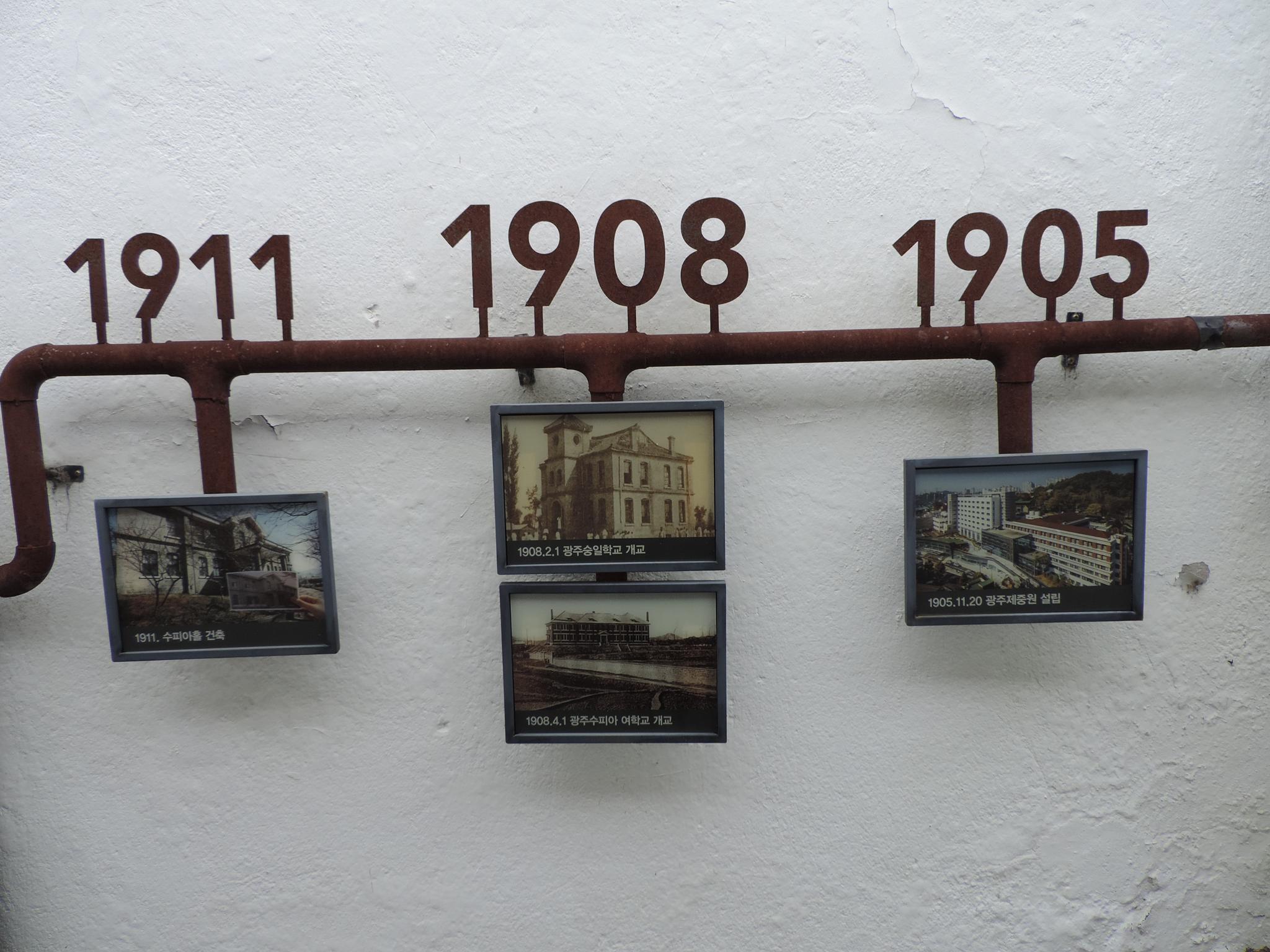
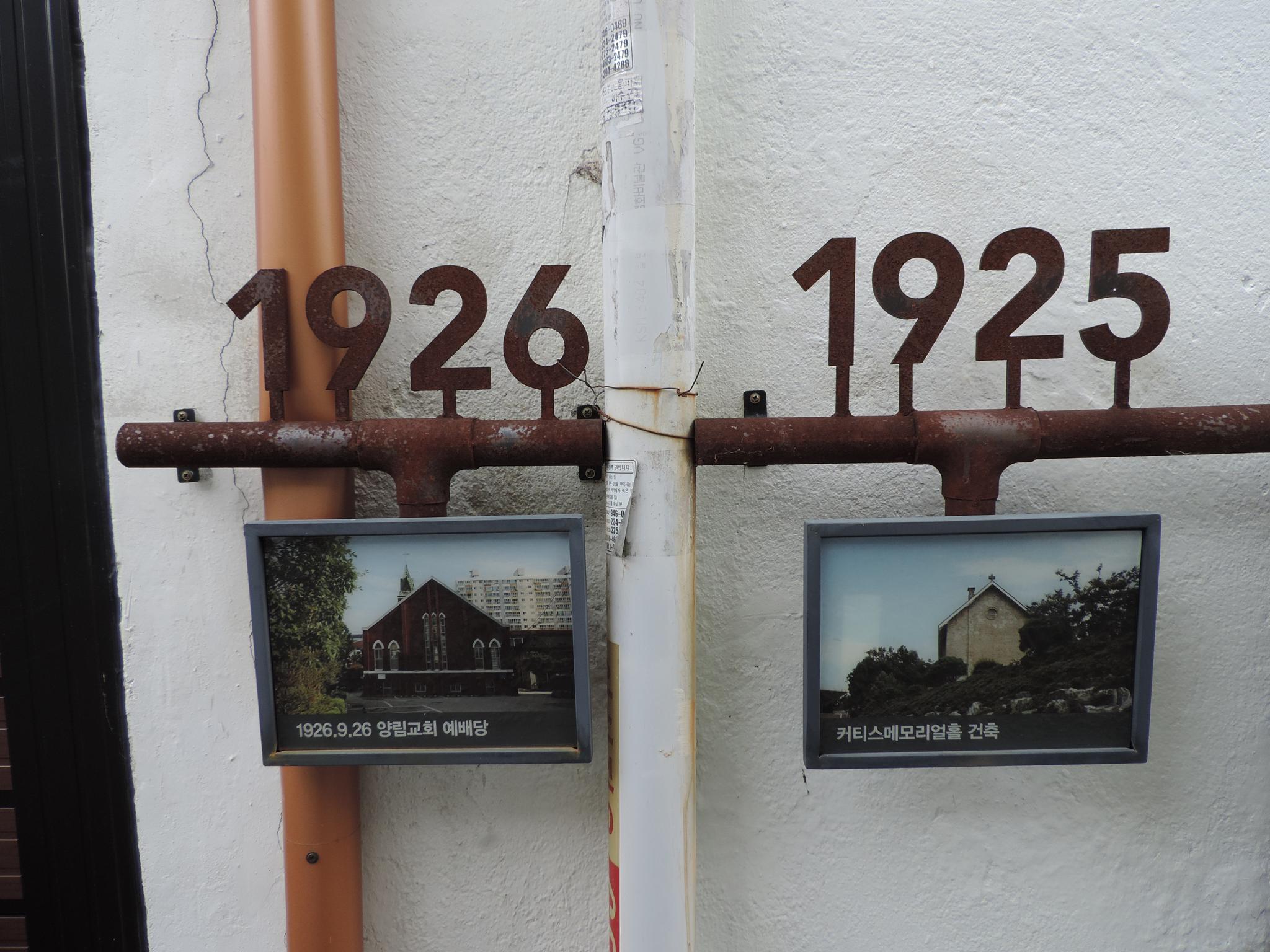
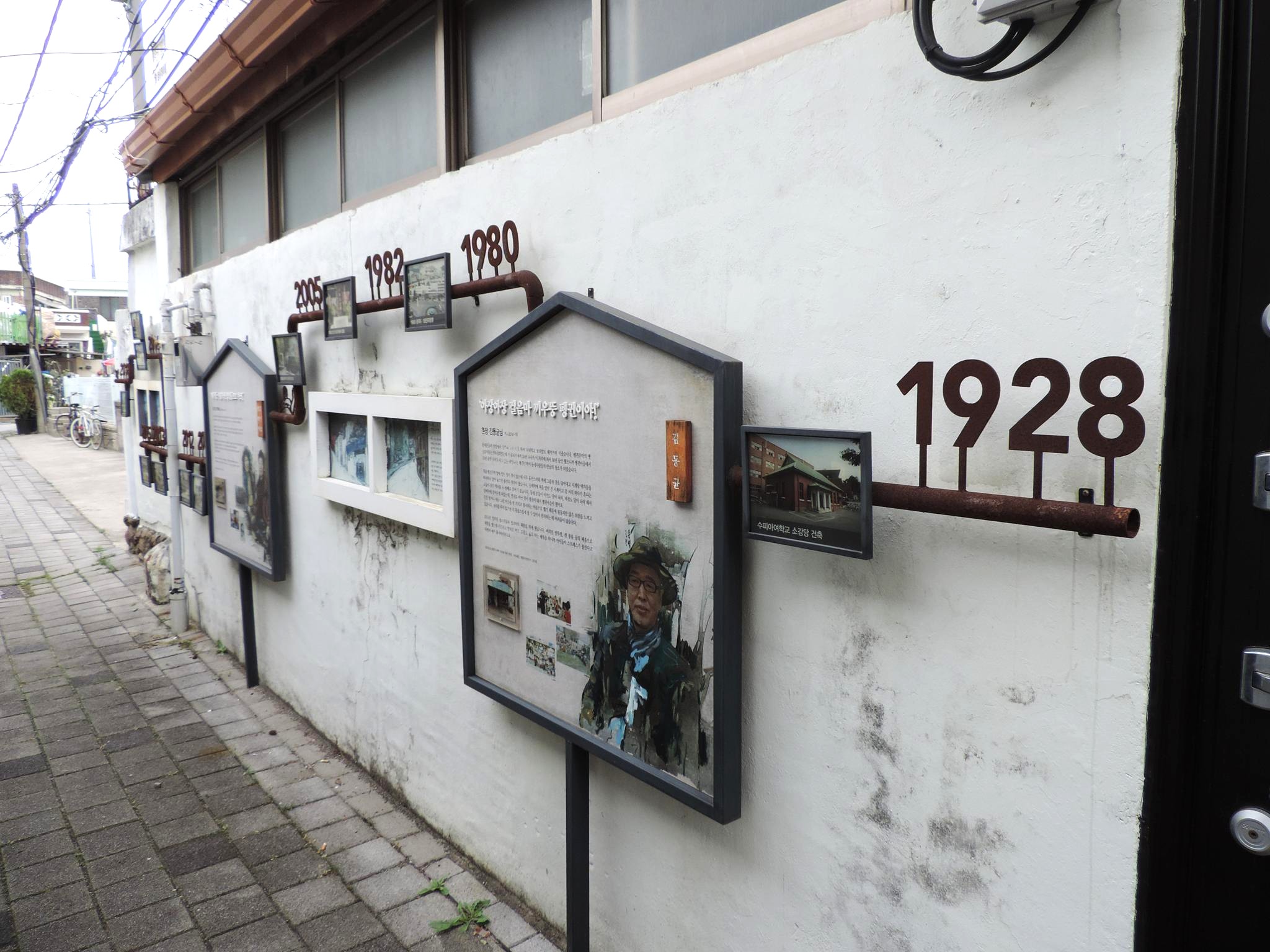
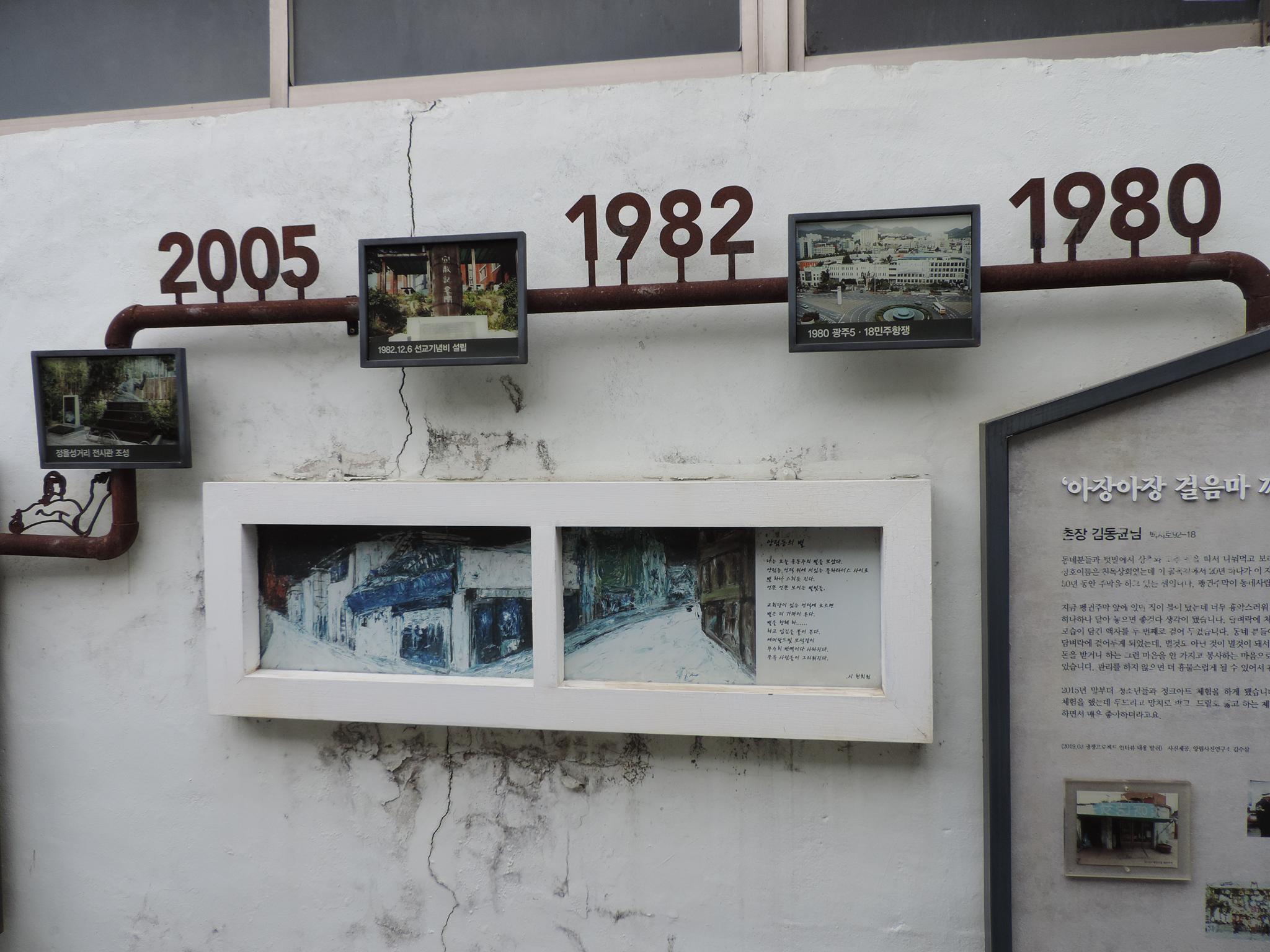
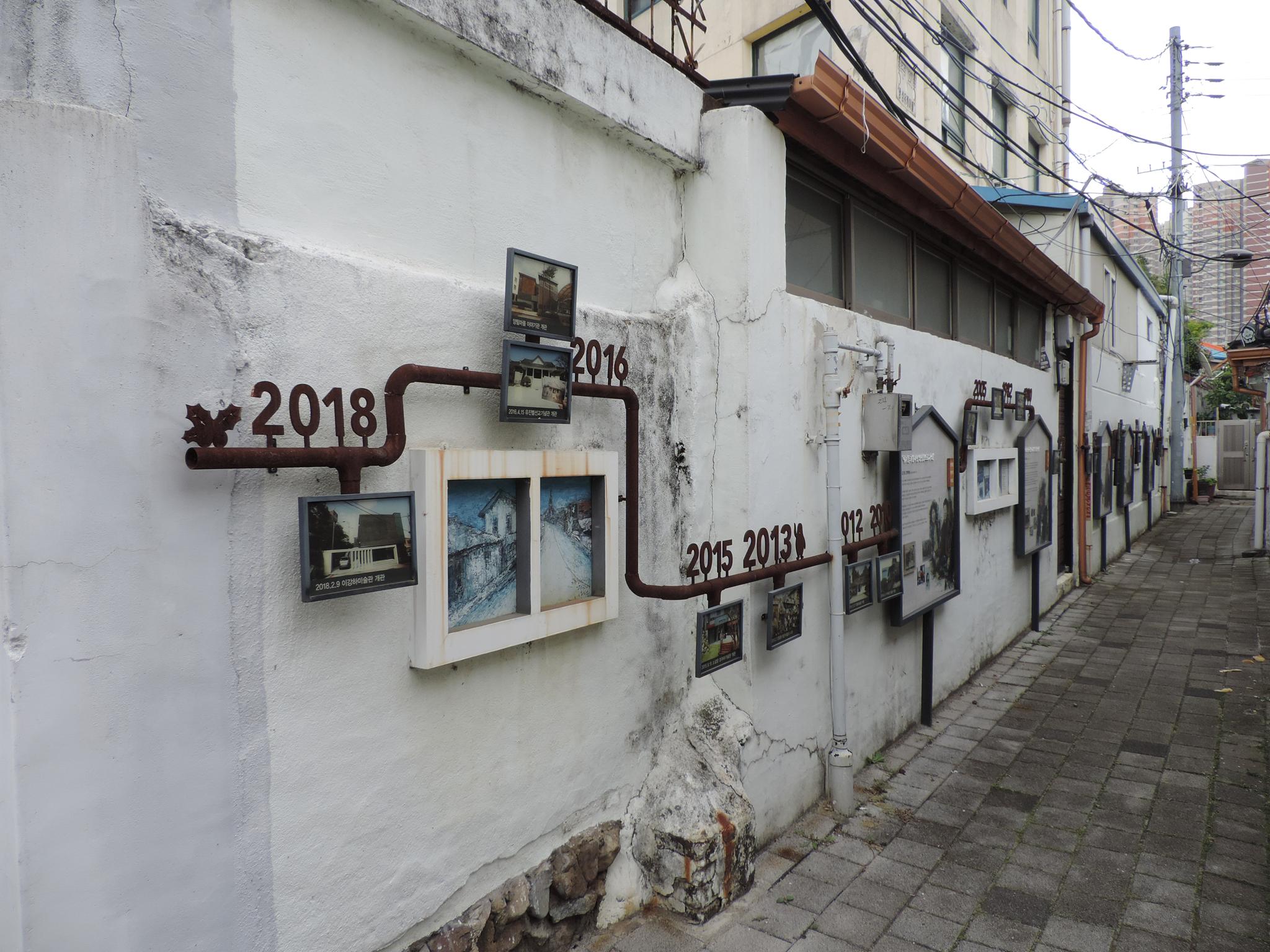
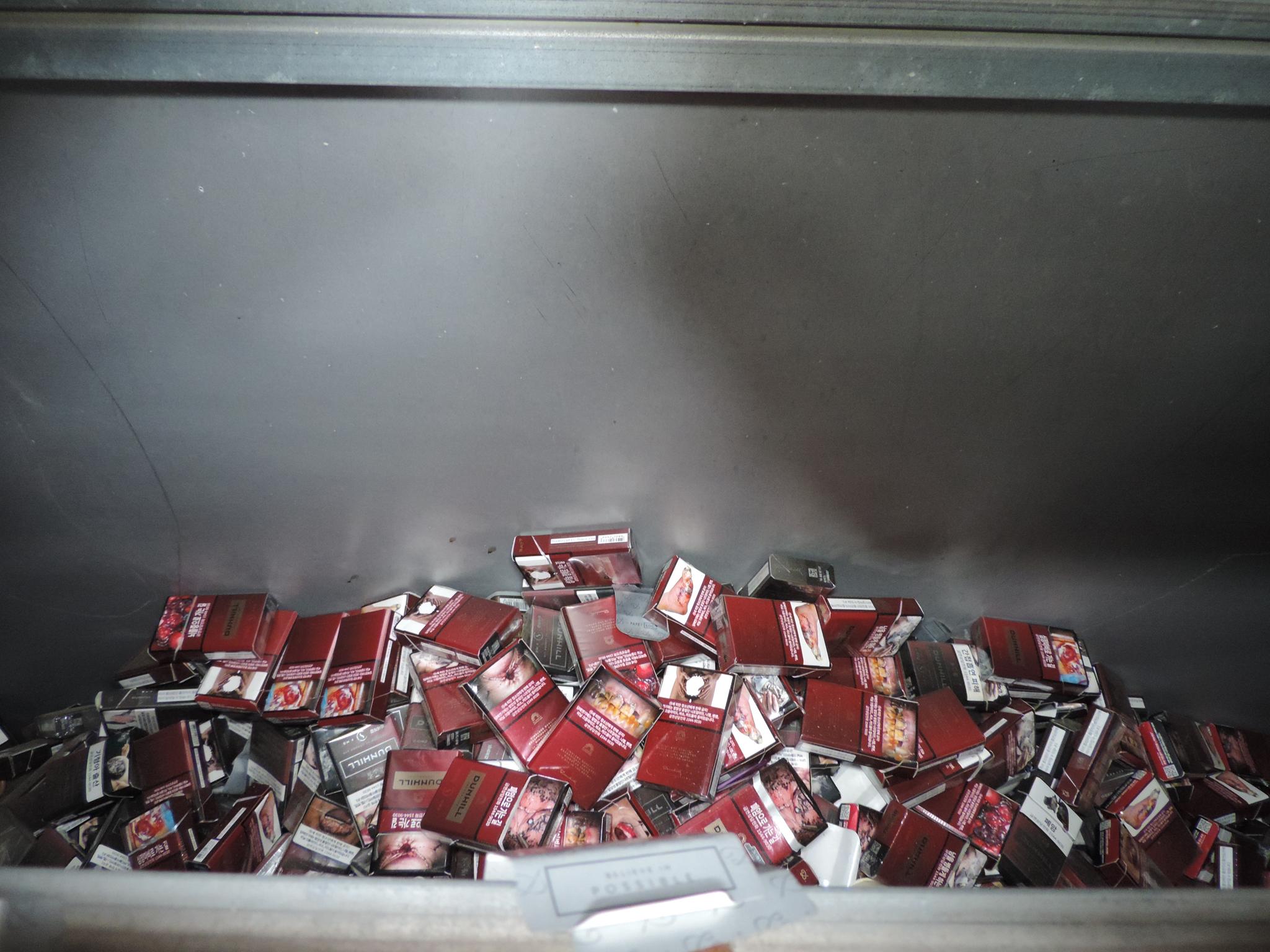
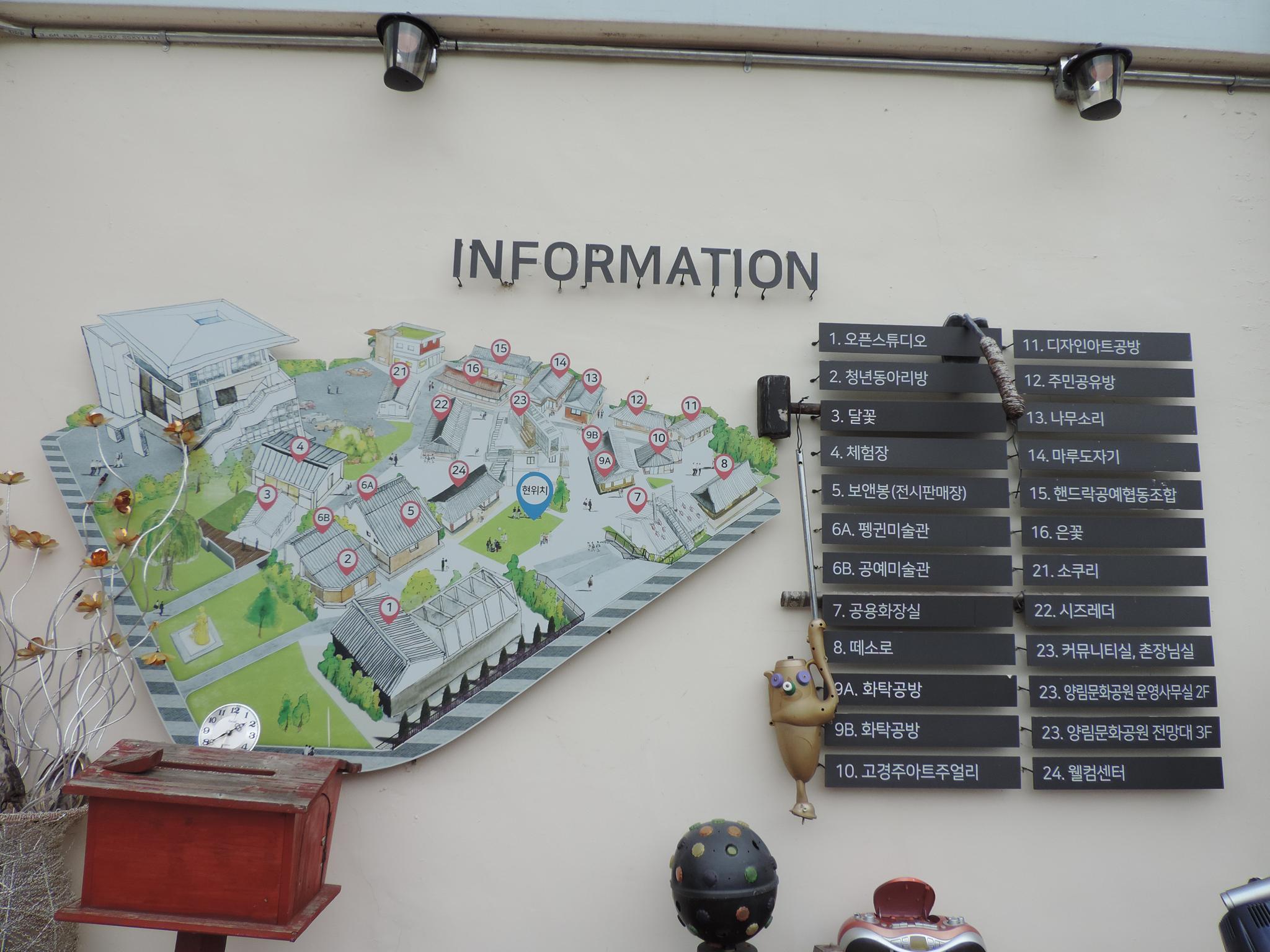
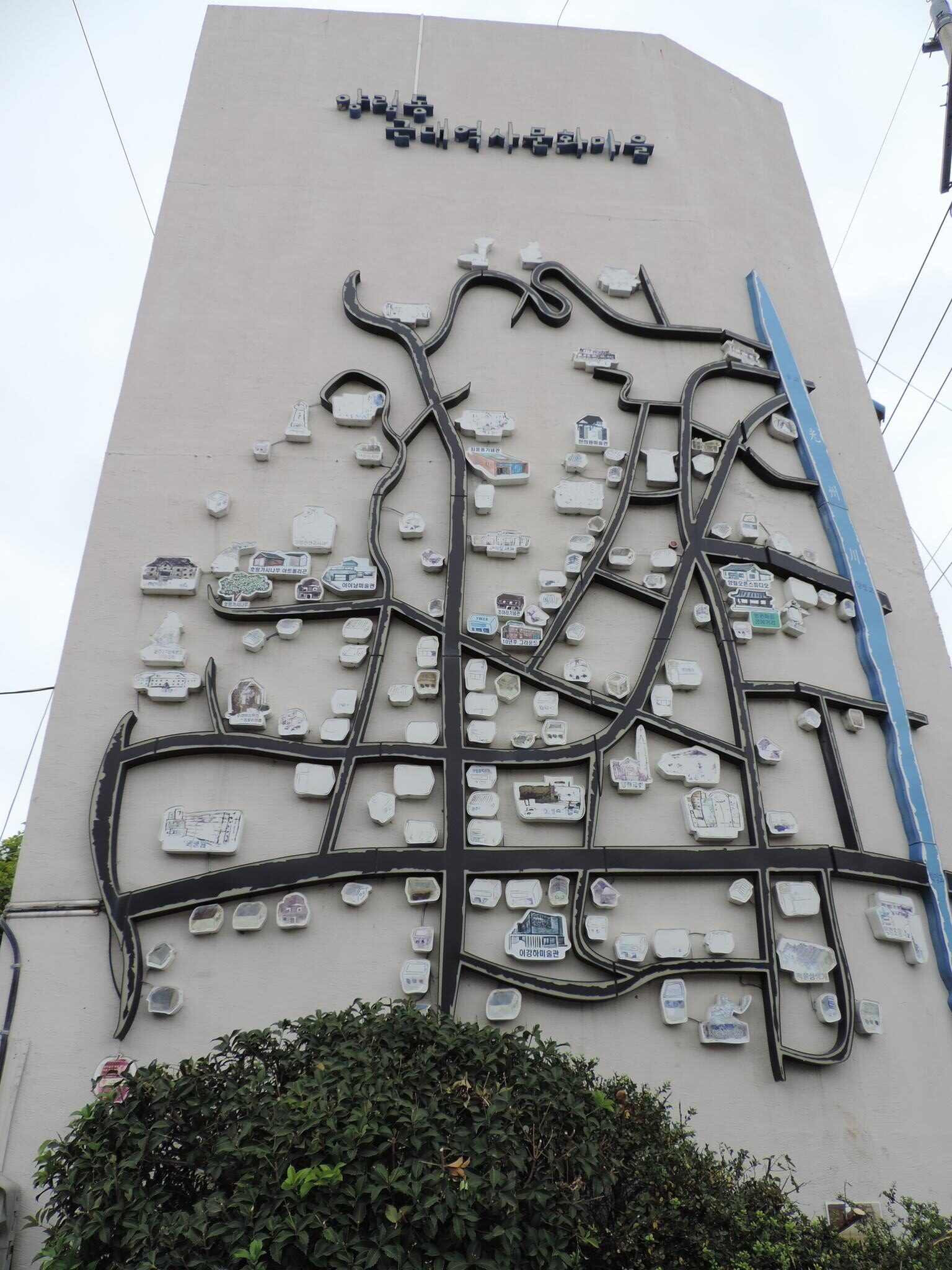
In the alleys of Penguin Village, you’ll also find plenty of information about the area’s history, its origins, and the artists and notable figures who have shaped the neighborhood. In their honor, commemorative plaques are often displayed, featuring details to those people or images of their works. We’ve also included other direction elements here, such as information boards and guiding signs. There are also several works that artistically depict the neighborhood map; one particularly striking piece is as large as an entire house. And a small miniature house depicts a building as it appeared in the past; it currently serves as a collection point for cigarette packs. It’s all part of a residential neighborhood that’s visually engaging yet multifunctional. More details will follow shortly. Check out as well the several other creative categories via the main page of the Gwangju Penguin Village.
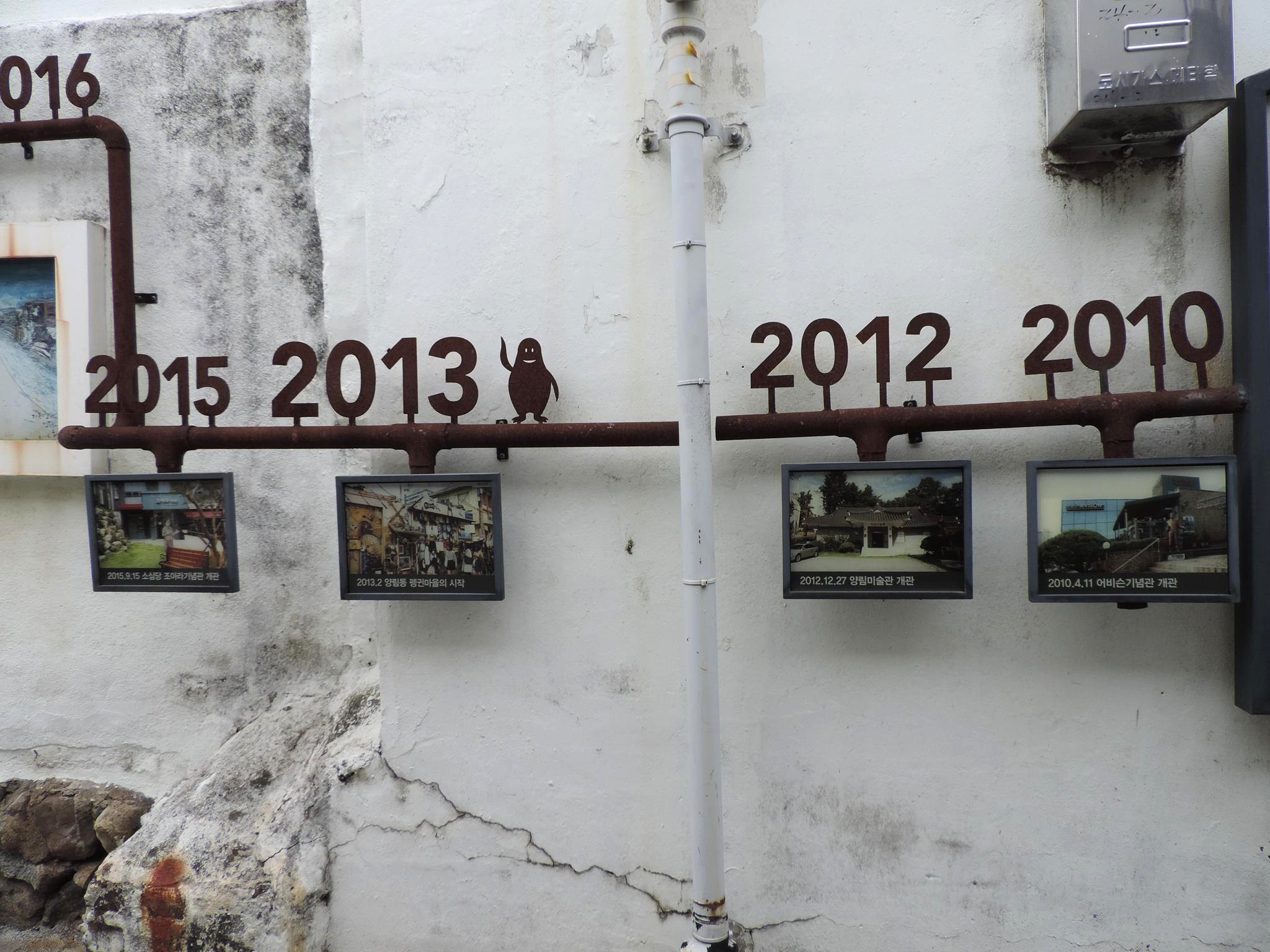
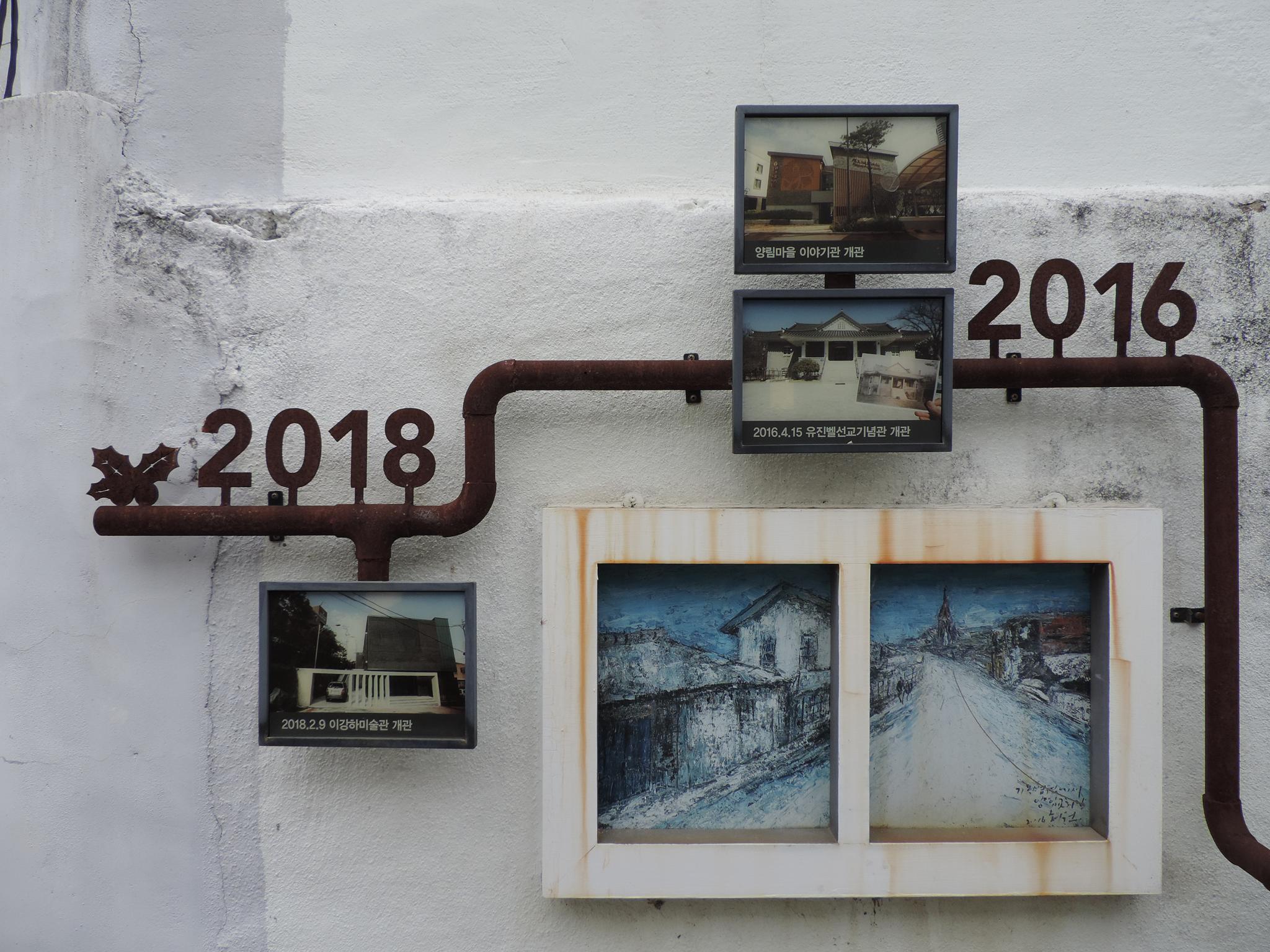
Village History Timeline
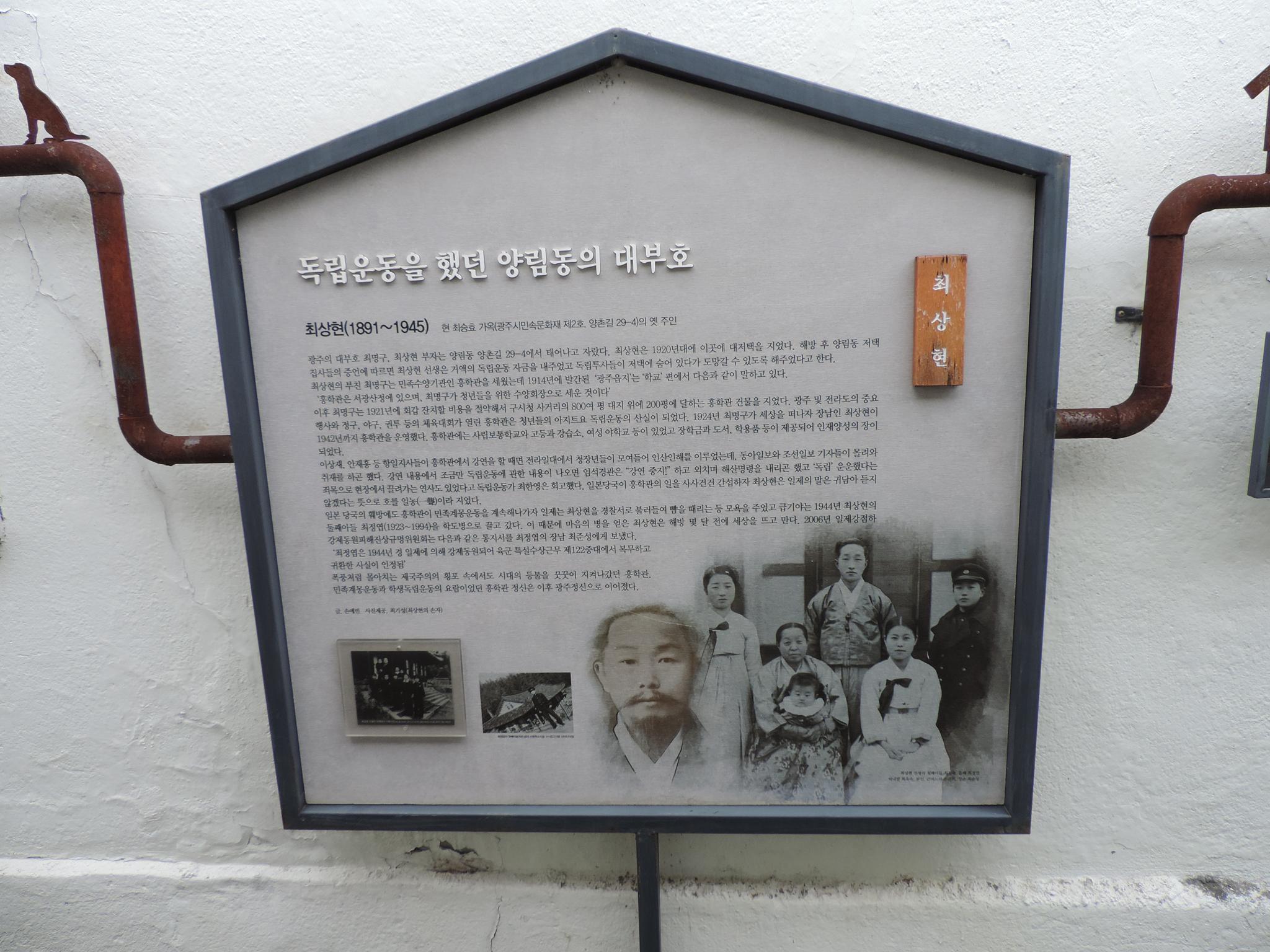
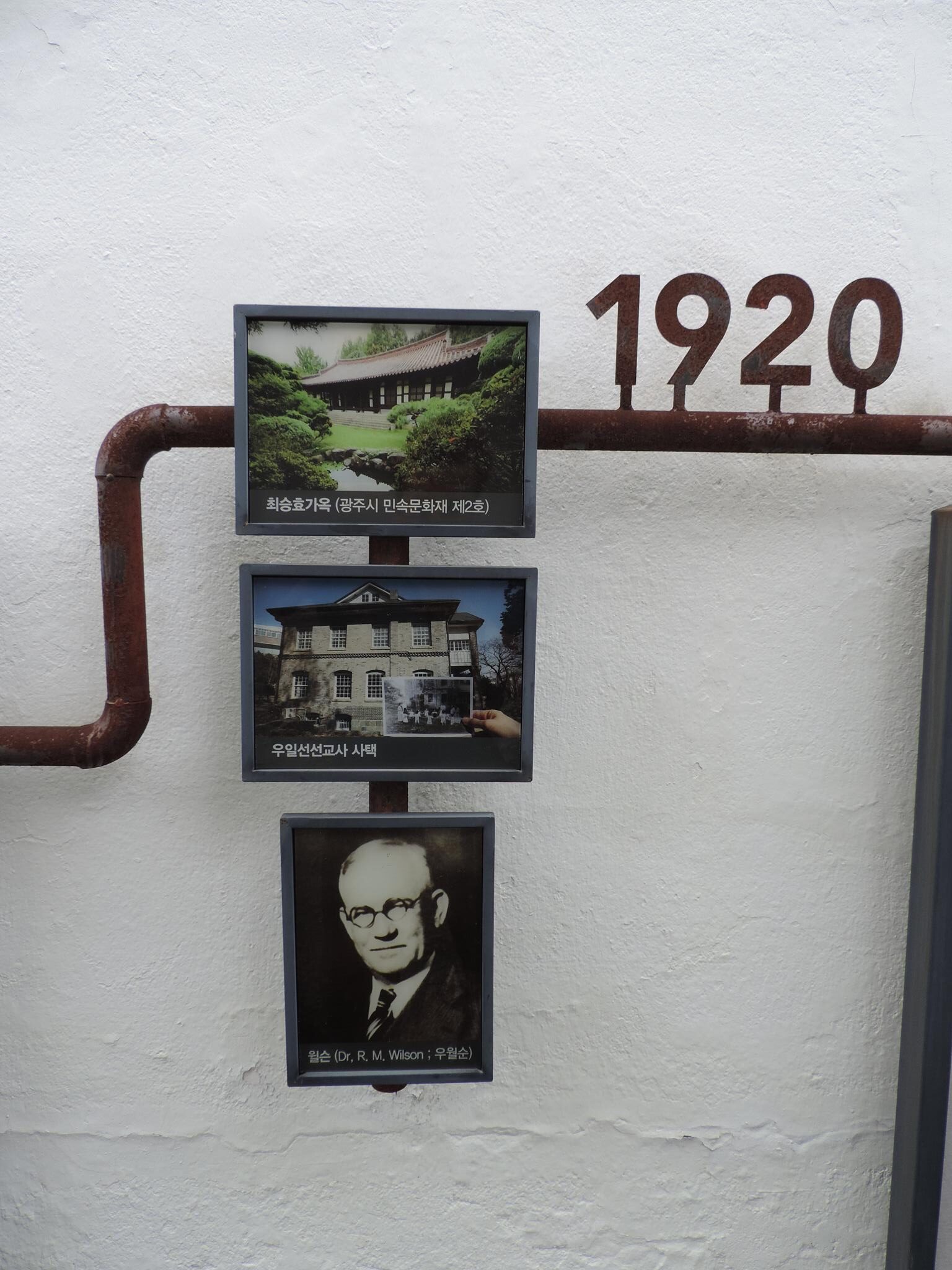
Choi Sang-hyun was a wealthy figure in Yangnim-dong who participated in the independence movement. He lived from 1891 till 1945 and was the former owner of the current Choi Seung-hyo House at Gwangju Folk Cultural Property No. 2, 29-4 Yangchon-gil. Choi Myeong-gu and Choi Sang-hyun, father and son and prominent figures in Gwangju, were born and raised at 29-4 Yangchon-gil in Yangnim-dong. Choi Sang-hyun built a grand mansion here in the 1920s. According to testimonies from the butlers of the Yangrim-dong mansion after liberation, Mr. Choi Sang-hyun provided substantial funds for the independence movement and allowed independence fighters to hide in the mansion until they could escape.
Choi Sang-hyun’s father, Choi Myeong-gu, founded Heunghakgwan, an institution for national education. The 1914 edition of the Gwangju Eupji or Gwangju County Gazetteer states the following in its ‚Schools‘ section: “Heunghakgwan is located at Seogwangsanjeong and was established by Choi Myeong-gu as a training center for young people.” Later, in 1921, Choi Myeong-gu saved the money intended for his 60th birthday celebration and used it to construct a 200-pyeong Honghakgwan building on a plot of land spanning approximately 800 pyeong at the intersection near the old city hall.
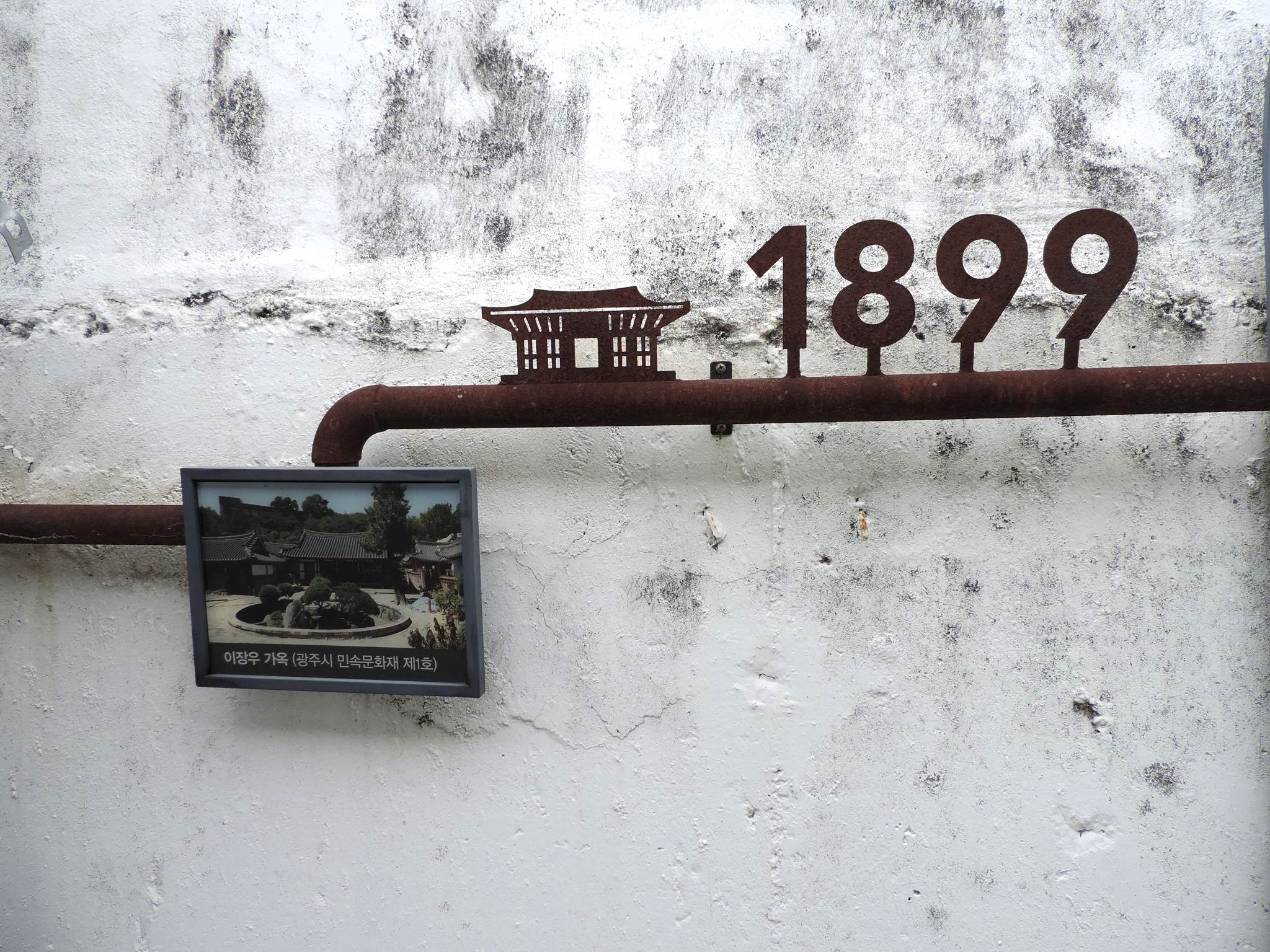
Honghakgwan, where major events in Gwangju and Jeolla Province as well as athletic competitions such as tennis, baseball, and boxing were held, became a gathering place for young people and a cradle of the independence movement. When Choi Myeong-gu passed away in 1924, his eldest son, Choi Sang-hyeon, managed Honghakgwan until 1942. Honghakgwan housed a private elementary school, a high school preparatory course, and a night school for women, providing scholarships, books, and school supplies, making it a hub for nurturing talent.
Whenever anti-Japanese activists such as Lee Sang-jae and Ahn Jae-hong gave lectures at Honghakgwan, young people from across the Jeolla region would flock to the venue, creating a massive crowd, and reporters from the Dong-A Ilbo and Chosun Ilbo would often gather to cover the events. Independence activist Choi Han-young recalled that if even a hint of the independence movement came up in a lecture, the police officer on duty would shout, “Stop the lecture!” and order the crowd to disperse; some speakers were even dragged away on the spot on charges of “mentioning independence.” As the Japanese authorities interfered in every aspect of Heunghakgwan’s affairs, Choi Sang-hyun adopted the pen name Ilnong to signify his refusal to heed the Japanese regime’s demands.
When Honghakgwan continued its national enlightenment movement despite the Japanese authorities’ obstruction, the Japanese regime summoned Choi Sang-hyun to the police station, where they humiliated him by slapping him across the face. Eventually, in 1944, they forcibly conscripted Choi Sang-hyun’s second son, Choi Jeong-yeop (1923–1994), as a student soldier. As a result, Choi Sang-hyun developed a mental illness and passed away a few months before liberation.
In 2006, the Commission for the Investigation of the Truth Regarding Victims of Forced Mobilization under Japanese Colonial Rule sent the following notification to Choi Jeong-yeop’s eldest son, Choi Jun-seong: “It is acknowledged that Choi Jeong-yeop was forcibly mobilized by the Japanese imperialists around 1944, served in the 122nd Special Waterborne Service Company of the Army, and returned.” Honghakgwan steadfastly upheld the torch of the era even amidst the storm of imperialist oppression. The spirit of Honghakgwan, the cradle of the national enlightenment movement and the student independence movement, later evolved into the Gwangju Spirit. – Text by Son Ye-in; Photos provided by Choi Ki-sung, grandson of Choi Sang-hyun
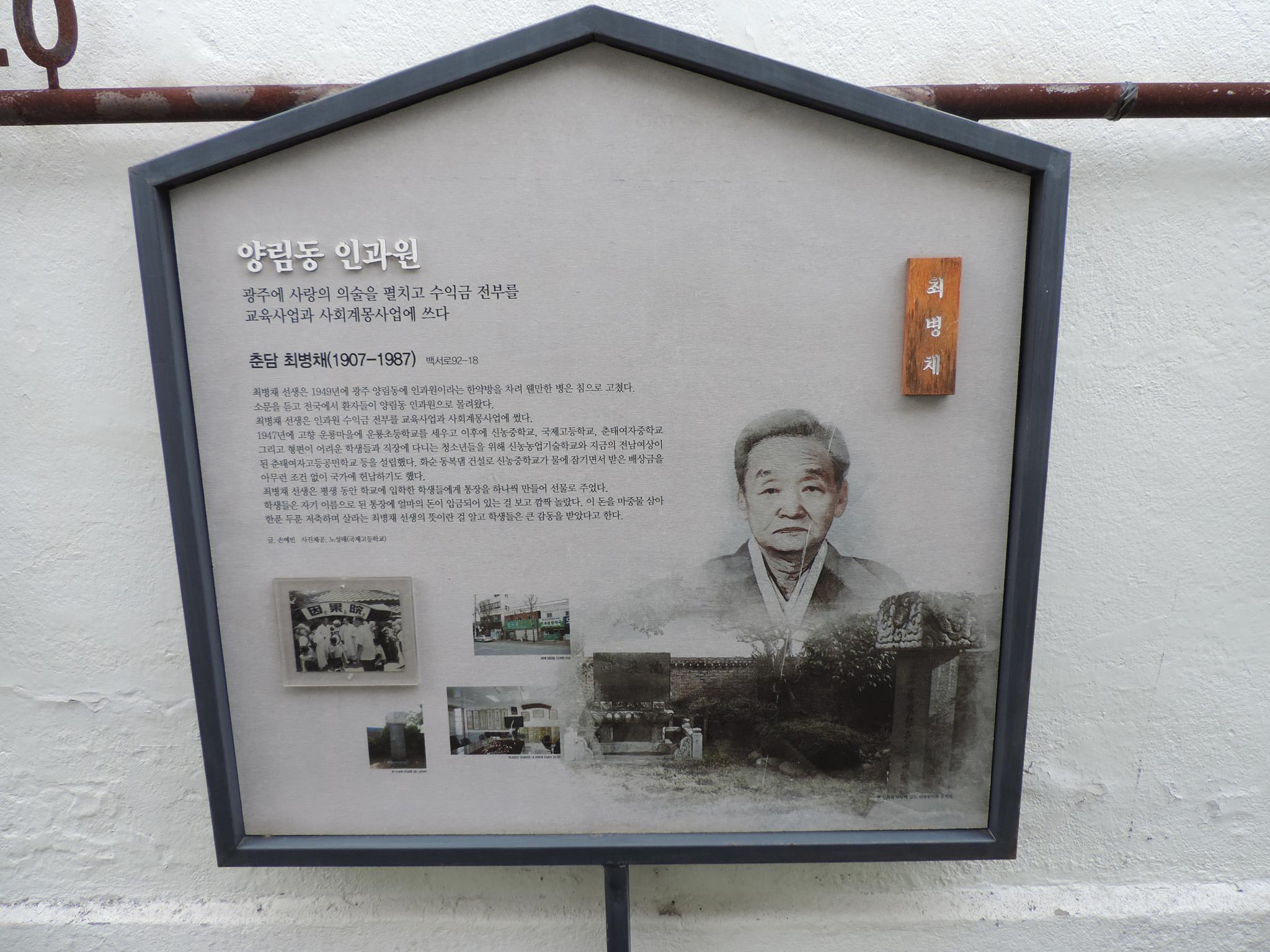
In-gwa-won in Yangnim-dong. Practicing medicine with compassion in Gwangju and dedicating all proceeds to educational and social enlightenment initiatives Chun-dam Choi Byeong-chae (1907–1987) Baekseo-ro 92-18. In 1949, Dr. Choi Byeong-chae opened a traditional Korean medicine clinic called Ingawon in Yangnim-dong, Gwangju, where he treated most illnesses with acupuncture. Hearing of his reputation, patients flocked to Ingawon from all over the country. Dr. Choi Byeong-chae devoted all of Ingawon’s profits to educational and social enlightenment initiatives.
In 1947, he established Unryong Elementary School in his hometown of Unryong Village. Subsequently, he founded Sinong Middle School, Gukje High School, and Chuntae Girls’ Middle School. He also established Sinong Agricultural Technical School and Chuntae Girls’ Higher Civic School (which later became Jeonnam Girls’ Commercial High School) to support students from low-income families and working youth. When Sinong Middle School was submerged due to the construction of the Dongbok Dam in Hwasun, he donated the compensation money he received to the state without any conditions.
Throughout his life, Mr. Choi Byeong-chae opened a savings account for each student who enrolled in his schools and presented it to them as a gift. The students were surprised to see that a sum of money had been deposited into the accounts bearing their names. Upon realizing that this was Mr. Choi’s way of encouraging them to use this seed money as a starting point to save penny by penny, the students were deeply moved. – Text by Son Ye-bin; Photos provided by Noh Seong-tae Gukje High School
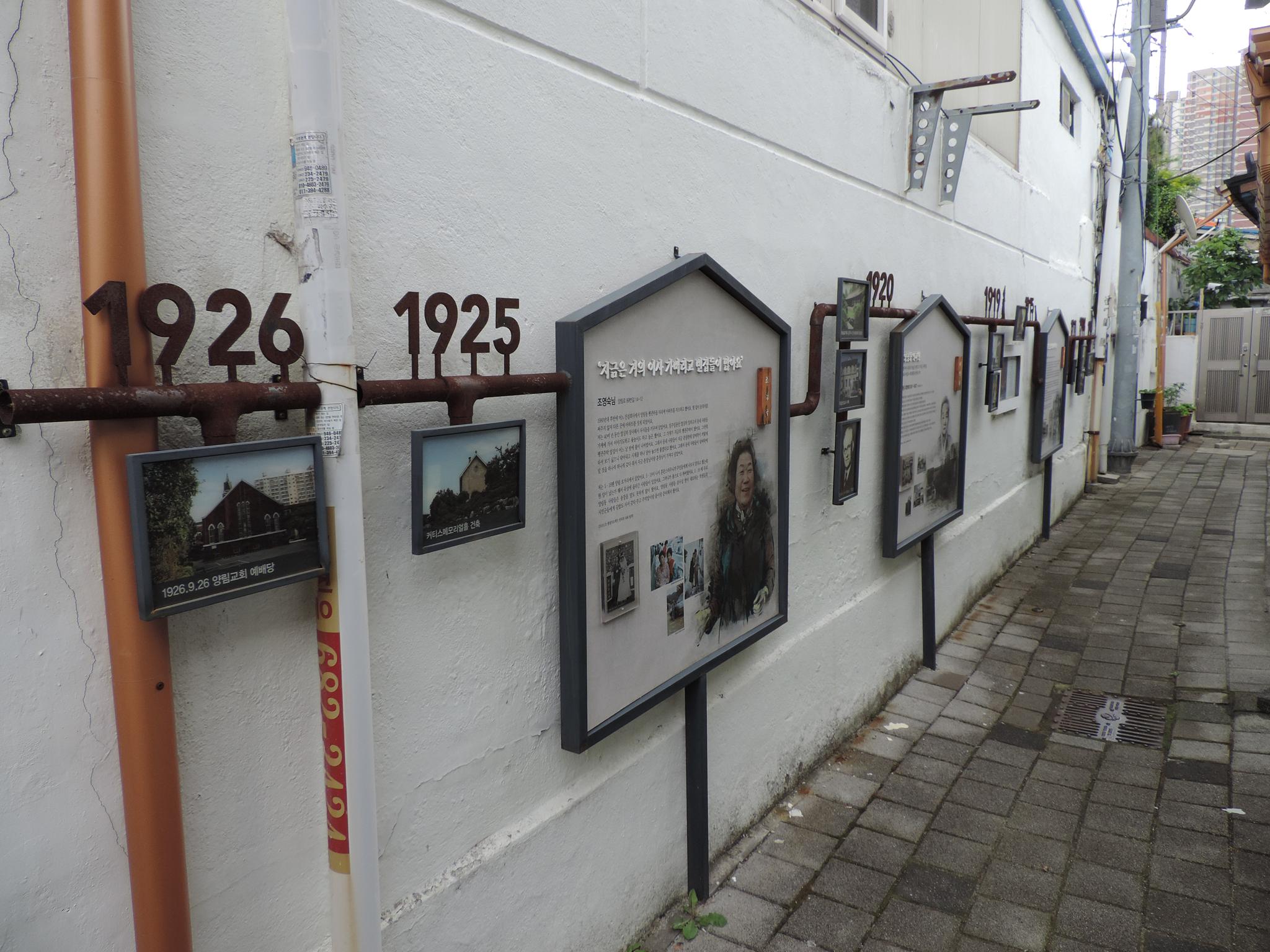
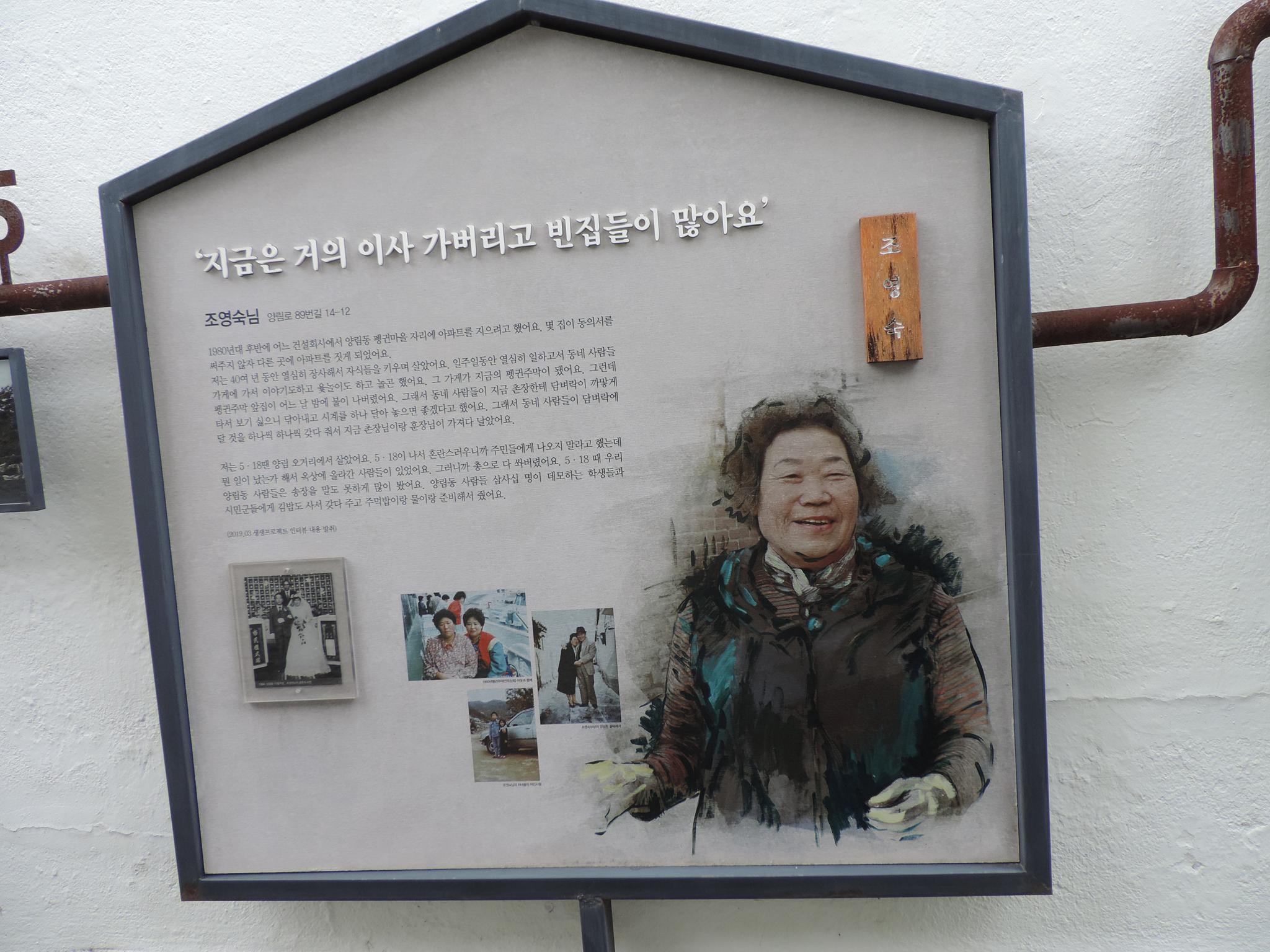
“Most people have moved away now, and there are a lot of empty houses.”, Ms. Jo Young-sook, 14-12 Yangnim-ro 89beon-gil. In the late 1980s, a construction company planned to build an apartment complex on the site of Penguin Village in Yangnim-dong. When a few households refused to sign the consent forms, the company ended up building the apartments elsewhere. I worked hard running my business for over 40 years to raise my children. After working hard all week, I’d go to the neighborhood shops to chat and play yutnori. That shop is now Penguin Jumaek.
One night, however, a fire broke out in the house across from Penguin Tavern. So the neighbors told the current village chief that the wall was blackened and unsightly, and asked if he could clean it up and hang a clock there. The neighbors each brought items to hang on the wall, and the village chief and the honorary chief hung them up. I lived at the Yangrim Intersection during the May 18th Uprising. After the uprising broke out and things became chaotic, we told the residents not to go out, but some people climbed onto their rooftops to see what was happening. So they shot them all. During the May 18th Uprising, we people of Yangrim-dong saw so many dead bodies we couldn’t even speak. About thirty or forty people from Yangnim-dong bought kimbap and brought it to the demonstrating students and the citizen army, and they prepared rice balls and water to give them. – Excerpt from the March 2019 Dangdang Project interview
“Waddling along, wobbling – it’s a penguin!” 42-18, Bushi, Village Chief Kim Dong-gyun. We spent our days picking lettuce and other vegetables from our garden with the neighbors, sharing them, and eating barley rice. The Penguin Tavern’s former name was Chindok Sanghoe. Since the current owner has been here for 30 years after moving to this spot 20 years ago, we’ve been selling watermelons in Penguin Village for 50 years. The Penguin Tavern has become a gathering place for the locals. The house in front of Penguin Tavern recently caught fire, and it looks so terrible that I can’t help but think it would be nice to clean off the soot from the walls and hang up the clock and picture frames one by one.
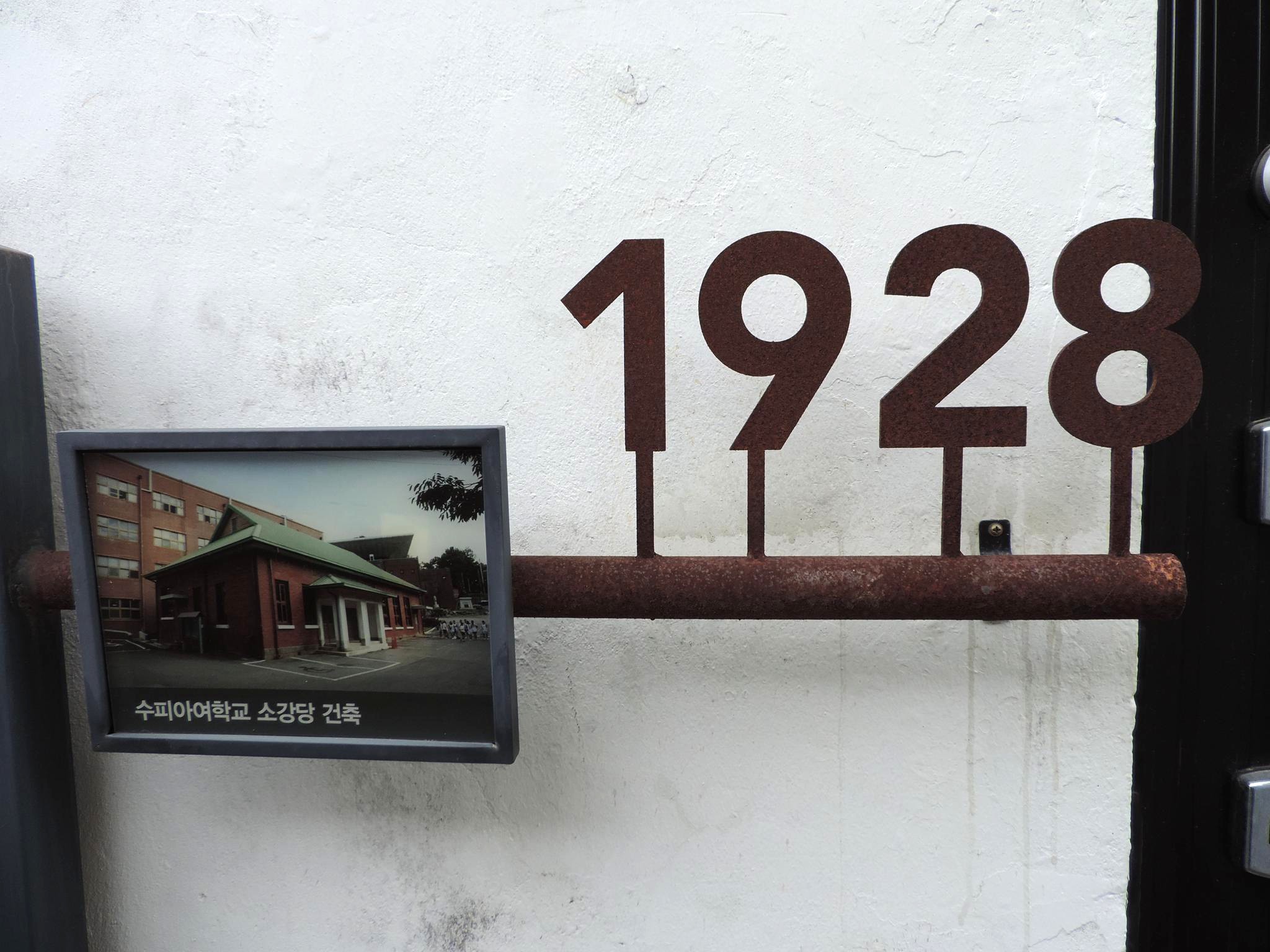
The first thing I hung up was the clock, and the second was a picture frame showing someone getting scolded for picking persimmons. The neighbors told me, “Hang this up too,” So I ended up hanging them on the wall, and what started as nothing special turned into something special, creating Penguin Village. Since I did this with a spirit of volunteerism rather than expecting payment, it’s been hard work, but I feel a great sense of fulfillment. If we don’t maintain it, it could become an eyesore, so managing it is quite challenging. Starting in late 2013, I began hosting junk art workshops with teenagers. We used discarded bottle caps, cans, and other scrap materials for the activities. The kids really enjoyed hammering, drilling, and working with tools, saying it helped relieve their stress. – March 2019, Photo Research Institute, Kim Soo-sang & Kim Dong-kyun – A Construction of the Small Auditorium at Sophia Girls’ School 1928
“If you want to raise kids, move to Yangnim-dong!” – Kim Ki-ho and Yeom Mak-rye, 14-4 Yangnim-ro 89beon-gil. I was truly happy when my husband, who had worked at S-U-D-I for a few years, and I bought our house in Yangnim-dong together. Back then, we brought our belongings here on a handcart. Just not having to move around with the kids was enough to make me happy. There was even a well in our yard. We built a four-room house on an empty lot next to it. We planned to collect rent to help pay for the kids’ education. Back then, every household had many children, so there were so many kids around. We played marbles, jacks, jump rope, and paper-cup games in the alley.
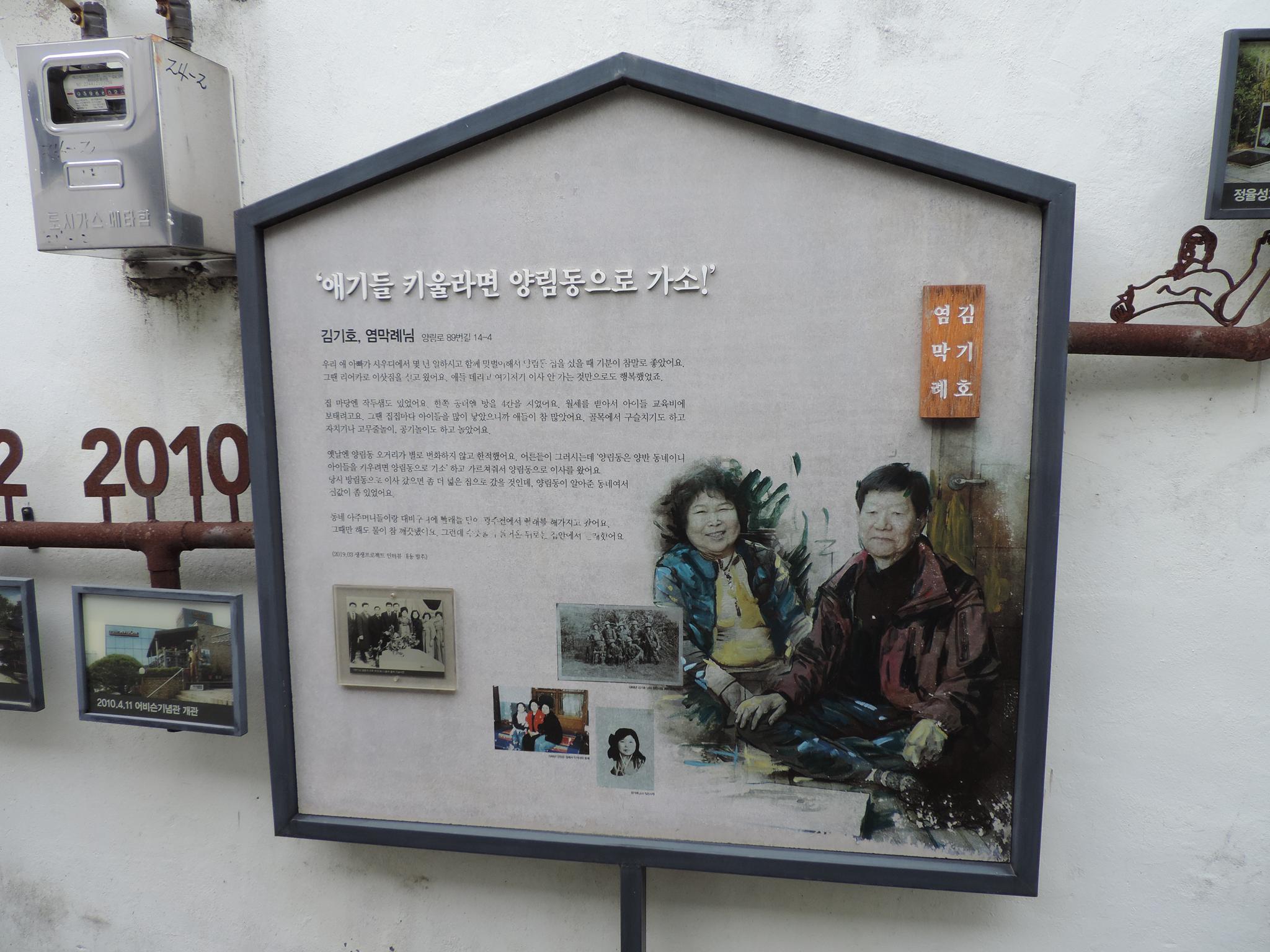
Back then, the Yangnim-dong intersection hadn’t changed much and was quite peaceful. The adults used to say, “Yangnim-dong is a neighborhood of the yangban class, so if you want to raise children, you should move to Yangnim-dong,” so we moved here. If we had moved to Bangnim-dong at the time, we probably would have gotten a bigger house, but since Yangnim-dong was a well-regarded neighborhood, the housing prices were a bit higher. Back when I used to hang laundry with the neighborhood ladies at the old water trough, the water was really clean. But I brought it back from the Gwangju Market. Since I moved in, I’ve been doing it at home. – March 2019: “Vivid Project” Interview – Jeong Yul-seong
Poet Da-hyeong Kim Hyun-seung Memorial
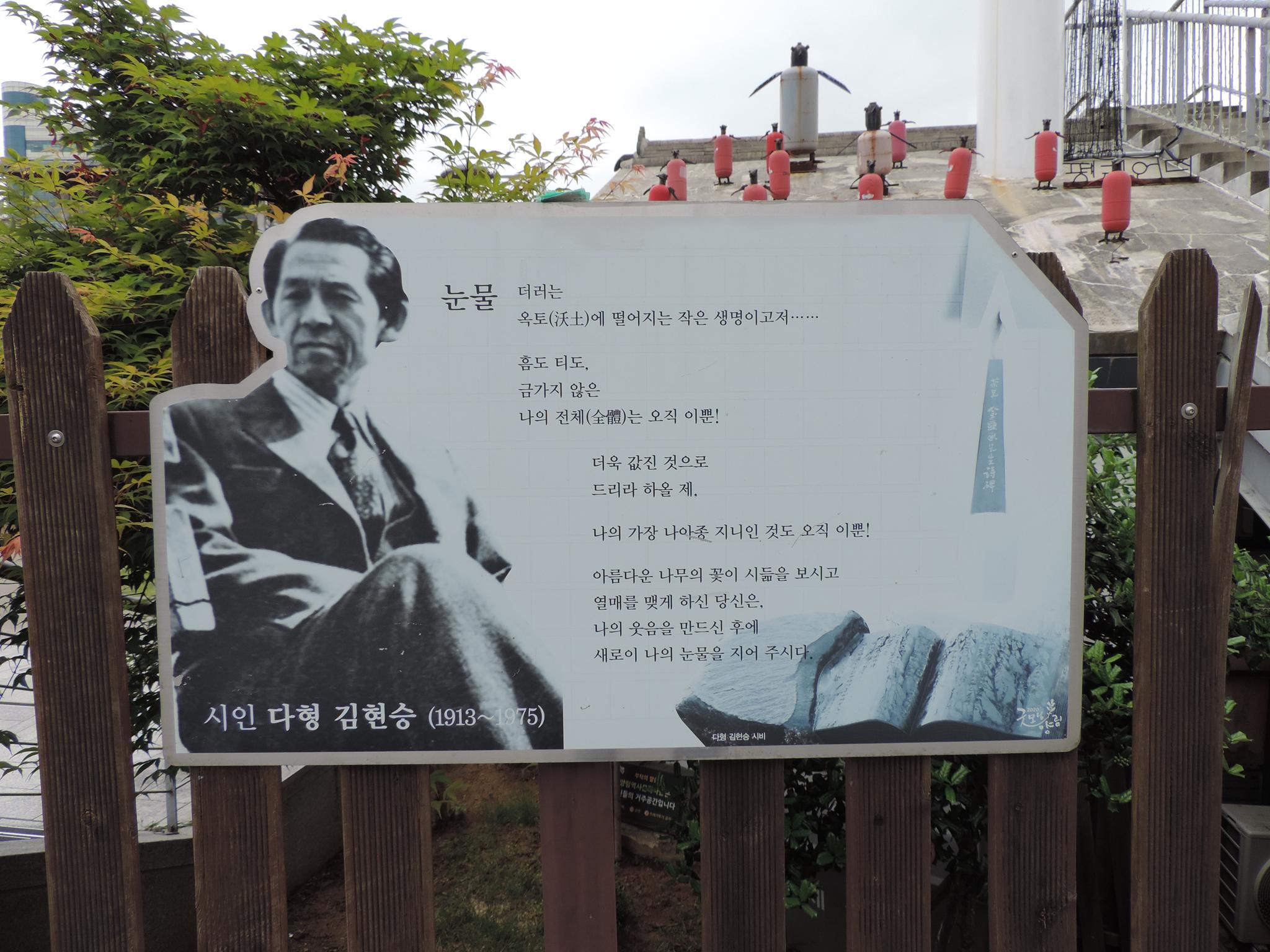
Some tears are but tiny lives falling onto fertile soil. Without blemish or flaw, unbroken, this is all that remains of my being! Poet Da-hyeong Kim Hyun-seung (1913–1975). When I vow to offer something even more precious, this is all that remains of my most cherished possession! You, who saw the flowers of the beautiful tree wither and caused it to bear fruit, after creating my laughter, now create my tears anew.
The Mother of Sophia and Gwangju
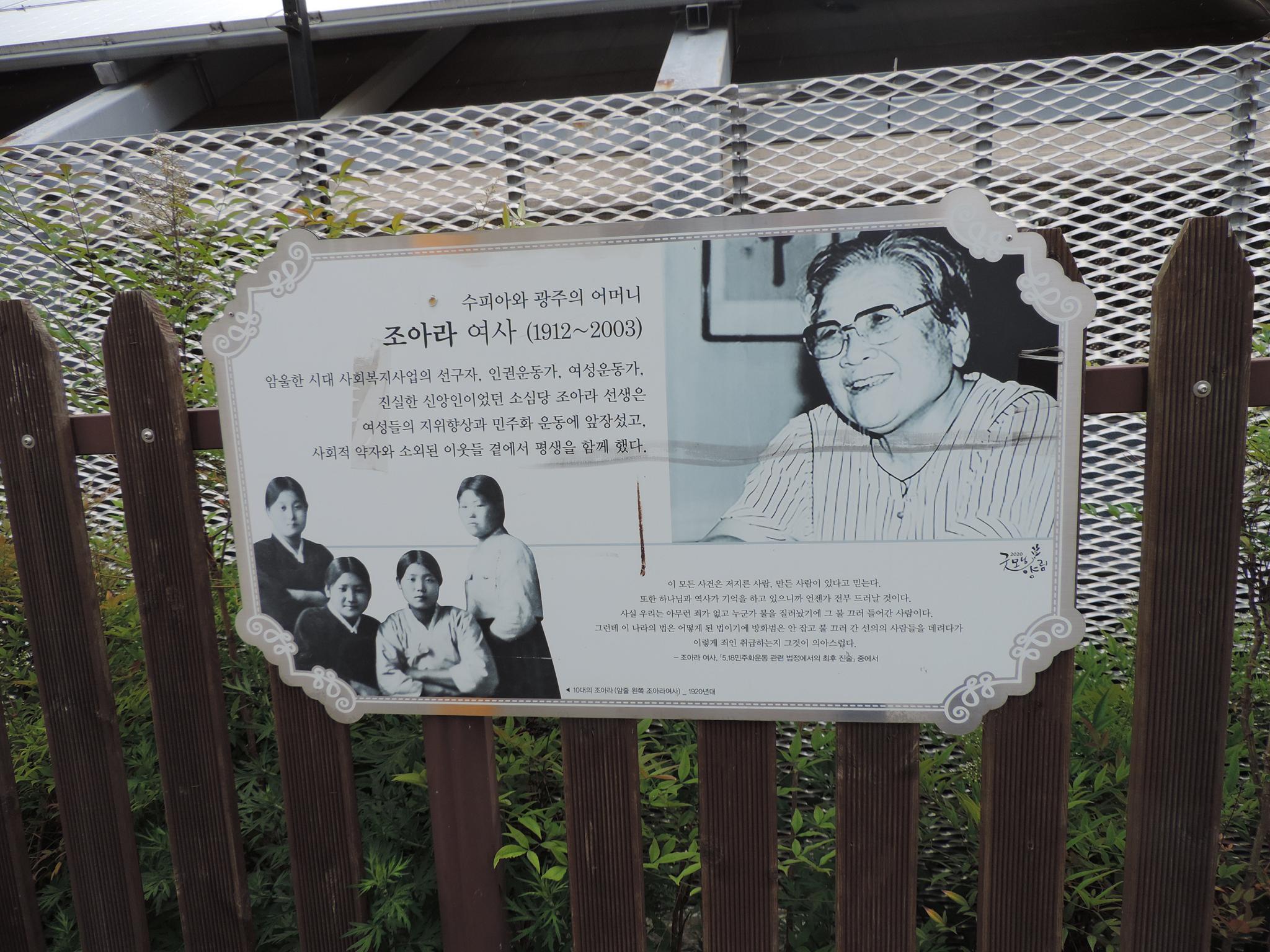
Ms. Jo A-ra (1912–2003). A pioneer in social welfare during a dark era, a human rights activist, a women’s rights advocate, and a woman of deep faith, Ms. Jo A-ra (known as Sosim-dang) took the lead in the movement to improve the status of women and promote democratization, and spent her entire life standing by the socially vulnerable and marginalized. I believe that there are those who committed these acts and those who orchestrated them. Furthermore, since God and history remember, everything will eventually come to light. In fact, we are innocent; we are merely the ones who went in to put out the fire that someone else had set. Yet I find it puzzling that this country’s laws—which fail to apprehend the arsonists—instead arrest the well-meaning people who went to extinguish the fire and treat them as criminals.
– Ms. Jo Ara, from her final statement in court regarding the May 18 Democratization Movement
A Prayer for Autumn
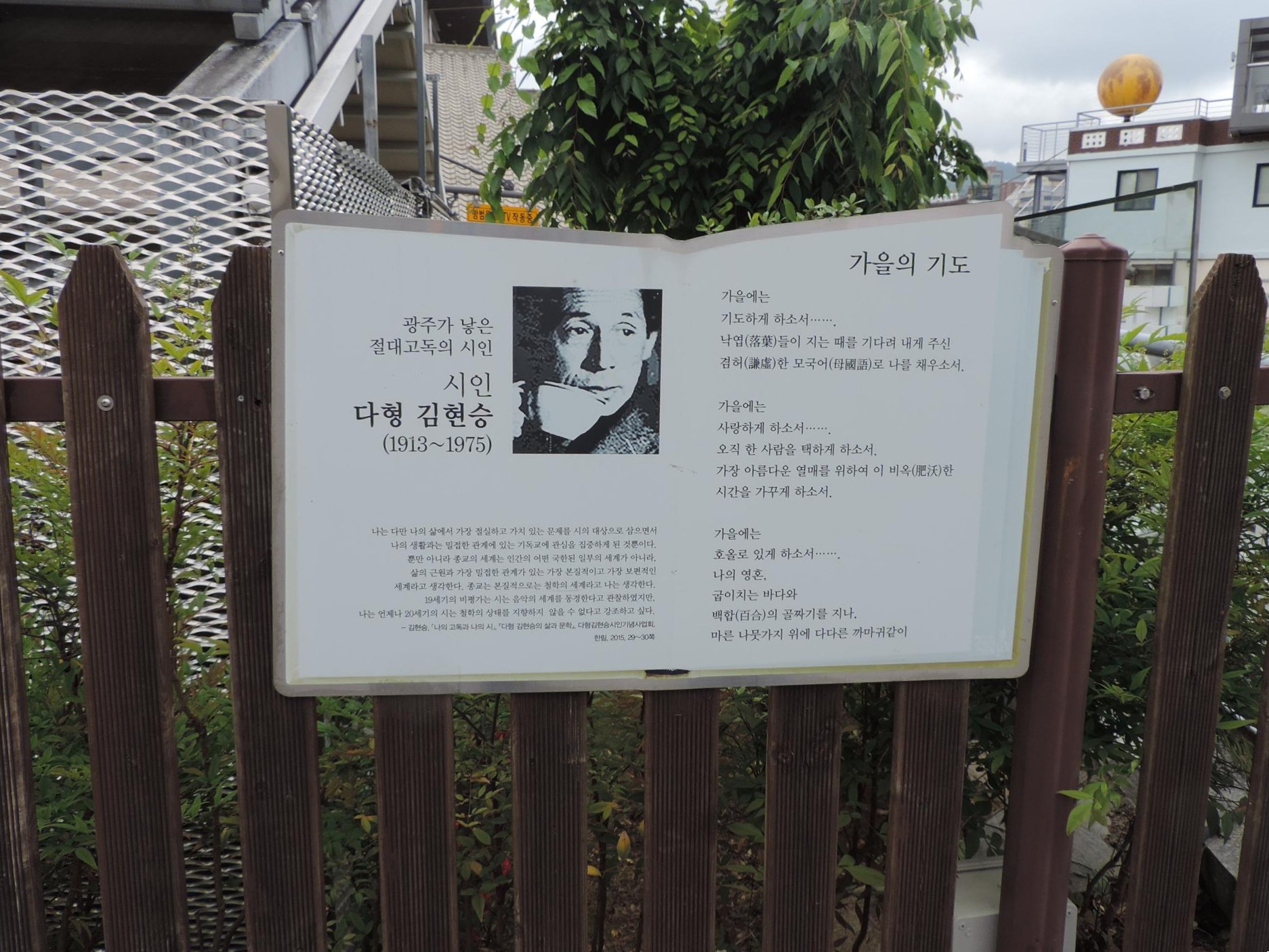
The Poet of Absolute Solitude, Born in Gwangju. As I wait for the time when the fallen leaves drift down, fill me with the humble mother tongue you have given me. Poet Da-hyeong Kim Hyun-seung (1913–1975). I have simply focused my attention on Christianity, which is closely intertwined with my life, while taking the most urgent and valuable issues of my existence as the subject of my poetry. Moreover, I believe that the realm of religion is not merely a limited part of the human world, but rather the most essential and universal realm, one most closely connected to the very source of life. I believe that religion is, in essence, the realm of philosophy. While 19th-century critics observed that poetry yearns for the world of music, I wish to emphasize that 20th-century poetry cannot help but aspire to the state of philosophy. – Kim Hyun-seung, My Solitude and My Poetry: The Life and Literature of Da-hyeong Kim Hyun-seung – Da-hyeong Kim Hyun-seung Memorial Foundation, Hallim, 2015, pp. 29–30
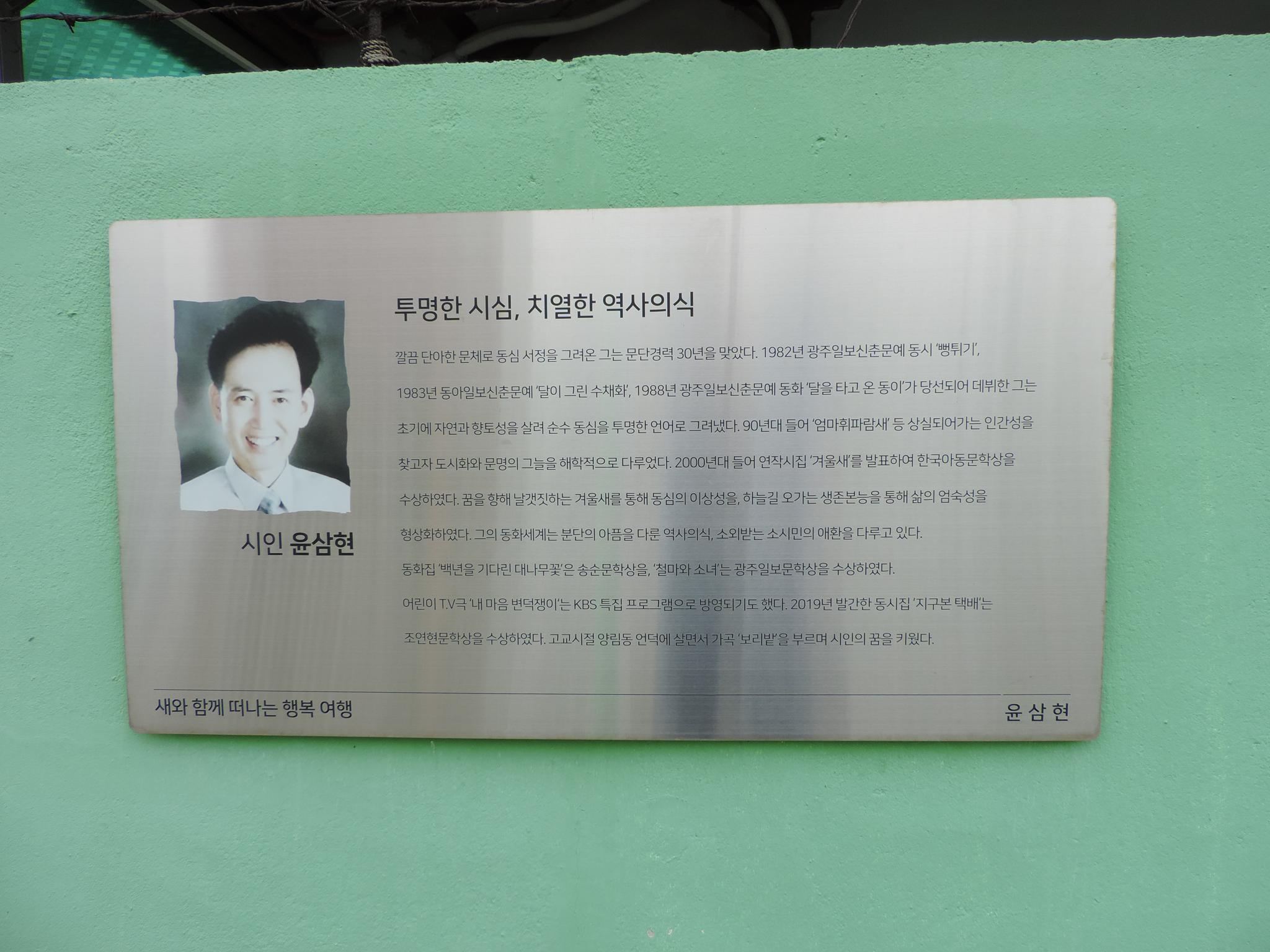
Poet Yoon Sam-hyun – A Joyful Journey with Birds
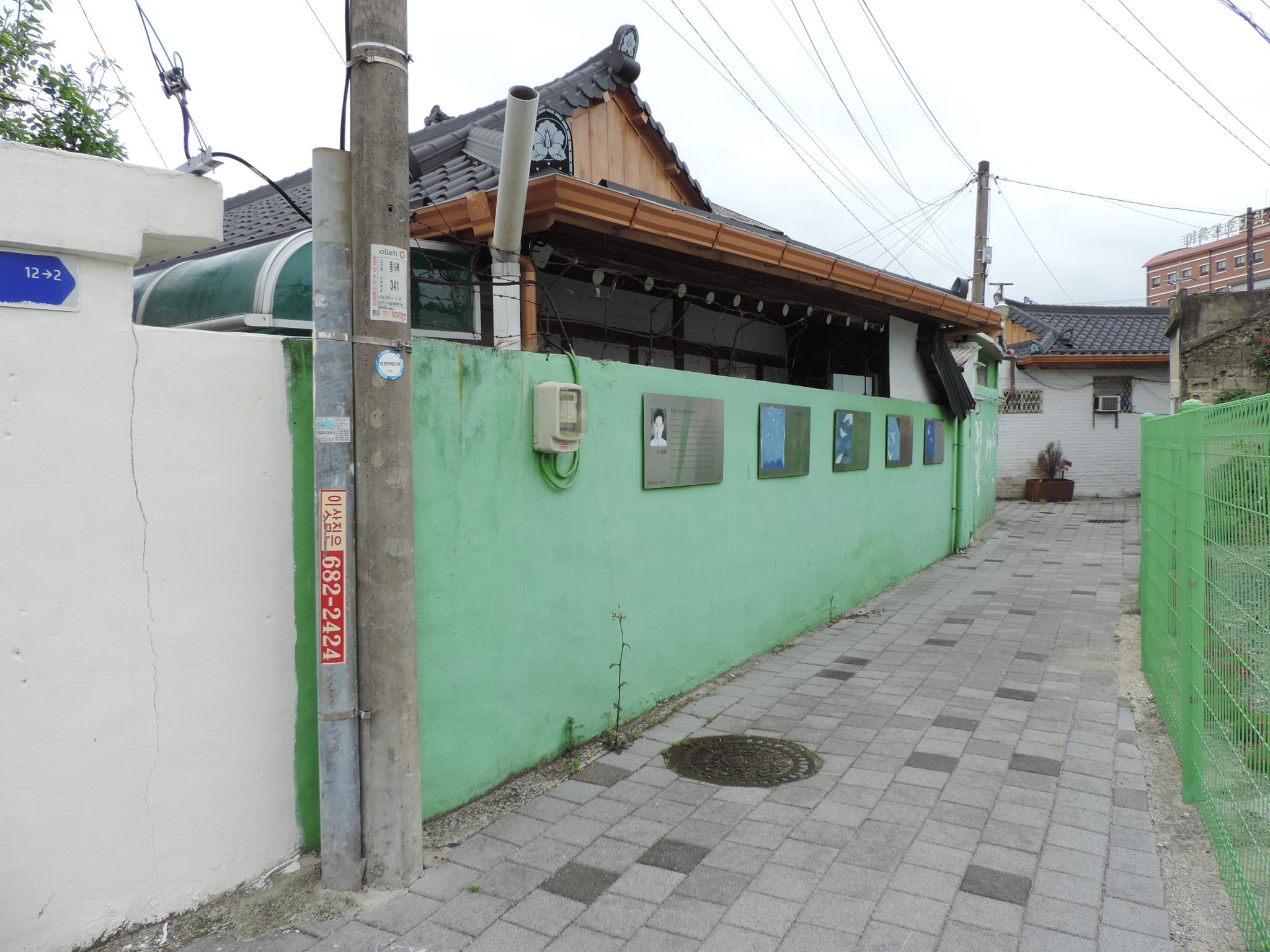
A transparent poetic sensibility and a keen historical consciousness celebrating 30 years in the literary world, he has depicted childlike lyricism with a clean and elegant style. He made his literary debut in 1982 with the children’s poem “Puffed Rice” in the Gwangju Ilbo New Year’s Literary Contest,
followed by “Watercolor Painted by the Moon” in the 1983 Dong-A Ilbo New Year’s Literary Contest, and the children’s story “Dong-i, Who Came Riding the Moon” in the 1988 Gwangju Ilbo New Year’s Literary Contest.
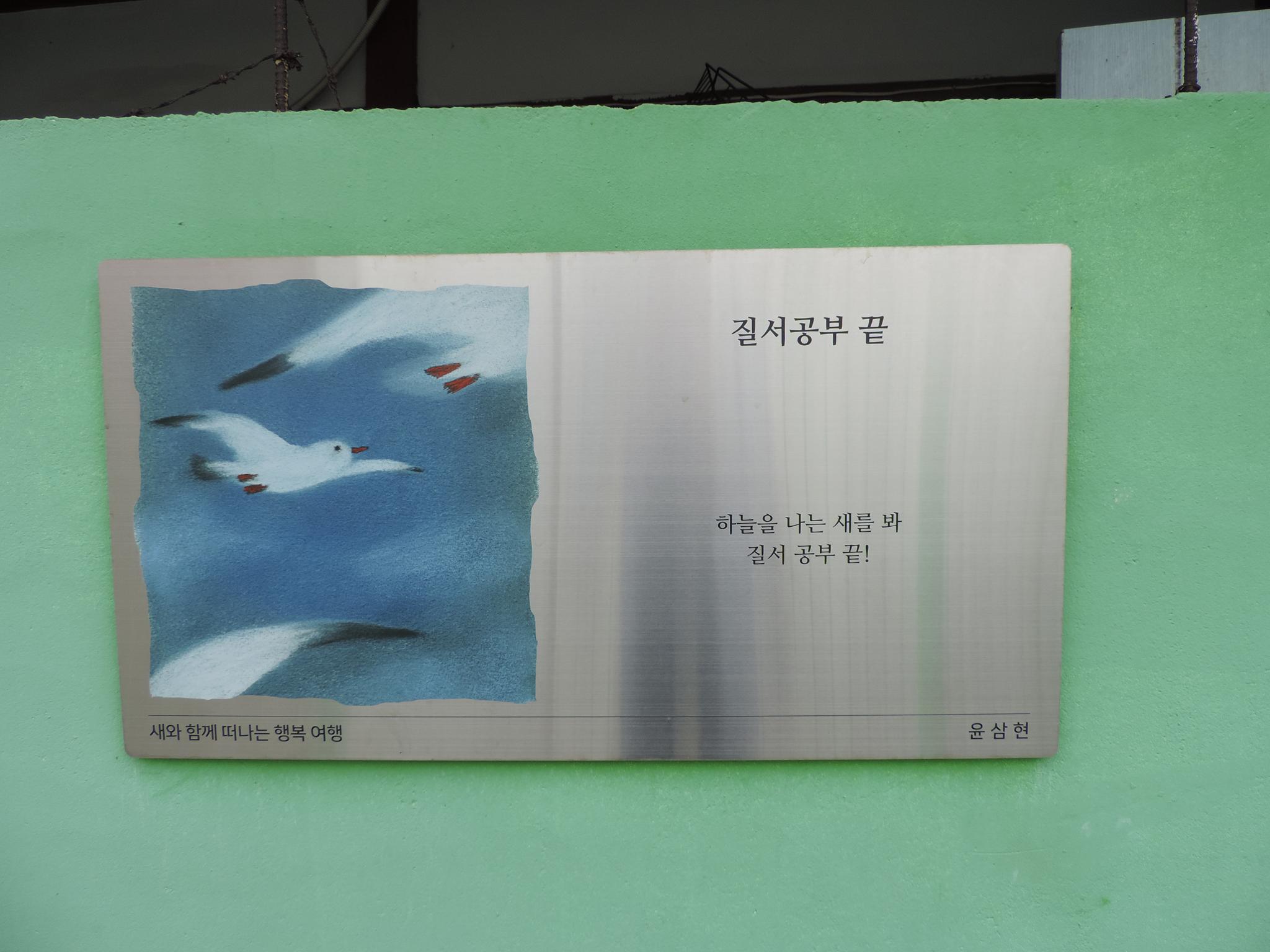
In his early works, he depicted pure childlike innocence in transparent language, drawing on nature and local folklore. In the 1990s, through works such as “Mom’s Whistling Bird”, he humorously explored the shadows of urbanization and civilization in an attempt to rediscover humanity that was fading away. In the 2000s, he published the serial poetry collection “Winter Birds” and won the Korean Children’s Literature Award.
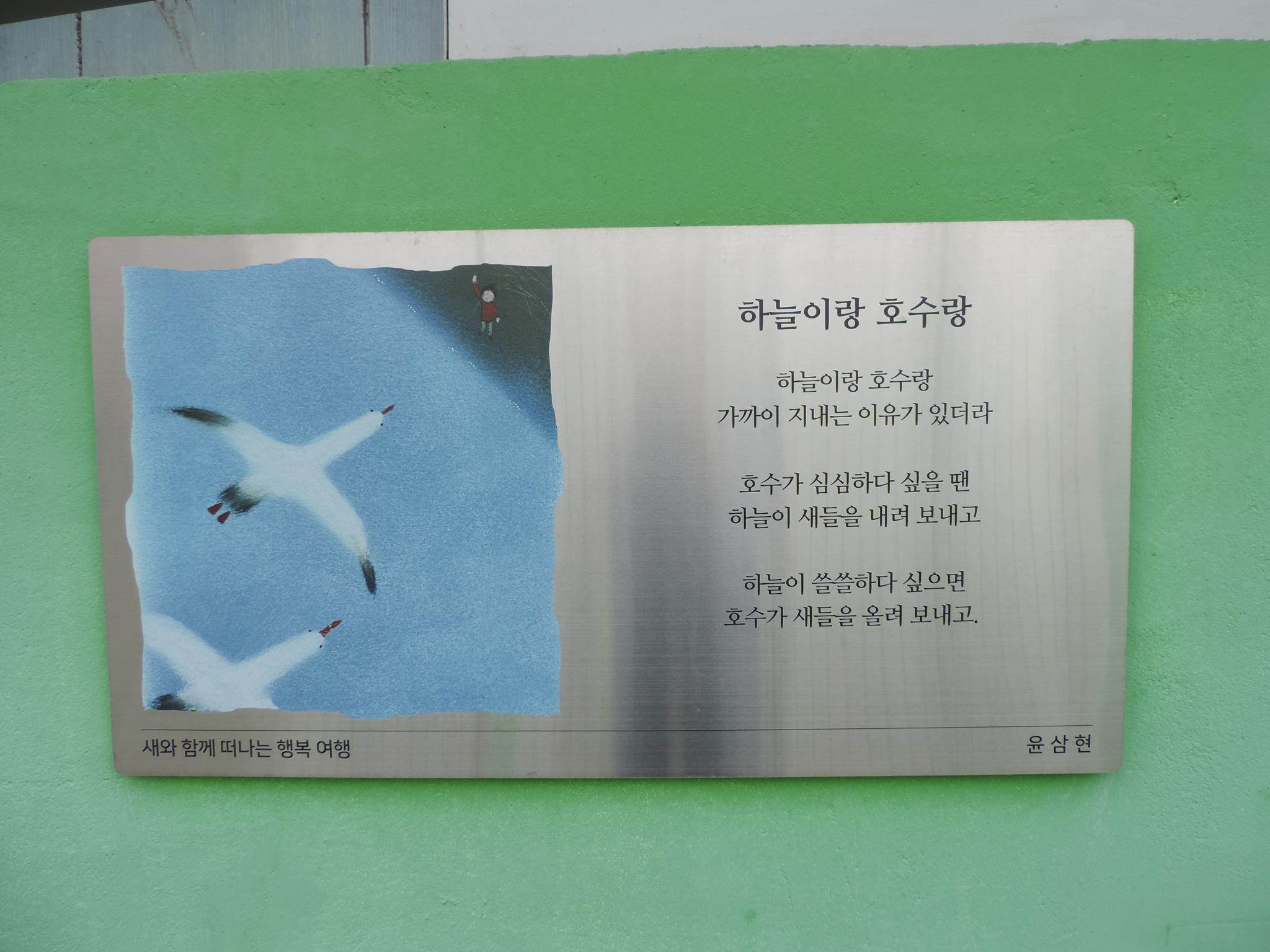
Through the image of winter birds flapping their wings toward their dreams, he embodied the idealism of childhood innocence, and through their instinct for survival as they travel the skies, he depicted the solemnity of life. His world of children’s literature addresses a historical consciousness that deals with the pain of division and the joys and sorrows of marginalized ordinary citizens. His children’s story collection „The Bamboo Flower That Waited a Hundred Years“ won the Songsun Literary Award, and „The Iron Horse and the Girl“ won the Gwangju Ilbo Literary Award.
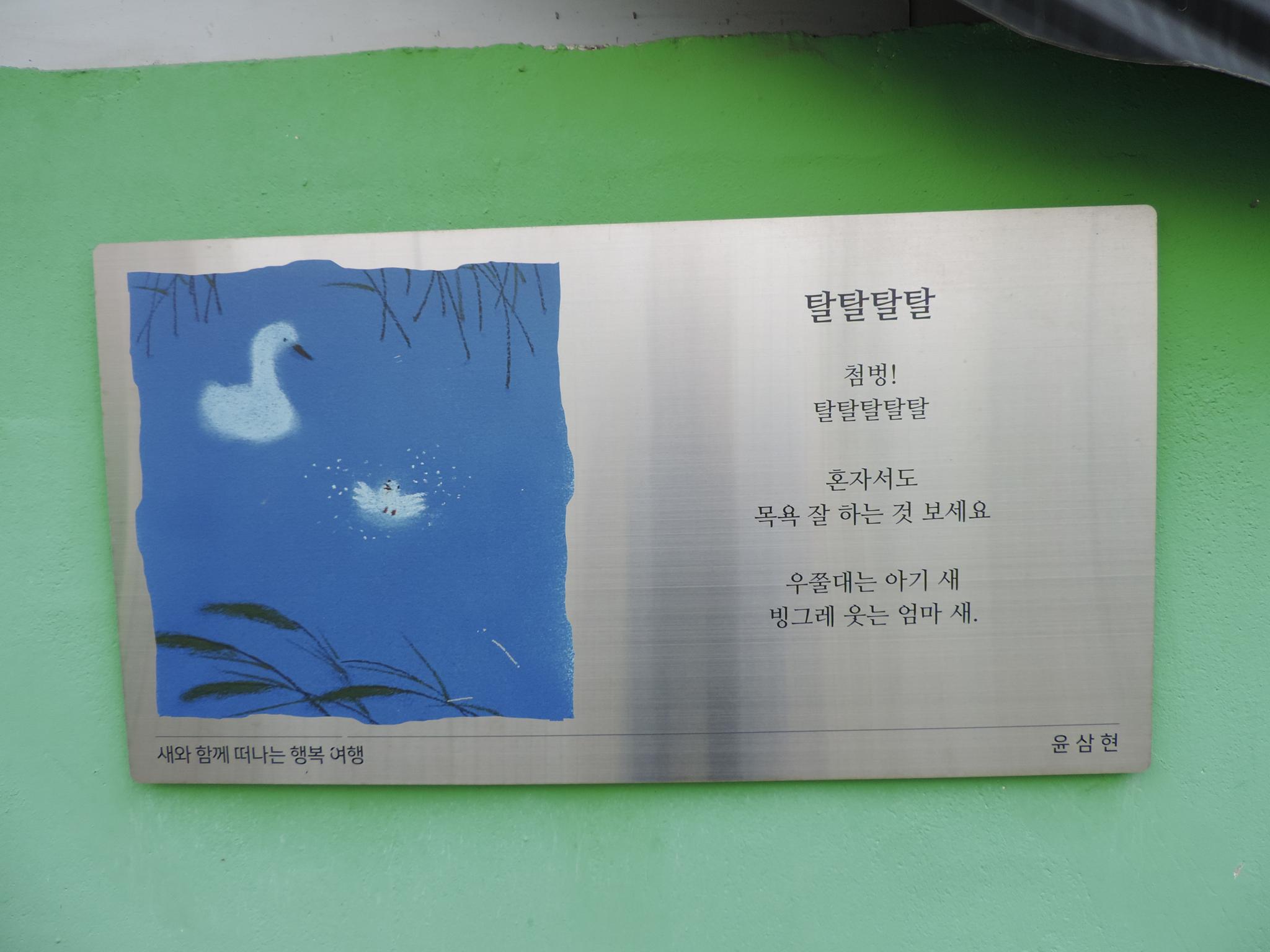
The children’s TV drama *My Capricious Heart* was also broadcast as a KBS special program. His 2019 collection of children’s poetry, *Globe Delivery*, won the Jo Yeon-hyeon Literary Award. While living on a hill in Yangnim-dong during his high school years, he nurtured his dream of becoming a poet while singing the art song “Singing in the Barley Fields.” – Yoon Sam-hyeon
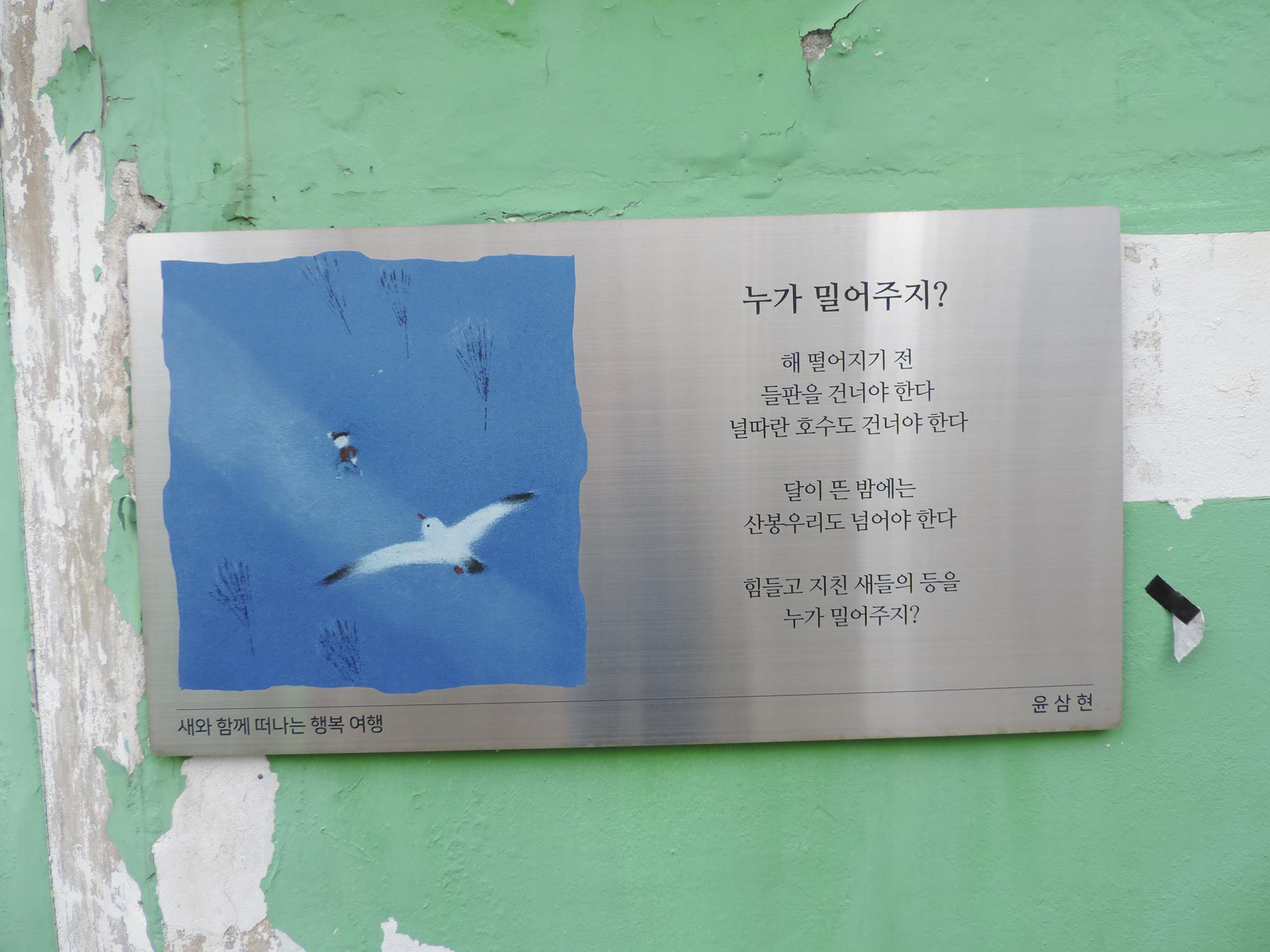
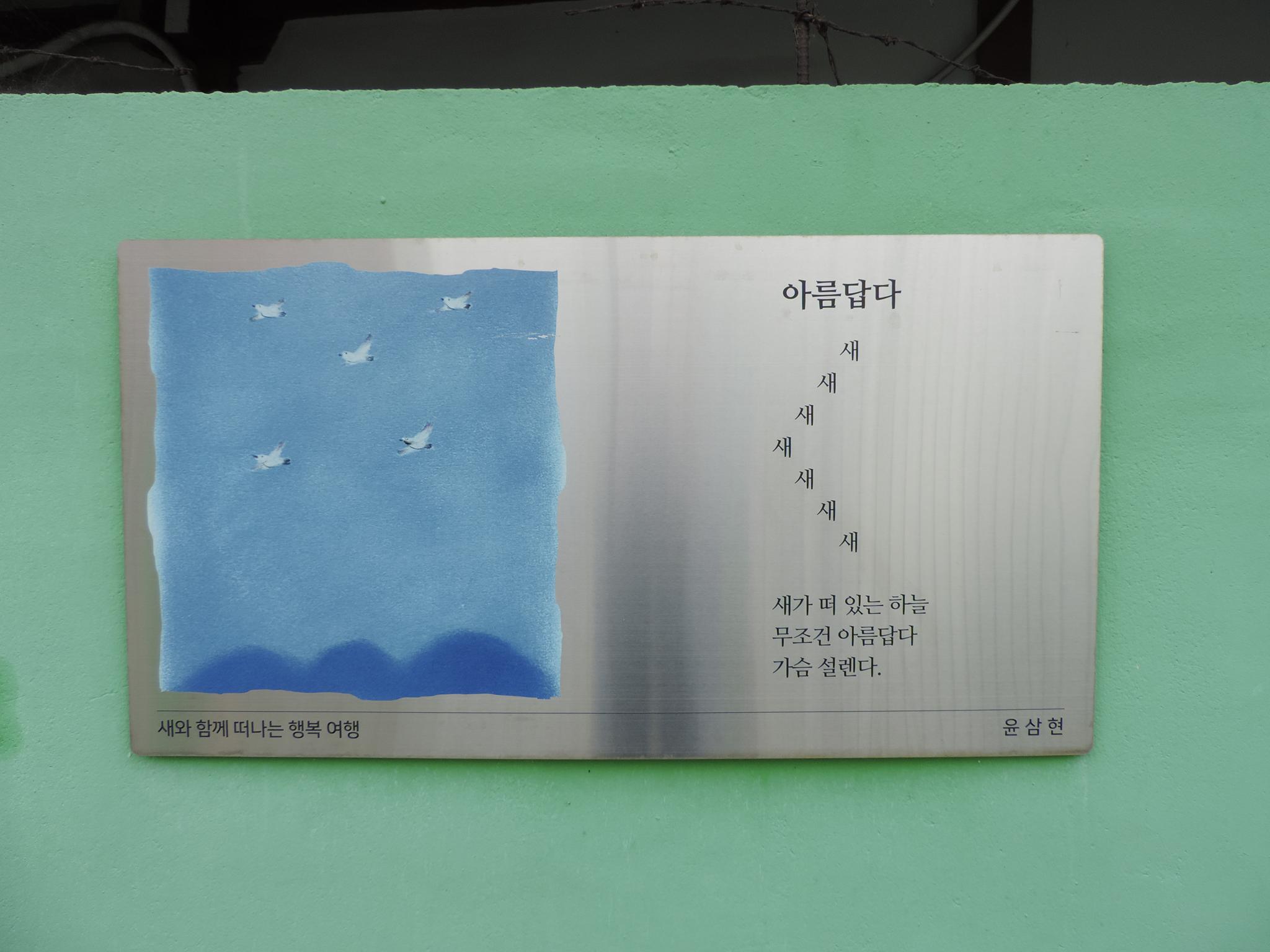
Scenes of Nature and the Simple Sentiment of the Homeland
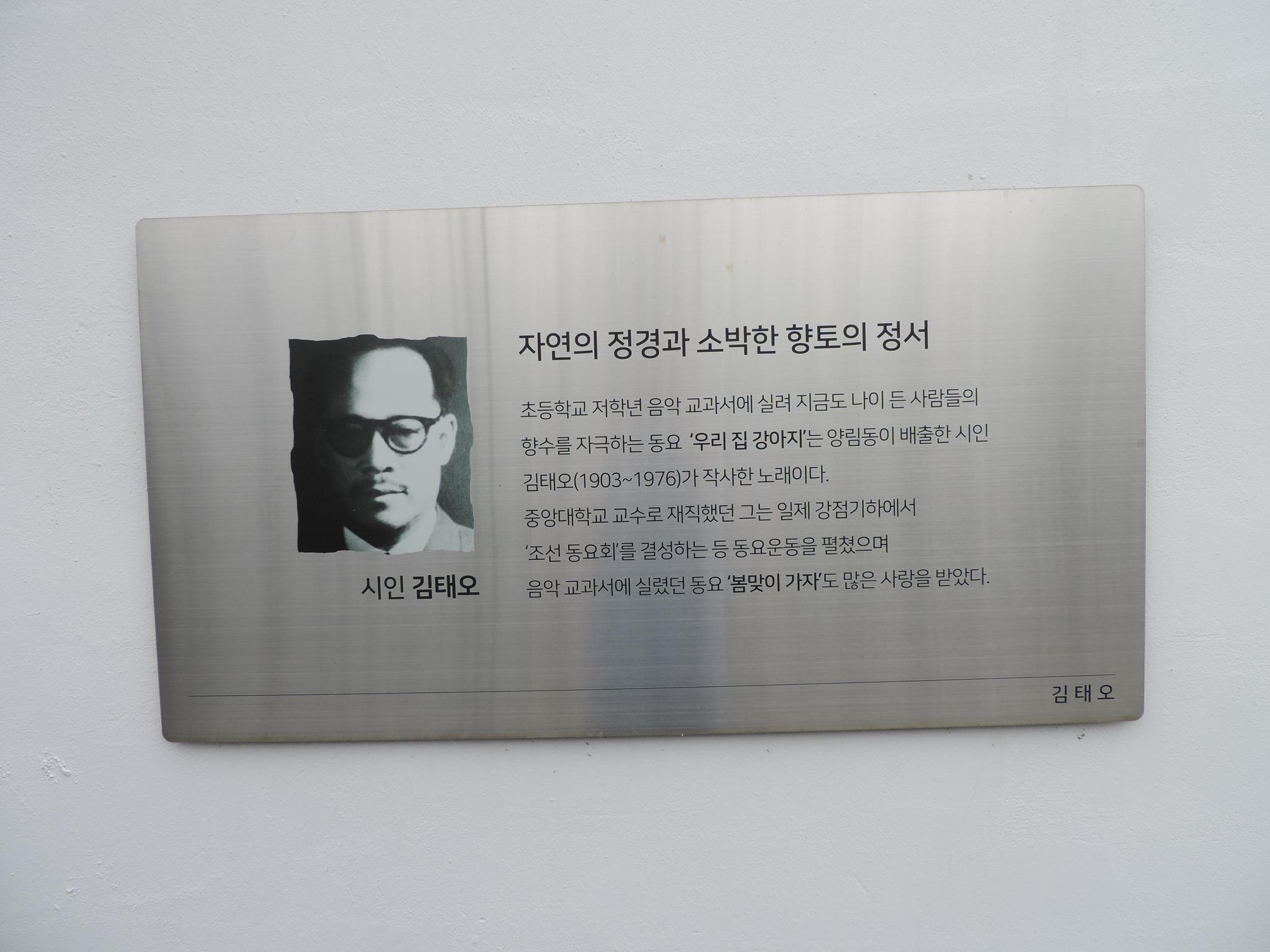
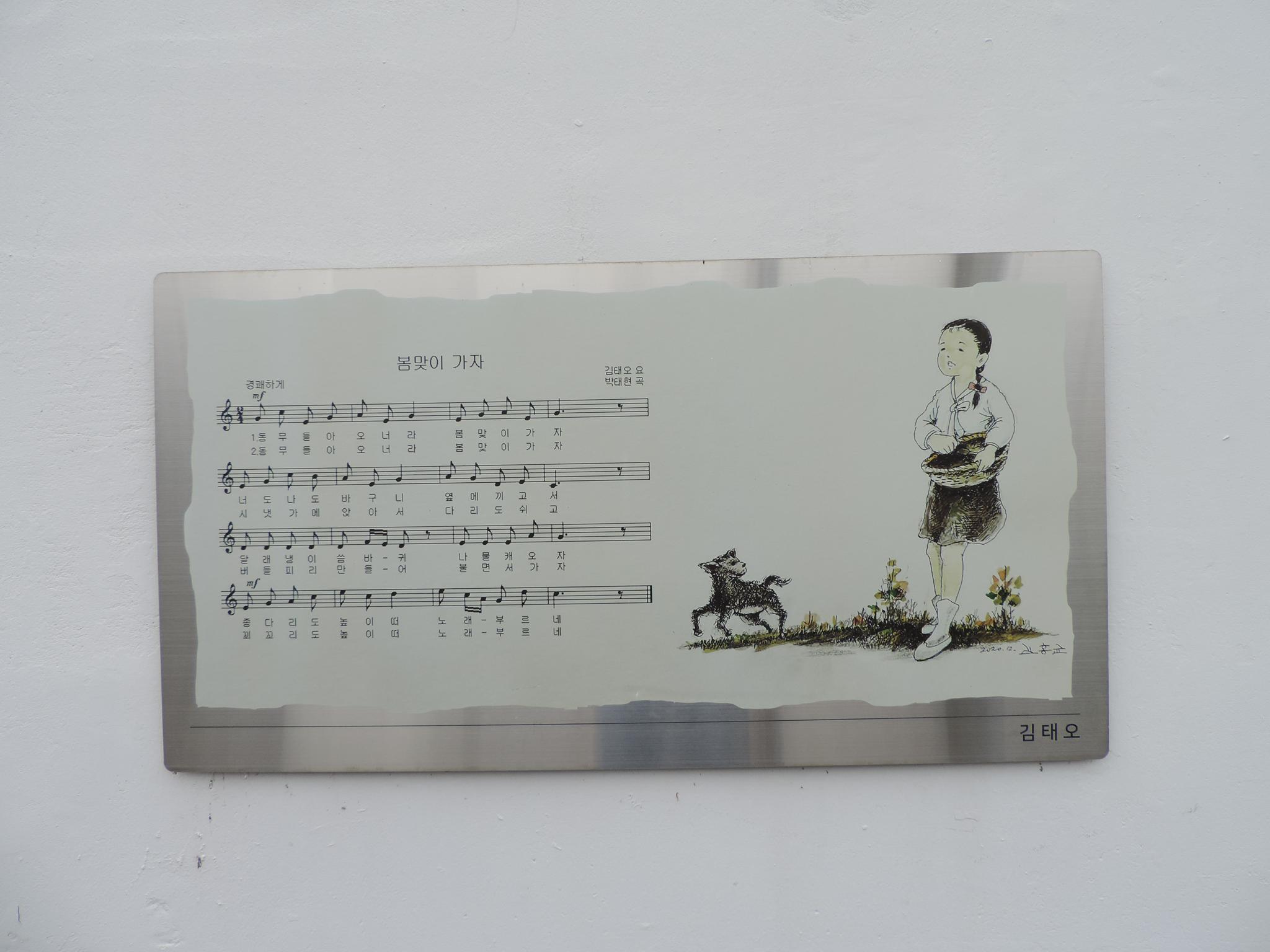
The children’s song “Our Family Dog,” which appears in elementary school music textbooks and still evokes nostalgia among older generations, was written by the poet Kim Tae-o (1903–1976), a native of Yangnim-dong. A former professor at Chung-Ang University, he led the children’s song movement during the Japanese colonial period, including the formation of the “Joseon Children’s Song Society.” Poet Kim Tae-oh, the children’s song “Let’s Welcome Spring,” which was also included in music textbooks, was widely loved. – Kim Tae-oh
A Lifetime Dedicated to Children’s Education
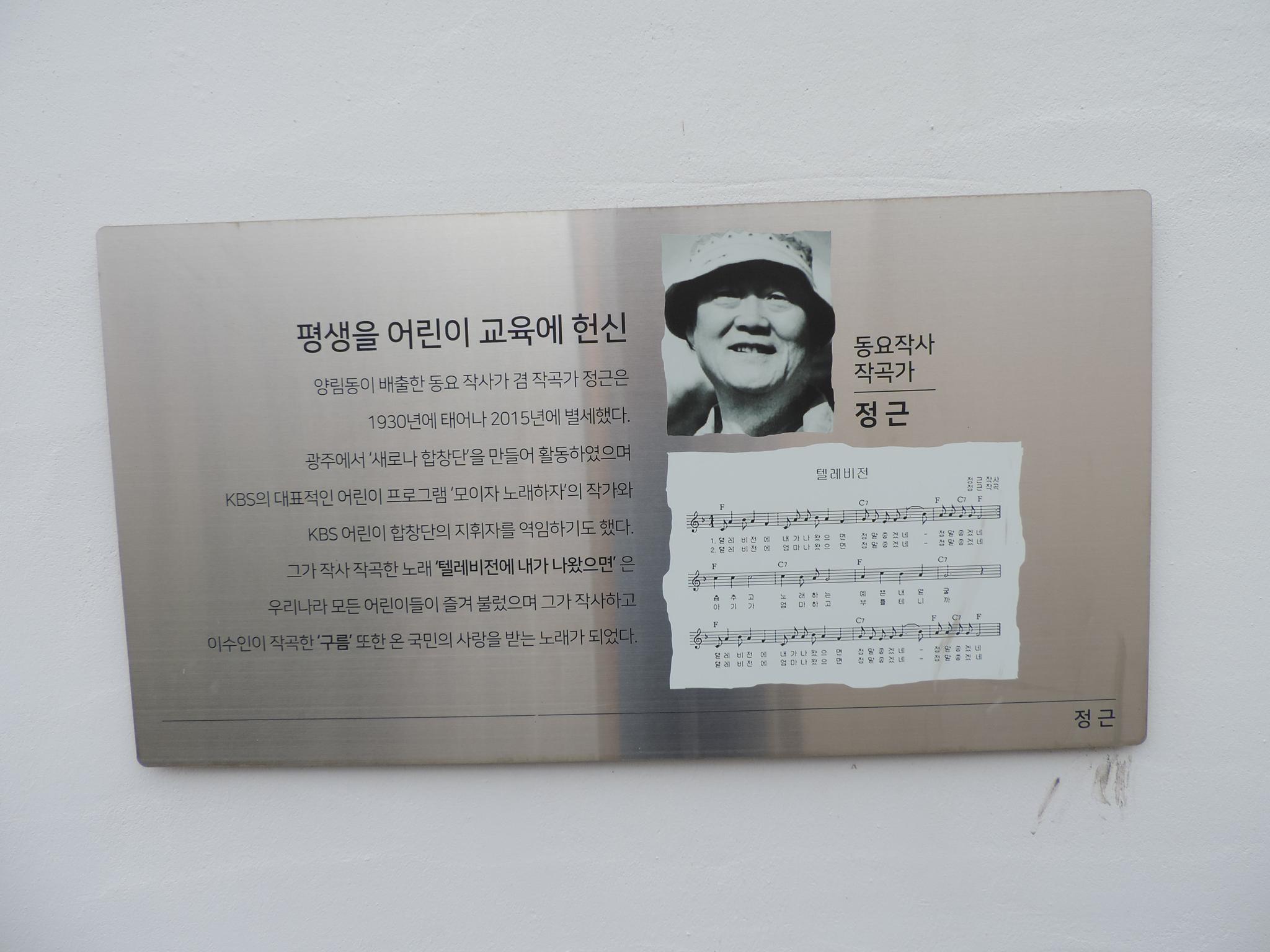
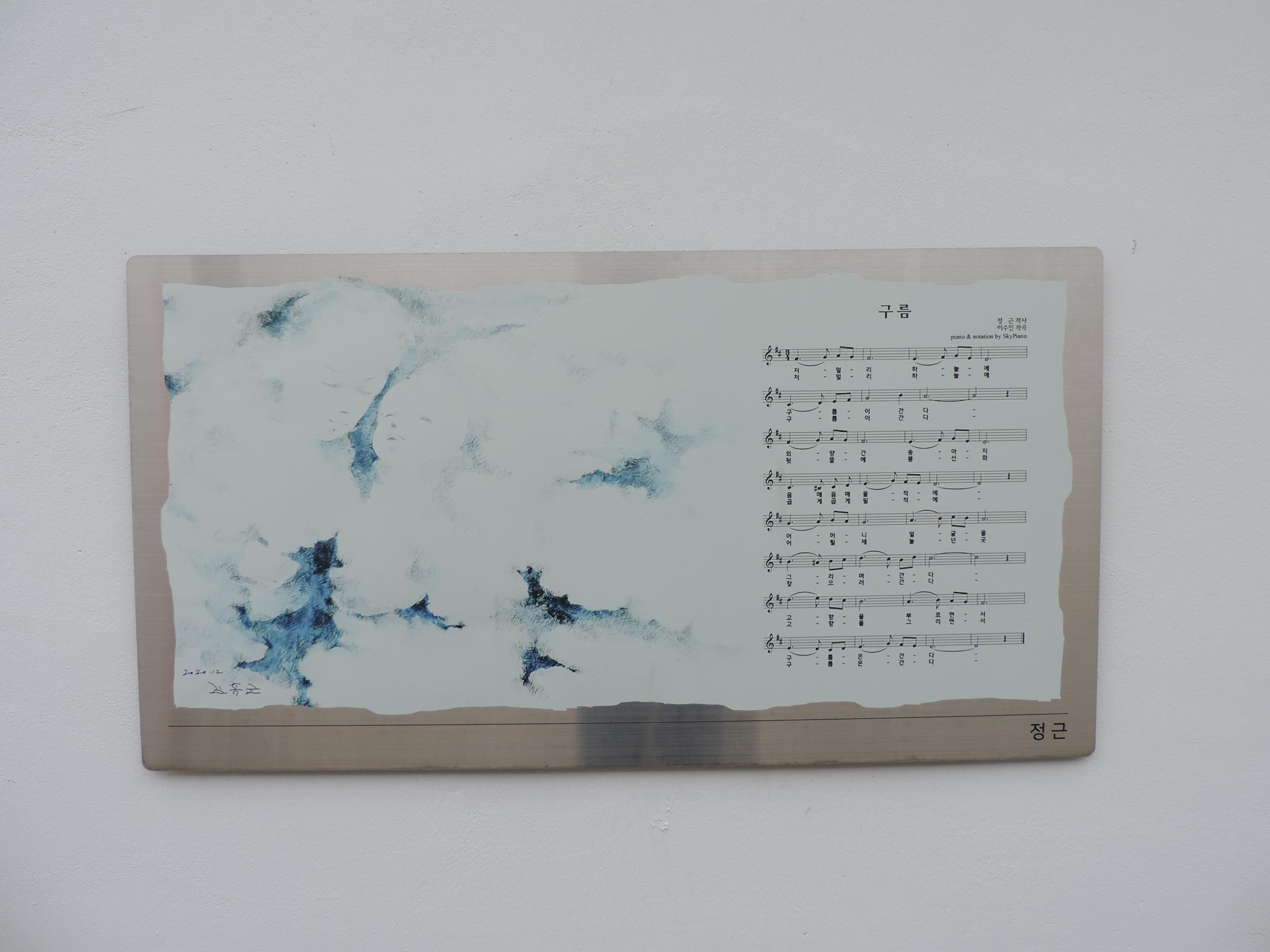
Jeong Geun, a children’s song lyricist and composer from Yangnim-dong, was born in 1930 and passed away in 2015. He formed and led the “Saerona” Choir in Gwangju, and served as a writer for KBS’s flagship children’s program “Let’s Gather and Sing” as well as the conductor of the KBS Children’s Choir. The song “If I Were on TV,” which he wrote and composed, was a favorite among all children in Korea, and “Cloud,” for which he wrote the lyrics and Lee Su-in composed the music, also became a beloved song for the entire nation.
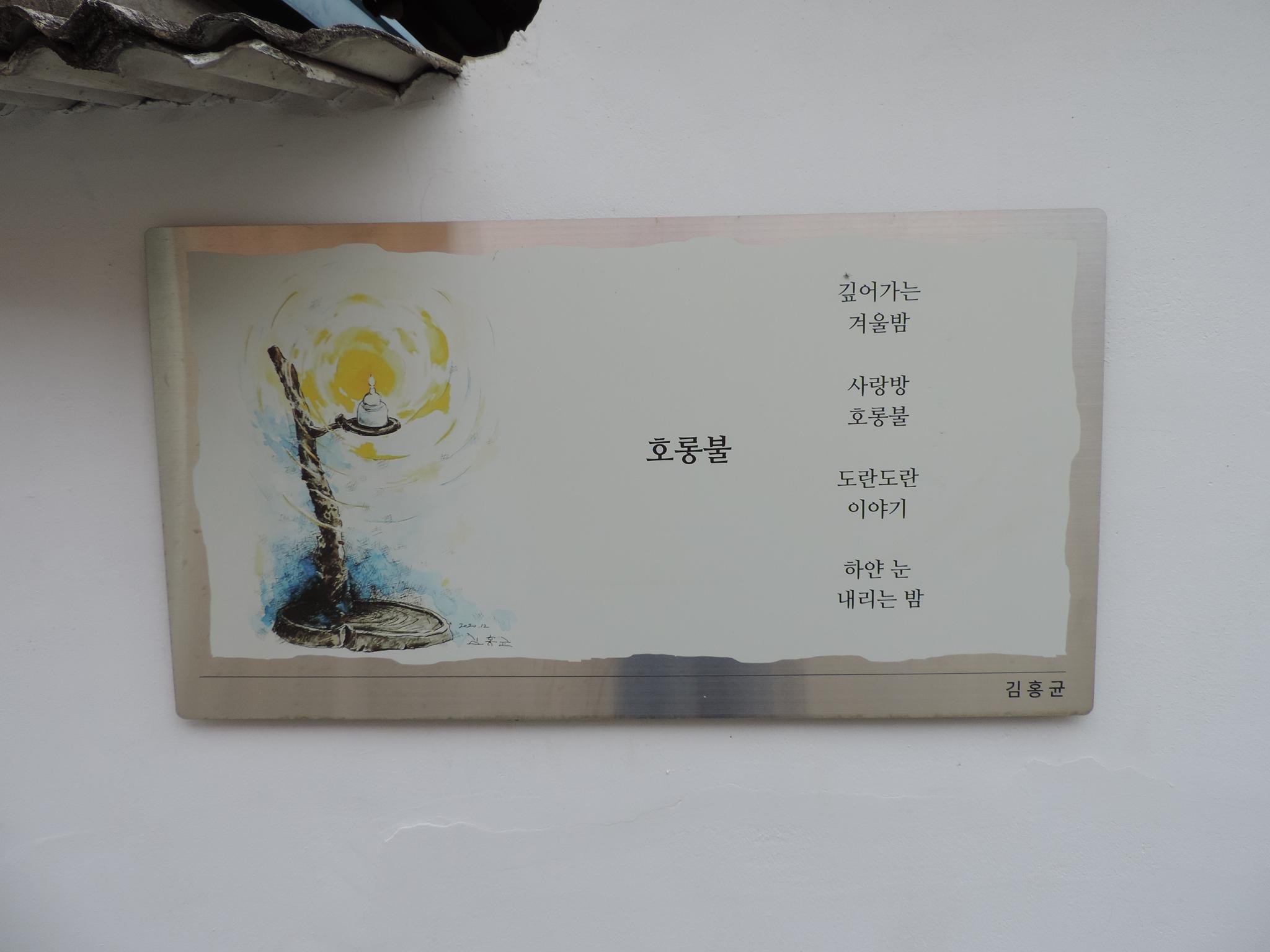
Poetry and Music
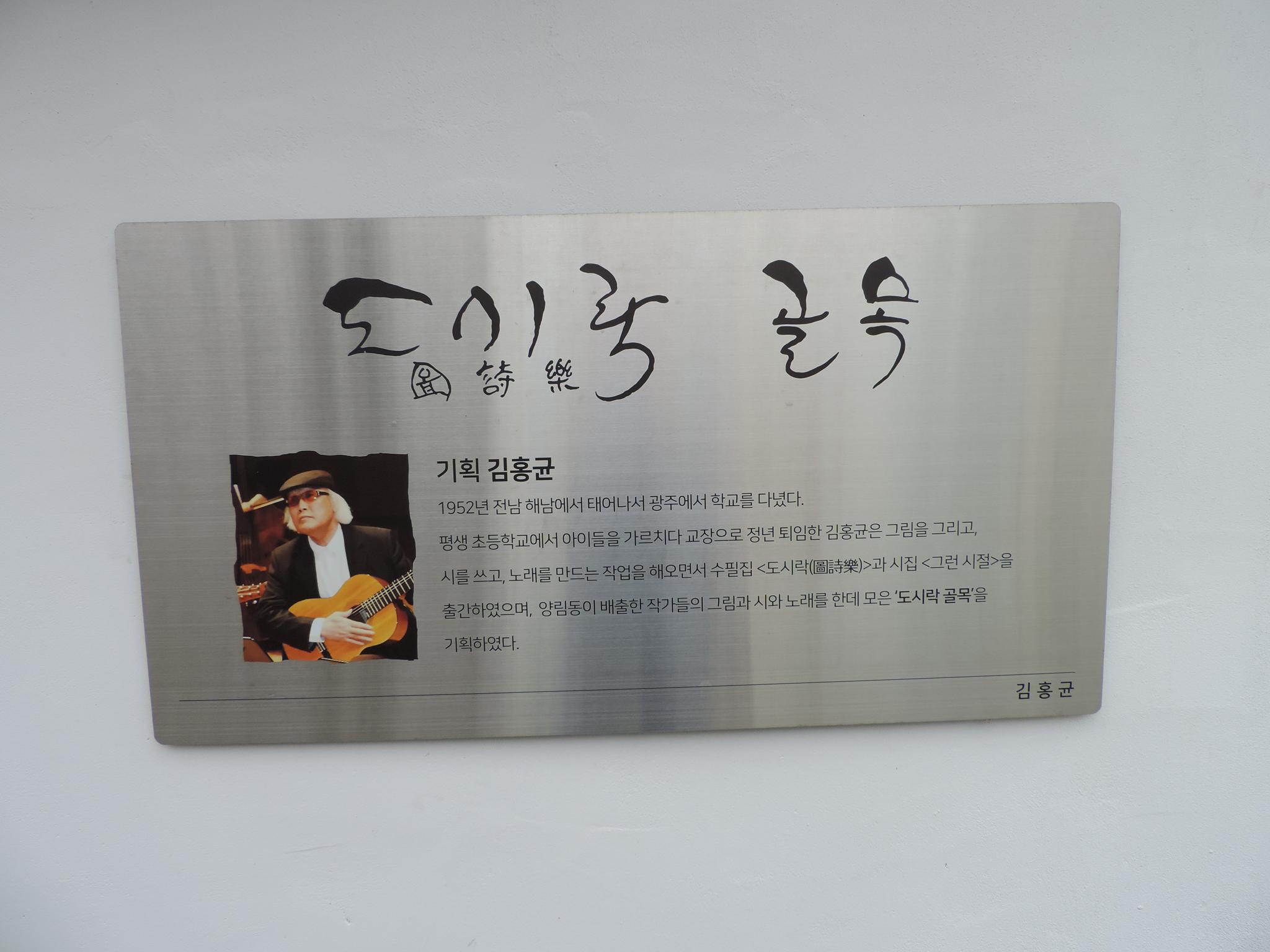
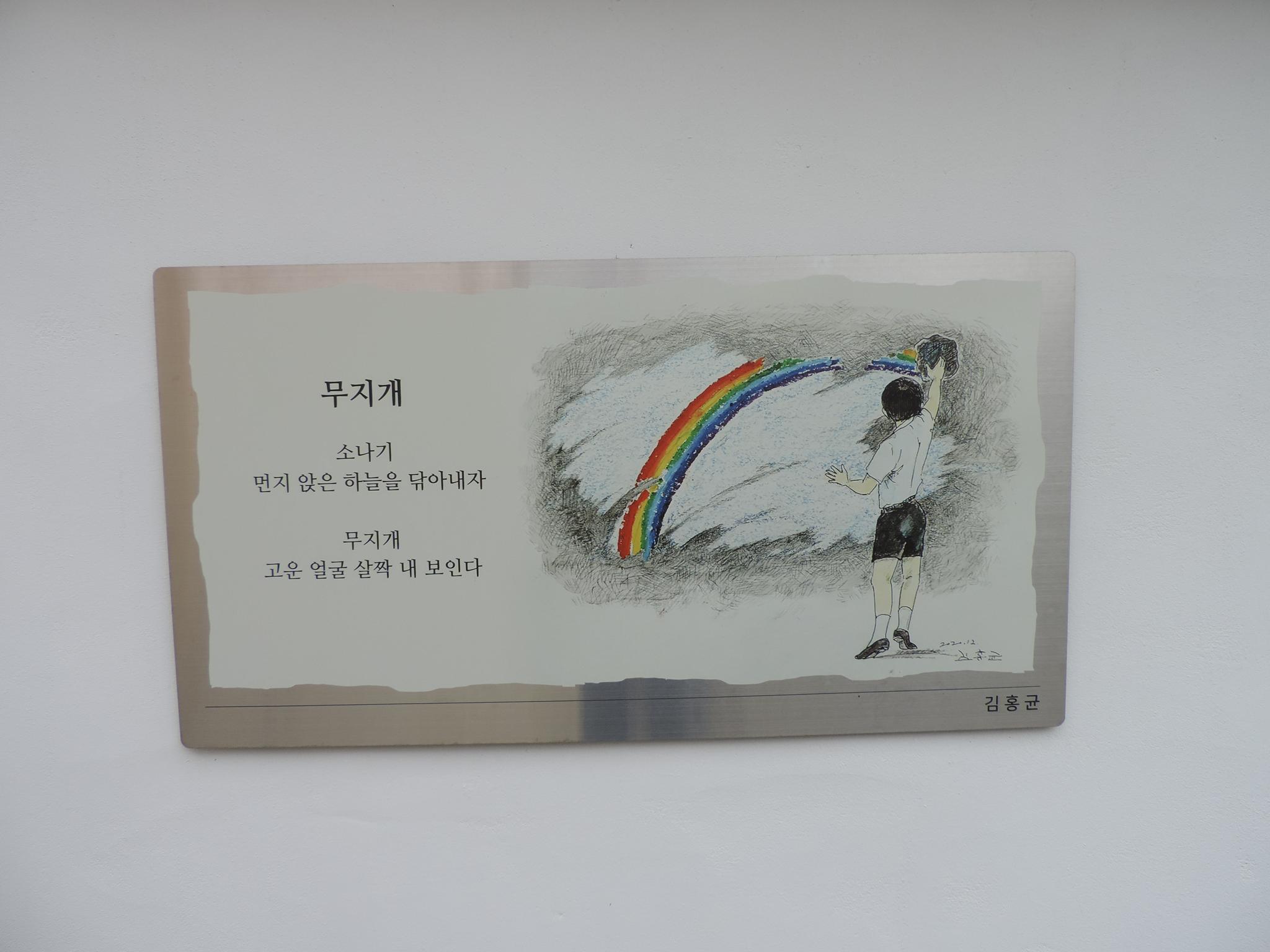
Curated by Kim Hong-gyun. Born in Haenam, Jeollanam-do in 1952, he attended school in Gwangju. Kim Hong-kyun, who taught children at an elementary school his entire career before retiring as principal, has been painting, writing poetry, and composing songs. He has published the essay collection „Dosirak (Poetry, Music, and Art)“ and the poetry collection „Those Days“, and curated “Dosirak Alley,” an exhibition bringing together the paintings, poetry, and songs of artists from Yangnim-dong. – Kim Hong-kyun
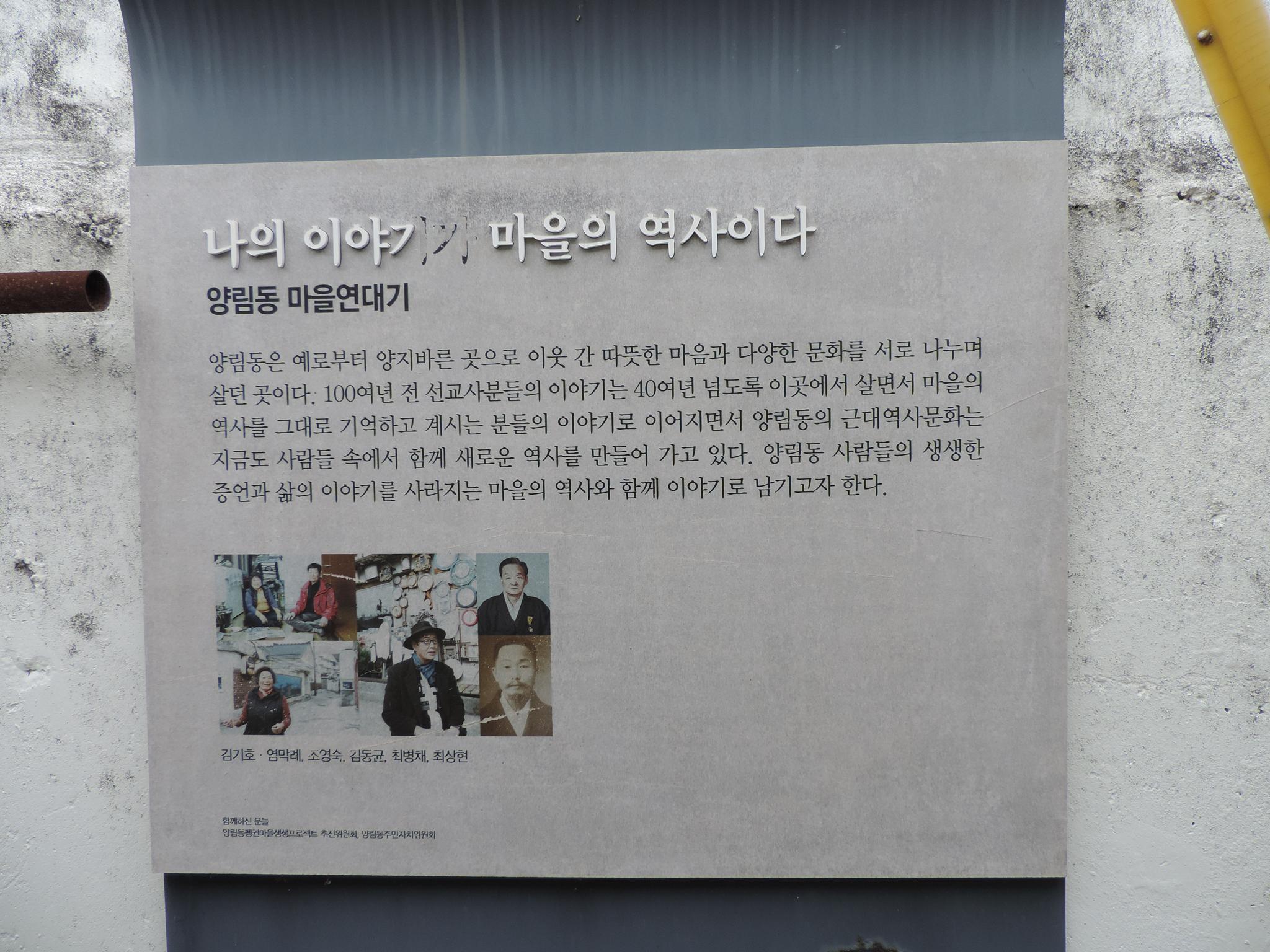
My Story Is the History of the Village – The Yangnim-dong Village Chronicle
Yangnim-dong has long been a sunny, welcoming place where neighbors lived in harmony, sharing warm hearts and diverse cultures. The stories of the missionaries from over 100 years ago have been passed down through the voices of those who have lived here for more than 40 years and vividly remember the village’s history. Thus, the modern history and culture of Yangnim-dong continue to be woven into a new narrative by the people who live here today. We aim to preserve the vivid testimonies and life stories of the people of Yangnim-dong, along with the history of this disappearing village, in the form of these narratives. – Kim Ki-ho, Yeom Mak-rye, Jo Young-sook, Kim Dong-kyun, Choi Byeong-chae, Choi Sang-hyun – Contributors: Yangnim-dong Penguin Village Vivid Project Steering Committee, Yangnim-dong Residents’ Autonomy Committee
Yangrim Modern History and Culture Village
Murals of Yangrim-dong Figures Painted by participating Artists: Han Hee-won, Park Gu-hwan, Jeong Un-hak, Lee Yi-nam. Kim Hyun-seung, Poet (1913–1975): Born in Pyongyang, he moved to Gwangju with his father, who became a pastor at Yangnim Church, and lived there. It is said that he often enjoyed contemplative walks along the hill leading to the current Honam Theological University, where the missionary’s residence once stood. Known as the “Poet of Autumn,” the “Poet of Solitude,” and the “Poet of Tears,” Kim Hyun-seung—the elder brother—made Yangnim-dong the birthplace of his literature. – Jeong Yul-seong, One of China’s Three Great Musicians (1914–1976): Born in Yangnim-dong, Jeong Yul-seong was a revolutionary musician who contributed to the development of East Asian music. Just as Korea’s “Arirang” resonates with the people, his “Yan’an Song” served as a voice for the joys and sorrows of the Chinese people and remains widely sung to this day. He is also known as an anti-Japanese activist from Gwangju who participated in the Independence Army as a member of the Righteous Army Corps.
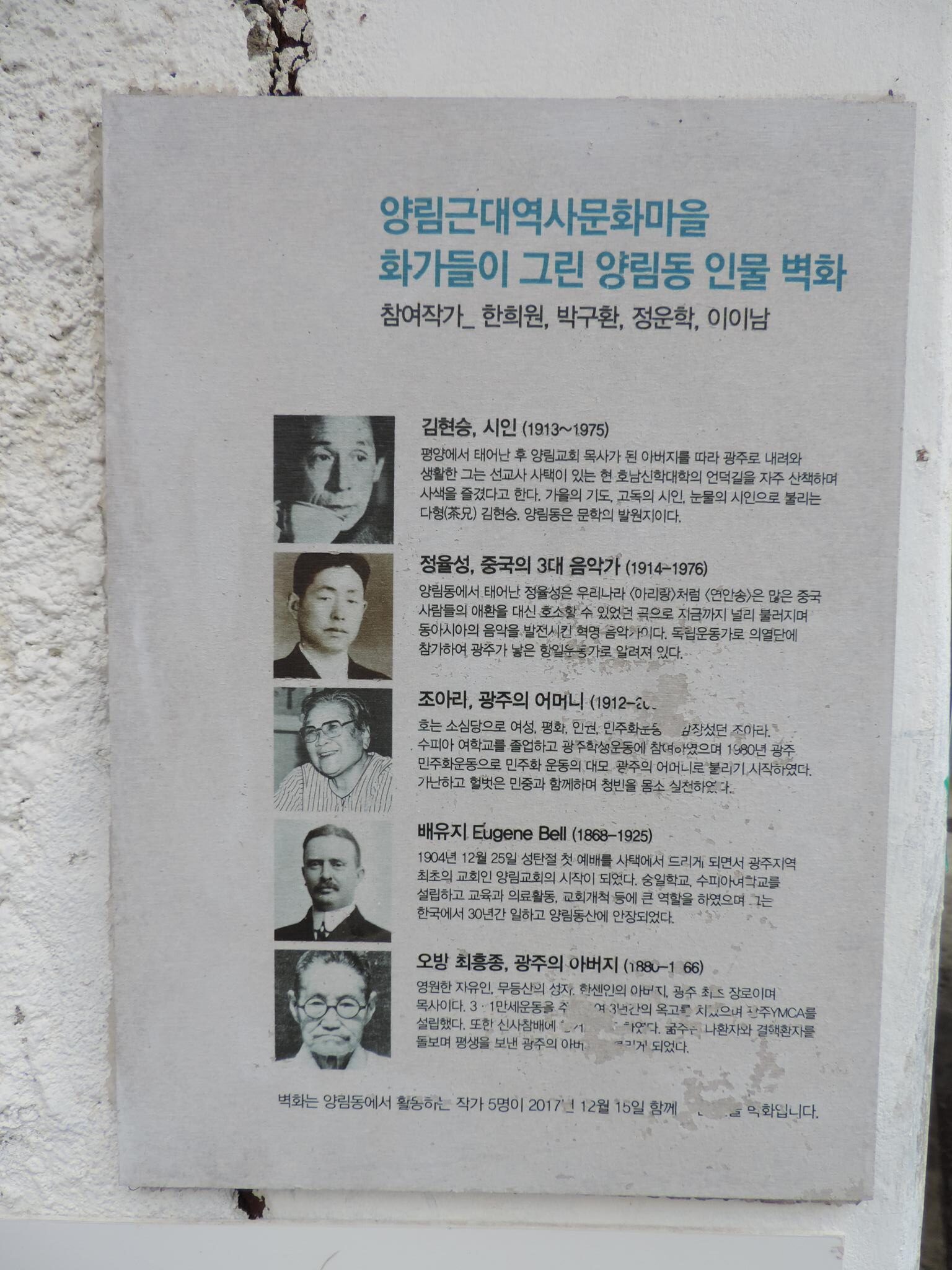
Jo Ara, Mother of Gwangju: Known by her pen name Sosimdang, Jo Ara was a pioneer in the women’s, peace, human rights, and democratization movements. After graduating from Sophia Girls’ School, she participated in the Gwangju Student Movement, and following the 1980 Gwangju Democratization Movement, she came to be known as the “Godmother of the Democratization Movement” and the “Mother of Gwangju.” She lived among the poor and destitute, personally practicing a life of simplicity. – Bae Yu-ji (Eugene Bell) (1868–1925): On December 25, 1904, the first Christmas service was held at his parsonage, marking the beginning of Yangnim Church, the first church in the Gwangju region. He founded Sungil School and Sophia Girls’ School and played a major role in education, medical activities, and church planting. After serving in Korea for 30 years, he was laid to rest at Yangnim Dongsan. – Oh Bang Choi Heung-jong, the Father of Gwangju (1880–1966): He is known as the Eternal Free Spirit, the Holy Site of Mudeungsan Mountain, the Father of Hansen’s Disease Patients, and the Pastor of Gongju. He endured three years of imprisonment for his role in the March 1st Independence Movement and founded the Gwangju YMCA. He also refused to bow to the Shinto shrine. He became known as the Father of Gwangju, having devoted his entire life to caring for starving leprosy and tuberculosis patients. – Created on December 15, 2017, by five artists active in Yangnim-dong
In Memory of pastor Choi Heung-jong & nurse Seo Seo-pyeong
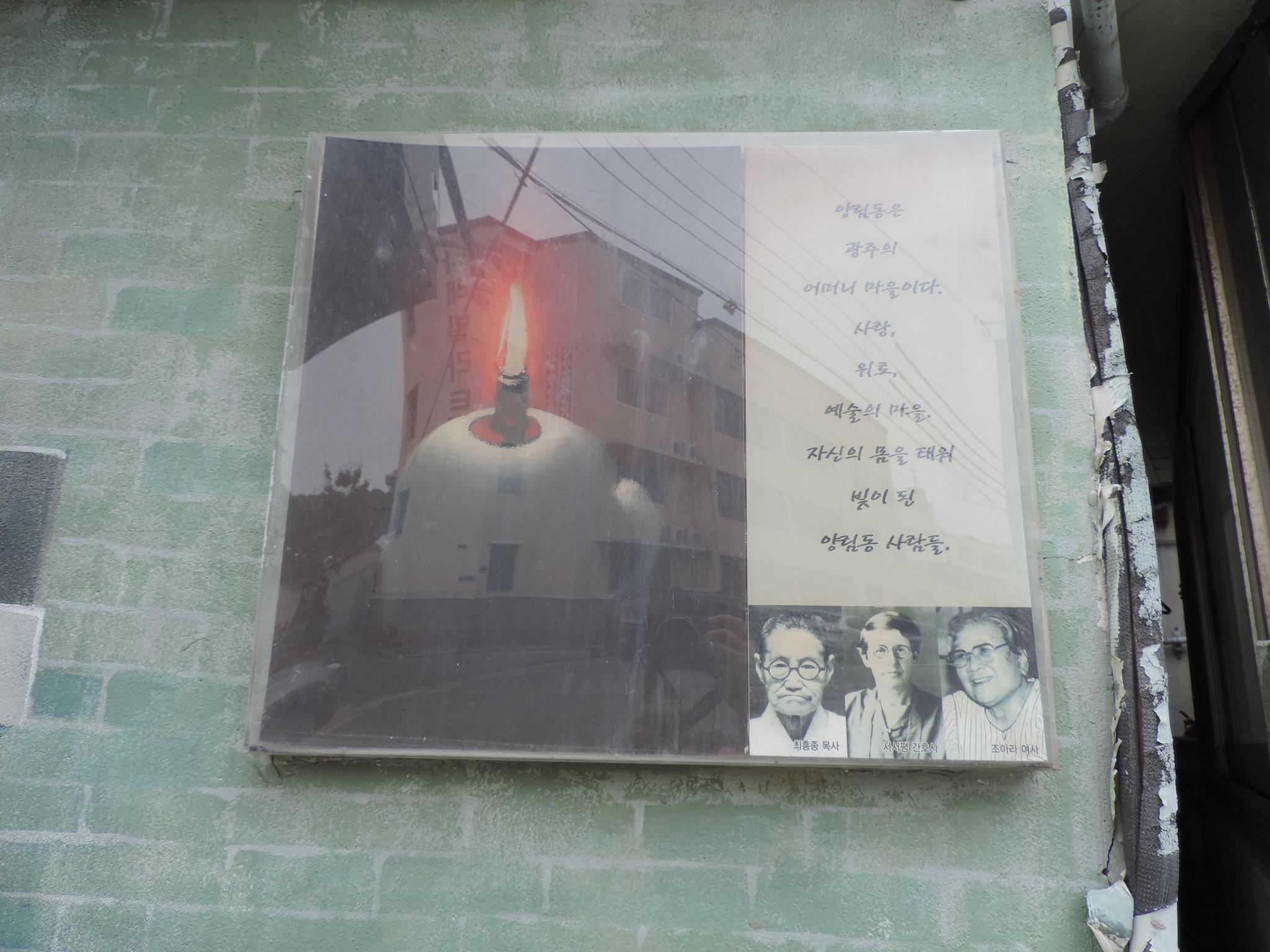
Yangnim-dong is the mother village of Gwangju. A village of love, comfort, and art. The people of Yangnim-dong, who sacrificed themselves to become a light. For pastor Choi Heung-jong and nurse Seo Seo-pyeong. – Mrs. Jo A-ra
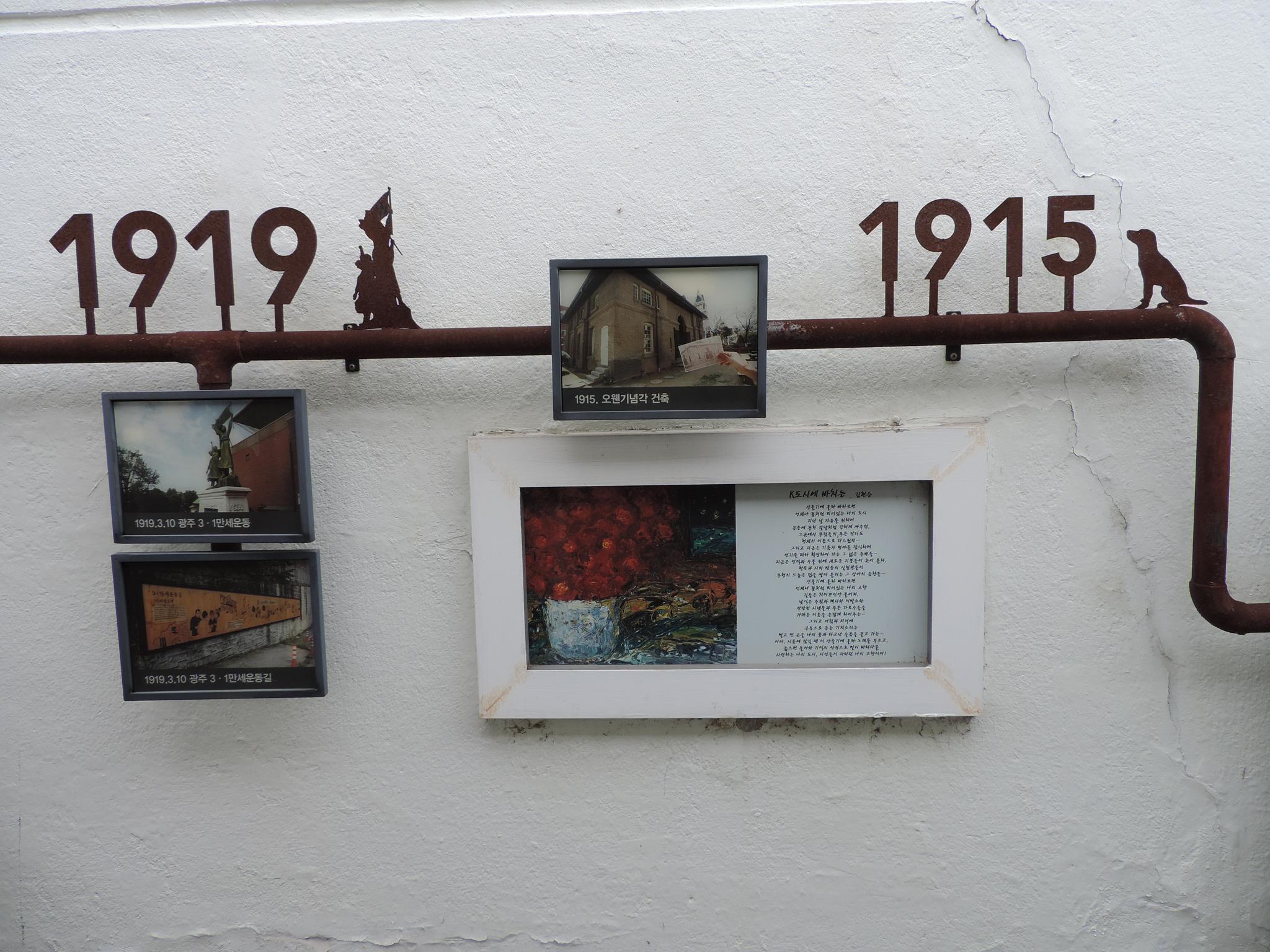
Owen Memorial Hall Miniature – The Birthplace of Gwangju’s new Culture
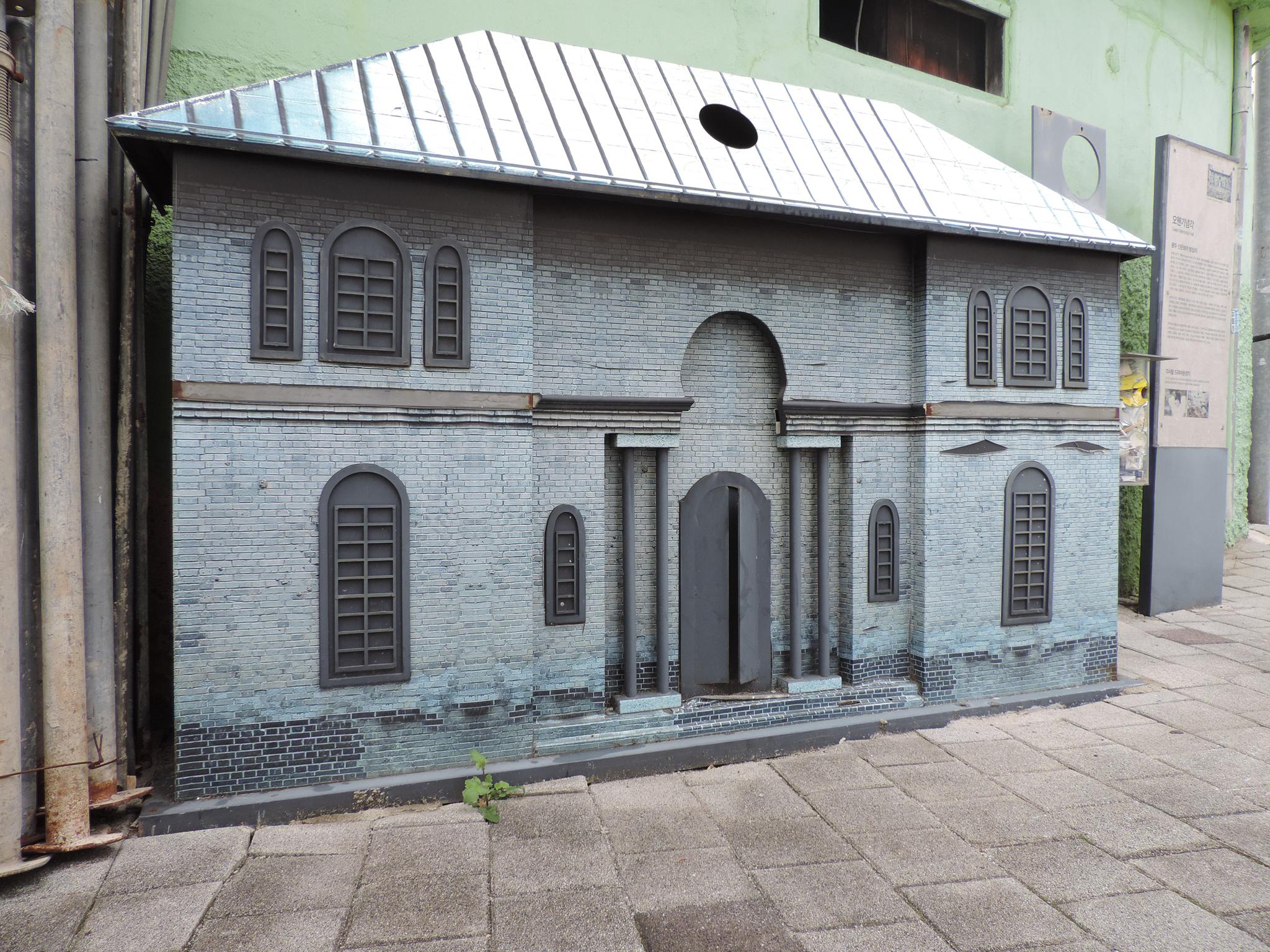
Owen Memorial Hall was built to commemorate Clement Gagging Owen (M.D., Clement Cangiorn Owen; Korean name: Oh Gi-won, 1867–1925), who served as the first missionary in Jeollanam-do alongside Rev. Eugene Bel (DD; Korean name: Bae Yu-ji, 1868–1925) and was martyred in Gwangju, as well as his father. Owen originally intended to establish a hospital in memory of his grandfather, but he came to believe that a large building for teaching the Bible was more necessary than a hospital. He sent a letter appealing that, if sufficient funds were secured, he would certainly build a magnificent structure equipped with classrooms and an auditorium, though not a dormitory, in the basement. However, less than two months after sending this letter and without ever receiving a reply, he passed away in the spring of 1909 in Jangheung, on his way to Geumseongnae. Subsequently, his family in the United States and his supporters erected the “Owen Memorial Hall” to commemorate his remarkable missionary work in Korea and his intention to build a facility for Bible study.
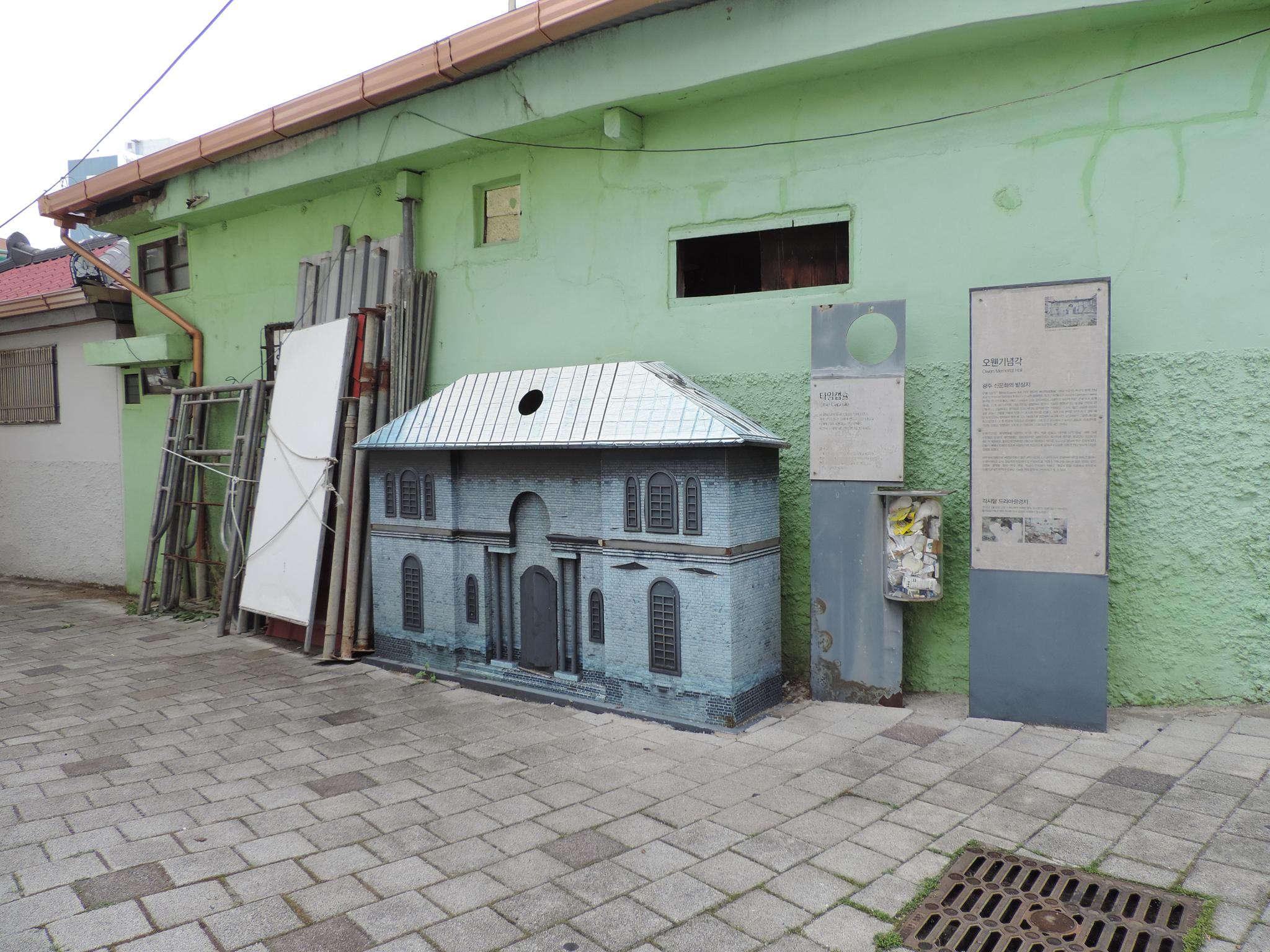
The Owen Memorial Hall features walls constructed of gray bricks laid in the Dutch style, with wooden pillars inside supporting the timber framework. Although the floor plan is square, the interior layout is symmetrical on either side of the pulpit located at the corner, and the side opposite the pulpit is a two-story structure. The floor slopes slightly toward the pulpit. Designed to be suitable for worship and gatherings, the building was once used as a church and hosted various meetings.
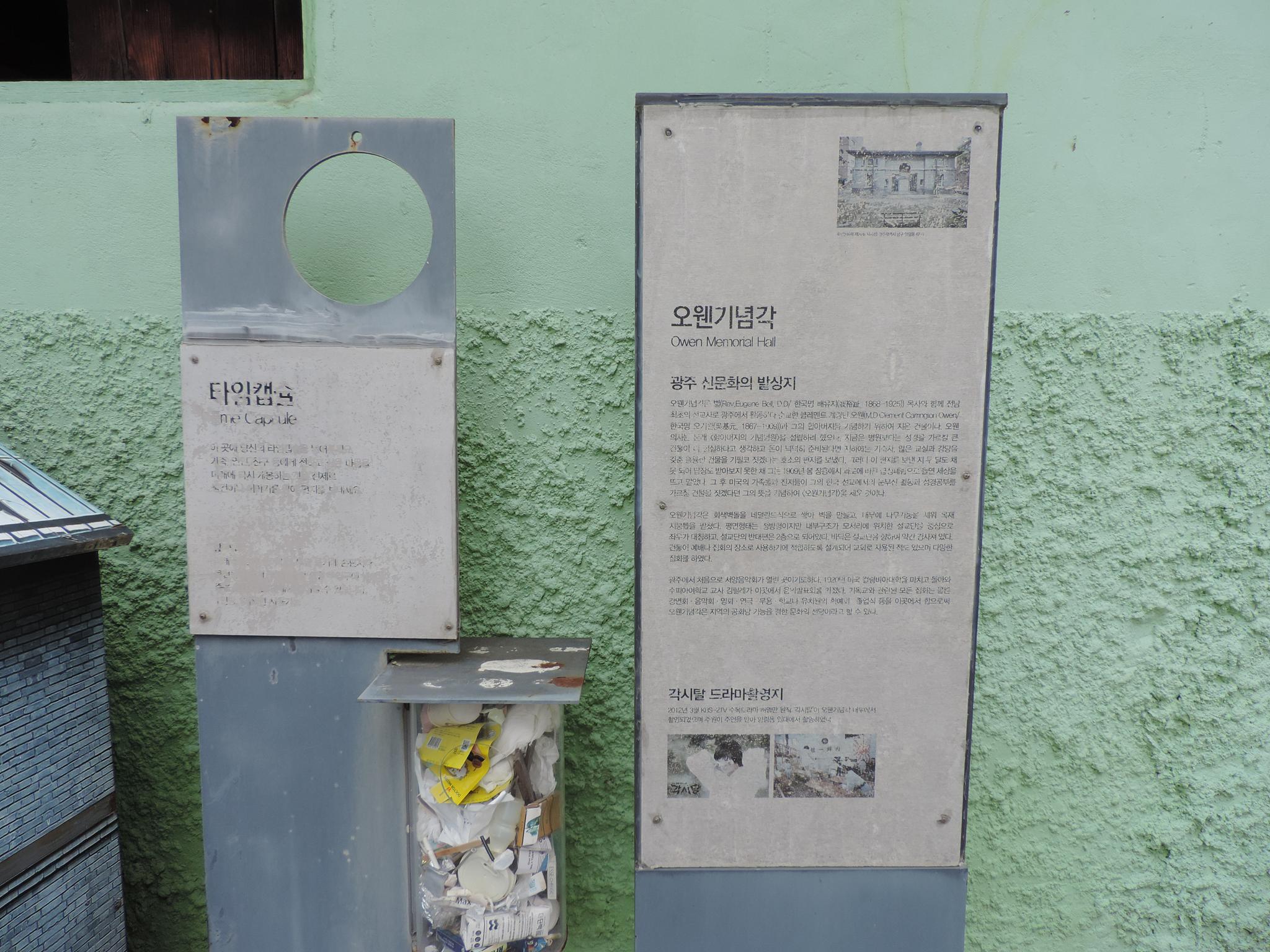
It was also the site of the first Western-style concert held in Gwangju. In 1920, Kim Pil-rae, a teacher at Sophia Girls’ School who had returned after graduating from Columbia University in the United States, held a music recital here. As the Owen Memorial Hall hosted not only Christian gatherings but also lectures, concerts, films, plays, dance performances, and school or kindergarten recitals and graduation ceremonies, it can be described as a cultural hub that also served as a community center for the region. Also it was filming location for the Drama “Gaksital”. In March 2012, the KBS-2TV Wednesday-Thursday drama “Gaksital,” based on the original work by Myung Man, was filmed inside the Owen Memorial Hall, with Joo Won starring in the lead role. This miniature house evokes the past, while also serving as a cigarette pack container. There is a hole in the roof where you can toss the packs inside.
Asia’s First – Resident-Led Village Beautification – ‚Penguin Village’ (Useless Yet Useful)
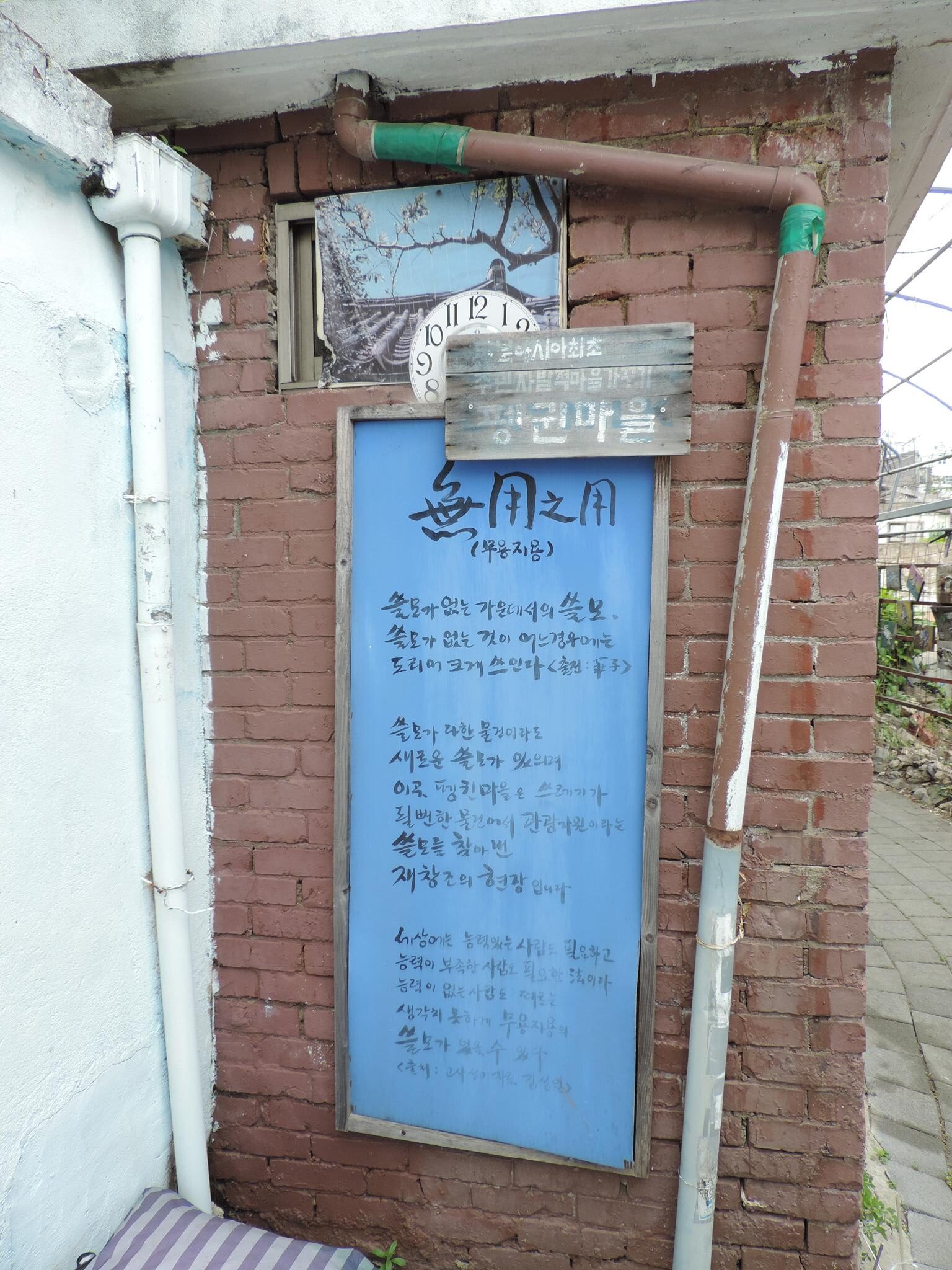
Usefulness found in the seemingly useless. What appears useless can, in some cases, prove to be of great use. Even objects that have outlived their original purpose can find new utility, and here at Penguin Village, we have transformed items that were nearly destined for the trash into valuable tourism resources – a true site of reinvention. Life requires both capable people and those who lack ability. Even those without ability can sometimes unexpectedly find a “useless yet useful” purpose.
The Story of Yangrim
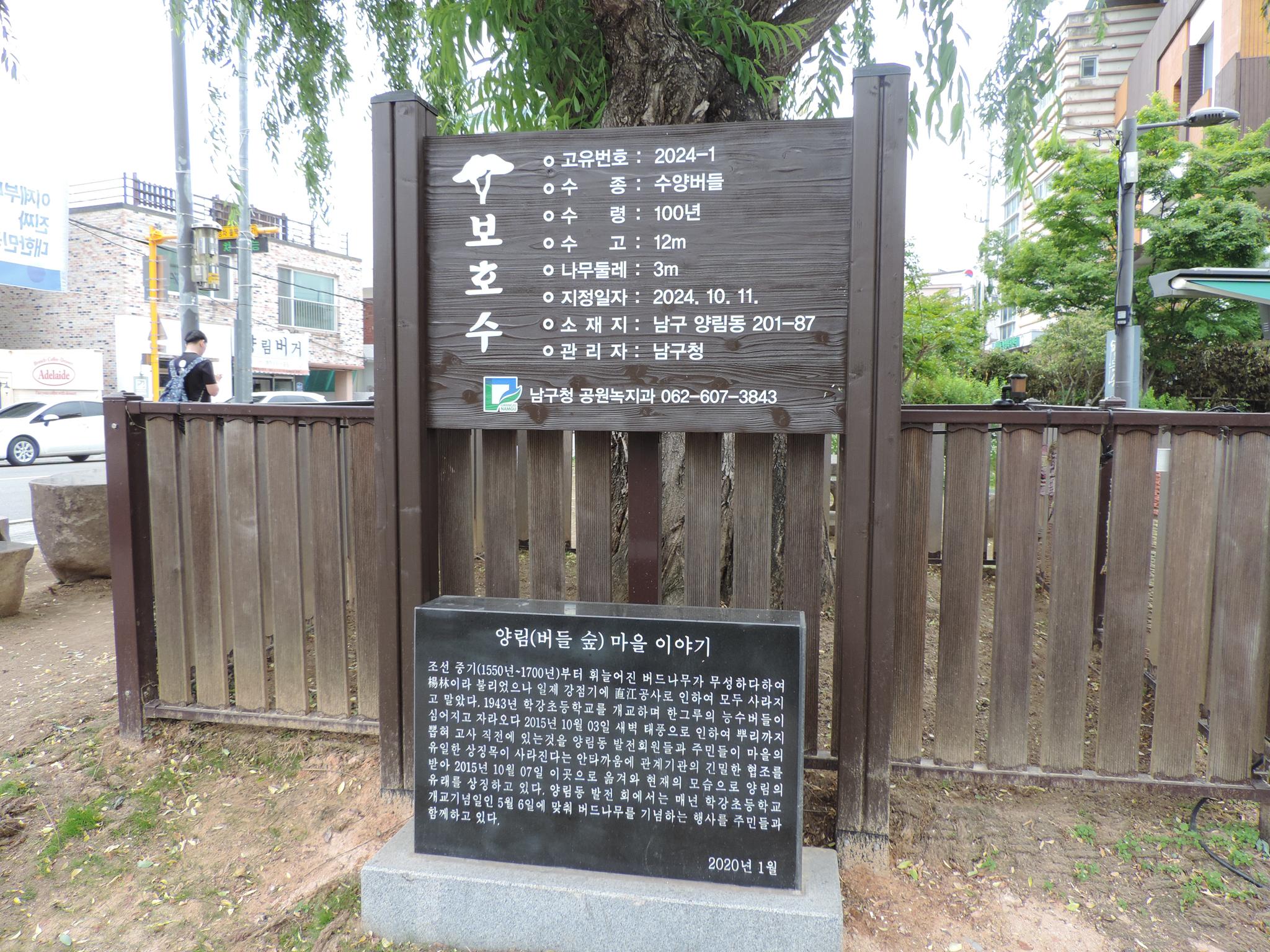
From the mid-Joseon Dynasty (1550–1700), the area was known as Yangrim because of its lush, weeping willows, but these were all destroyed during the Japanese colonial period due to the construction of the Chokgang River project. In 1943, a single weeping willow was planted when Hakgang Elementary School opened. As it grew, it was nearly uprooted by a typhoon in the early morning of 3rd October 2015, and was on the verge of dying. Deeply saddened by the prospect of losing the village’s only symbolic tree, members of the Yangnim-dong Development Association and residents worked closely with relevant authorities to have it relocated to this site on 7th October 2015 It was transplanted to this location, where it now stands as a symbol of Yangrim’s origins. Every year on May 6, the anniversary of Hakgang Elementary School’s founding, the Yangrim-dong Development Association holds a commemorative event for the willow tree together with the residents. – January 2020
Direction Signs
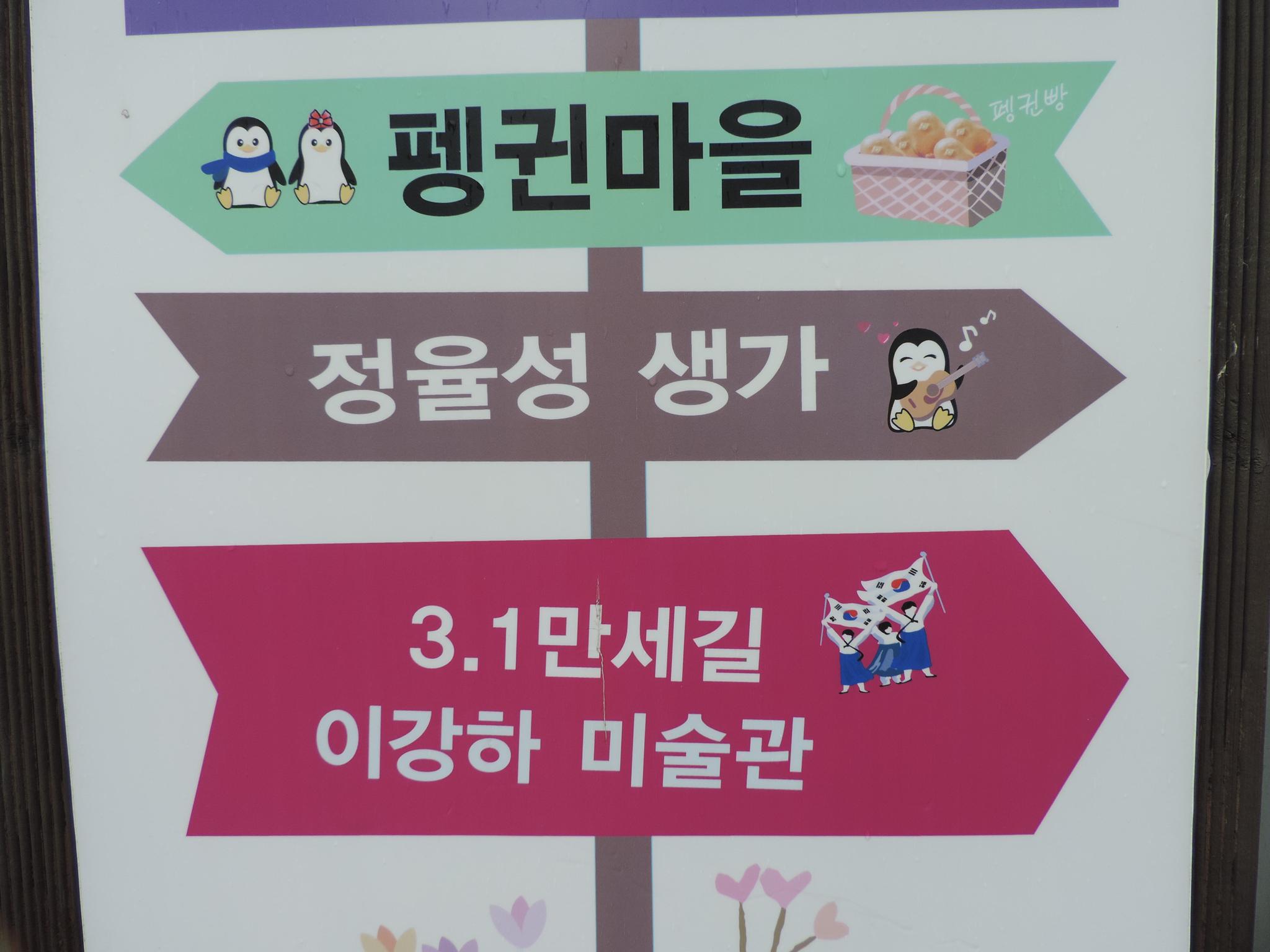
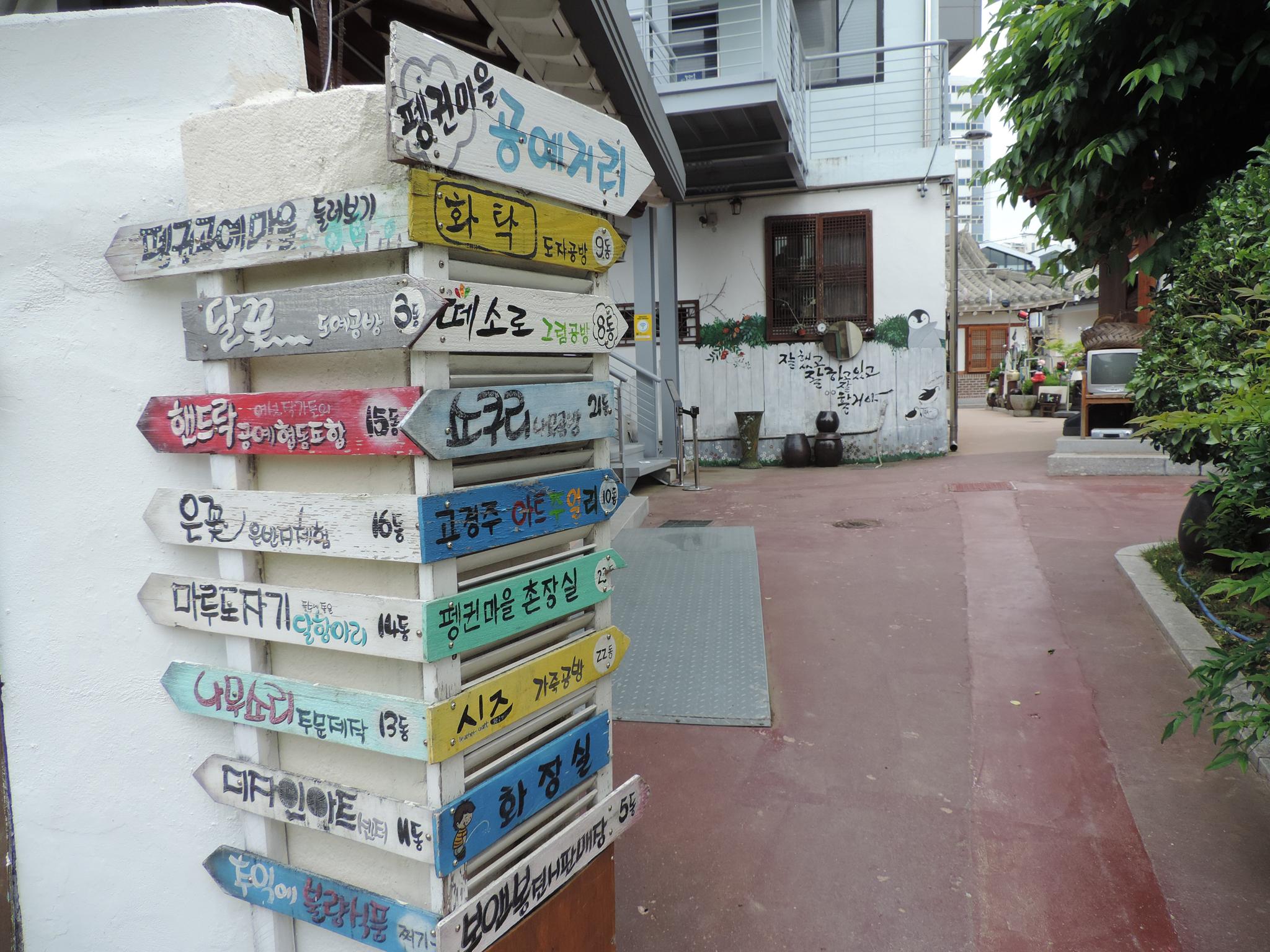
Neighborhood Map
Map Installation Mural

MORE ARTICLES ABOUT SOUTH KOREA
>>> Enigma13 – Graffiti Artist <<<
>>> Apgujeong Graffiti Tunnel <<<
>>> Sinchon Graffiti Tunnel <<<
>>> Goto Mall – 24 Hours Project <<<
>>> Banpo-daero – Picasso Tribute <<<
>>> Gwangju Penguin Village <<<
>>> Haeundae Sand Festival <<<
>>> Dashi Rock Media Festival <<<
>>> Gallery Square Art Academy <<<
>>> Monolugar Graffiti Hall <<<
>>> Jeonju – Streetart & Graffiti <<<
>>> Hongik Streetart & Graffiti <<<
>>> Wausan Streetart Wall <<<
>>> Suwon – Streetart & Graffiti <<<
>>> Paju – Streetart & Graffiti <<<
>>> Daegu – Muhak Art Alleys <<<
>>> Daegu – Streetart Jung-gu <<<
>>> Daegu – Streetart Nam-gu <<<
>>> Daegu – Streetart Suseong-gu <<<
>>> Goyang – Streetart & Graffiti <<<
>>> Motomall Graffiti Wall <<<
>>> Hong Jonggi – VØID Gallery <<<
>>> Toon Topia Exhibition <<<
>>> Chosun Art College <<<
>>> Cuma Chosun Exhibition <<<
>>> Jaman Mural Village <<<
>>> Ihwa Mural Village <<<
>>> Gamcheon Mural Village <<<
>>> Gwangju Art Street <<<
>>> Itaewon – Streetart <<<
>>> Itaewon – Graffiti <<<
>>> Baegun Streetart Wall <<<
>>> Sillim River Streetart <<<
>>> Nambusunhwan Urban Art <<<
>>> Imjingak DMZ Streetart <<<
>>> Hongdae Red Road <<<
>>> Red Road Tiles Project <<<
>>> Itaewon „Hello“ Series <<<
>>> Songhyeon Sculpture Park <<<
>>> Uijeongbuji Sculpture Park <<<
>>> Museum of Craft Arts <<<
>>> Busan Sculpture Gallery <<<
>>> Daegu Sculpture Gallery <<<
>>> Gwangju Sculpture Gallery <<<
>>> Haeundae Sculpture Gallery <<<
>>> Jeonju Hanok Village <<<
>>> Imjingak DMZ Memorials <<<
>>> Pyeonghwa Nuri Sculptures <<<
>>> Seoul Sculpture Gallery <<<
>>> Suwon Sculpture Gallery <<<
>>> Gyo-Dong Kidult Figures <<<
>>> Stella Lucens Anime Café <<<
>>> Busan Street Manikins <<<
>>> Daegu Street Manikins <<<
>>> Gwangju Street Manikins <<<
>>> Jeonju Street Manikins <<<
>>> Seoul Street Manikins <<<
>>> Seoul Manga & Anime Signs <<<
>>> Bukchon Hanok Village <<<
>>> Ami Tomb Stone Village <<<
>>> Busan – Architecture <<<
>>> Daegu – Architecture <<<
>>> Goyang – Architecture <<<
>>> Gwangju – Architecture <<<
>>> Jeonju – Architecture <<<
>>> Paju – Architecture <<<
>>> Suwon – Architecture <<<