text text text
text text text
text text text
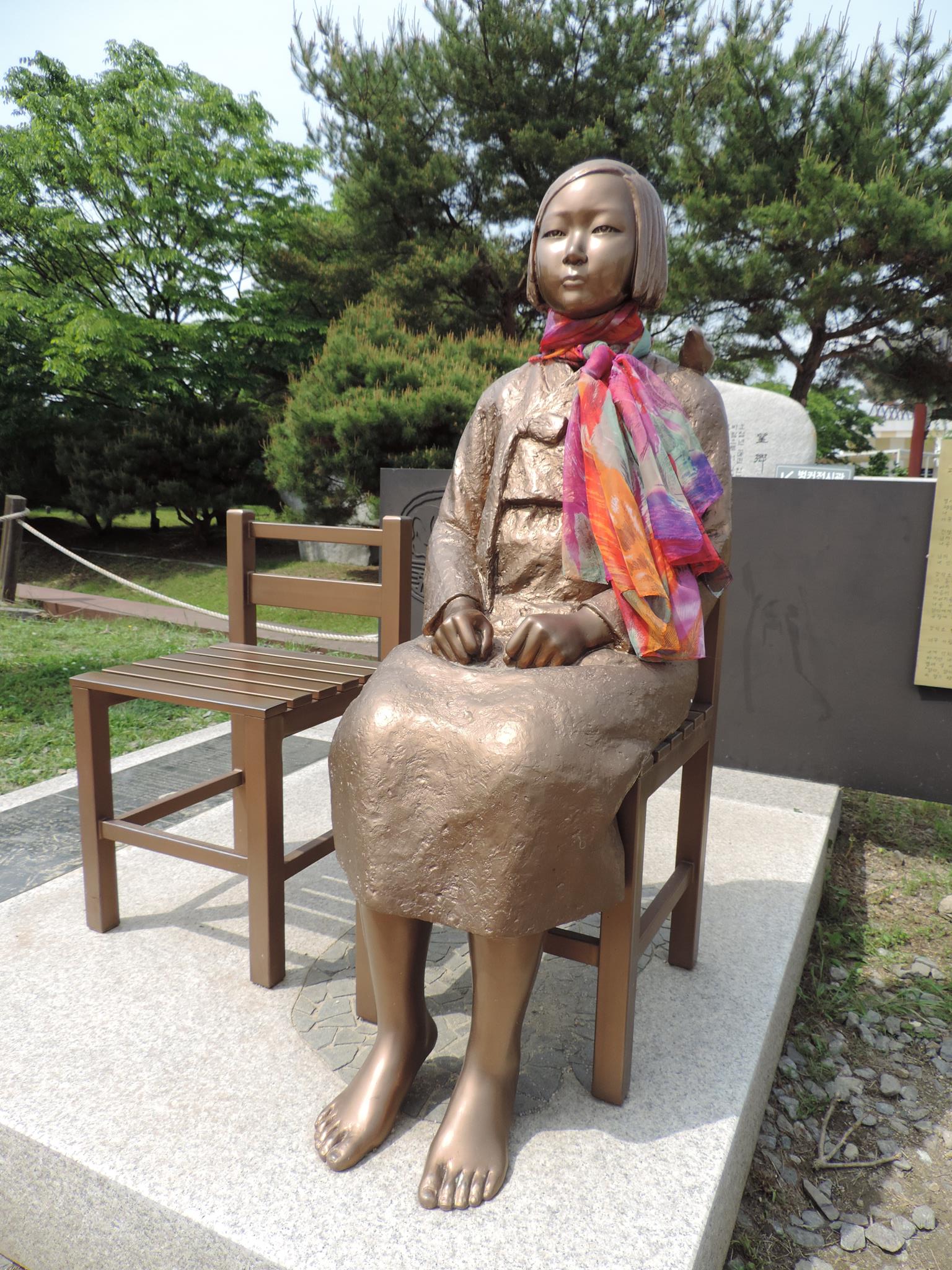
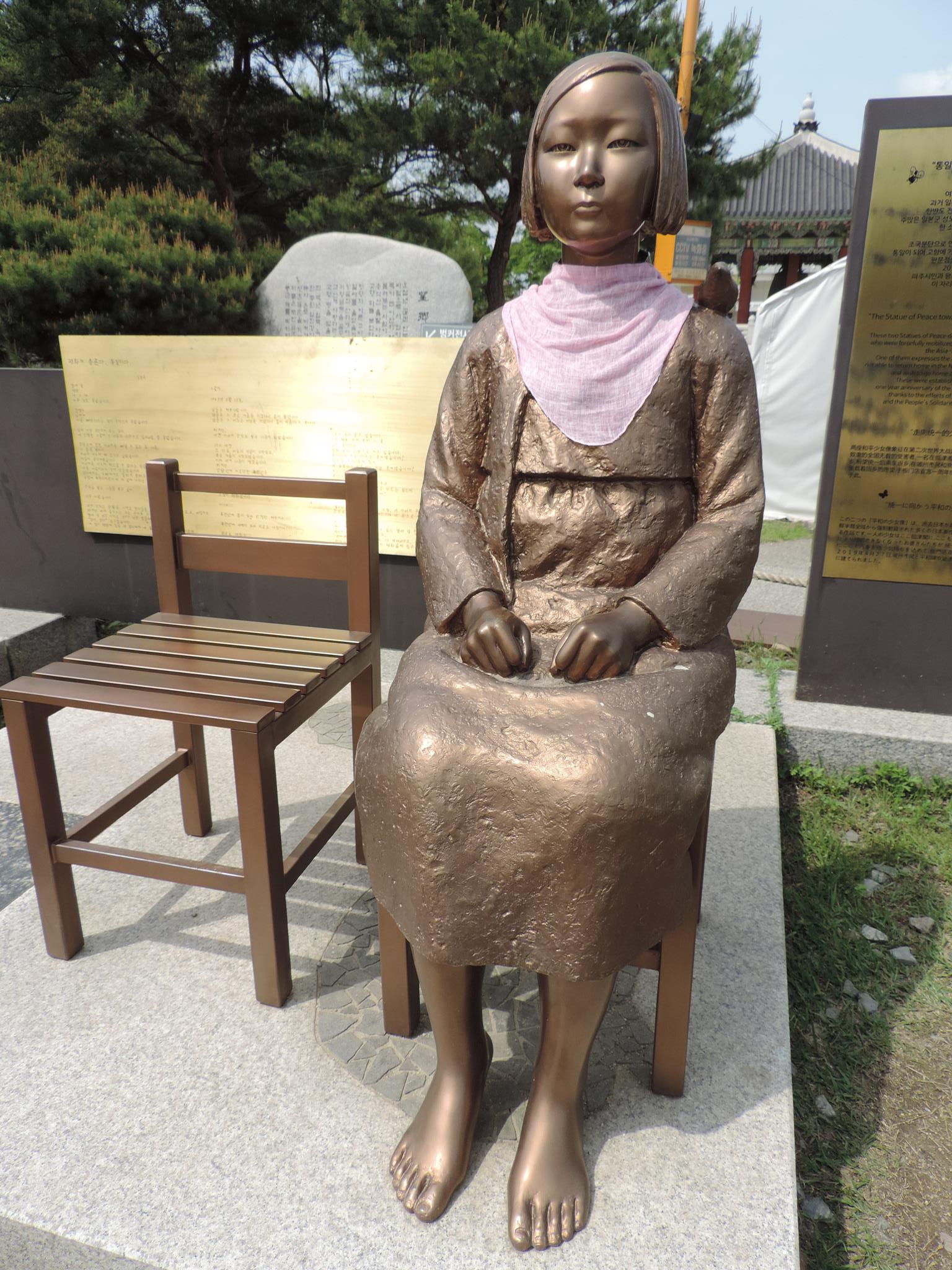
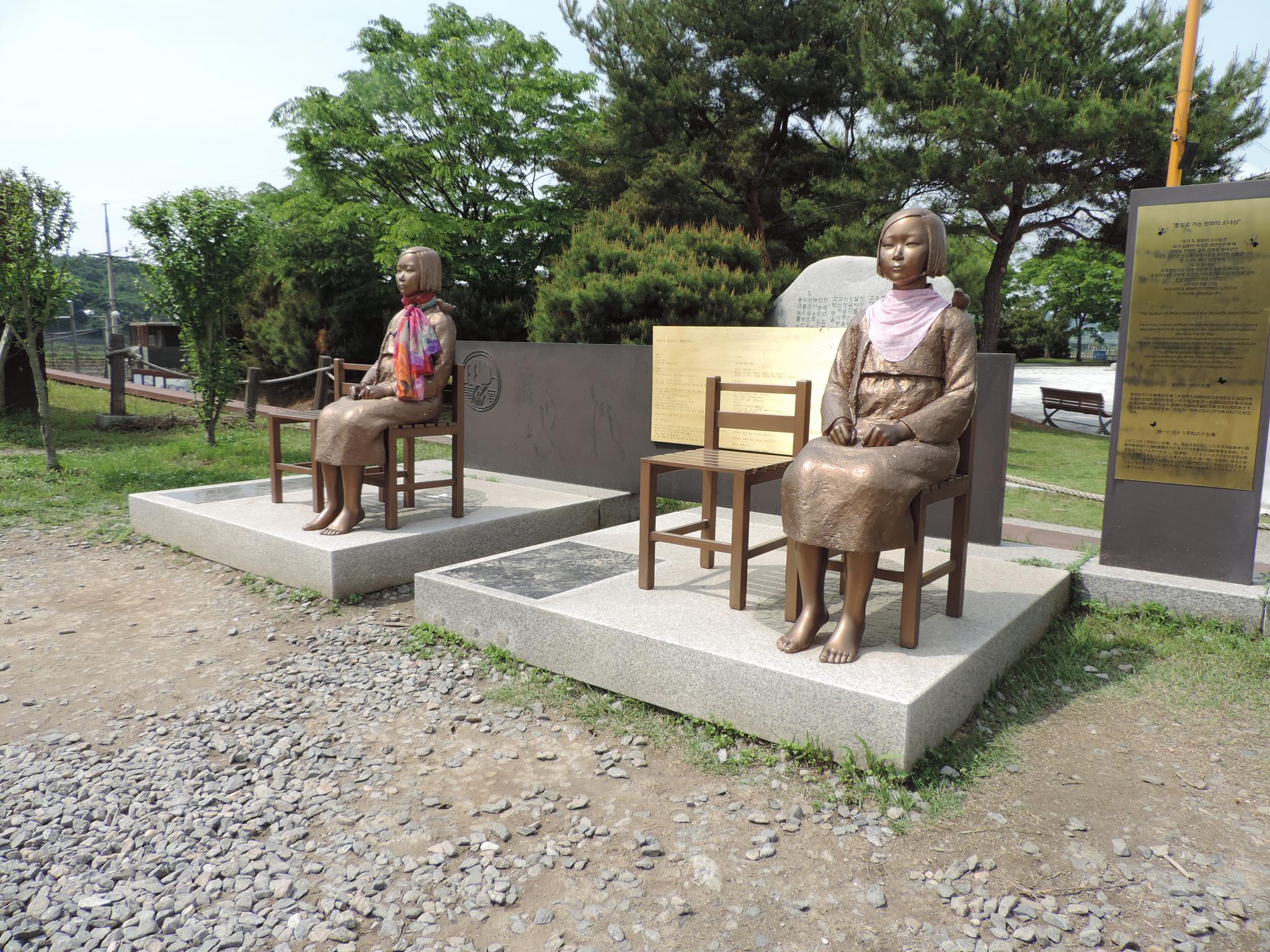
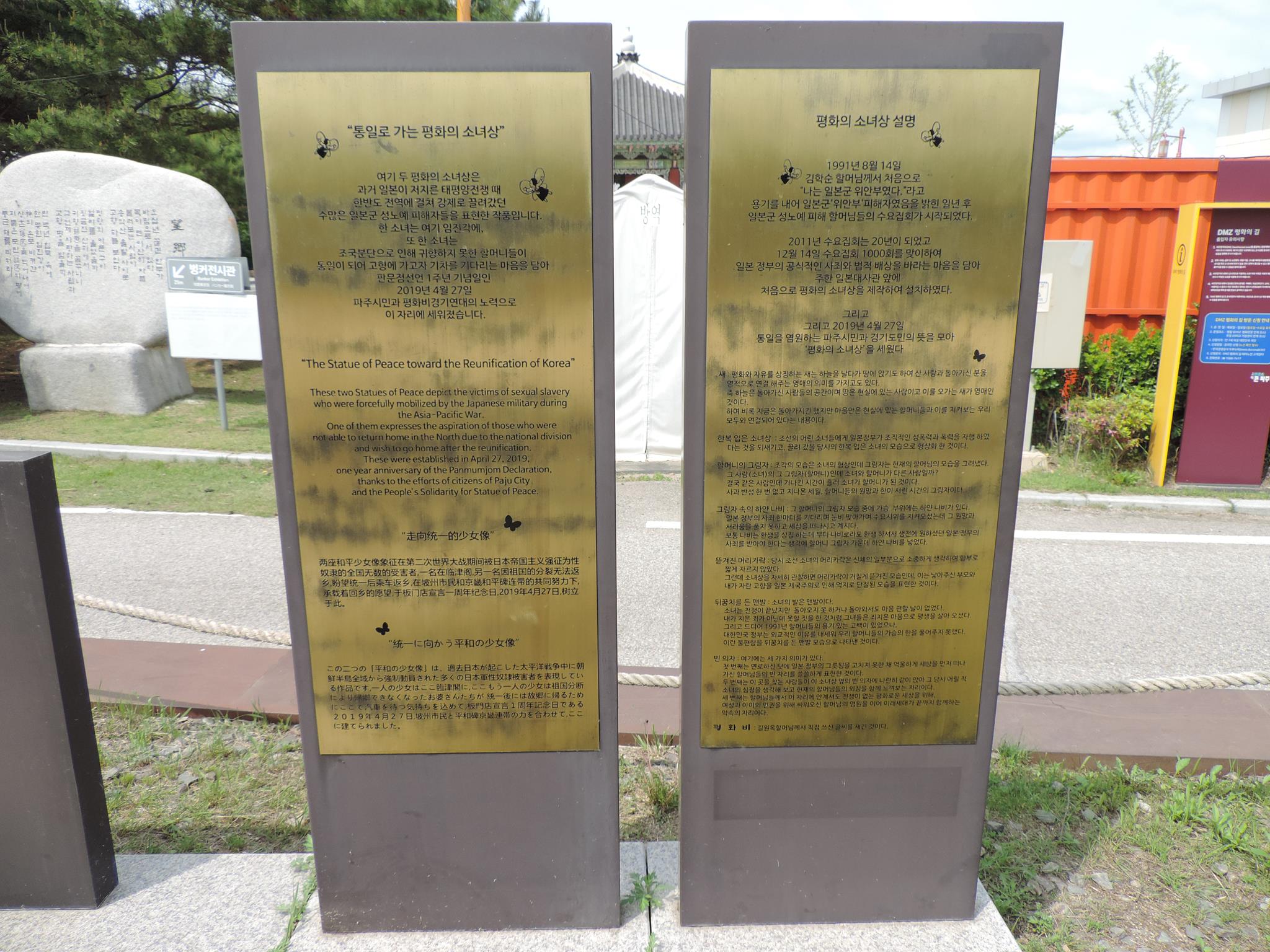
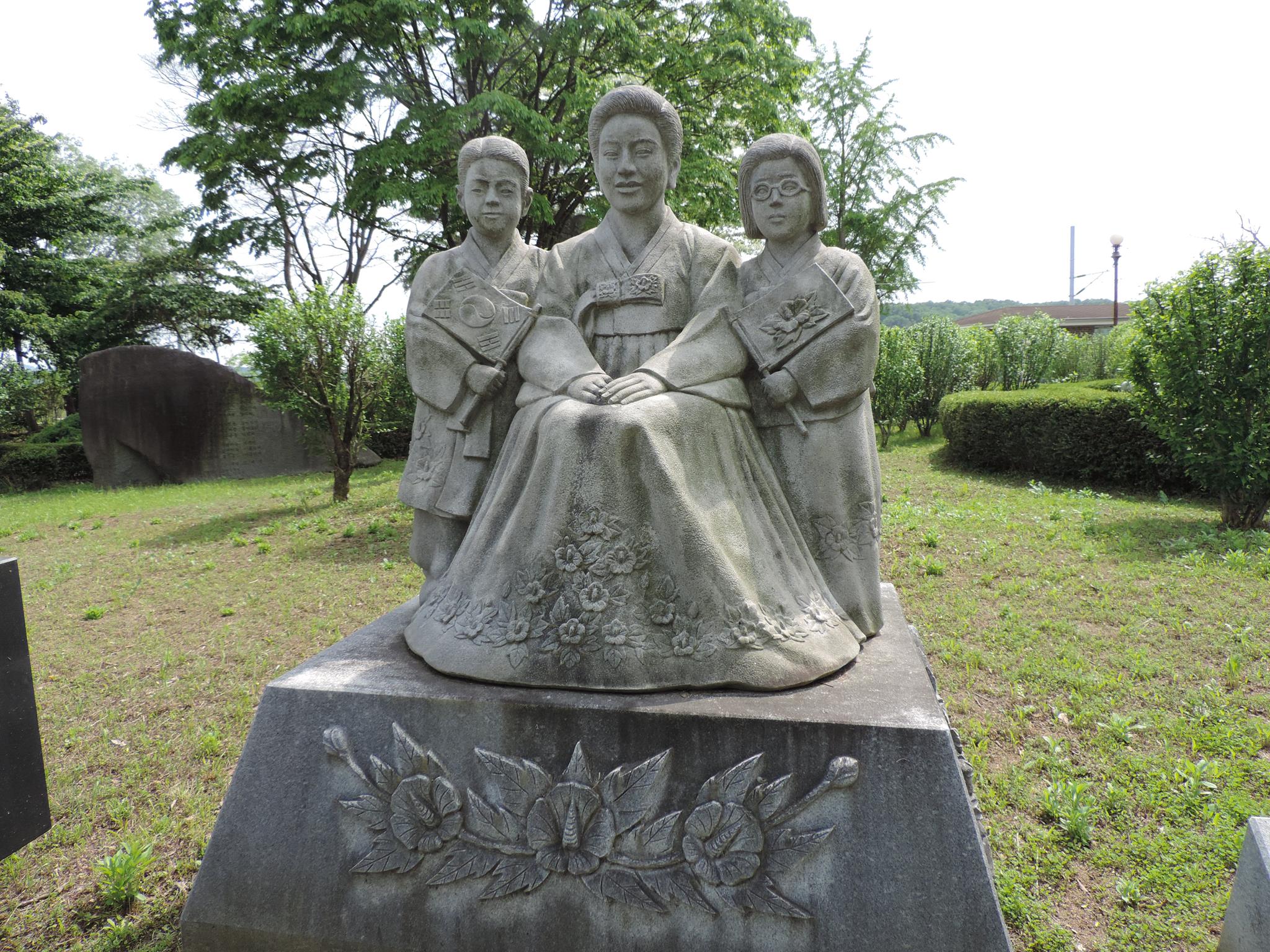
„The Statues of Peace toward the Reunification of Korea“
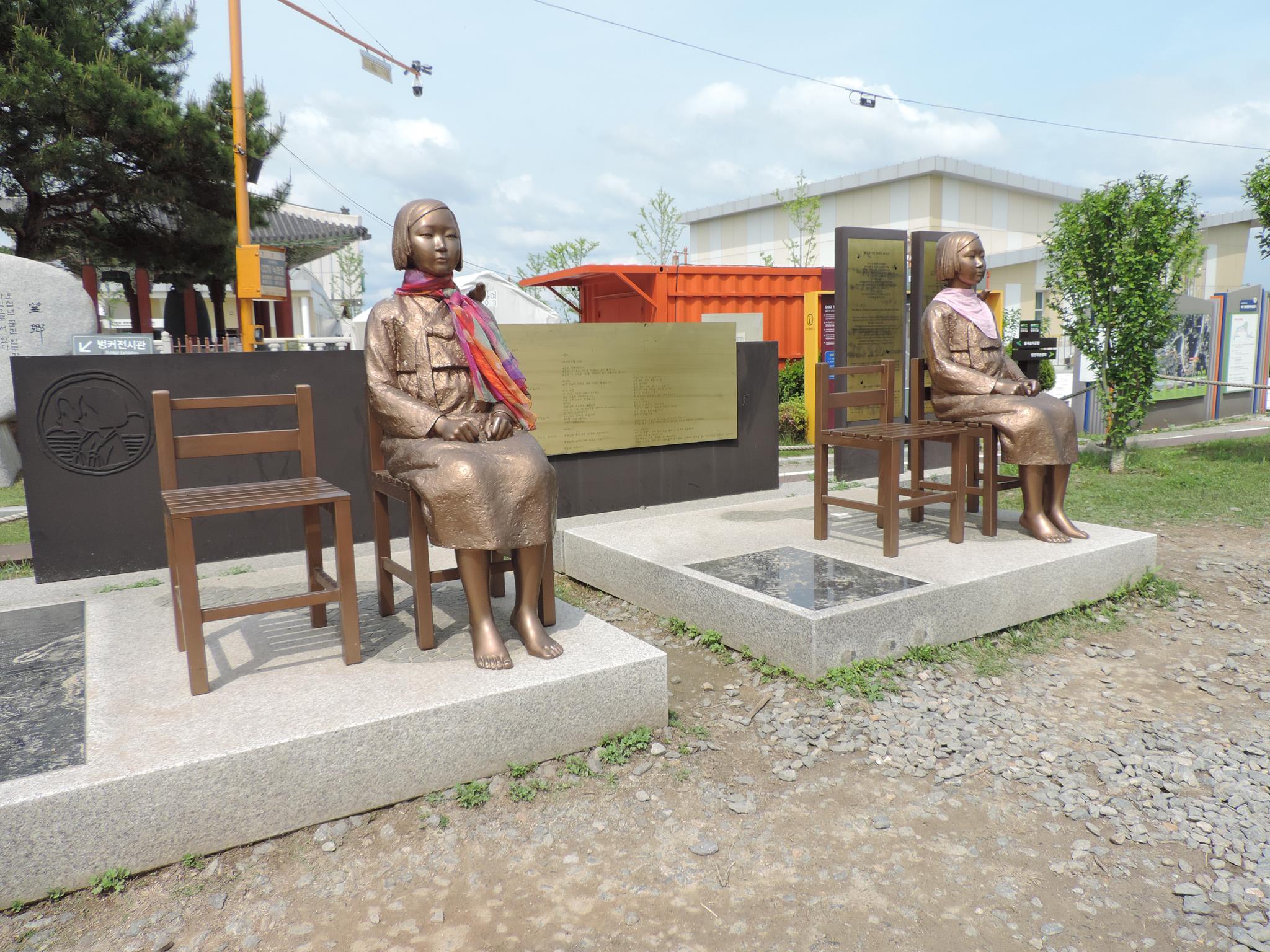
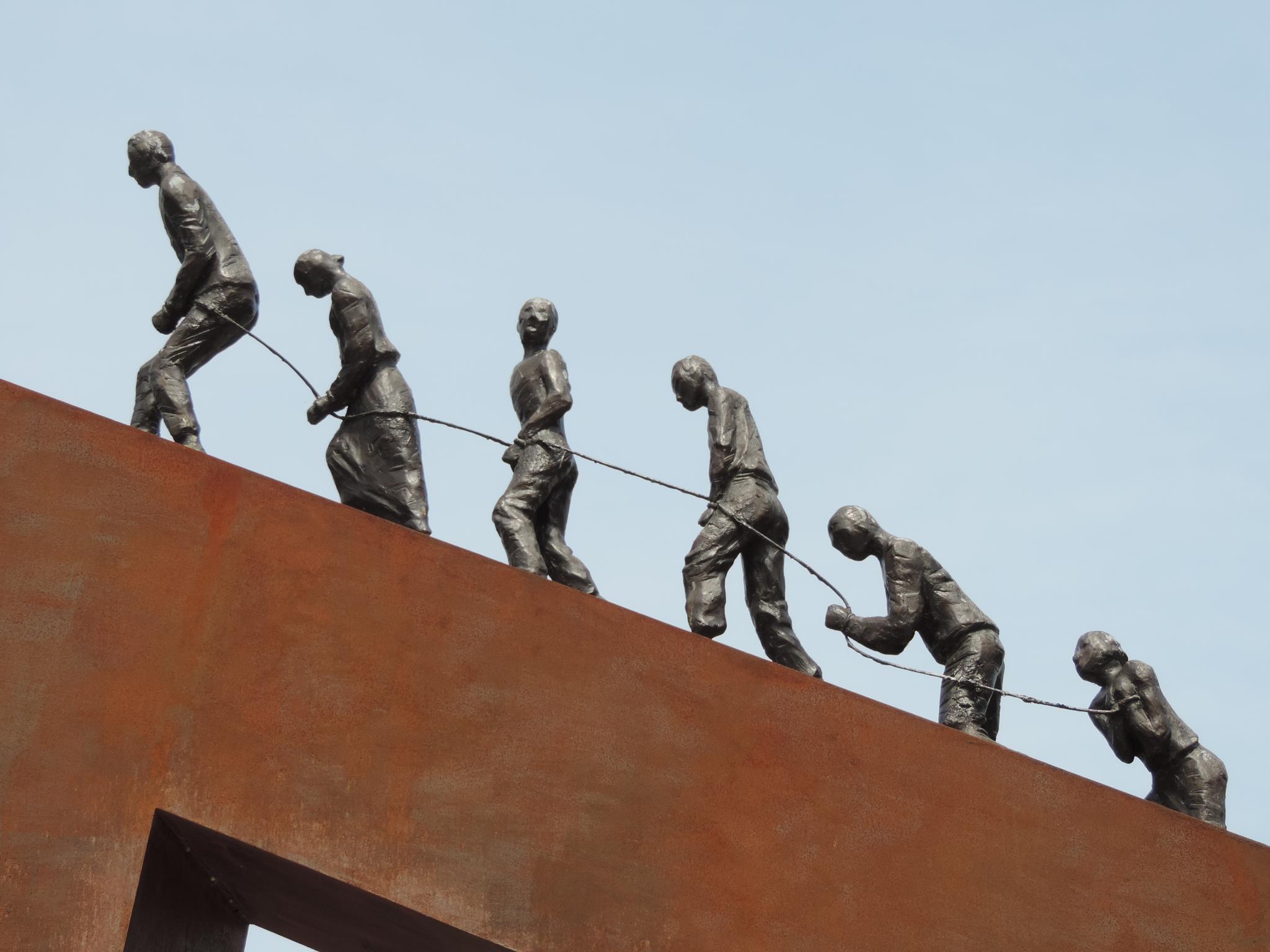
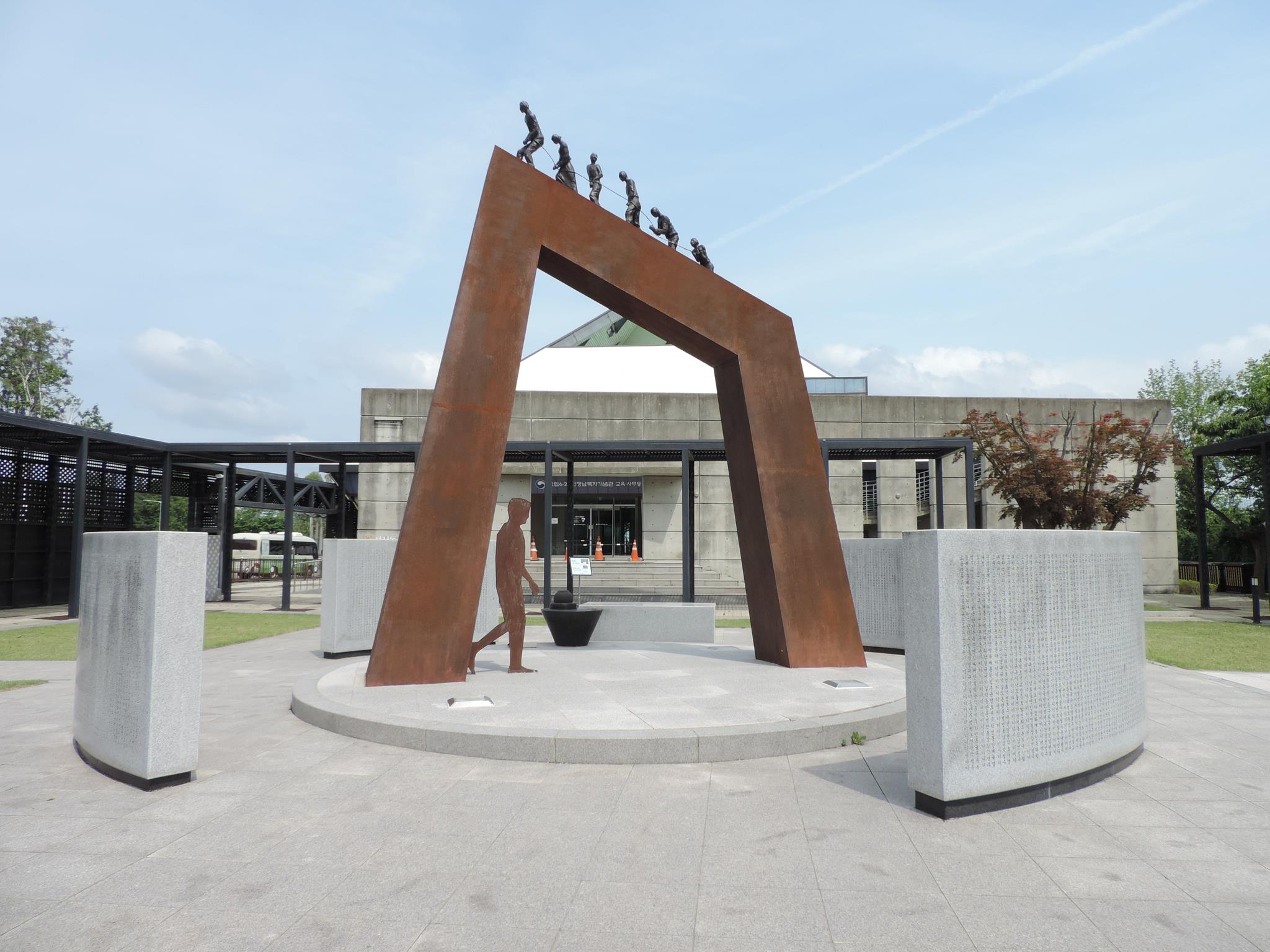
Inscription: These two Statues of Peace depict the victims of sexual slavery who were forcefully mobilized by the Japanese military during the Asia-Pacific War. One of them expresses the aspiration of those who were not able to return home in the North due to the national division and wish to go home after the reunification. These were established in April 27th in 2019 during the one year anniversary of the Panmumjom Declaration. Thanks to the efforts of citizens of Paju City and the People’s Solidarity for the Statue of Peace.
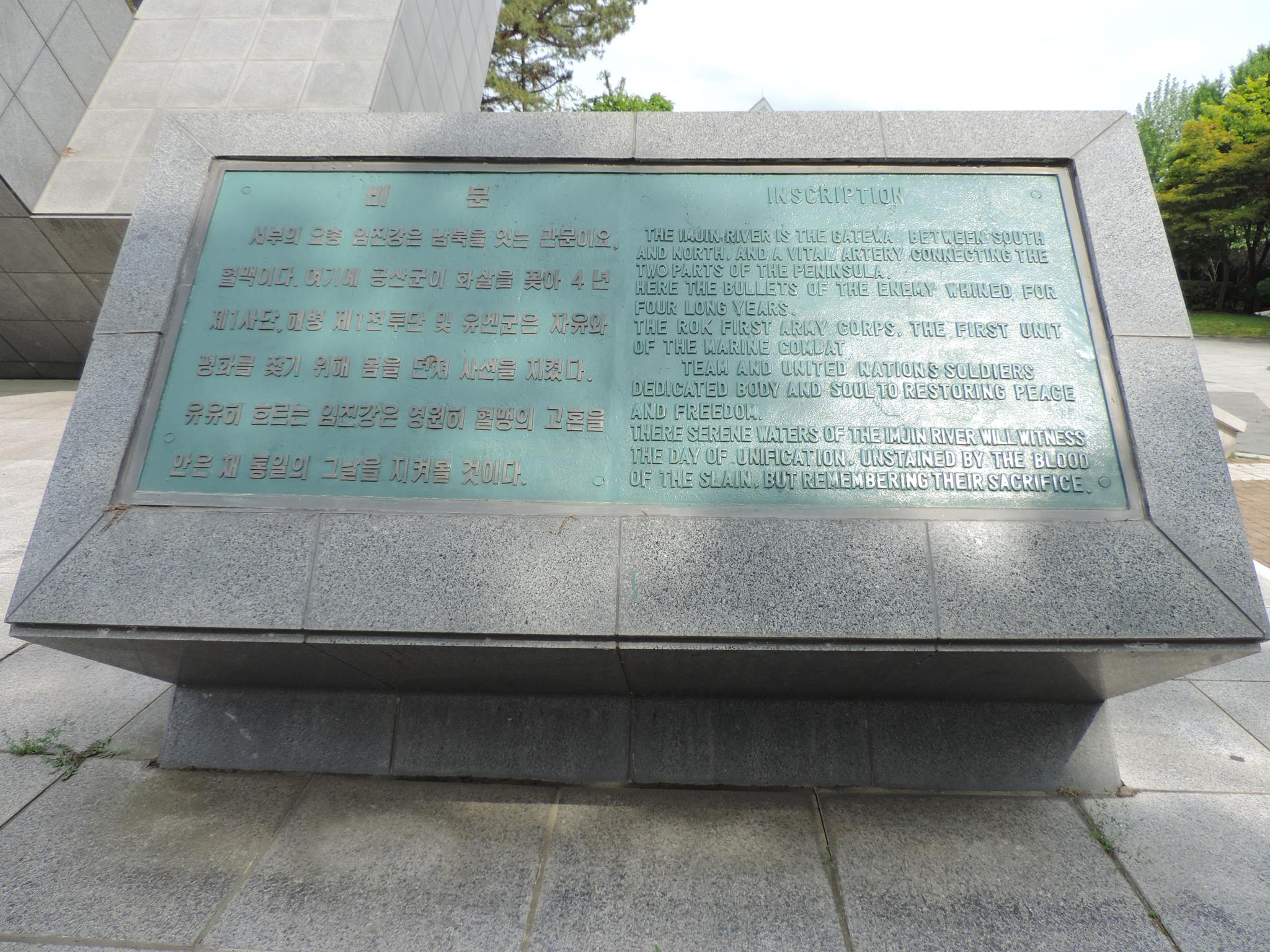
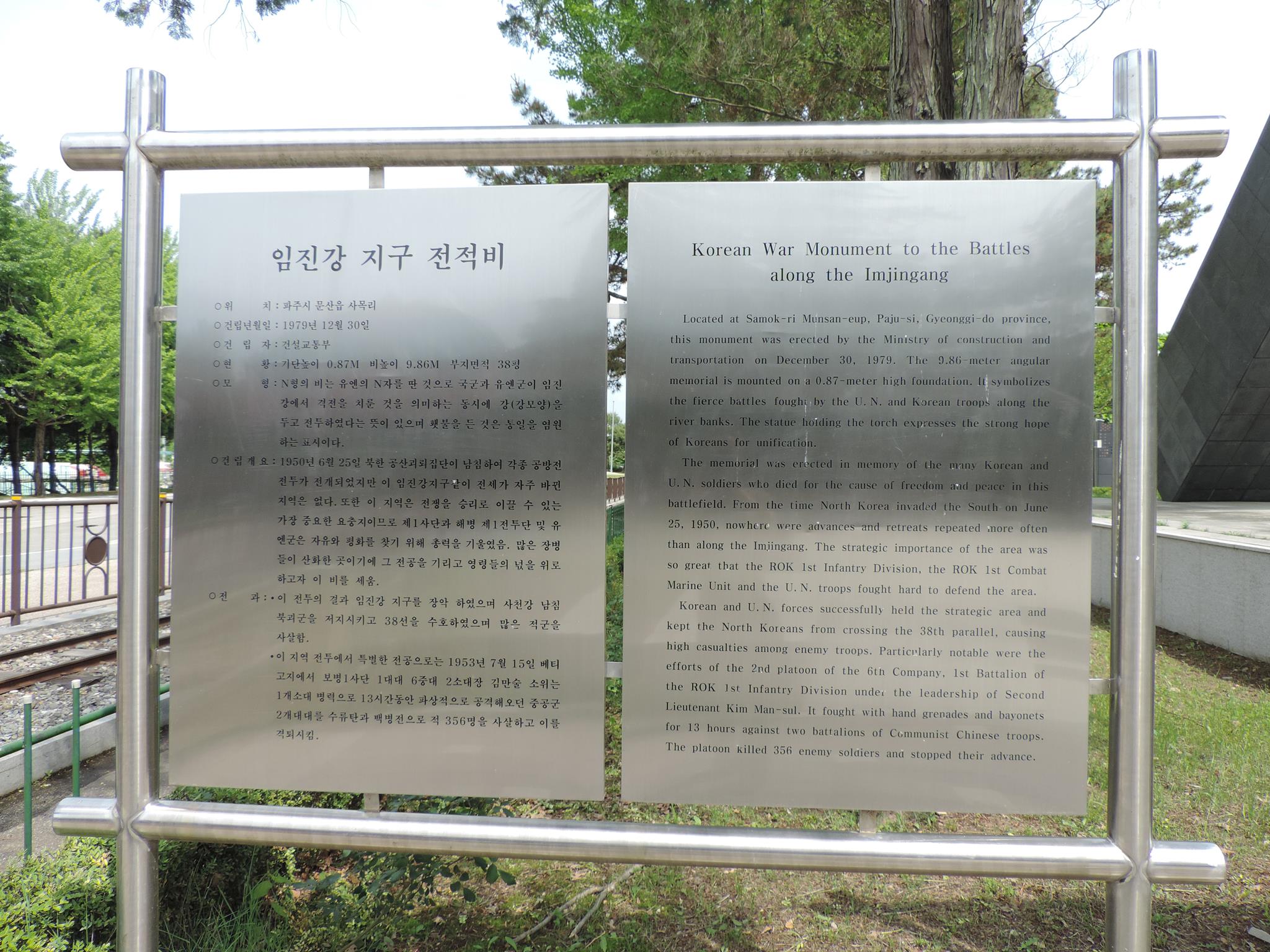
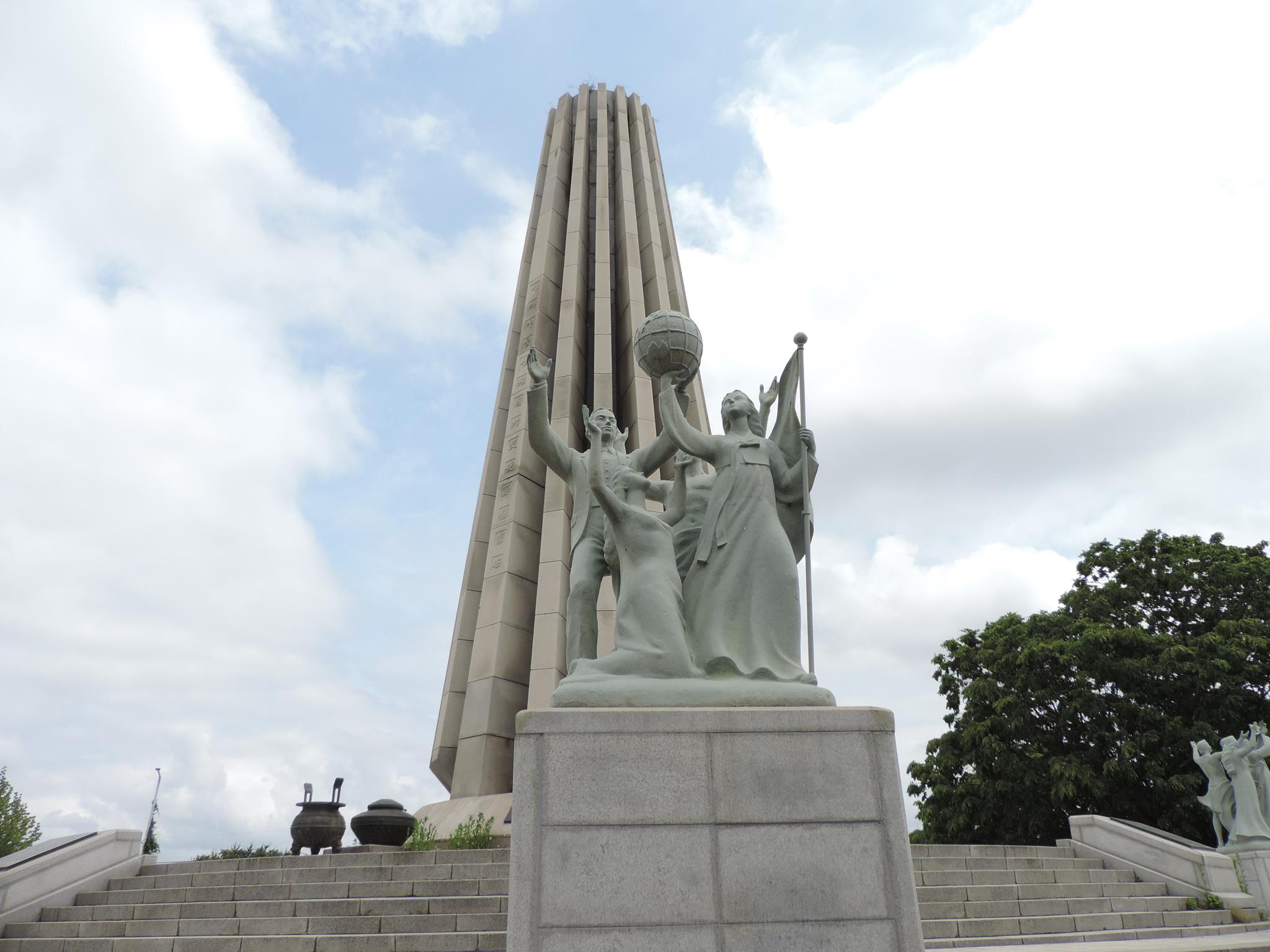
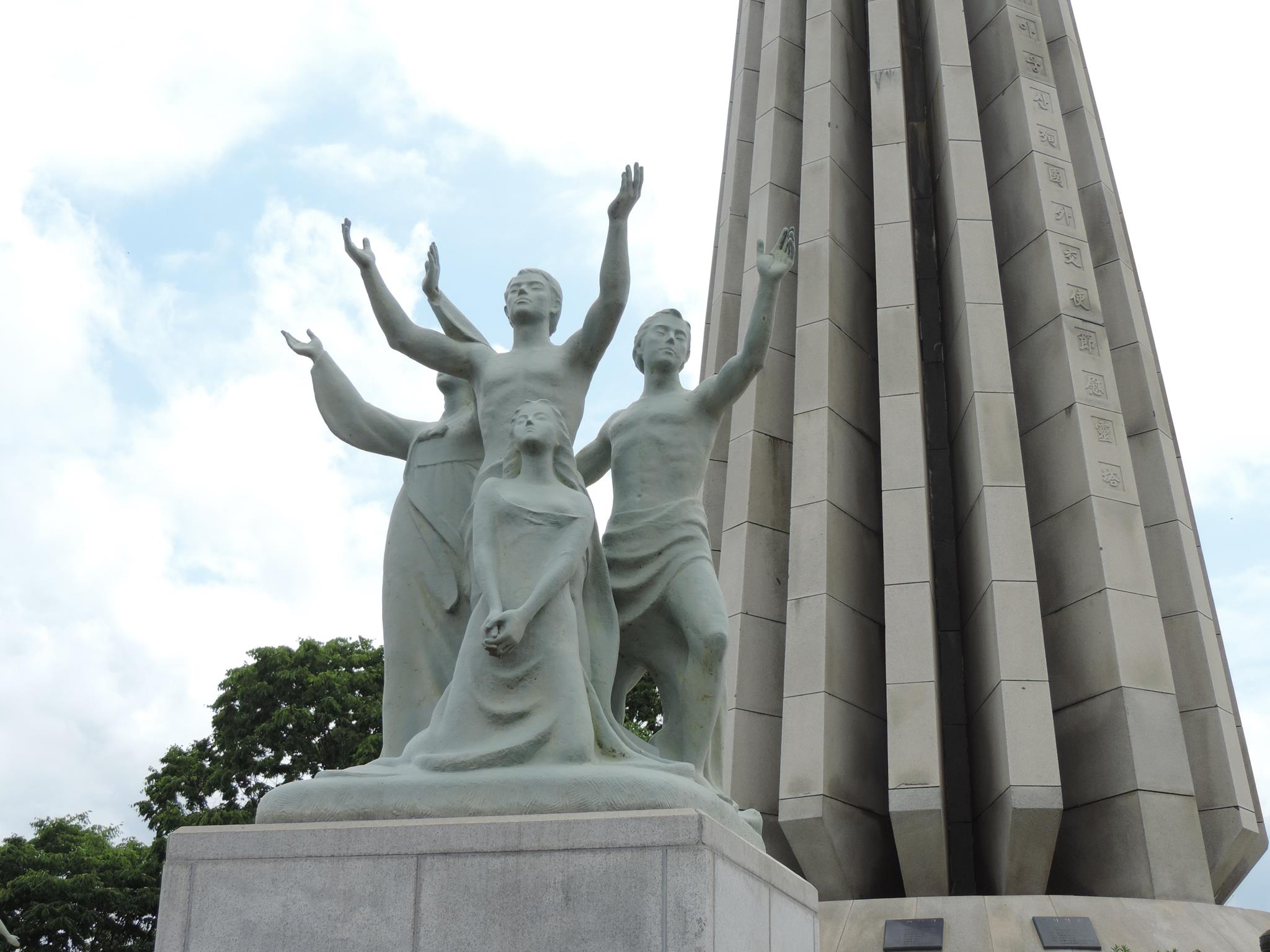
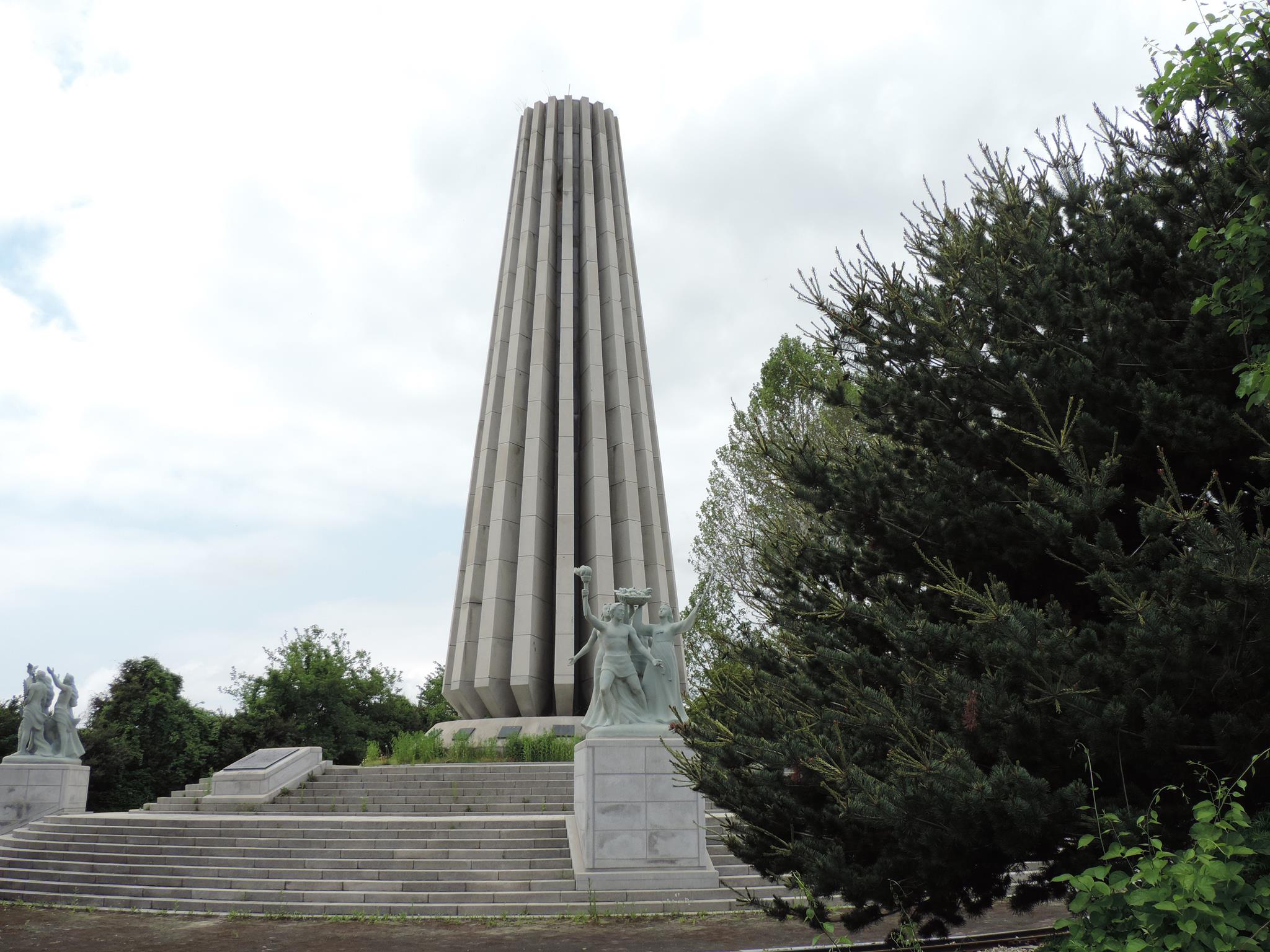
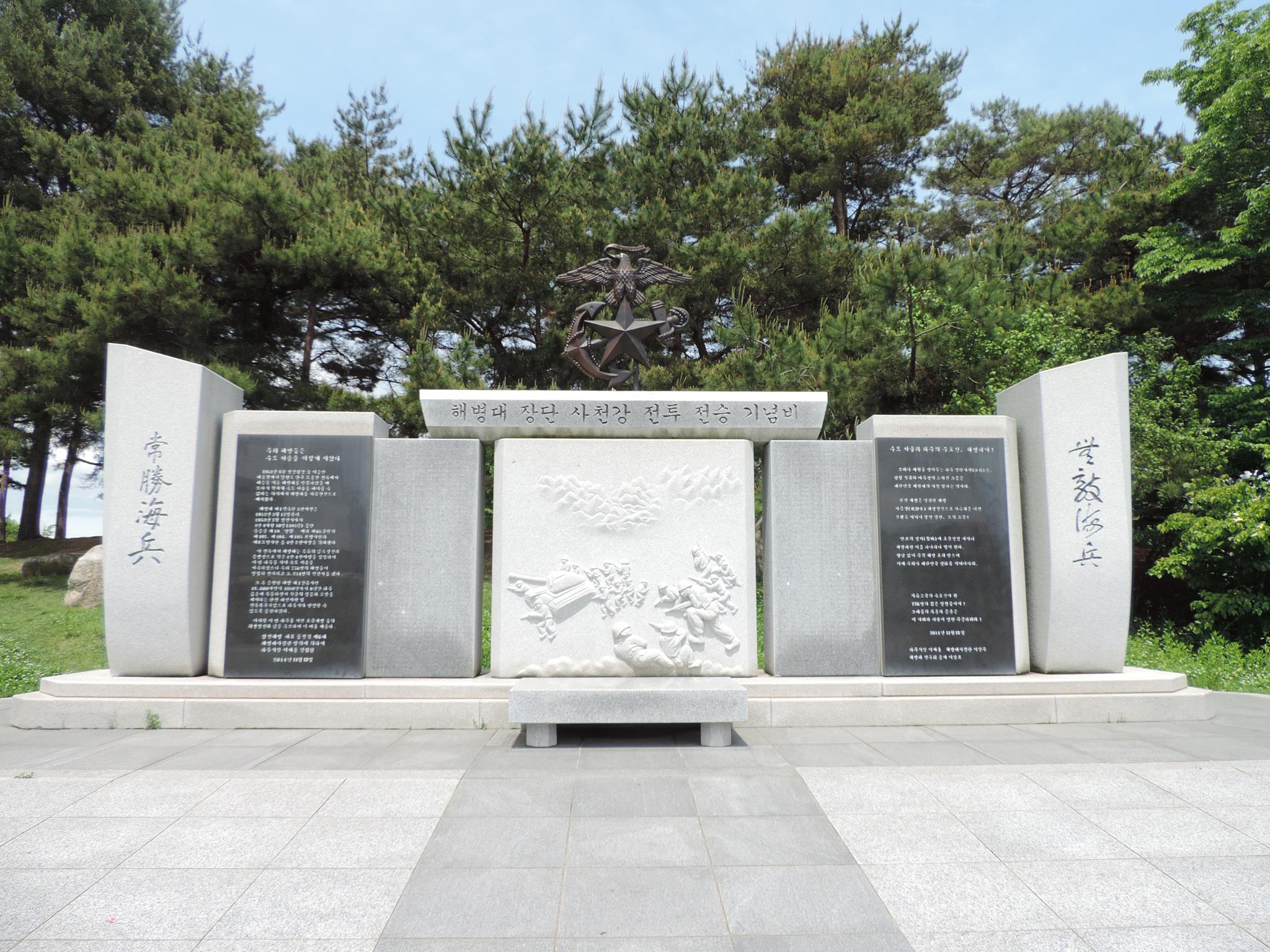
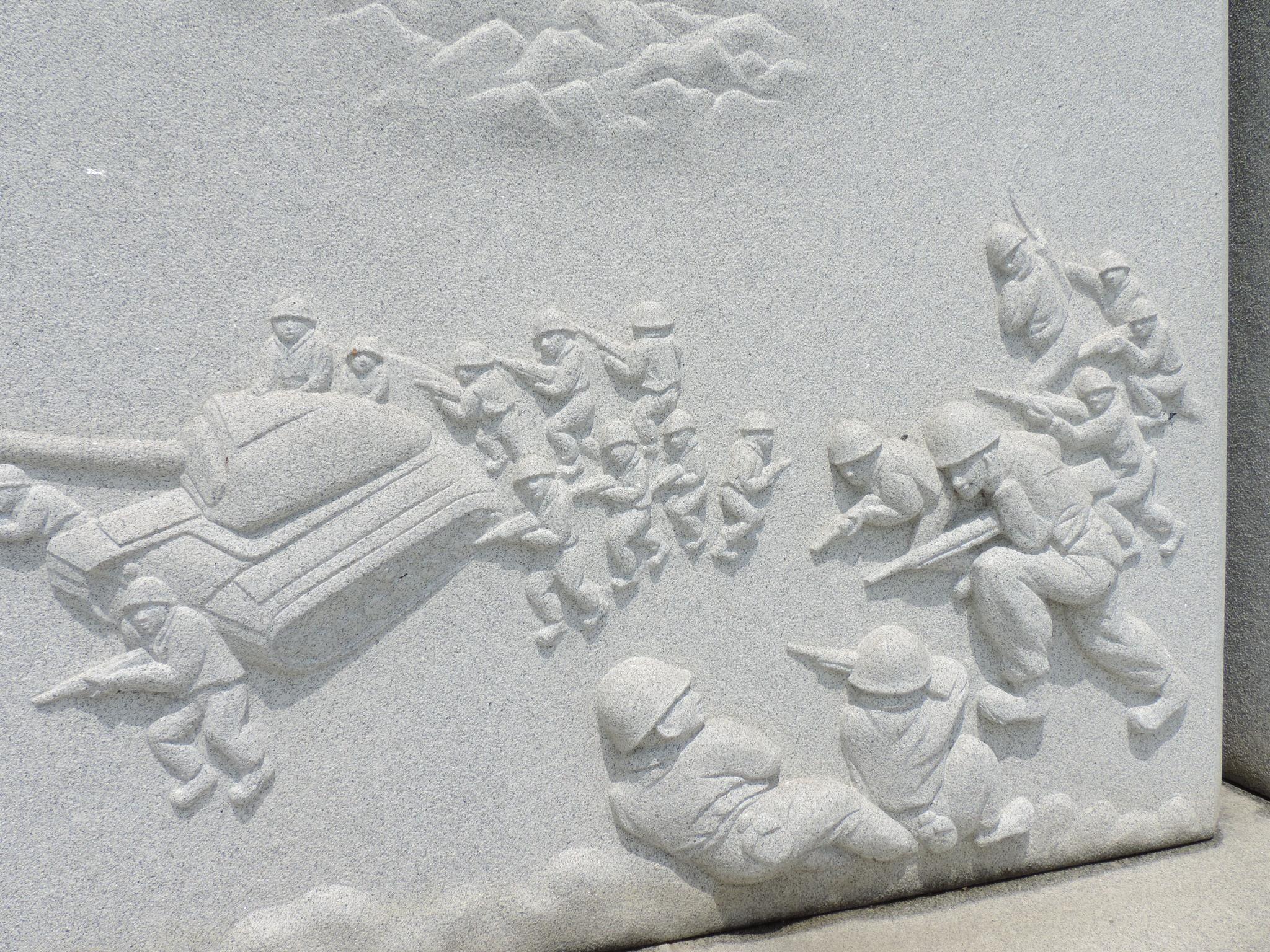
Korean War Monument to the Battles along the Imjingang
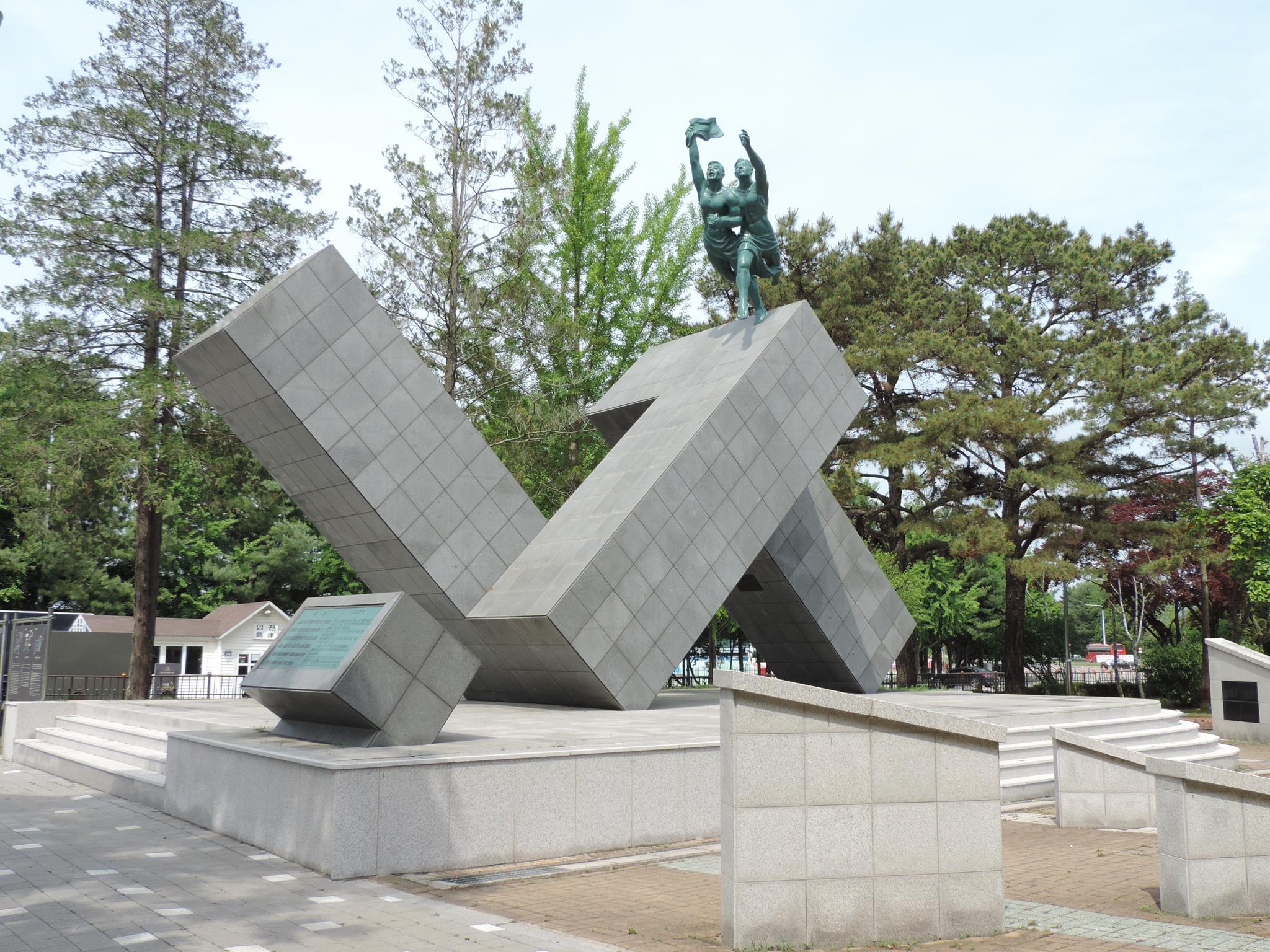
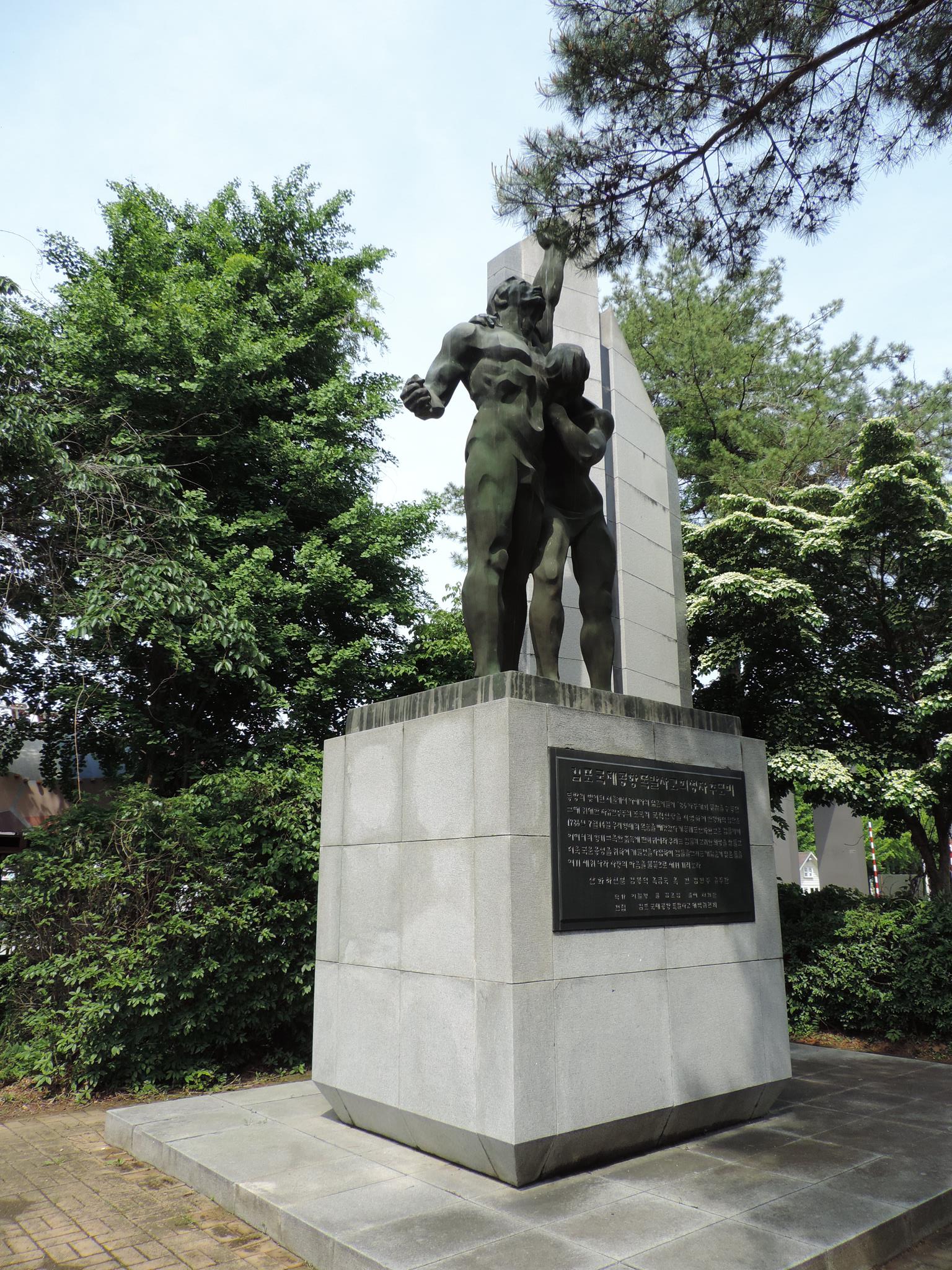
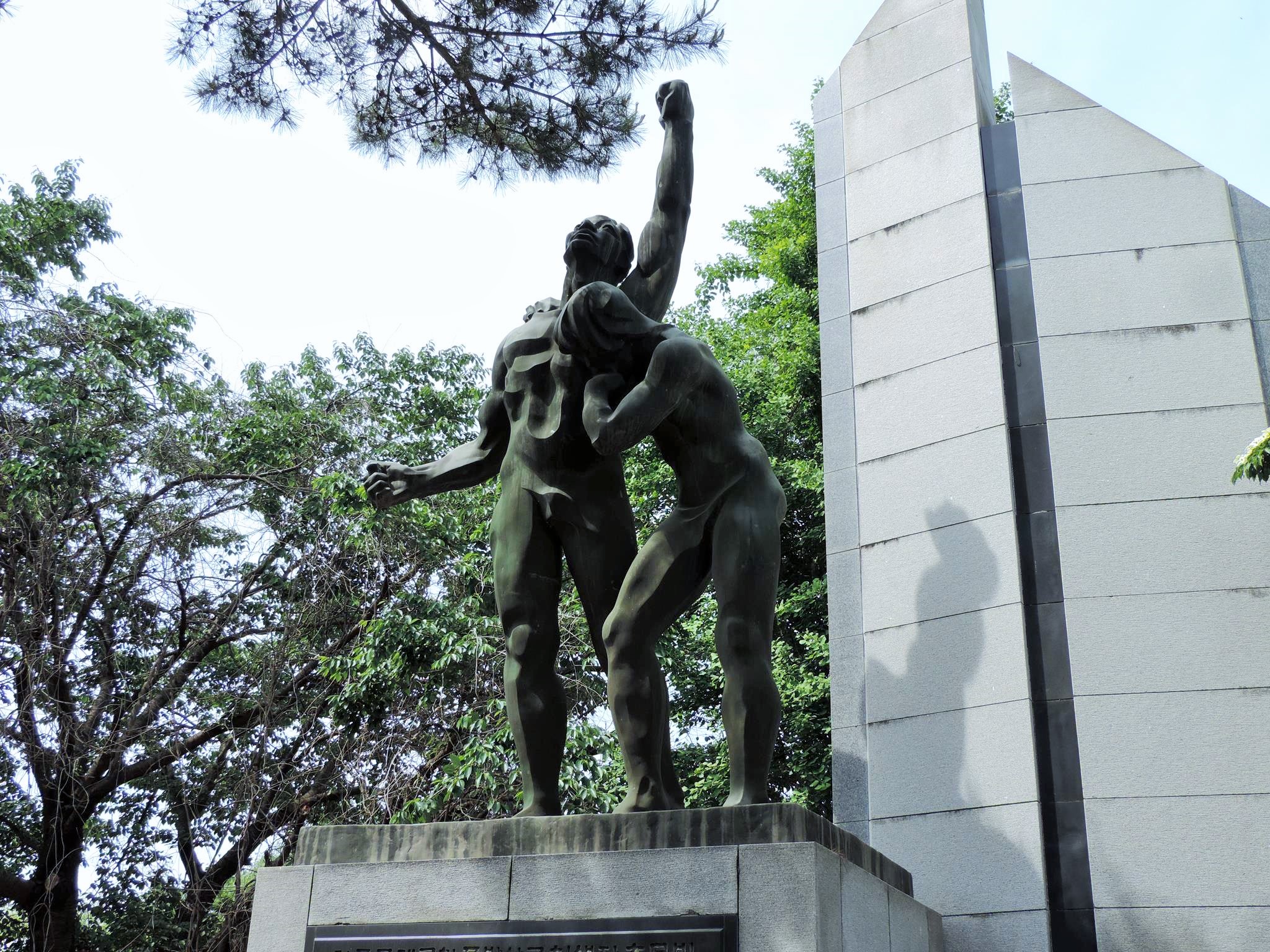
Inscription: The Imjin River is the gateway between south and north, and a vital artery connecting the two parts of the peninsula. Here the bullets of the enemy whined for four long years. The Rok First Army Corps, the First Unit of the Marine Combat Team and United Nation’s soldiers dedicated body and soul to restoring peace and freedom. There serene waters of the Imjin River will witness the day of unification. Unstained by the blood of the slain, but remembering the sacrifice.
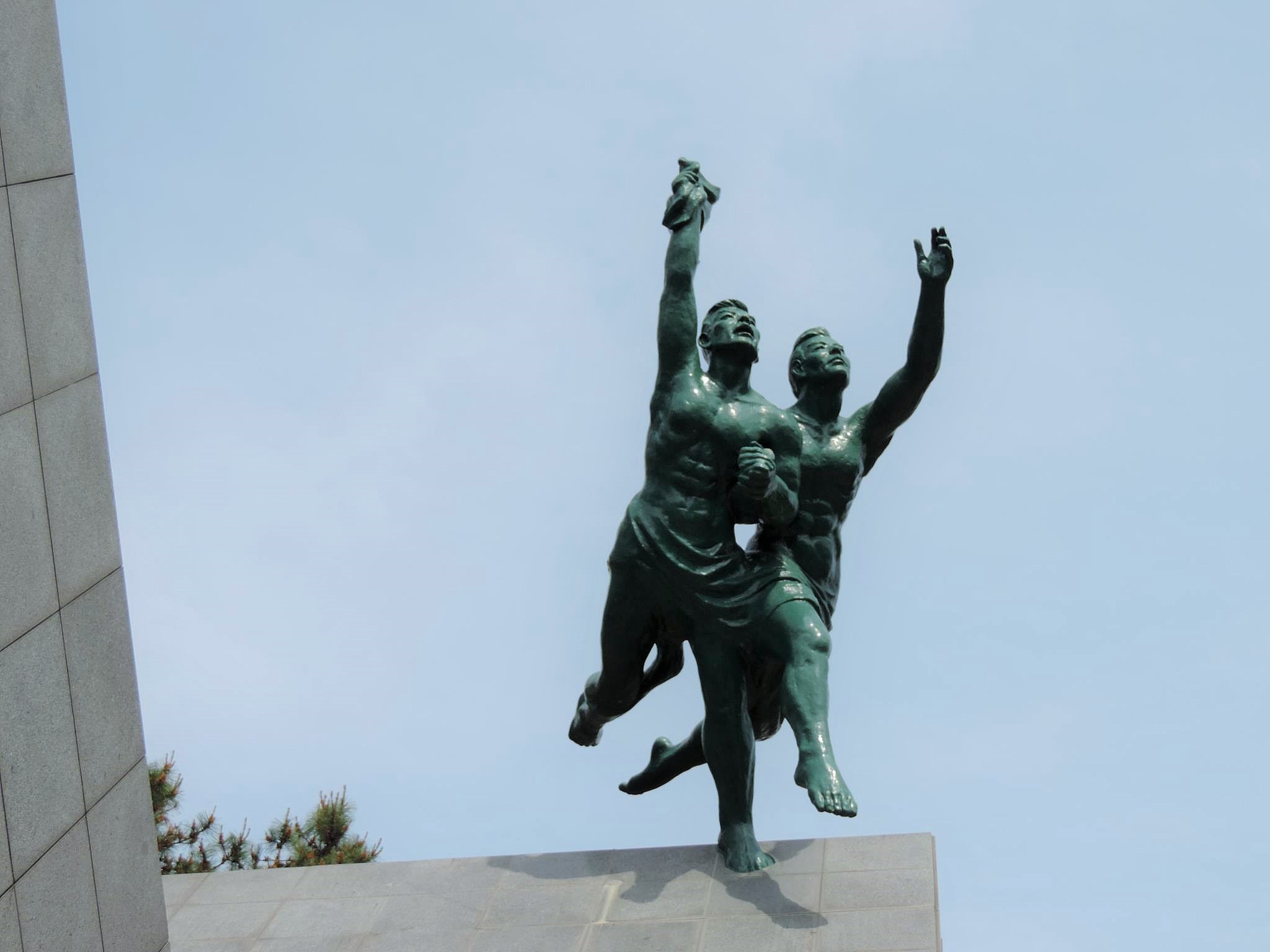
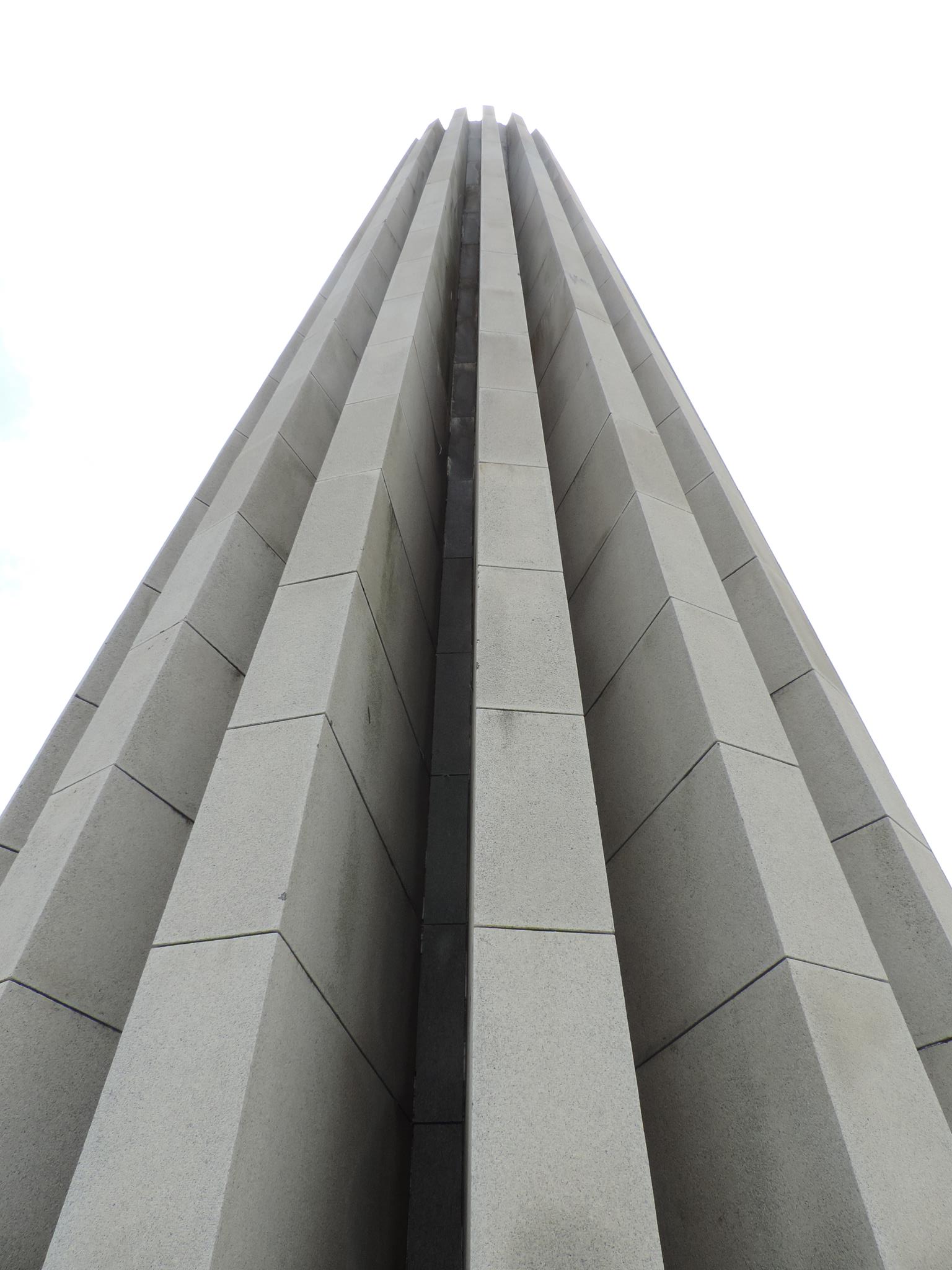
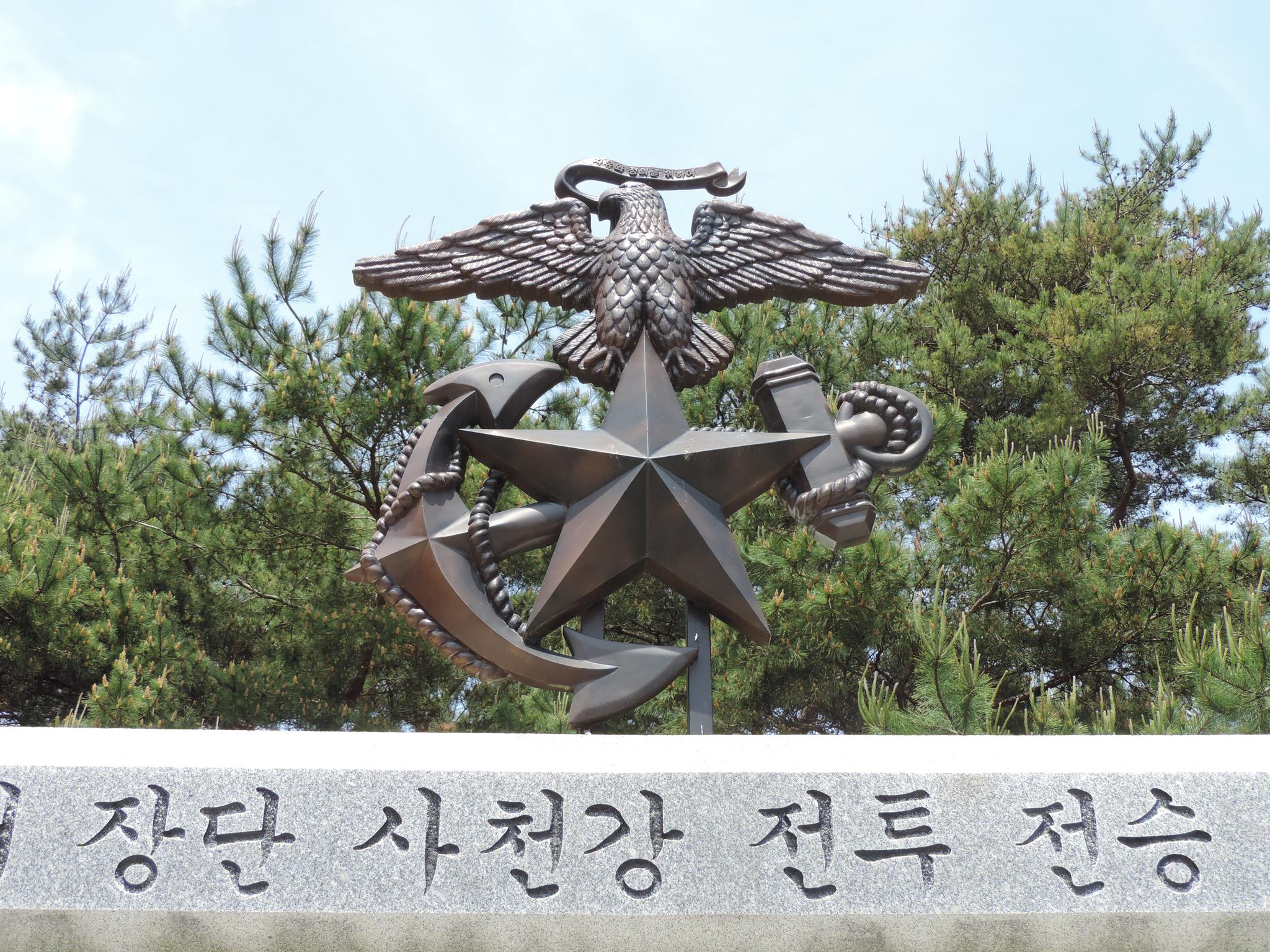
Located at Samok-ri Munsan-eup, Paju-si, Gyeonggi-do province, this monument was erected by the Ministry of construction and transportation on December 30th in 1979. The 9.86-meter angular memorial is mounted on a 0.87-meter high foundation. It symbolizes the fierce battles fought, by the U.N. and Korean troops along the river banks. The statue holding the torch expresses the strong hope of Koreans for unification.
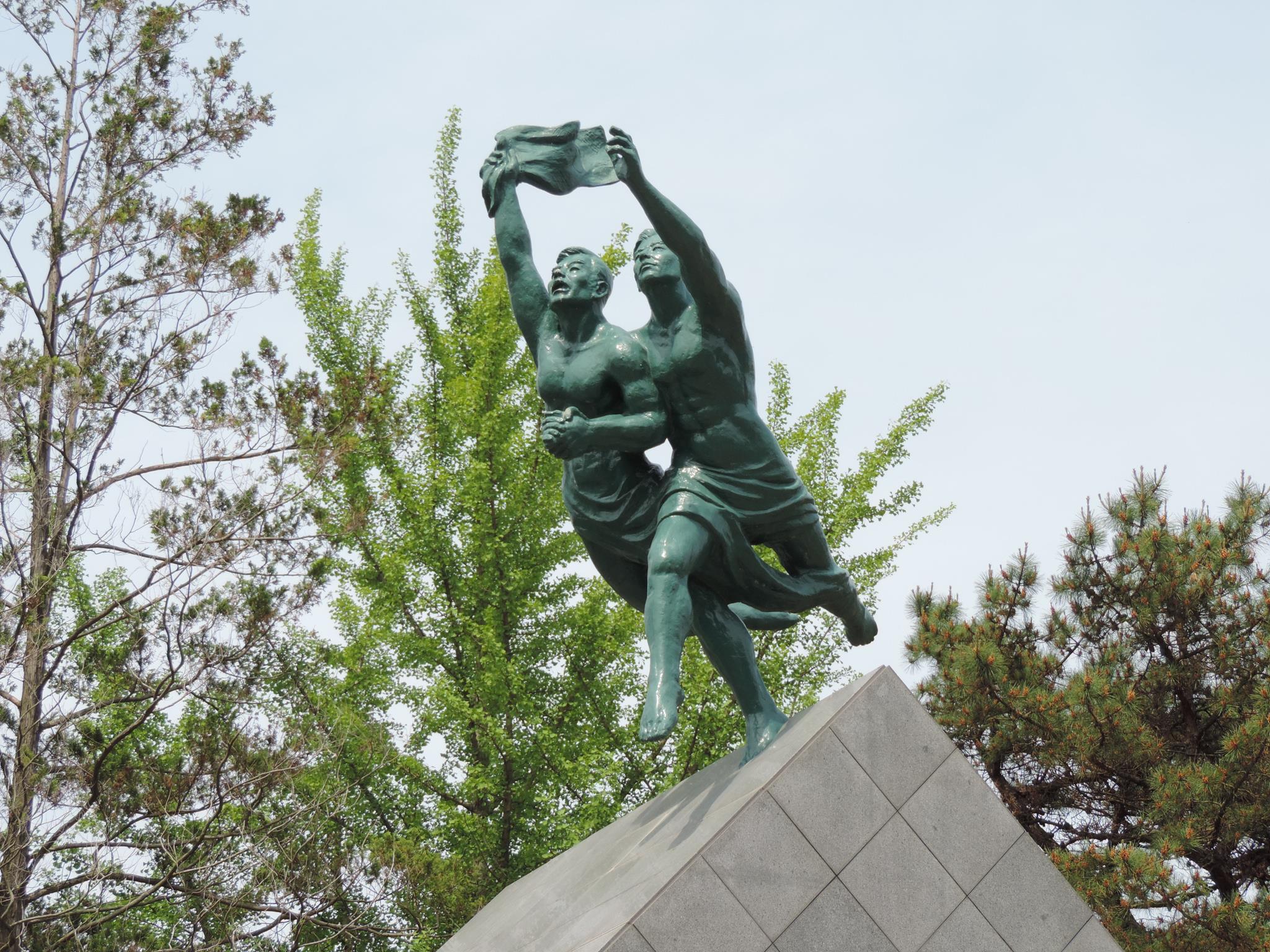
The memorial was erected in memory of the many Korean and U.N. soldiers who died for the cause of freedom and peace in this battlefield. From the time North Korea invaded the South on June 25th in 1950, nowhere were advances and retreats repeated more often than along the Imjingang. The strategic importance of the area was so great that the ROK 1st Infantry Division, the ROK 1st Combat Marine Unit and the U.N. troops fought hard to defend the area. Korean and U.N. forces successfully held the strategic area and kept the North Koreans from crossing the 38th parallel, causing high casualties among enemy troops.
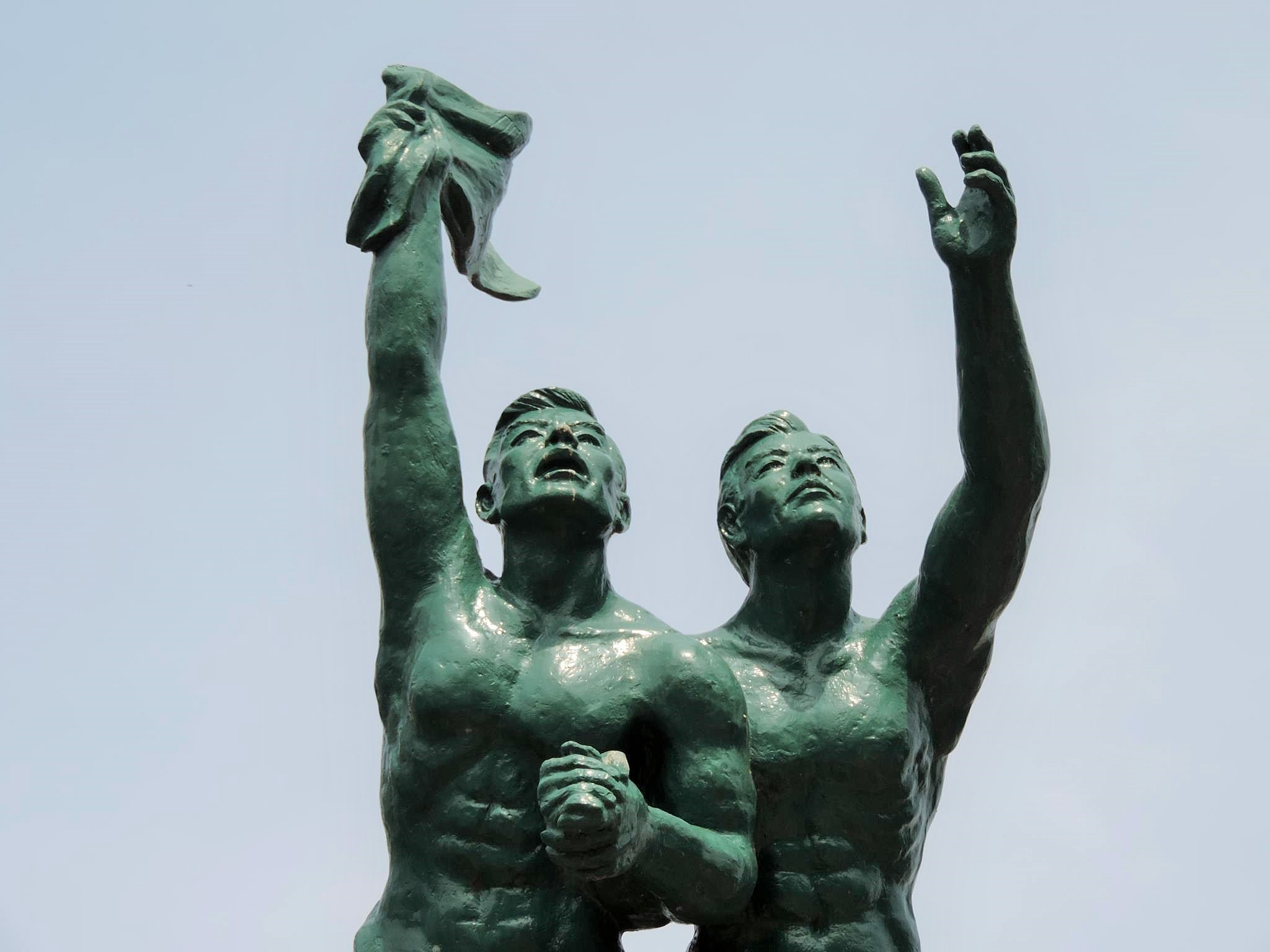
Particularly notable were the efforts of the 2nd platoon of the 6th Company, 1st Battalion of the ROK 1st Infantry Division under the leadership of Second Lieutenant Kim Man-sul. It fought with hand grenades and bayonets for 13 hours against two battalions of Communist Chinese troops. The platoon killed 356 enemy soldiers and stopped their advance.
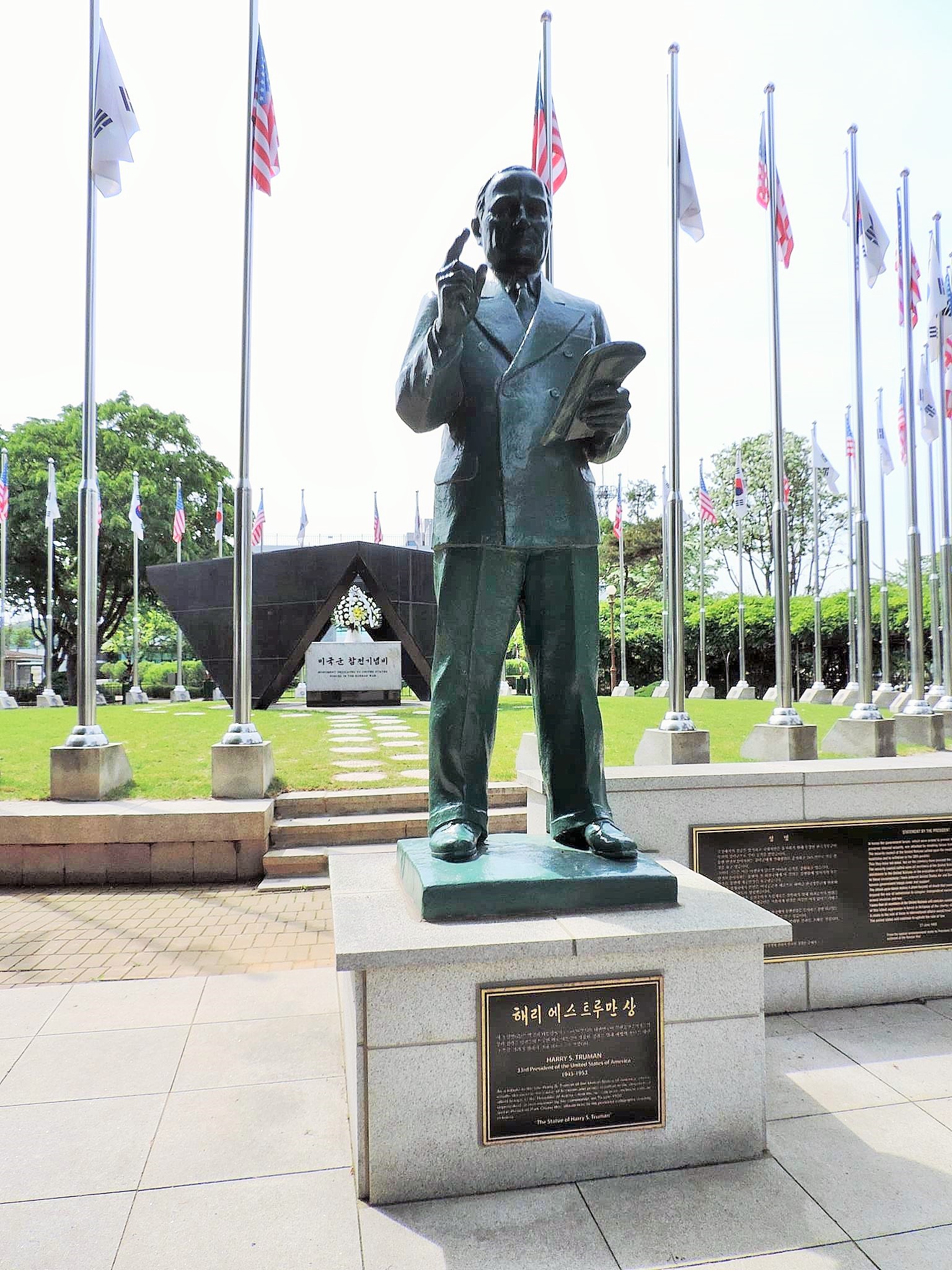
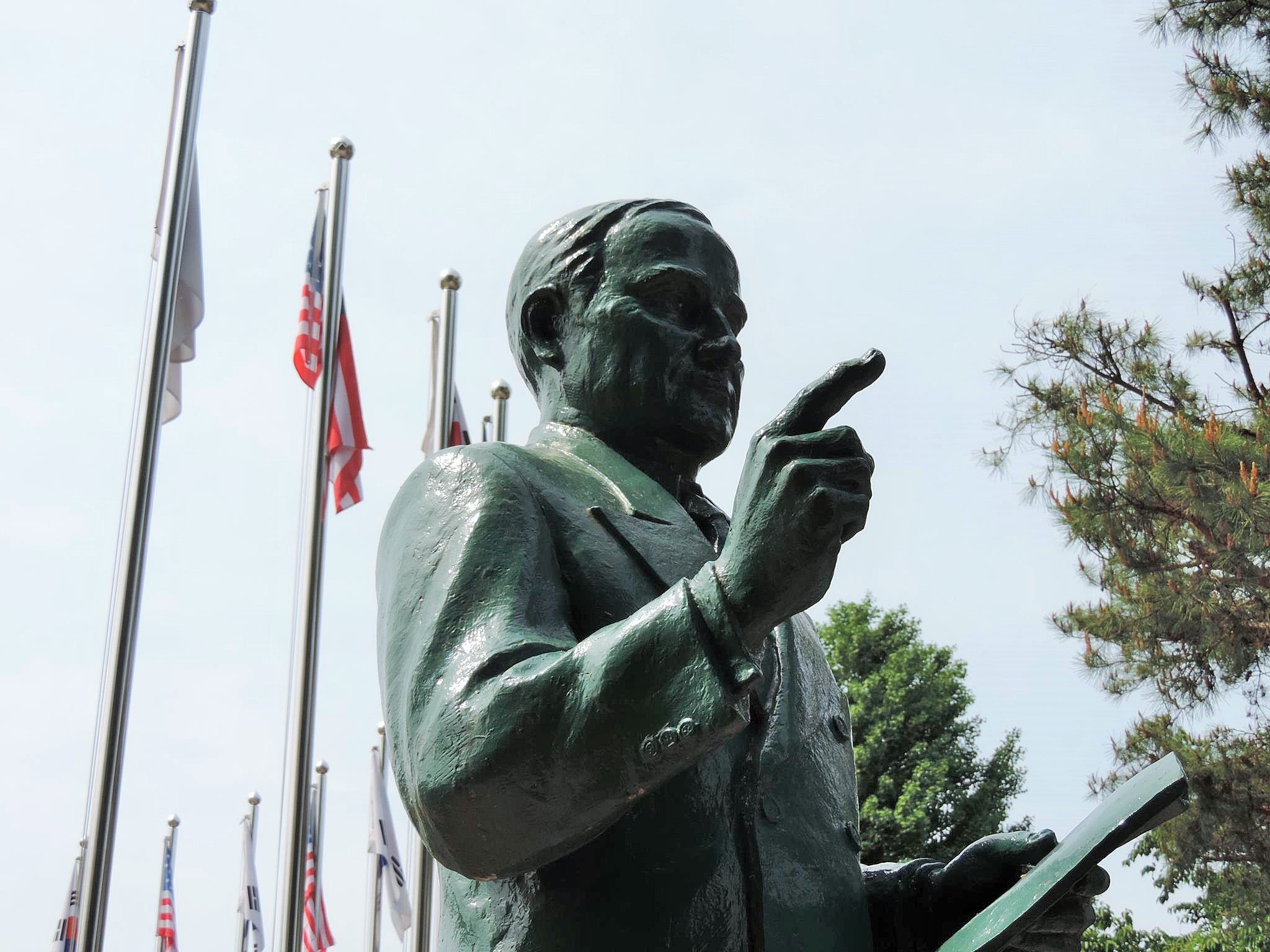
Memorial to US President Harry S. Truman
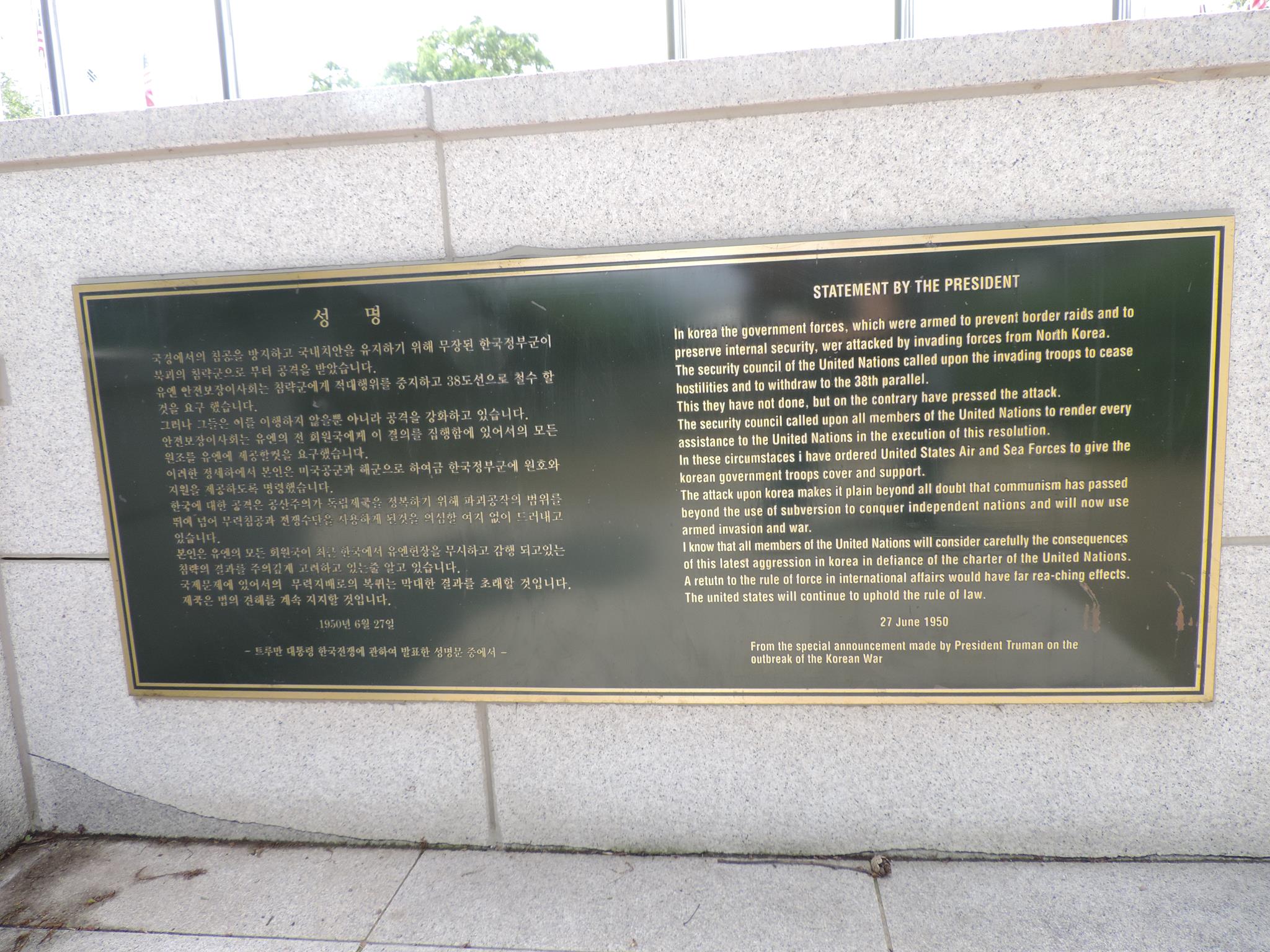
Statement by the President: In Korea the government forces, which were armed to prevent border raids and to preserve internal security, wer attacked by invading forces from North Korea. The security council of the United Nations called upon the invading troops to cease hostilities and to withdraw to the 38th parallel. This they have not done, but on the contrary have pressed the attack. The security council called upon all members of the United Nations to render every assistance to the United Nations in the execution of this resolution. In these circumstaces i have ordered United States Air and Sea Forces to give the korean government troops cover and support. The attack upon korea makes it plain beyond all doubt that communism has passed beyond the use of subversion to conquer independent nations and will now use armed invasion and war. I know that all members of the United Nations will consider carefully the consequences of this latest aggression in korea in defiance of the charter of the United Nations. A retutn to the rule of force in international affairs would have far rea-ching effects. The united states will continue to uphold the rule of law. From the special announcement made by President Truman on 27th June 1950 on the outbreak of the Korean War.
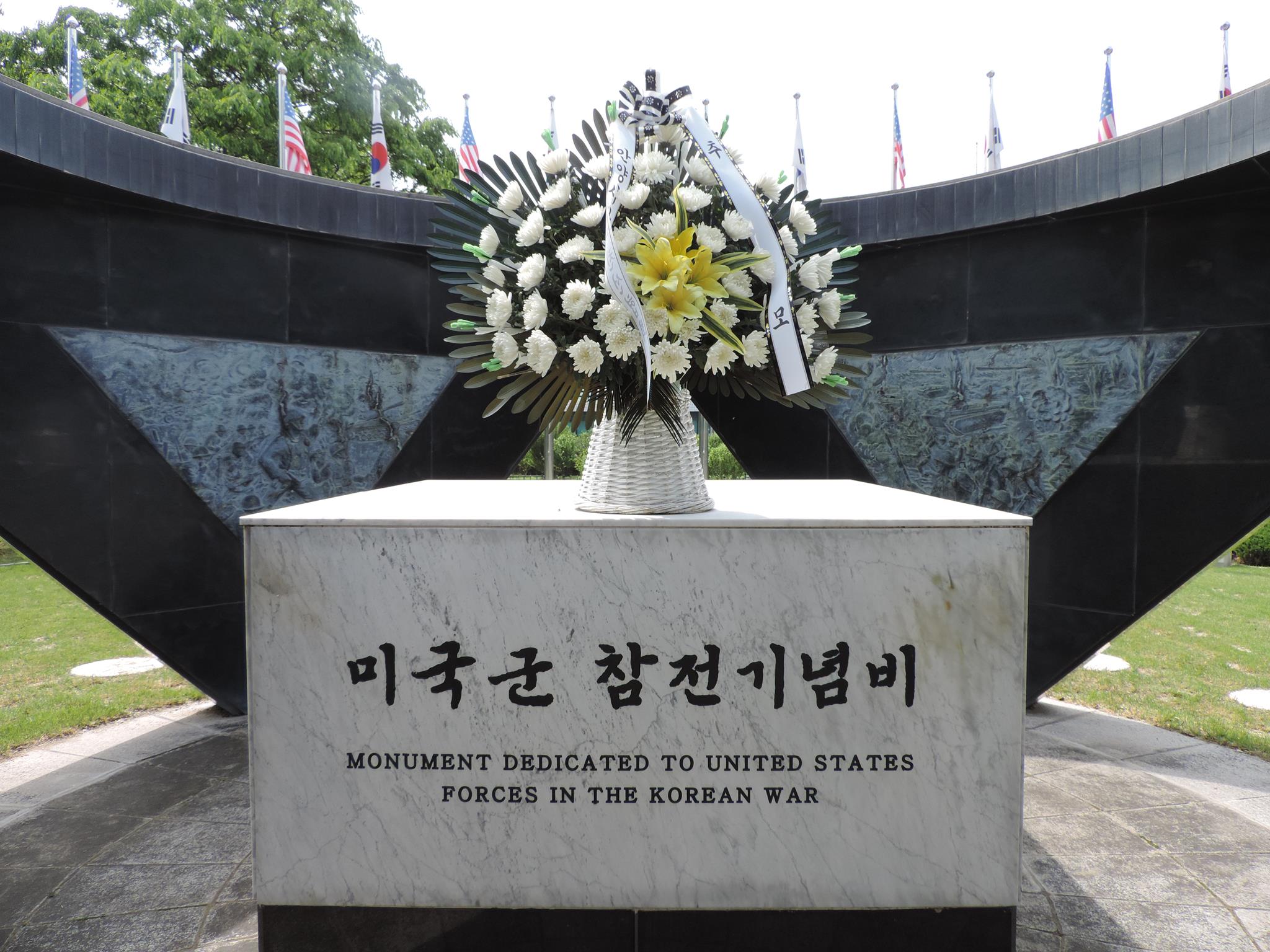
Monument dedicated to United States forces in the Korean War
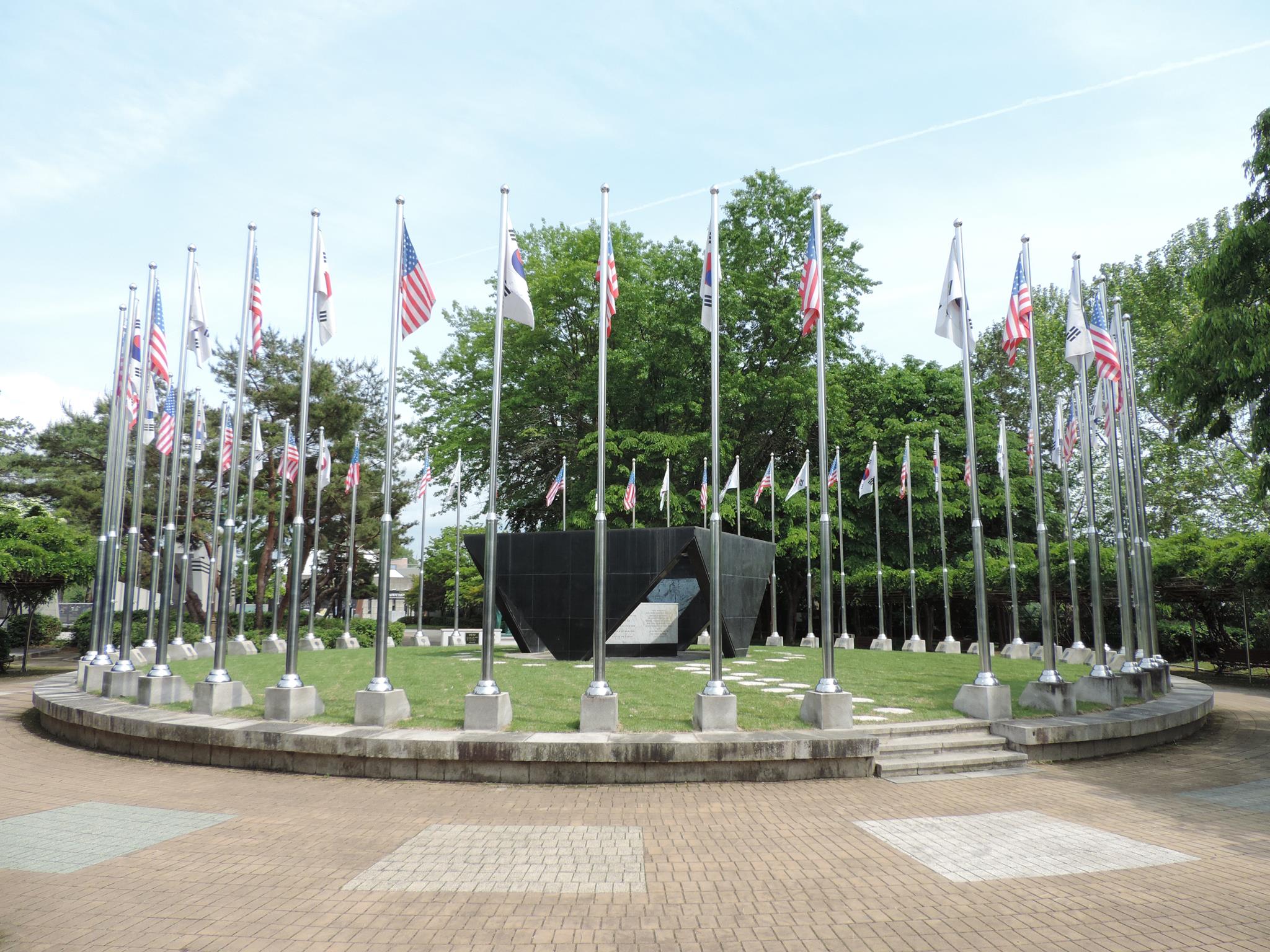
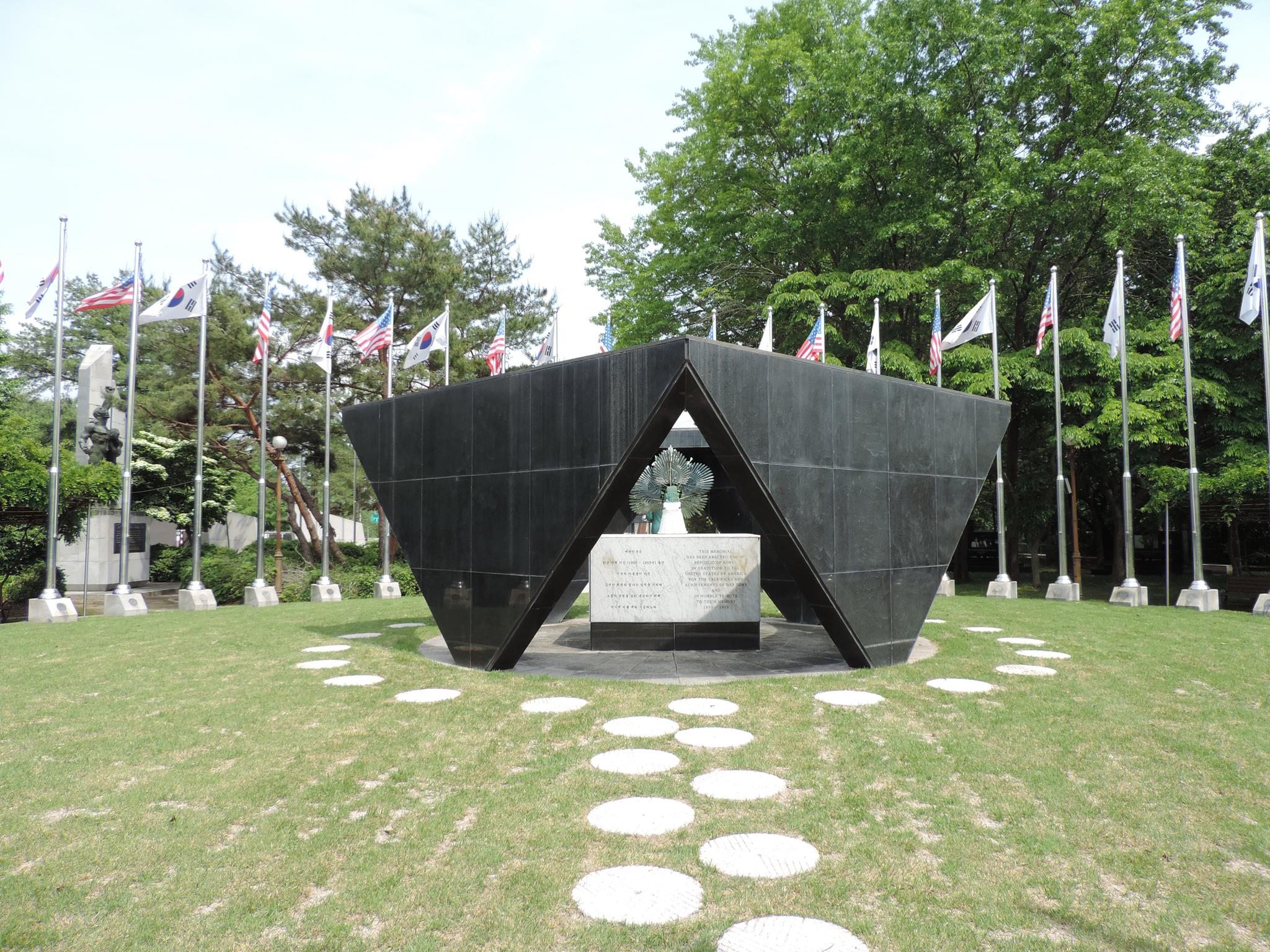
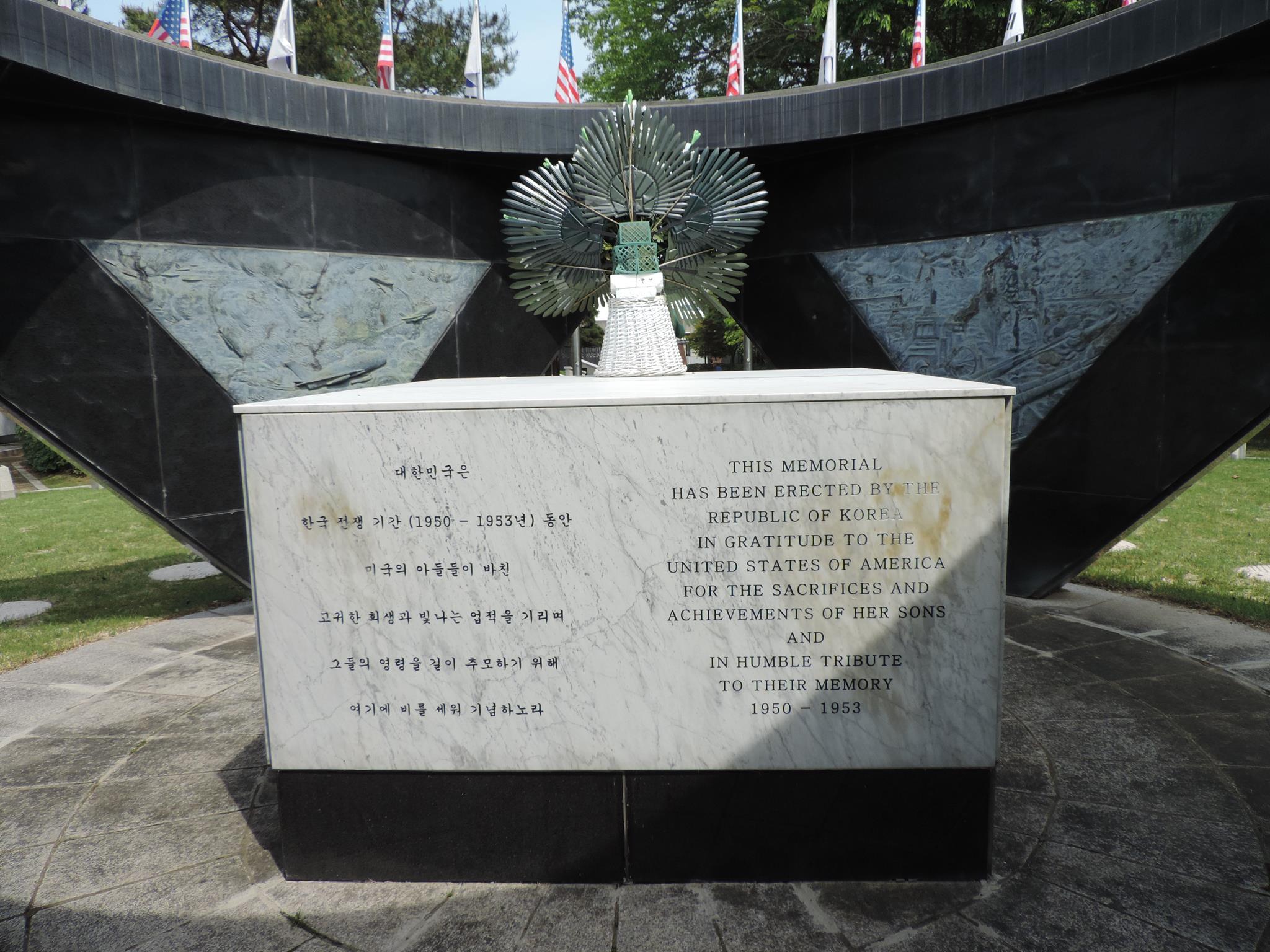
This memorial has been erected by the Republic of Korea in gratitude to the United States of America for the sacrifices and achievements of her sons and in humble tribute to their memory from 1950 till 1953.
Memorial to the Prisoners of War
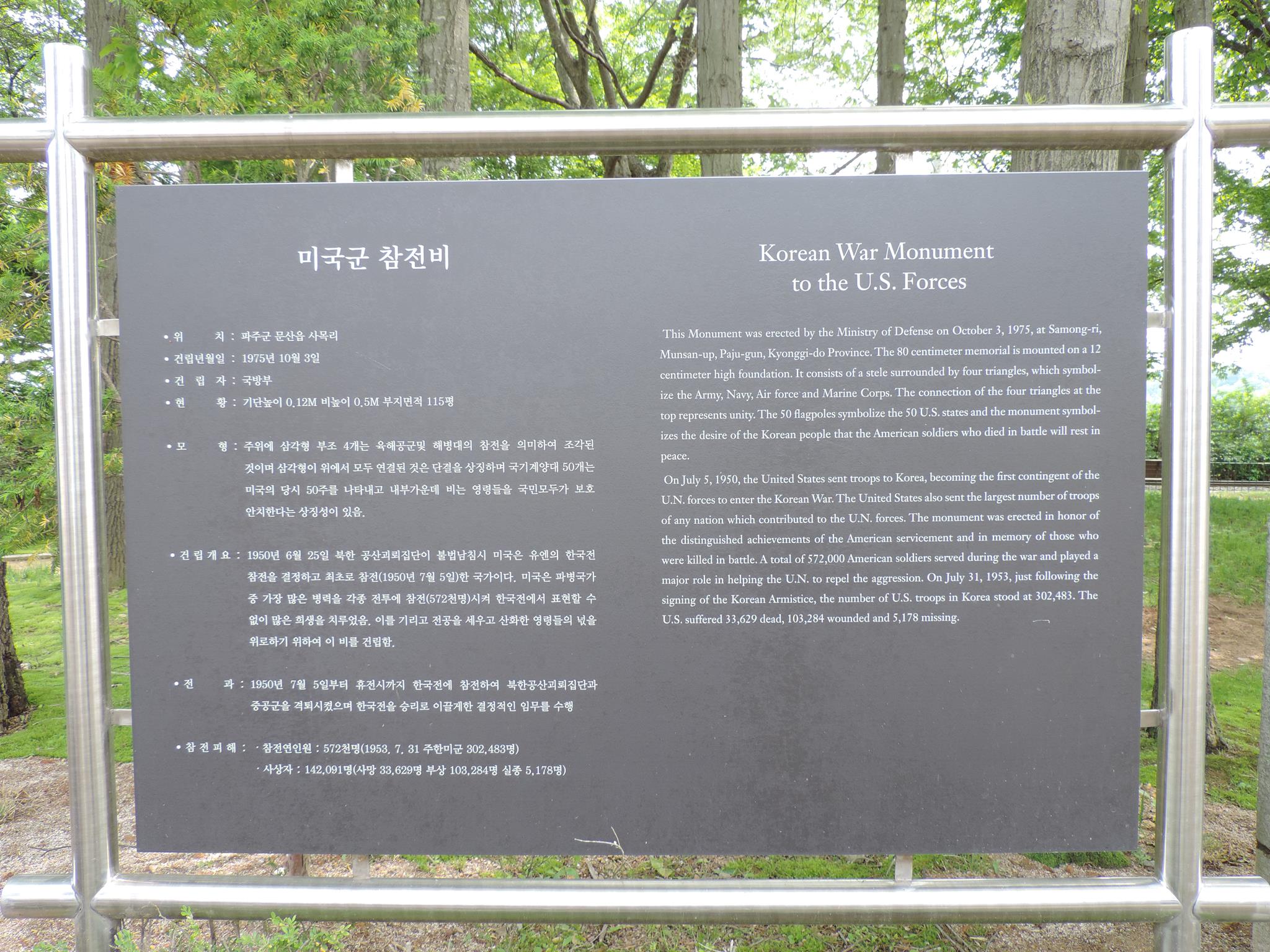
Korean War Monument to the U.S. Forces
This Monument was erected by the Ministry of Defense on October 3rd in 1975, at Samong-ri, Munsan-up, Paju-gun, Kyonggi-do Province. The 80 centimeter memorial is mounted on a 12 centimeter high foundation. It consists of a stele surrounded by four triangles, which symbol- ize the Army, Navy, Air force and Marine Corps. The connection of the four triangles at the top represents unity. The 50 flagpoles symbolize the 50 U.S. states and the monument symbol- izes the desire of the Korean people that the American soldiers who died in battle will rest in peace.
On July 5th in 1950, the United States sent troops to Korea, becoming the first contingent of the U.N. forces to enter the Korean War. The United States also sent the largest number of troops of any nation which contributed to the U.N. forces. The monument was erected in honor of the distinguished achievements of the American servicement and in memory of those who were killed in battle. A total of 572,000 American soldiers served during the war and played a major role in helping the U.N. to repel the aggression. On July 31st in 1953, just following the signing of the Korean Armistice, the number of U.S. troops in Korea stood at 302,483. The U.S. suffered 33,629 dead, 103,284 wounded and 5,178 missing.
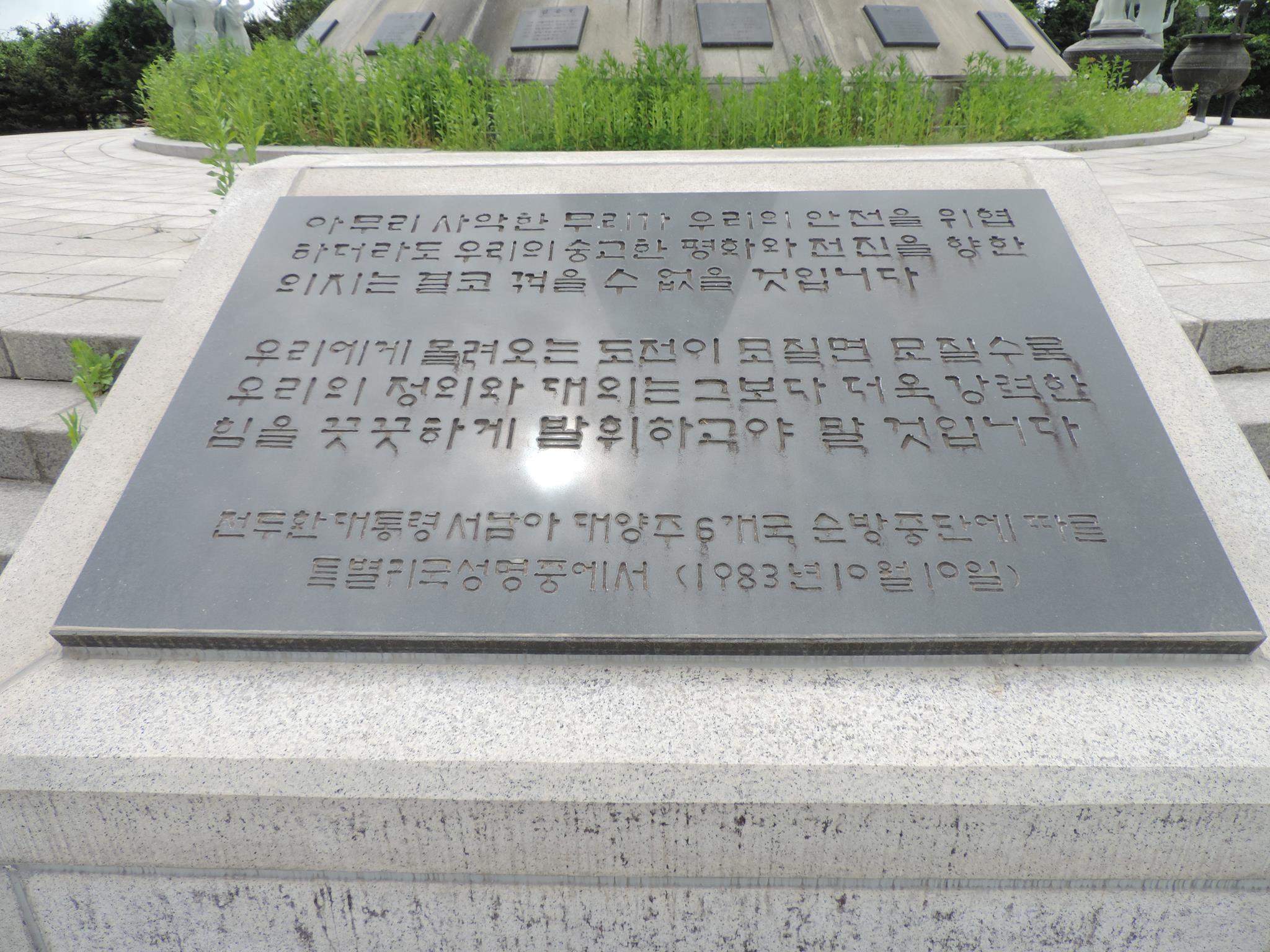
Cry for Peace and Justice Memorial
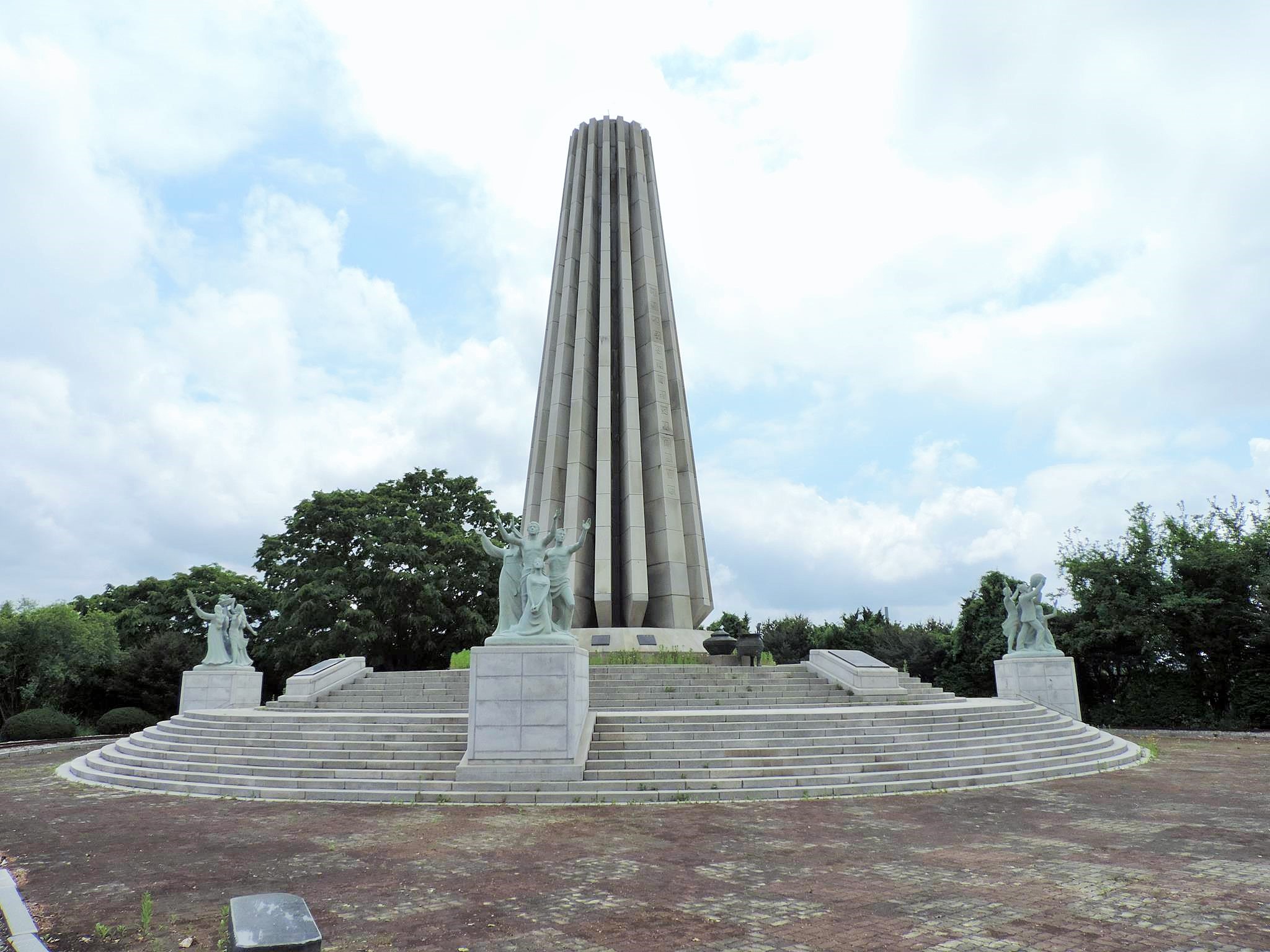
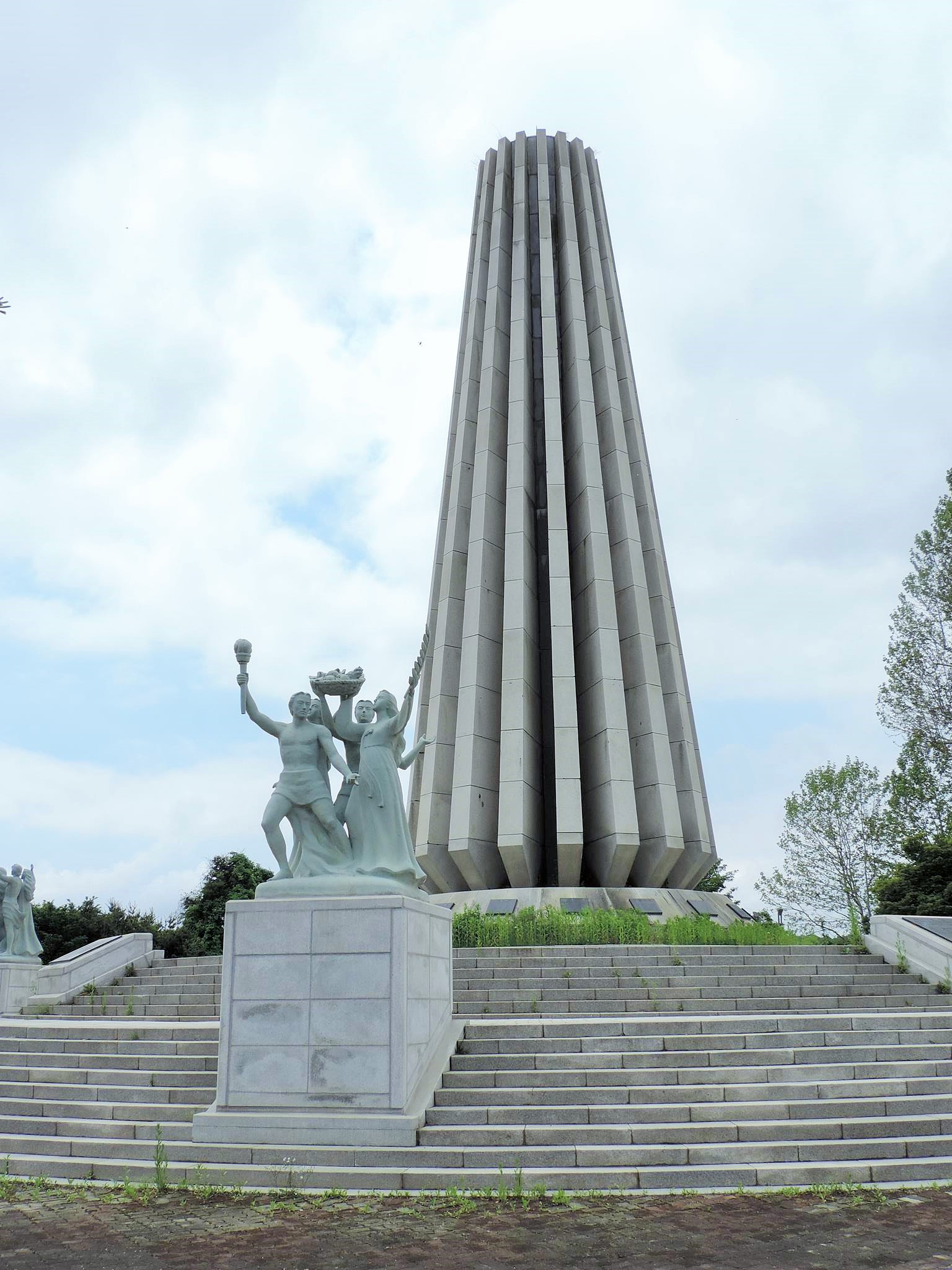
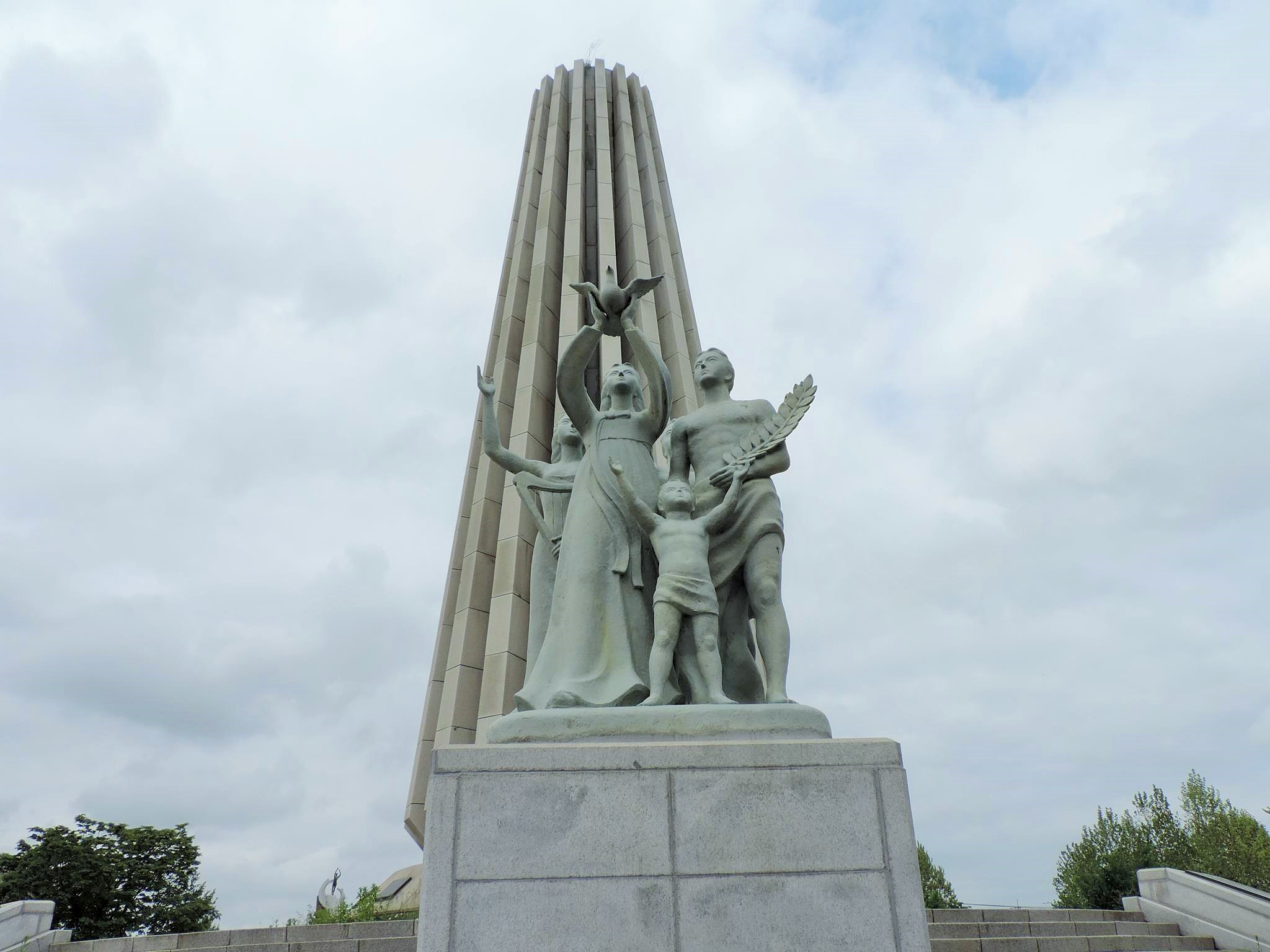
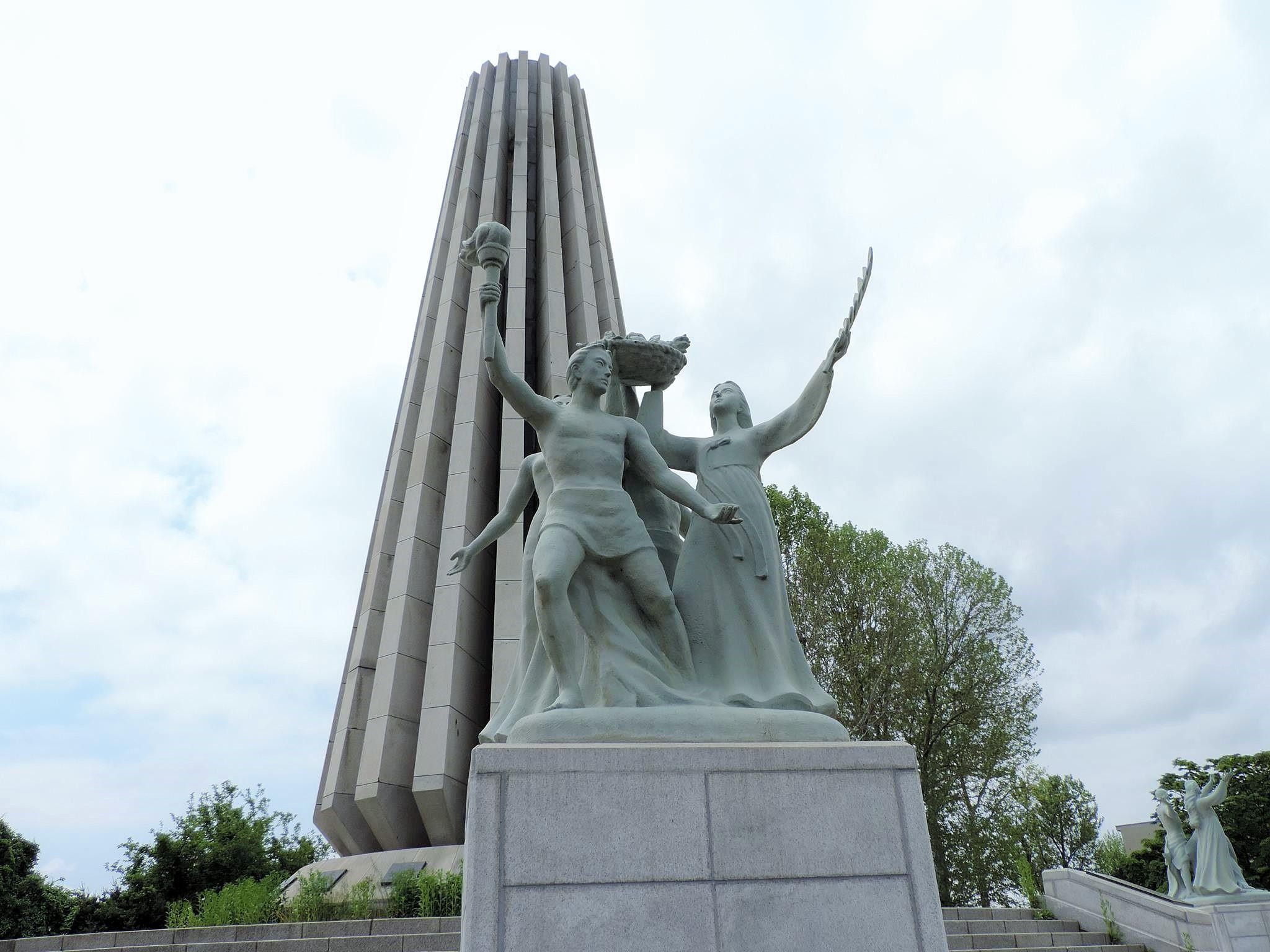
Inscription: No matter how evil the forces that threaten our safety may be, they will never be able to silence our noble cry for peace and progress. The more severe the challenges we face, the more resolutely we will exert our justice and foreign policy with even greater strength. From President Chun Doo-hwan’s special statement upon returning home early from his tour of six countries in Oceania. October 10, 1983.
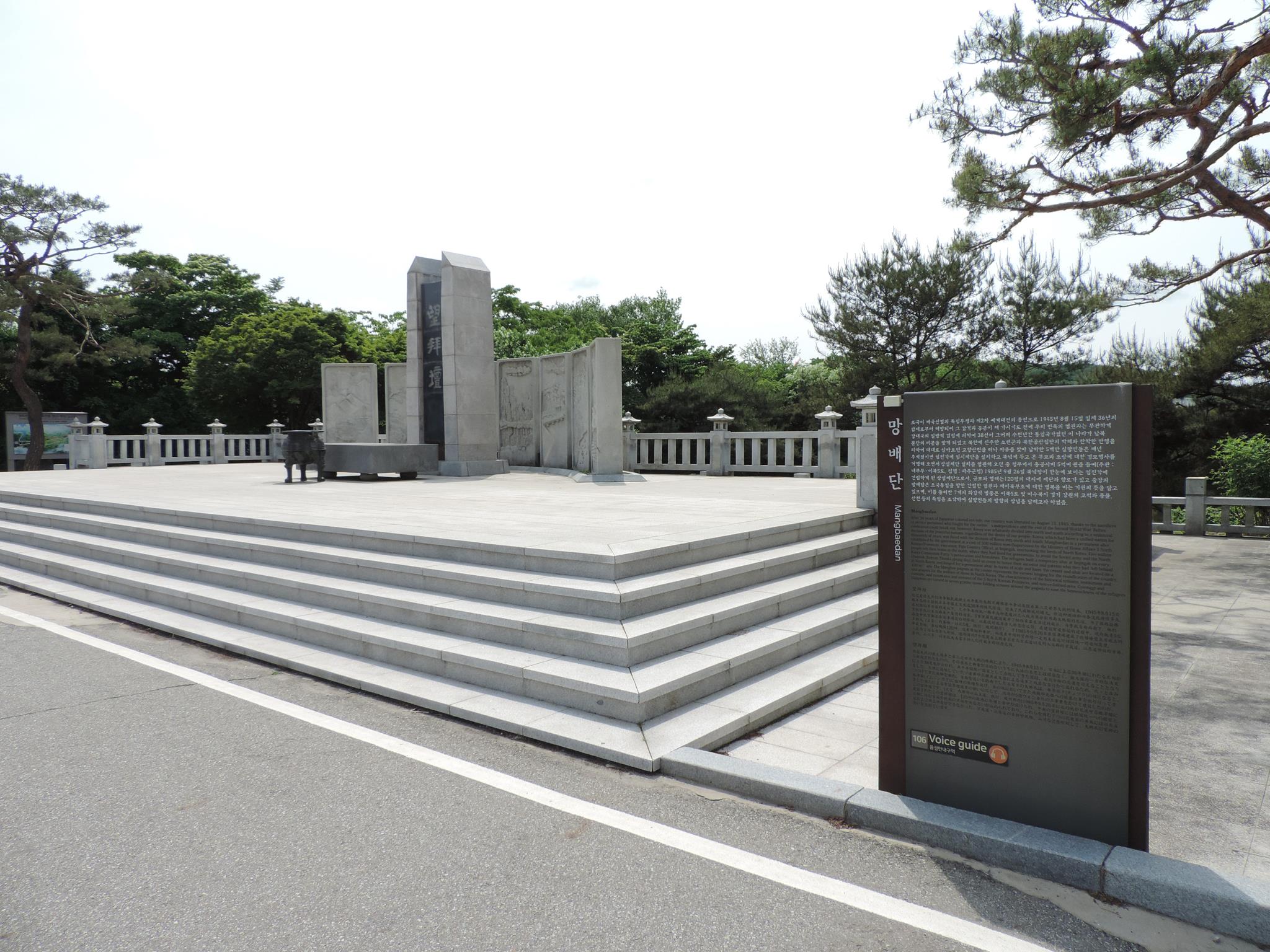
Mangbaedan
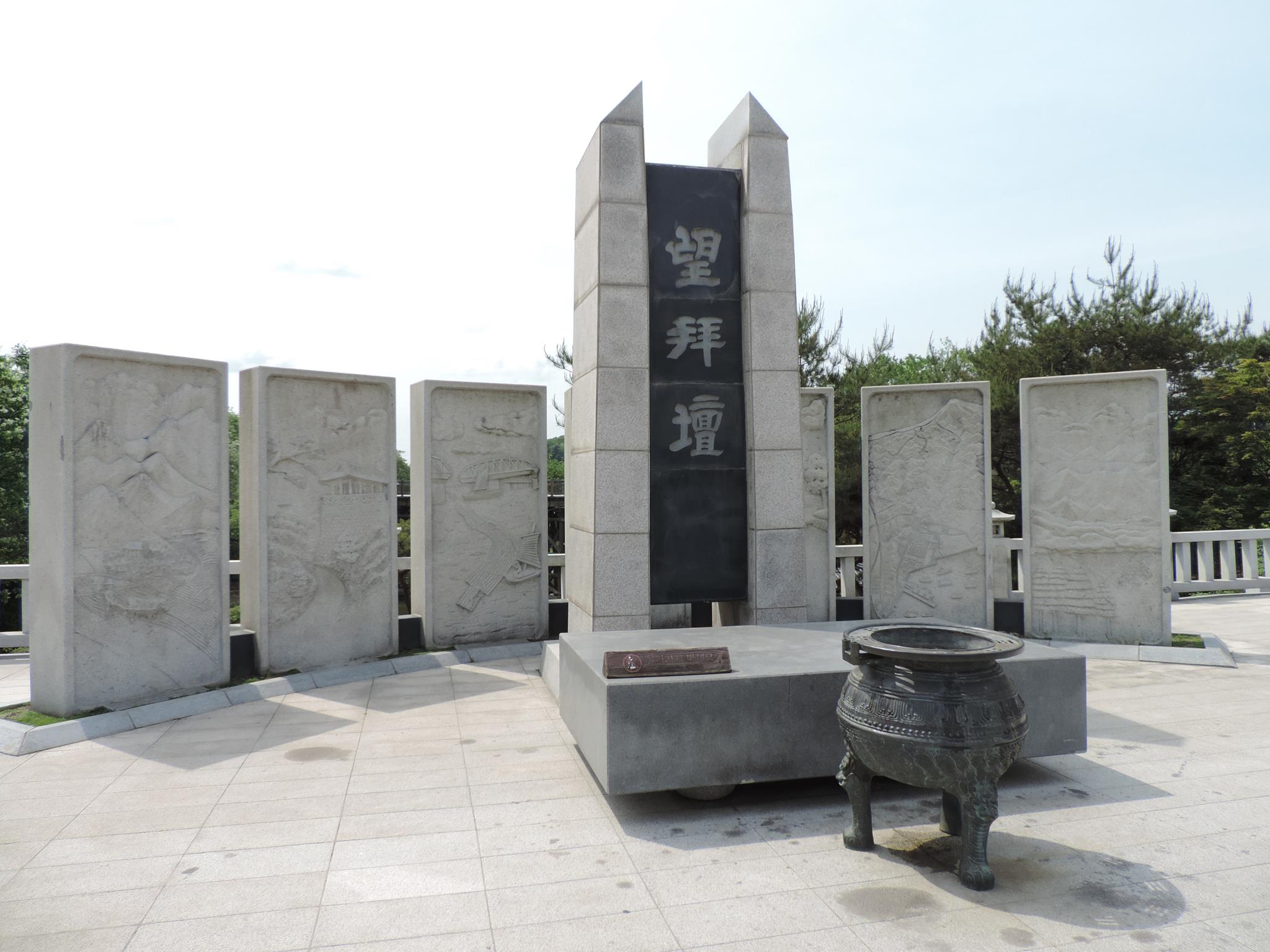
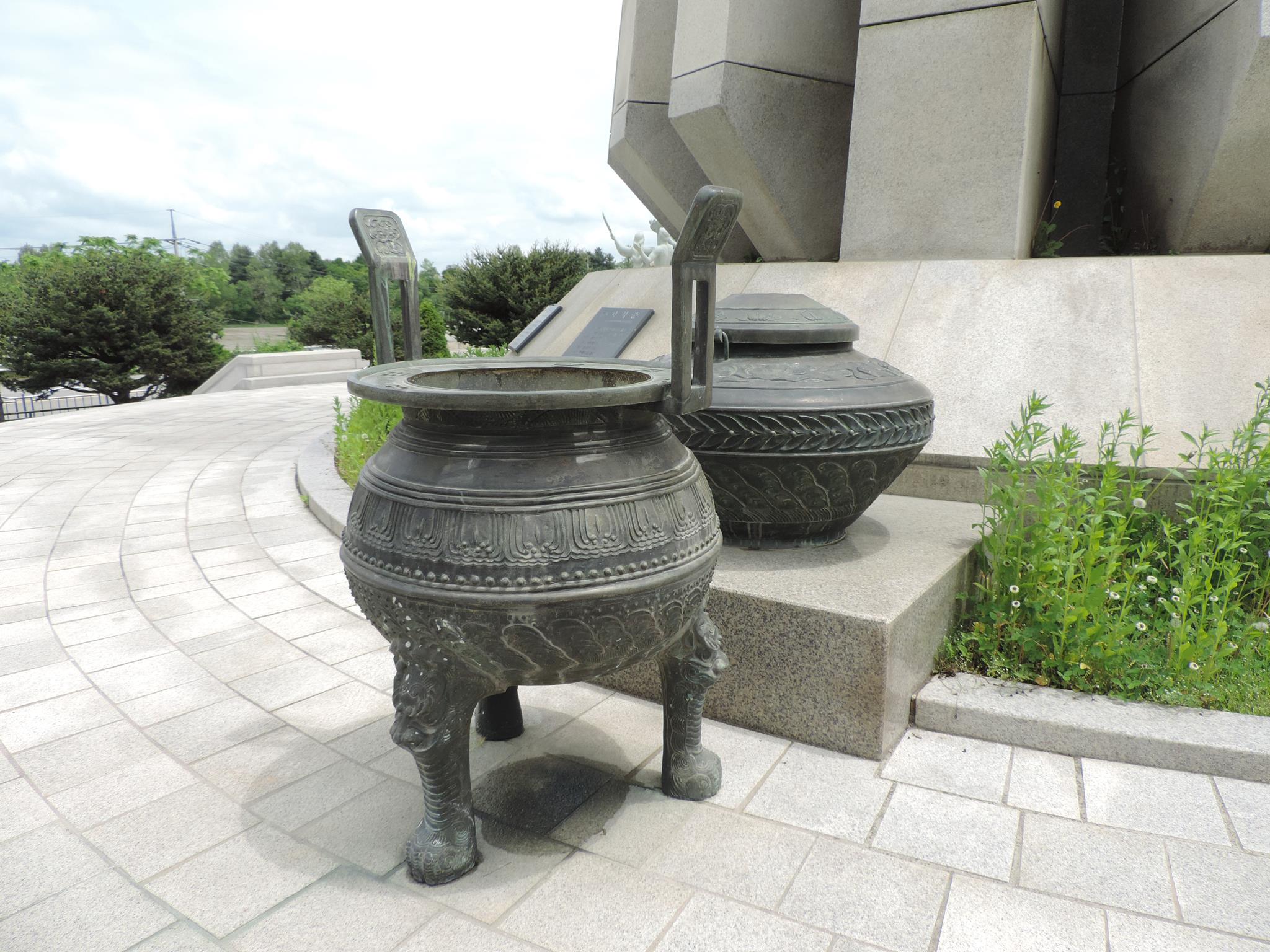
After 36 years of Japanese colonial era rule, our country was liberated on August 15th in 1945, thanks to the sacrifices of service personnel who fought for the nation’s independence and the end of the Second World War. Before celebration could break out, however, Korea was arbitrarily divided into north and south according to a unilateral decision of the powerful nations, regardless of the desire of our people. Korea, which had been a unified nation for thousands of years, was faced with the division of Korea into north and south. Mangbaedan is a permanent alter established by the government at a cost of 500 million won (Supervision by the Ministry of Home Affairs 5 North Korean Provinces, execution: Paju Country Office), at Imjingak, overlooking the lands of North Korea.
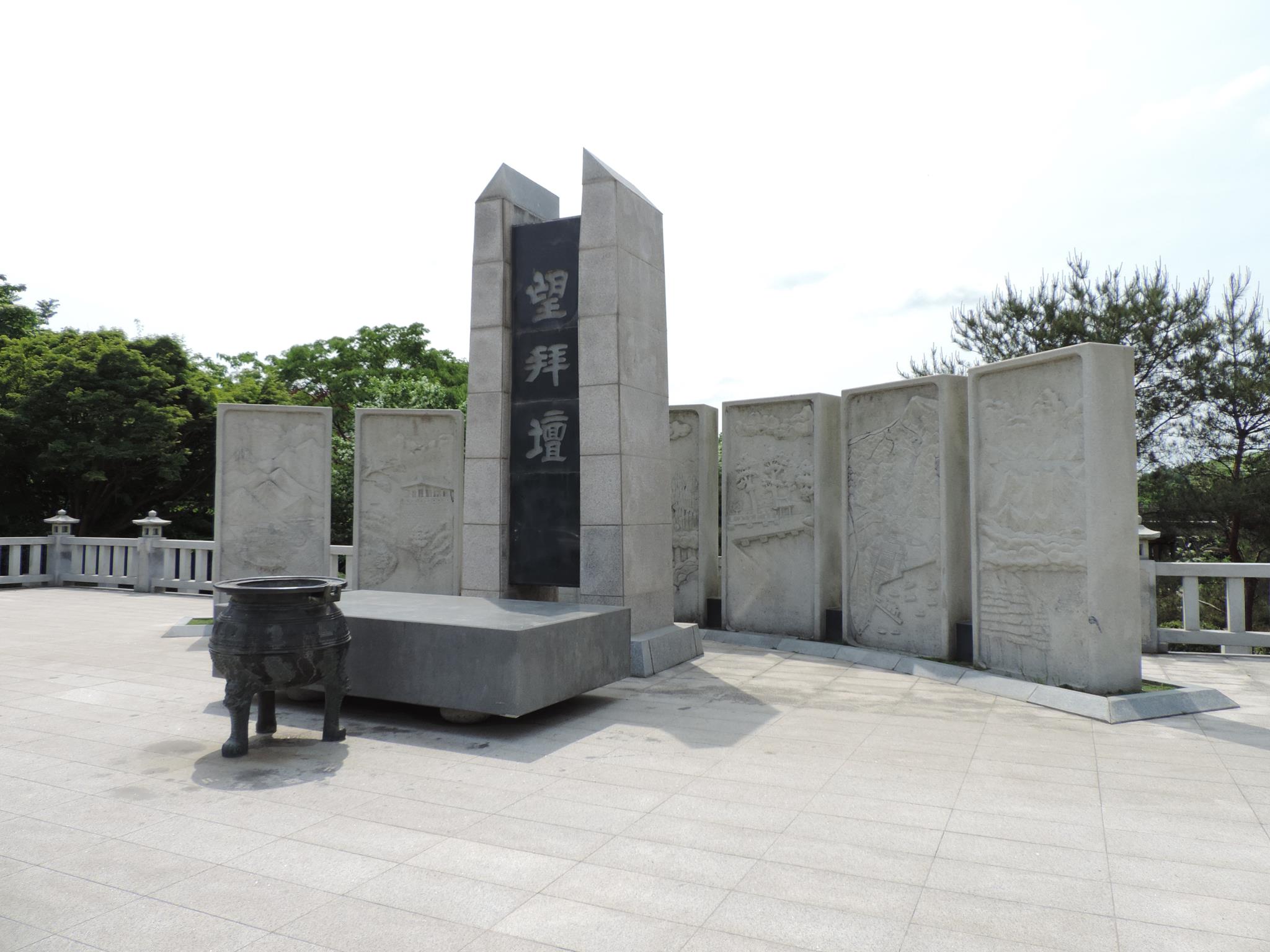
Five million people left their home in the north, where they had lived for generations, to avoid the Soviet army and the North Korea Communist Party’s persecution and brutalities. The refugees built a temporary altar at Imjingak on every Chuseok (Korean Thanks giving day), held an event to honor their ancestor and parents who they had left behind in North Korea, and longed for a permanent altar. In terms of scale and form, the censer and altar are located on a 400-m2 site. The Mangbae pagoda at the center represents the earnest longing for the reunification of the country, and prayers for the welfare of those in North Korea. The characteristics of the historical remains, institutions and customs, and mountains and streams of the 5 North Korean Provinces, and non-reclaimed area, Gyeonggi and Gangwon are carved in seven granite stone-folding screens around the pagoda to ease the homesickness of the refugees.
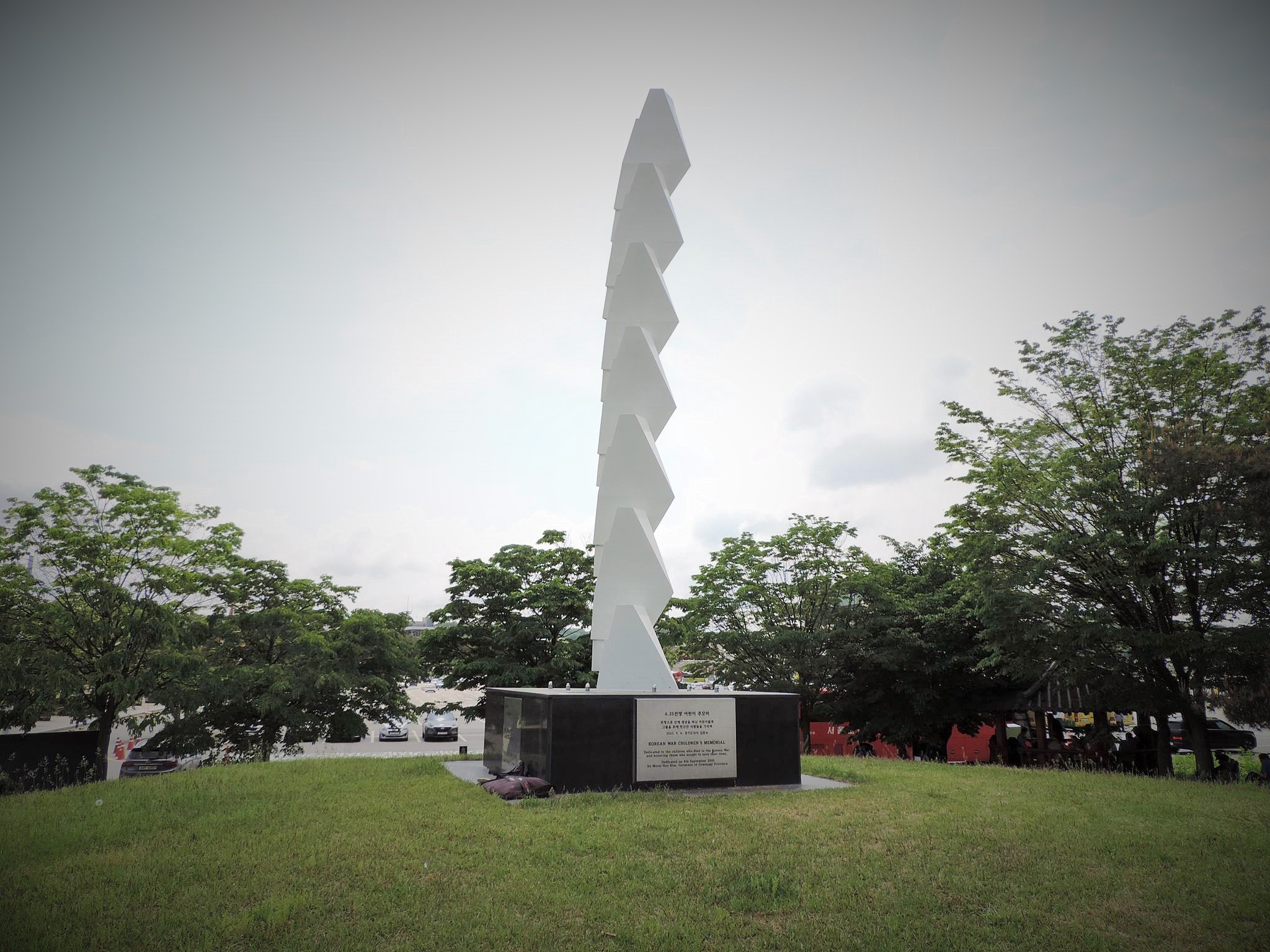
„Las Palmas“ – „The Doves“ – Korean War Children’s Memorial – SÉBASTIAN
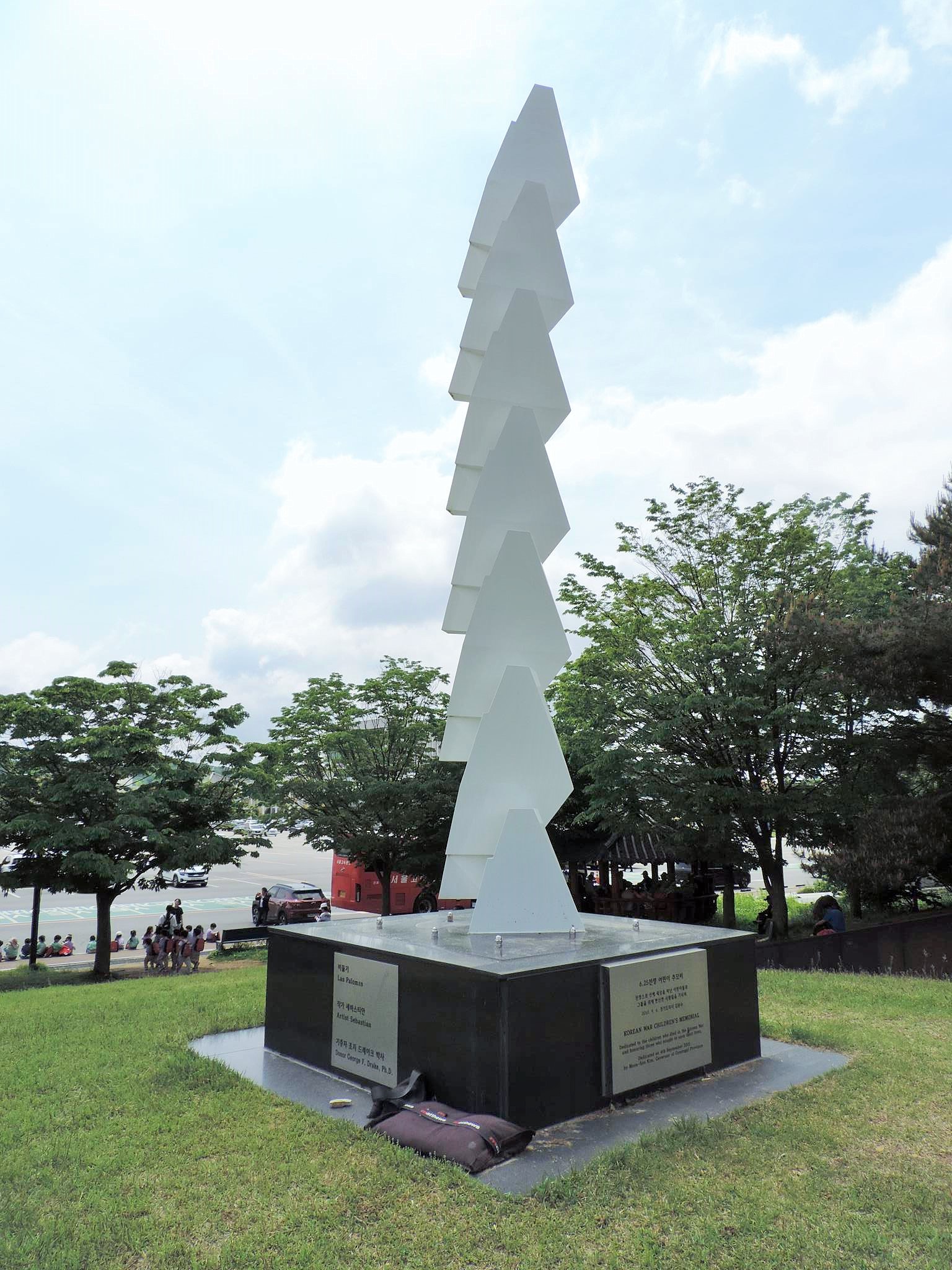
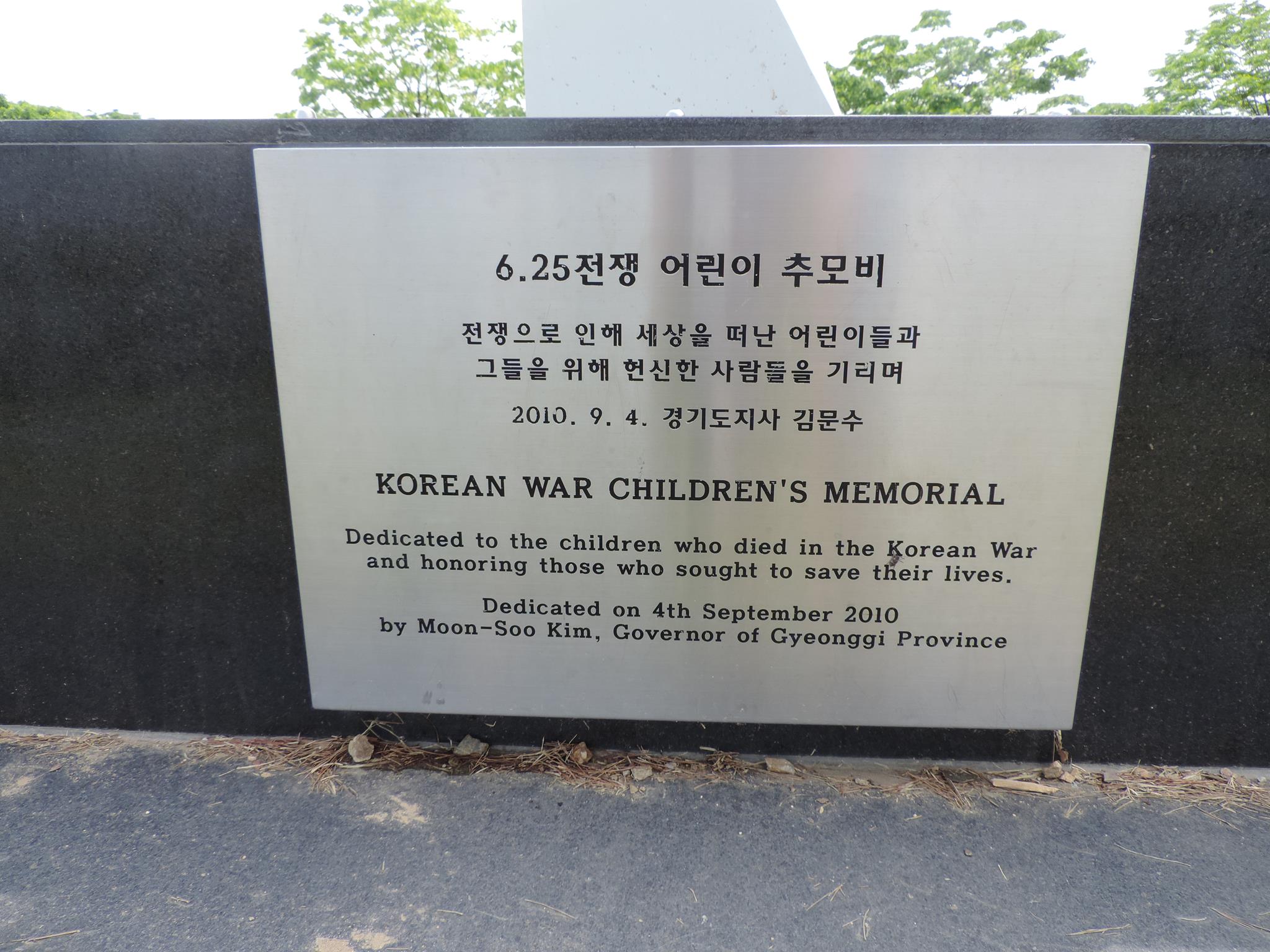
This monument is dedicated to the chirdren who died in the Korean War and honoring those who sought to save their lives. It was created by the Mexican sculptor ENRIQUE CARBAJAL GONZÁLEZ, better known by his artist name SÉBASTIAN, and dedicated on 4th September 2010 by Moon-Soo Kim, the Governor of Gyeonggi Province. The title „Las Palmas“ is Spanish and means „The Doves“.
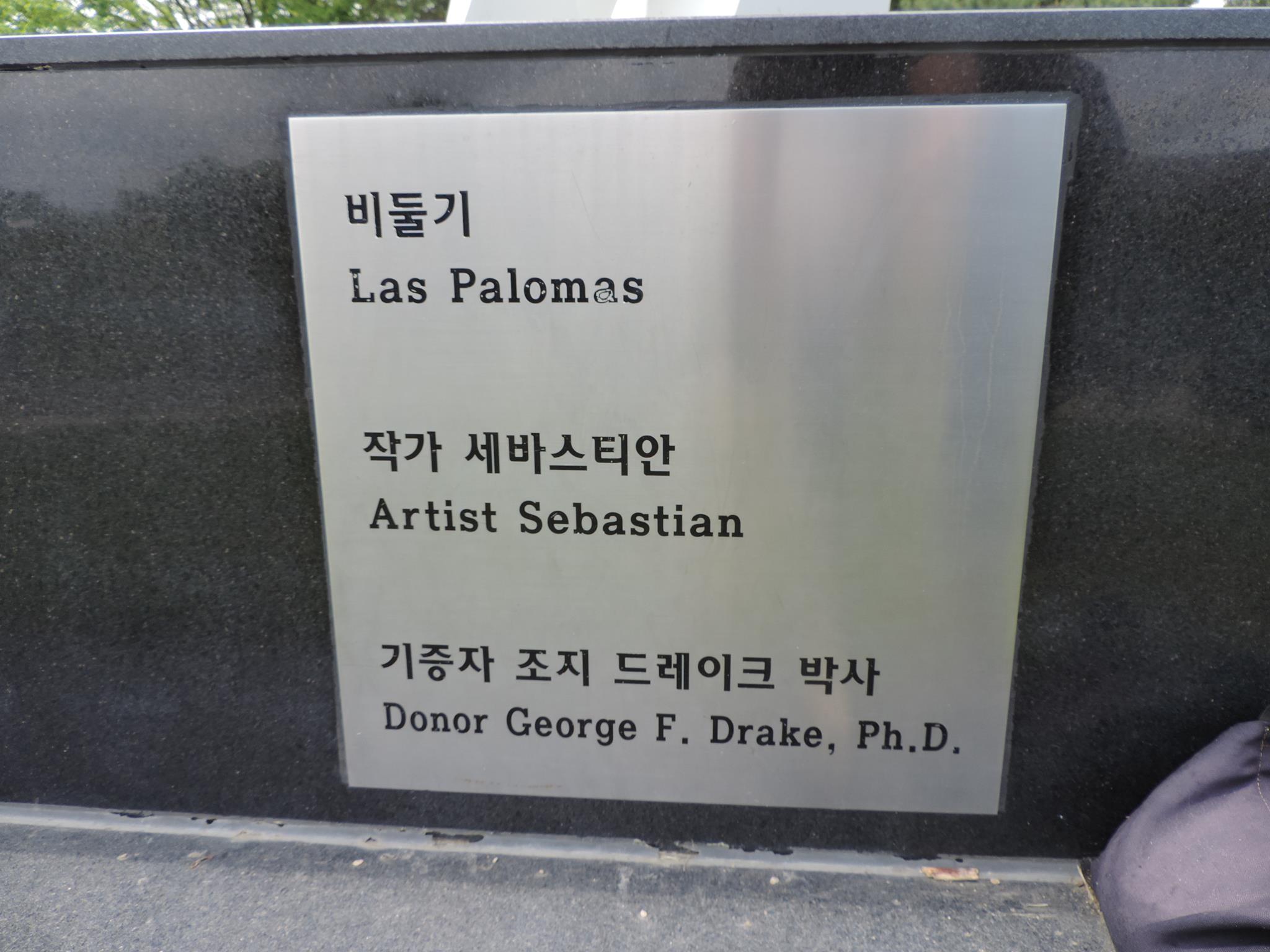
 Artist: SÉBASTIAN – ENRIQUE CARBAJAL GONZÁLEZ
 Website: https://www.sebastianescultor.com.mx
 Facebook: https://www.facebook.com/EscultorSebastian
 Instagram: https://www.instagram.com/sebastiansculptor
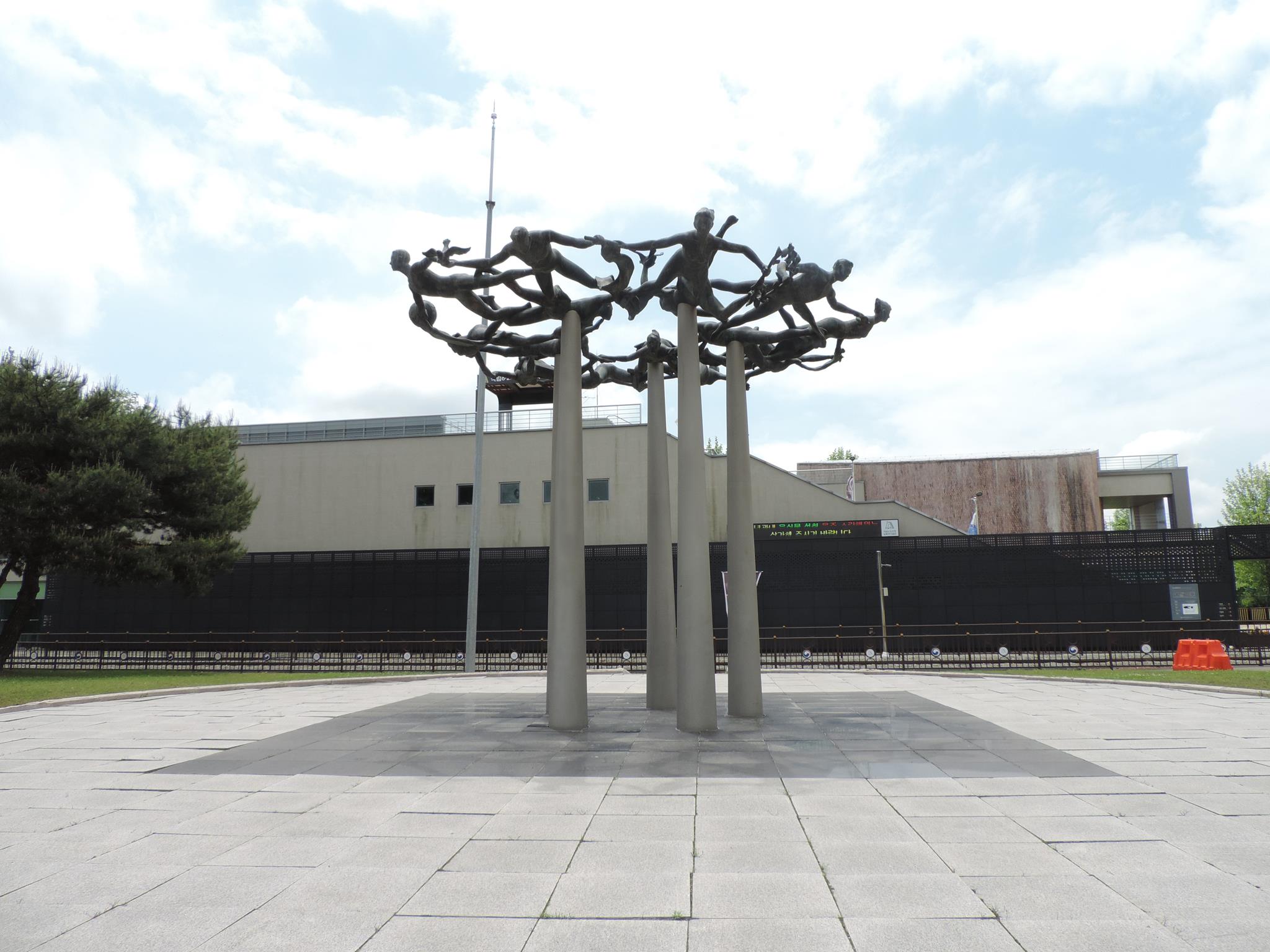
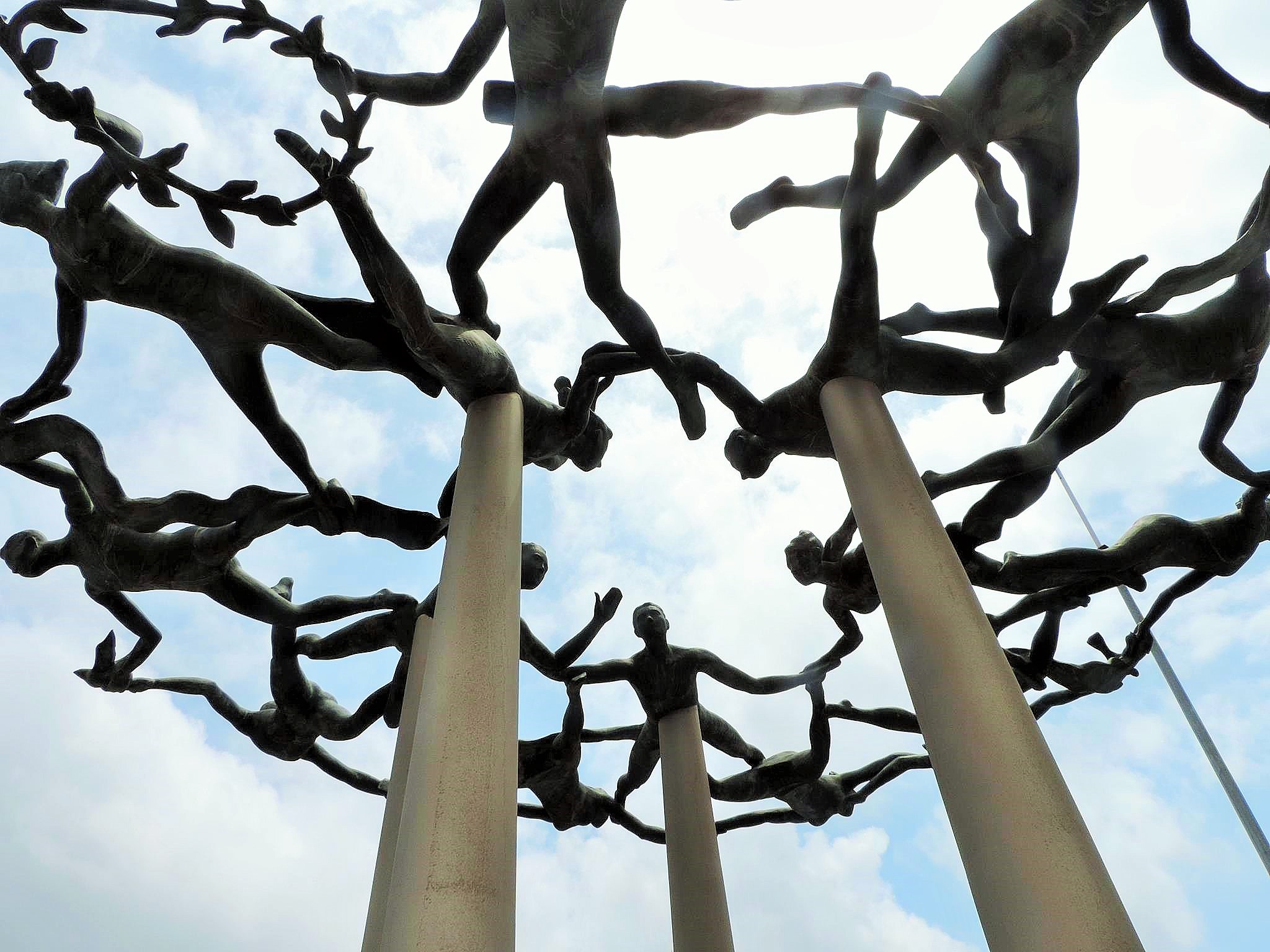
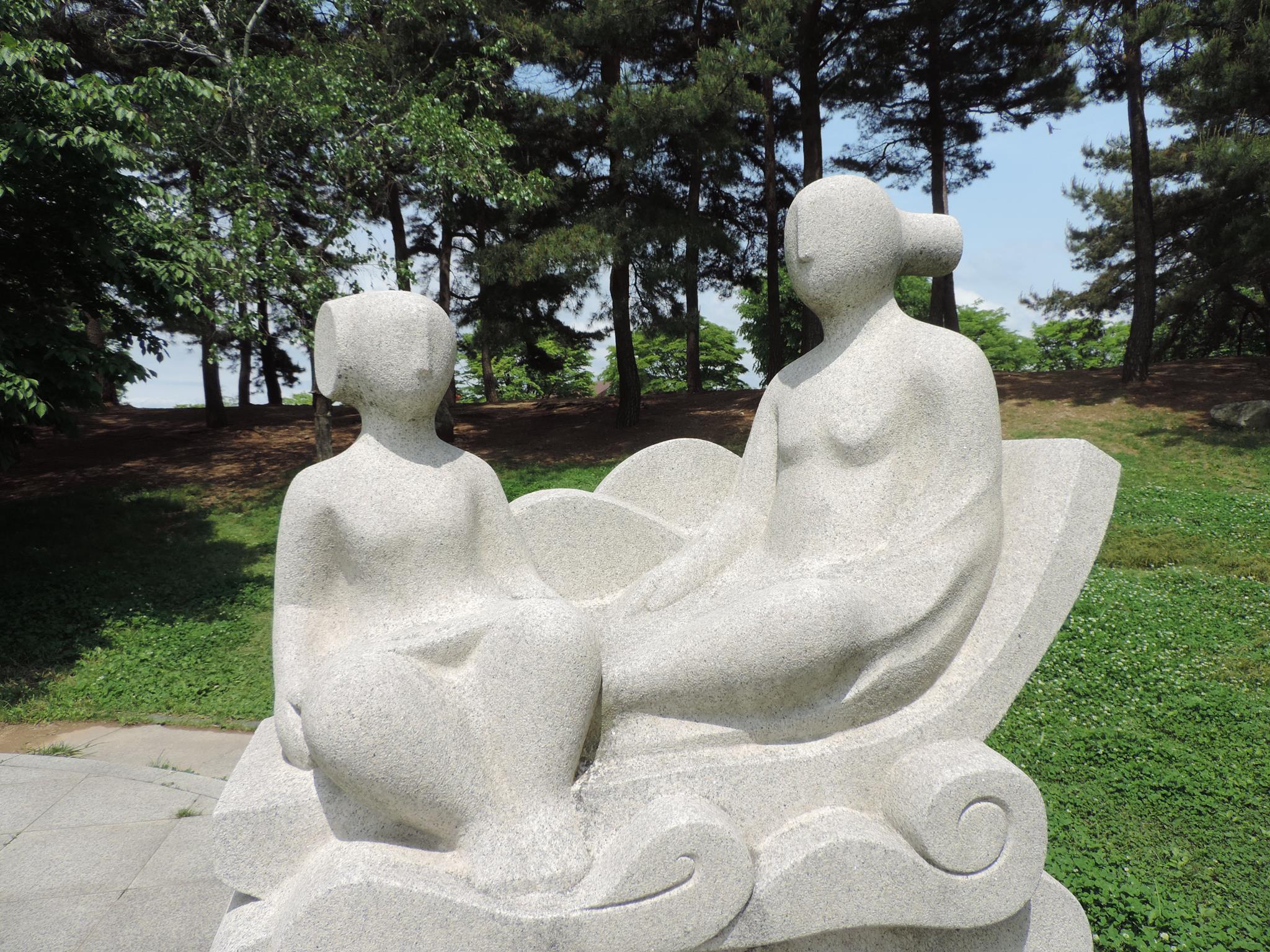
Peace Memorial by MIMESIS ART MUSEUM
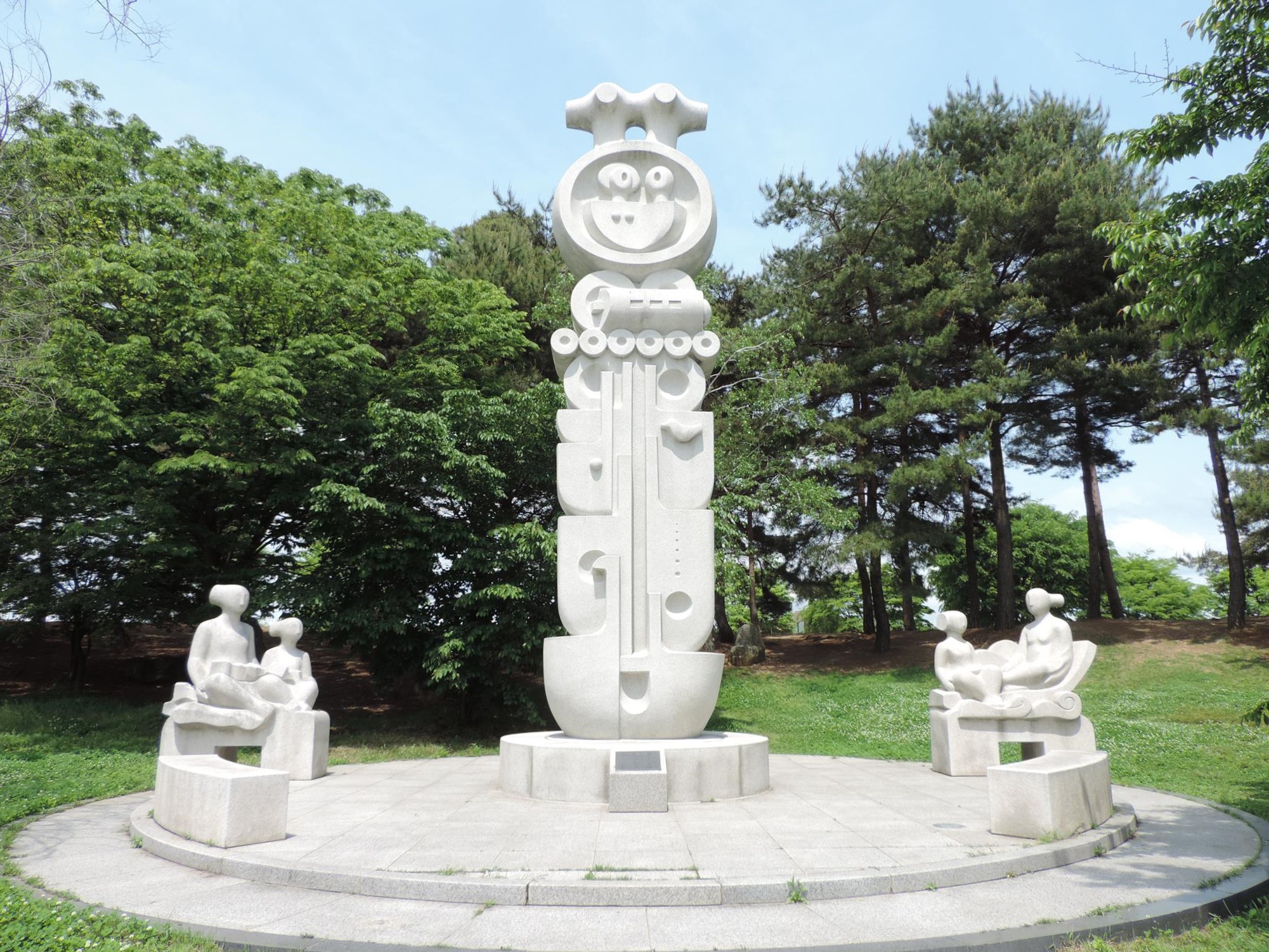
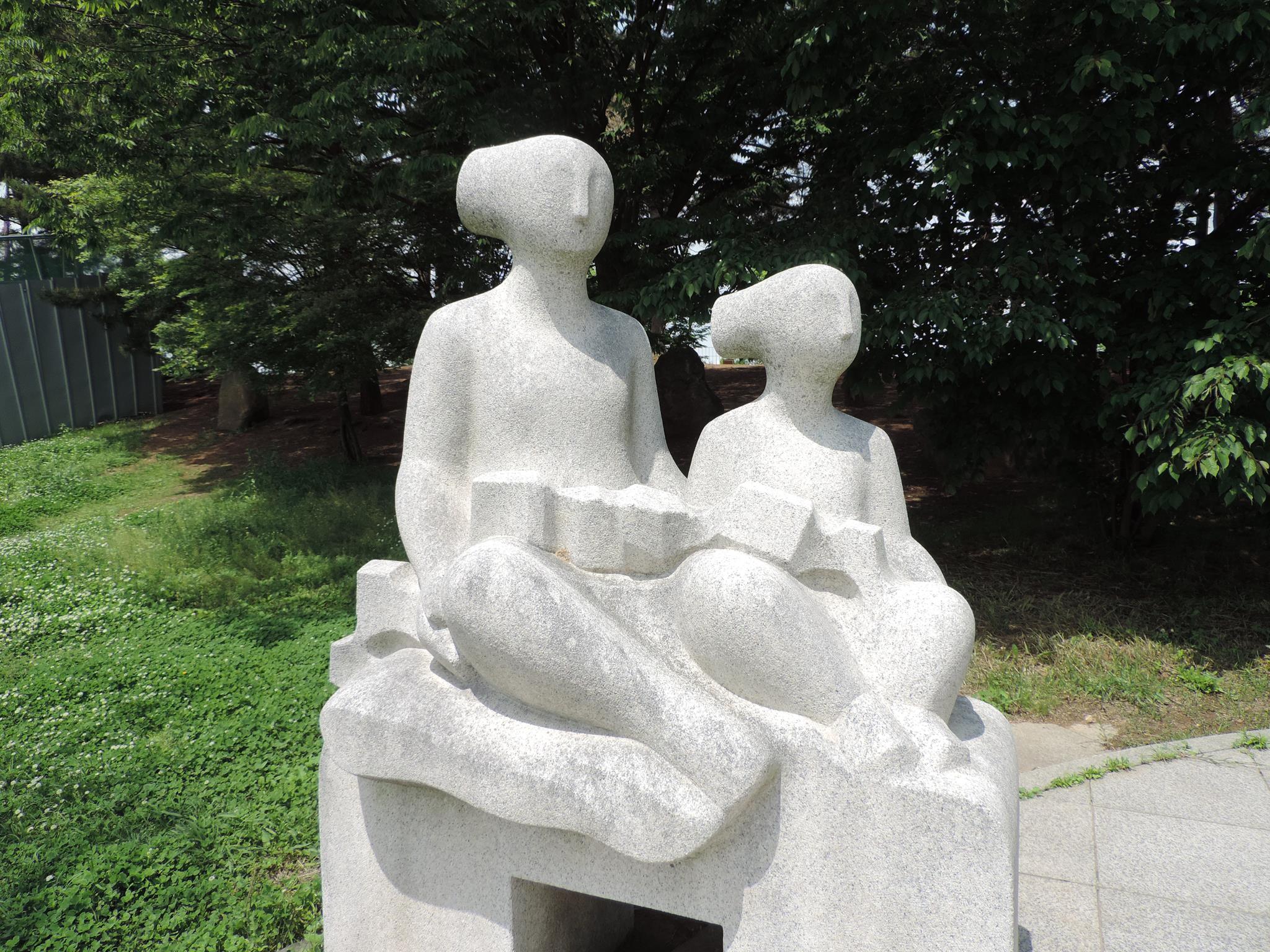
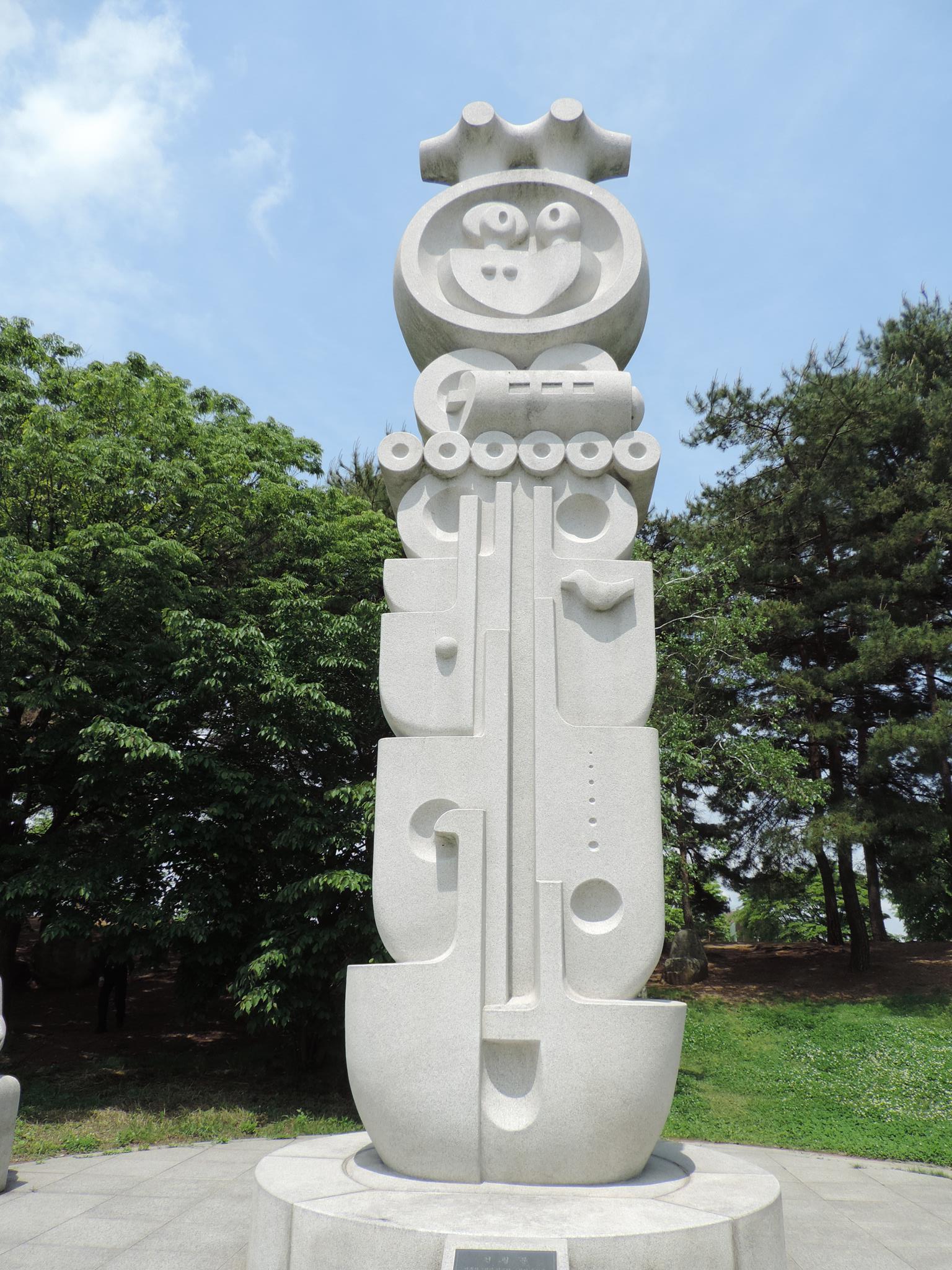
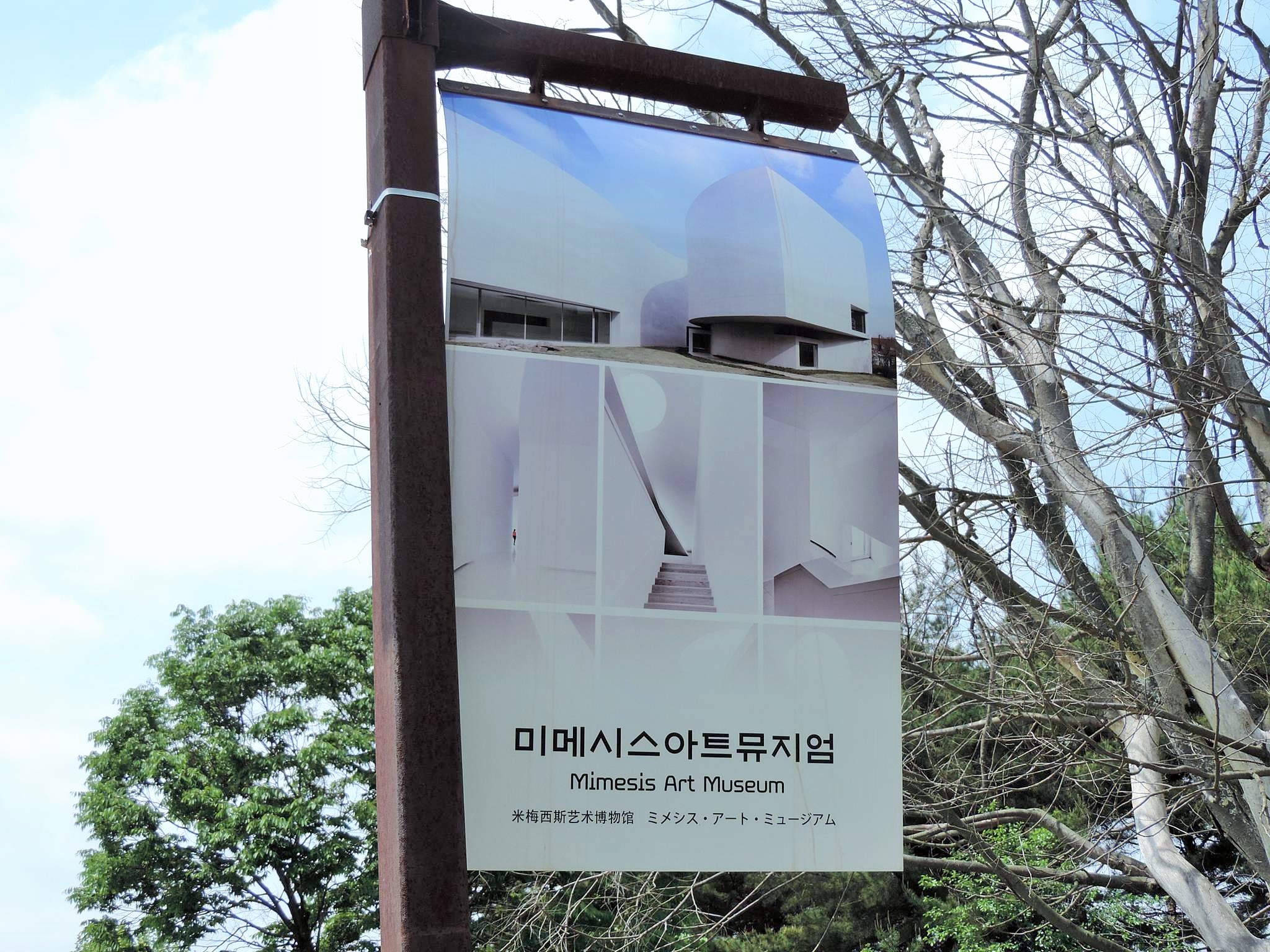
Museum: MIMESIS ART MUSEUM
Website: https://mimesisartmuseum.co.kr
 Naver: https://blog.naver.com/mimesis_art
Facebook: https://www.facebook.com/Mimesisartmuseum
Instagram: https://www.instagram.com/mimesis_art_museum
 Youtube: https://www.youtube.com/@mimesisartmuseum
 LinkTree: https://linktr.ee/mimesisartmuseum
„Song of Longing for Home – Thirty Lost Years“ – Unesco Memory of the World – 1983
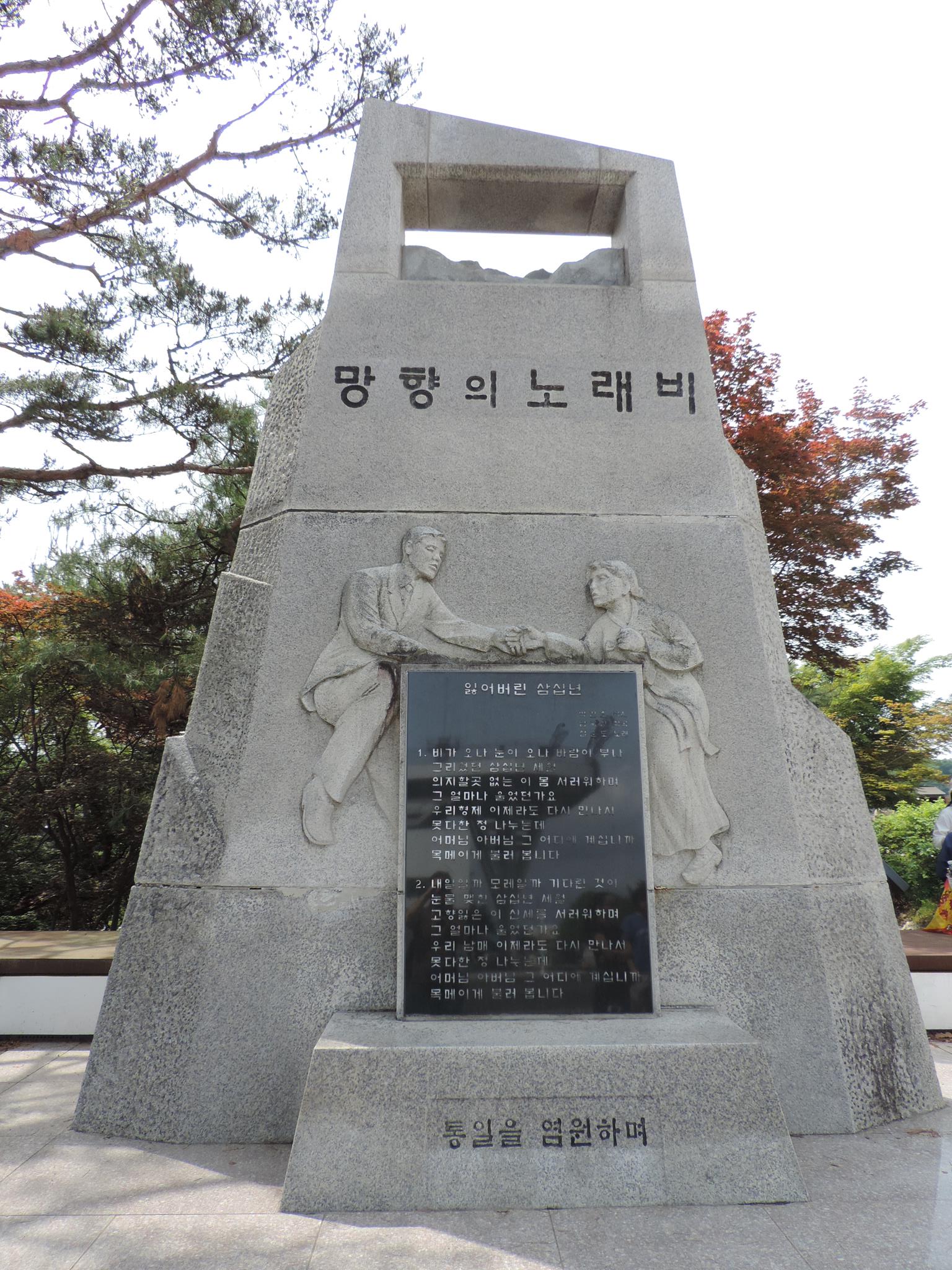
First verse: Rain or snow or wind, I longed for thirty years. With nowhere to turn, I grieved, how much I cried. Now that we brothers have finally met again, we share our unfinished feelings. Mother, Father, where are you? I call out with a lump in my throat.
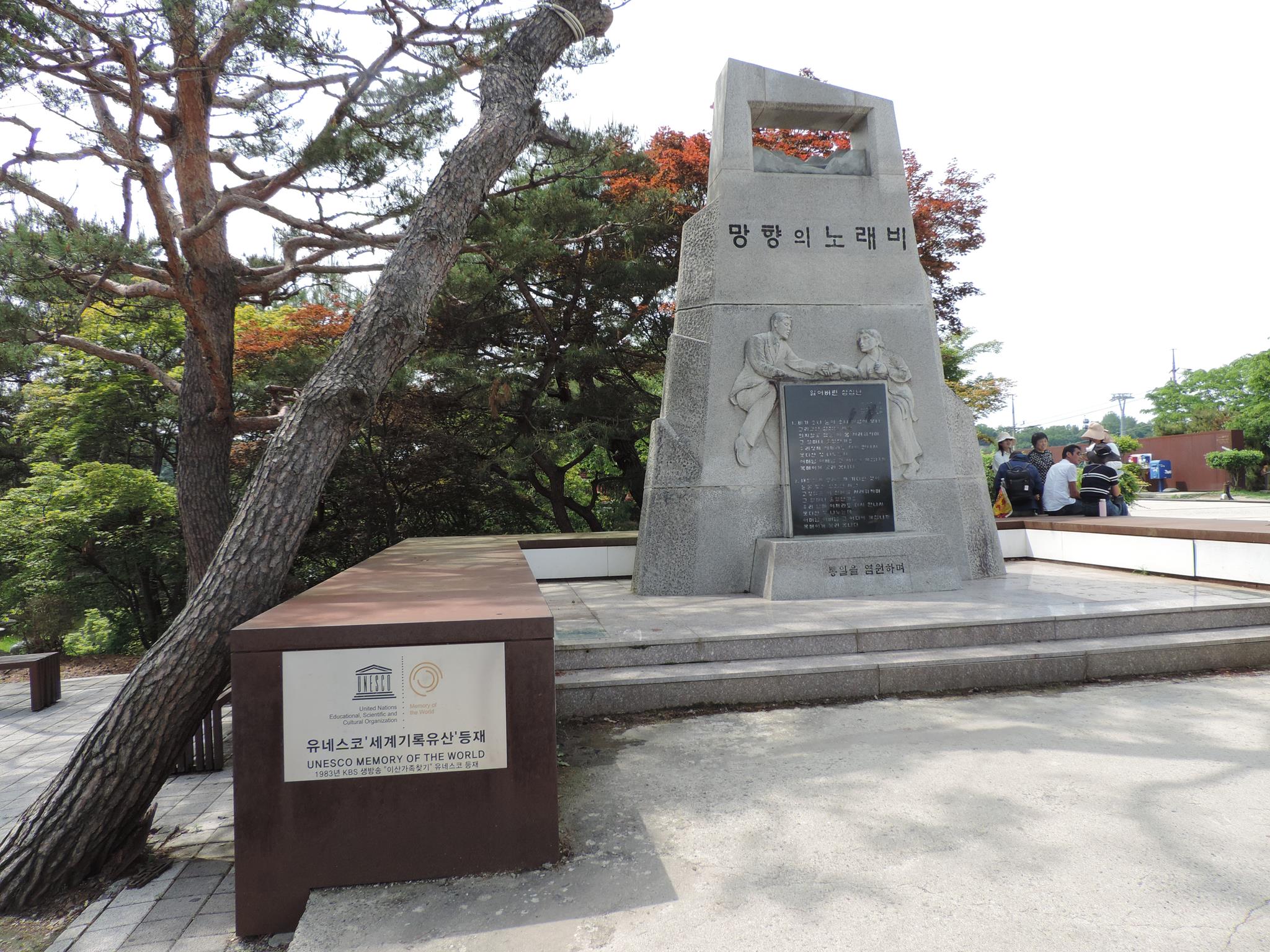
Second verse: Waiting for tomorrow or the day after tomorrow, Thirty years of tearful days, Grieving over my lost homeland, How much I have cried. My siblings, let us meet again, To share the love we have not yet shared. Mother, Father, where are you? I call out with a choked voice. Longing for reunification.
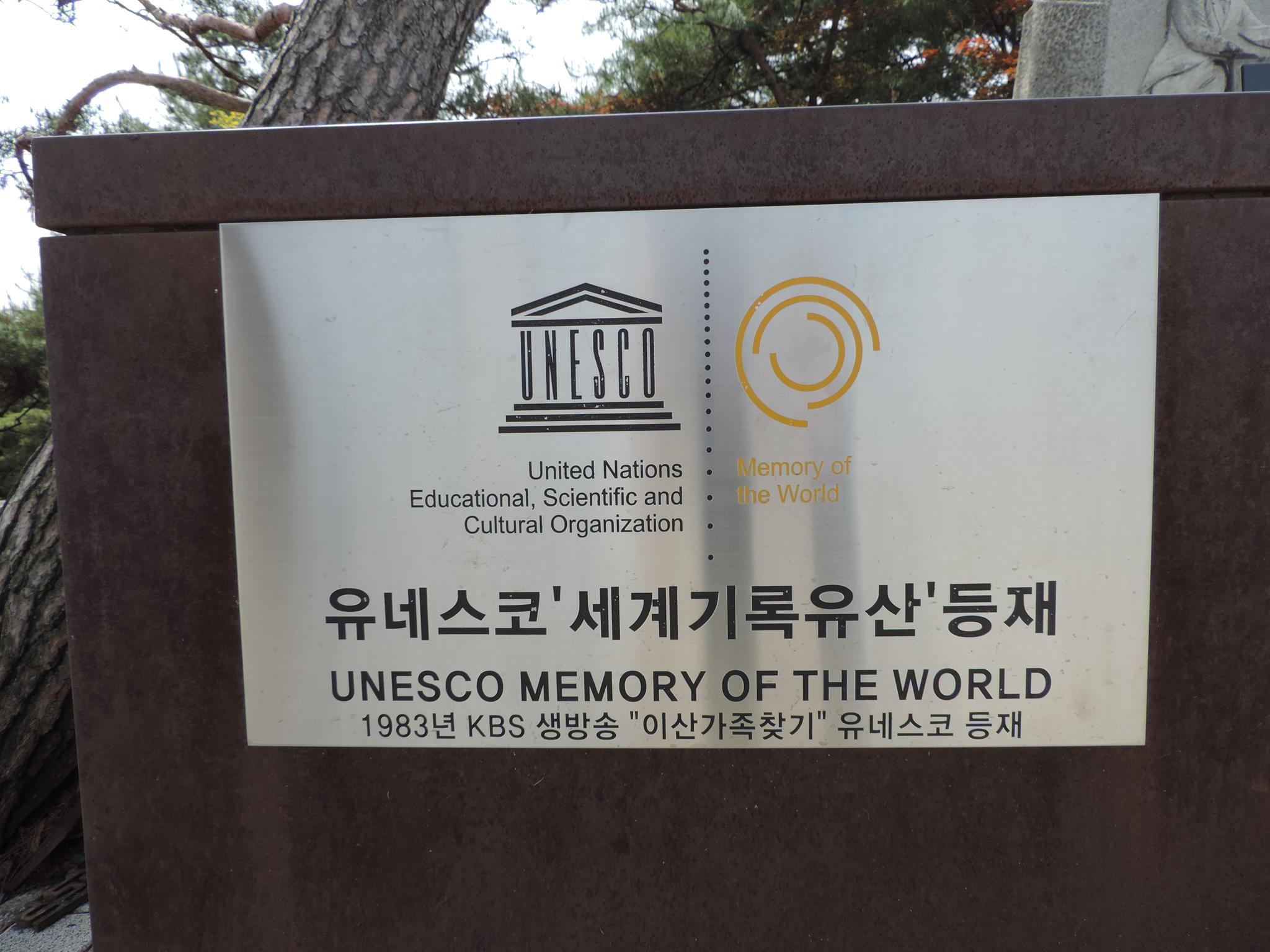
Organization: UNITED NATIONS EDUCATIONAL, SCIENTIFIC AND CULTURAL ORGANIZATION – UNESCO
Website: https://www.unesco.org
Facebook: https://www.facebook.com/unesco
Instagram: https://www.instagram.com/unesco
 Pinterest: https://www.pinterest.com/unesco
 Tik Tok: https://www.tiktok.com/@unesco
 LinkedIn: https://www.linkedin.com/company/unesco
Youtube: https://www.youtube.com/@unesco
LinkTree: https://linktr.ee/unesco
„Welcome to Imjingak“
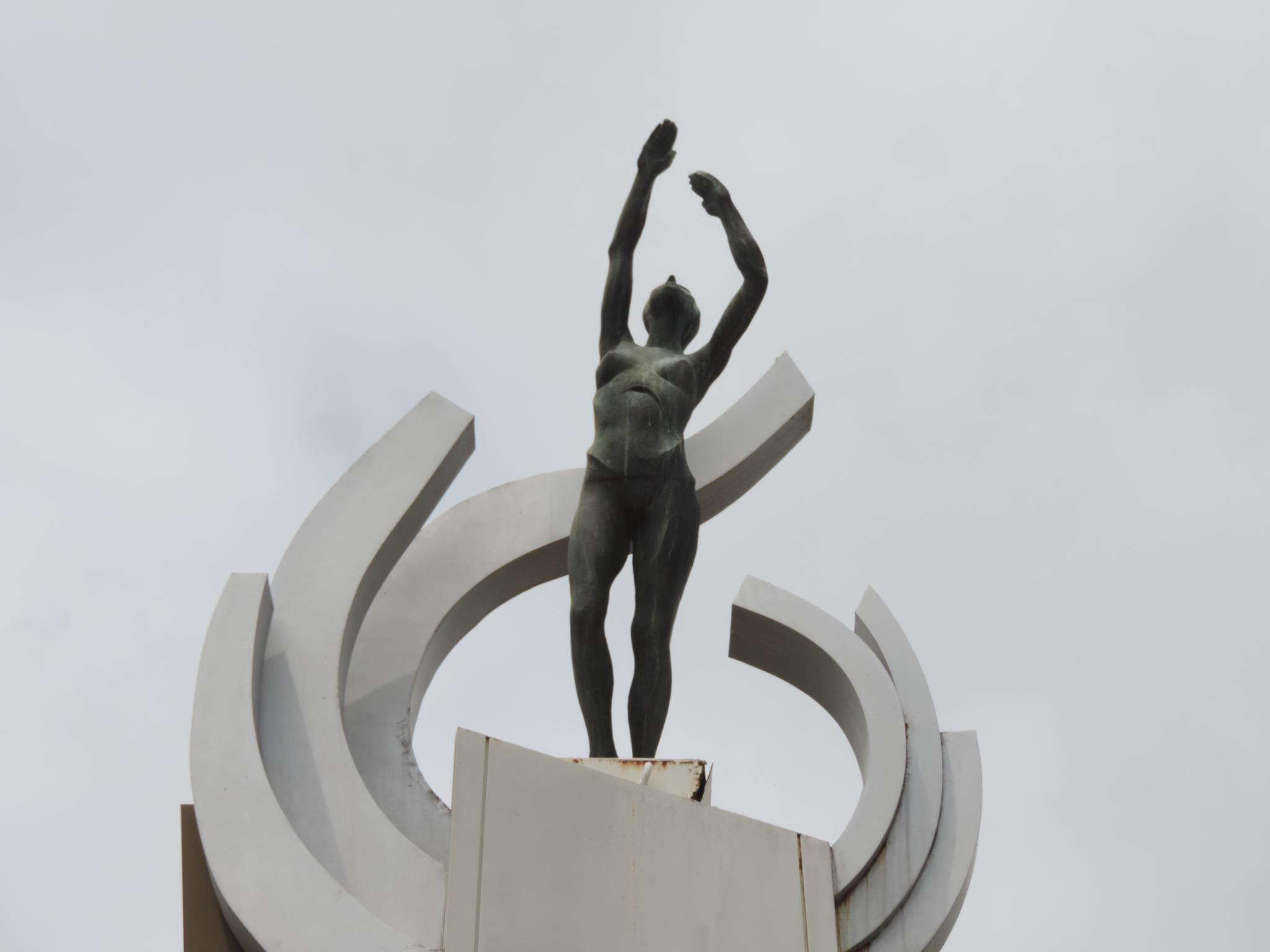
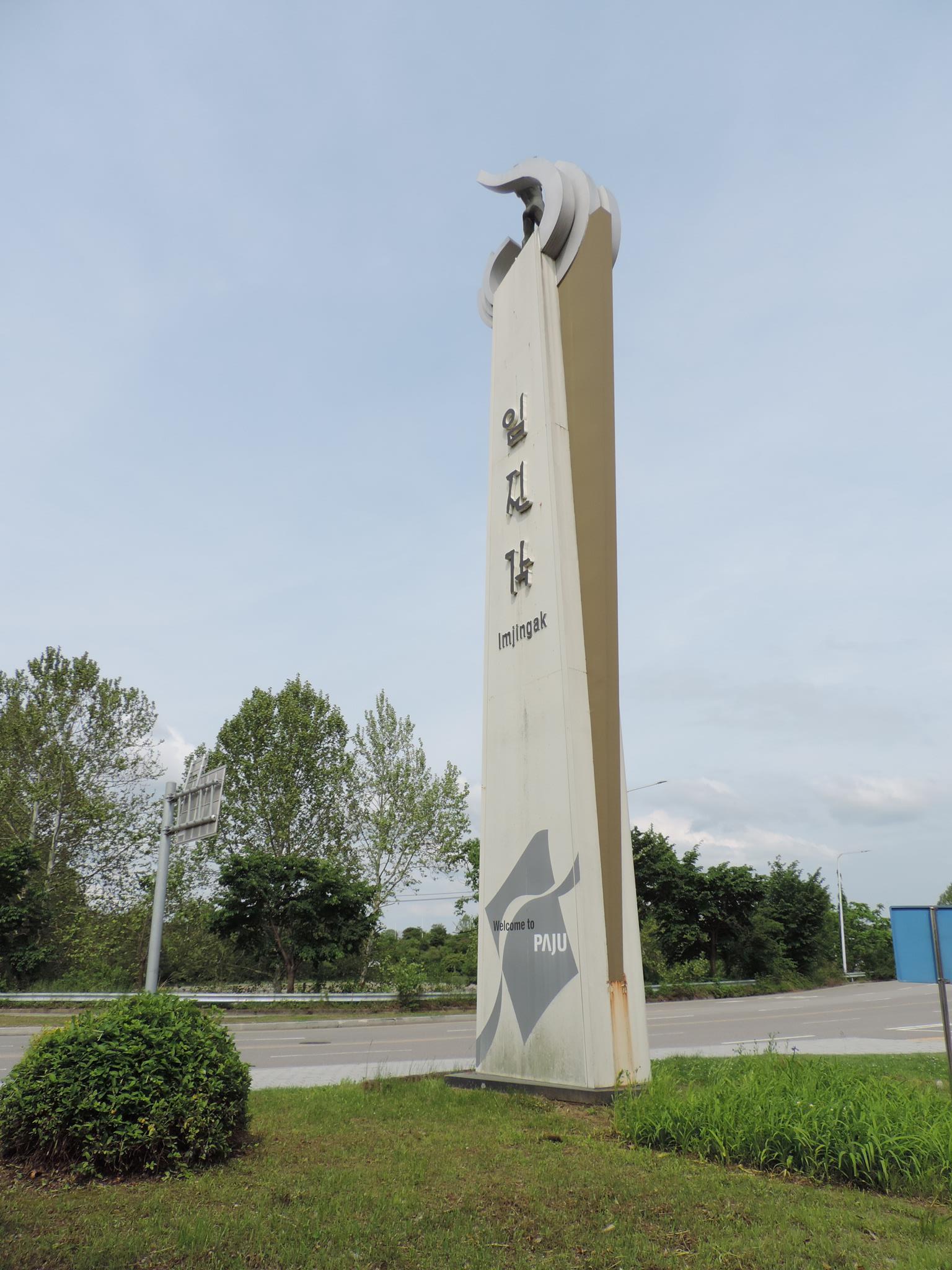
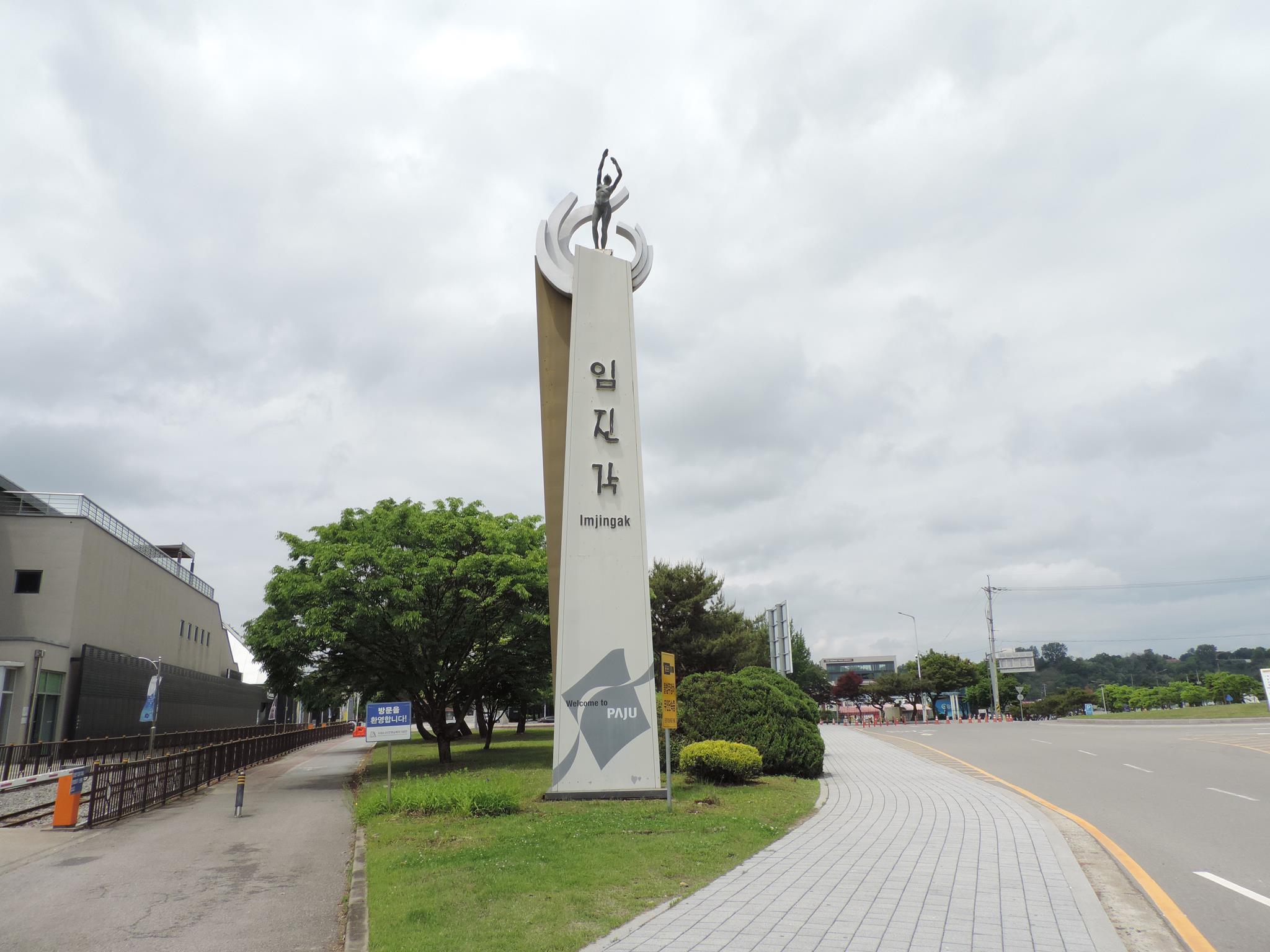
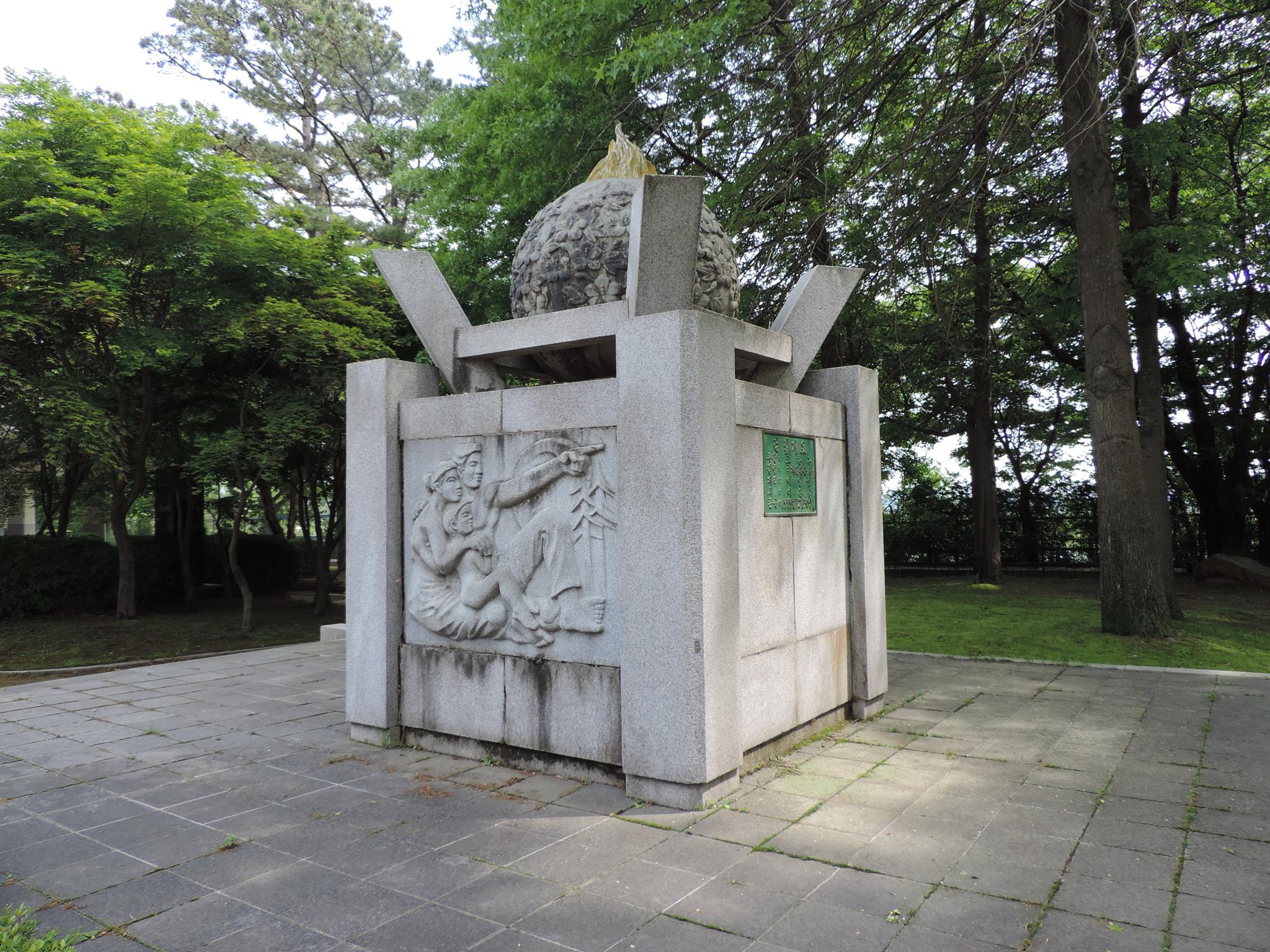
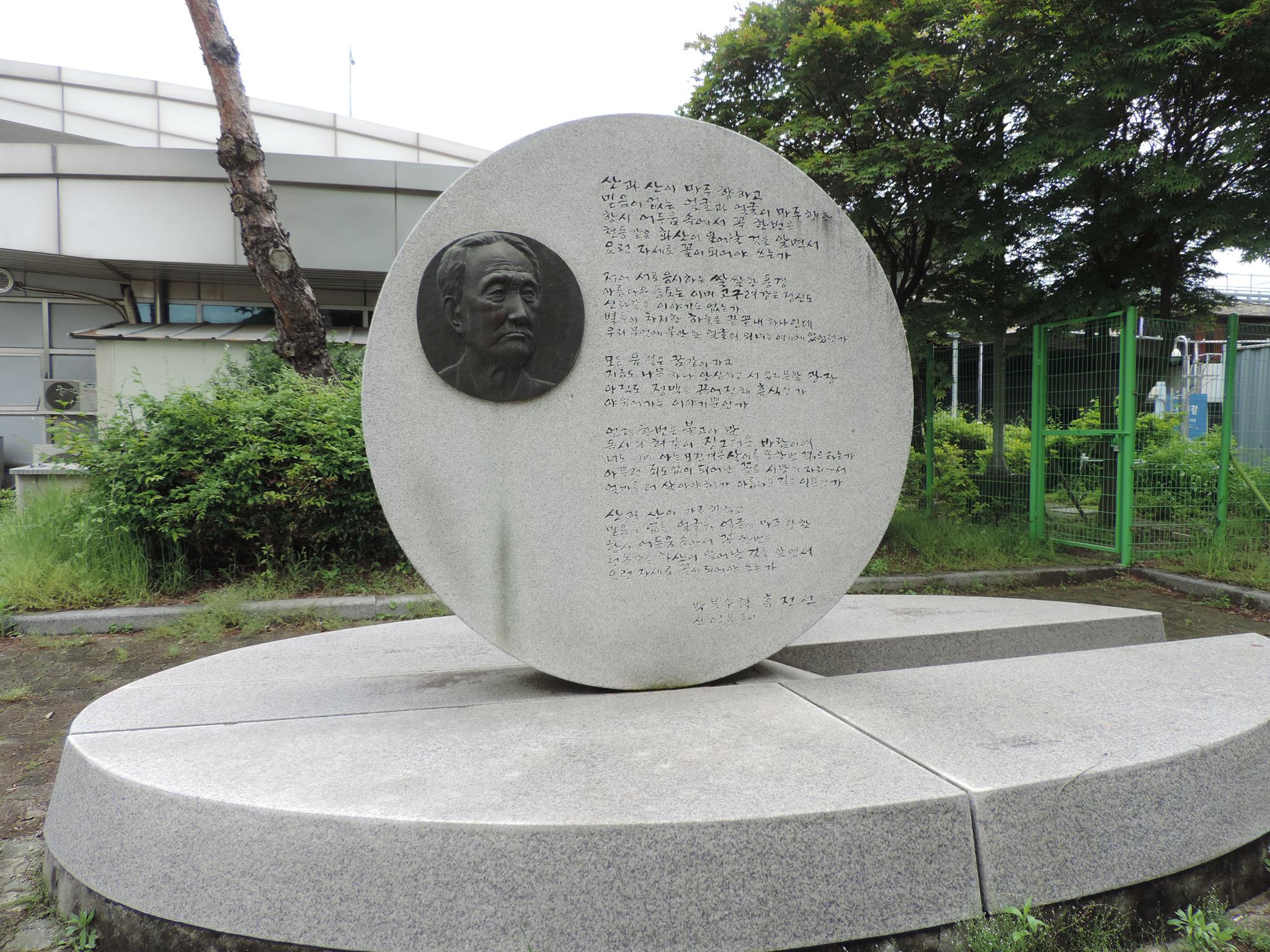
Inscription: Mountains face each other, faces without faith face each other, always in darkness, knowing that a volcanic eruption will occur at least once. Should we become flowers in this posture? The cold scene of each other staring at each other. Is there no beautiful spirit like Goguryeo, no mythical stories? The sky filled with stars is ultimately one, so what is the meaning of our anxious faces? All forms fade like dreams, and even now, a single tree stands reassuringly, unable to move. Are the veins still severed, resting? Is it only a withering story? When will it ever play? O wind, as repulsive as a snake’s tongue. Are you telling me to endure this harsh life once more? The flower that bloomed without any sin, how much longer must it live in its current place? Is this the only path? Mountains are fake, faces without faith are fake, in the darkness, at least once, the celestial palace will descend, must one become a flower in a crouching posture?
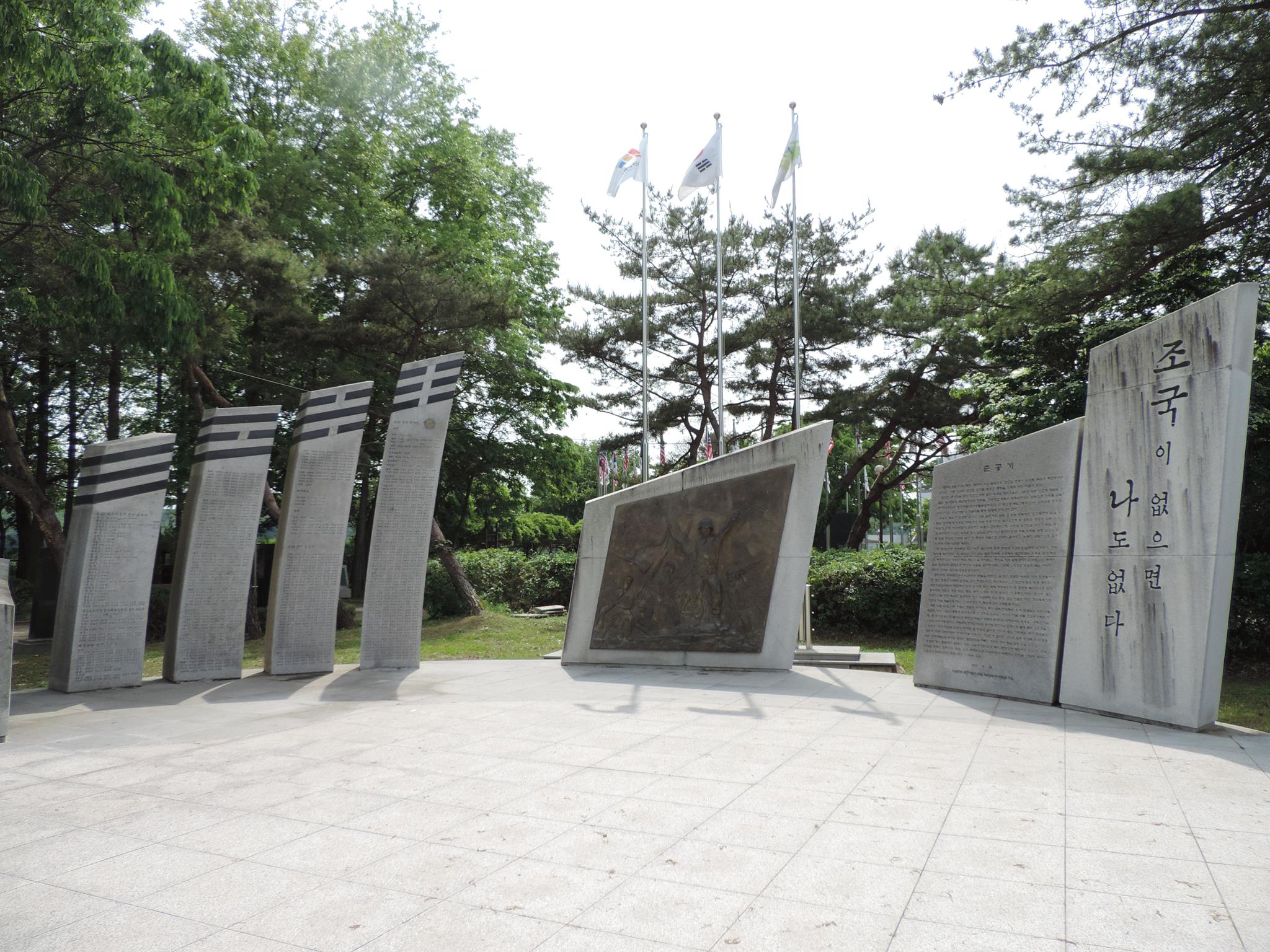
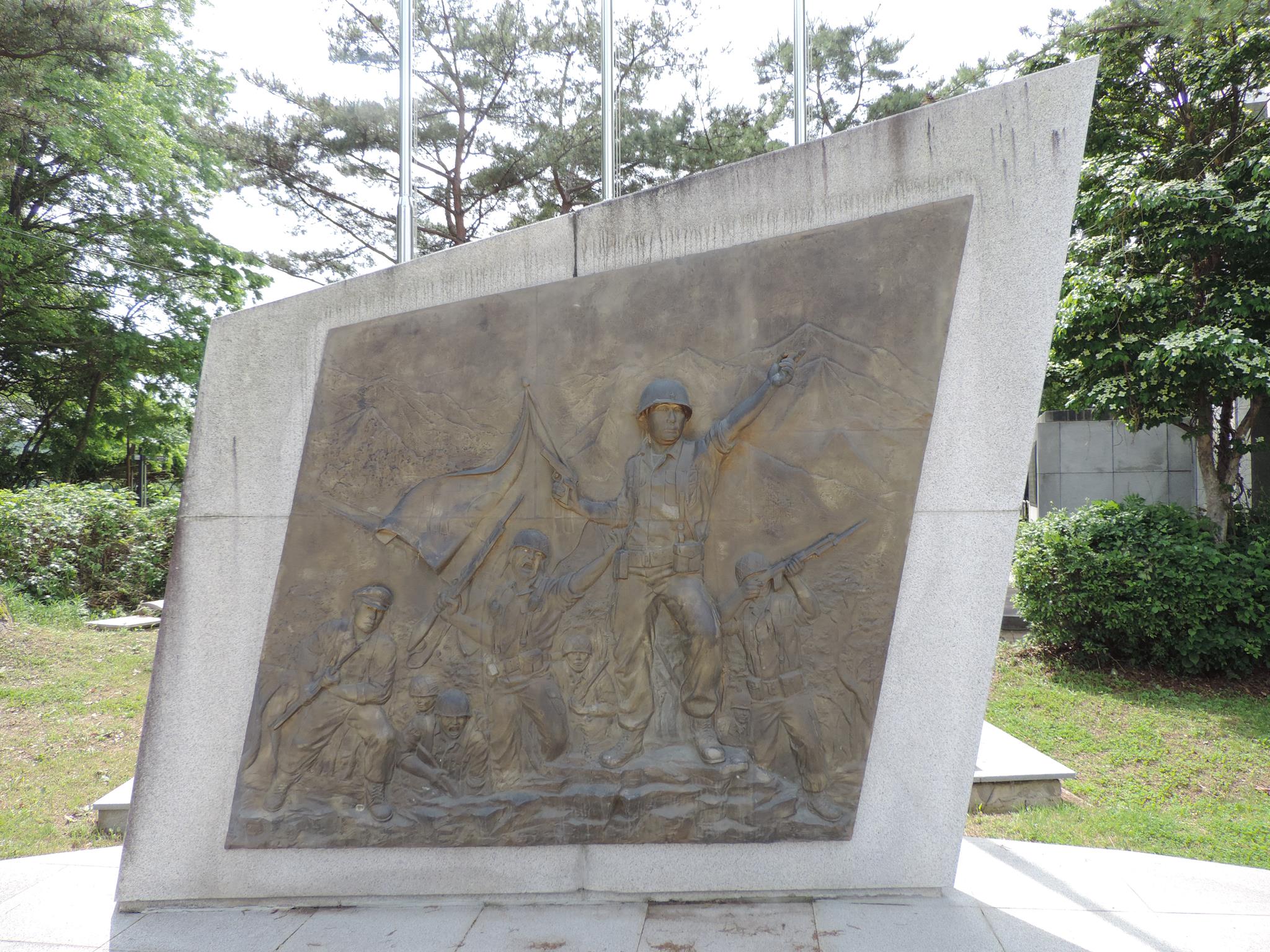
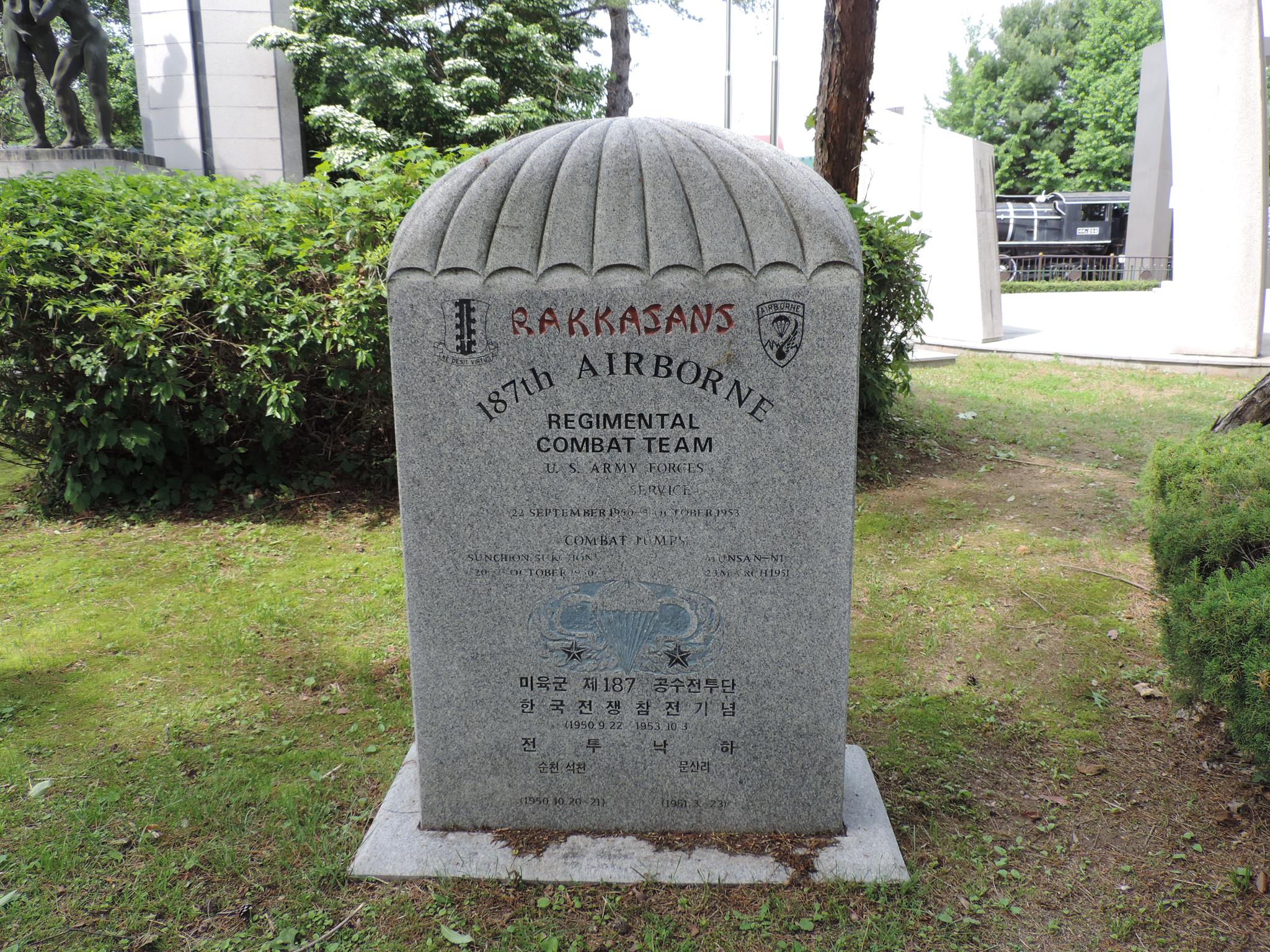
Memorial to Rakkasans – 187th Airborne Regimental Combat Team – U.S. Army Forces
Memorial to Americans of Japanese Ancestry
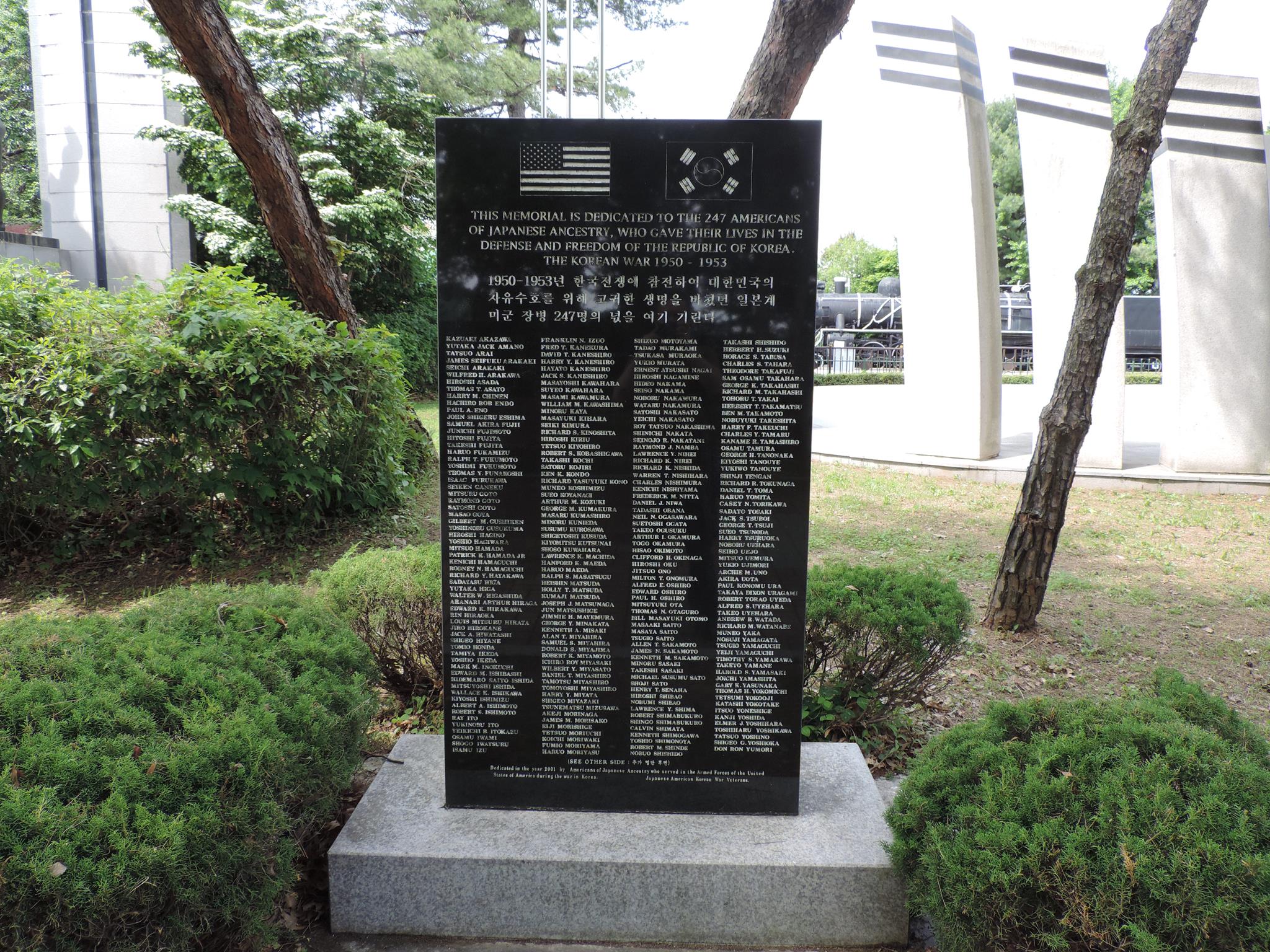
This memorial is dedicated to the 247 Americans of Japanese ancestry, who gave their lives in the defense and freedom of the Republic of Korea during the Korean War from 1950 till 1953.
„Freedom is not free“ – Memorial to William E. Weber – The Hero of Korean War – 2023
Colonel William E. Weber was born on 10th of November in 1925 and passed away at the age of 97 on April 9th in 2022, at his home in Maryland. In 1995 he erected the Korean War Veterans Memorial and devoted his final years to building the Wall of Remembrance despite his advanced age and worsening injuries. Colonel Weber volunteered for the special forces in February 1943 when he was only seventeen years old. He was commissioned as a Second Lieutenant in January 1945 at Fort Benning. Georgia. He deployed to the Philippines as a Platoon Leader in the 187th Airborne Infantry Regiment after serving with the 11th Airborne Division and to Japan with the 82nd Airborne Division in August 1945. After serving in various positions, including at the Infantry School, the Command and General Staff College, NATO Headquarters, the Army War College, and the Department of the Army, he retired as a Colonel in 1980. Colonel Weber received numerous medals and commendations, including the U.S. Legion of Merit. Silver Star. Bronze Star, Purple Heart, and the Republic of Korea Order of Civil Merit.
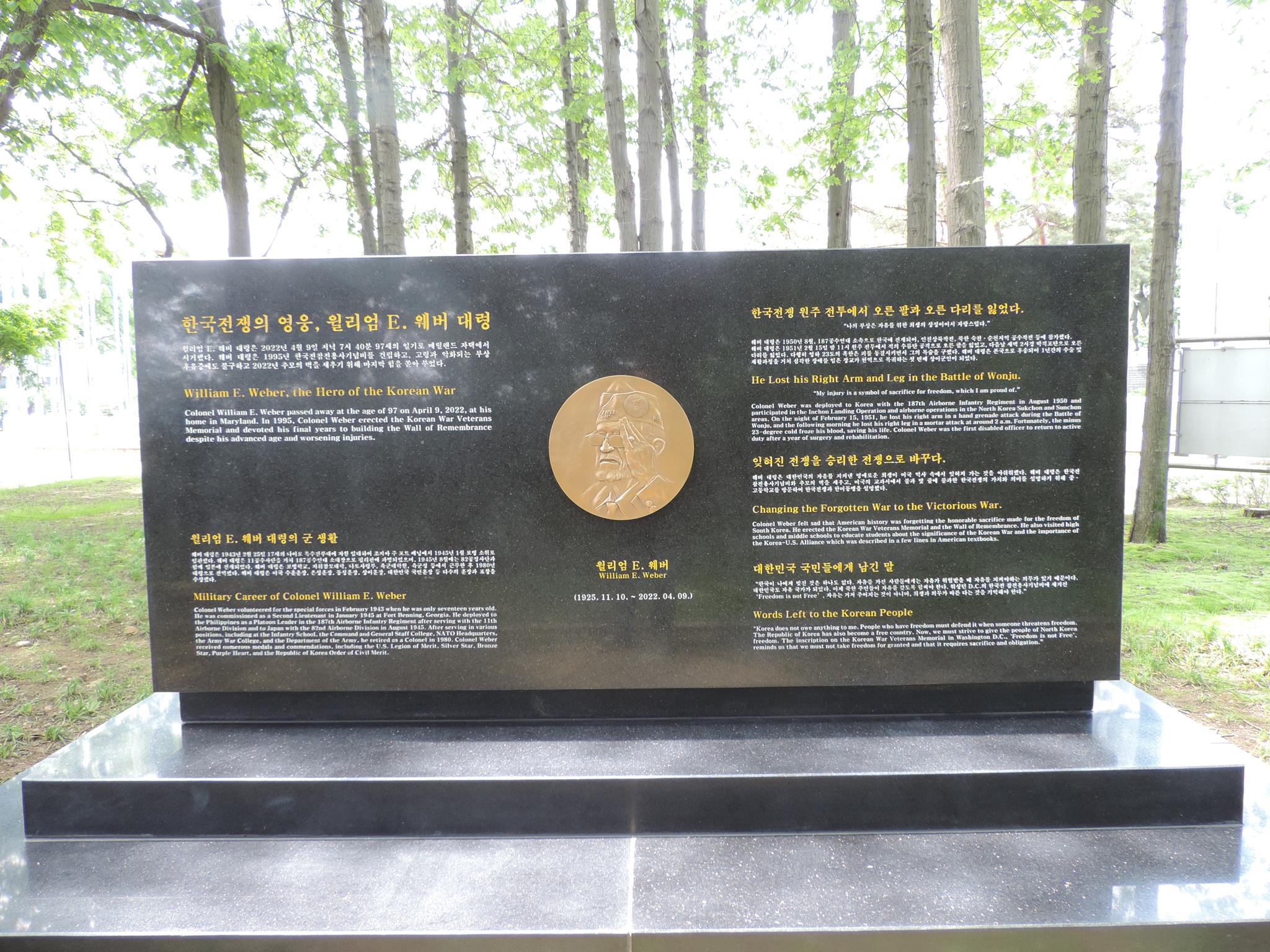
Colonel Weber Lost his Right Arm and Leg in the Battle of Wonju and said: „My injury is a symbol of sacrifice for freedom, which I am proud of.“ He was deployed to Korea with the 187th Airborne Infantry Regiment in August 1950 and participated in the Inchon Landing Operation and airborne operations in the North Korea Sukchon and Sunchon areas, On the night of February 15, 1951, he lost his right arm in a hand grenade attack during the Battle of Wonju, and the following morning he lost his right leg in a mortar attack at around 2 a.m. Fortunately, the minus 23-degree cold froze his blood, saving his life. Colonel Weber was the first disabled officer to return to active
duty after a year of surgery and rehabilitation.
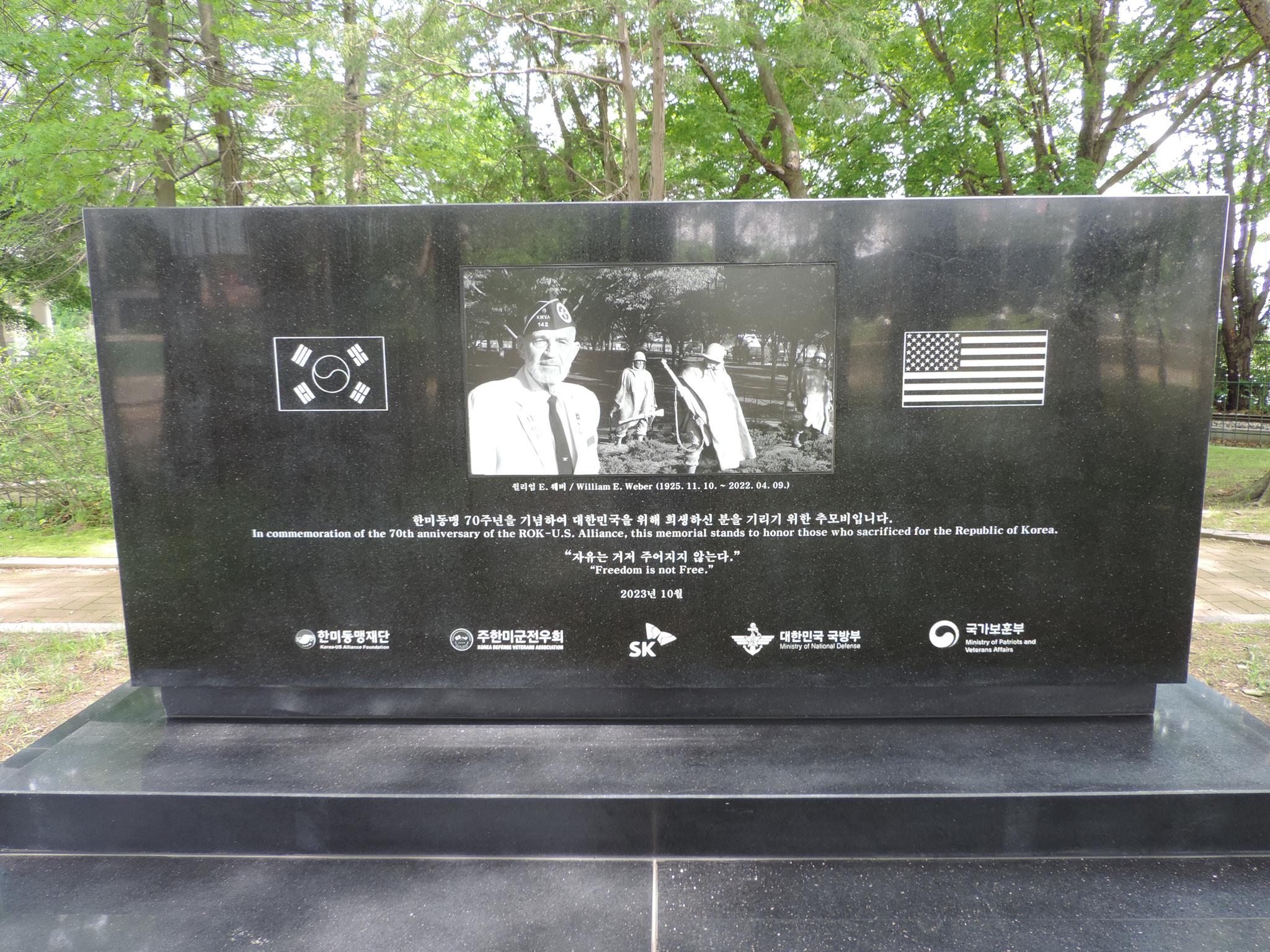
Colonel Weber felt sad that American history was forgetting the honorable sacrifice made for the freedom of South Korea. He erected the Korean War Veterans Memorial and the Wall of Remembrance. He also visited high schools and middle schools to educate students about the significance of the Korean War and the importance of the Korea-U.S. Alliance which was described in a few lines in American textbooks. Weber: „Korea does not owe anything to me. People who have freedom must defend it when someone threatens freedom. The Republic of Korea has also become a free country. Now, we must strive to give the people of North Korea freedom. The inscriscription on the War Veterans Memorial in Washington D.C. ‚Freedom is not Free‘, reminds us that we must not take freedom for granted and that it requires sacrifice and obligation.“ This monument in Imjingak was inaugurated in October 2023 in commemoration of the 70th anniversary of the ROK-U.S. Alliance. This memorial stands to honor those who sacrificed for the Republic of Korea.
Memorial to John K. Singlaub, the General Who defended Korea
„If I could give up a few stars to prevent the second Korean War and save the lives of countless Koreans, my service in Korea would be very rewarding.“ In 1977 Major General John Singlaub, Chief of Staff of the United Nations Command / U.S. Forces Korea, assessed that withdrawing U.S. forces from Korea would provide North Korea with an opportunity to miscalculate, given the unprecedented increase in North Korean military power and troop deployment at the time. General Singlaub based his judgment on his military expertise from experiencing the Korean War and international strategic environments such as the Indochina War. Even when General Singlaub was recalled home he refused to compromise his convictions, which ultimately led to his retirement from the military. While his service in Korea helped prevent a recurrence of war on the Korean Peninsula, it also marked the end of his military career.
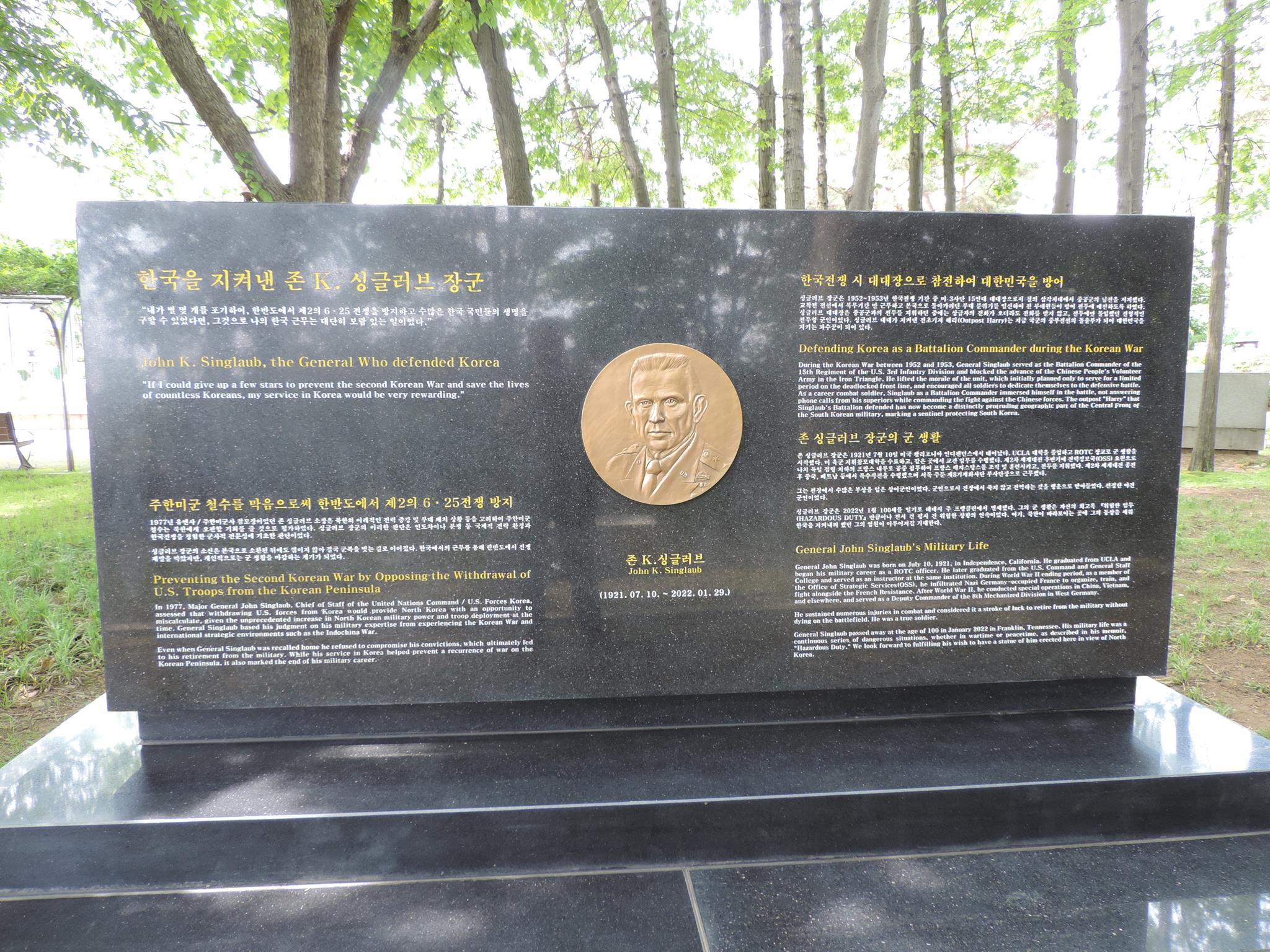
During the Korean War between 1952 and 1953, General Singlaub served as the Battalion Commander of the 15th Regiment of the U.S. 3rd Infantry Division and blocked the advance of the Chinese People’s Volunteer Army in the Iron Triangle. He lifted the morale of the unit, which initially planned only to serve for a limited period on the deadlocked front line, and encouraged all soldiers to dedicate themselves to the defensive battle. As a career combat soldier, Singlaub as a Battalion Commander immersed himself in the battle, not answering phone calls from his superiors while commanding the fight against the Chinese forces. The outpost „Harry“ that Singlaub’s Battalion defended has now become a distinctly protruding geographic part of the Central Front of the South Korean military, marking a sentinel protecting South Korea.
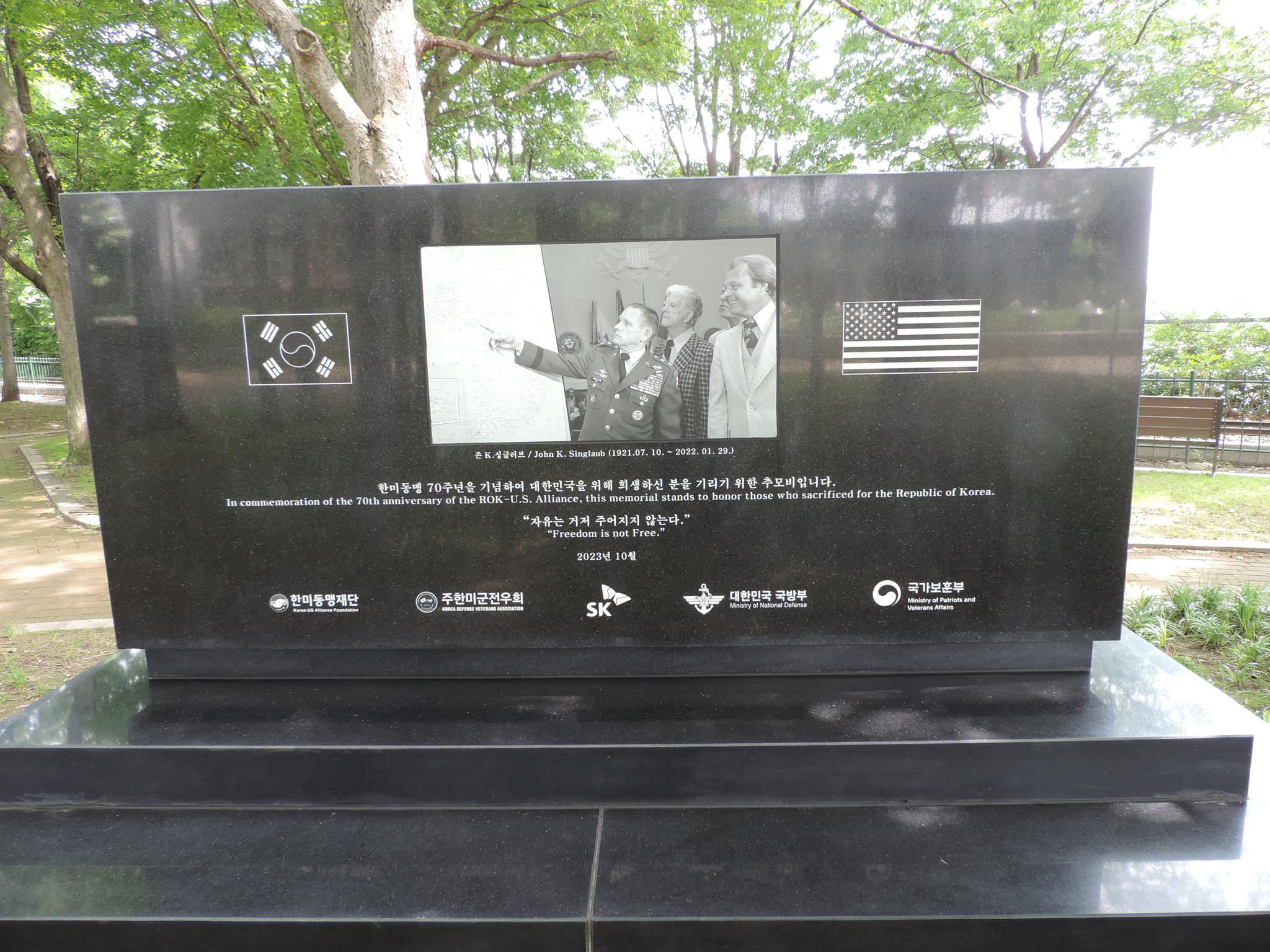
General John Singlaub was born on July 10th in 1921, in Independence, California. He graduated from UCLA and began his military career as a ROTC officer. He later graduated from the U.S. Command and General Staff College and served as an instructor at the same institution. During World War II ending period, as a member of the the Office of Strategic Services(OSS), he infiltrated Nazi Germany-occupied France to organize, train and fight alongside the French Resistance. After World War II, he conducted special operations in China, Vietnam and elsewhere, and served as a Deputy Commander of the 8th Mechanized Division in West Germany. He sustained numerous injuries in combat and considered it a stroke of luck to retire from the military without dying on the battlefield. He was a true soldier. General Singlaub passed away at the age of 100 in January 2022 in Franklin, Tennessee. His military life was a continuous series of dangerous situations, whether in wartime or peacetime, as described in his memoir, „Hazardous Duty.“ We look forward to fulfilling his wish to have a statue of him erected here in view of North Korea. This monument in Imjingak was inaugurated in October 2023 in commemoration of the 70th anniversary of the ROK-U.S. Alliance. This memorial stands to honor those who sacrificed for the Republic of Korea.
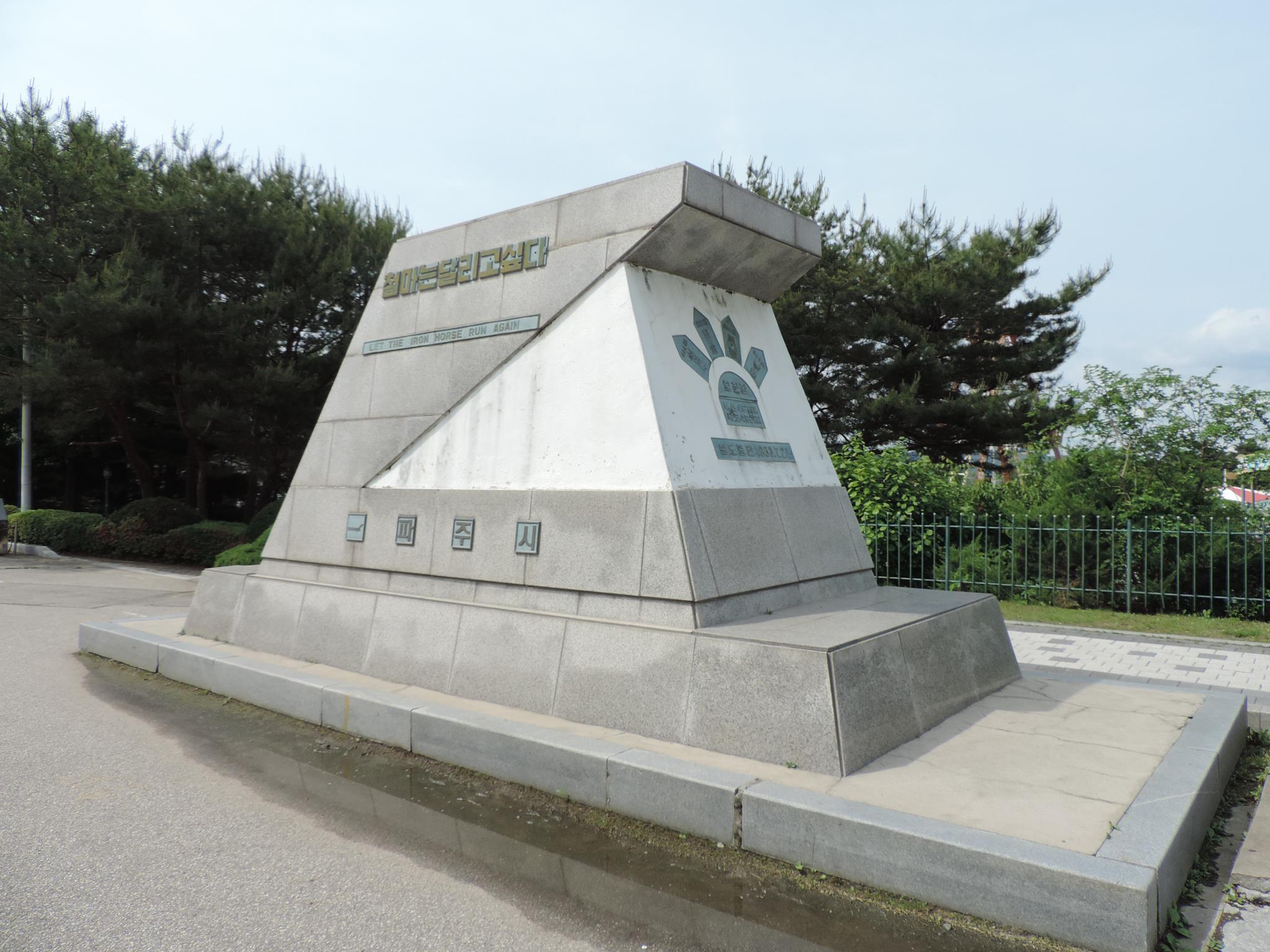
„Let the Iron Horse run again“
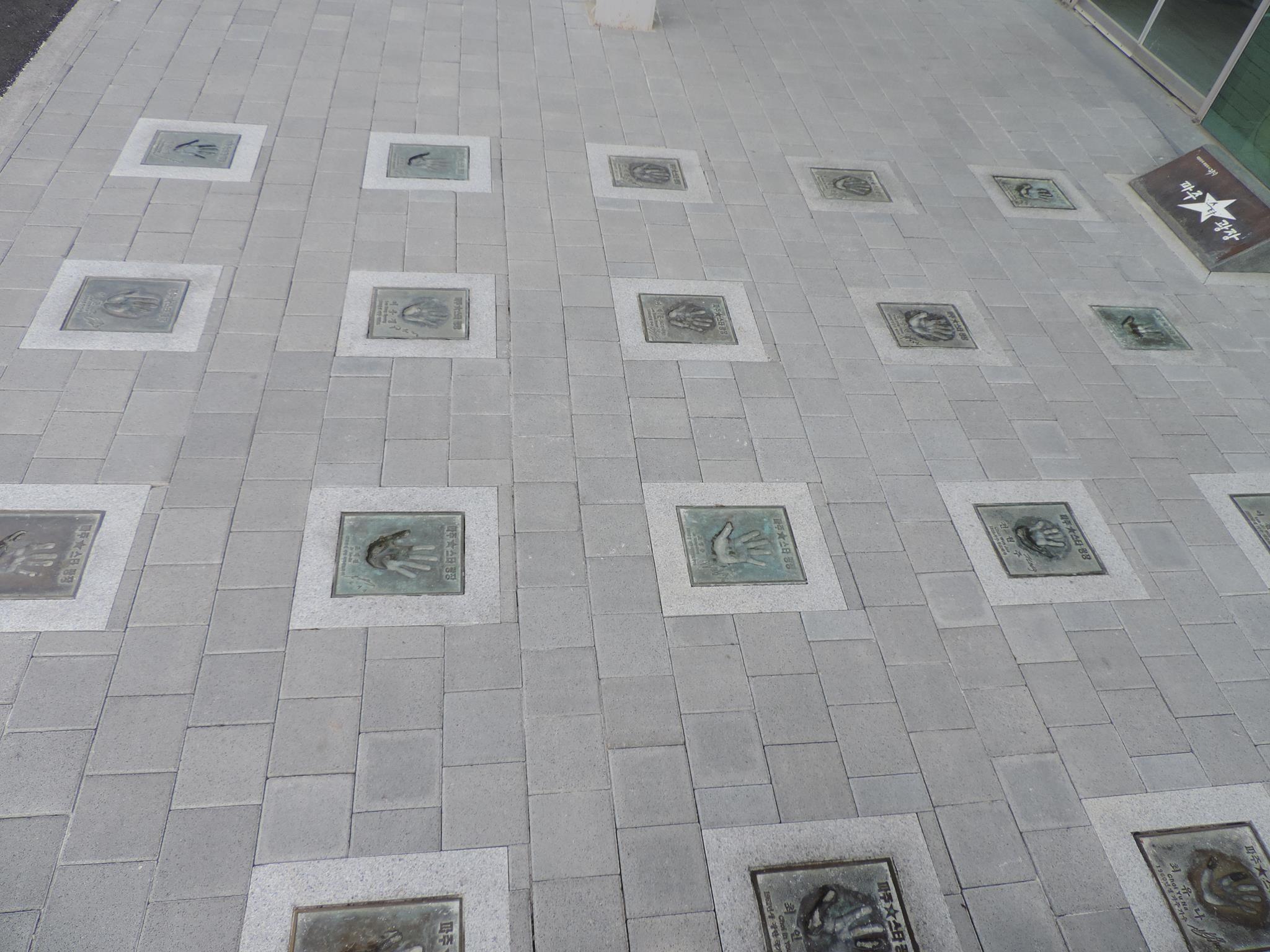
Handprints Memorial
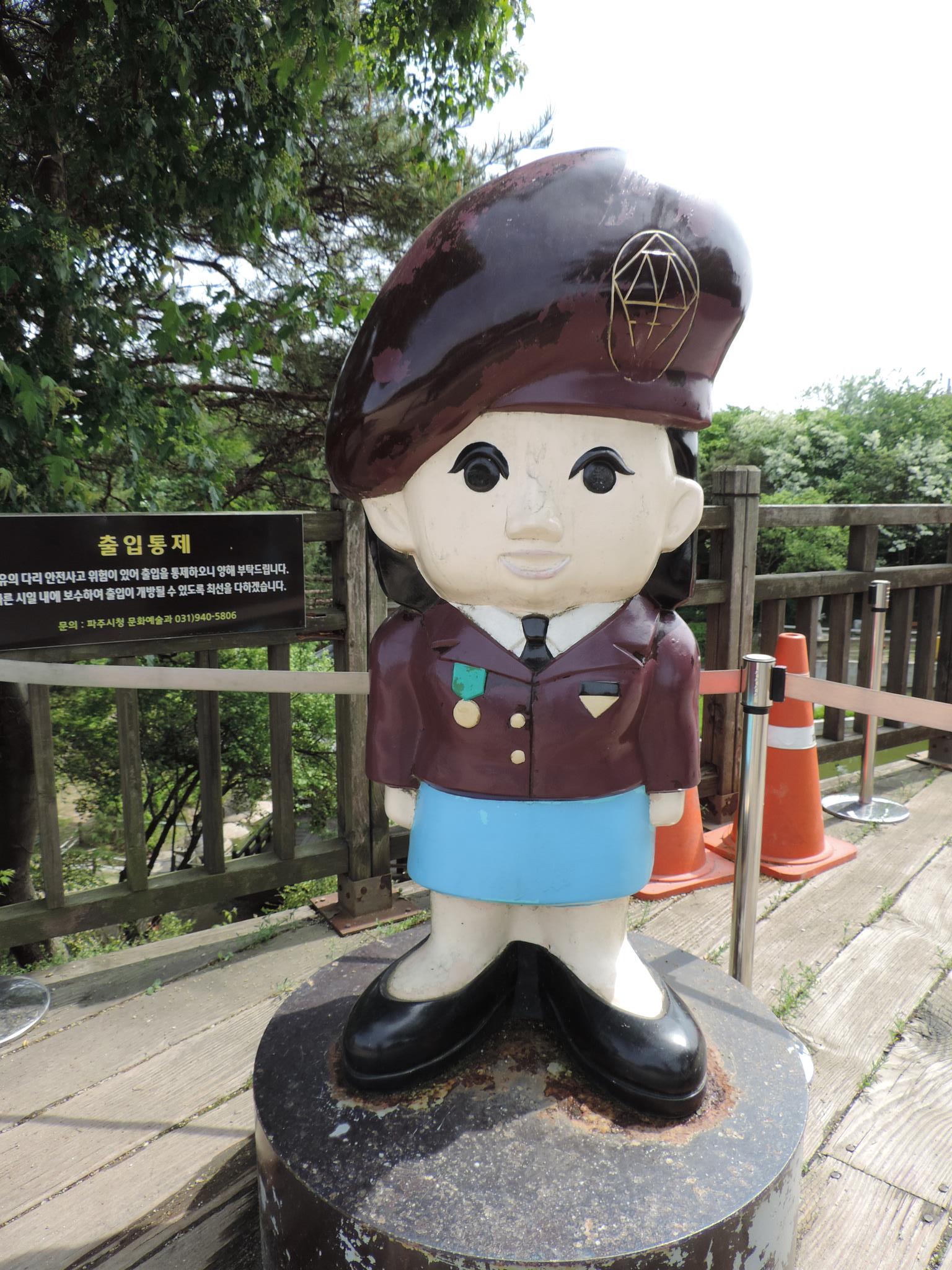
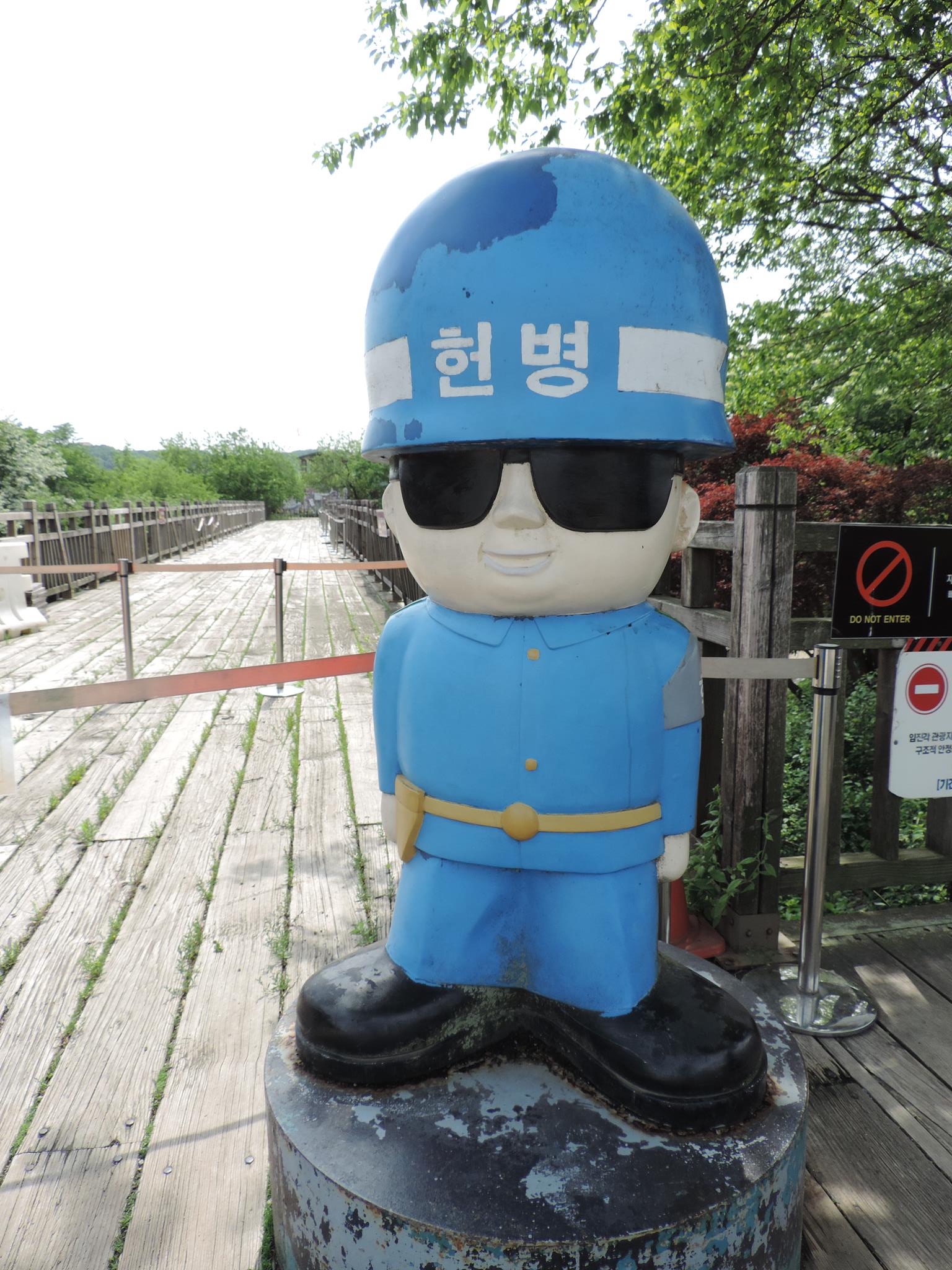
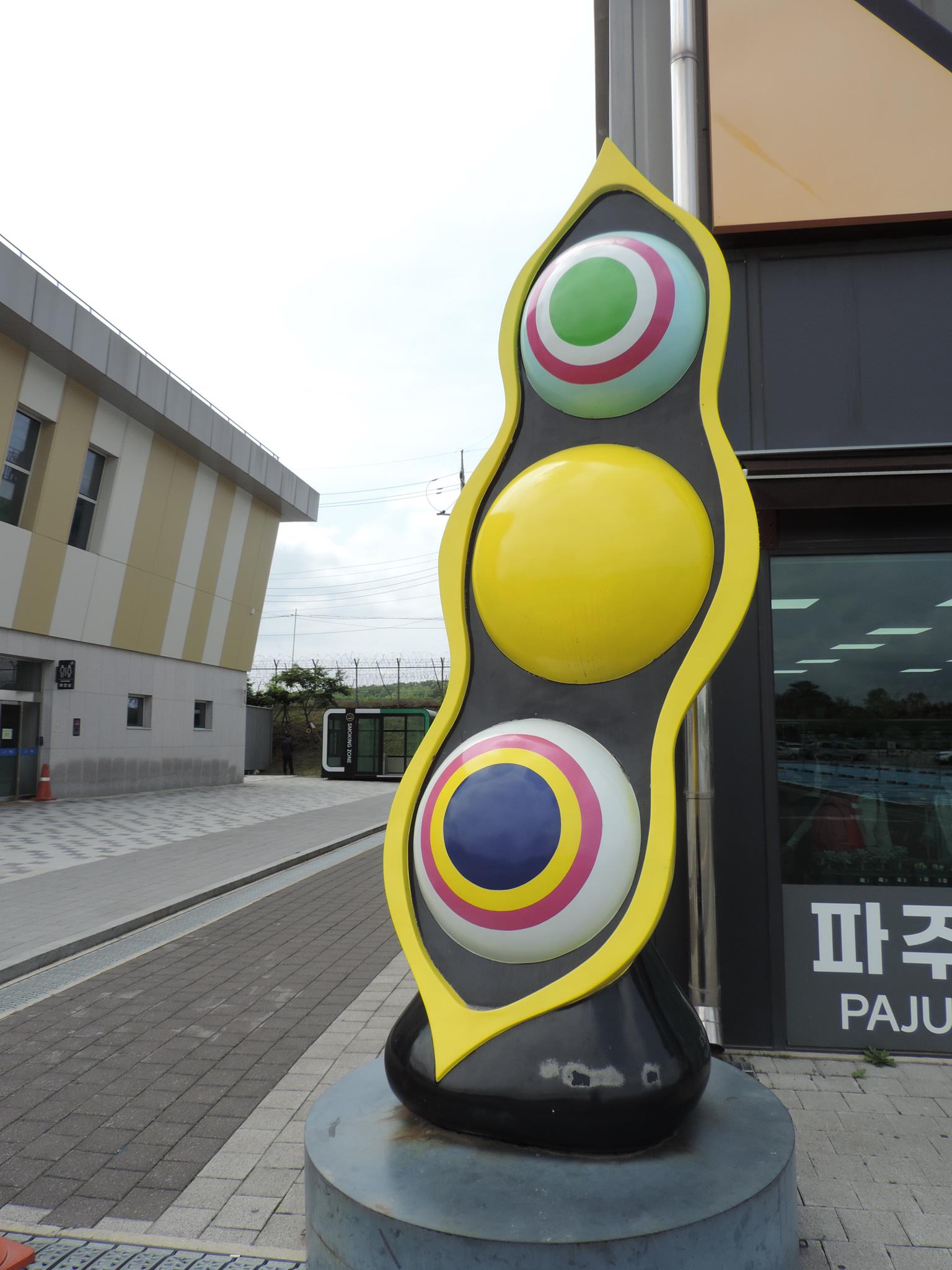
Manikin Sculptures
INFOTHEK
Memorial Space: DMZ – IMJINGAK PARK
Artworks List: https://www.kci.go.kr/kciportal/landing/article.kci?arti_id=ART002970488

MORE ARTICLES ABOUT SOUTH KOREA
>>> Enigma13 – Graffiti Artist <<<
>>> Apgujeong Graffiti Tunnel <<<
>>> Sinchon Graffiti Tunnel <<<
>>> Goto Mall – 24 Hours Project <<<
>>> Banpo-daero – Picasso Tribute <<<
>>> Haeundae Sand Festival <<<
>>> Dashi Rock Media Festival <<<
>>> Gallery Square Art Academy <<<
>>> Monolugar Graffiti Hall <<<
>>> Jeonju – Streetart & Graffiti <<<
>>> Hongik Streetart & Graffiti <<<
>>> Wausan Streetart Wall <<<
>>> Suwon – Streetart & Graffiti <<<
>>> Paju – Streetart & Graffiti <<<
>>> Daegu – Muhak Art Alleys <<<
>>> Goyang – Streetart & Graffiti <<<
>>> Motomall Graffiti Wall <<<
>>> Hong Jonggi – VØID Gallery <<<
>>> Toon Topia Exhibition <<<
>>> Cuma Chosun Exhibition <<<
>>> Jaman Mural Village <<<
>>> Ihwa Mural Village <<<
>>> Gamcheon Mural Village <<<
>>> Gwangju Art Street <<<
>>> Itaewon – Streetart <<<
>>> Itaewon – Graffiti <<<
>>> Baegun Streetart Wall <<<
>>> Sillim River Streetart <<<
>>> Nambusunhwan Urban Art <<<
>>> Red Road Tiles Project <<<
>>> Itaewon „Hello“ Series <<<
>>> Songhyeon Sculpture Park <<<
>>> Uijeongbuji Sculpture Park <<<
>>> Museum of Craft Arts <<<
>>> Busan Sculpture Gallery <<<
>>> Daegu Sculpture Gallery <<<
>>> Gwangju Sculpture Gallery <<<
>>> Haeundae Sculpture Gallery <<<
>>> Pyeonghwa Nuri Sculptures <<<
>>> Seoul Sculpture Gallery <<<
>>> Suwon Sculpture Gallery <<<
>>> Gyo-Dong Kidult Figures <<<
>>> Stella Lucens Anime Café <<<
>>> Busan Street Manikins <<<
>>> Daegu Street Manikins <<<
>>> Gwangju Street Manikins <<<
>>> Jeonju Street Manikins <<<
>>> Seoul Street Manikins <<<
>>> Seoul Manga & Anime Signs <<<
>>> Bukchon Hanok Village <<<
>>> Ami Tomb Stone Village <<<
>>> Busan – Architecture <<<
>>> Daegu – Architecture <<<
>>> Goyang – Architecture <<<
>>> Gwangju – Architecture <<<
>>> Jeonju – Architecture <<<
>>> Paju – Architecture <<<
>>> Suwon – Architecture <<<