
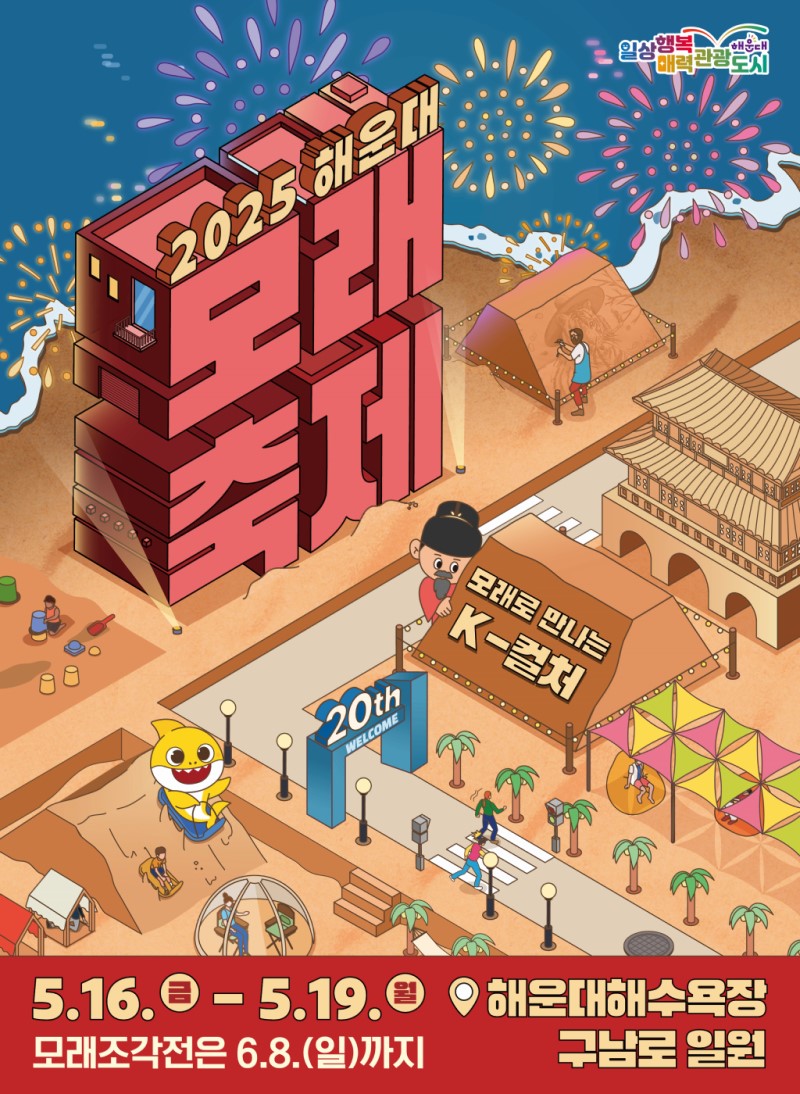
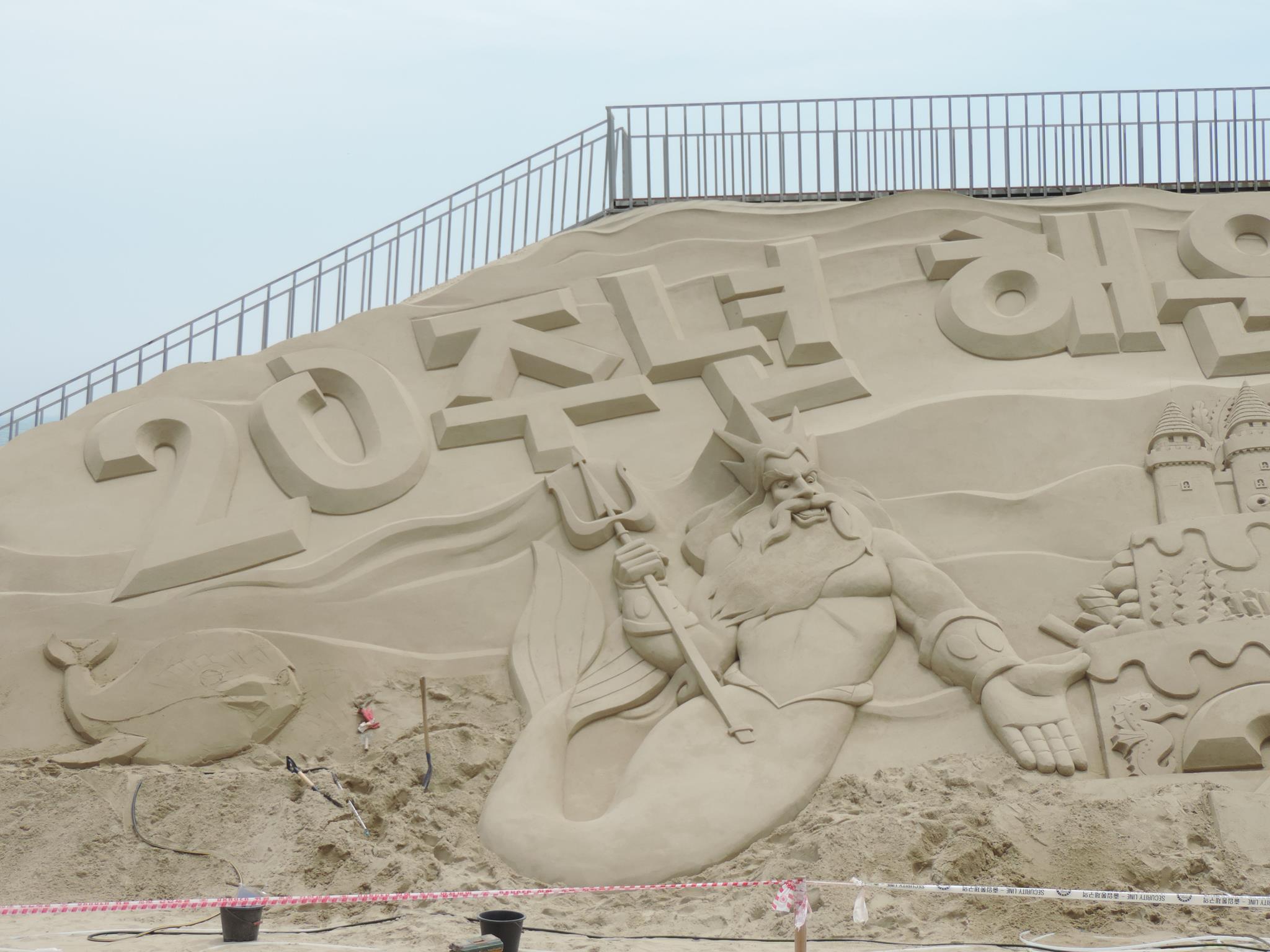
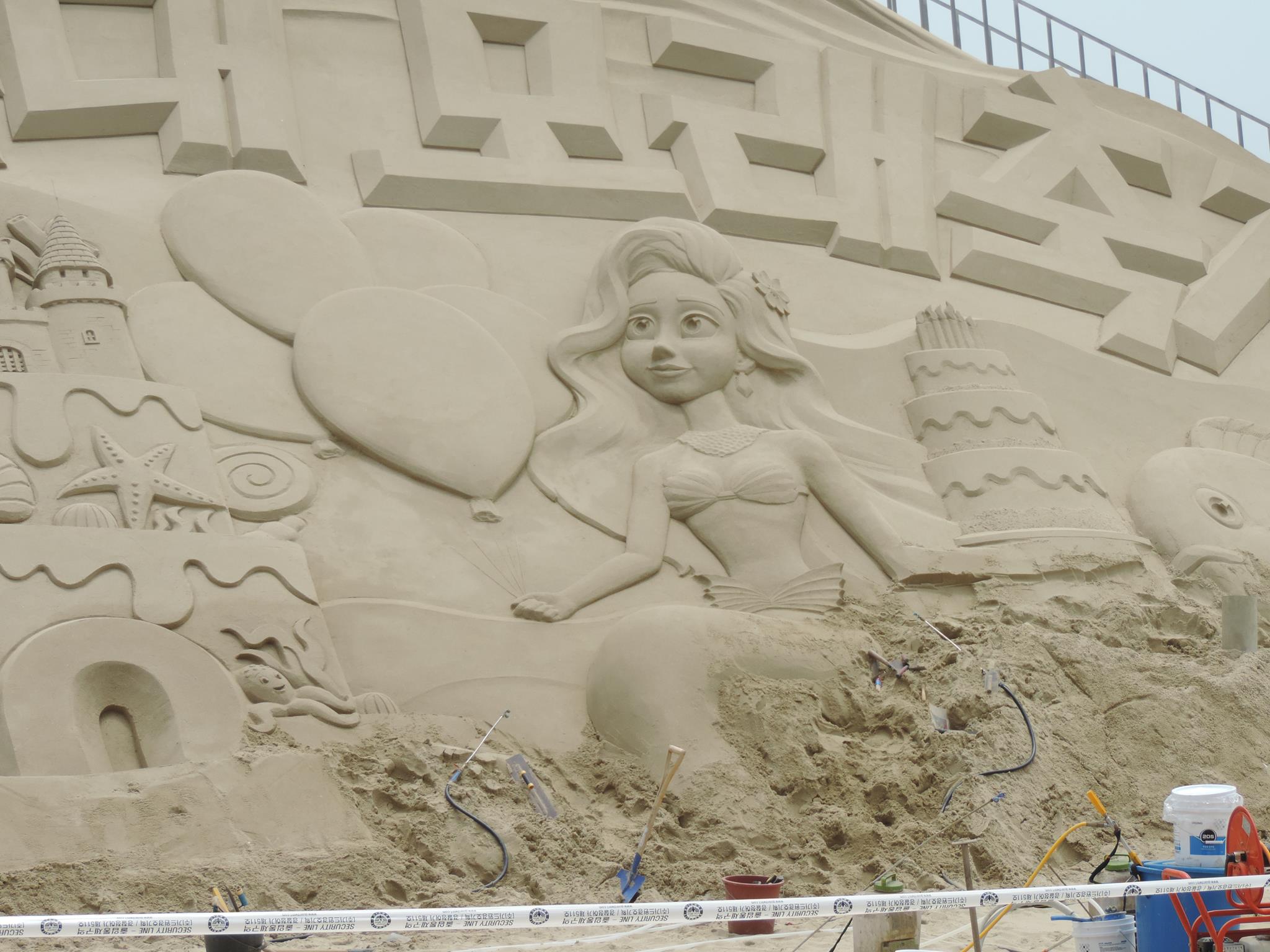
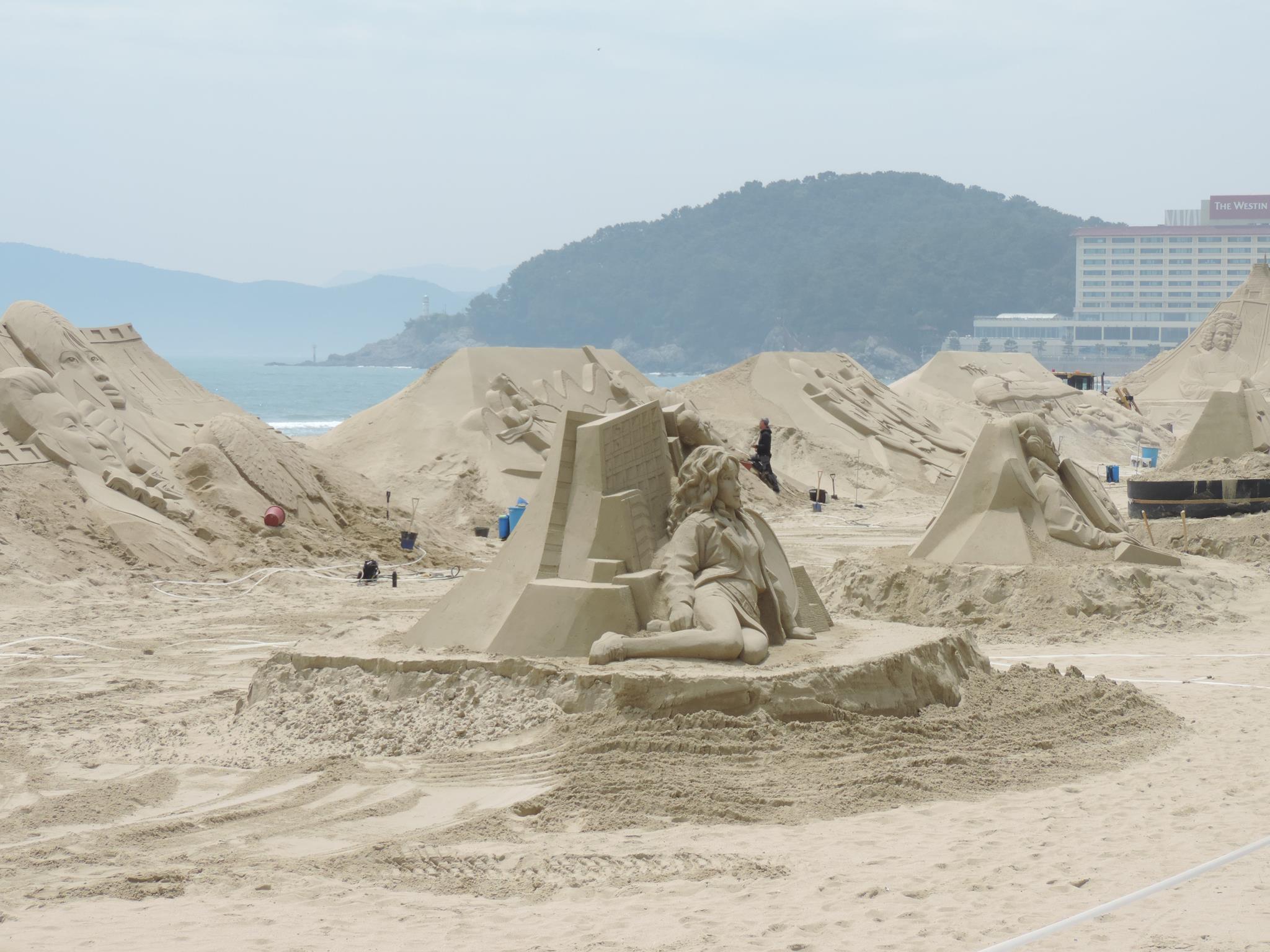
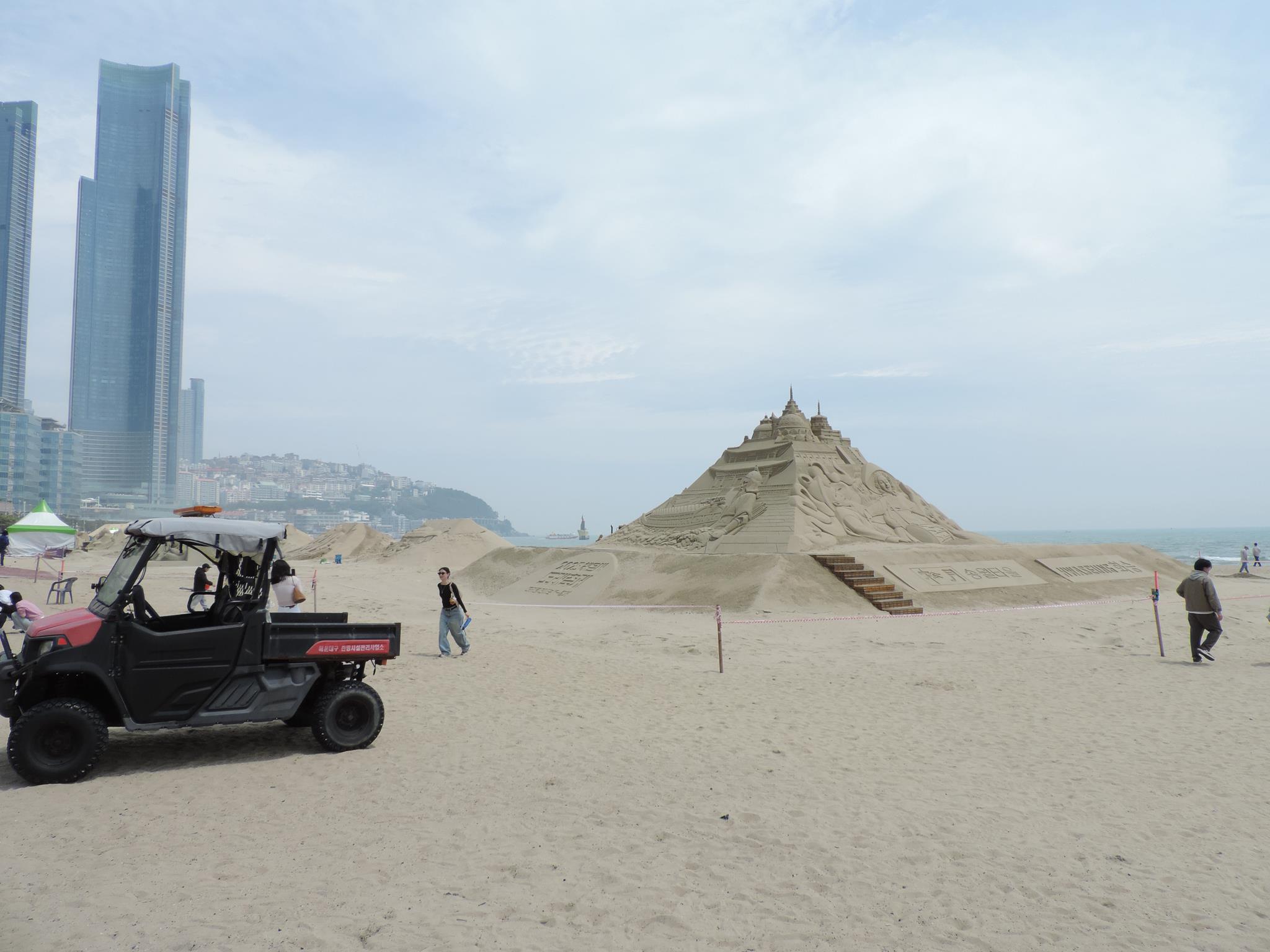
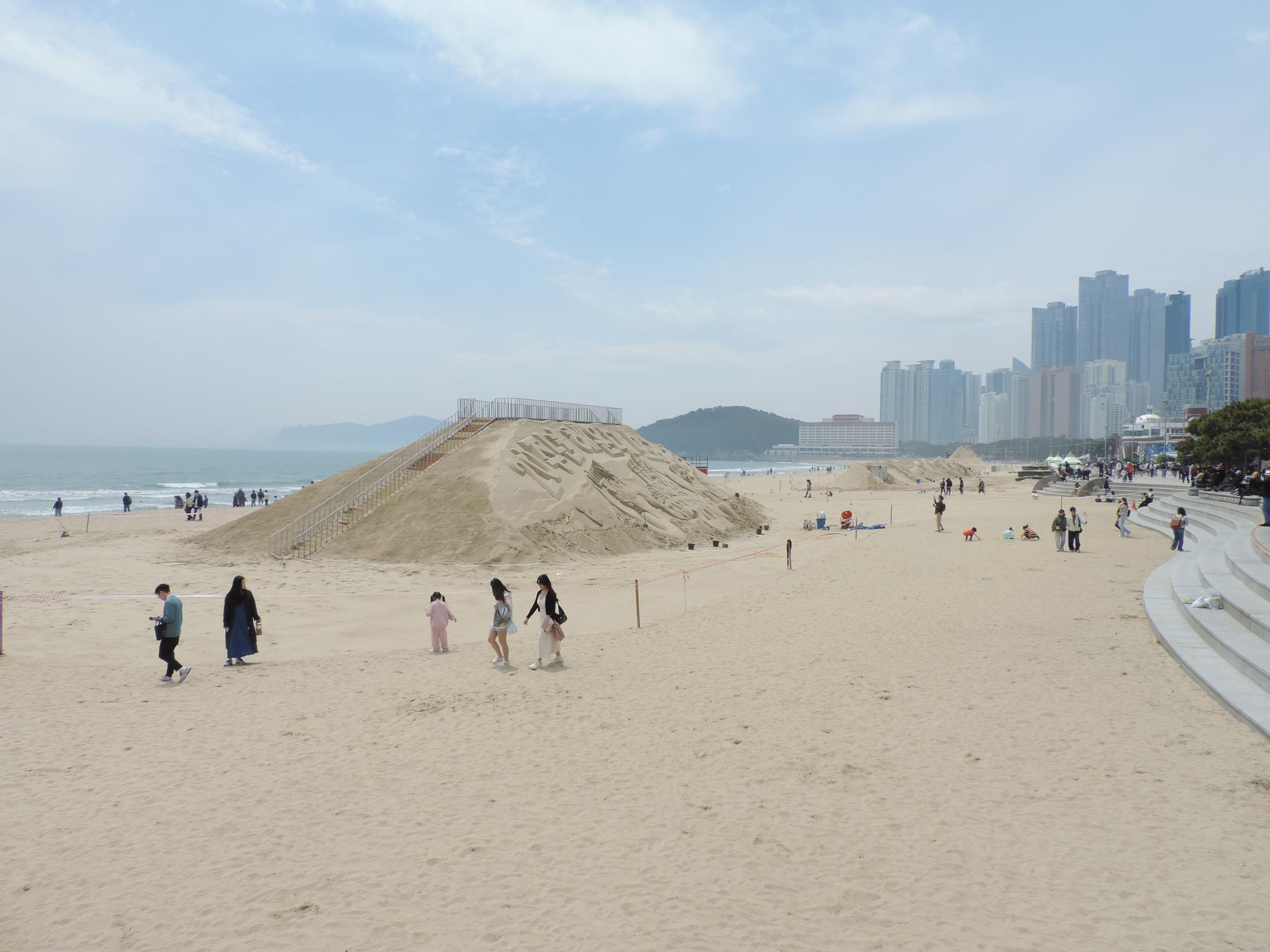
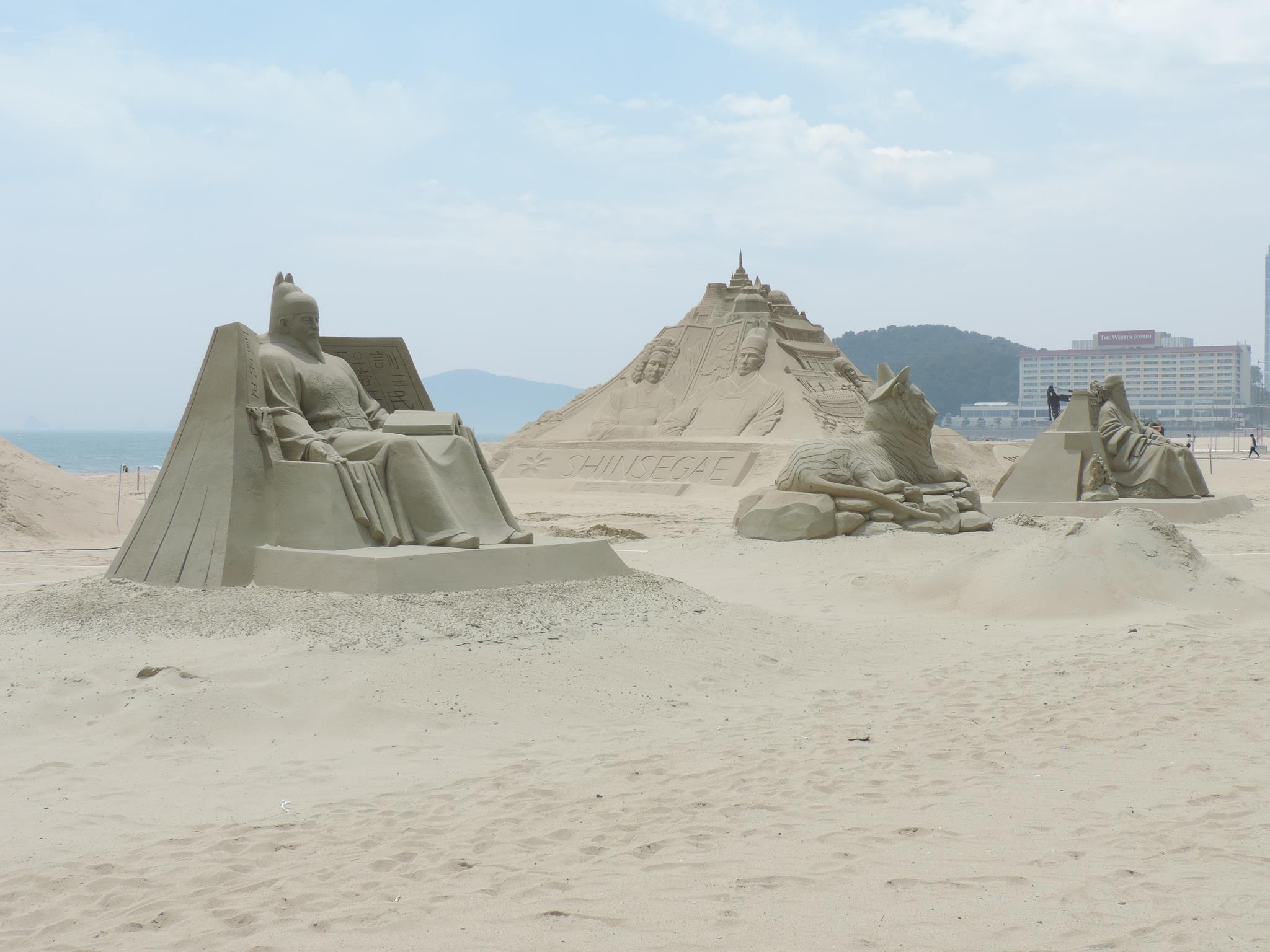
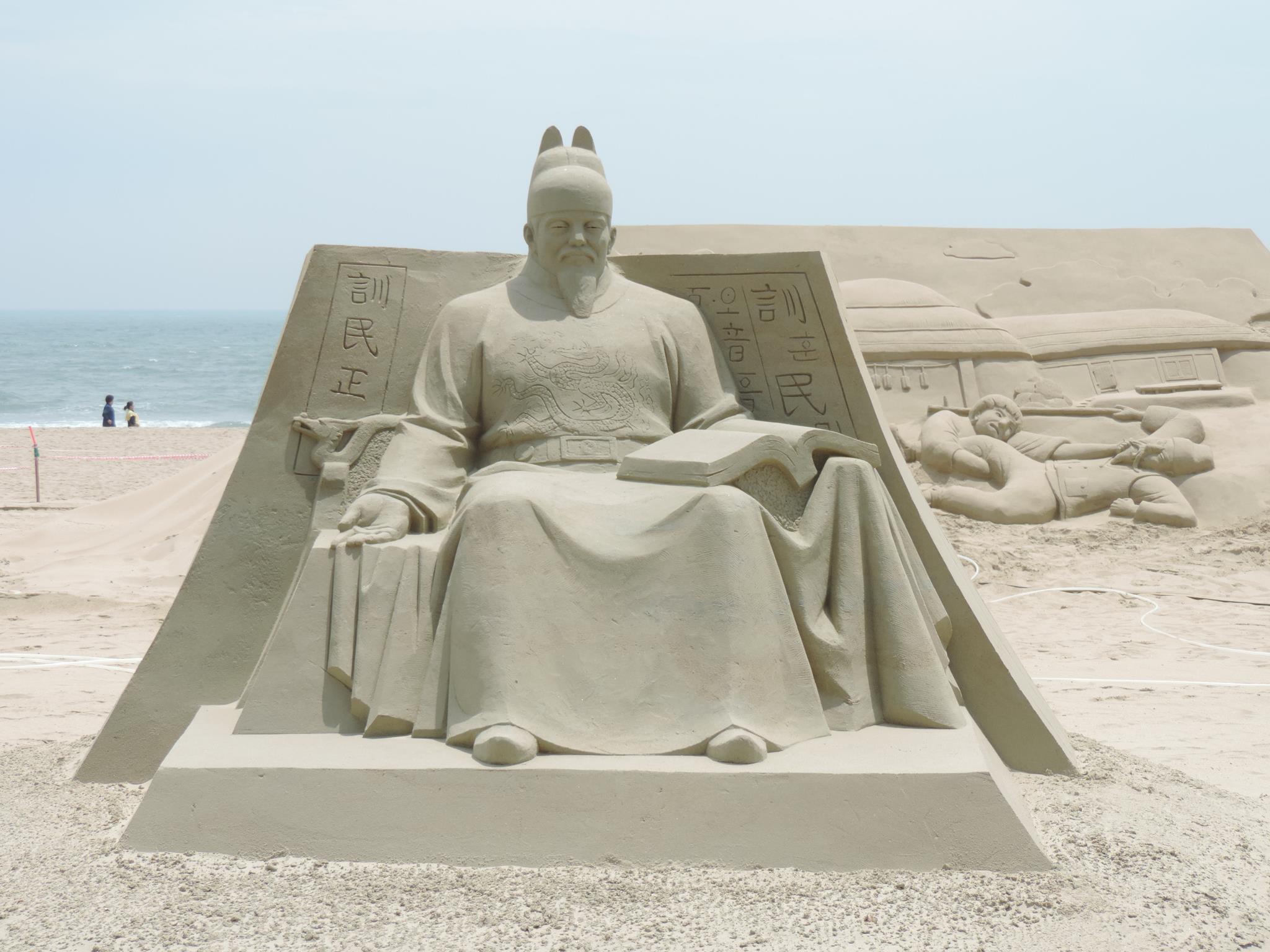
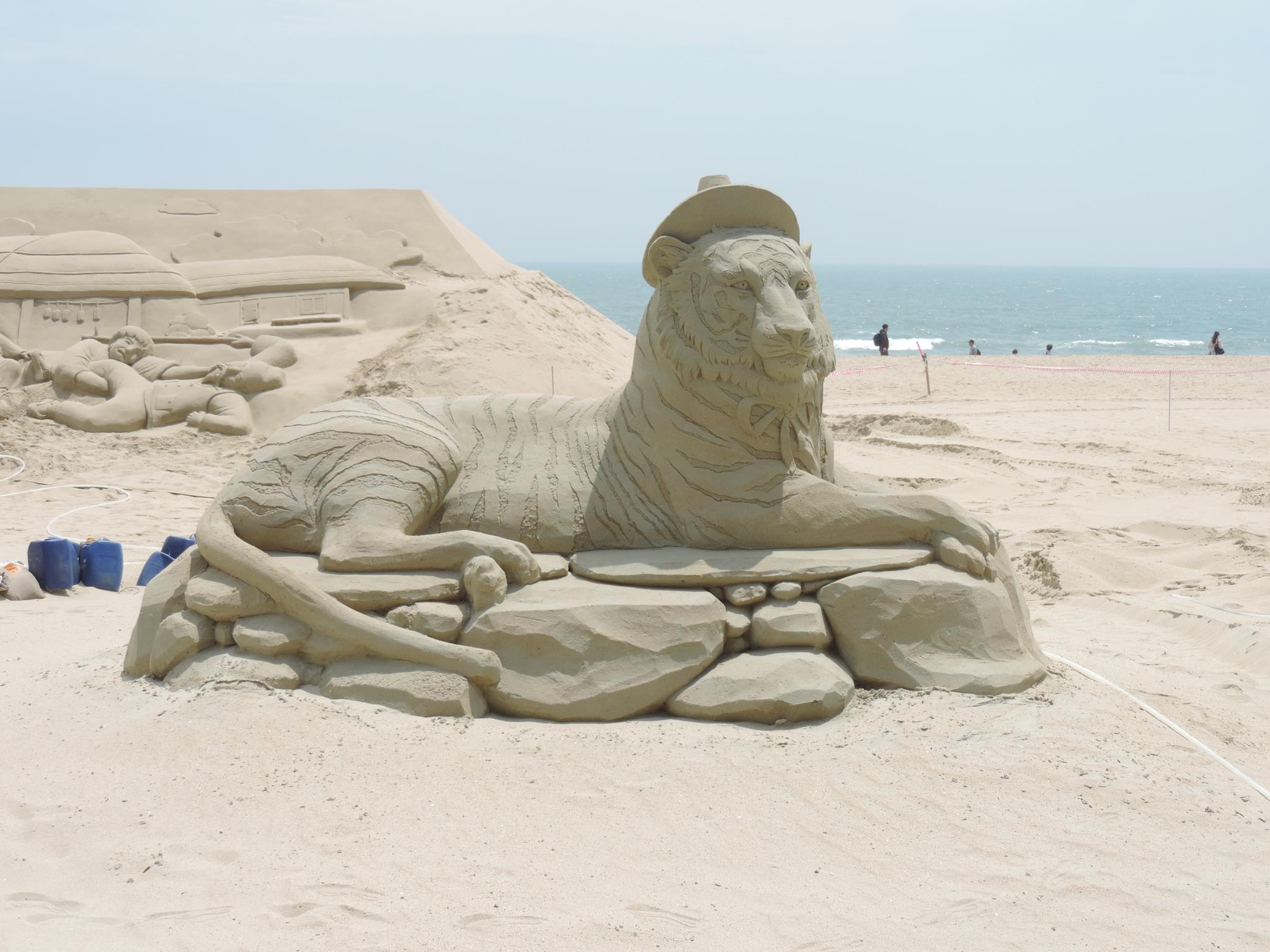
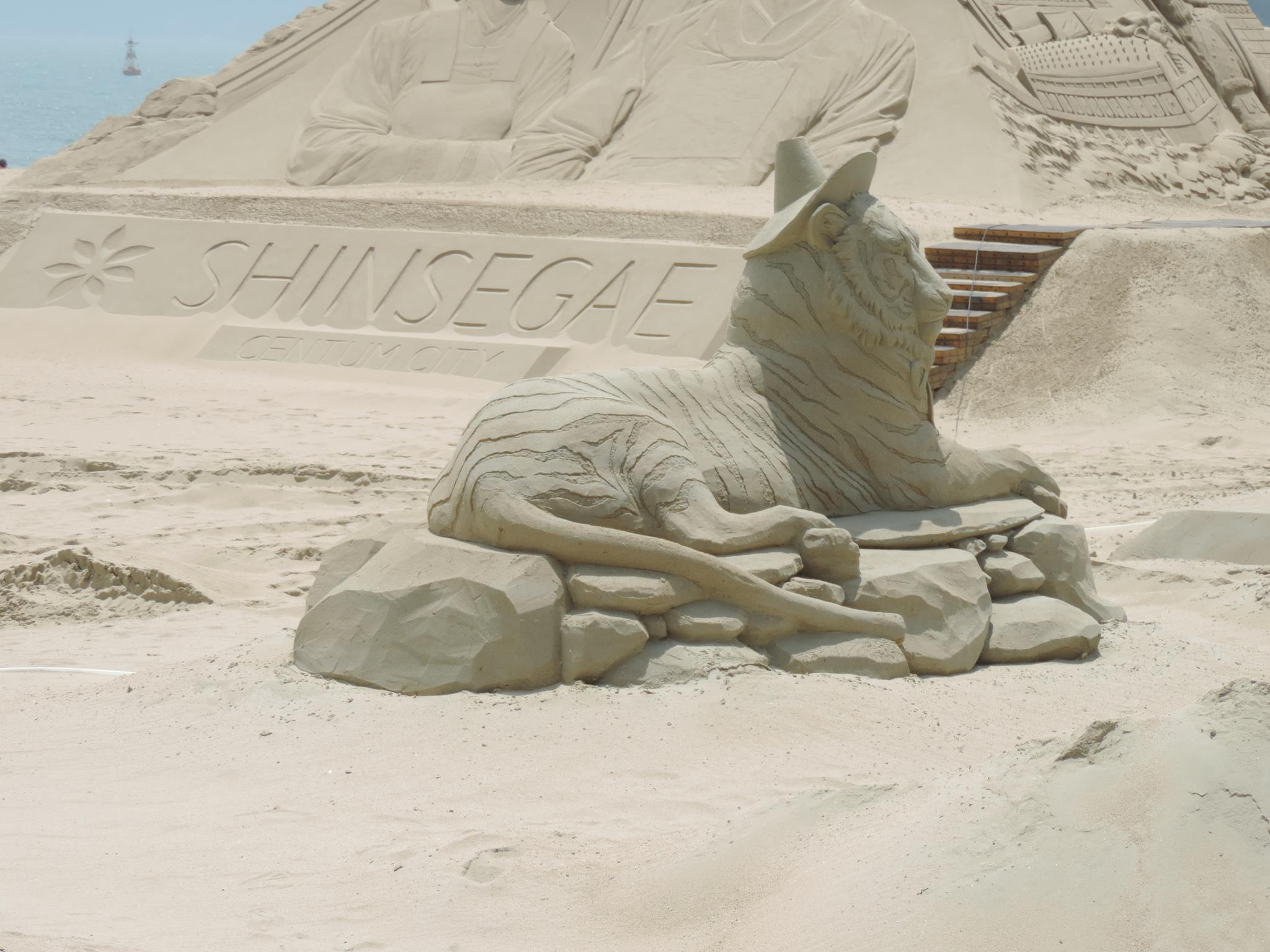
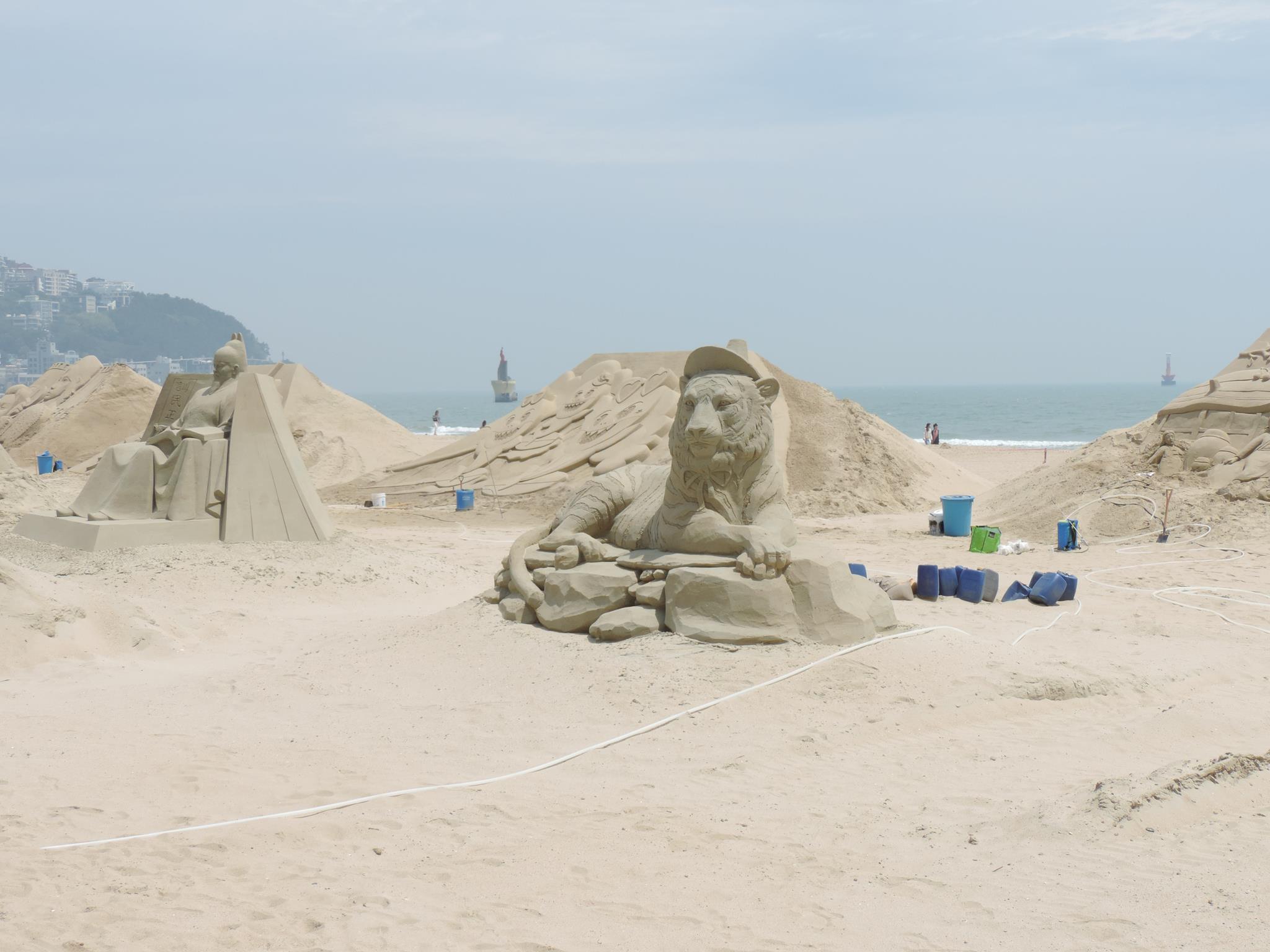
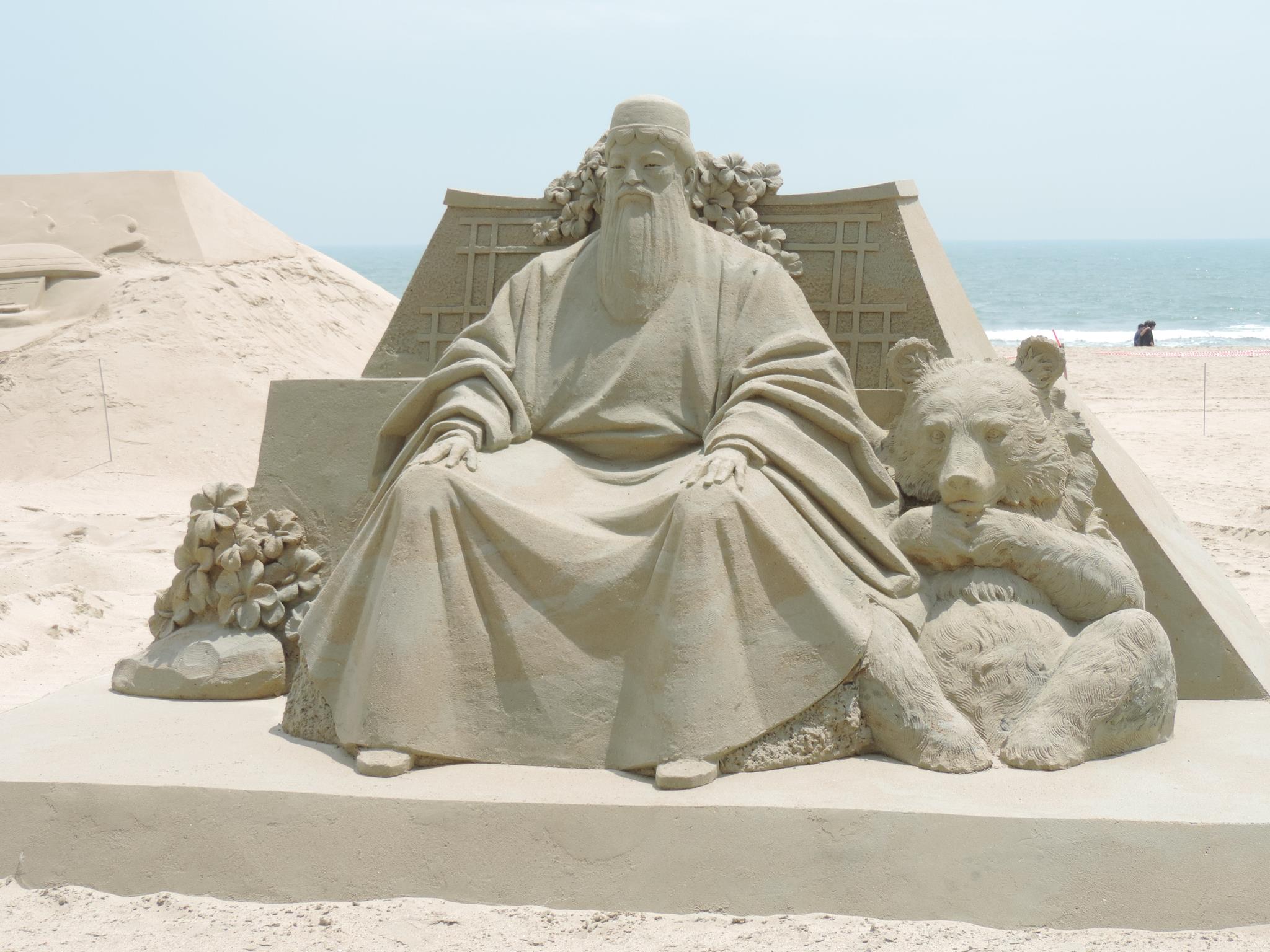
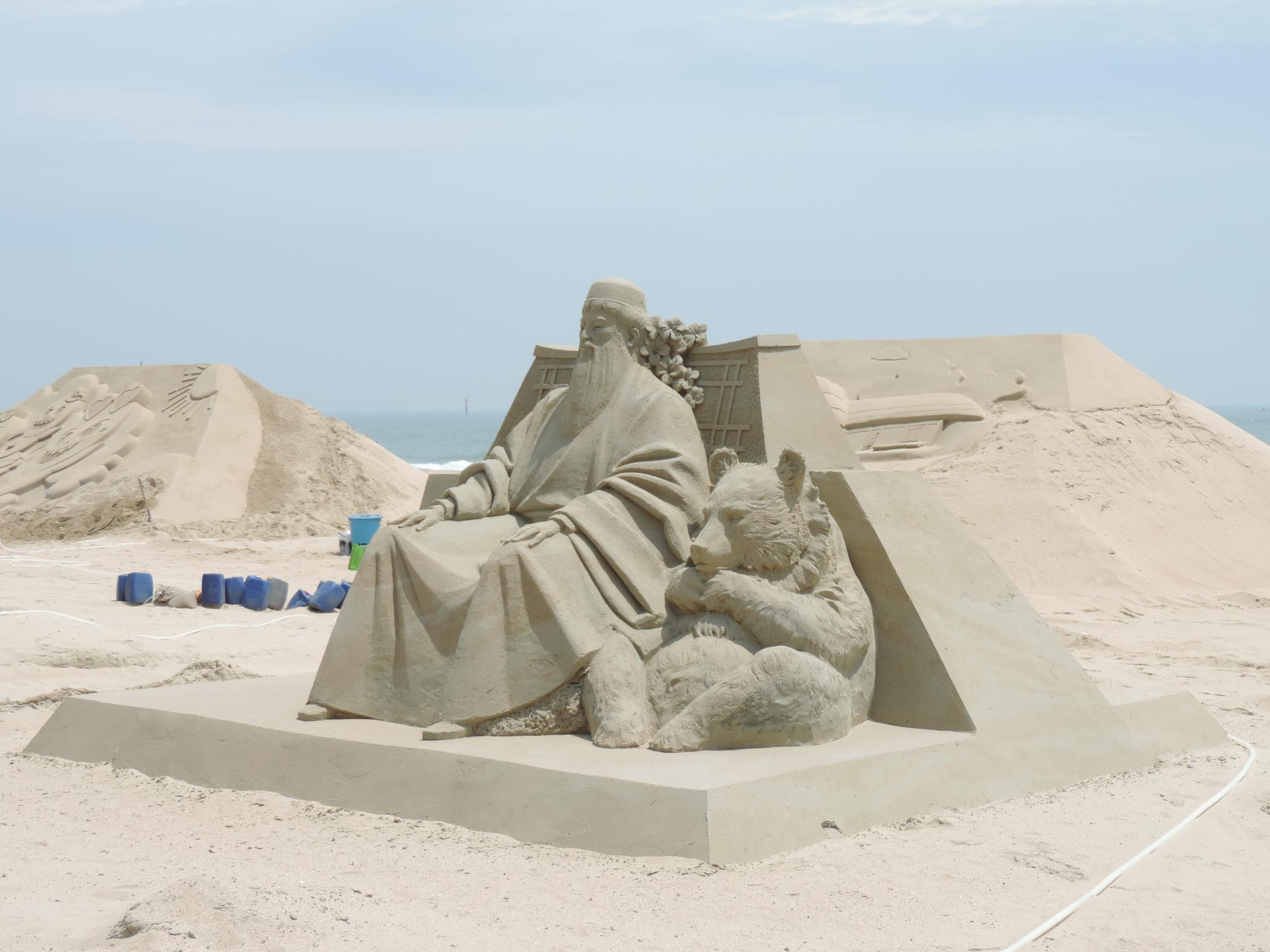
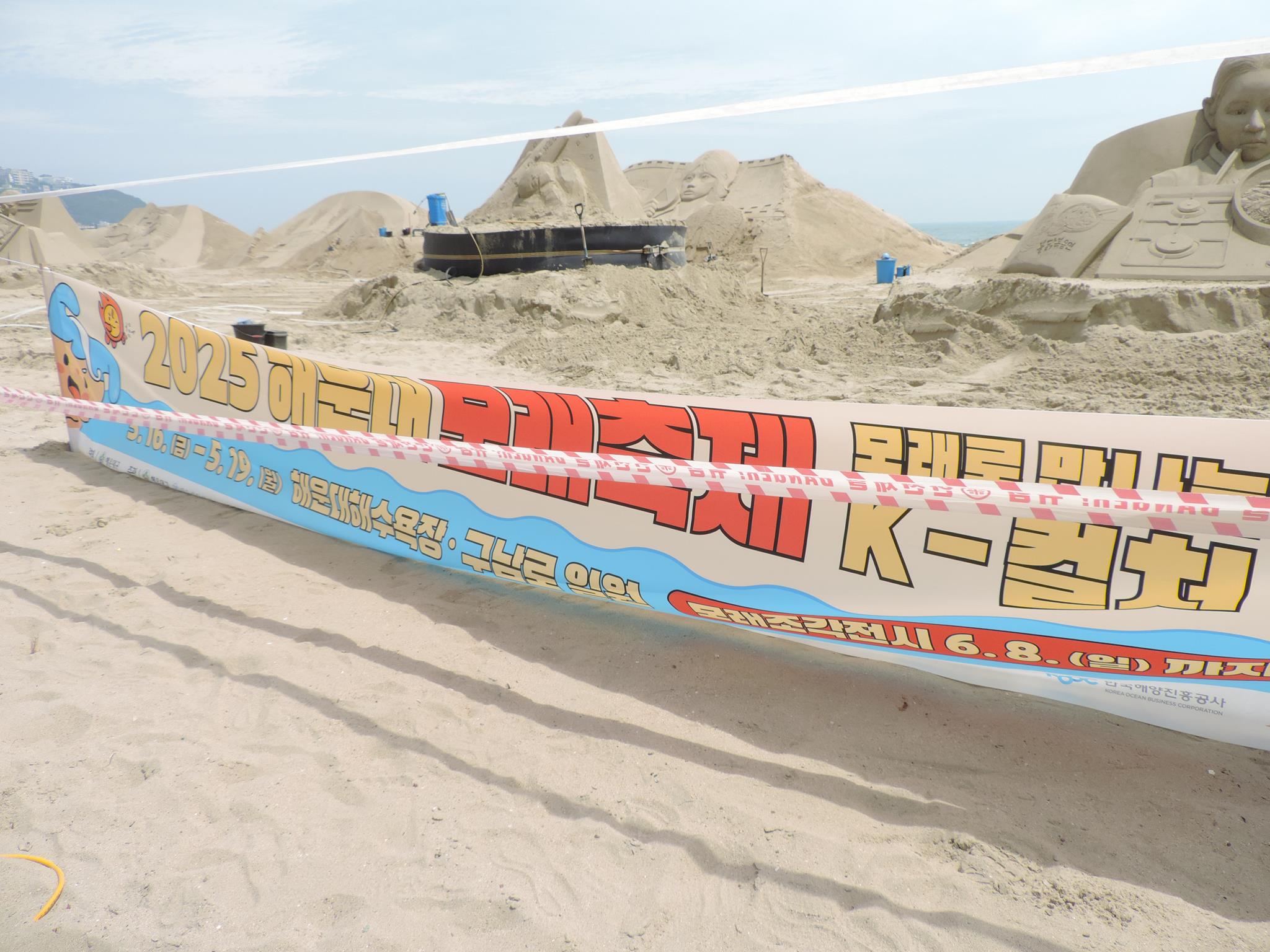
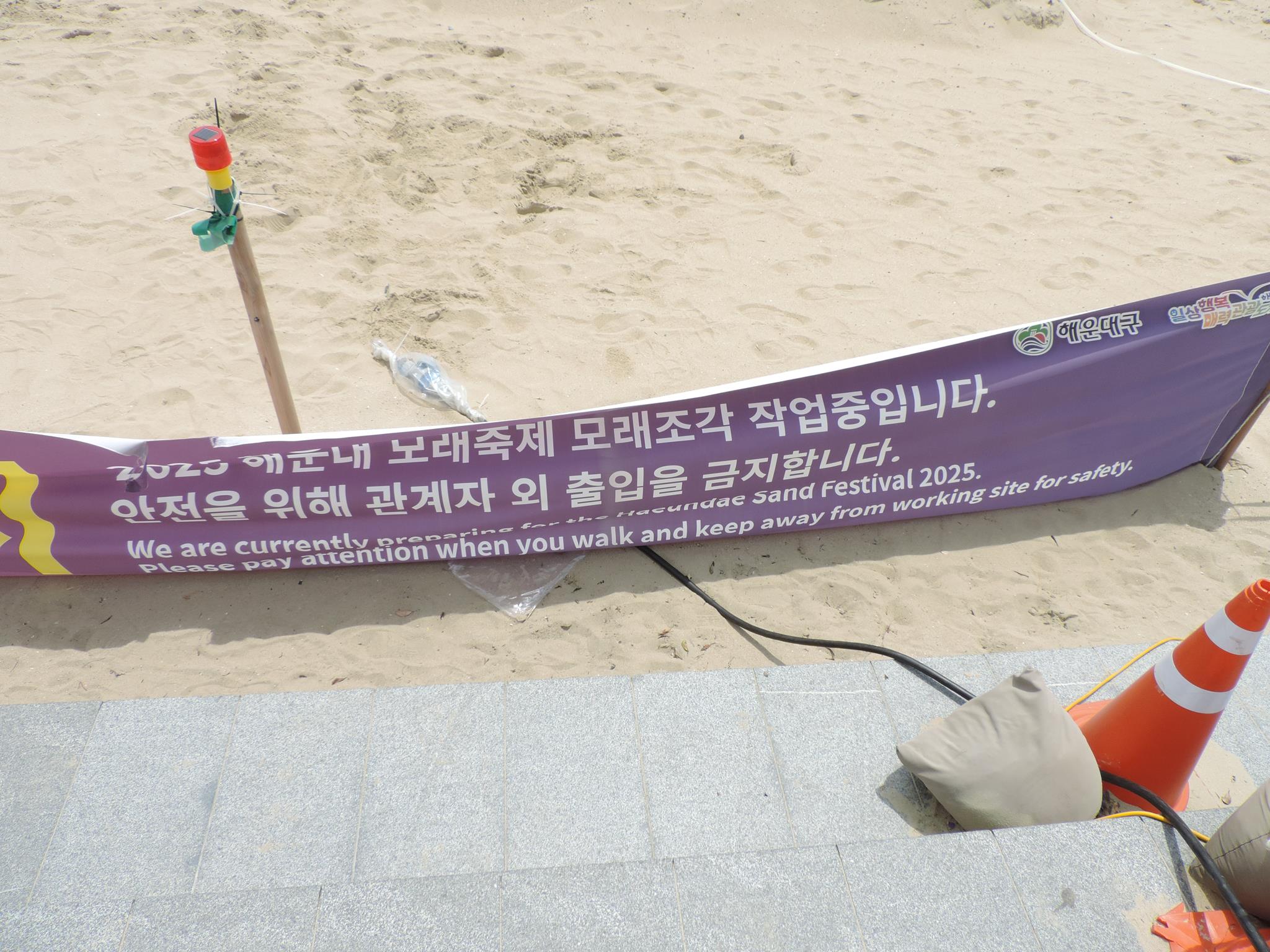
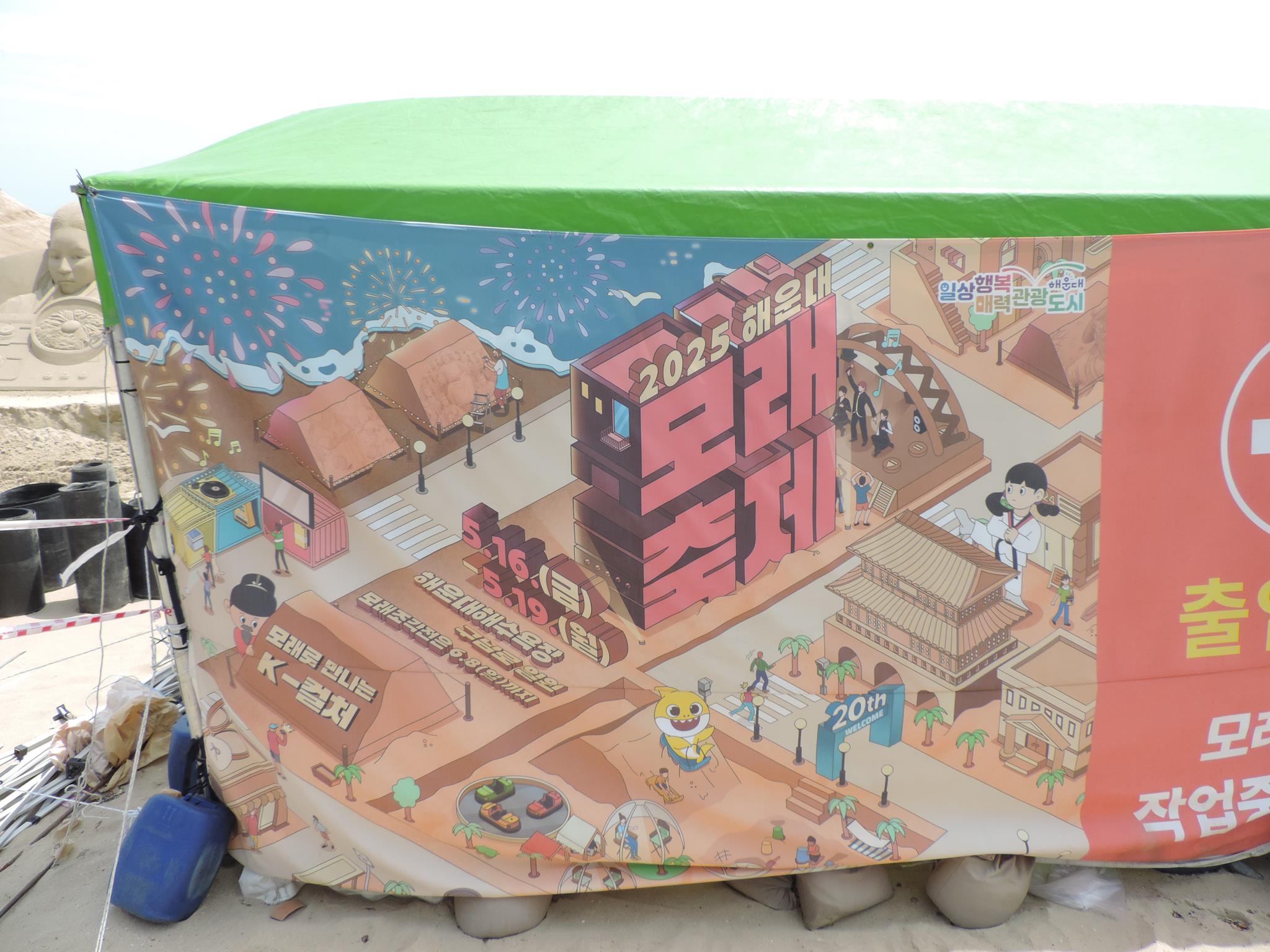
The HAEUNDAE SAND FESTIVAL took place in 2025 from May 16th till 19th and was the 20th edition of this great event in the eastern coast suburb of Busan. Countless artists from all over the world transformed the beach into an art gallery with huge sculptures and several meter-high frescos. The festival was accompanied by a colorful supporting program of music, art and culture, and even after the event you could admire the sand artworks until June 8th. The power of sand and remembering what it was like to play in the sand as a child. At the same time, an admiration for the incredibly fantastic sculptures that were created by high scale artists. In two interviews we talked to the sand sculptors ABRAM WATERMAN from Canada and CHRIS GUINTO, part of the artist duo BROKEN GLASS from the USA, while they were creating their works.
Flyer by Haeundae Sand Festival
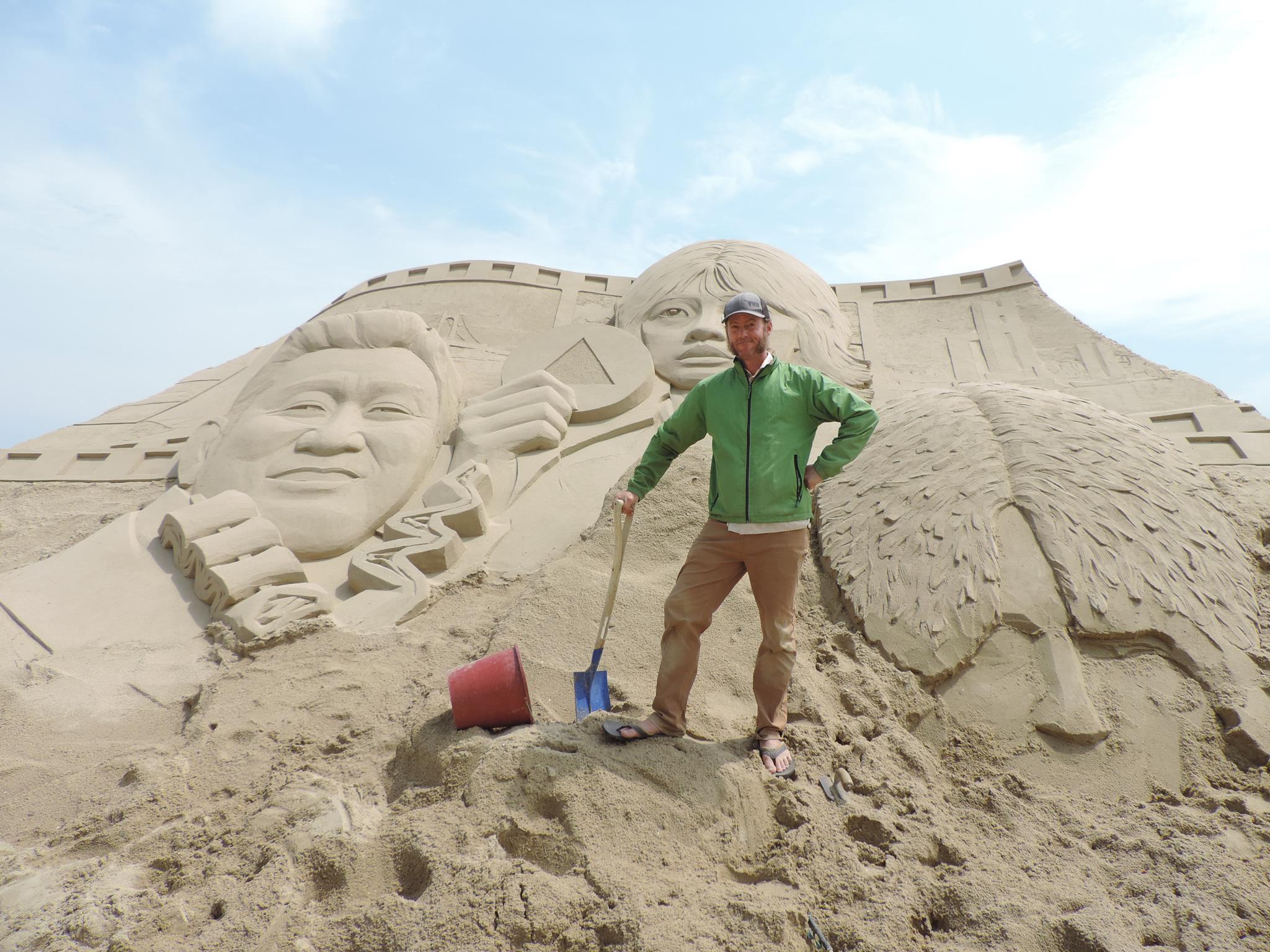
ABRAM WATERMAN
Hello listeners, at the moment we are in Haeundae on the beach. It’s a suburb part of Busan city in Korea. And in middle of May there will be the fantastic Haeundae Sand Festival. At the moment several artists are preparing huge sand sculptures. They are really several meters high and there are some characters, frescoes, sceneries, lions, animals, people, so there are a lot of sculptures. And now I’m going to speak to one of the artists, who is a sand sculpture from Canada. His name is Abram Waterman and he will tell us a bit more about his art and about the event. Hello, Abram.
Thanks for this interview and hello listeners and readers. I’ve been coming to this festival for about five years now. I think it might be the 20th year that they have been doing it. Actually we just get a big pile of sand at the beginning and in the case for this year they also had the themes prepared for us in advance. So we came in and were just given some reference material. And then it means go ahead and attack the pile of sand!
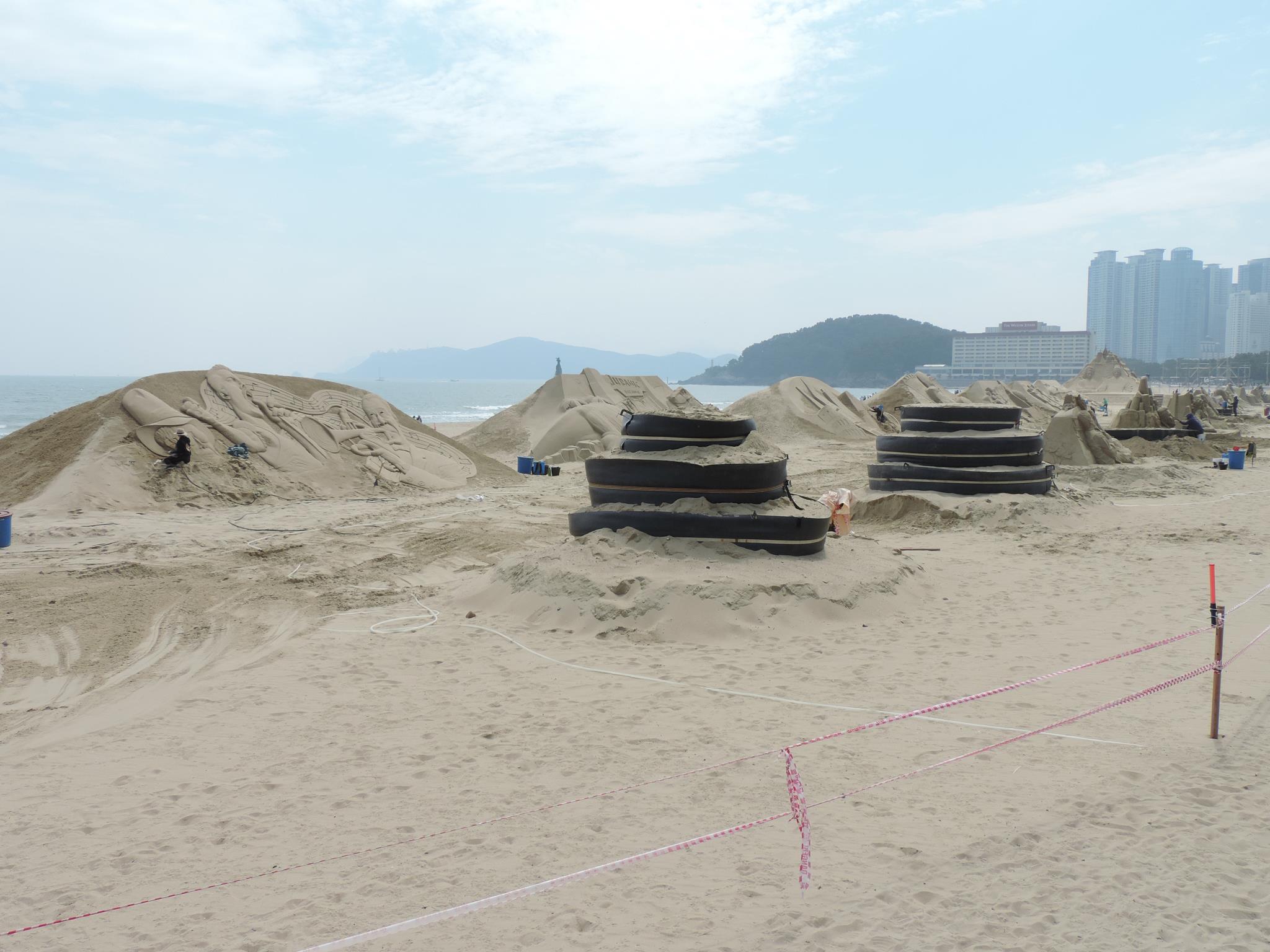
So before you artists start with sculpturing, they prepare the sand hills and make these piles. And I saw that they put some kind of rubber rings around it to fix it or that the sand sticks together?
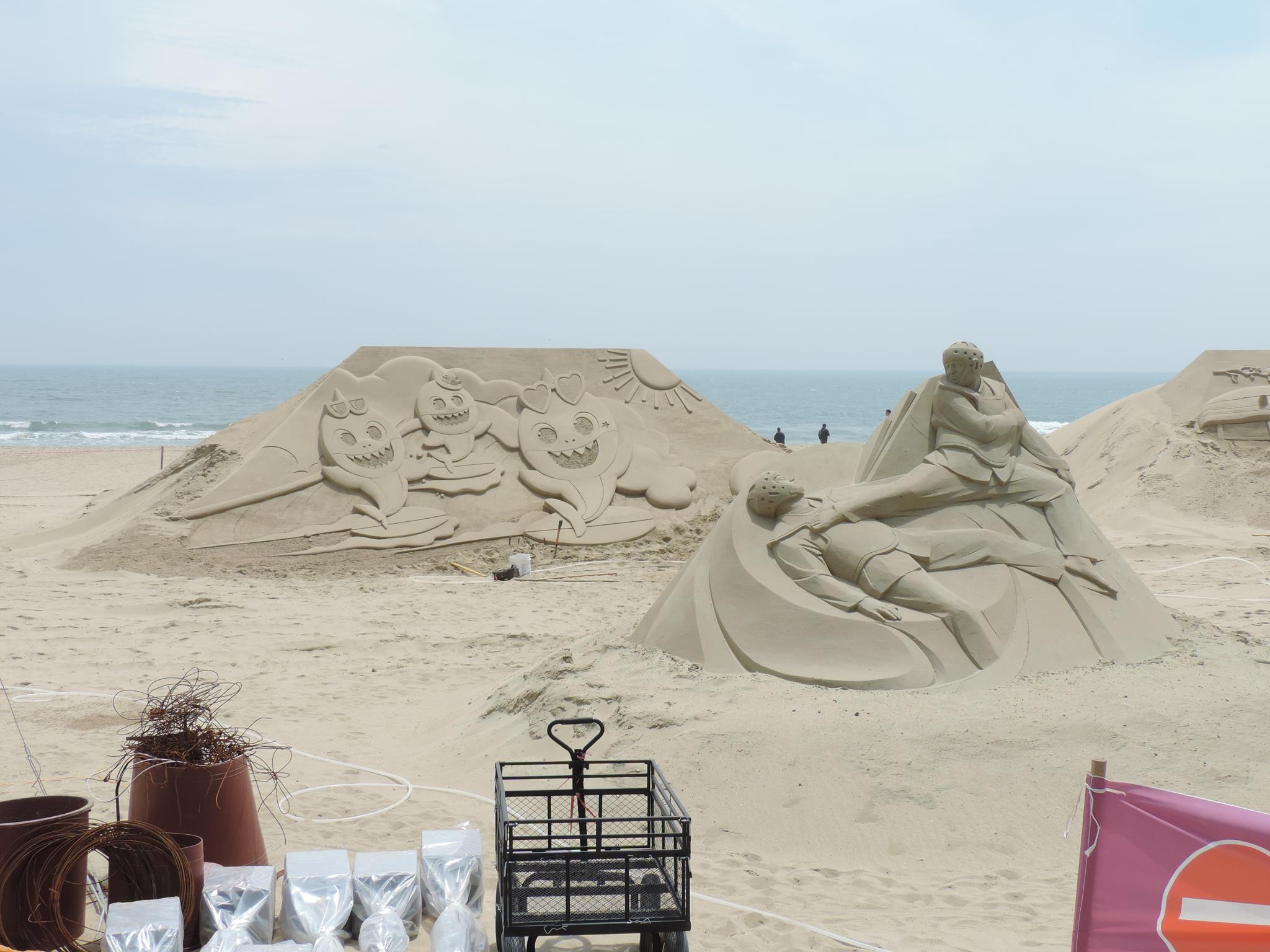
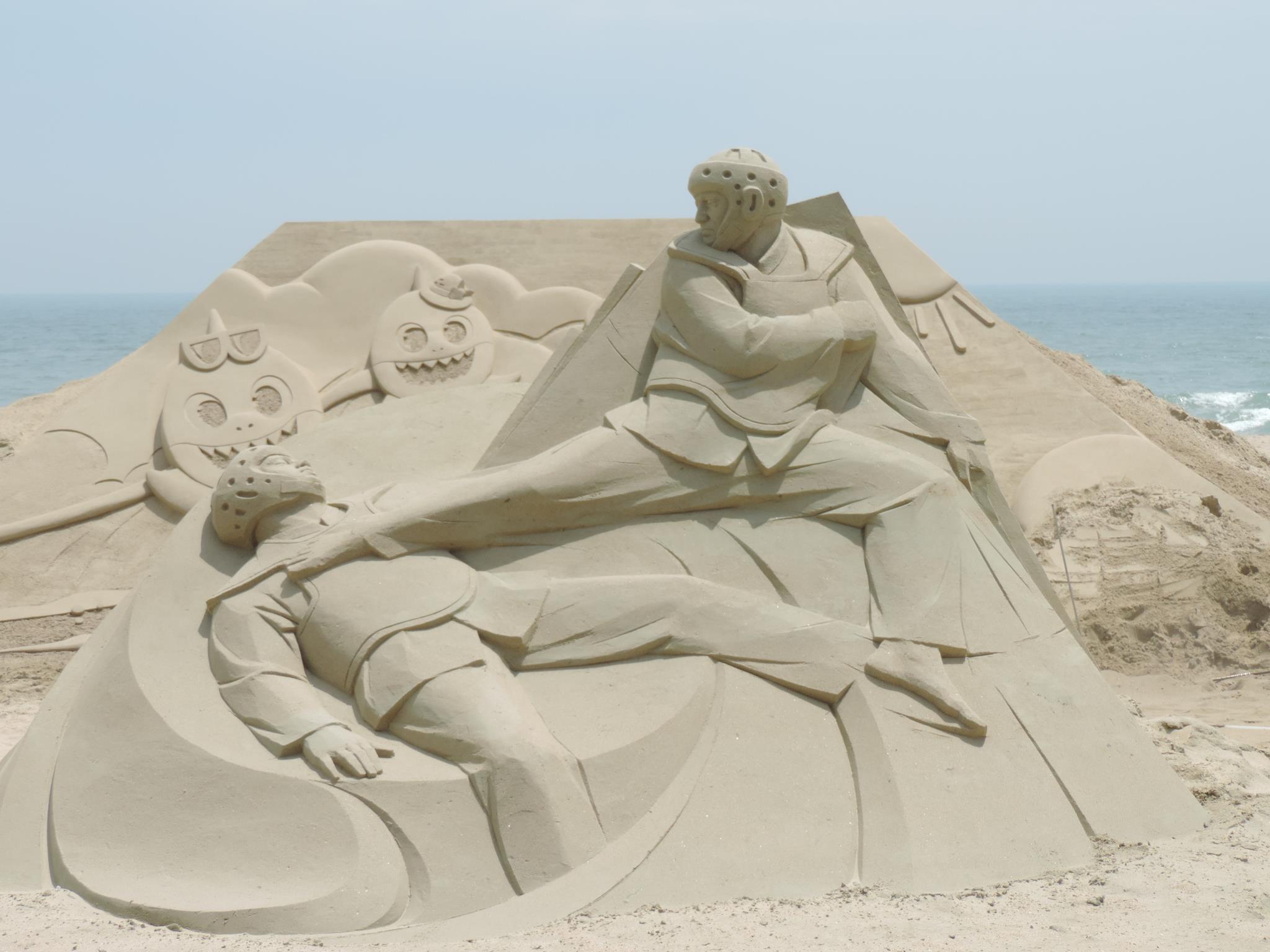
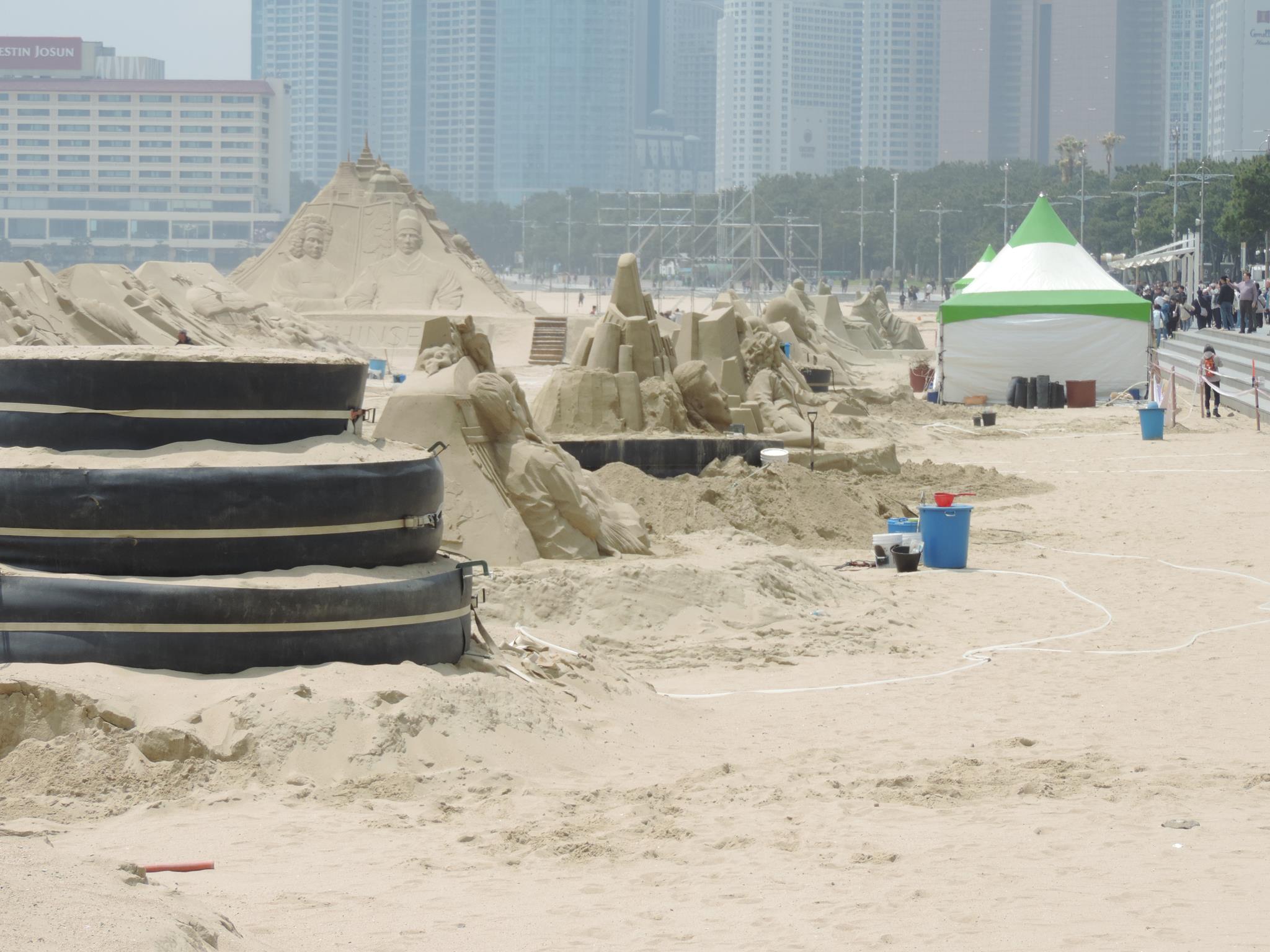
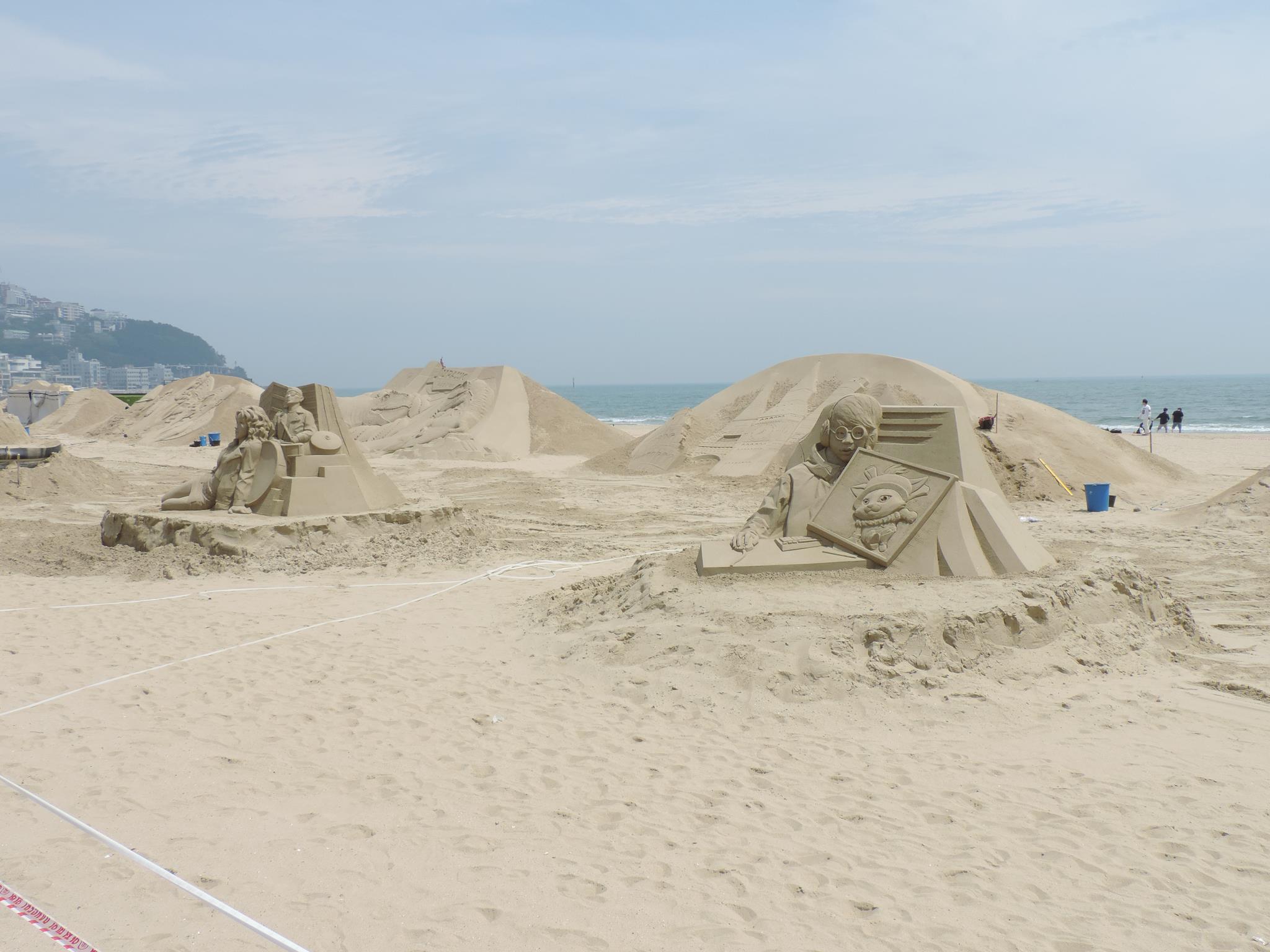
In the sand sculpting world there are like two varieties of sculptures. Well, actually there are multiple varieties of sculpture, but the one we call a hard pack where you use a form, in this case they have plastic forms, round forms, and then you fill that with water and sand. That works like a machine compactor, a tamper that packs that in and then you get a much more dense material. You can also use wood forms as well. The larger piles here though are what we call soft pack where it’s just like that a sand machine comes in and digs up a big pile of sand. There’s no fraction and we just climb up and kind of compact it a little bit by hand as we’re going with water. And we shovel with our hands or feet and whatever we can use.
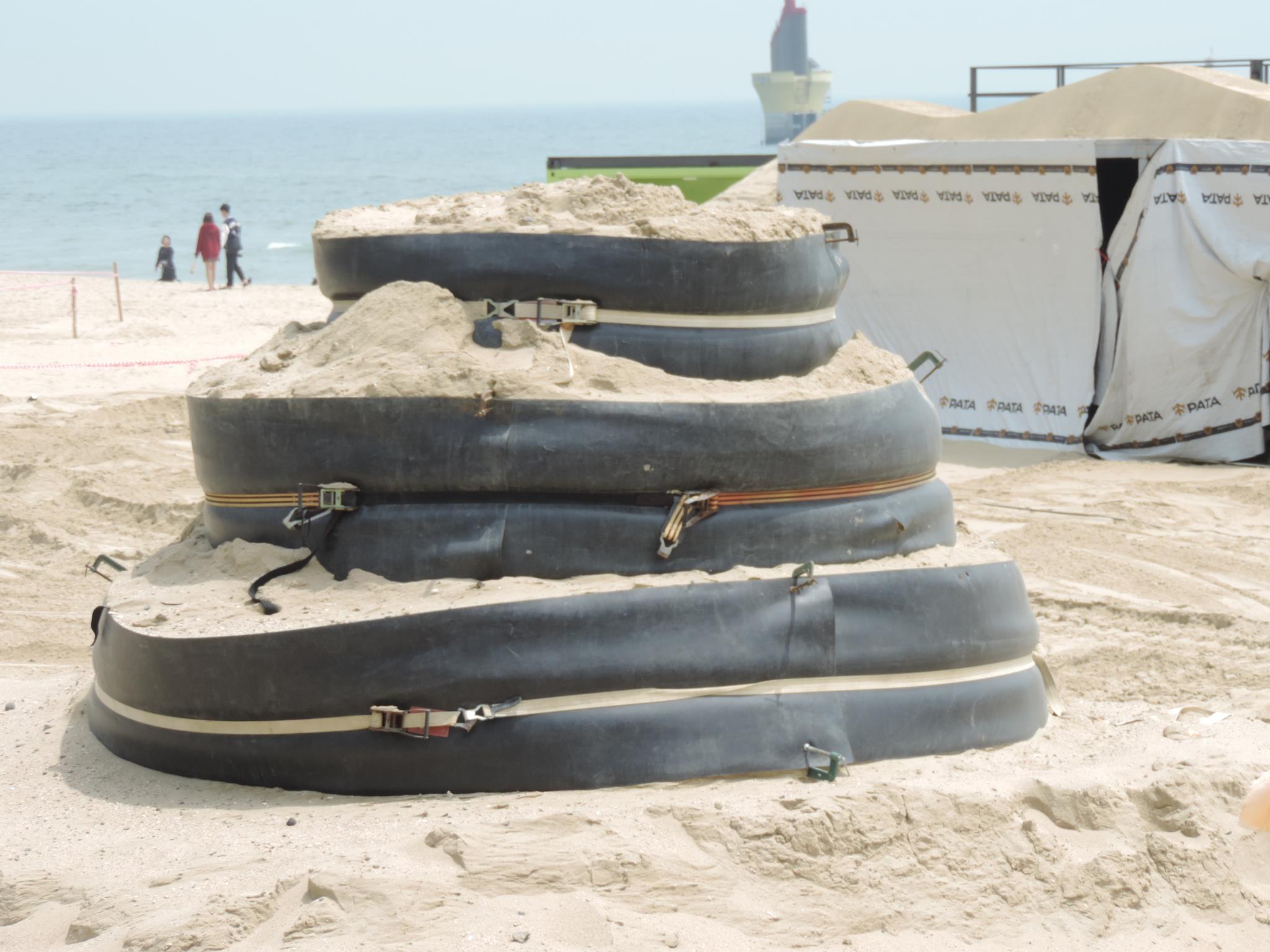
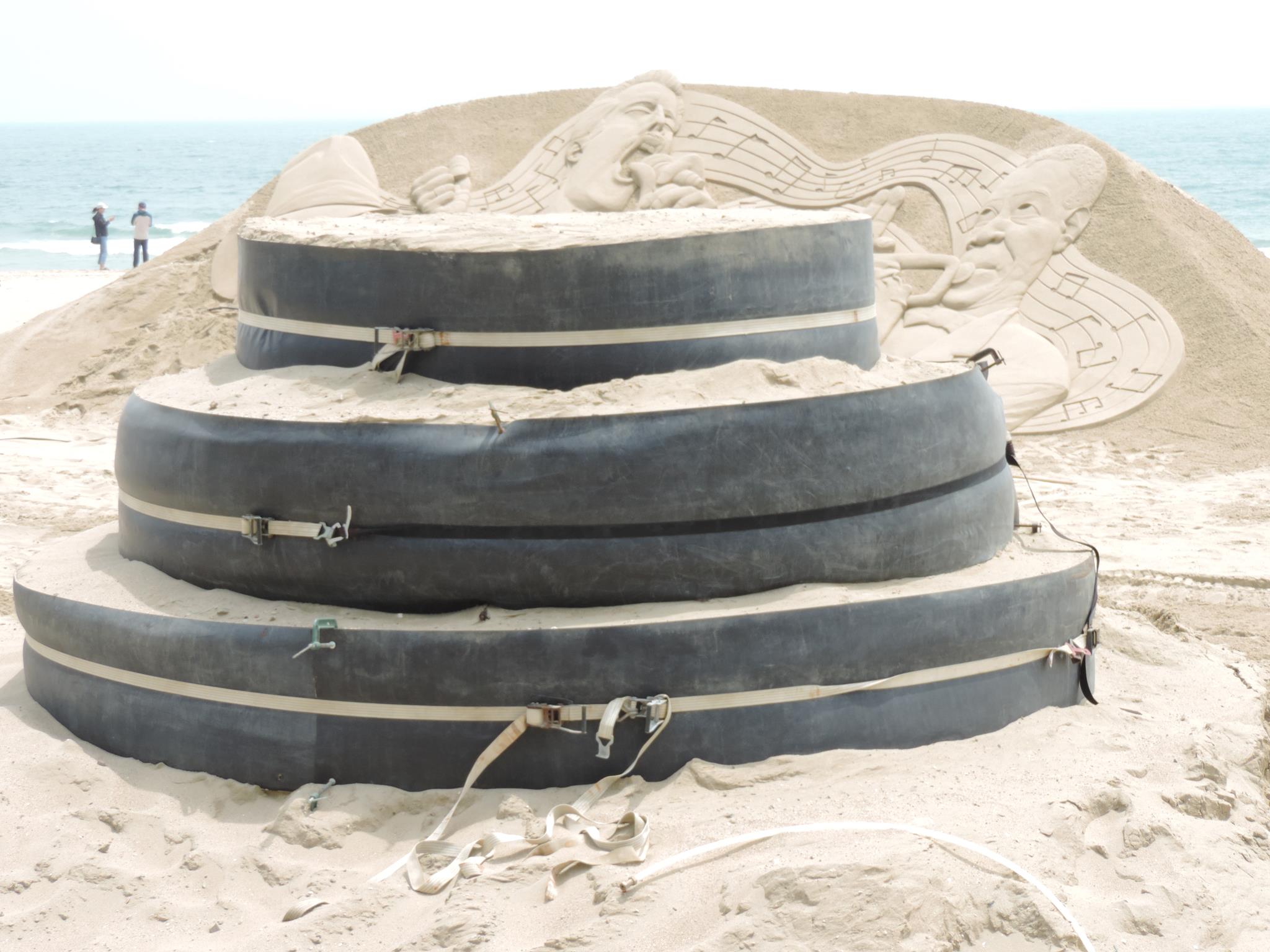
The bigger sand piles are like this one here where you are working on. And the ones in the front are smaller and more packed because the sculptures are different and they have to be a bit more stable?
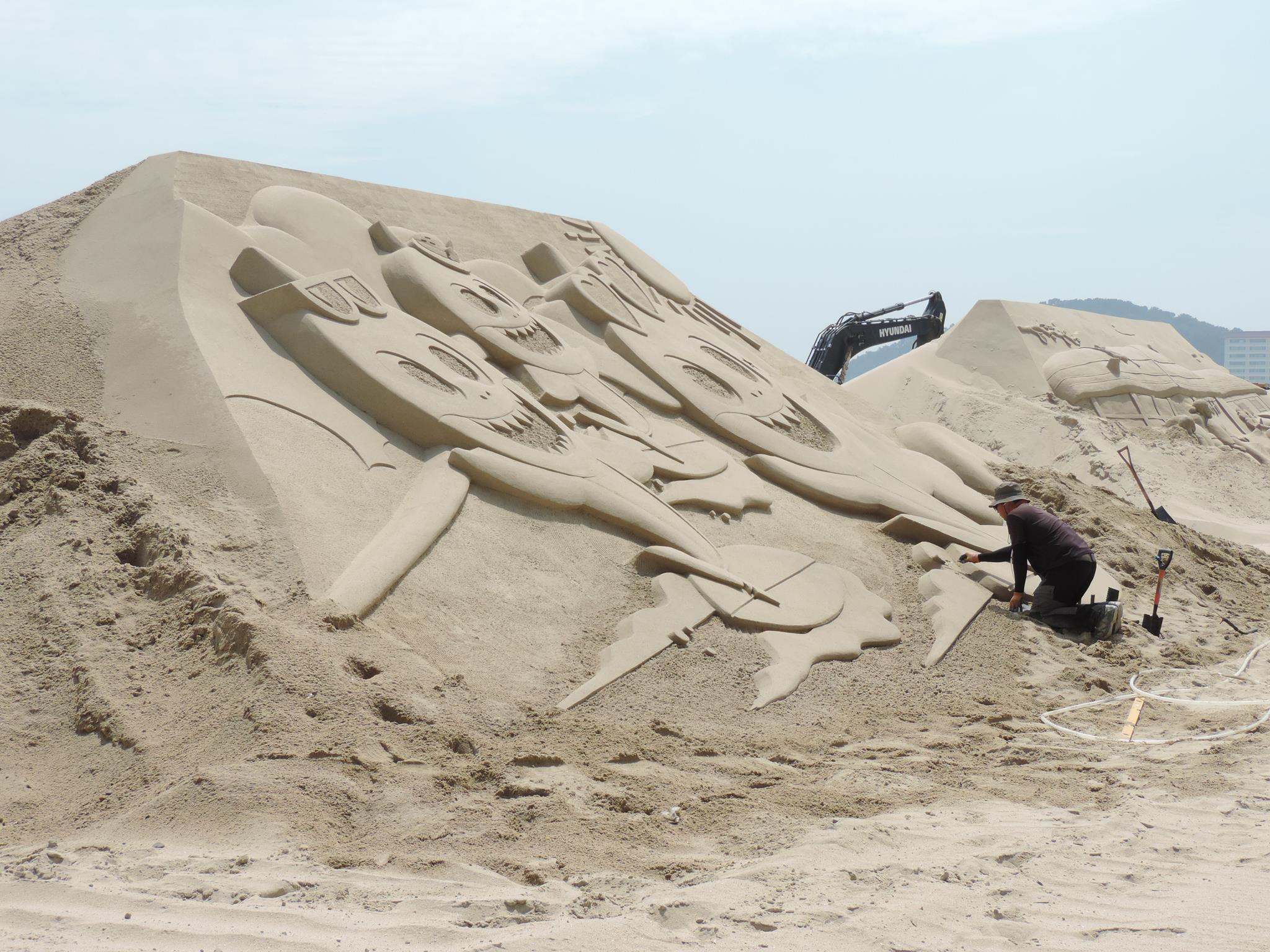
Yes, because here is a lot more sand and with this larger soft pack you do more a relief style. You can’t go as vertical without this collapsing whereas the smaller machine compact ones you’ll see some more areas where it’s much more vertical and like the sand is more solid.
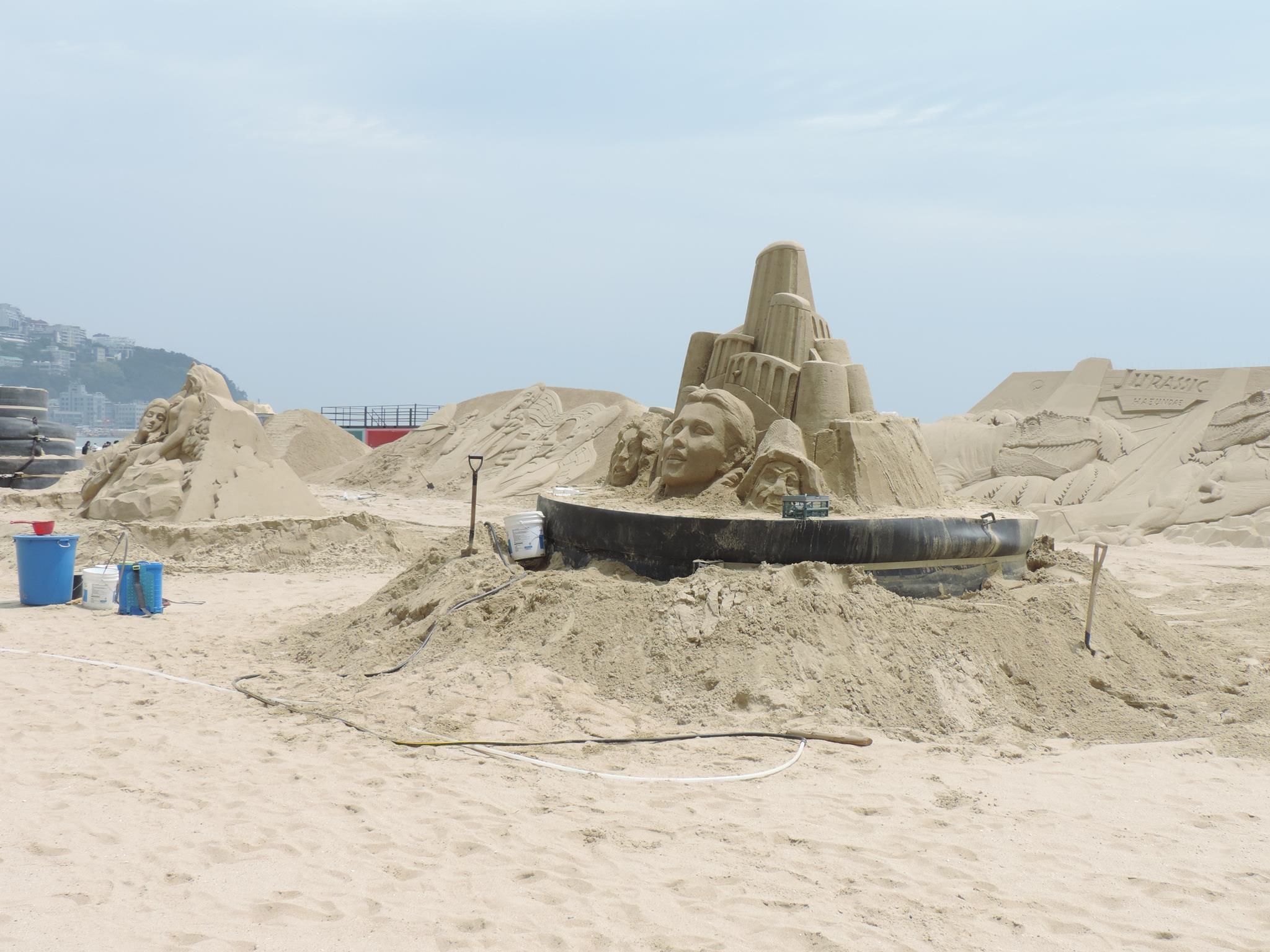
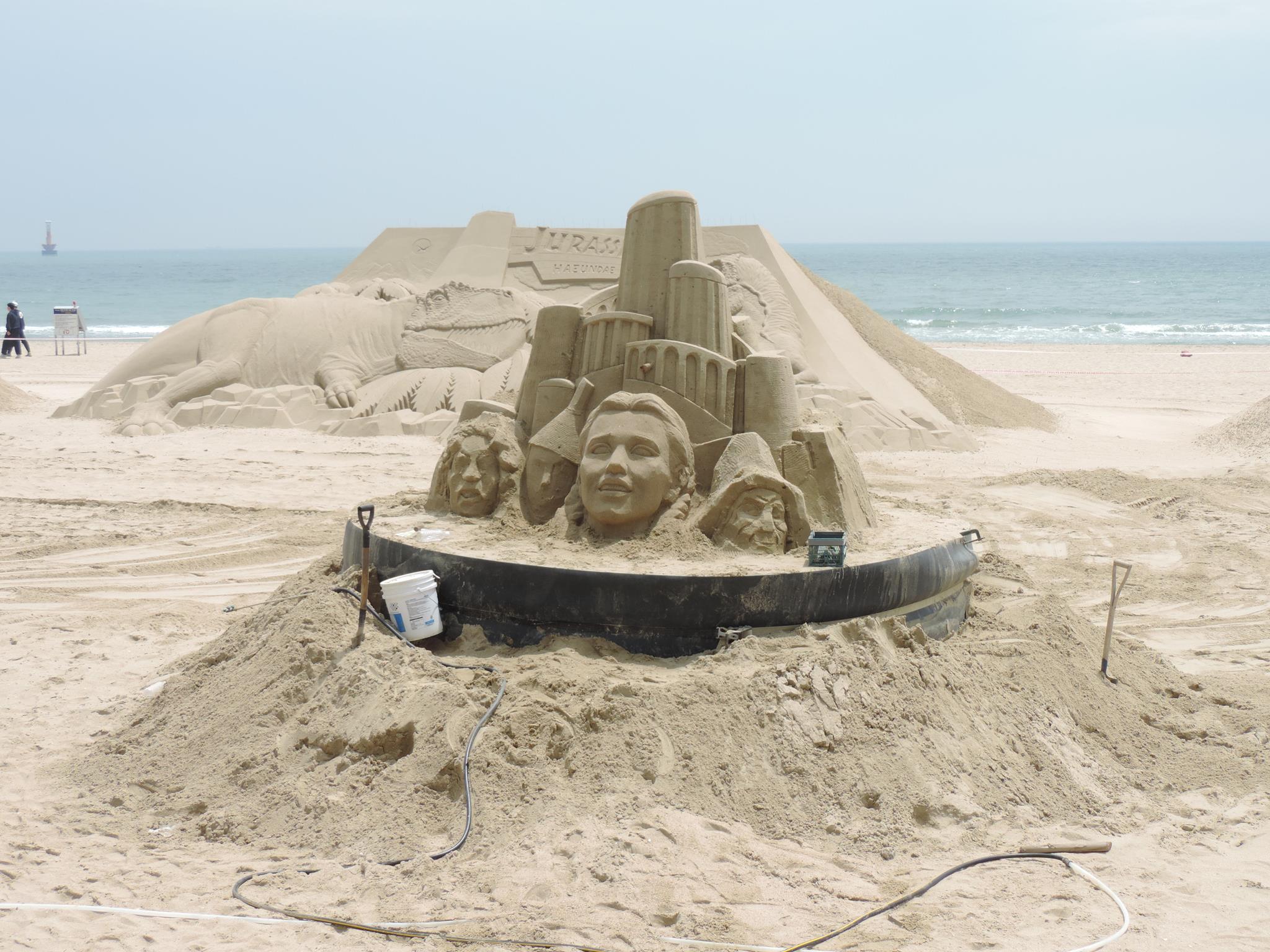
Some of the sculptures are already finished, but how do the artists prepare them that they don’t get damaged till the festival starts? Do they water them or do they put something maybe on it which keeps it together?
When we’re done sculpting we spray it with a diluted glue and that gives it a kind of protective skin. Because otherwise with sun, the wind and the rain, it would be damaged soon. The wind and the sun, they would just dry it out and blow it away. But with this liquid we put a little skin of glue on there and it holds up fairly well.
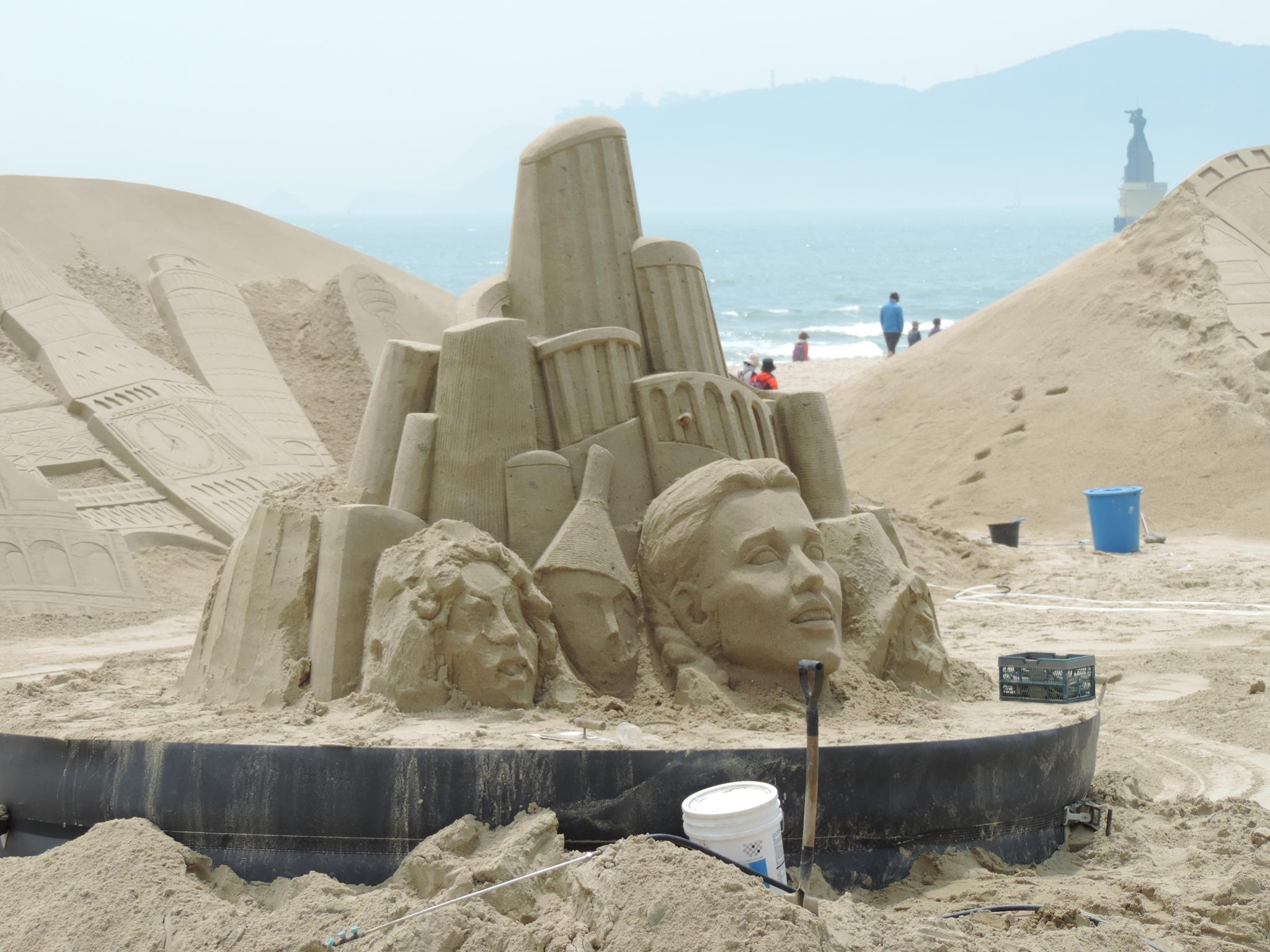
Tell us a bit how you make those sculptures and which tools you use. You said actually with everything. I saw you were working with a stick, but you also have a shovel and you use your hands. And in between you always put a bit of water on it.
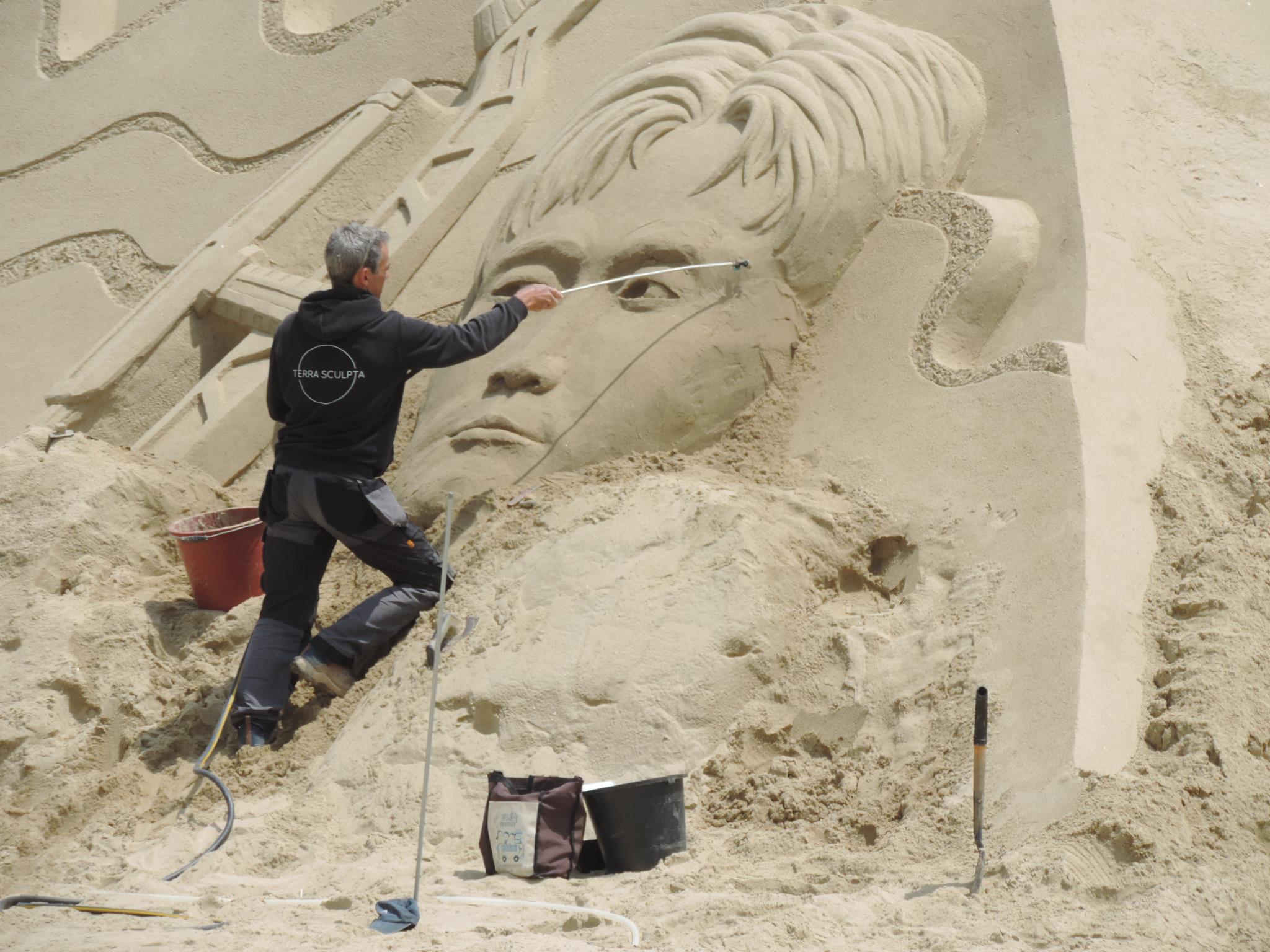
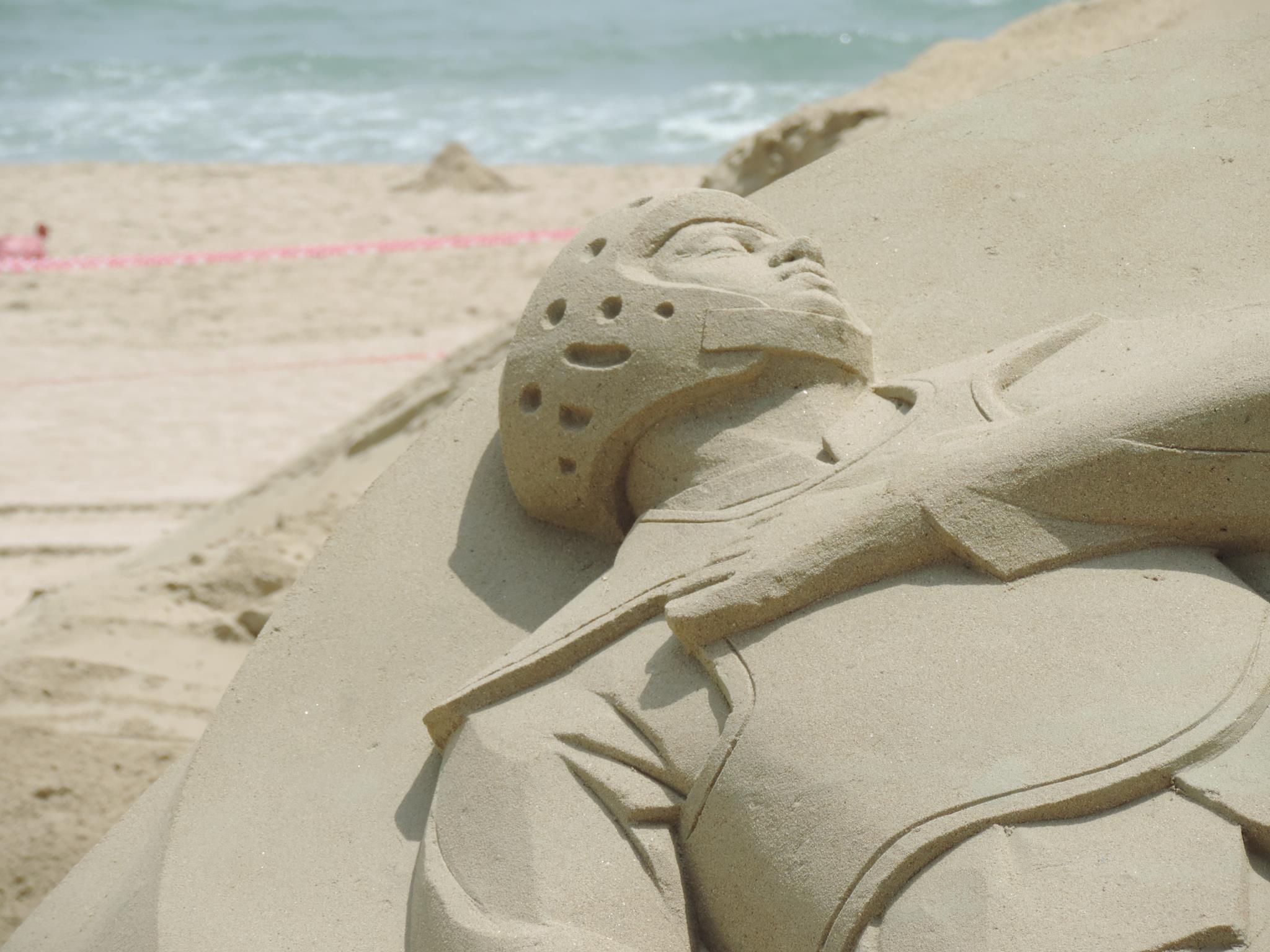
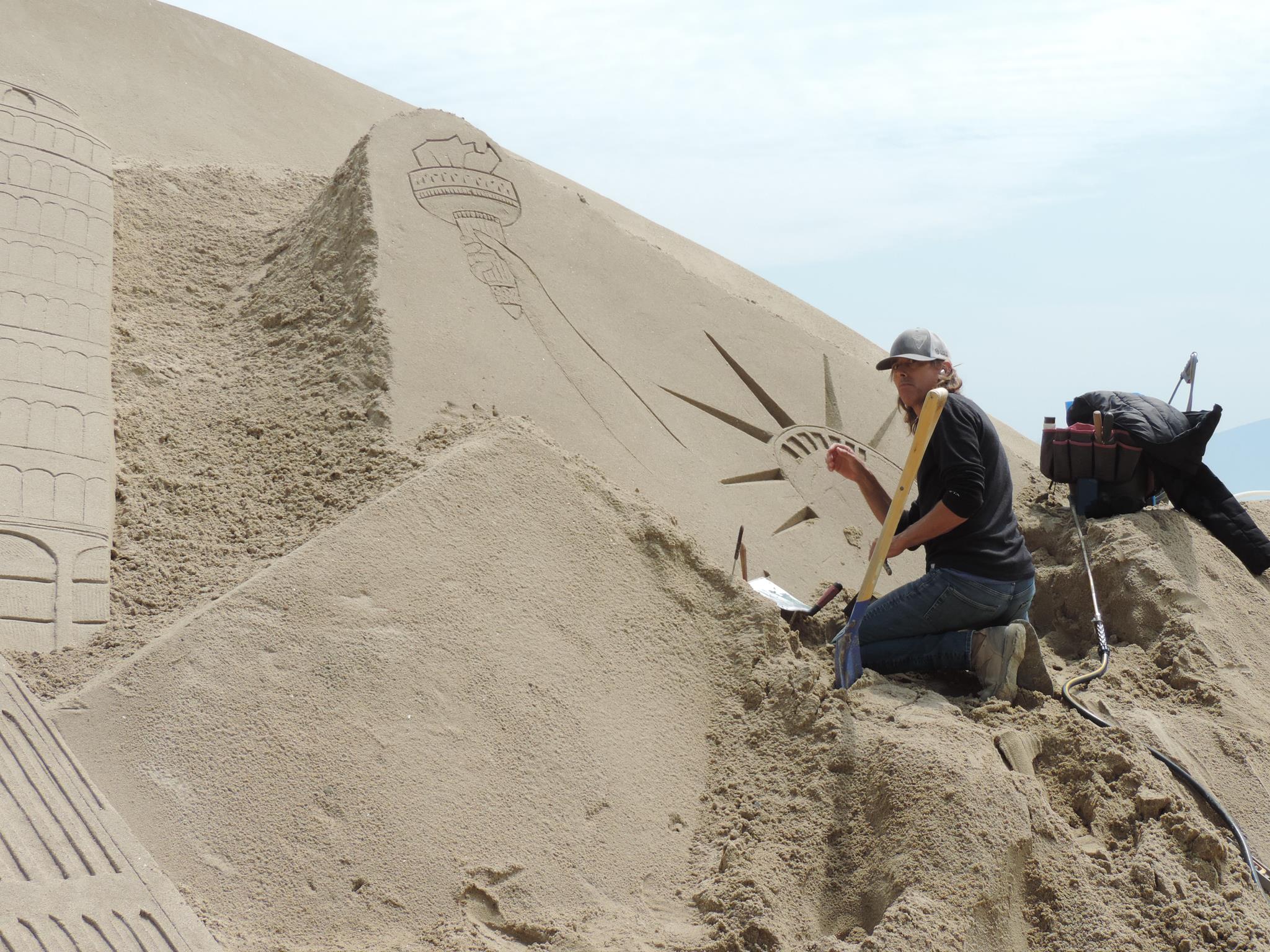
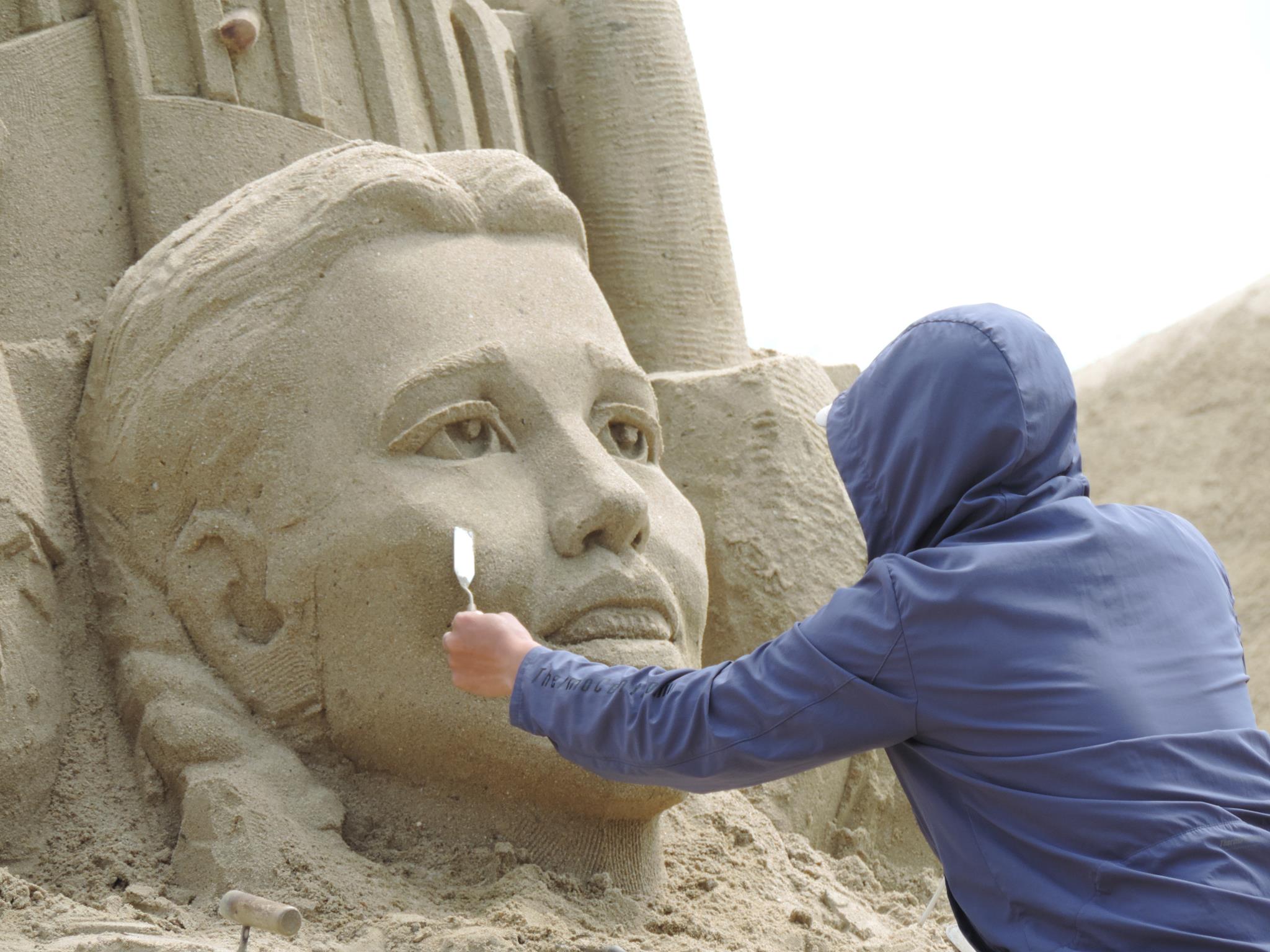
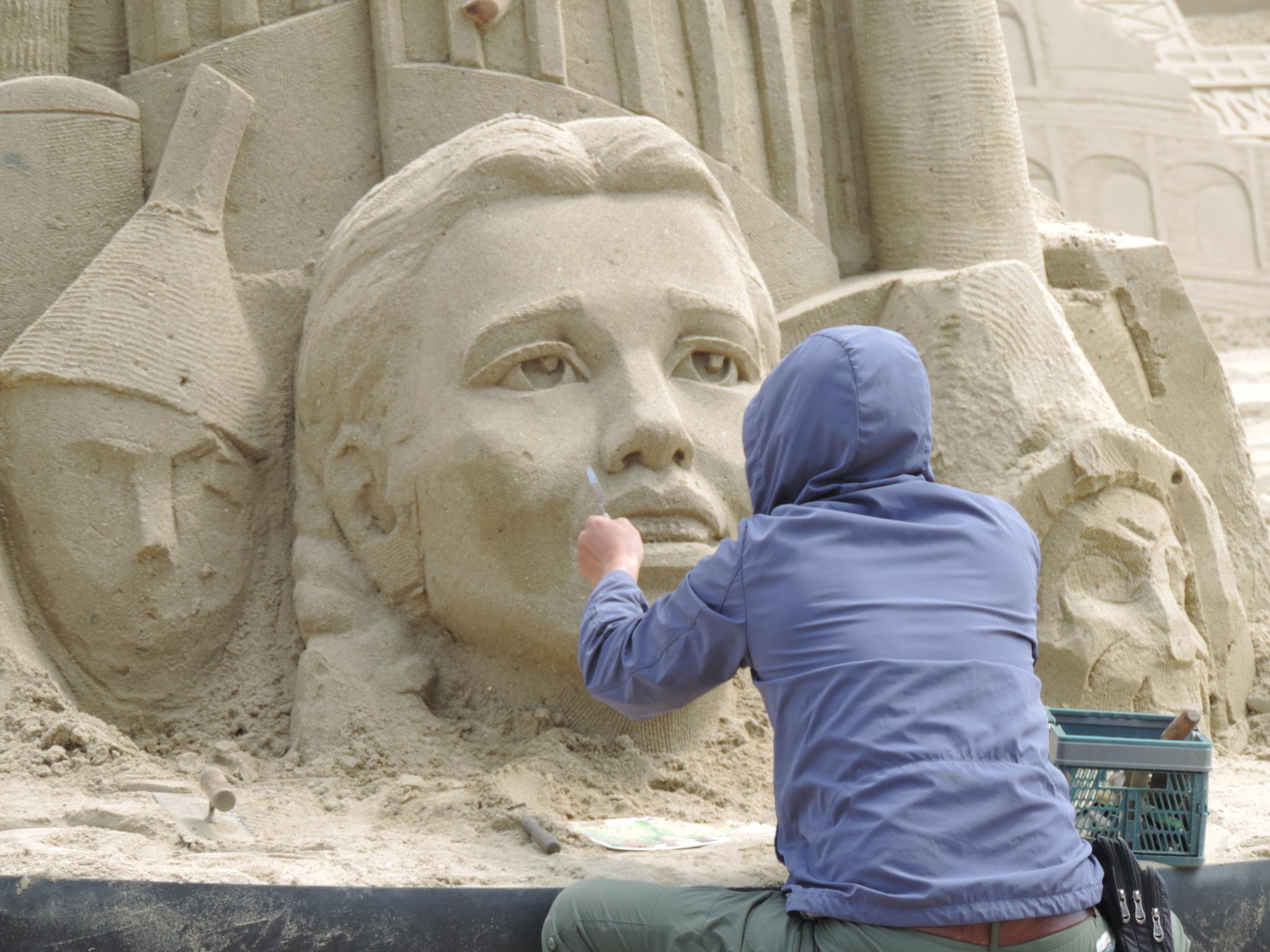
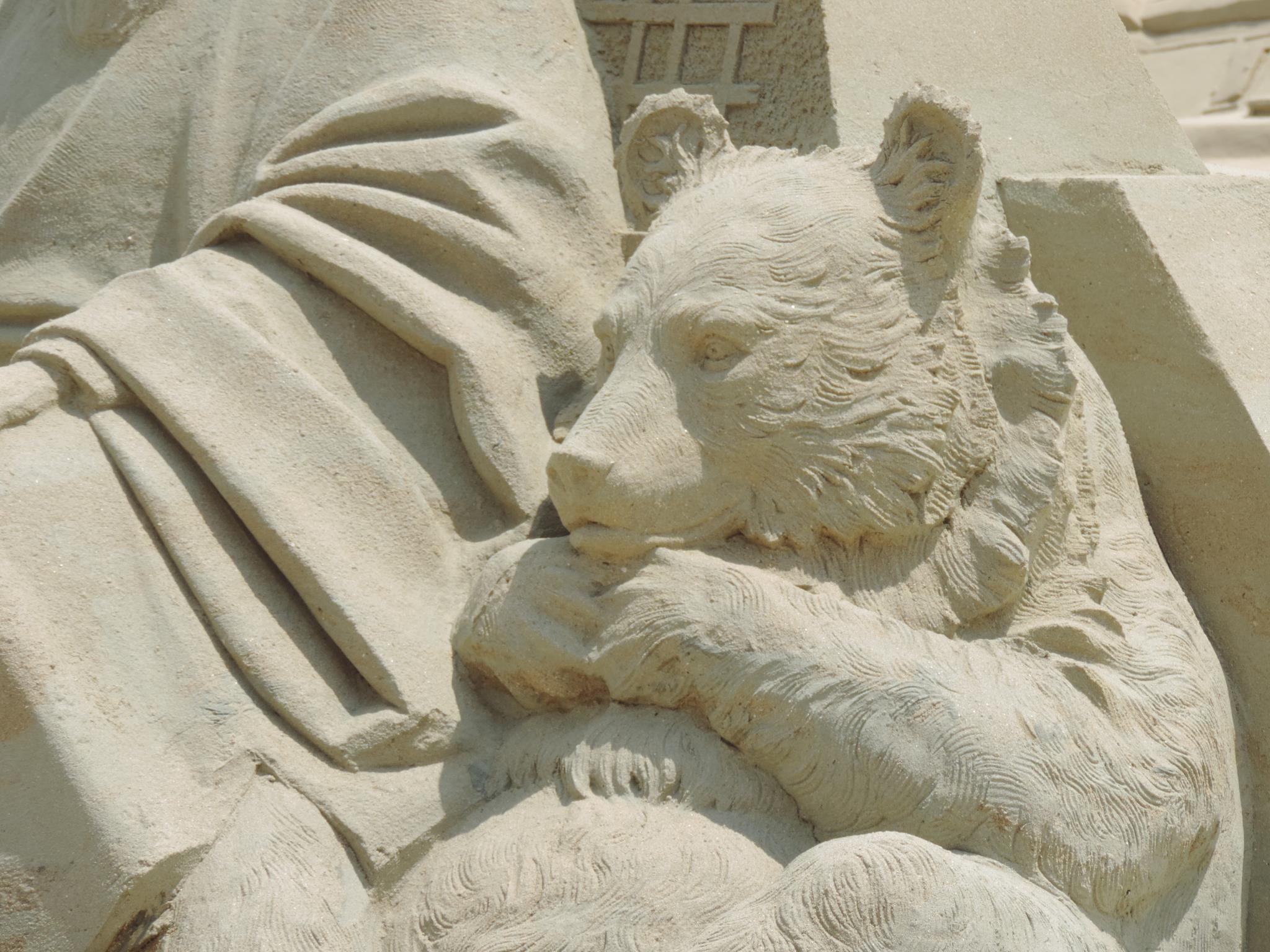
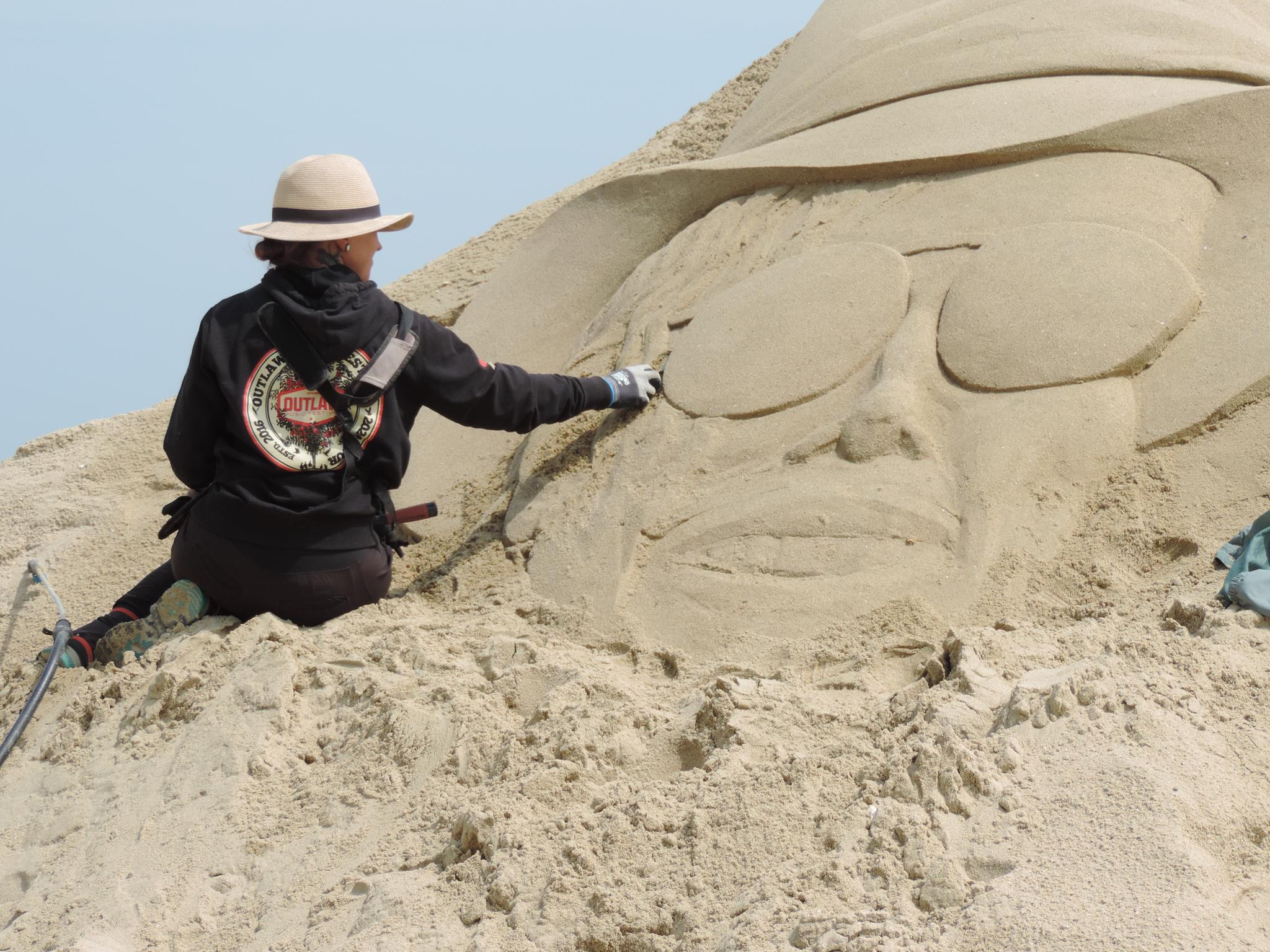
Yes, water and compaction is really what makes it hold together. So in the case of larger piles and even the smaller ones, sand sculpting has a job where you get to start at the top and work your way down. So you have to climb up there, but we’ve got hoses out here and lots of water. And then you’re packing and shaping it. Initially with a shovel and then basically the more detailed you get, you just use smaller versions of the tools. You start with a shovel and then step by step you switch to smaller tools and then little palette knives which are just smaller shovels. Then finally you can also use brushes and different texture tools to finish off after that.
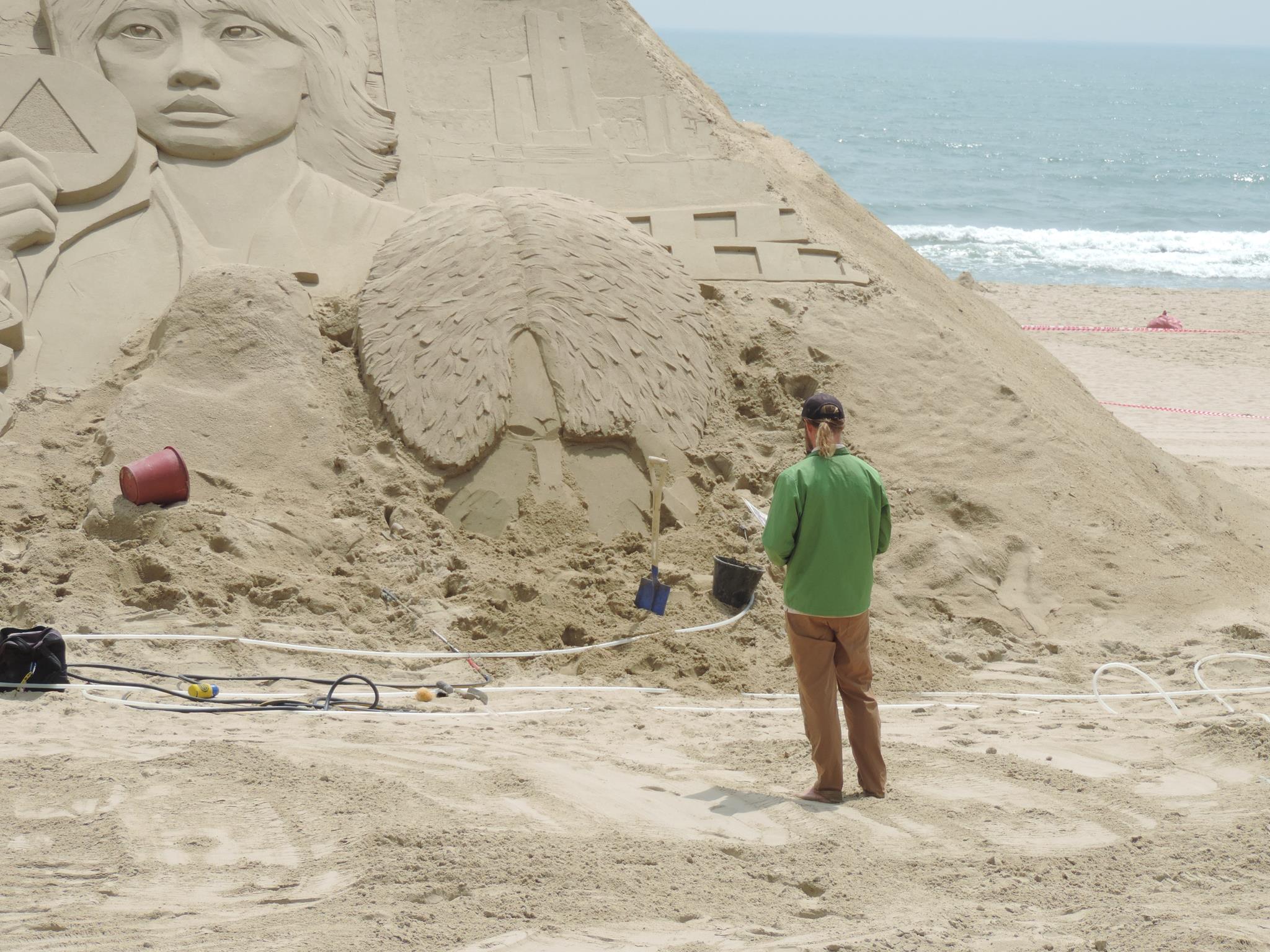
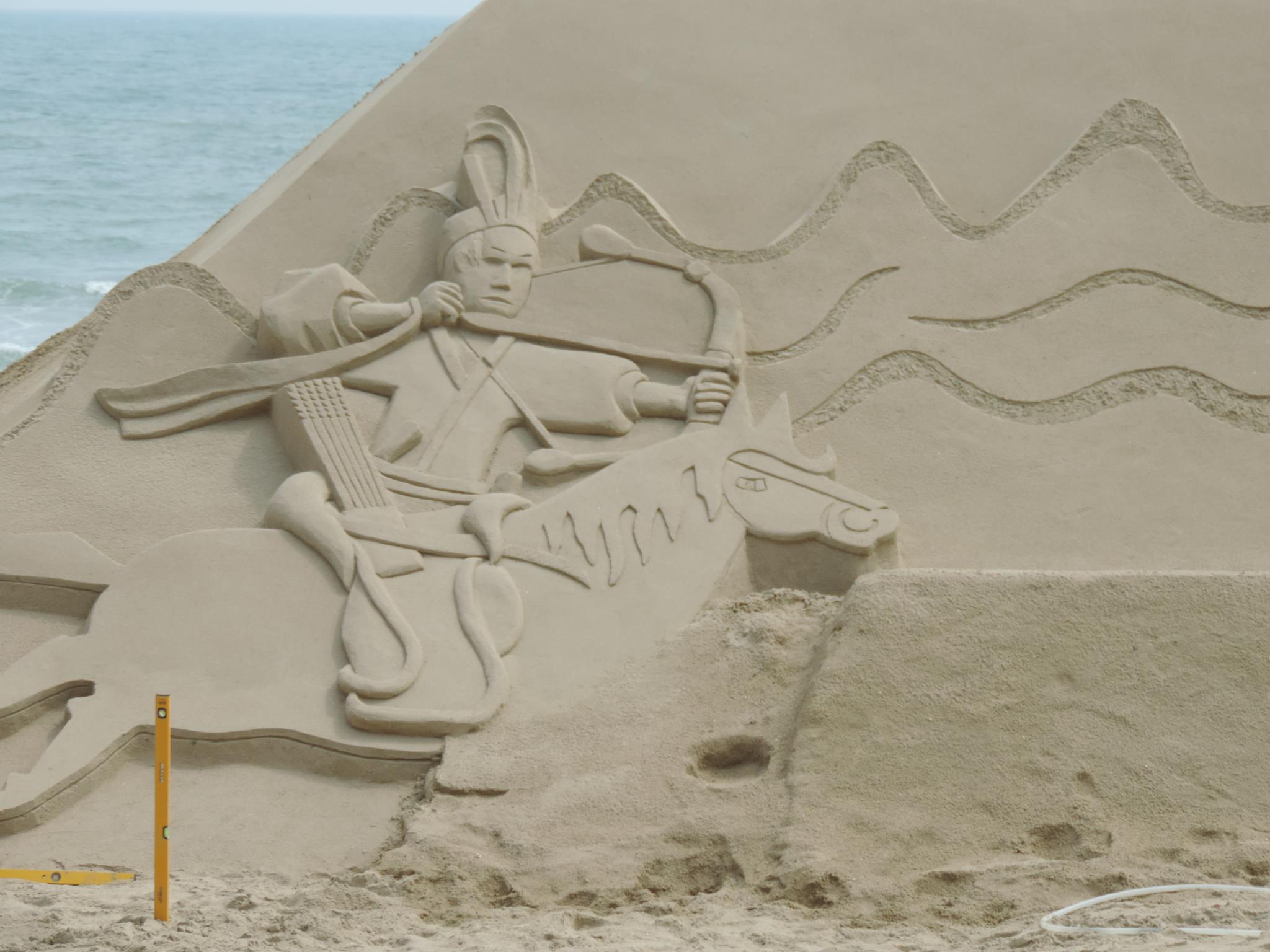
In that part it’s quite similar to a stone sculpture because first you have the bigger instruments and the bigger tools, and then you get more and more in detail. But then with a stone, you have to take care that it will not crack and with sand it is very different. With a stone, if you have a crack, you can still maybe fix it, but if the sand goes away, then it can be that the whole artwork is floating down.
Yeah, and that definitely happens at times. It does collapse and the whole artwork goes down with the sand after all. We like to think that we’re professional and we know how to avoid that, but it still happens to all of us sometimes. And I think one of the big differences between a stone sculpture and sand is, that sand is a lot softer and easier to work with. It’s a lot faster and you can also add back on. So in the case of when you lose your entire sand sculpture, obviously you need to start over, but if just a part of it falls down, you can usually pack some back up again and move on. And there are lots of different little techniques for adding little bits on to finish your work too.
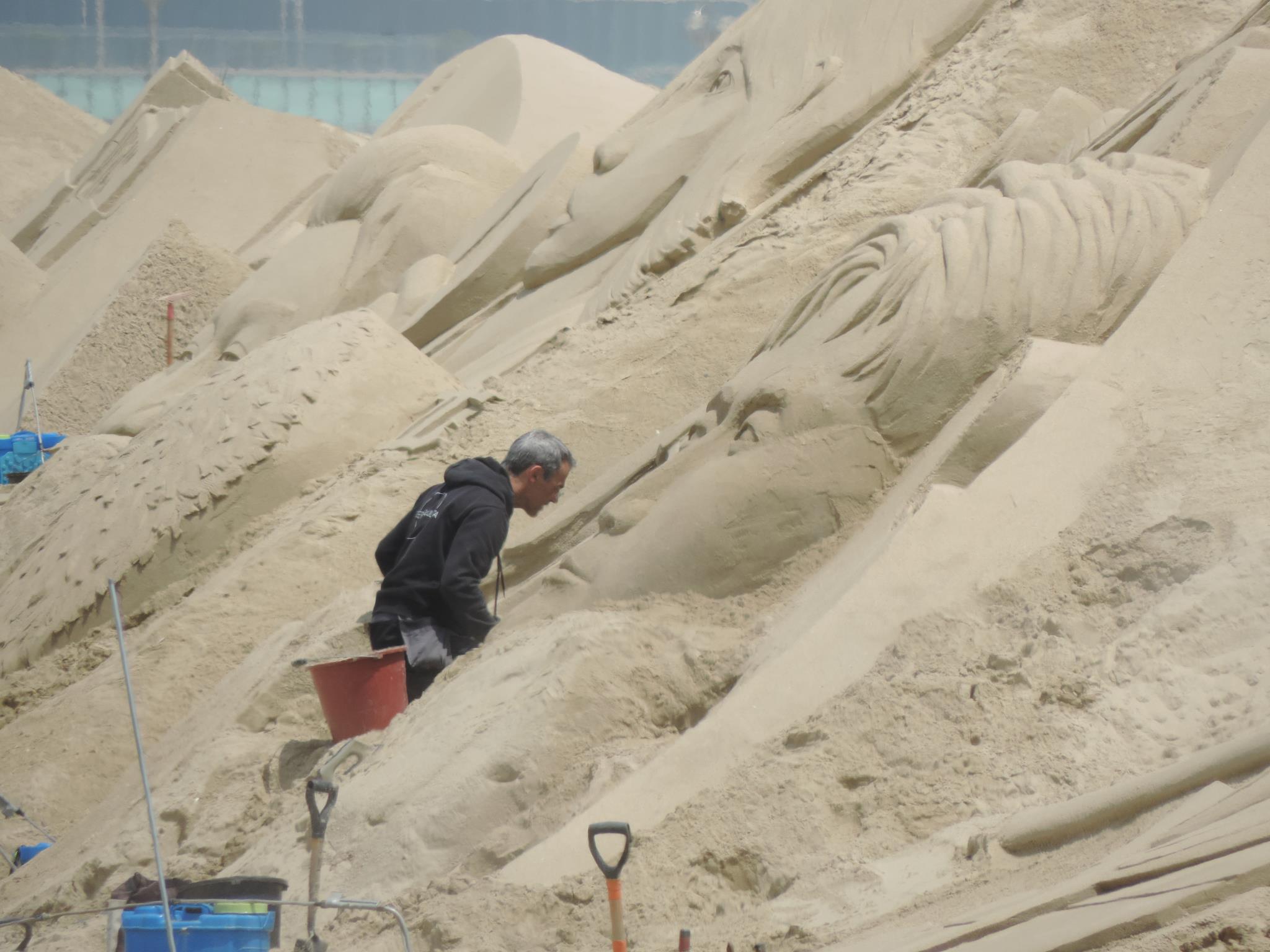
So when you work from top to bottom, do you have some ramps or something like that? Like with the pyramids, maybe some stairs or some level around where you are walking on?
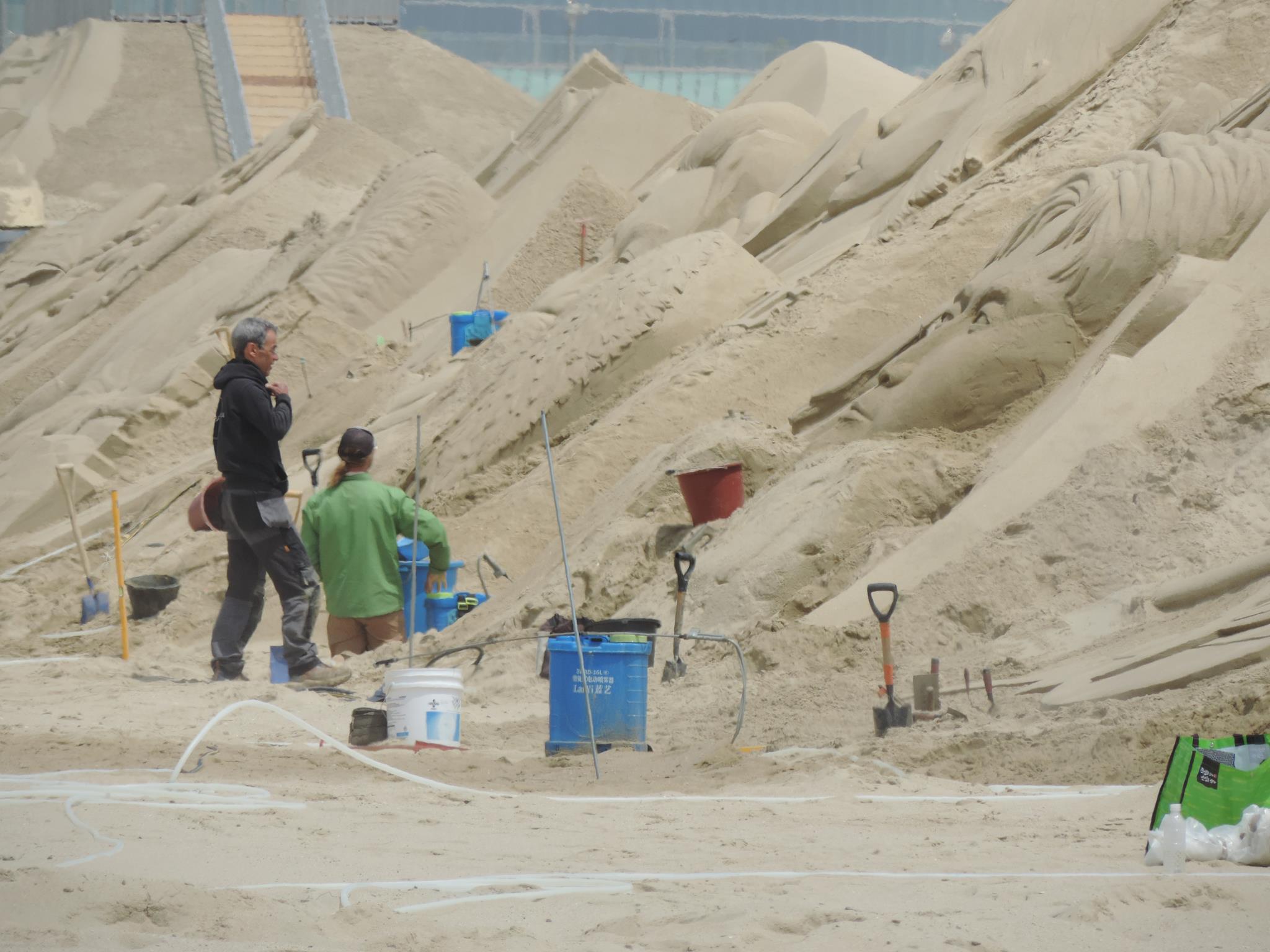
Yes, kind of. You do have to leave areas where you can walk up. But generally you just start at the top, then you finish the top and then you just work your way down in different small steps. You are shoveling sand down as you go and you’re standing on that sand. That way you just work your way down.
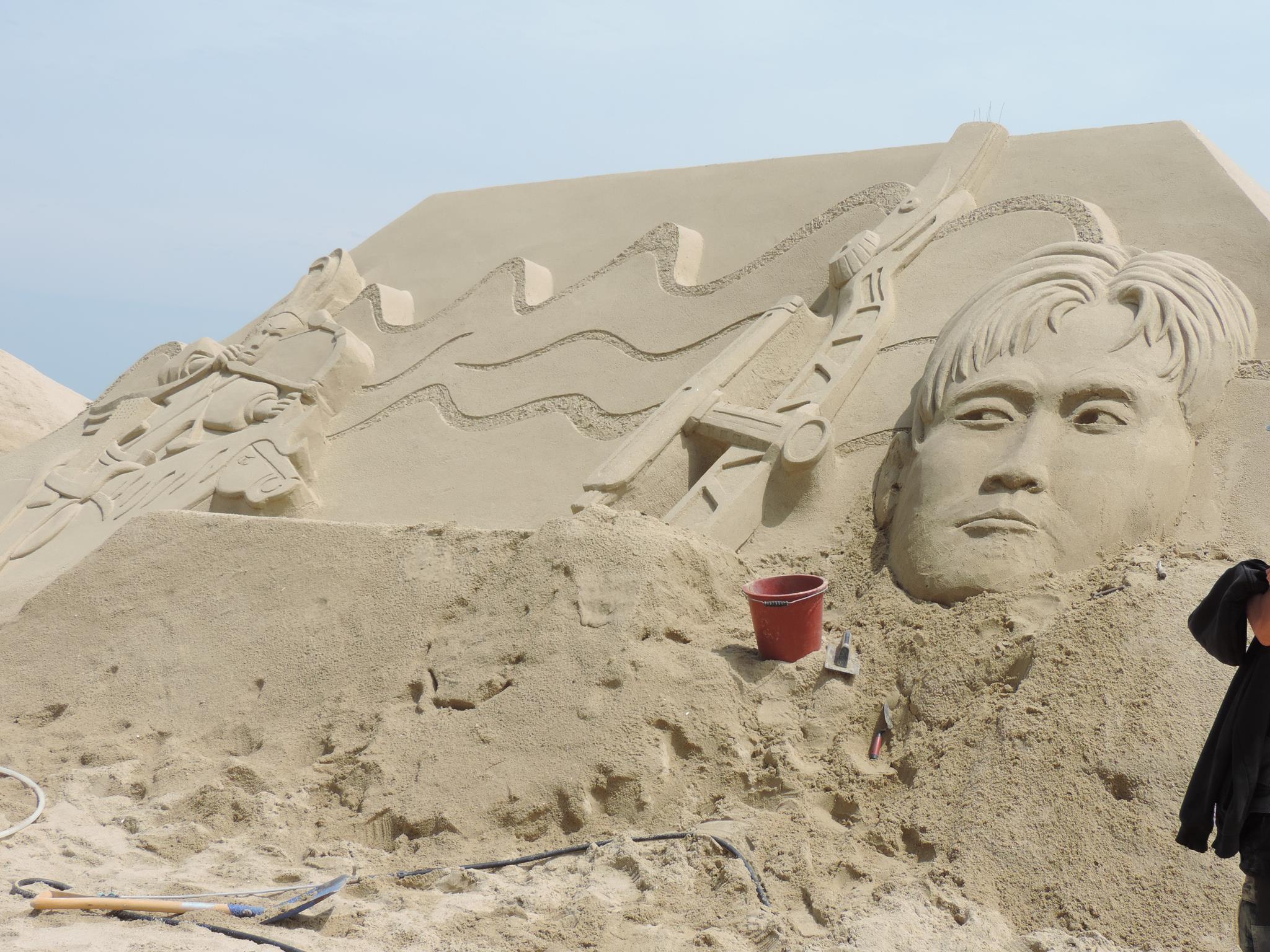
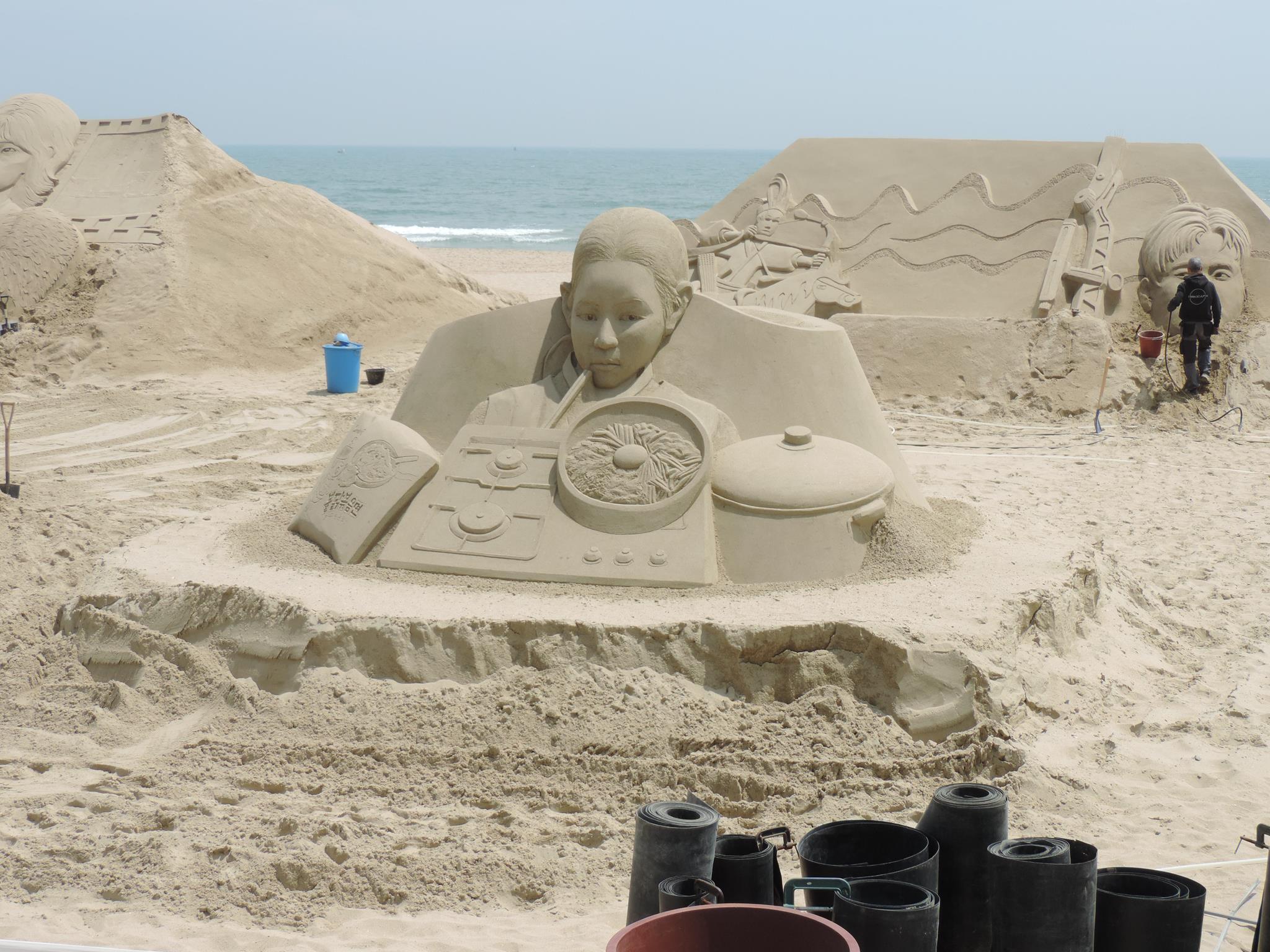
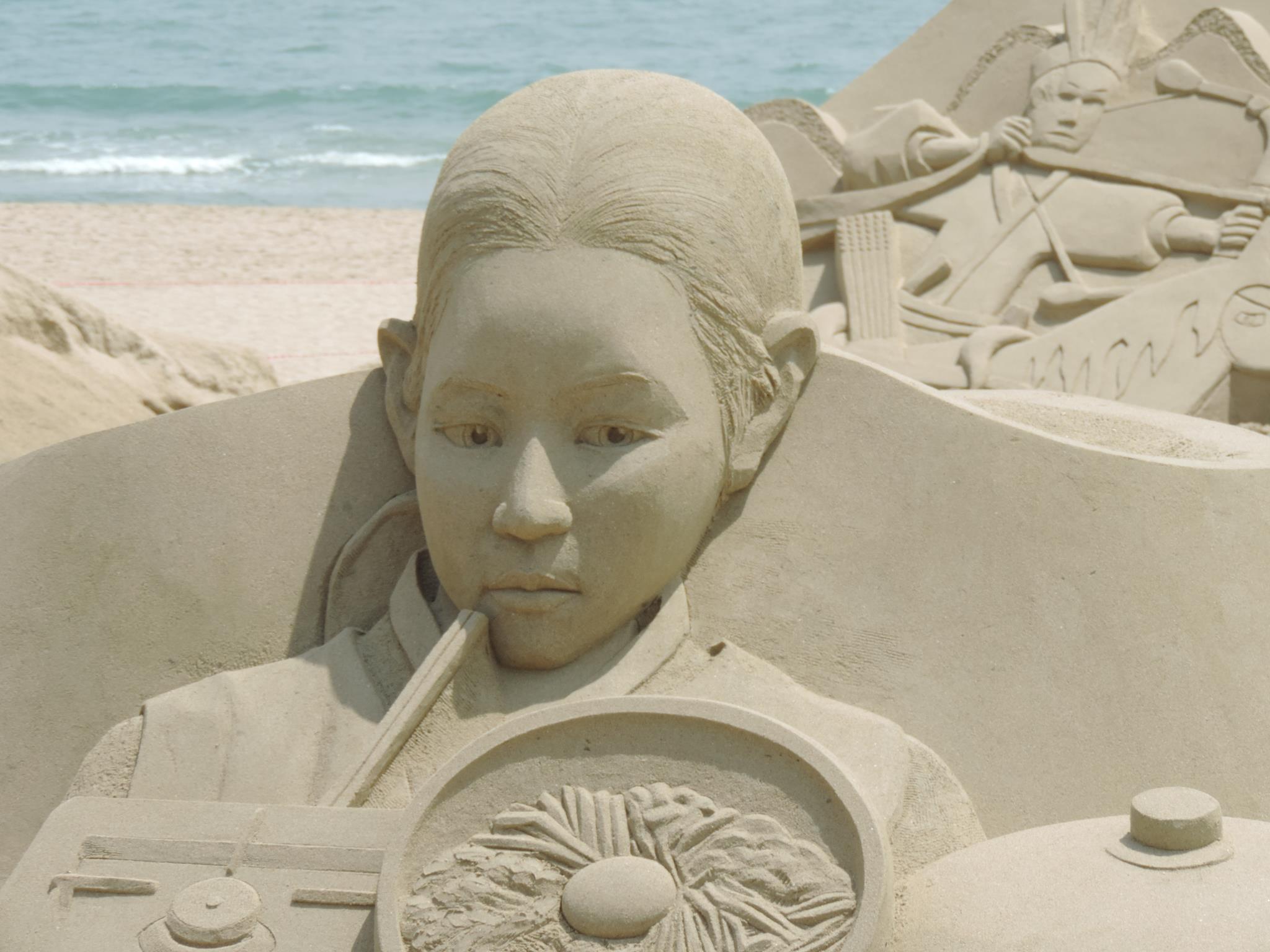
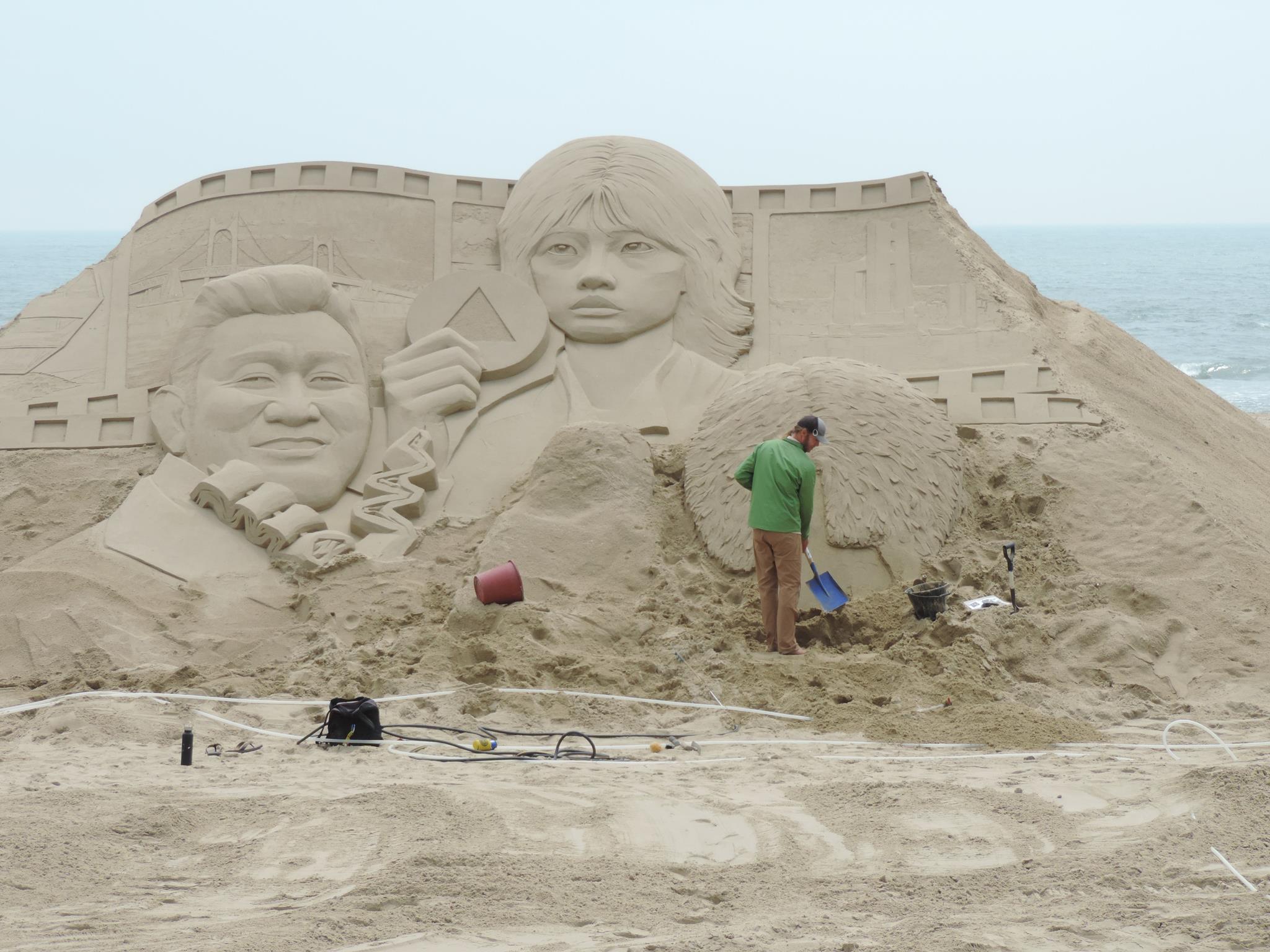
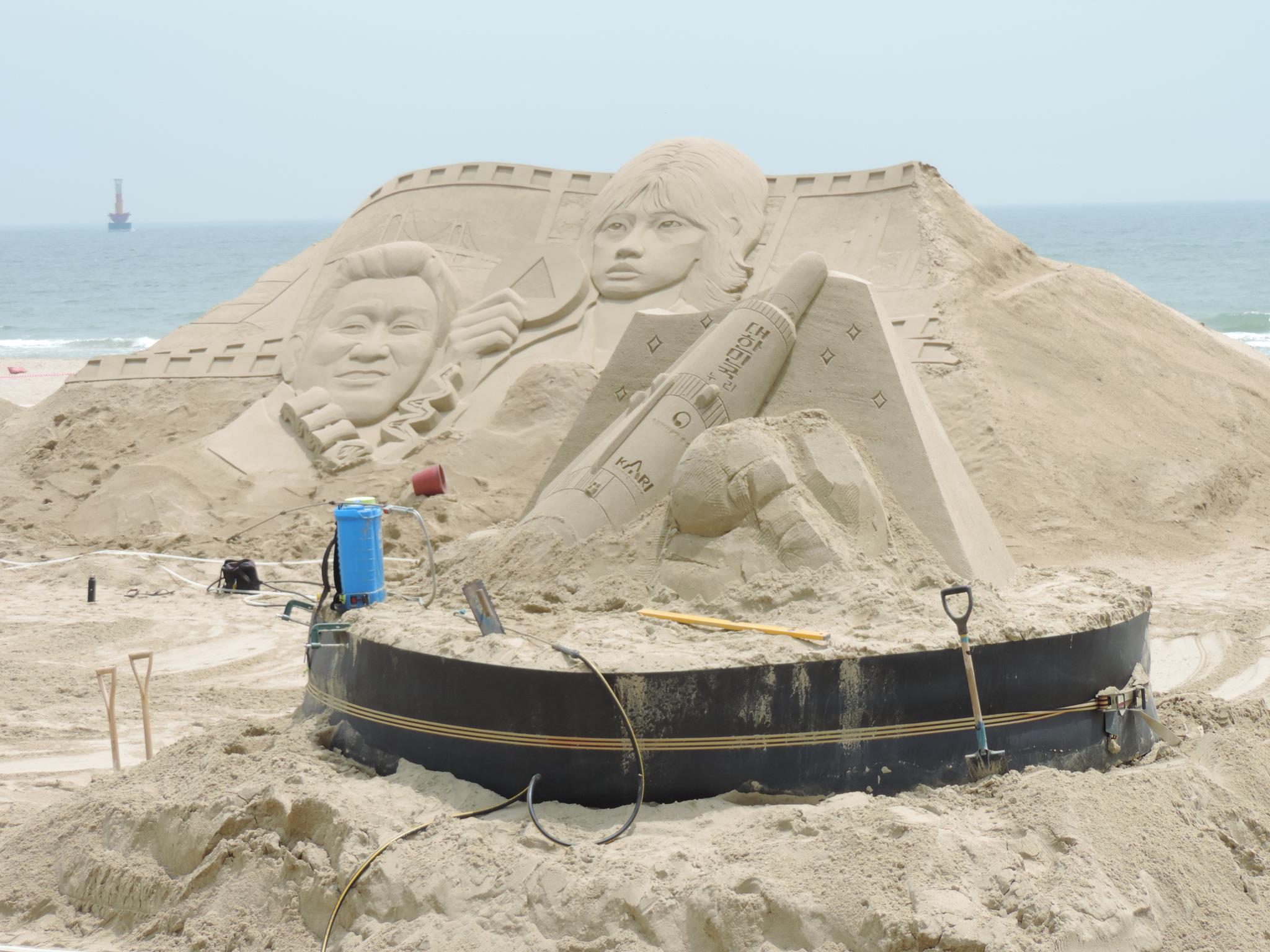
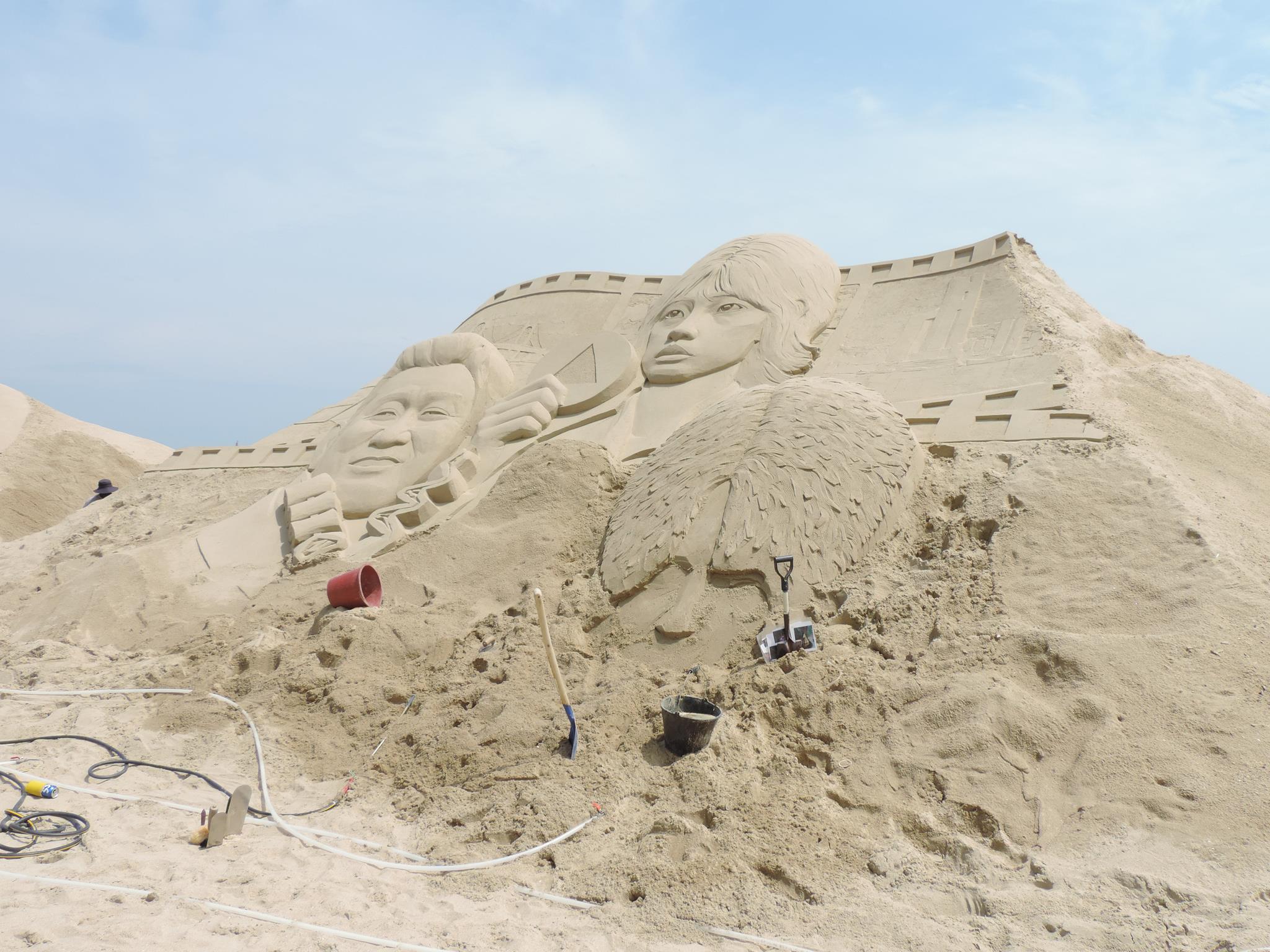
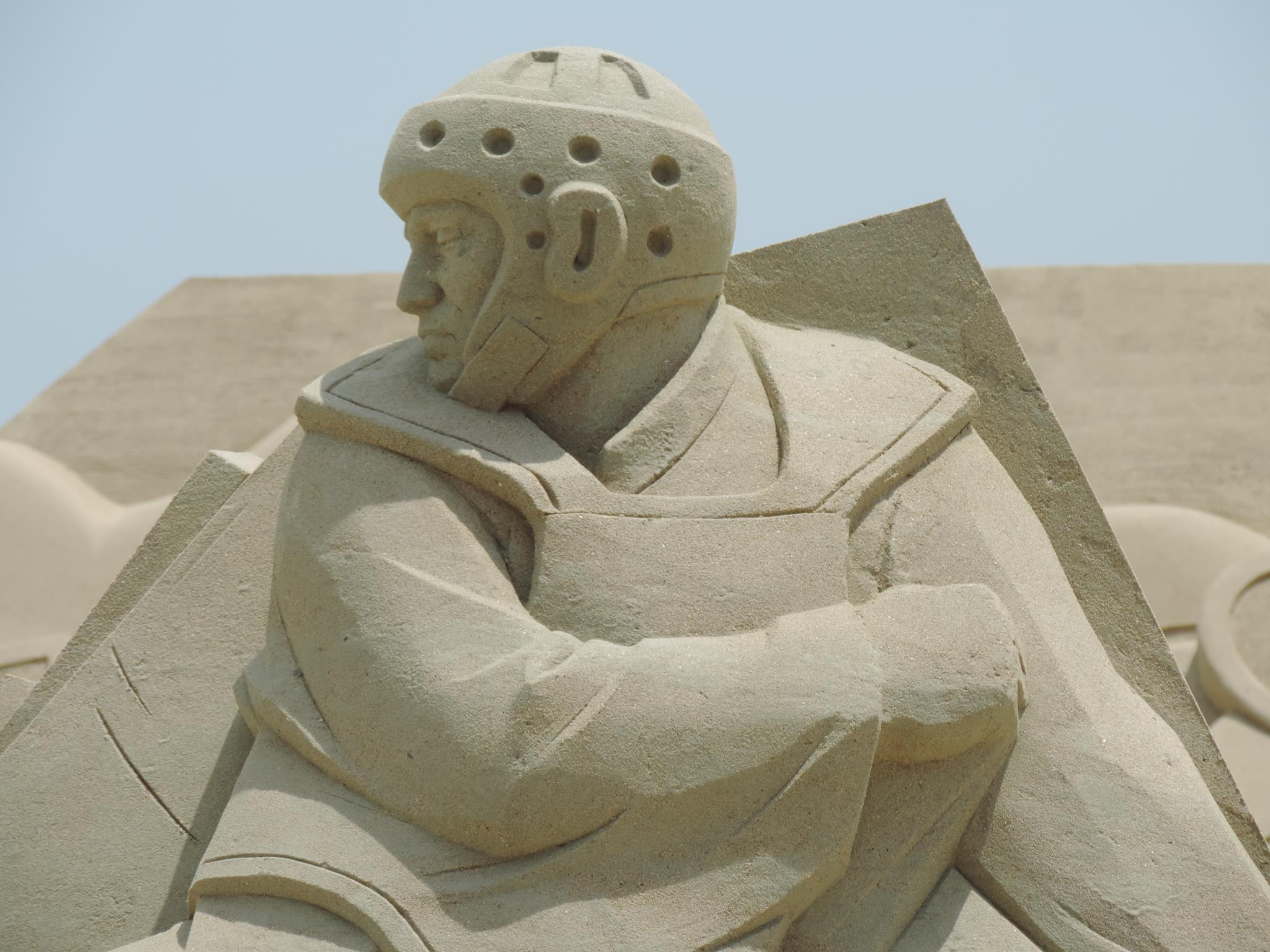
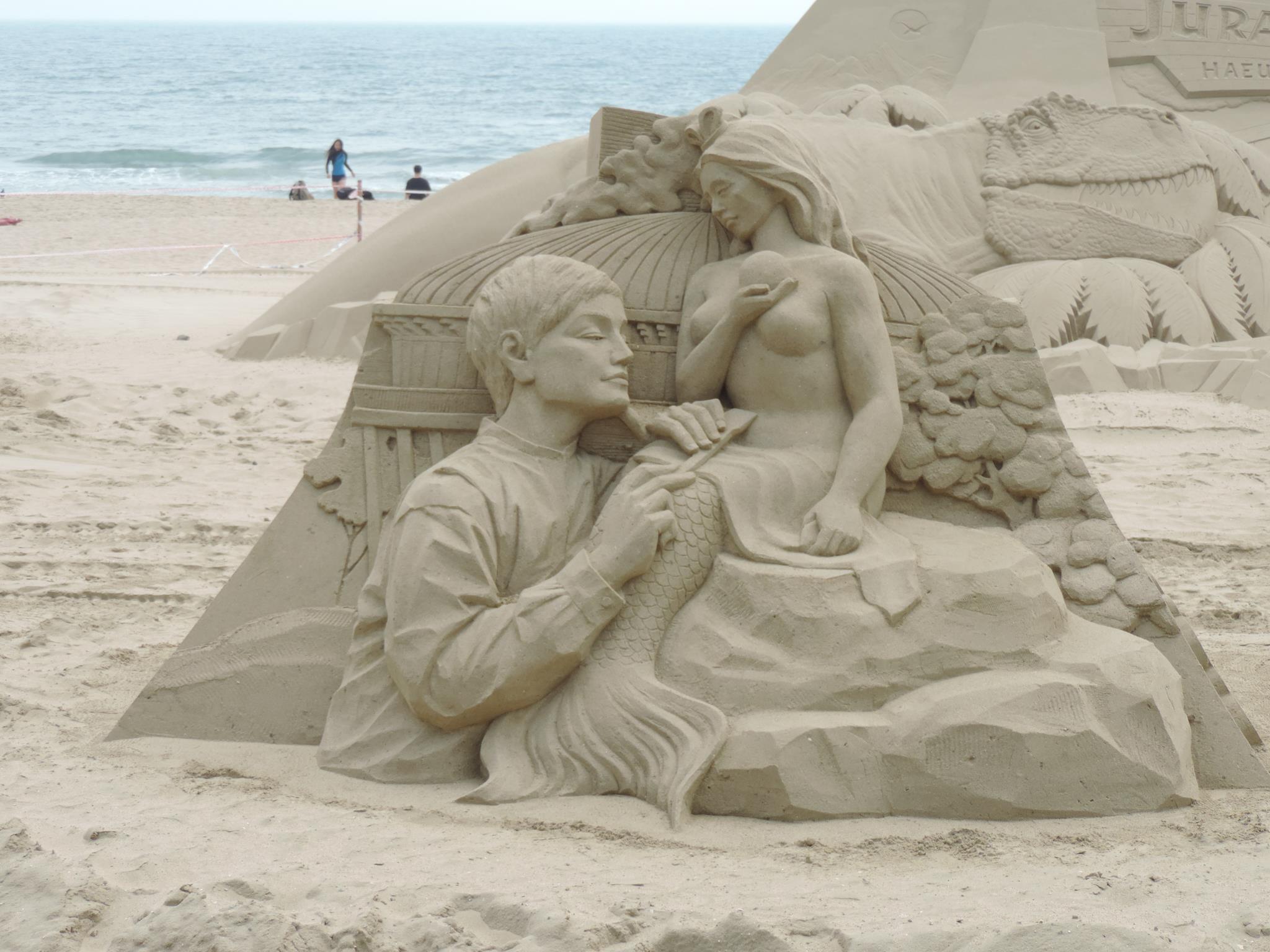
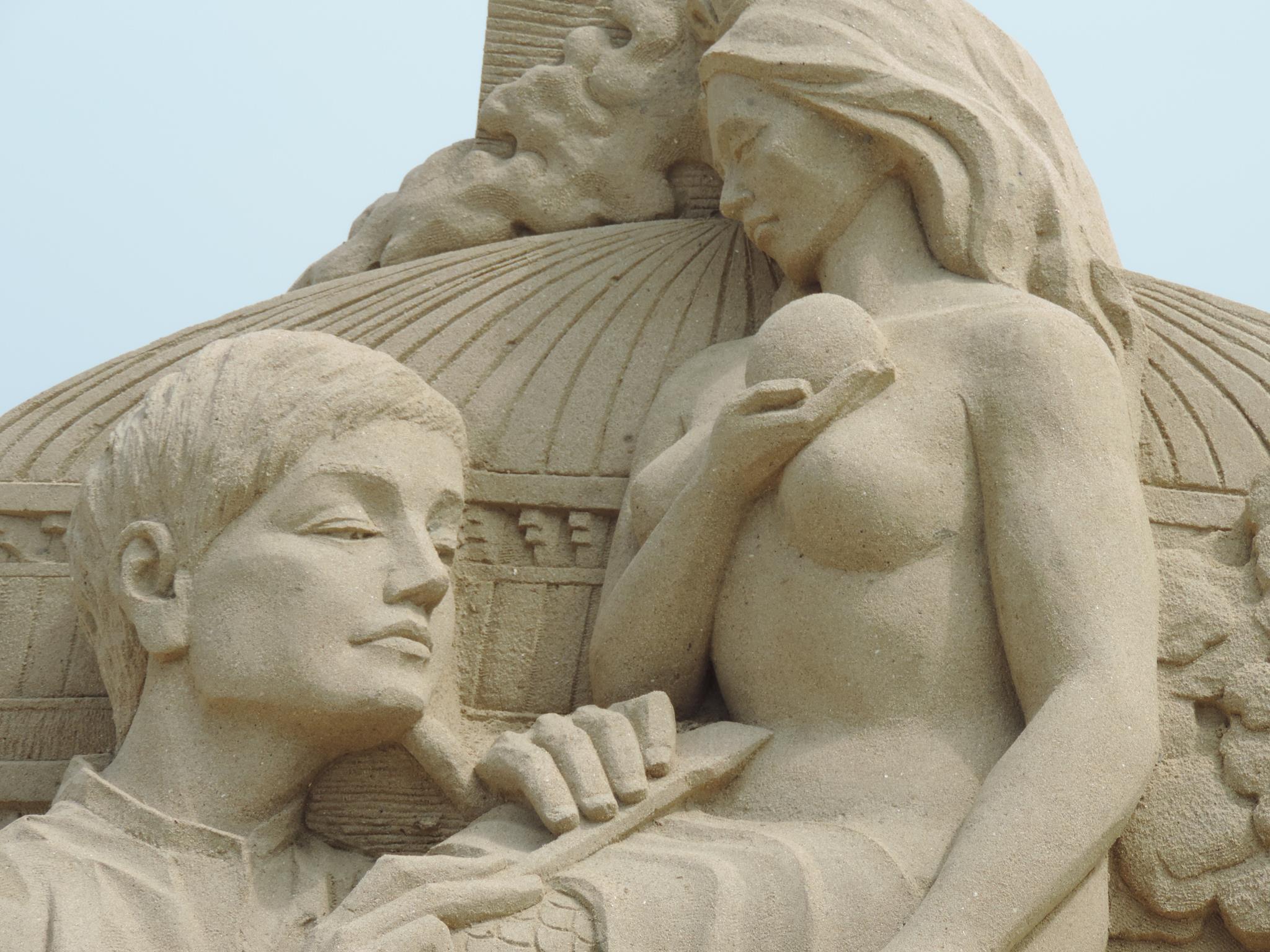
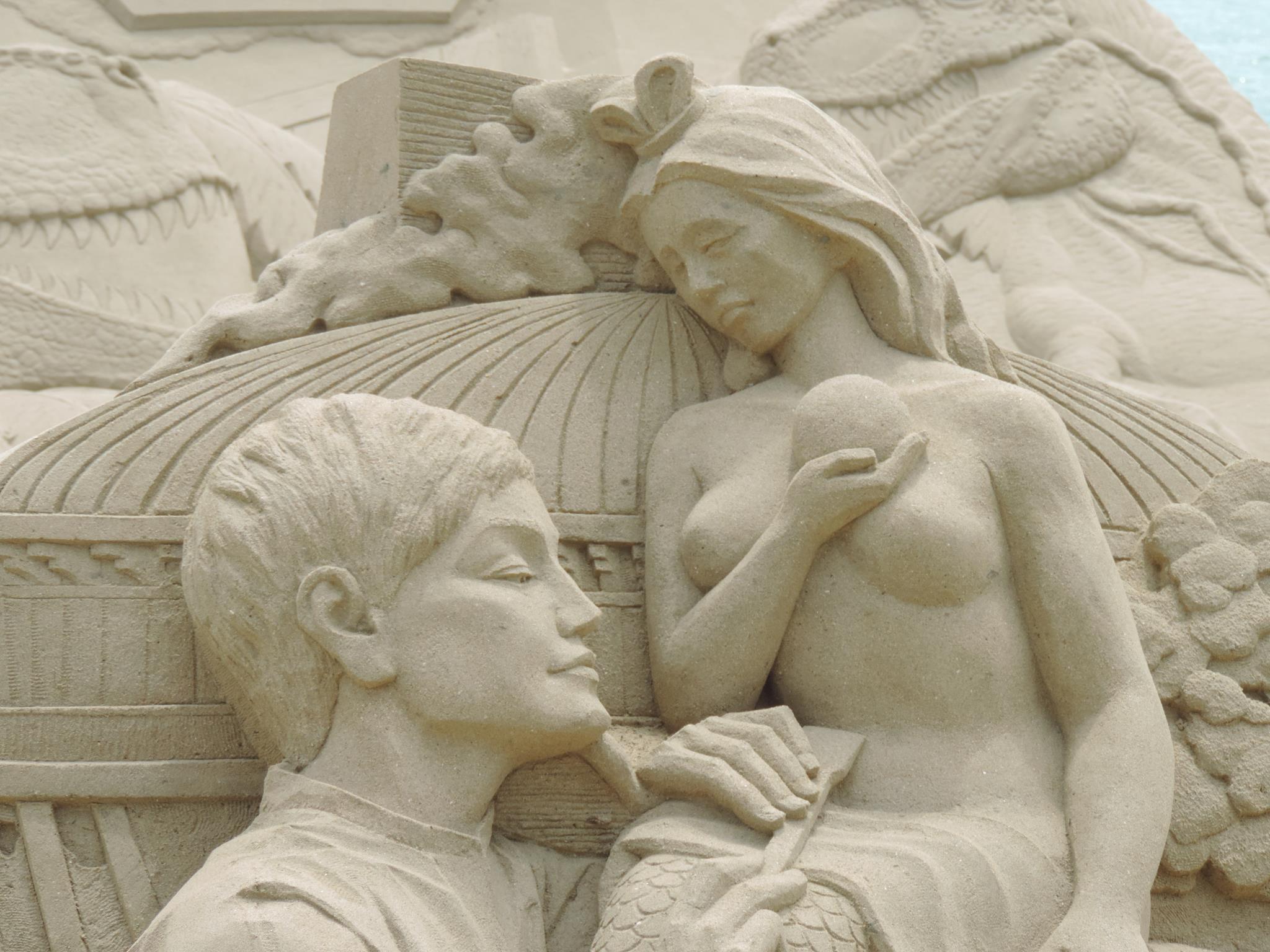
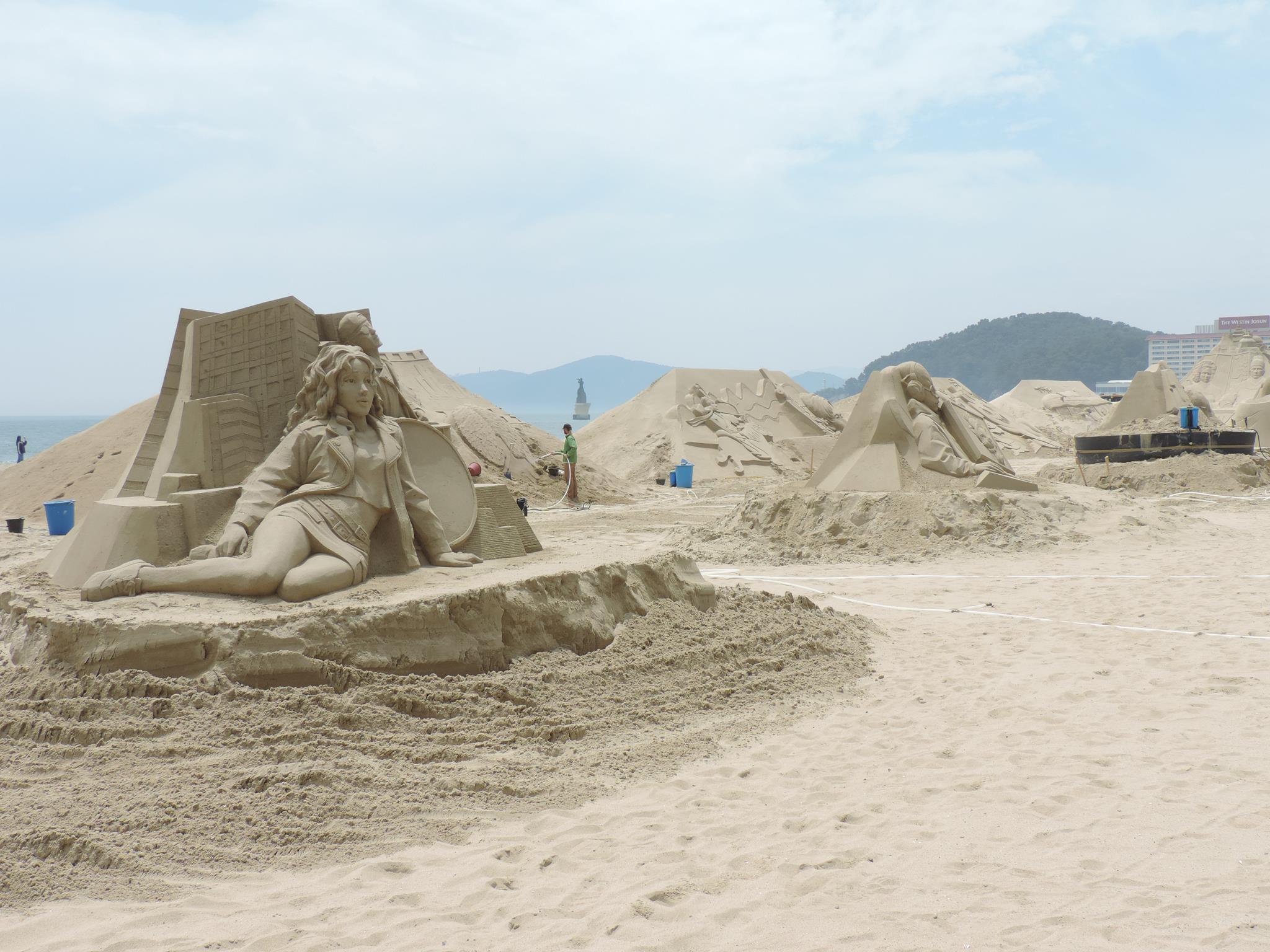
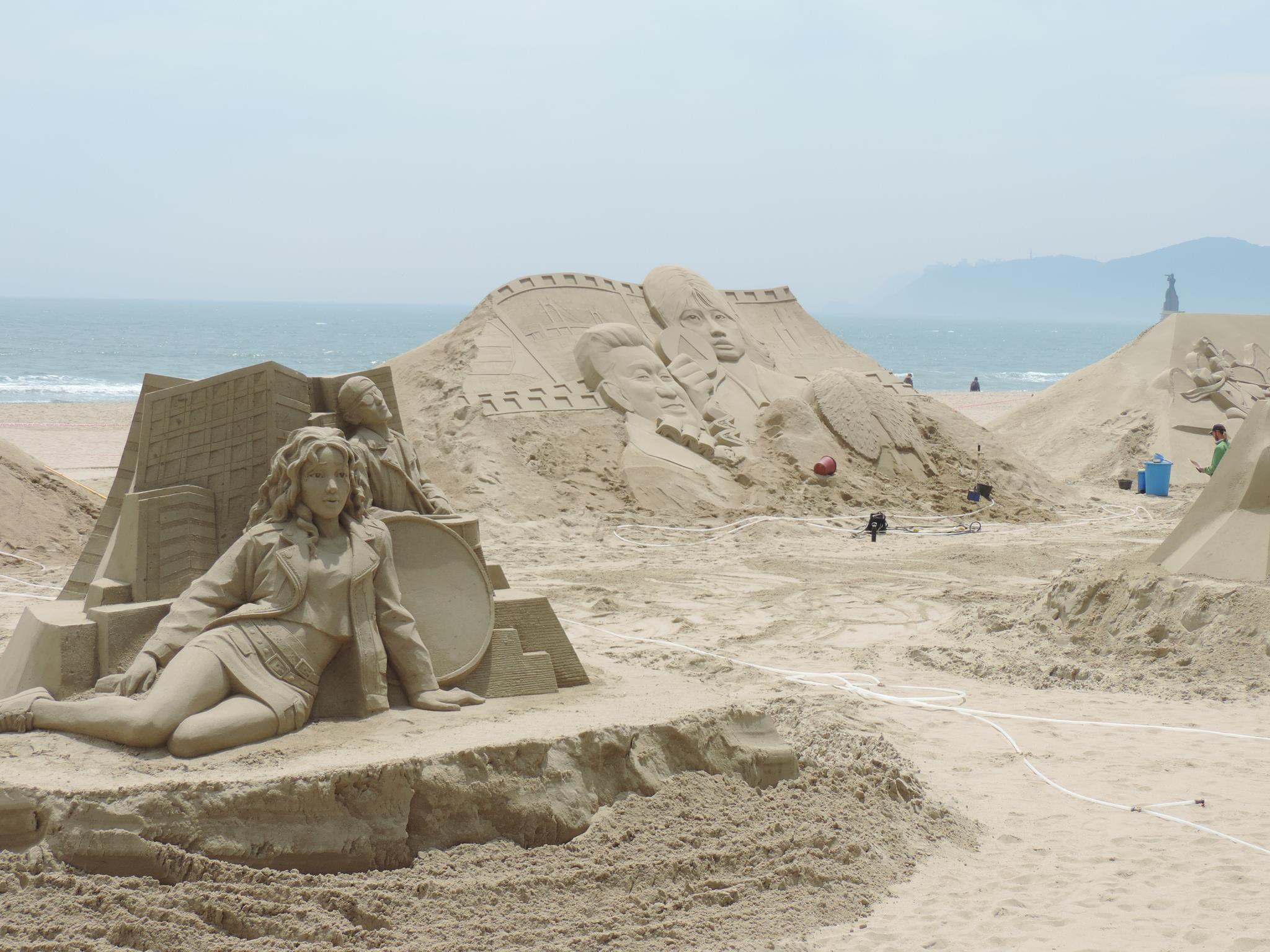
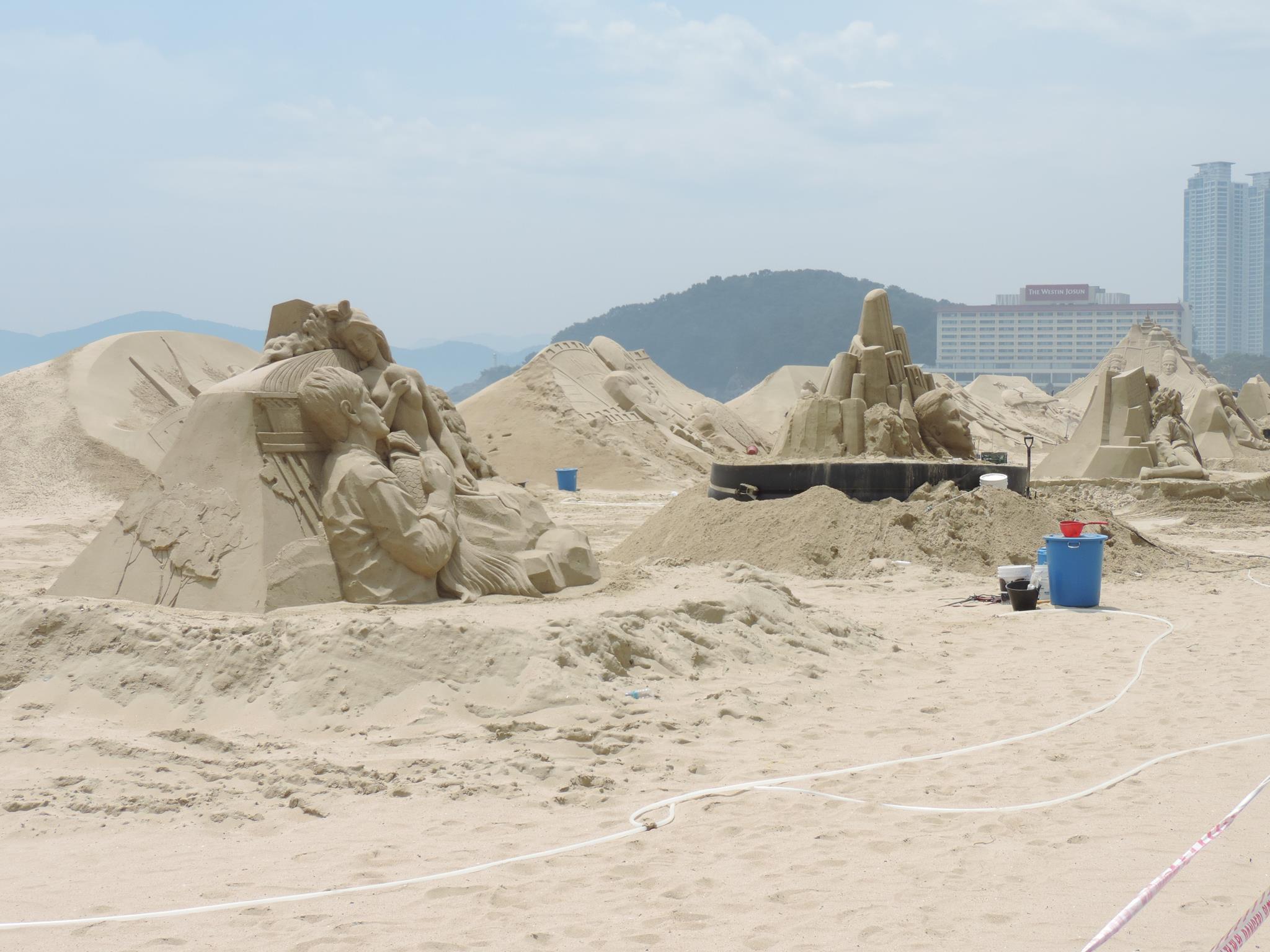
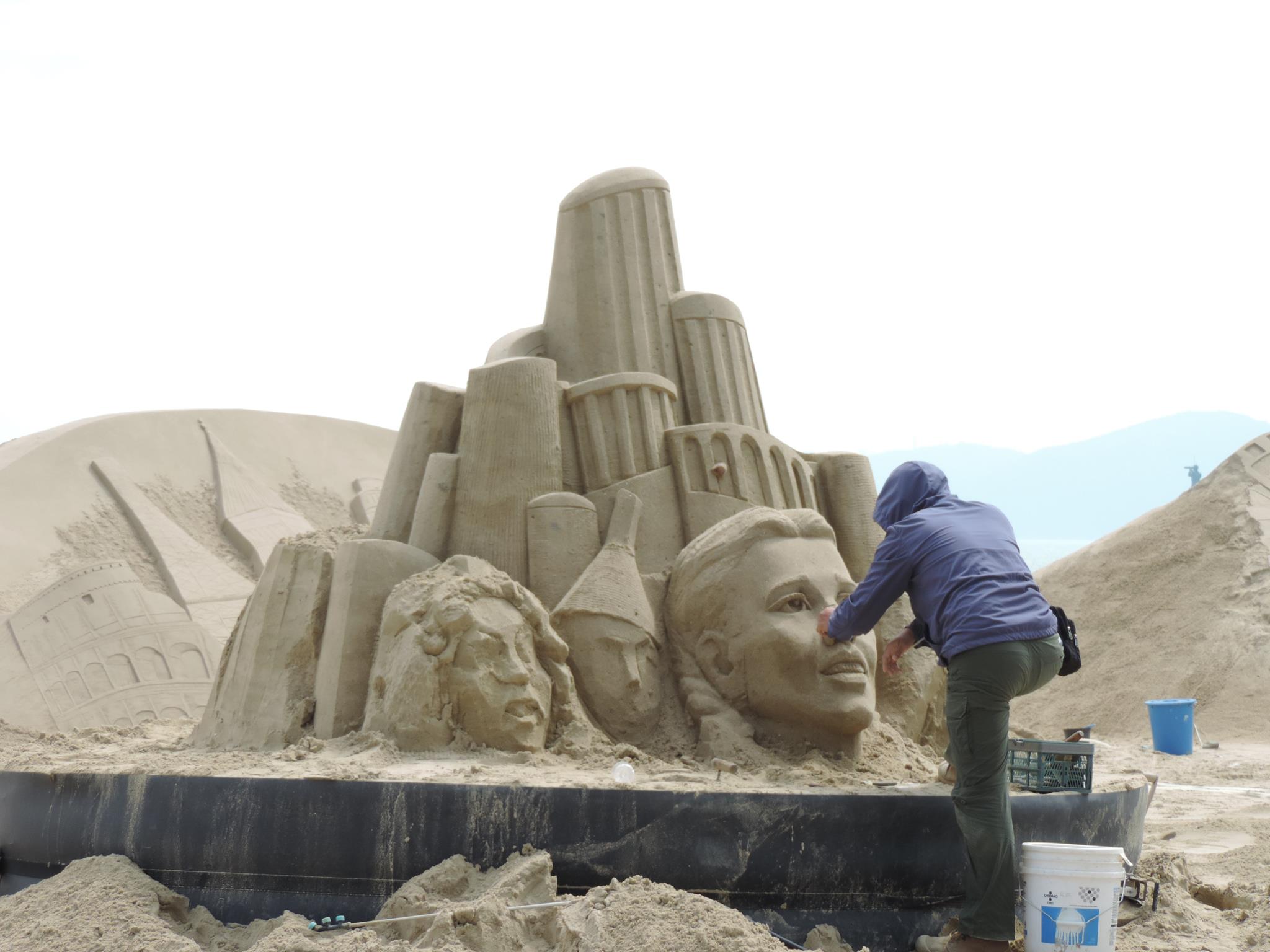
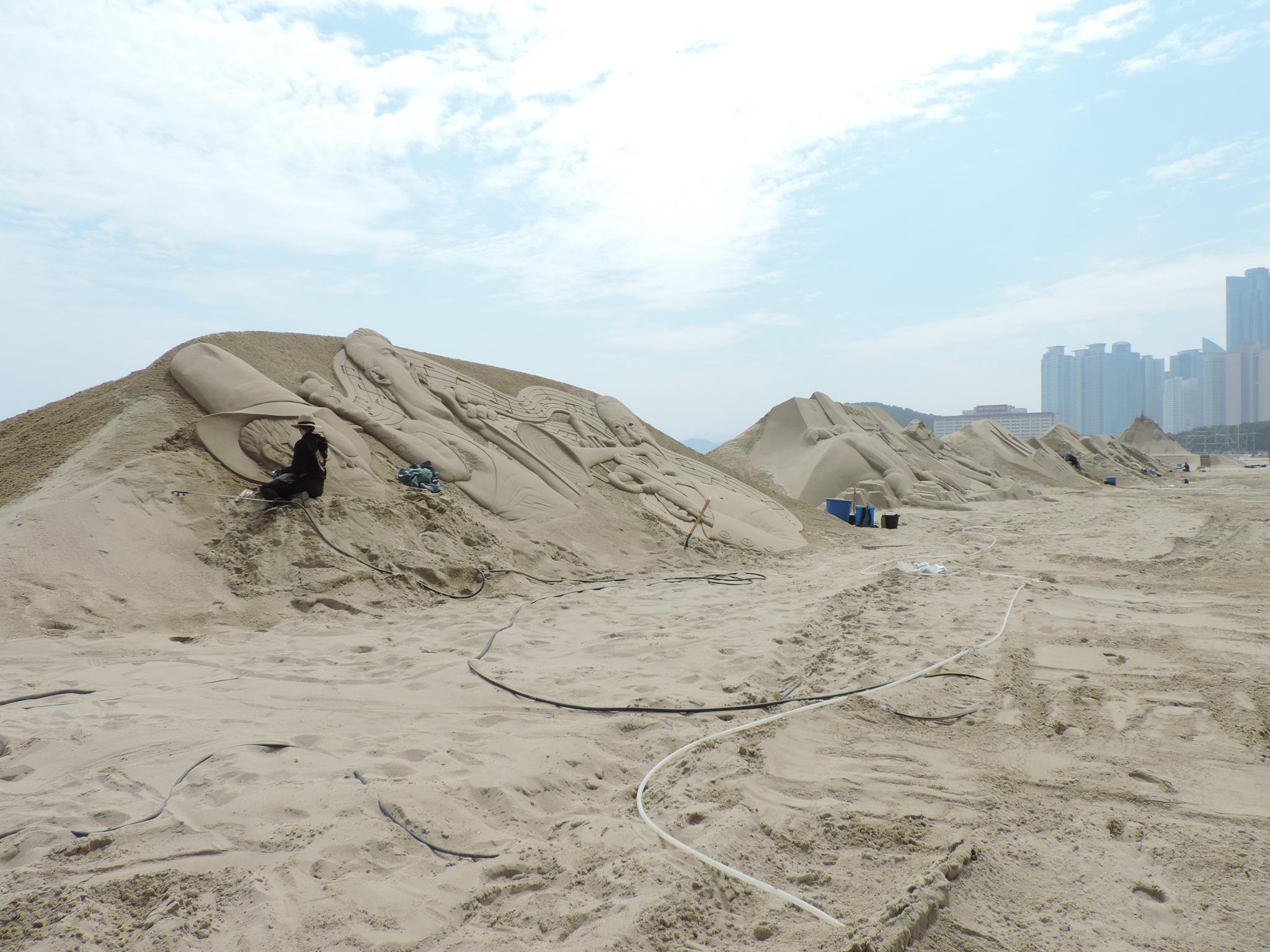
Tell us some words about your artwork which are you creating at the moment for the festival. I can see on top the face of a woman, which is already finished. And then there is the face of a man and you’re working now on a third face.
I was given the subject matter there’s like a film reel in the background with some scenes from Busan, but these are three Korean actors that I’m doing. The woman is from Squid Game, the second face I don’t know myself, but he looks familiar to me. I think I’ve seen him in some movies. And then the third person, which is not finished yet, is going to be the actor from Old Boy.
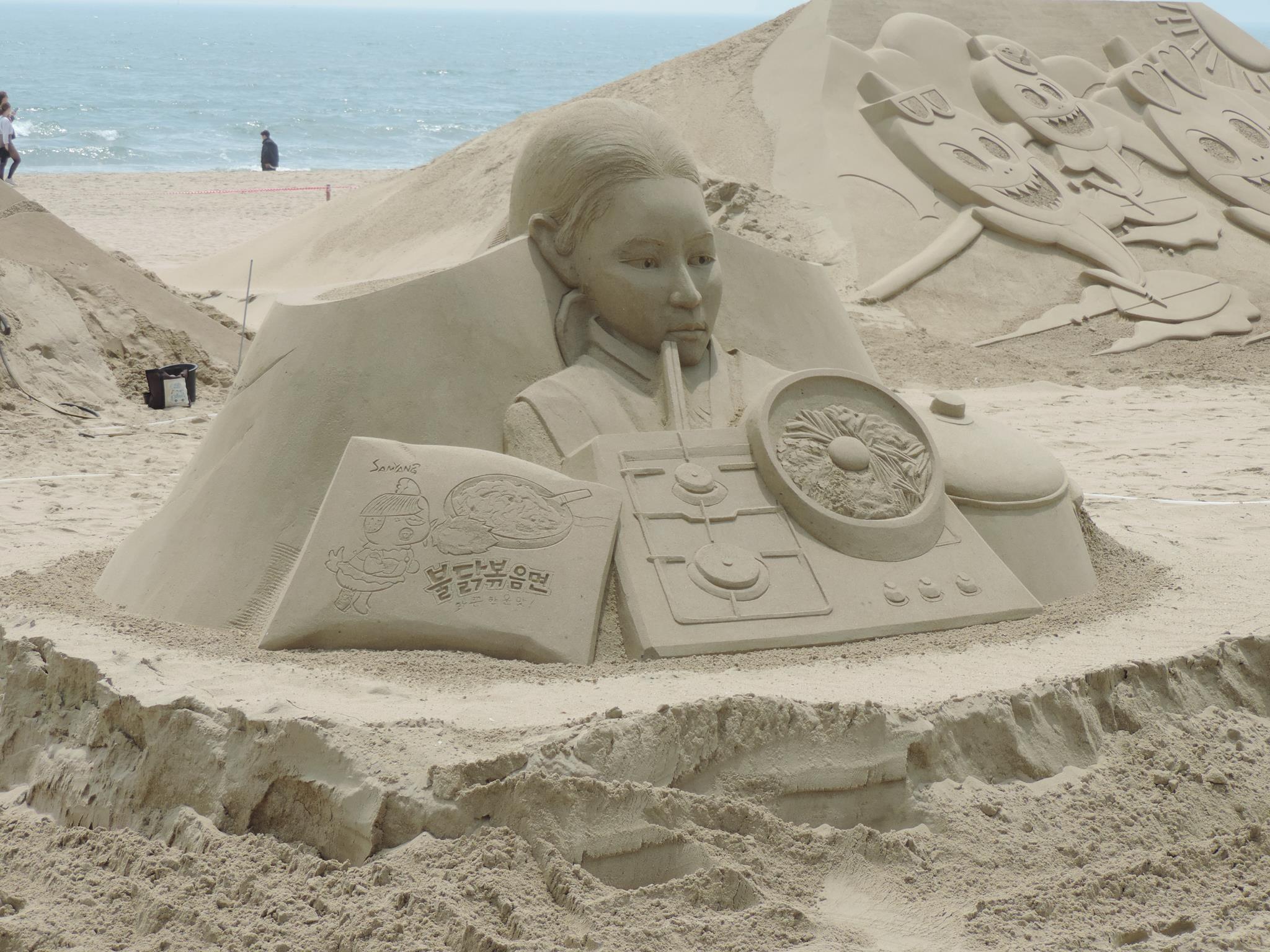
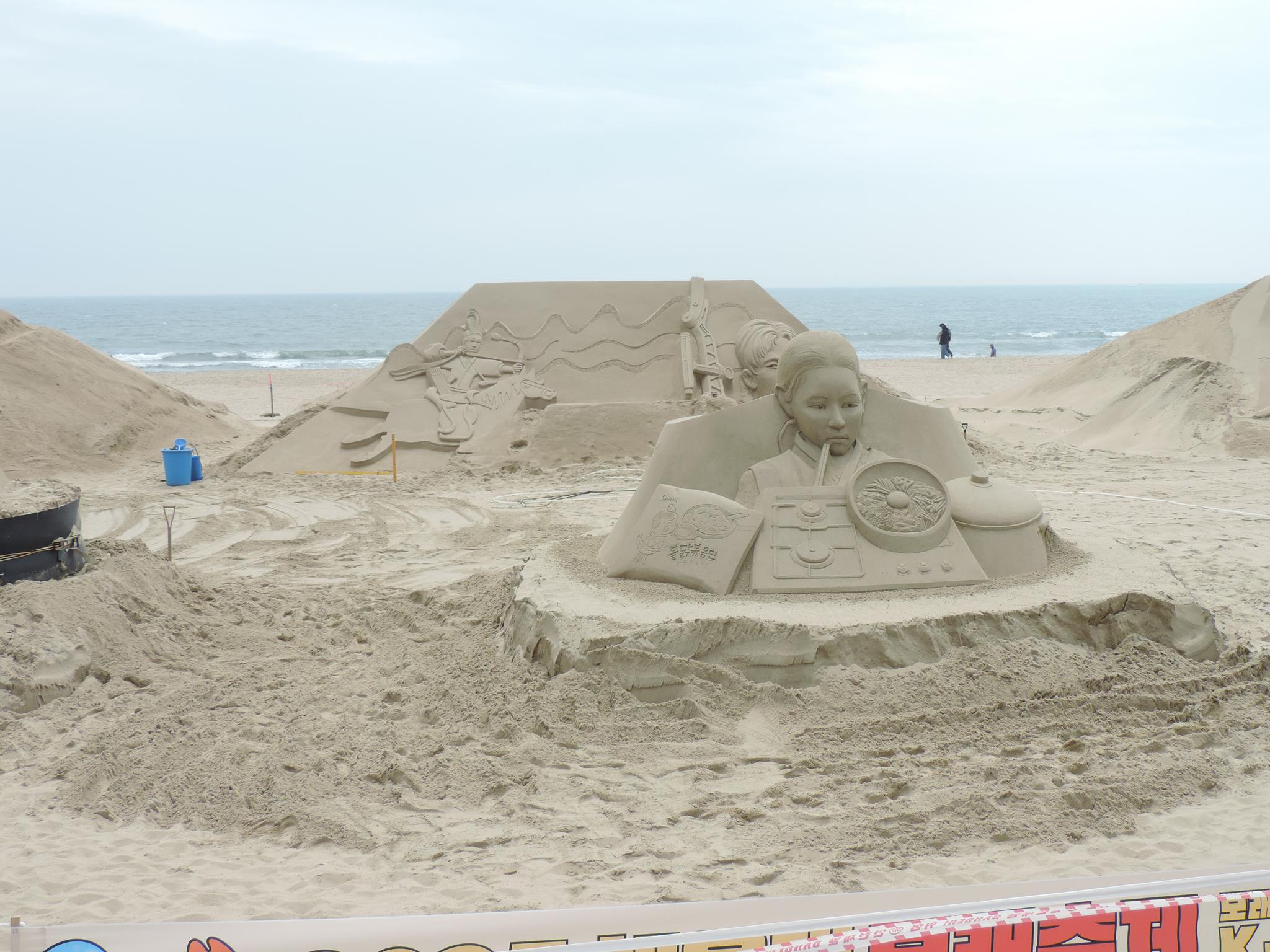
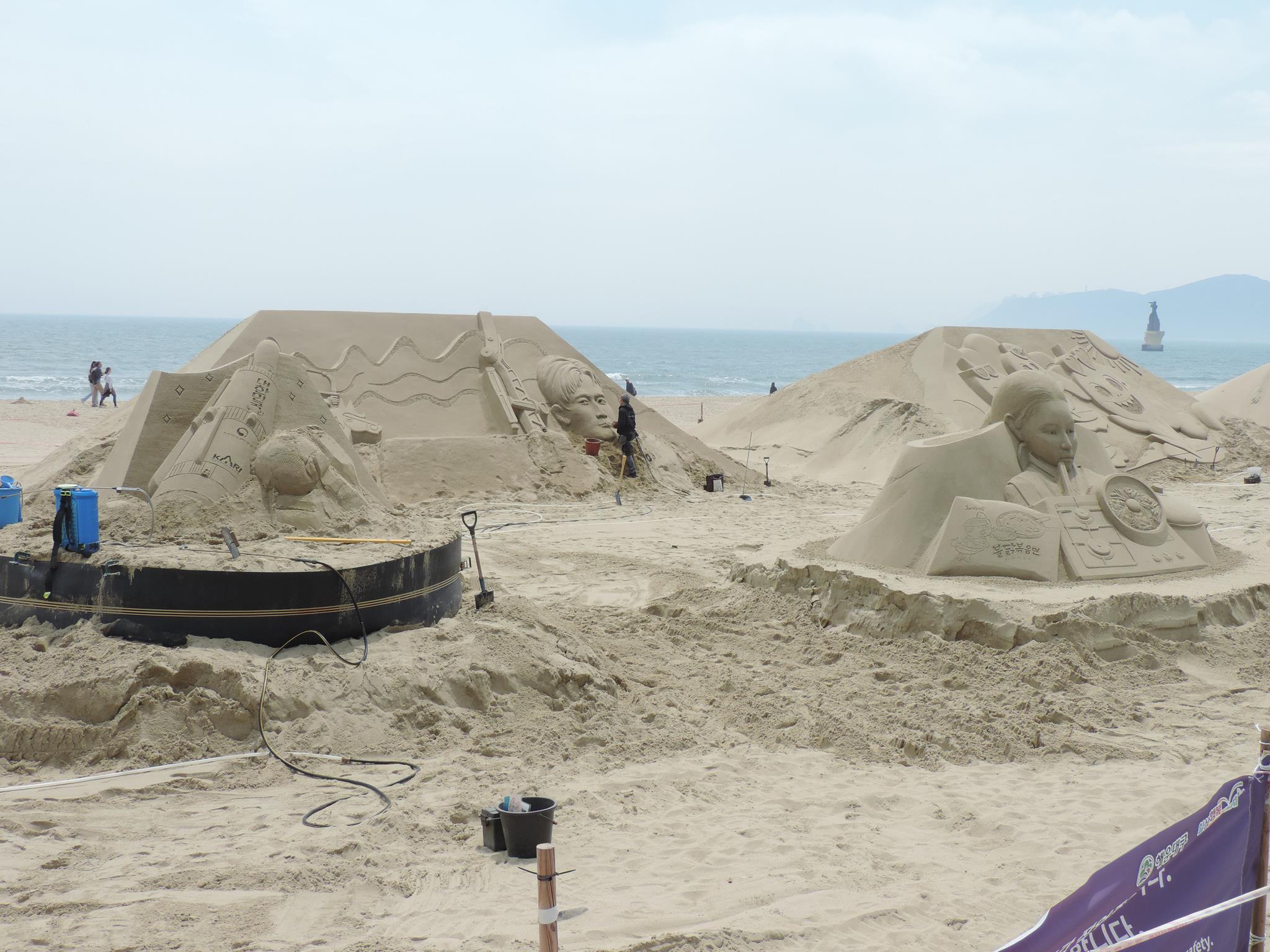
Oh cool, Old Boy, that is also a very good movie! So they gave you photos and graphics and then you should do these persons? Or did you have some artistic freedom of how you design it?
Yes, they gave me a graphic of what they wanted and with some photo reference of the actors, but I kind of moved them around a little and I made the composition which I liked.
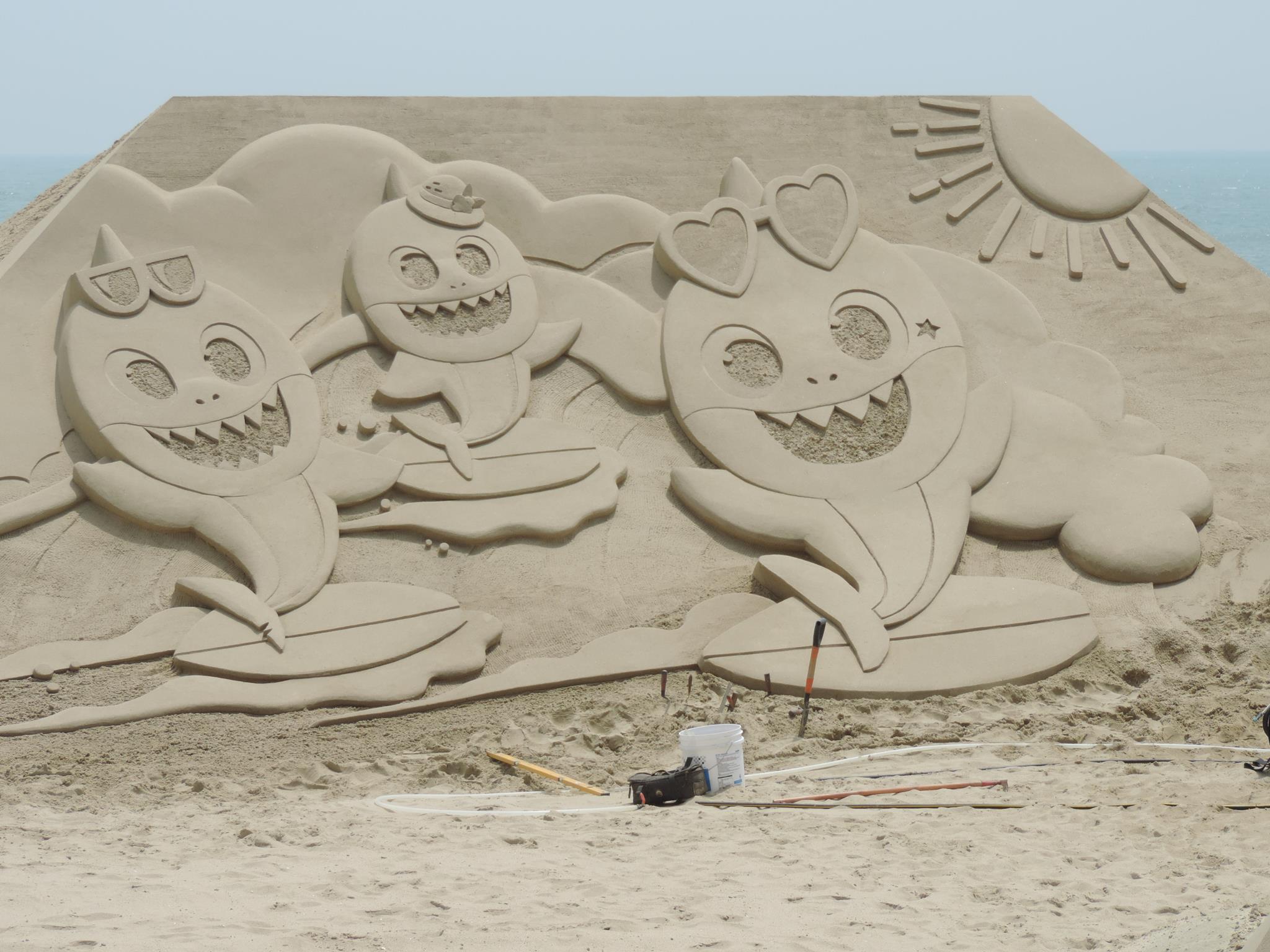
Let’s talk a bit about you as an artist. How did you start with doing sculpture art or art in general? And how did you decide to choose the medium sand?
I guess I’ve always been an artist. I think everyone has an artist inside of them. And all kids are fantastic artists. And then they become a little too self-critical when they approach for teenage years. But I was fortunate enough to continue on with art. I also used to do a lot of drawing and painting. And then I started doing a little bit of snow sculpting. I come from Canada, so there it is quite common. And then I got hired as a local for a sand festival where I live. But that just took over my life from there on. It was just that year when I did the one event. And then the next year I did a couple of events. And then it slowly just became my full time employment.
So you’re traveling around the world and you are a participant at different sand festivals in different countries?
Yeah, that’s it. I’m mostly in North America and they do a lot of contests over there, but at this event here it is quite international. We’ve got Pedro from Portugal, we’ve got another Canadian and some of the artists from the United States, a couple of Chinese artists and also sculptors from Taiwan. They did earlier pieces which are already finished. Also they had a couple of Russian sculptures too. So it is very international and there is a circuit all around the world.
Some more info about the festival, so there are all this fantastic sculptures, but there’s also an additional program with music and performances on a stage.
Yes, there is a big program. They will be setting up a big stage. The location changed from last year, but there’s a big stage and they show a bunch of big musical acts which I’ve never heard of on the other side of the world. Then they also do some sledding down the sand hills and they do sand sculpting lessons as well. On the weekend of the event there will be a lot of fun for families and kids, but actually for all ages to come in and get their hands dirty. They teach others how to make big sand sculptures.
I am sure everybody once played with sand. Everybody who has been at the beach when they were a child or just at the playground where you have some sand. I think every child once played with sand and with a bucket, or even if it is just the sand in the backyard. I think there wouldn’t be any child who hasn’t done that.
Definitely, and I think that’s part of the appeal of sand sculpture. It’s something that everyone has done at some point. You know, like everybody played in the sand. So this is the exact same thing, but on a different level. Also the lessons are nice and that you can come and learn a few different techniques just for improving your sand sculpting skills.
Before you said something interesting, like that actually everybody is an artist, but when you get older, you get too self-critical. And you were lucky that you kept on going with the open mind for art. I’m sure you just love doing this because you still can be like a creative child and play in the sand, but just on an adult and bigger scale.
Sure, and I’m very fortunate for the career that I have. Also I enjoy it very much a lot of the time. But of course every once in a while, it is just like with everything else you like and which becomes a job after a while. So there are also days when you’re out in the rain and there is the wind and it’s cold and you still have to go to finish the artwork. But for the most part it’s a pretty wonderful job! Also my favorite part is always being together with the other sculptors. They are a really great group of people to be around and to hang out with. That is really nice and we have a lot of fun.
When you get older you become adult, but most of the adults are too strict and they’re too focused on their jobs and on earning money and on a lot of things which are actually not really important in the end. So a lot of people forget how to be a child and loose the touch to that creativity. But art can be a door or a way how you get connected again to your inner creativity.
Absolutely and yeah, my favorite sculpting is usually when I’m either in my backyard or somewhere else just doing it for free. So I just do my artwork how I want at some place where there are no constraints. Then I am not worried about my production or making money or anything else. Then it’s just “it” and “doing it”. And that can be a lot. For me it’s a lot more freeing and that’s the best time generally for me.
CHRIS GUINTO
Hello listeners, we are still on the beach of Haeundae and the artists are preparing for the great Sand Festival, which is happening from 16th till 19th of May 2025. I’m talking now to another great sand sculptor who comes originally from Baltimore, but also lived on Hawaii and at a lot of other places around the world. Hello Chris Guinto!
Yes, I am everywhere. I was living in Hawaii with my wife Mel for several years, but then we decided to move. Hawaii is getting too small, so now we’re just living out of our Jeep and traveling around. My wife is also a sand sculpture and we’ve been doing this together for around seven years. But we both individually are doing this for over 20 years. And with the sand sculpturing, that’s how we met.
Tell us more how it initially started. How and why did you become a sand sculpture?
I think the story is the same with everyone who does sand sculptures, or just similar. I was on the beach on the East Coast in the U.S., and I was invited to a small competition, which I never did before. But I went, and then from there, I was just snowballed. You go to the next level, and it’s just a stair. But anyway, then you just get invited, and then the next thing you know, it’s one big snowball. Meanwhile I was just all over the world. I did TV shows and all that and you name it. So here I am again, and with this festival in Haeundae it’s my third year now.
About the festival, so they’re doing this since 20 years now?
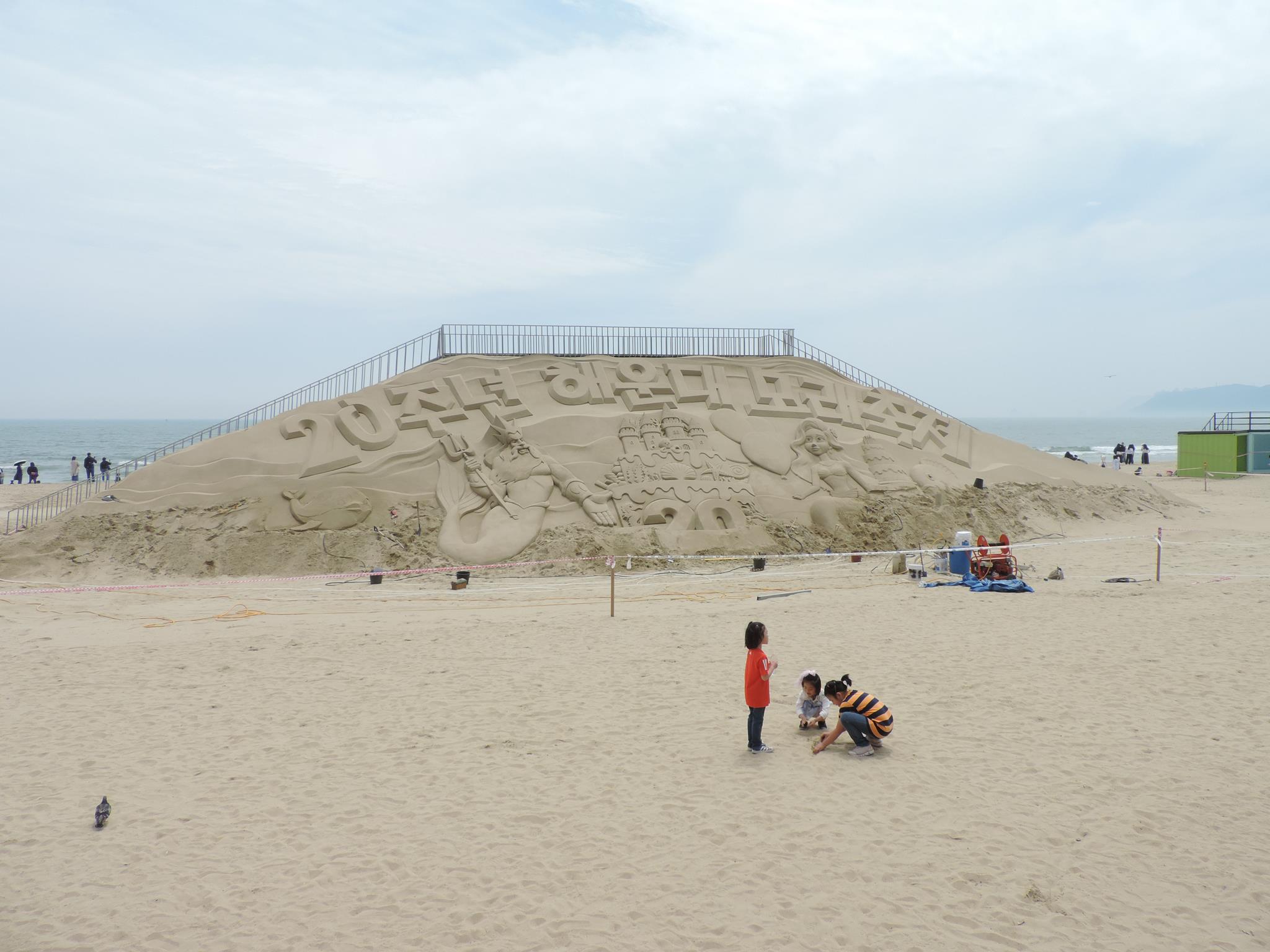
Yes, this year it is a special anniversary. It is 20 years now in this edition. It’s weird because a lot of the festivals that we attended, or competitions from around the world, they’re hitting the 20-year mark within the past two or three years. So they all sprung up at the same time. And so also for this festival, this is number 20 now. So it’s a big and huge event. They estimate to get about a million people here. It’s a monster event.
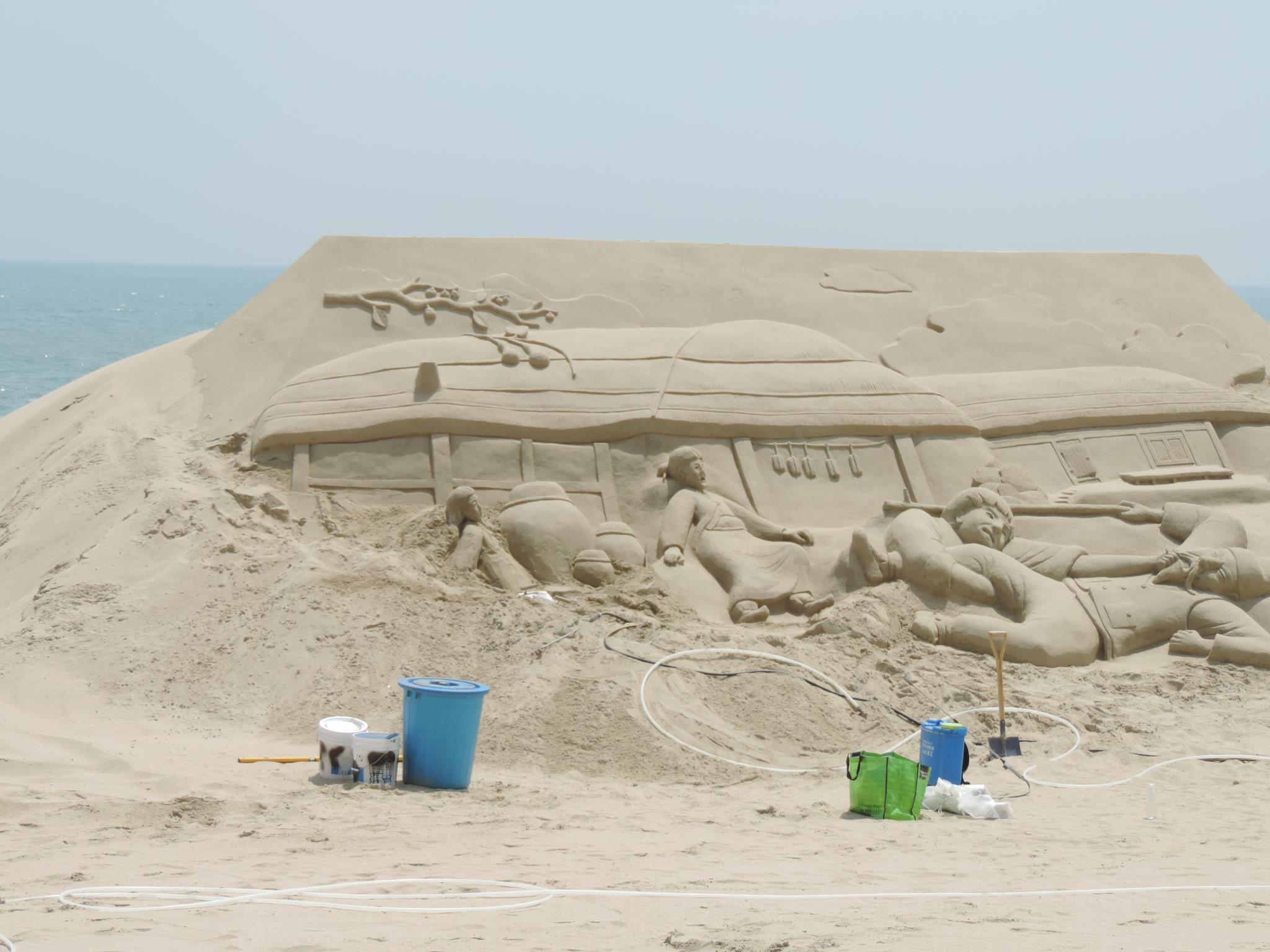
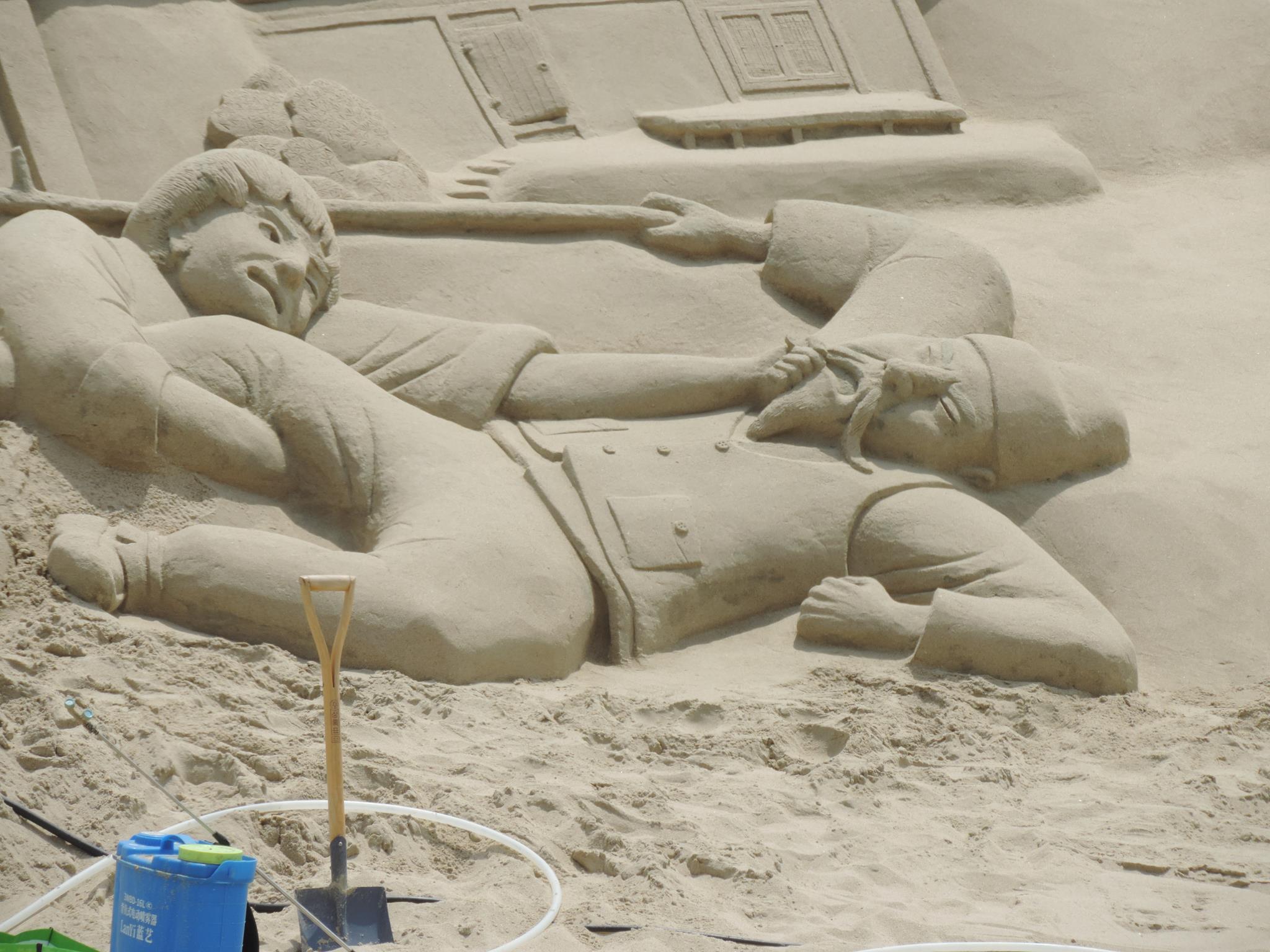
I saw on the map that they have a big program and there will be a stage with music and performance and a lot of different happenings around. So it’s like a proper festival.
Yes, definitely. At the moment it is quiet, but just wait till this thing pops up. I’ve been here already and it was really crazy. It was crazy and super busy. People from the entire country came here and also will come here this year. From all over the country they are coming to this event.
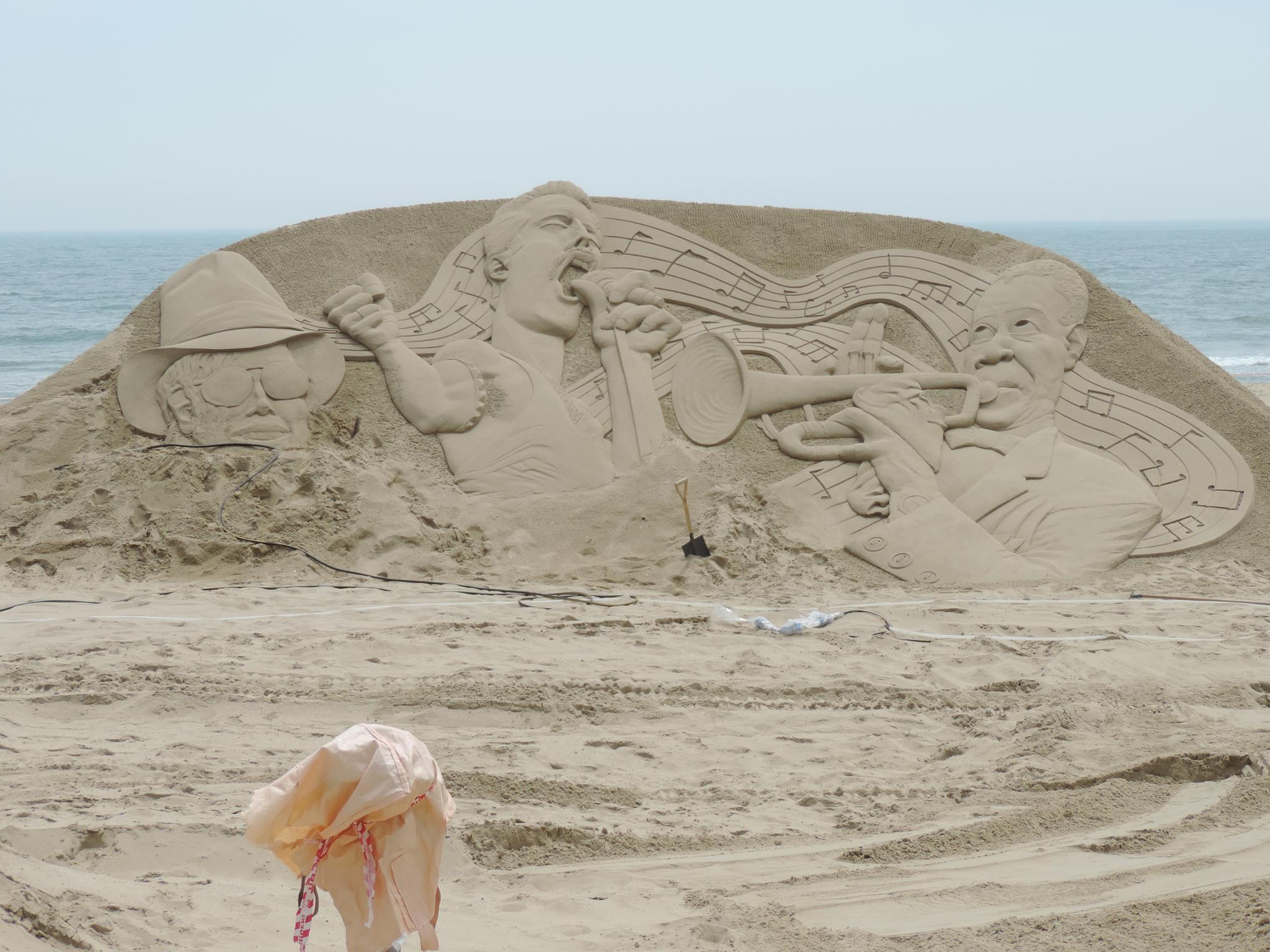
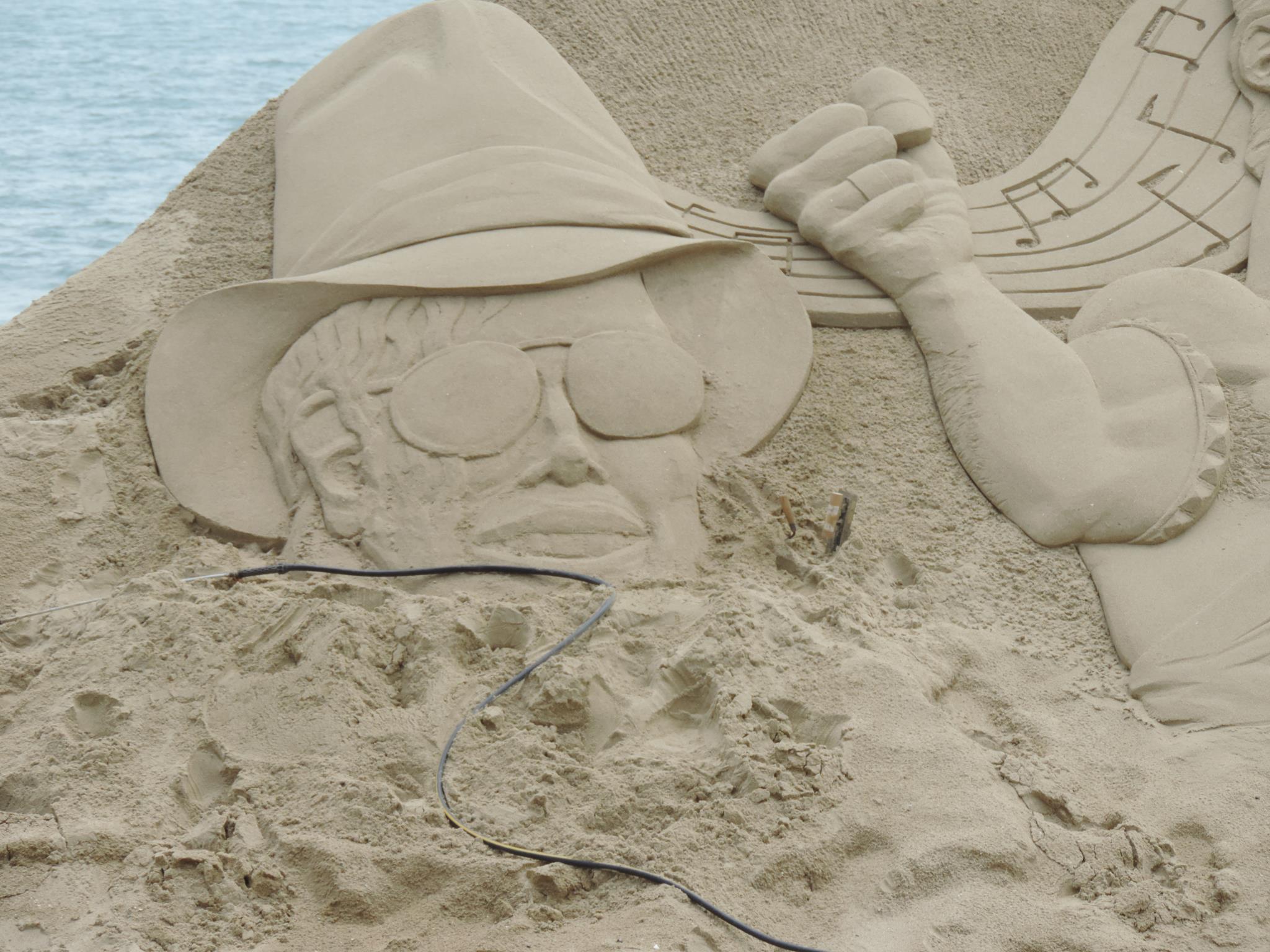
You said that recently a lot of festivals hit 20th anniversary. So there was then like a time around 2000 when it started becoming really popular?
Yes, around then, but already in the 90s it started taking a foothold. Then I never thought that we would have a 25th anniversary coming up. But soon there are some other events. Not here, but like anniversaries between 20 and 25 years where it started in the 2000s. At that time it just started going crazy. So events were popping up. Some fell and didn’t make it, and some like this one here continued and just came to thrive, it grew and succeeded and became what it is today.
Do you have a lot of events like this in the US or in North America?
Yes, of course. But those events are all over the world. This here is one of the bigger examples. Before we have been at an even it Port Aransas in Texas and we just came from there to here. That was probably one of the largest sand sculpting competitions in the world. It is really another monster of an event. And then before that, we were in Florida, where you have the Sugar Sand Clearwater in Florida, which is another wonderful, not that big, but another type of awesome event.
Is it always on the beach, or can it be that there’s a festival also somewhere in the desert?
They can have competitions and little festivals like that, but it’s usually, they tend to do it on beaches. In the desert, there it’s just a problem about getting water. Usually in desert areas, water is not something you can easily get to make a sand sculpture, which is definitely not common there. But still actions like that happen and you’ll see them in parking lots or in the middle of the city somewhere. I mean, all over the States, you name it. We’ve done a lot of parking lot competitions where they bring in the sand and dump it in the parking lot, and we just did it there. Forget whatever reason, permitting or whatever to make your life easier. If you like it and have fun with it, just do it. You can do these things anywhere. Here, it’s nice because you’re using native sand. So in a lot of places, like in Revere Beach and Hampton Beach and Rhode Island, you have to bring in sand from the quarry. And so that adds on to expenses for the festival organizers, and sometimes they pay a lot for all that sand.
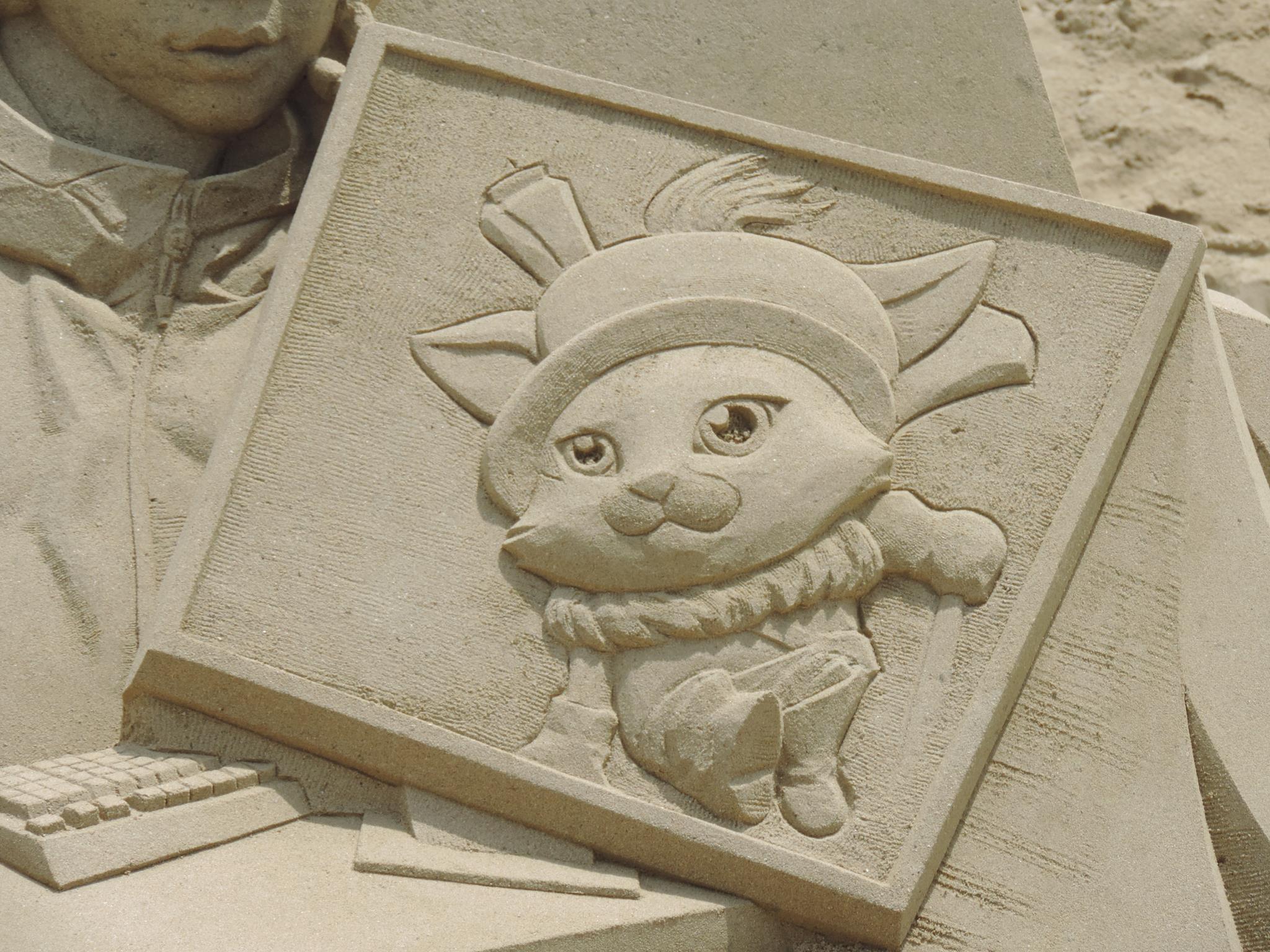
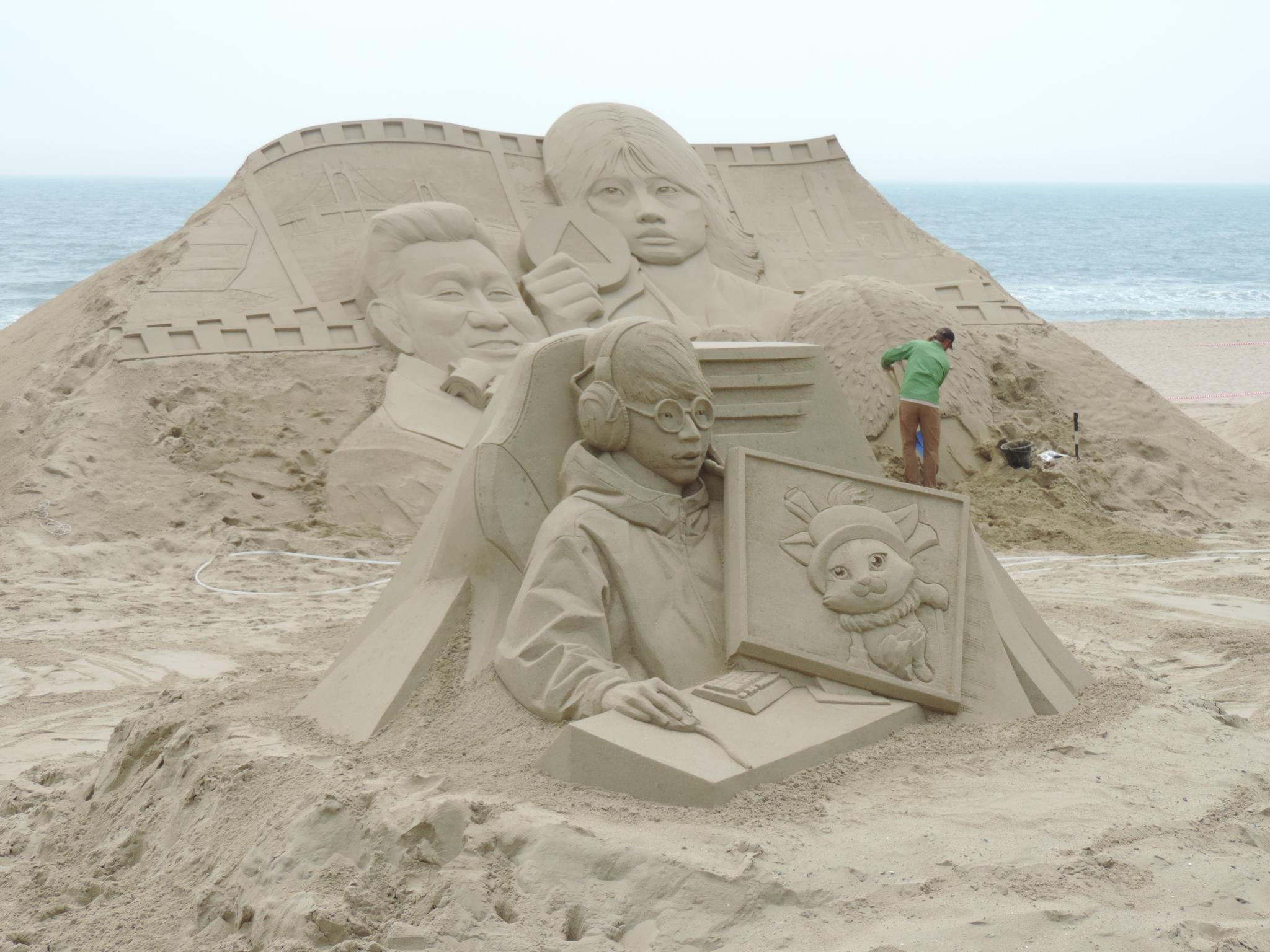
Sure, at the beach, it’s much more easier because you have everything just there.
Exactly. But that situation, believe it or not, this is not common. Most sand sculpting competitions bring in sand from the quarry. Sounds strange, but they are really doing that. So actually I’m only doing two festivals this year, and that’s this one in Texas, where they’re actually using real beach sand, which is not becoming very unusual. And the other one is this here in South Korea.
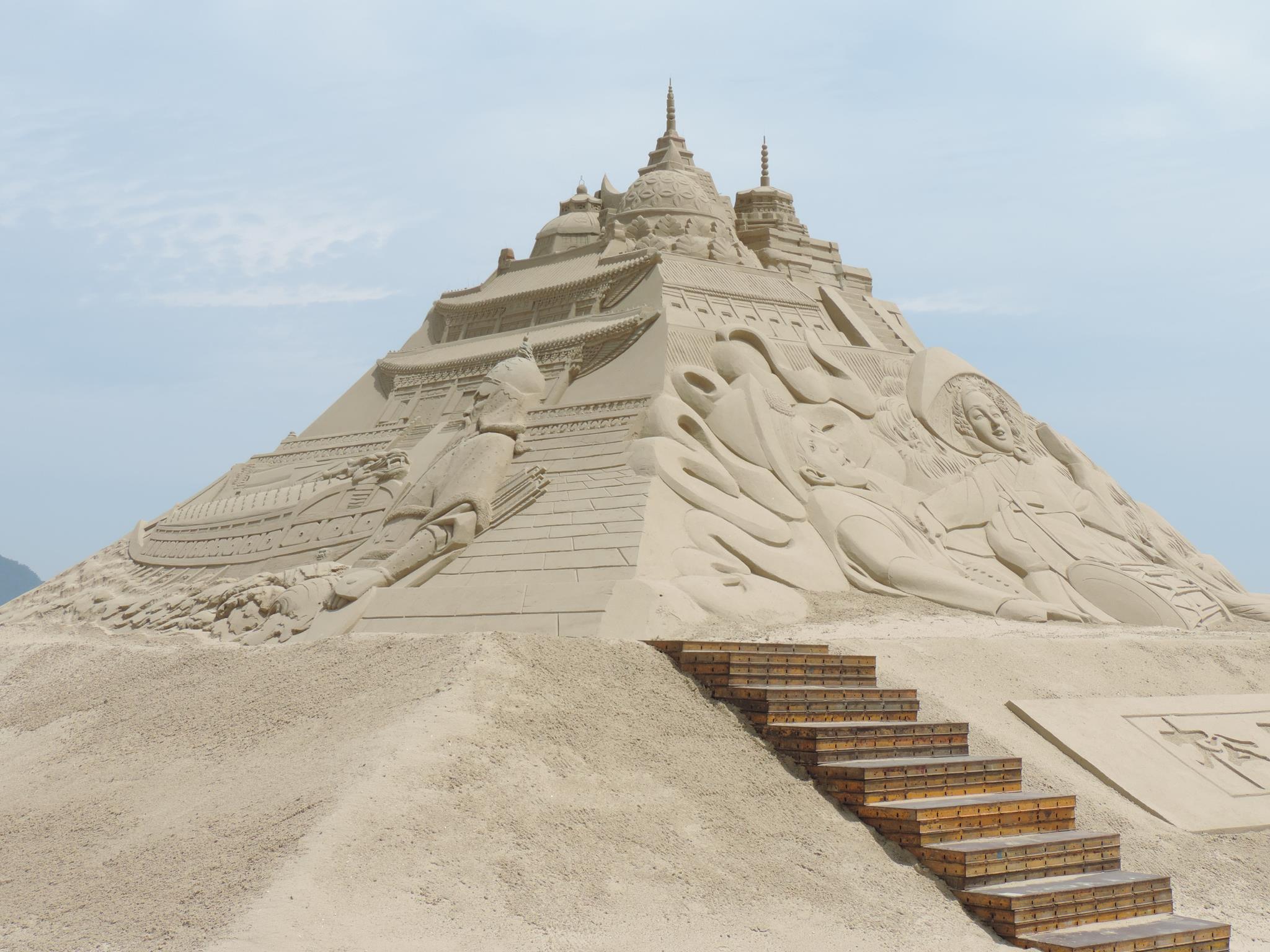
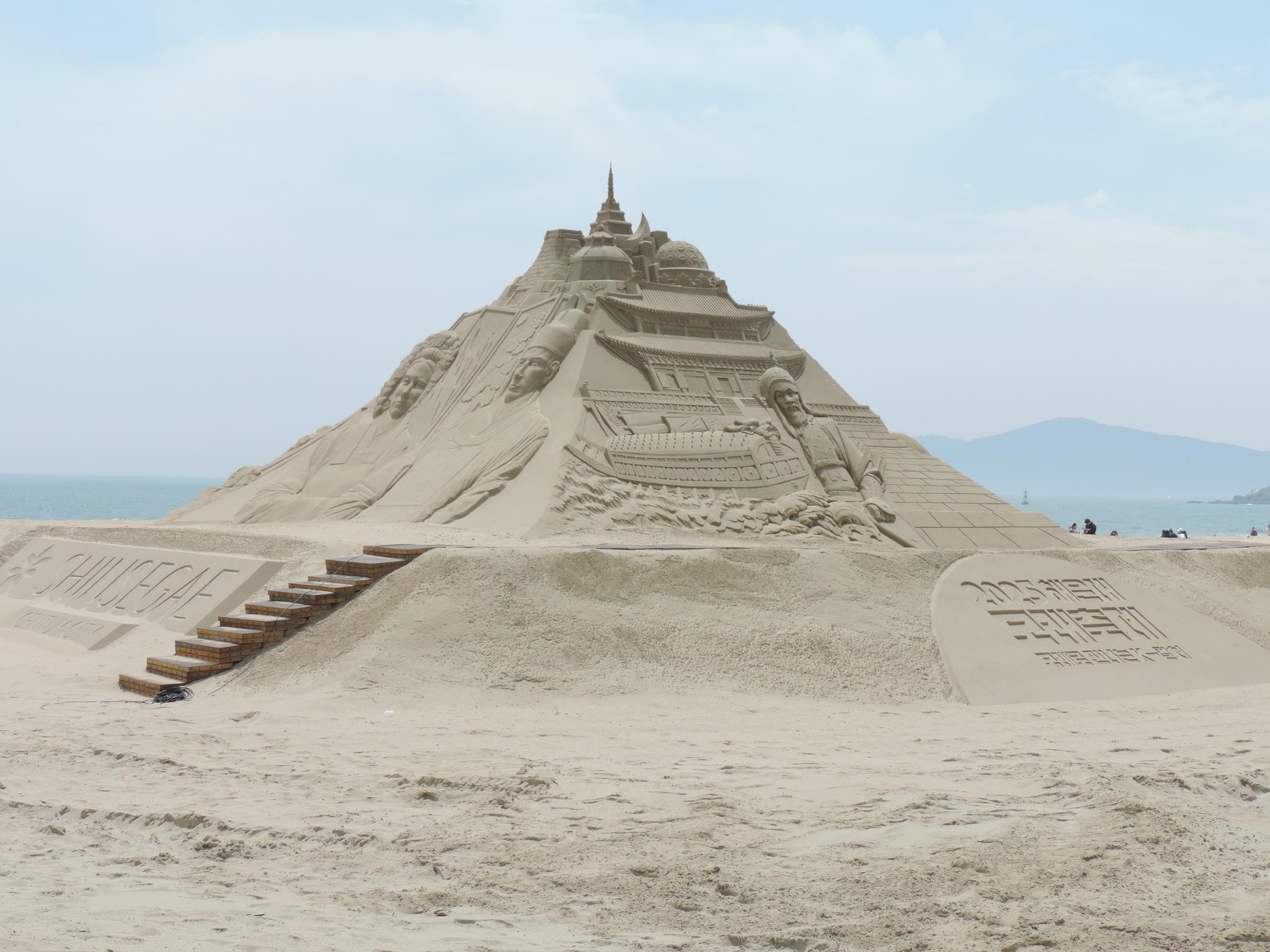
You’re the professional, and you can tell a lot about the structure and the differences of sand categories and the different types of sand. Because you can not make sculptures with every kind of sand.
Exactly. The sand here is completely different from the sand by that slope to the way down there. So it’s all different. For example on the Gulf Coast, where there is the states of Florida as a peninsula and you have the Atlantic on one side and the Gulf on the other side. And on the Atlantic side, there are a lot of waves coming in from the Atlantic Ocean. And during all those years those grains of sand got crushed and broke off from some rocks over and over again. Hundreds of thousands or millions of years ago, it retained its regular shape. But then until it gets weathered by the wind or destroyed by the waves, and each regular tiny crust becomes rounder and rounder, shaped like a pebble in a creek or a river. River rocks are usually rounded because they’re getting warmed by the water over eons. And sometimes they are fractured off a rock, they came down a hillside, wound up in a river, and got round. So on the east coast of Florida, you can’t do sand sculptures at competitions. The sand is horrible! It just all falls apart. On the west coast of Florida, there are no waves. And so the sand is just right across the state, 300 miles away. That sand is perfect for sand sculpting because it retains its irregular shapes.
So it’s not only a kind of art it’s a whole science itself.
Yes, it’s crazy! Like sand river sand is the best and what we always want. It’s the first thing we always ask if we want to do a job, where’s the sand from? And we know if it was stuck from a quarry, it’s going to be amazing. Because the quarry sand is just buried down there for eons. And it probably wasn’t exposed to water yet. Still some of the sand you pull out of the quarry is horrible. So you’ve got to get the right sand. But if you’re doing anything inland by a river, river sand is really good. Beach sand typically is never good, especially tropical islands. It’s because tropical islands are in the middle of an ocean or by an ocean and just get impounded by waves. But lake sand is great. There are no waves there or no real waves.
If you would have a microscope, we could zoom in to how the pebbles are. And you say if there’s a lot of water, the pebbles get more and more round and then they don’t stick to each other that good.
Yes, so the water helps to block it. But if they’re already round, it doesn’t matter how much water you’re going to put. It’s just going to fall apart. So when we say sand it is different, because for the average people sand is anything. Sand could be coal, diamonds or it could be granite. It could be marble, anything. Sand is a measurement. I forgot the exact size, but basically smaller than sand is dust, then you have sand, then pebbles, then rocks. But anything can create that. So it’s also about the size. But then the shape of it is what we’re looking for, the shape of sand. And if it’s clean sand, sometimes you get a lot of rocks in between or pebbles. I can’t work with this, you know. So a lot of times on the beach you see a strip of blue or black sand. That’s the good stuff. That’s the silt. The silt in the sand and dirty stuff is really good. It helps to block things together.
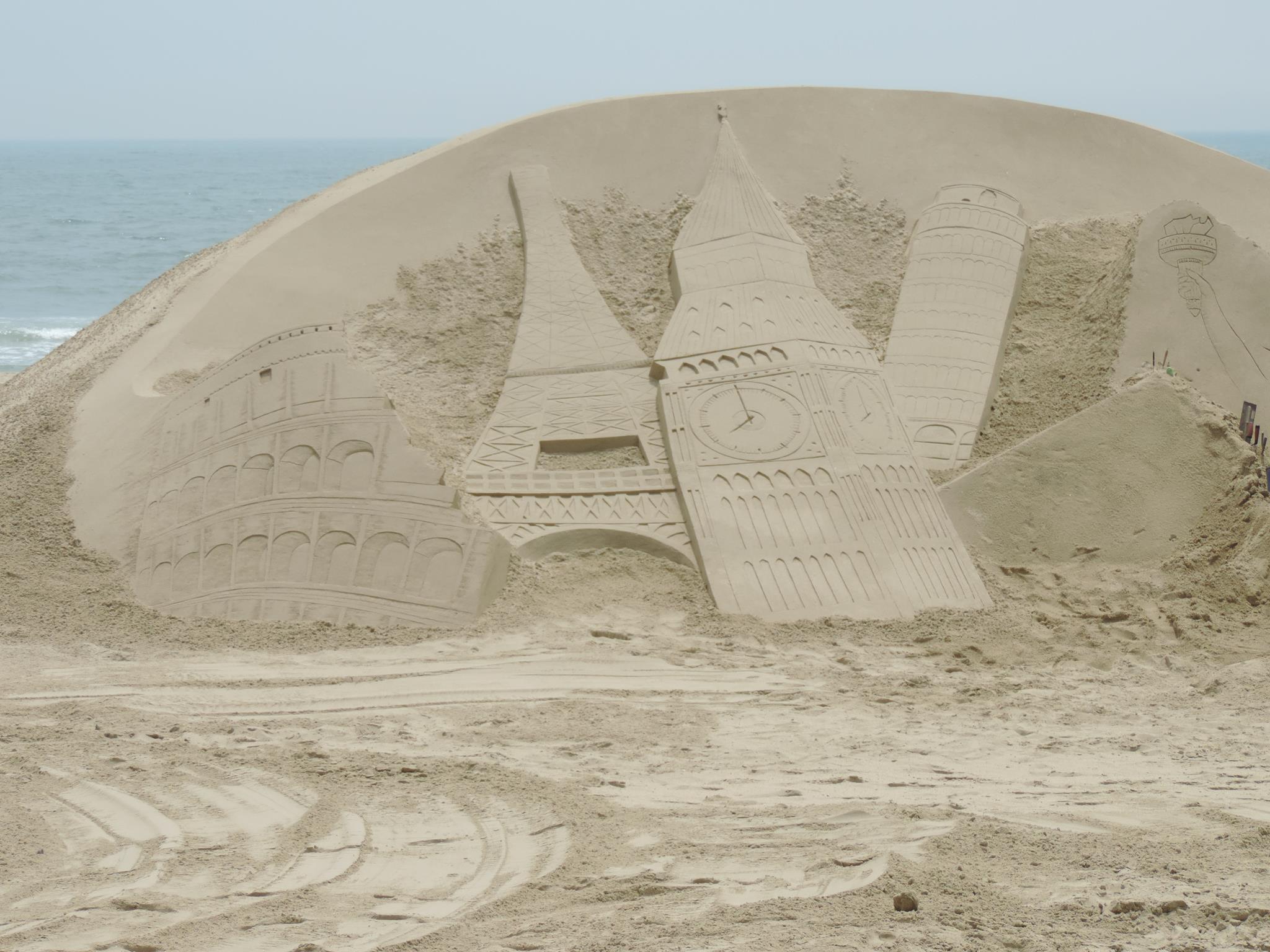
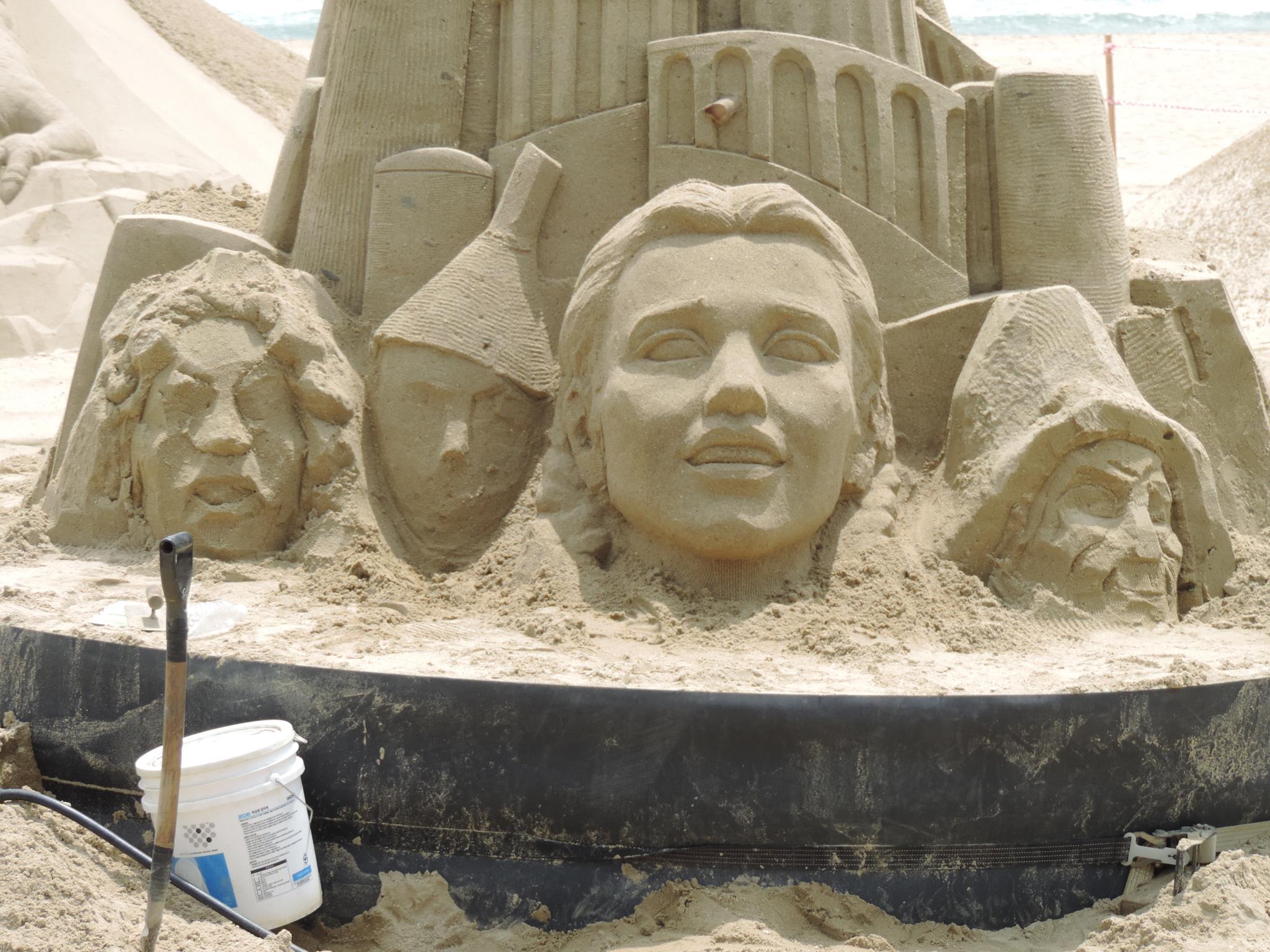
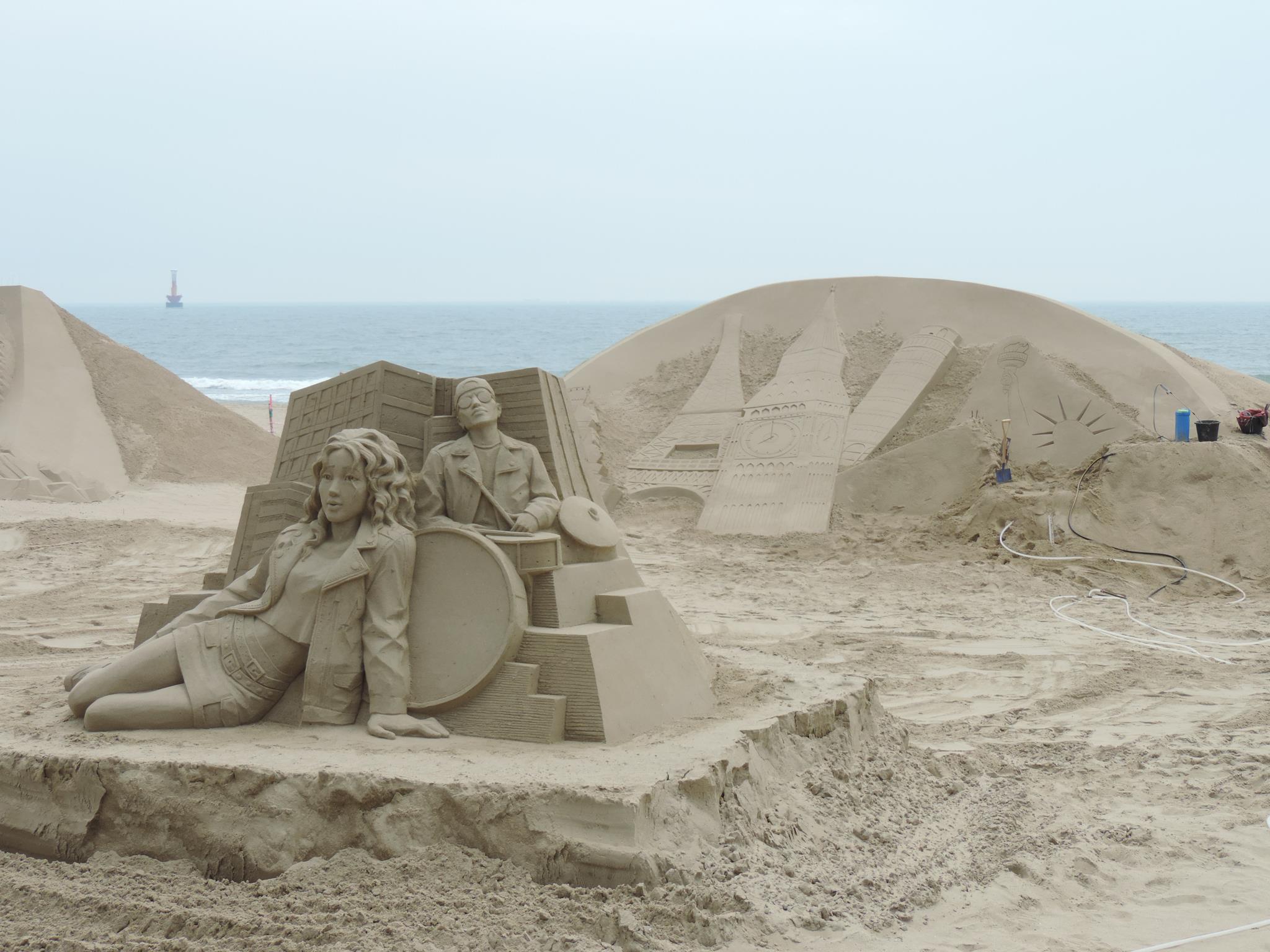
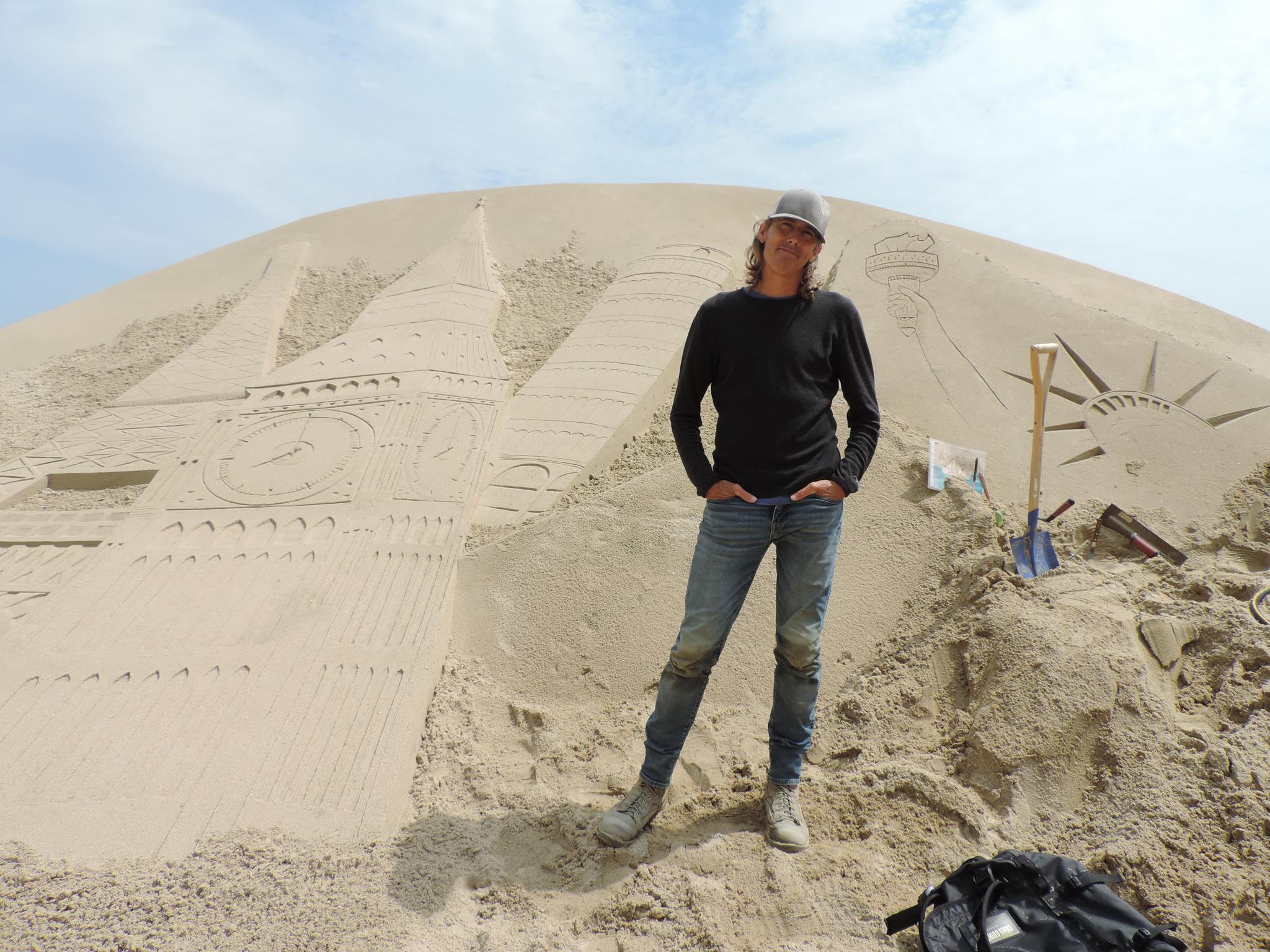
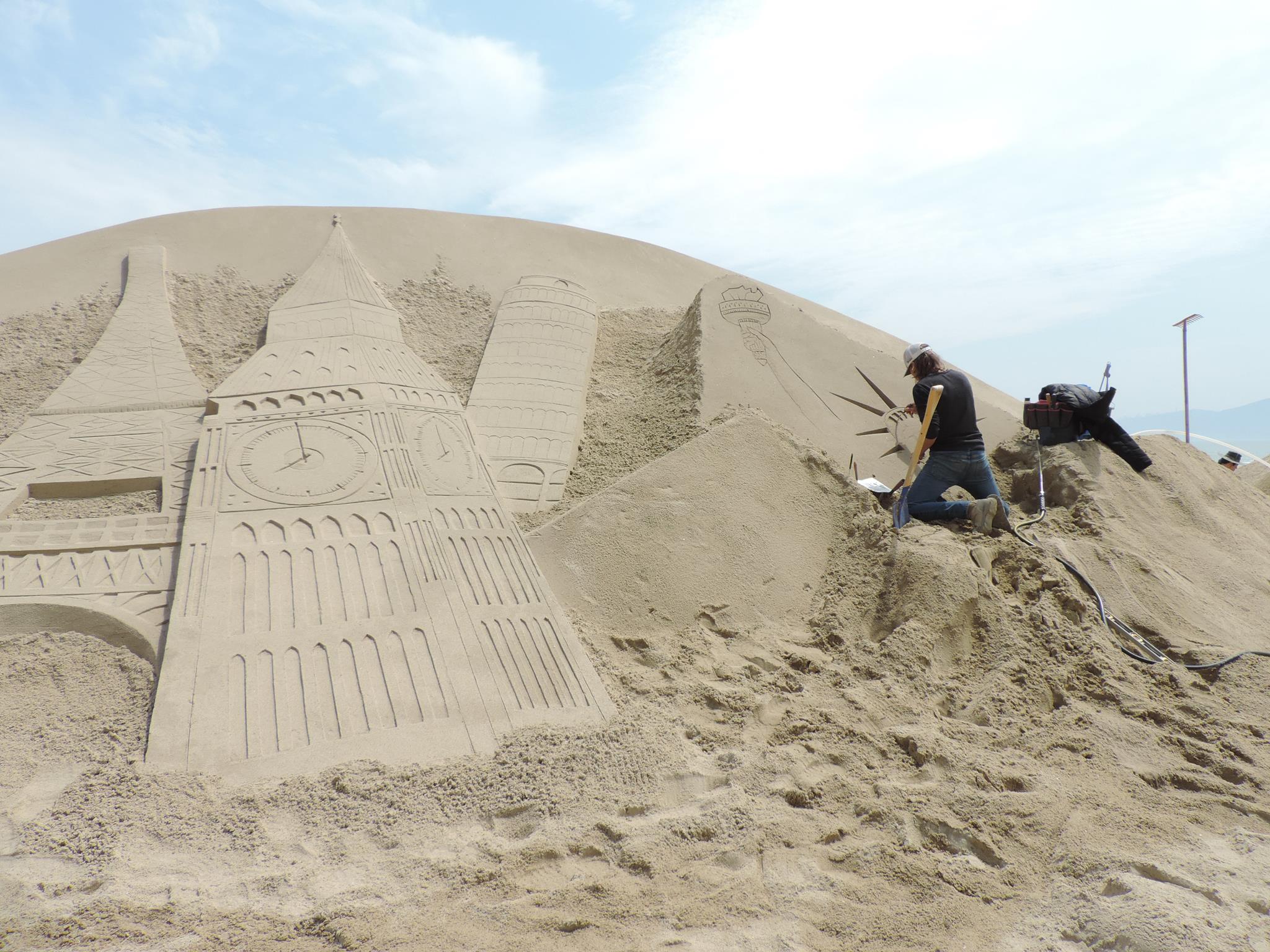
Tell us some words about your artworks. I see Big Ben is already finished, then there’s the Eiffel tower and the Leaning Tower of Pisa.
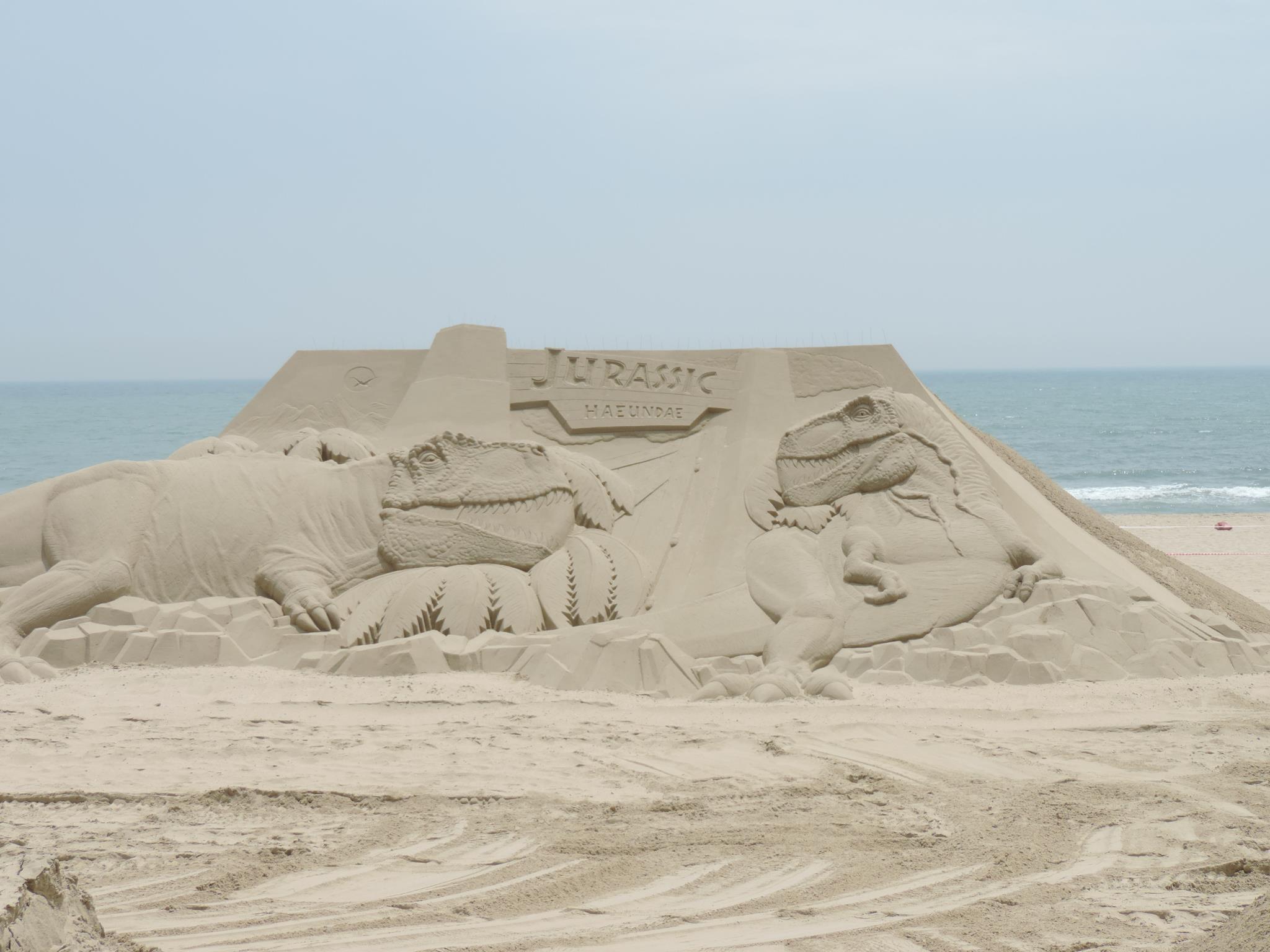
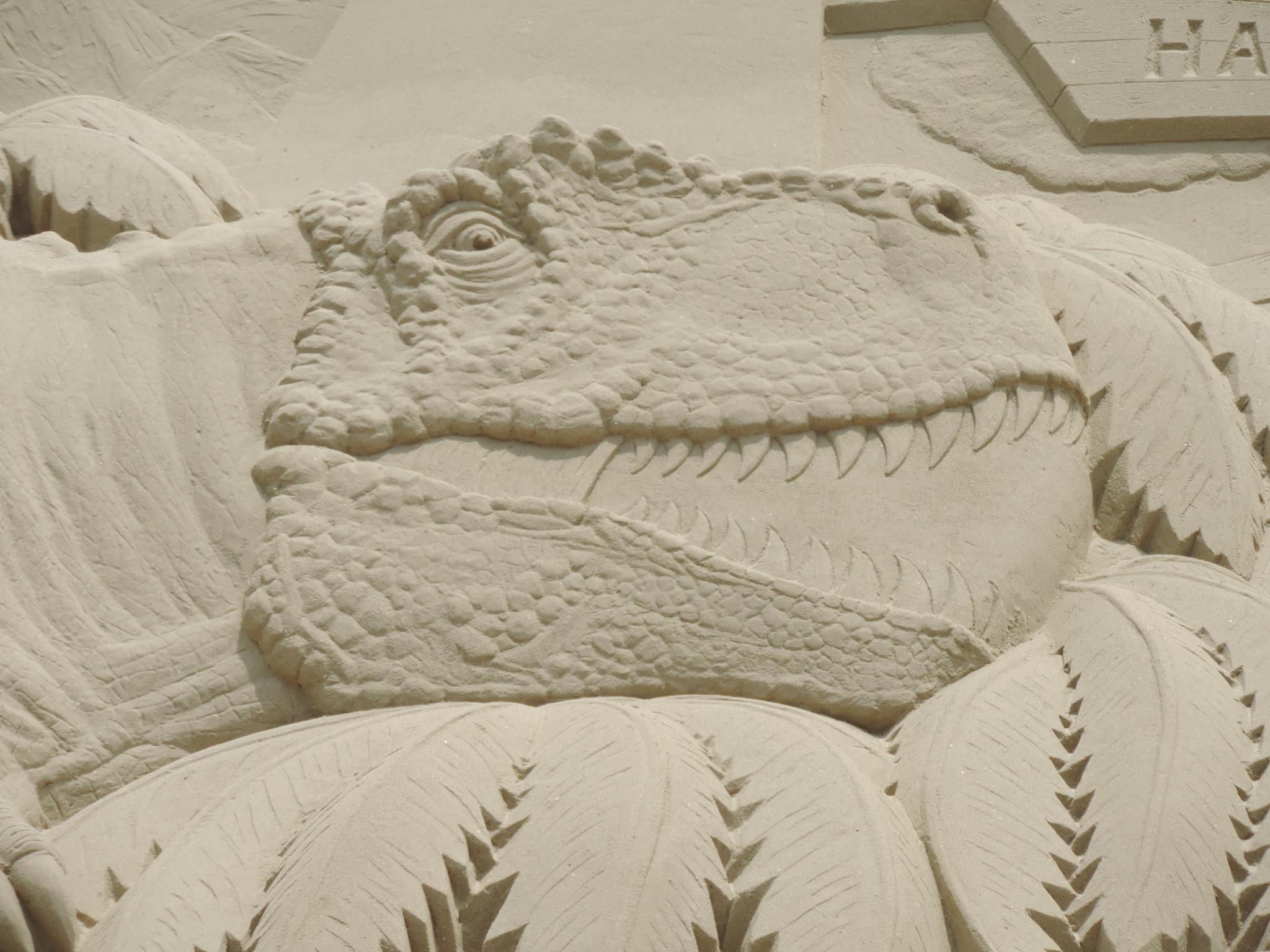
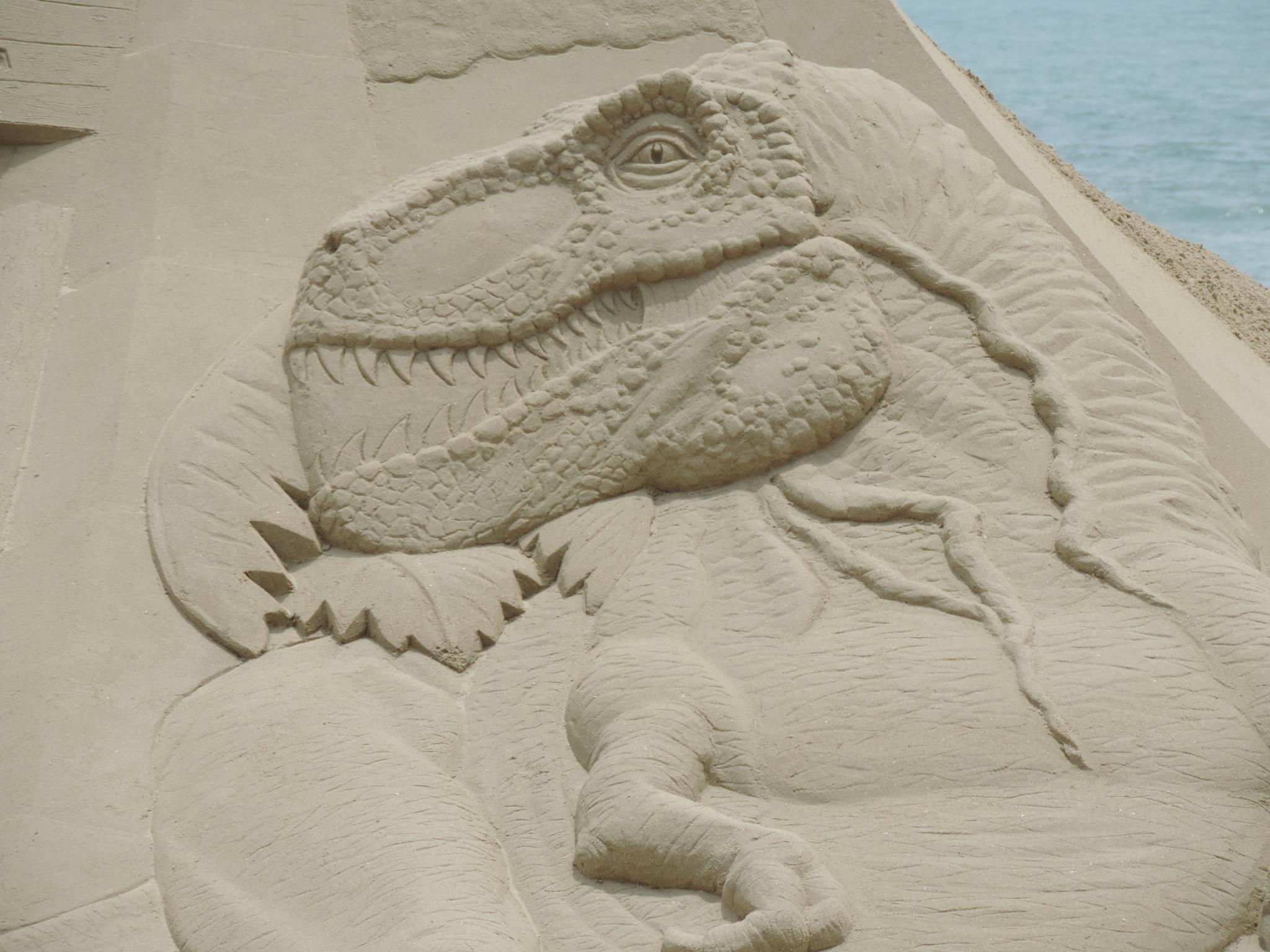
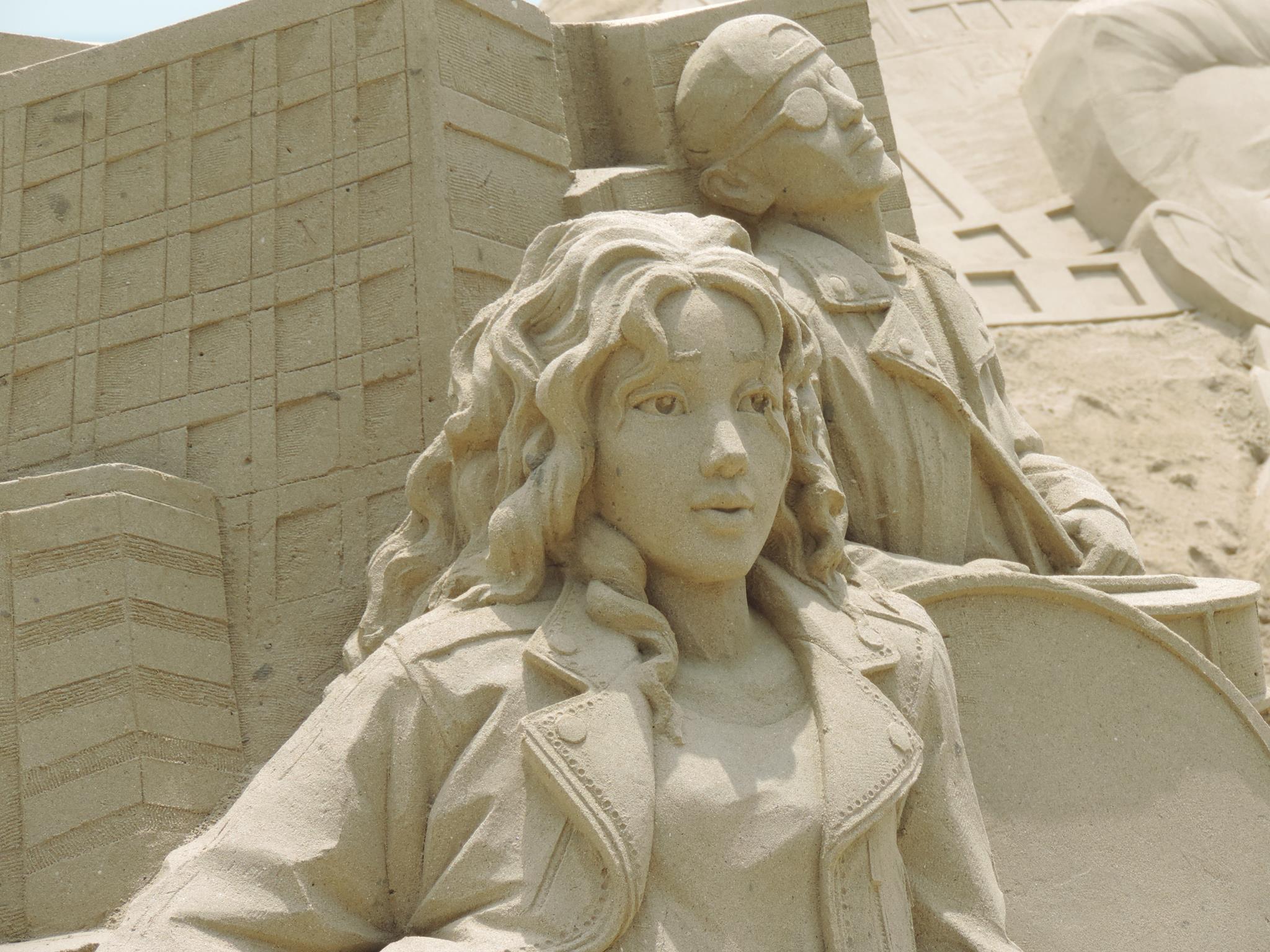
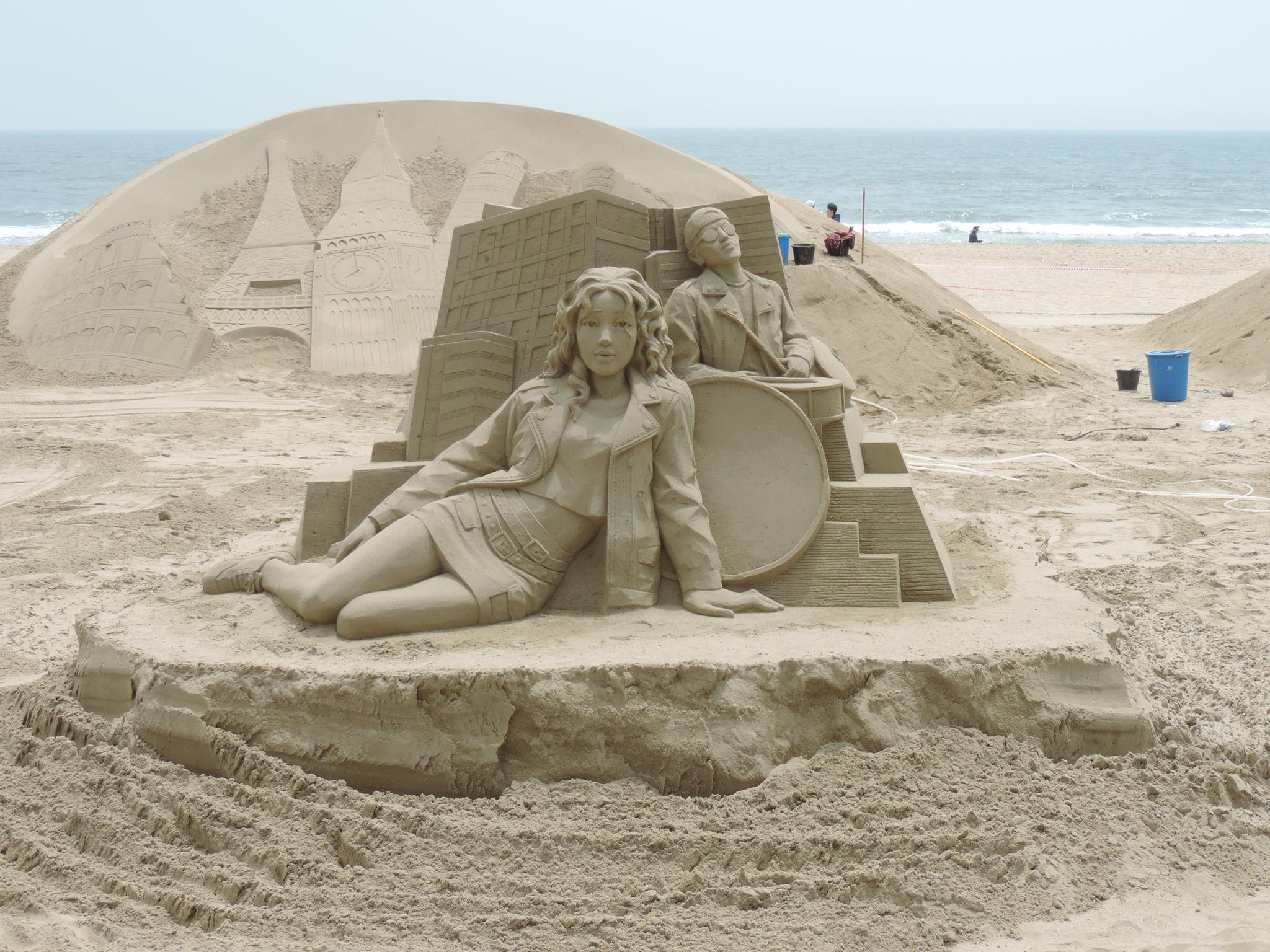
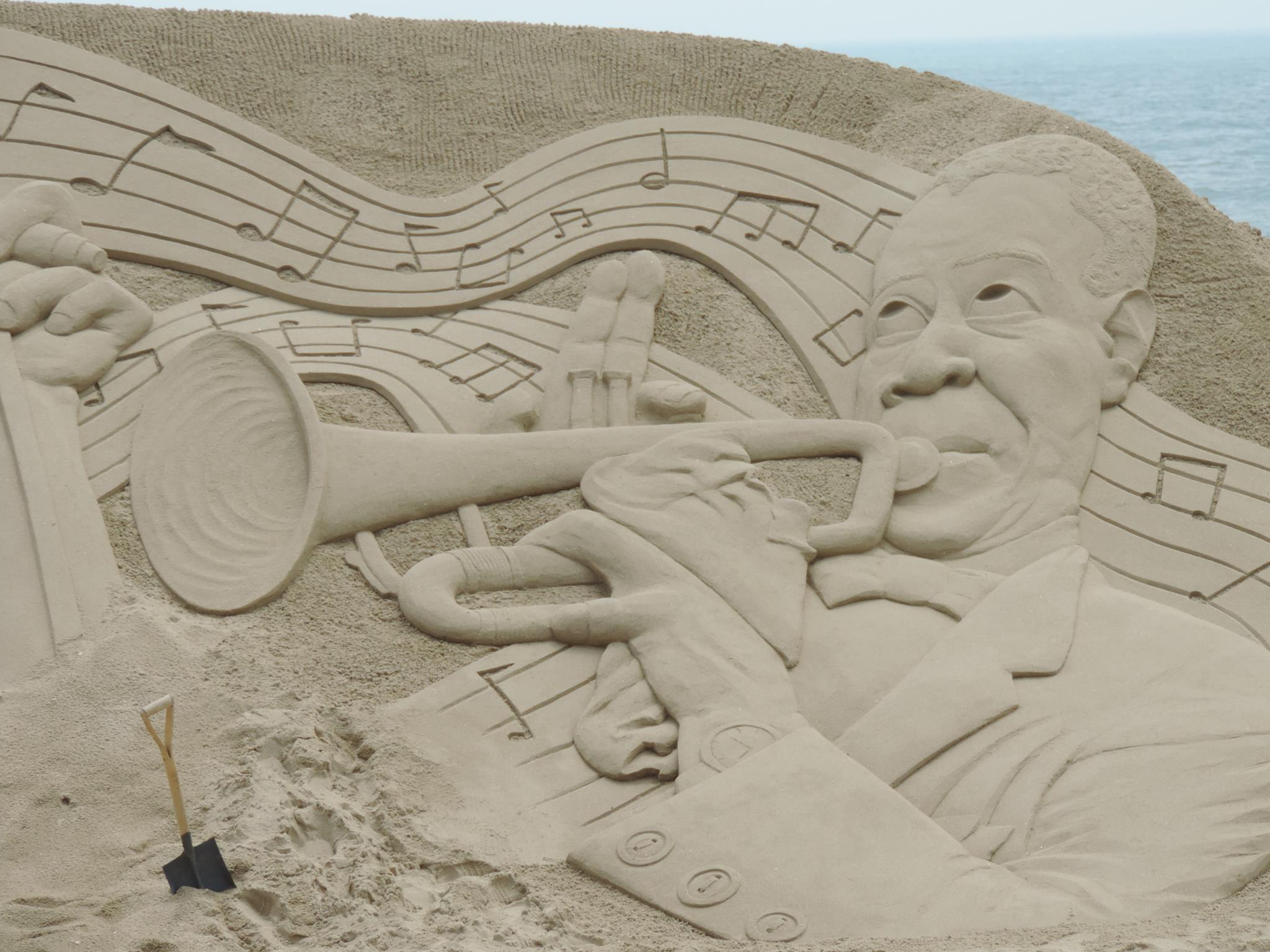
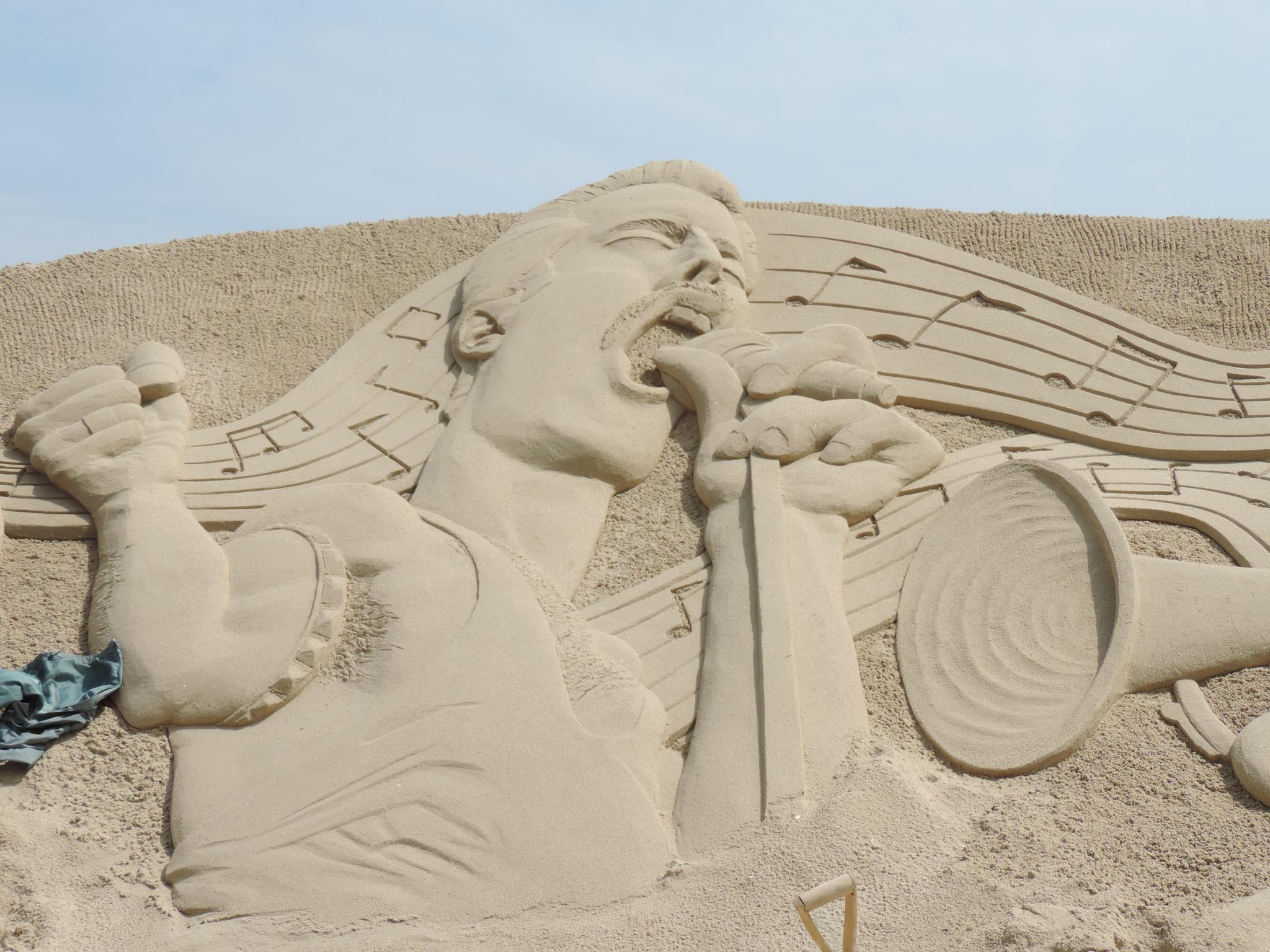
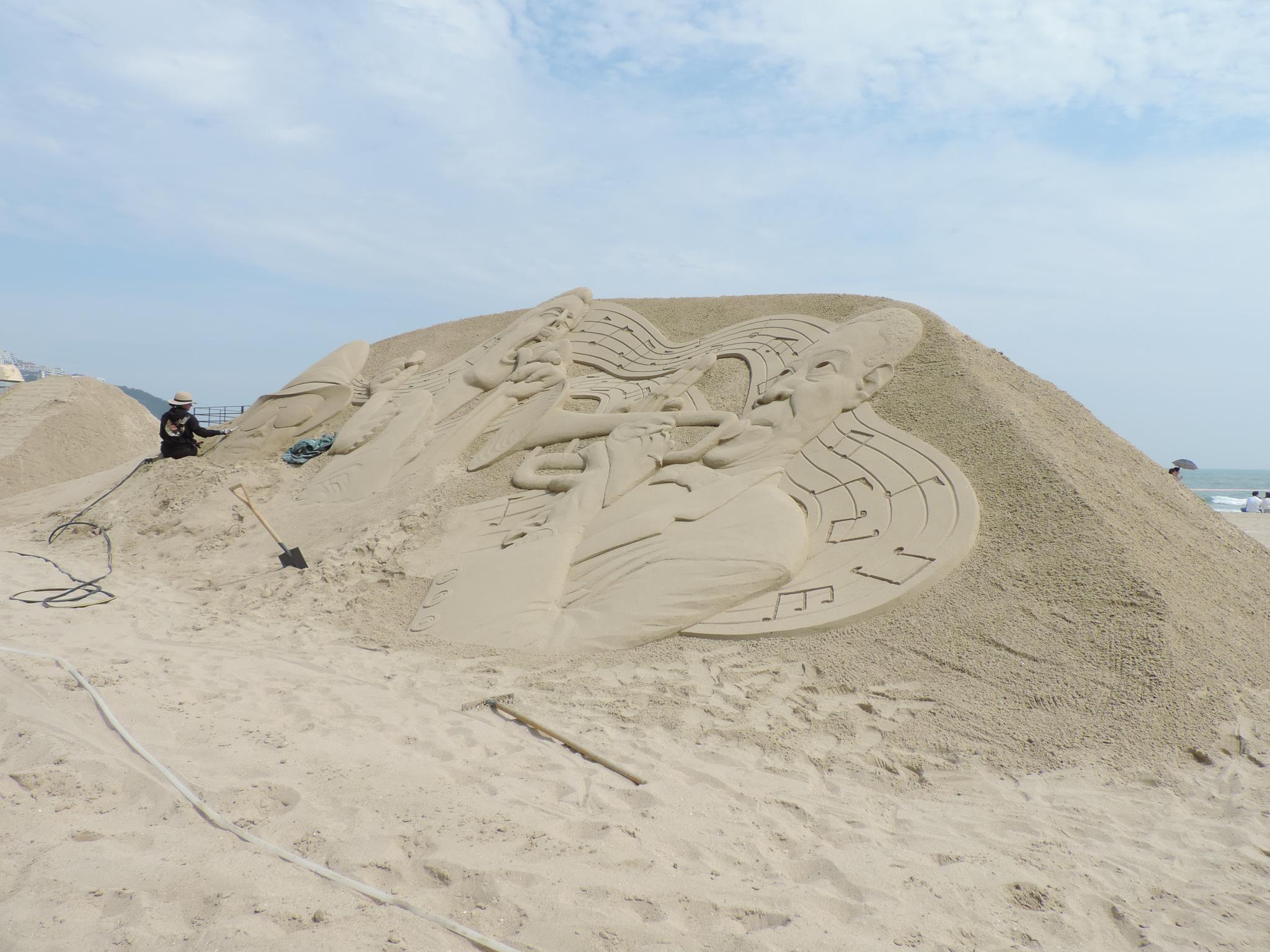
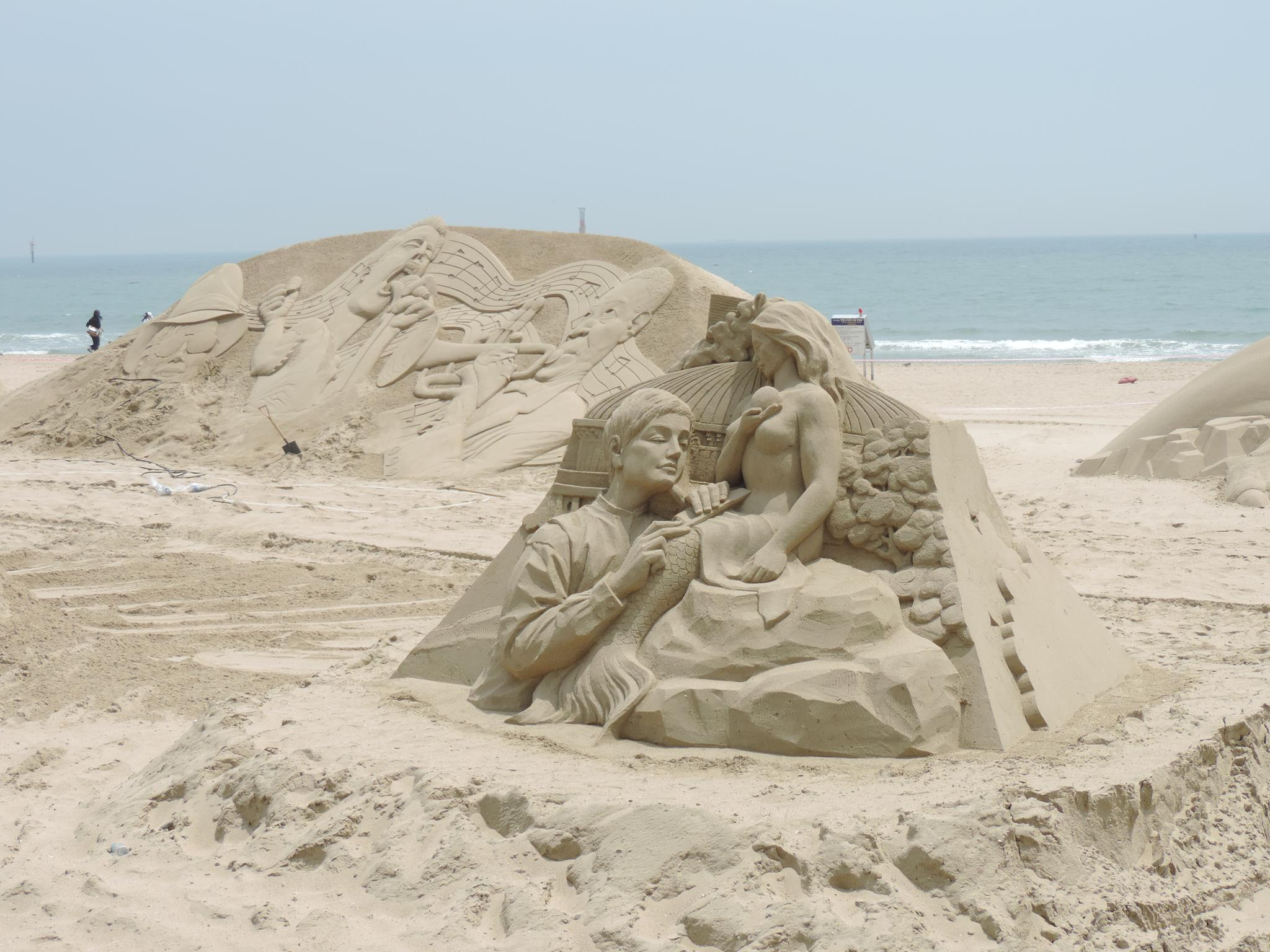
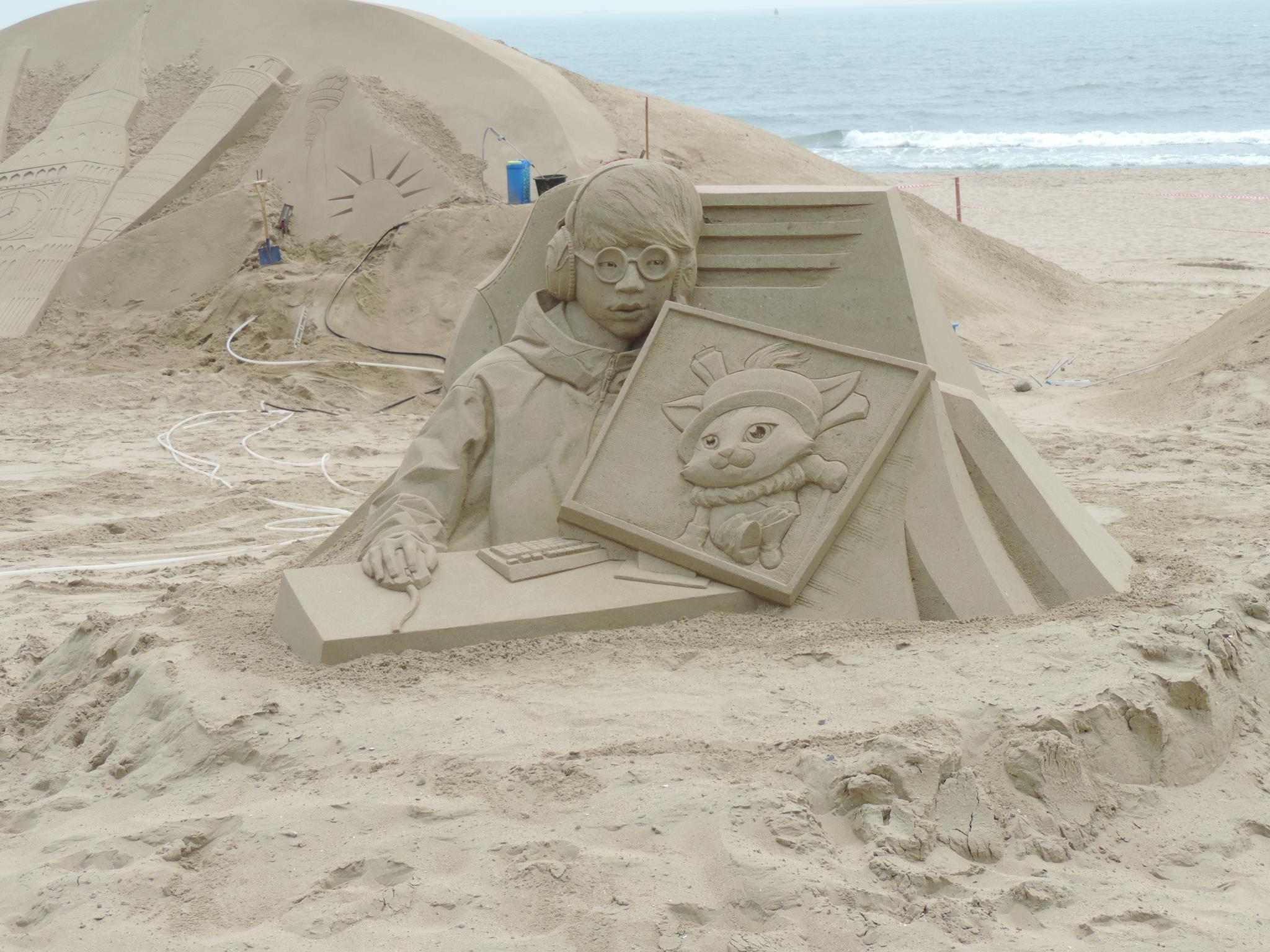
I’ve only done three architecture pieces in my entire 24 years. Normally I don’t do architecture, this is not my thing. I usually do animals or dinosaurs and things like that, so mostly organic material. And it’s a struggle for me to do these architectural things. They needed someone to do it, so I jumped in and joined. But it’s not my strong suit. Every sculptor makes the artworks in the own style and with different motifs. Like Mel and Abram, they are excellent in facing people. But I do everything else in between except for this one. Architecture for me is the hardest, also there is a lack of interest for me, and if you don’t feel it, it doesn’t come out. Hopefully this is the last architecture piece I ever do in my life. But that’s just me. I never do castles and I’ve never done a castle. And most people associate sand sculptures with castles. I’ve never ever done this. So with the festival this year it’s 20th anniversary. In 2020 I was also here when they had the event, it was all architecture. In 2019, they did dinosaurs. In 2018 the theme was music. So every year there are different topics. And now of course, we’re celebrating the 20th year. I don’t know if they’re going to do all of the years, but I know they’re going up through 2018. And they make a sculpture for every year. I know they’re starting with 2018, and then up until the present. So I know mine was going to be representing 2020.
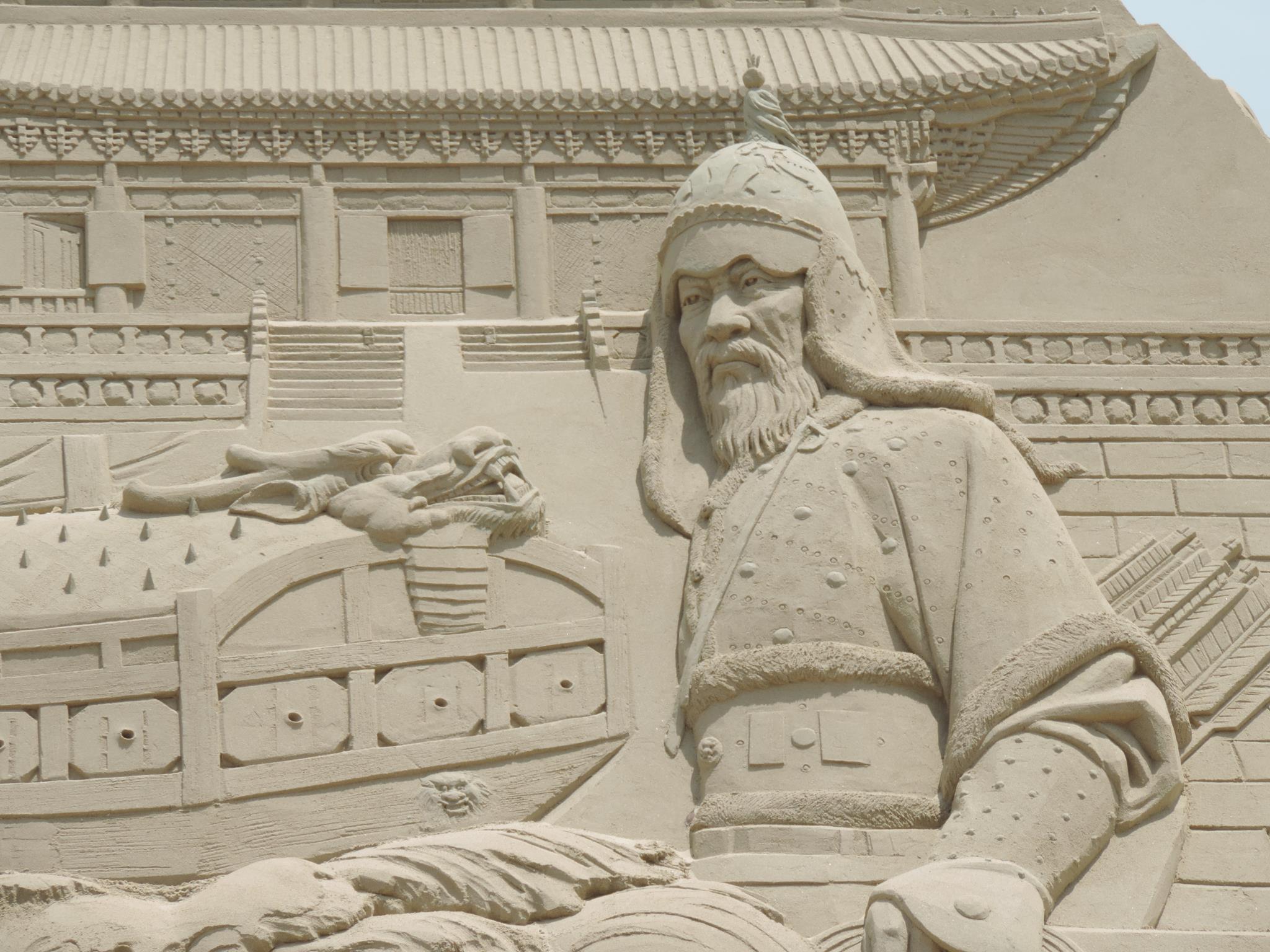
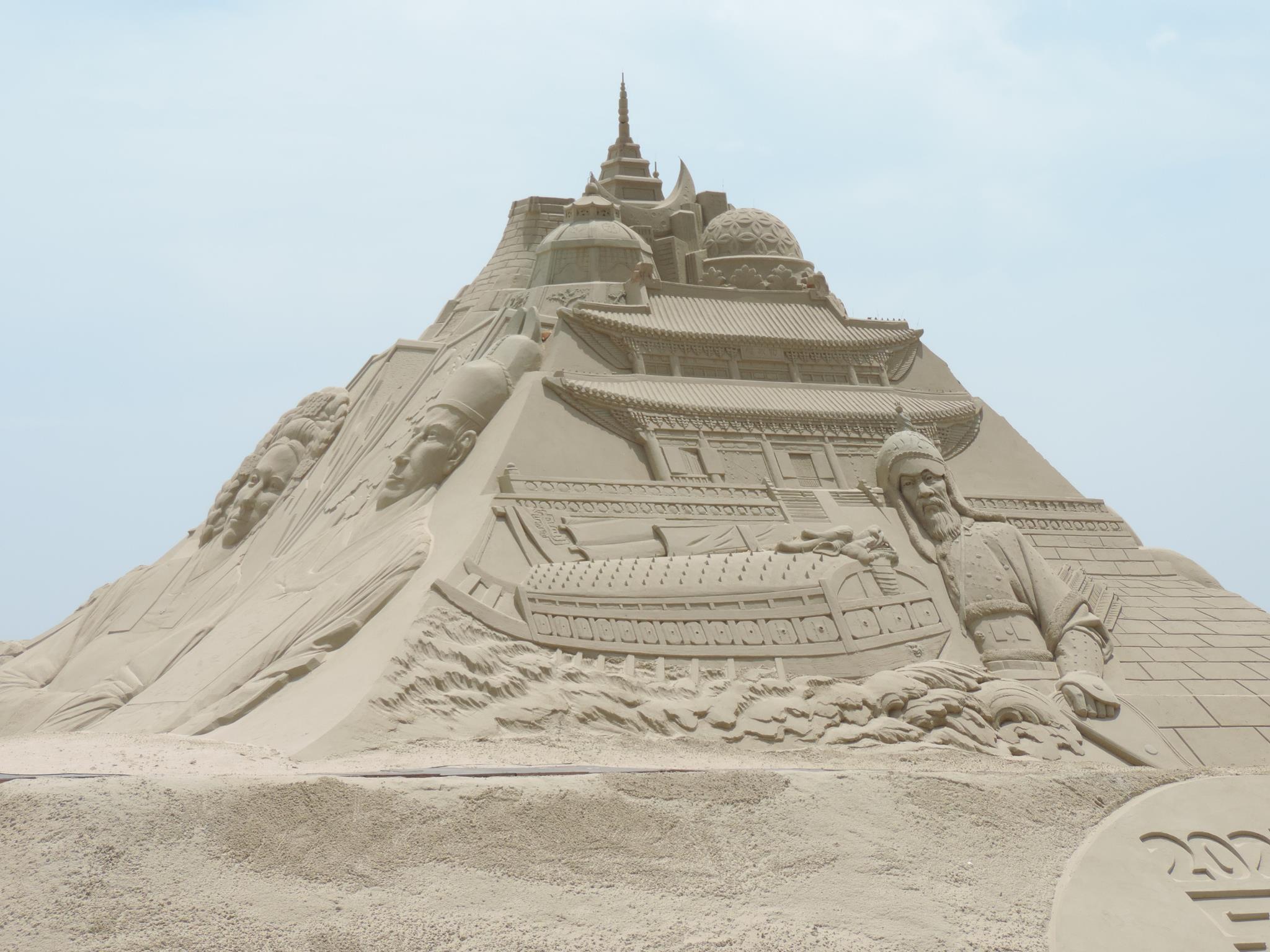
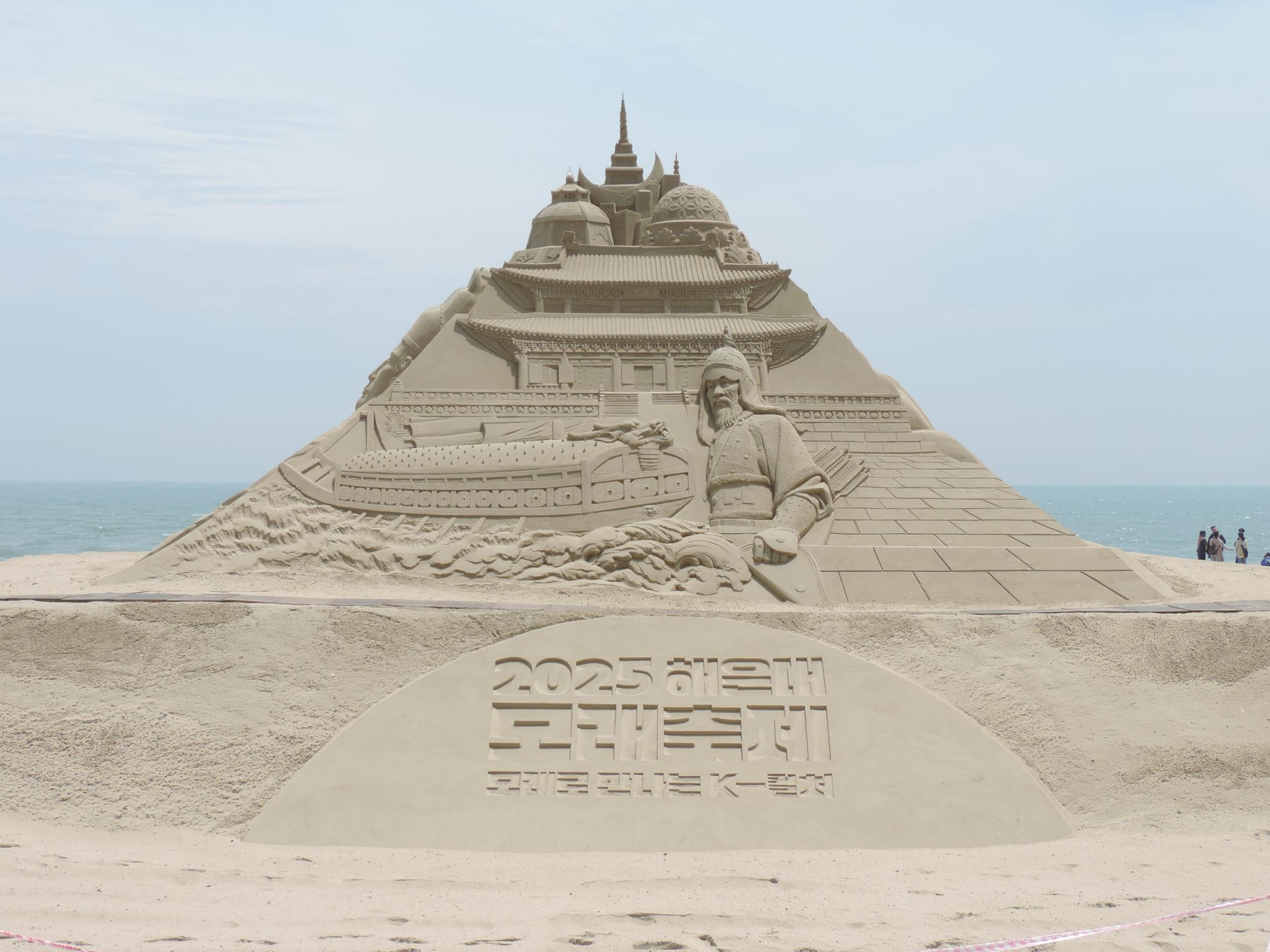
So it’s kind of a special, because it’s 20 years anniversary?
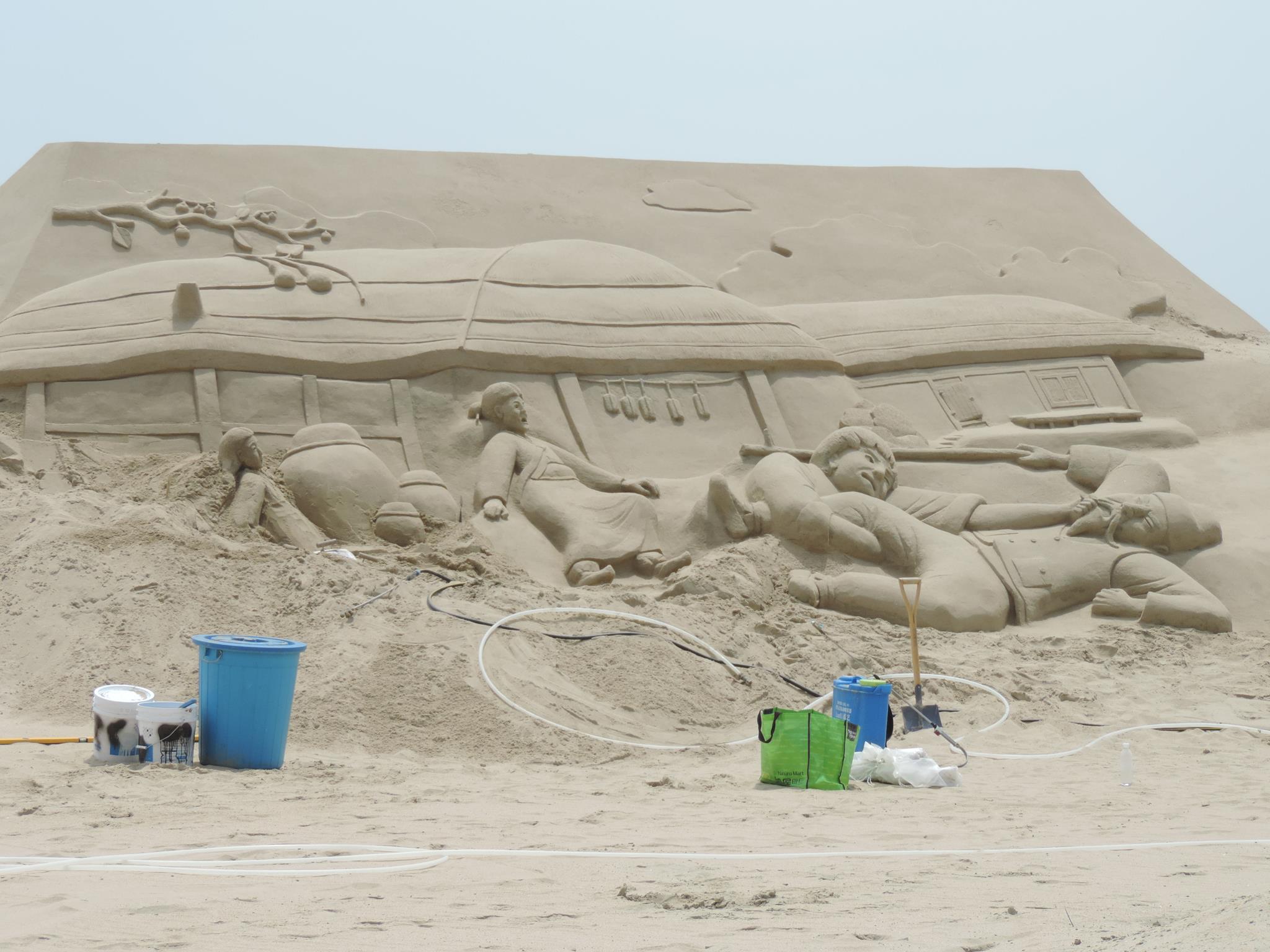
They have like every artwork representing one of the later years. So the works are in order, that means they in the front are working on 2018, then there is the sand sculpture for 2019, then 2020 and so on. They theme in 2021 was architecture, so that’s what I am doing. Then 2022, 2023 and 2024. And then of course the new very big one for 2025. But I don’t think they have every year from the beginning, because we don’t have enough sculptures here. Yes it’s a lot of sand, but also with sculptures just for this year, and not all of them are representing the previous events. So I think maybe the last ten years.
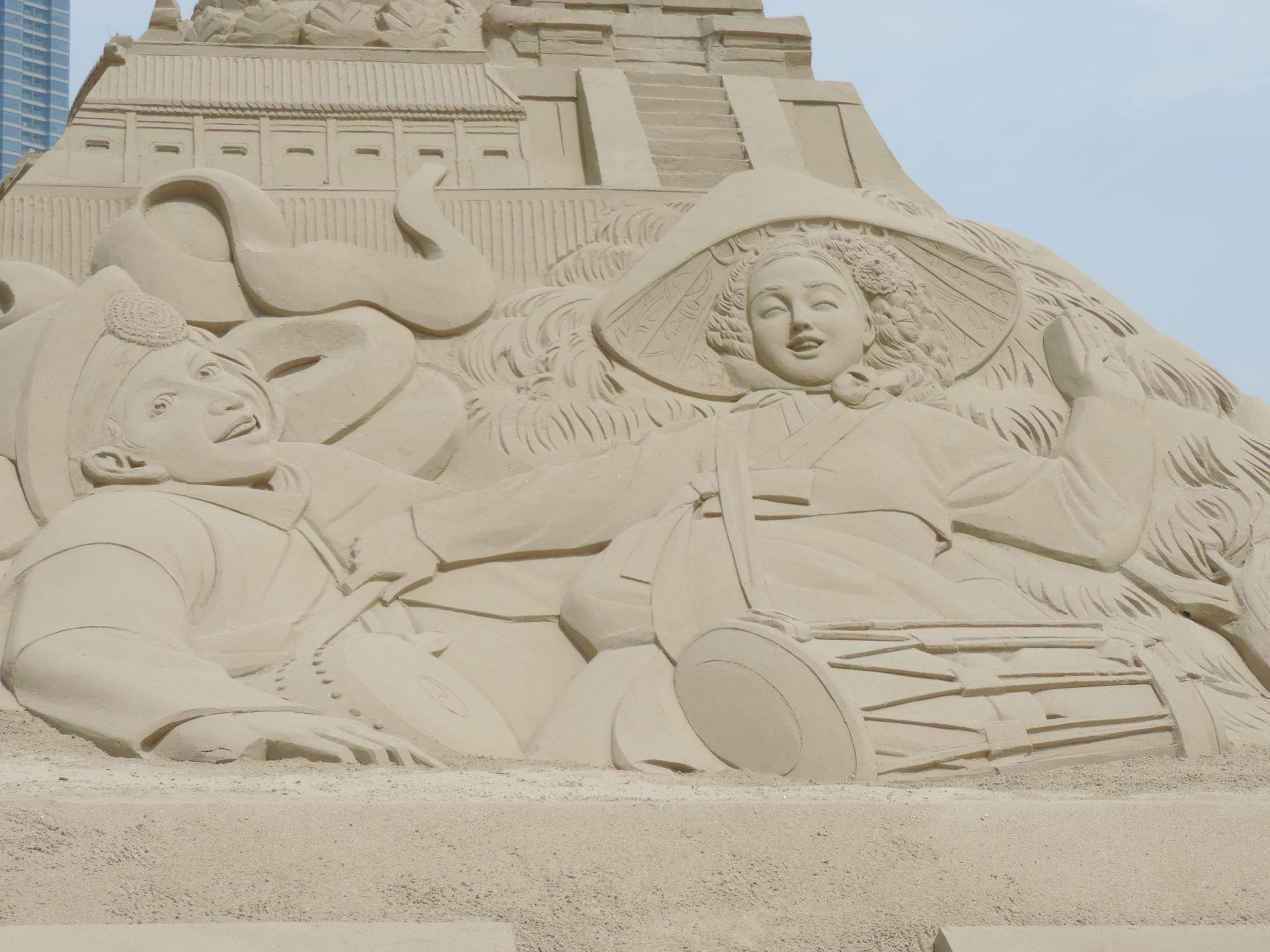
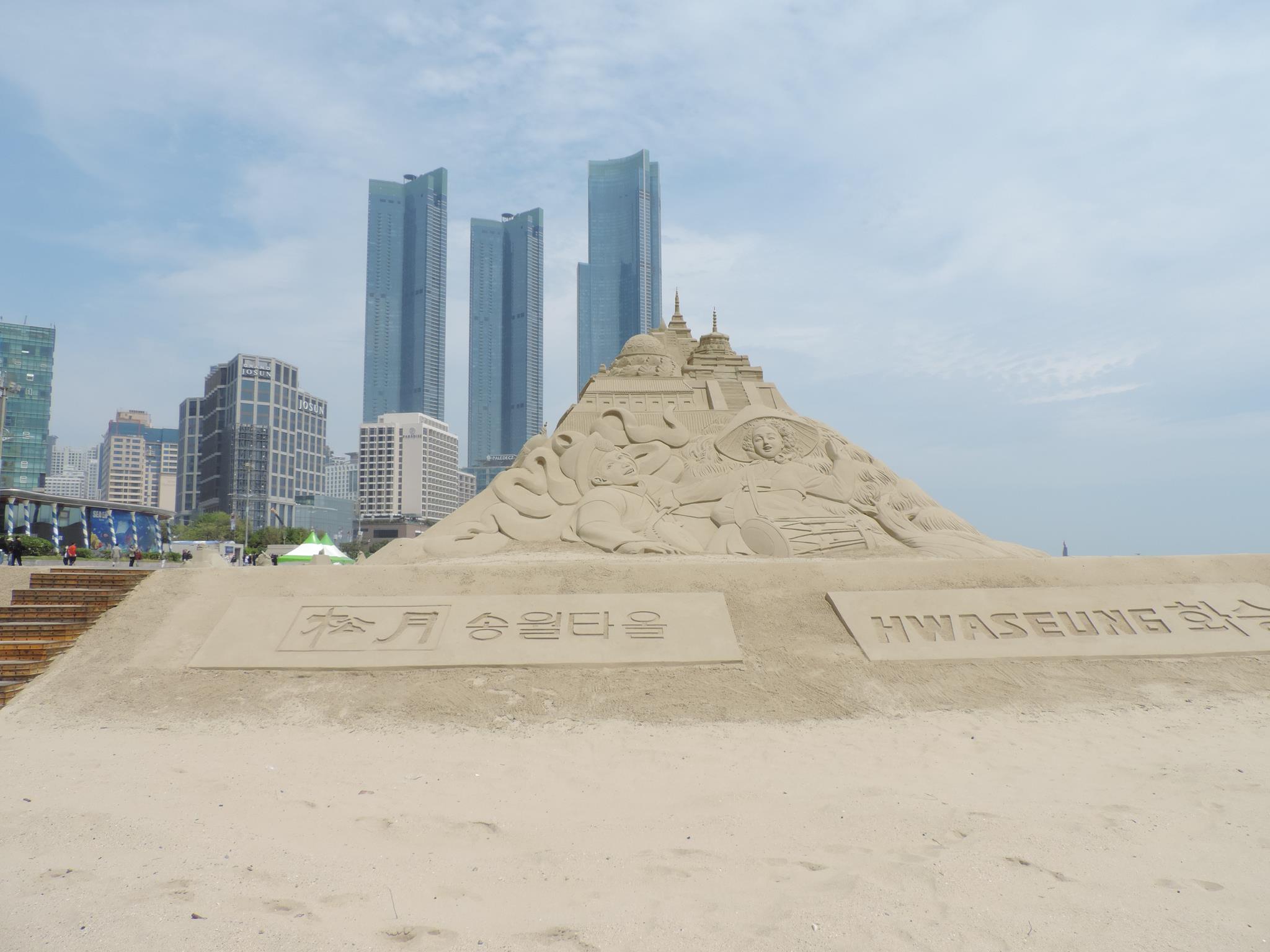
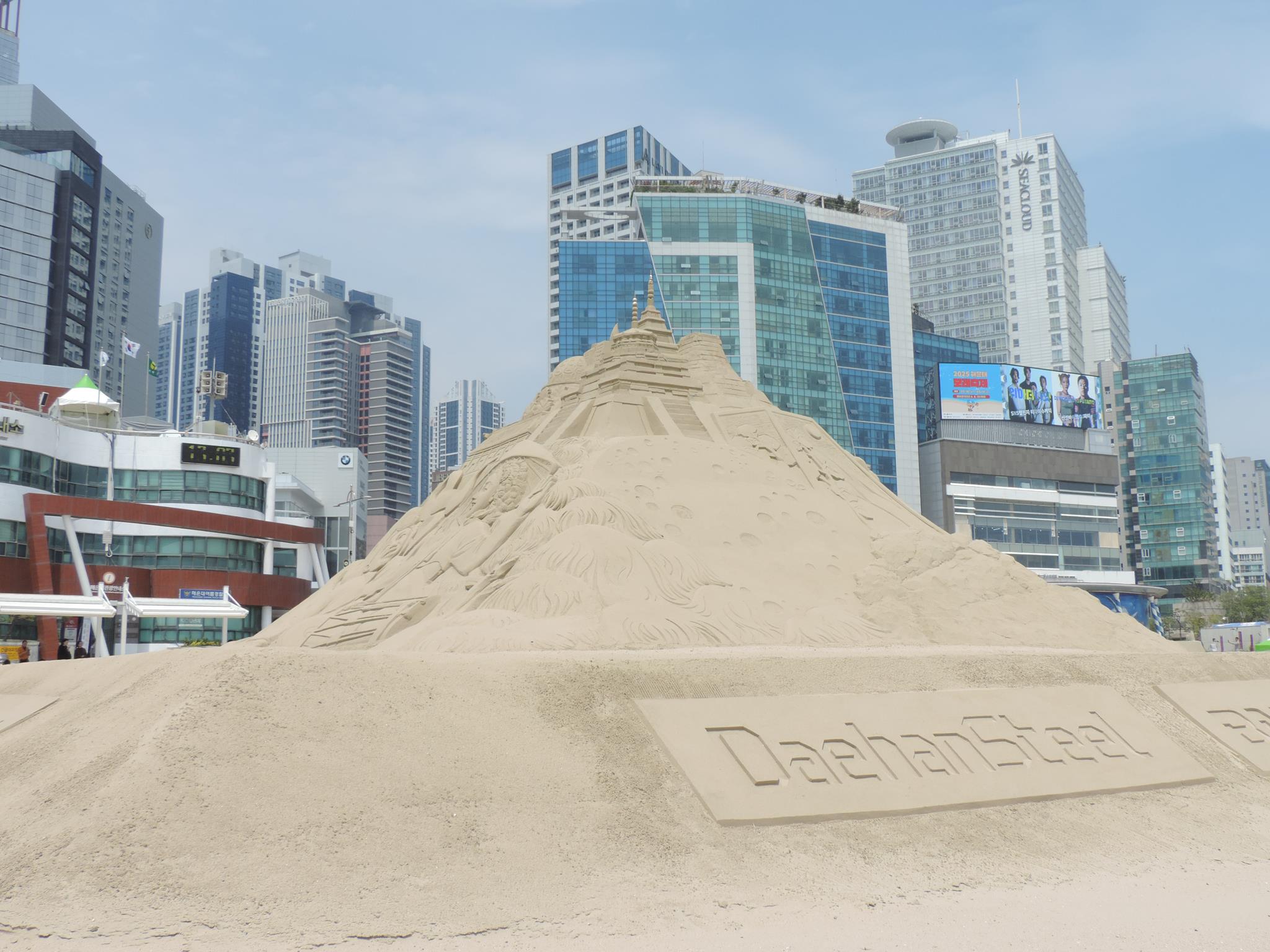
How long does it take to make a sand sculpture like this?
So it depends, like if it’s a sand pack, which is this, and you’re only doing one side. It will take us a total of 12 days to do one side. And of course because it’s sand packed it goes much slower. Because it’s sand packed it dries out much more quickly, we’re always watering it down. Also it gets blown away, the sun dries it out and you’re always trying to keep it sprayed down so that it doesn’t get destroyed. Because it’s flatter, it’s more susceptible to rain damage. Whereas if it’s really good sand and it’s more vertical, it’s less rain damage. So then you’re just constantly fixing stuff in the rain. This stuff here though it’s a little bit more vertical, definitely more vertical than some of the other sculptures and different.
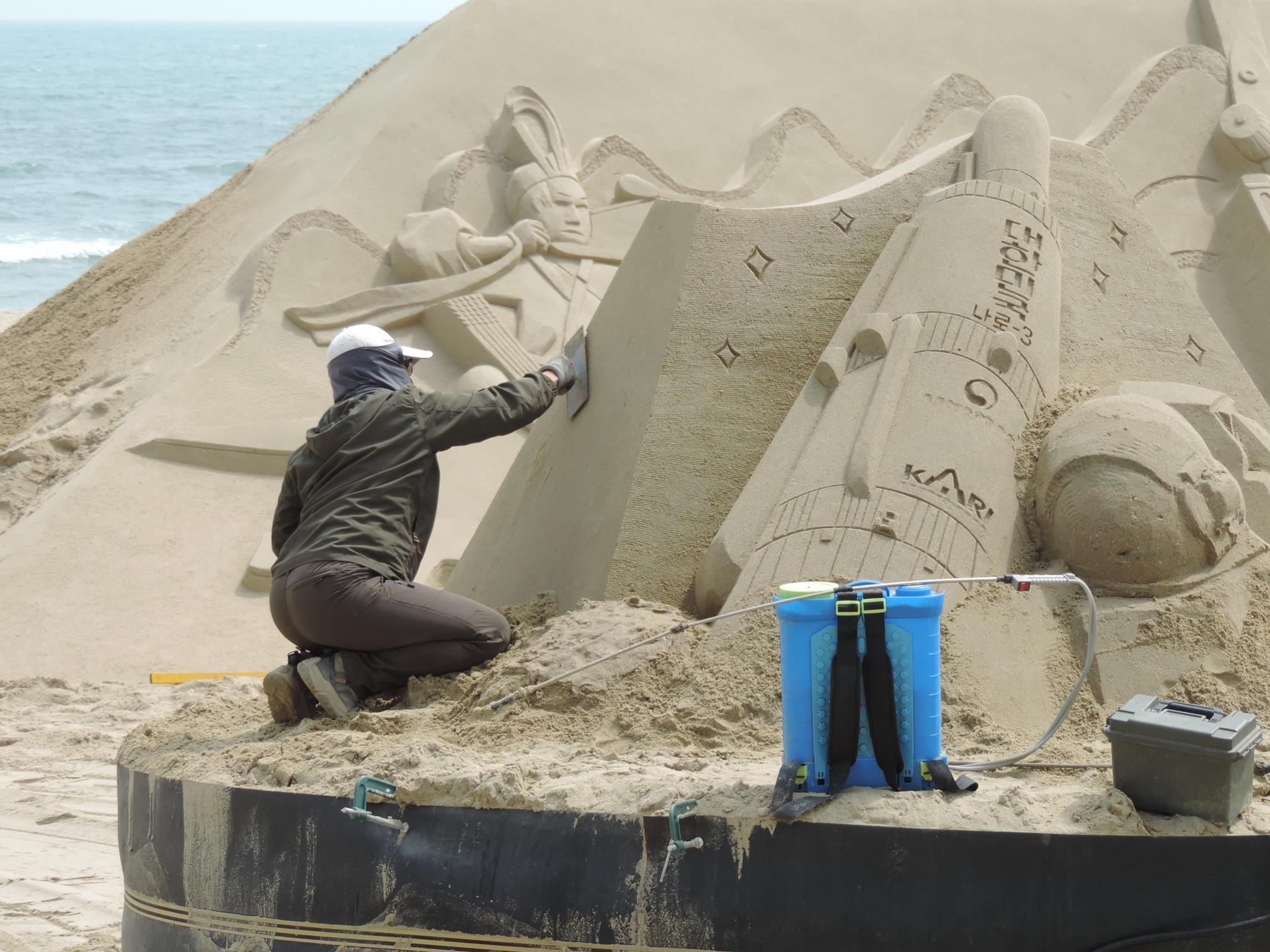
You’re watering in between, but also put every evening some special moisture or glue on it?
Right. So what we do is that we’ll take some special liquid. But actually you don’t spray it down with anything but water until it’s done. So when you’re done with the piece we add something and basically every mixture is different. What we use is 90 percent water and 10 percent some kind of glue which is biodegradable. We take that and we mix that and then we put it in this garden sprayer. Then we spray on top after it’s done. It doesn’t hold your sculpture together because this sculpture here probably weighs 13 or 14 tons. So it is just on the upper layer and it creates a shell on the outside. It’s like it holds your sculpture together like paint holds your house together. So it creates a little shell coating, and it keeps the wind from drying out those first few layers. It seals that first few layers so the wind can’t dry that out. The sun can’t dry it out and then blow it away. Underneath it’s already dried and if I were to crack it, it’ll just spill out sand constantly. Or it would completely fall apart. But this moisture literally keeps it so that it doesn’t get blown away. It’s kind of weird but that’s what keeps it. At the moment you can see my other colleague spraying right now. Just any part that is done, as soon as you’re done with it, you spray it and then you move on. So that’s another difficult thing with this because this sand is falling apart super easy. Whereas the sands at some other competitions retains that moisture much longer. When you pour water on this, and the quicker it goes down, the worse the sand is. But if you pour water on it and it just sits there for a while, that’s what you want. It retains that moisture and holds it because it’s a regular shape. It’s tighter. That means I can work on something, come back a day later, and finish it without being too much protective. Because it’s still going to fall apart. Here you’ve got to work on it continually, finish it fast, and you’re done. You have to move away and you can’t fix it later. So it’s a very difficult process with the soft sand, especially this one here. That’s also a challenge and it’s an awesome event. Yeah, I love this festival here.
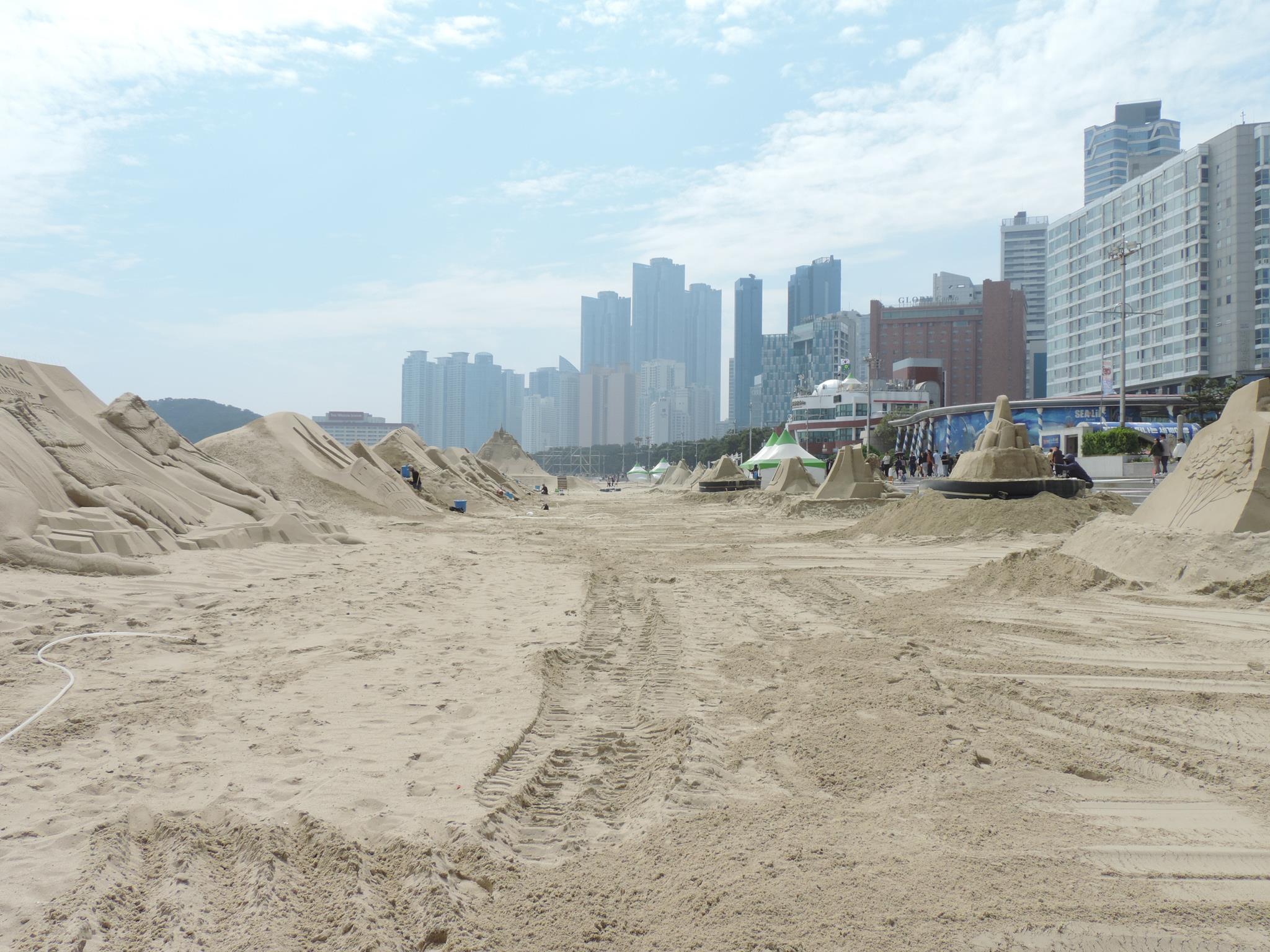
I just thought about the similarity to the monks who are doing these mandalas, and after they completed an artwork, they just destroy it. I mean, you don’t destroy it, but compared to an oil painting or a wooden sculpture, which you possess later on, this sand sculpture you cannot take with you, and it will be destroyed by sun, wind and water. So it’s a temporary artwork and it’s a lot more about the process of creating it and not actually having it in the end.
Yes, true. I guess when you’re an artist, especially a sculptor, you can work in a variety of mediums. Every medium is different, like wood sculpting, ice sculpting, snow sculpting or working with clay. And each medium requires different tools. I prefer clay. Clay is my most favorite, I love it. When you work with clay, there are no borders and you can think outside the box. Here you can’t. You have to stay within a box because it’ll collapse. So with clay, you put armatures and add things and do whatever your imagination can think of. But here in sand, it’s very constricting in sand. So that’s the only thing. For me it is alright when it gets blown away and dies, I’m fine with that because it’s not what I would love to see. Like I said, the architecture thematic is not mine. And it’s very difficult working in an art form that you can’t make what you want, and you’re struggling to just make it work. Some people say, that’s amazing how do you do that? But every artist will tell you, they can work on that for a year and when it’s done and gets destroyed, that’s alright. When I walk away, I don’t take pictures or anything. I just leave it there.
So you’re not only a sand sculptor, you also work with wood or especially clay. So you are a sculptor in general, the medium can be various.
Yes, clay, also I’ve done wood. I do some clay works and things like that, because clay is by far my most favorite and my strong point. My partner, she was an ice sculptor for long time and did those ice hotels and was at ice sculpting events in Canada. She knows ice very well. But when we moved to Hawaii, she just gave that part up. There’s no snow and no ice on Hawaii, but a lot of sand. Also any of the other sculptors here at the event, anyone can do any medium. I just need a chainsaw to sculpt wood. Or I need to learn how to use a chainsaw. Once they learn that, they’re going to be able to get their stocks anywhere. Abram Waterman did a lot of ice and snow as well, he’s done that quite often and he is really good with it, but he probably does more sand than anything else. And the other artist called Mel, she comes from a family of sculptors. Her dad was a sand and ice sculptor, her sister is a sand and ice sculptor, so they all do it. Basically she was born into it.
So you’re not only a sand sculptor, you also work with wood or especially clay. So you are a sculptor in general, the medium can be various.
Yes, clay, also I’ve done wood. I do some clay works and things like that, because clay is by far my most favorite and my strong point. My partner, she was an ice sculptor for long time and did those ice hotels and was at ice sculpting events in Canada. She knows ice very well. But when we moved to Hawaii, she just gave that part up. There’s no snow and no ice on Hawaii, but a lot of sand. Also any of the other sculptors here at the event, anyone can do any medium. I just need a chainsaw to sculpt wood. Or I need to learn how to use a chainsaw. Once they learn that, they’re going to be able to get their stocks anywhere. Abram Waterman did a lot of ice and snow as well, he’s done that quite often and he is really good with it, but he probably does more sand than anything else. And the other artist called Mel, she comes from a family of sculptors. Her dad was a sand and ice sculptor, her sister is a sand and ice sculptor, so they all do it. Basically she was born into it.
You like to move around and also be not always in one place.
Living in one place for a while, man, that sucks. Maybe others like it, but for me it’s horrible. It’s alright that others need that, I understand completely, but I always have the urge to explore, to go around, to see what’s going on in the world. And now with the sand sculpting, it’s just like, okay, what jobs will we take next? We always look to find something different. For example if they say, we have a job in South Africa. I’m like, yep, I’m going, because I haven’t done South Africa in a while. But if it’s the same stuff, I’ll get bored with it. I don’t want to do a job anymore if it’s the same thing again and again. And it’s nice to find a position where you can do that. You can pick and choose your jobs. Because with those sand sculpting events and getting into it, that became very difficult during the years. Before back in the days, it was very big and new, there were not so many artists and people were getting into it pretty simple. But now it is also more difficult, because the level has been raised so high. The type of sculpting has become so incredibly museum-like in the past 20 years versus the cartoon characters like SpongeBob SquarePants and whatever they were making 20 years ago. For people to get in now, and many people try, even if they’re that good, it’s hard to convince the event organizers that they’re good and that they can bring them in. So nowadays it’s super difficult to get in. I’m just lucky that we’re here at this festival and that we can make those decisions. It’s great that we don’t have to take every job that’s off the bus and we can focus on the special ones.
I’m sure in the beginning there were not so many sculpturos when it started, but when it got bigger and bigger, more and more people started doing it and also the quality rised.
Yes, exactly. Actually to be honest, when I first got in, I lied. They wanted pictures of things I can do. There was an event in Virginia Beach and they asked if I can send pictures of things I’ve done. There was one spot available for this master competition in Virginia Beach and I wanted to go there. So I just made a little gorilla and I dug a hole deep in the ground where I put the camera looking up. From that perspective the gorilla looks huge like 30 feet tall. So basically I lied and it was only five foot. But they said that’s amazing. They asked how I got it that tall. And I just lied and said, well it took some time and a lot of work. So they invited me and then at the competition I had to compete with the world’s best sculptors. So I had no idea what to create, but you just start working and you just do what you can and it worked. I didn’t win, but they were impressed and invited me to more events. So then there was the next event and the next, like next month or even next day, I just evolved. But yeah, that’s how I am.
Great talking to you and it’s an interesting event. I’m excited about how all the sculptures and frescoes will look at the end when everything is finished.
You can find material on the internet. There’s so much information out there on sand sculptures. You can go to our website to see more if you want to. I don’t know if you go to bgsandsculptures.com. That’s just ours. Like Jihoon, who runs this event, he’s got his own thing. We have a lot of background information on our website, also FAQs and questions. Like if you have questions to ask about learning more, then you can go to our website to learn more about sand sculpting if you like. There are also other topics, we cover a bunch of stuff on there. But if you want to do it, keep at it. It’s not rocket science. And these events are everywhere and they’re always looking for new artists.
INFOTHEK
 Sand Festival: HAEUNDAE SAND FESTIVAL
 Webpage: https://www.haeundae.go.kr/index.do?menuCd=DOM_000000309005001000
Webpage: https://www.busan.go.kr/eng/bsnews01/1680346
Artist: ABRAM WATERMAN
Webpage: https://ussandsculpting.com/abram-waterman
Artist: CHRIS GUINTO – STUDIO GUINTO
 Facebook: https://www.facebook.com/StudioGuinto
Facebook: https://www.facebook.com/p/Chris-Guinto-1628506516
 Instagram: https://www.instagram.com/studioguinto
Artist Duo: BROKEN GLASS SAND SCULPTURES – [ CHRIS GUINTO & MELINEIGE BEAUREGARD ]
Website: https://www.bgsandsculptures.com
Facebook: https://www.facebook.com/people/Broken-Glass-Sand-Sculptures/100086459870375
Instagram: https://www.instagram.com/bgsandsculptures

MORE ARTICLES ABOUT SOUTH KOREA
>>> Enigma13 – Graffiti Artist <<<
>>> Apgujeong Graffiti Tunnel <<<
>>> Sinchon Graffiti Tunnel <<<
>>> Goto Mall – 24 Hours Project <<<
>>> Banpo-daero – Picasso Tribute <<<
>>> Haeundae Sand Festival <<<
>>> Gallery Square Art Academy <<<
>>> Monolugar Graffiti Hall <<<
>>> Jeonju – Streetart & Graffiti <<<
>>> Hongik Streetart & Graffiti <<<
>>> Wausan Streetart Wall <<<
>>> Suwon – Streetart & Graffiti <<<
>>> Paju – Streetart & Graffiti <<<
>>> Daegu – Muhak Art Alleys <<<
>>> Goyang – Streetart & Graffiti <<<
>>> Motomall Graffiti Wall <<<
>>> Hong Jonggi – VØID Gallery <<<
>>> Toon Topia Exhibition <<<
>>> Cuma Chosun Exhibition <<<
>>> Jaman Mural Village <<<
>>> Ihwa Mural Village <<<
>>> Gamcheon Mural Village <<<
>>> Gwangju Art Street <<<
>>> Itaewon – Streetart <<<
>>> Itaewon – Graffiti <<<
>>> Baegun Streetart Wall <<<
>>> Sillim River Streetart <<<
>>> Nambusunhwan Urban Art <<<
>>> Red Road Tiles Project <<<
>>> Itaewon „Hello“ Series <<<
>>> Songhyeon Sculpture Park <<<
>>> Uijeongbuji Sculpture Park <<<
>>> Museum of Craft Arts <<<
>>> Busan Sculpture Gallery <<<
>>> Daegu Sculpture Gallery <<<
>>> Gwangju Sculpture Gallery <<<
>>> Haeundae Sculpture Gallery <<<
>>> Seoul Sculpture Gallery <<<
>>> Suwon Sculpture Gallery <<<
>>> Gyo-Dong Kidult Figures <<<
>>> Stella Lucens Anime Café <<<
>>> Busan Street Manikins <<<
>>> Daegu Street Manikins <<<
>>> Gwangju Street Manikins <<<
>>> Jeonju Street Manikins <<<
>>> Seoul Street Manikins <<<
>>> Seoul Manga & Anime Signs <<<
>>> Bukchon Hanok Village <<<
>>> Ami Tomb Stone Village <<<
>>> Busan – Architecture <<<
>>> Daegu – Architecture <<<
>>> Goyang – Architecture <<<
>>> Gwangju – Architecture <<<
>>> Jeonju – Architecture <<<
>>> Paju – Architecture <<<
>>> Suwon – Architecture <<<