Historijski muzej Bosne i Hercegovine – Outdoor Exhibition – „Home of the Perpetually Lost“
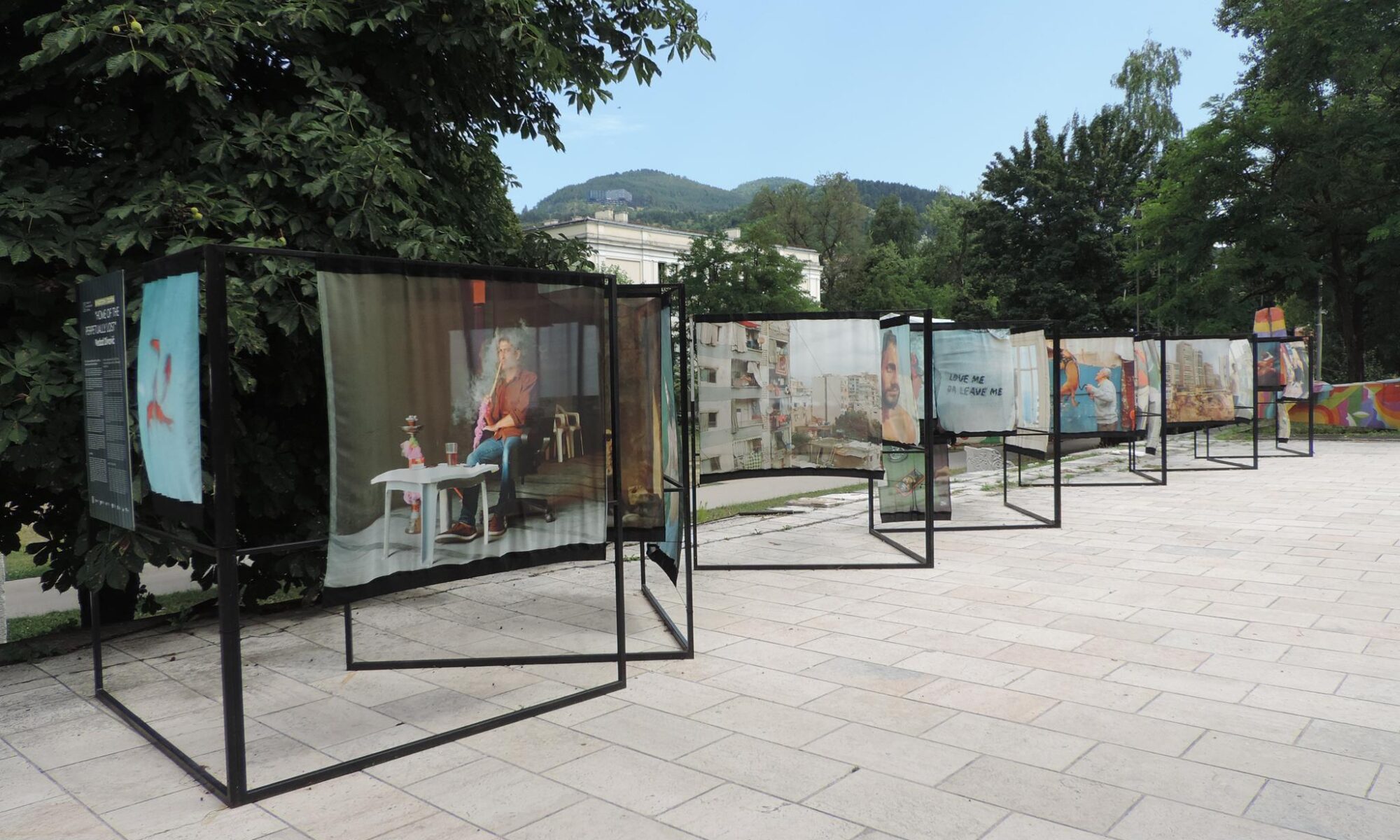
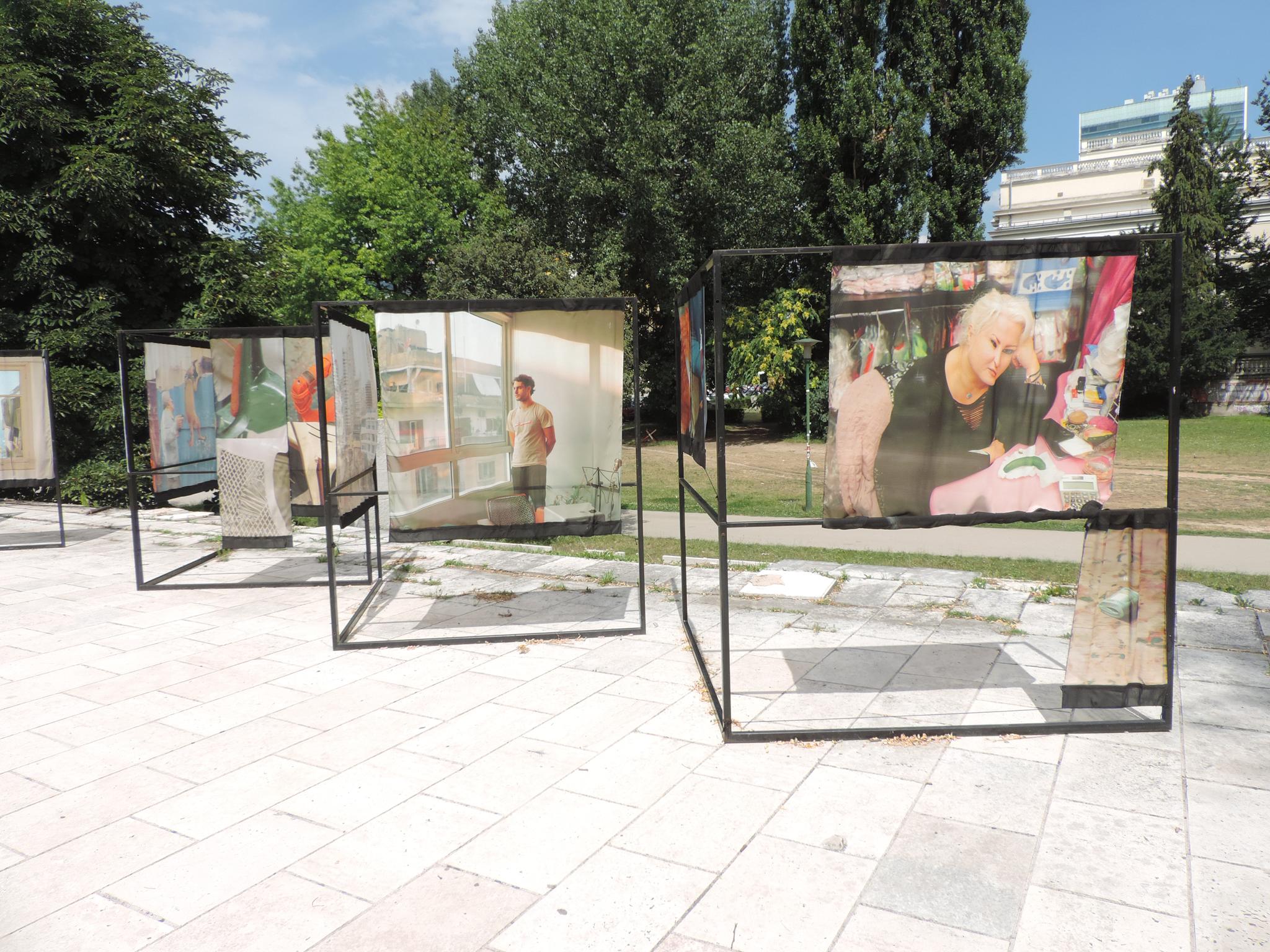
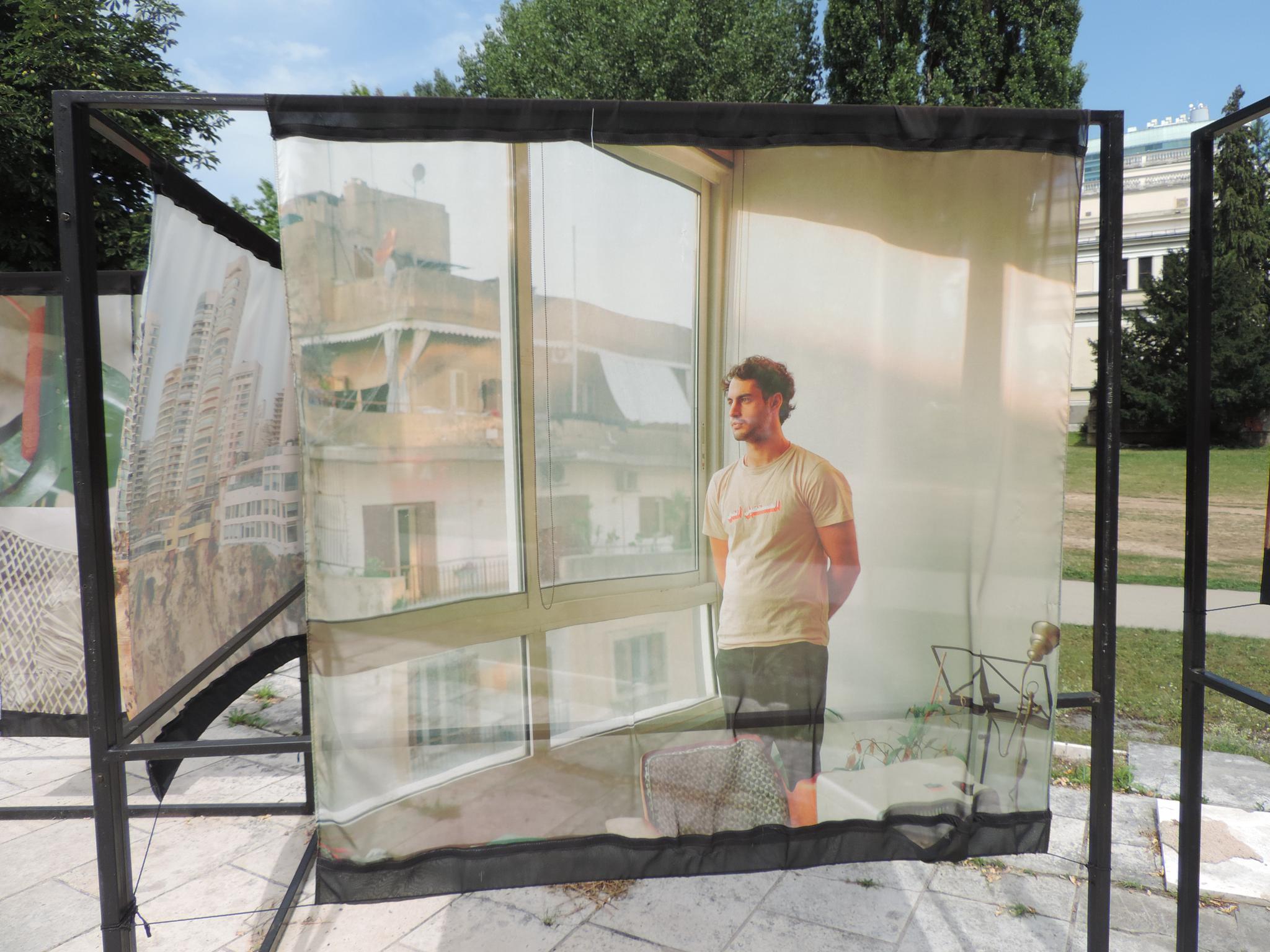
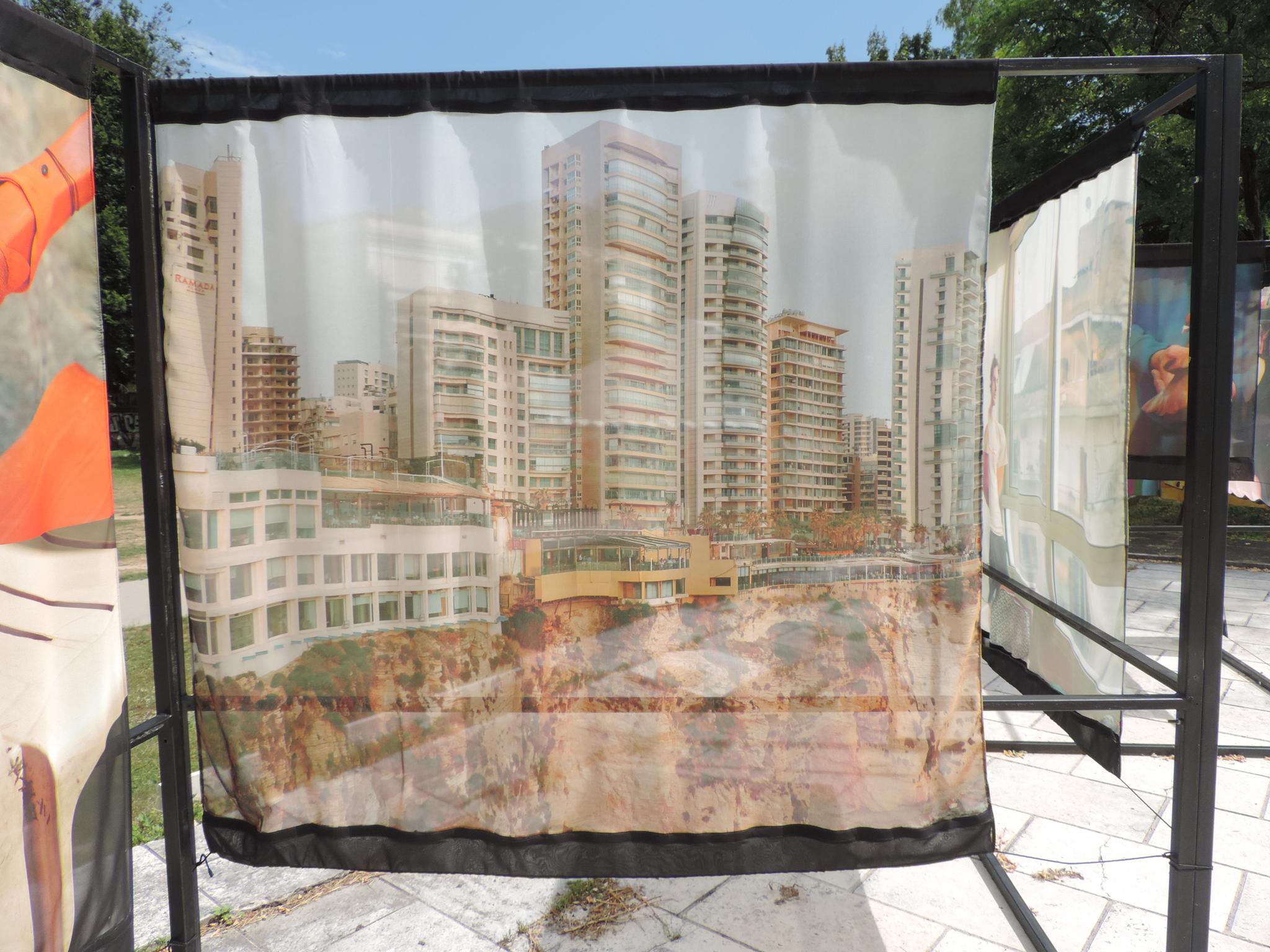
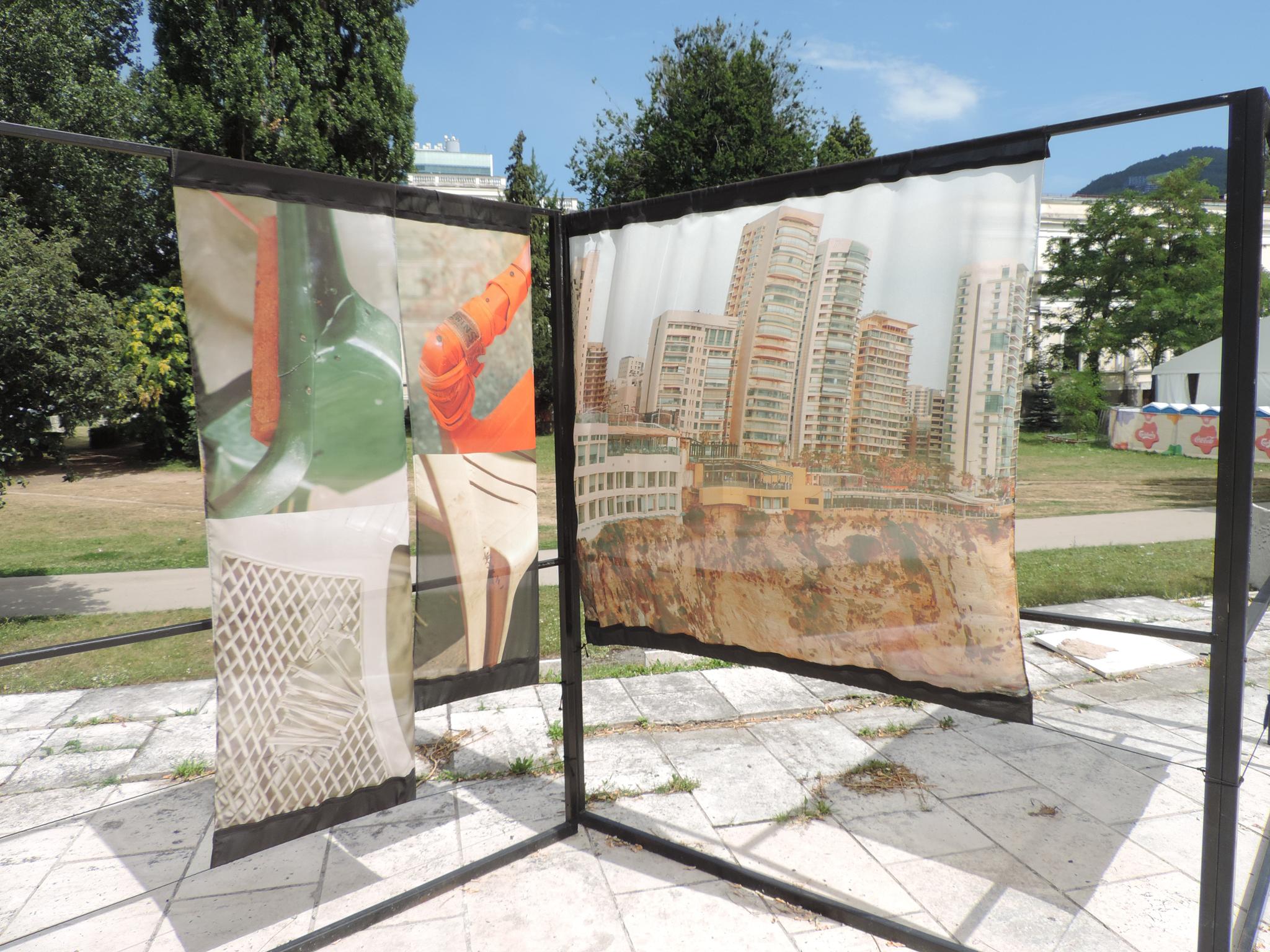
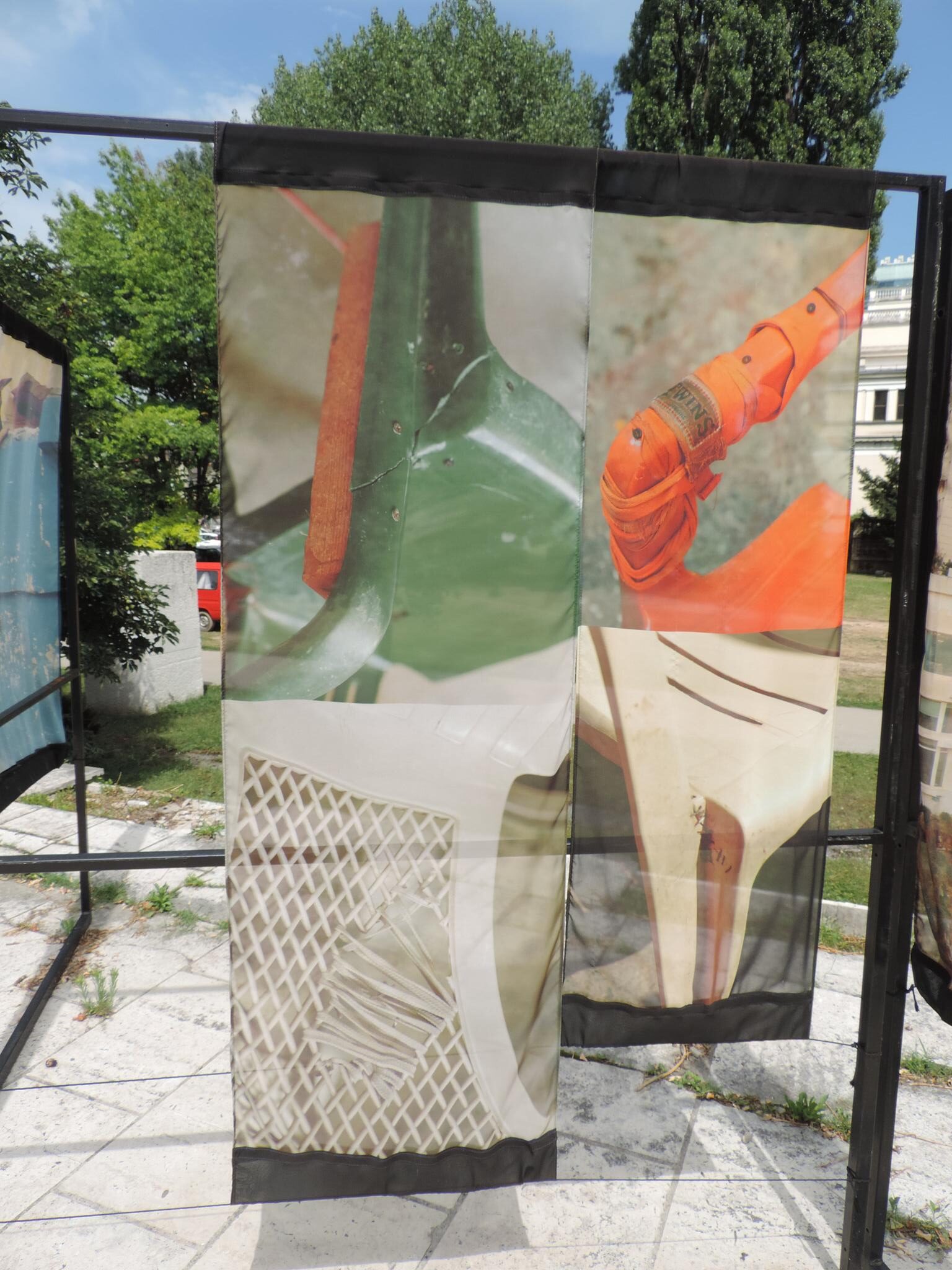
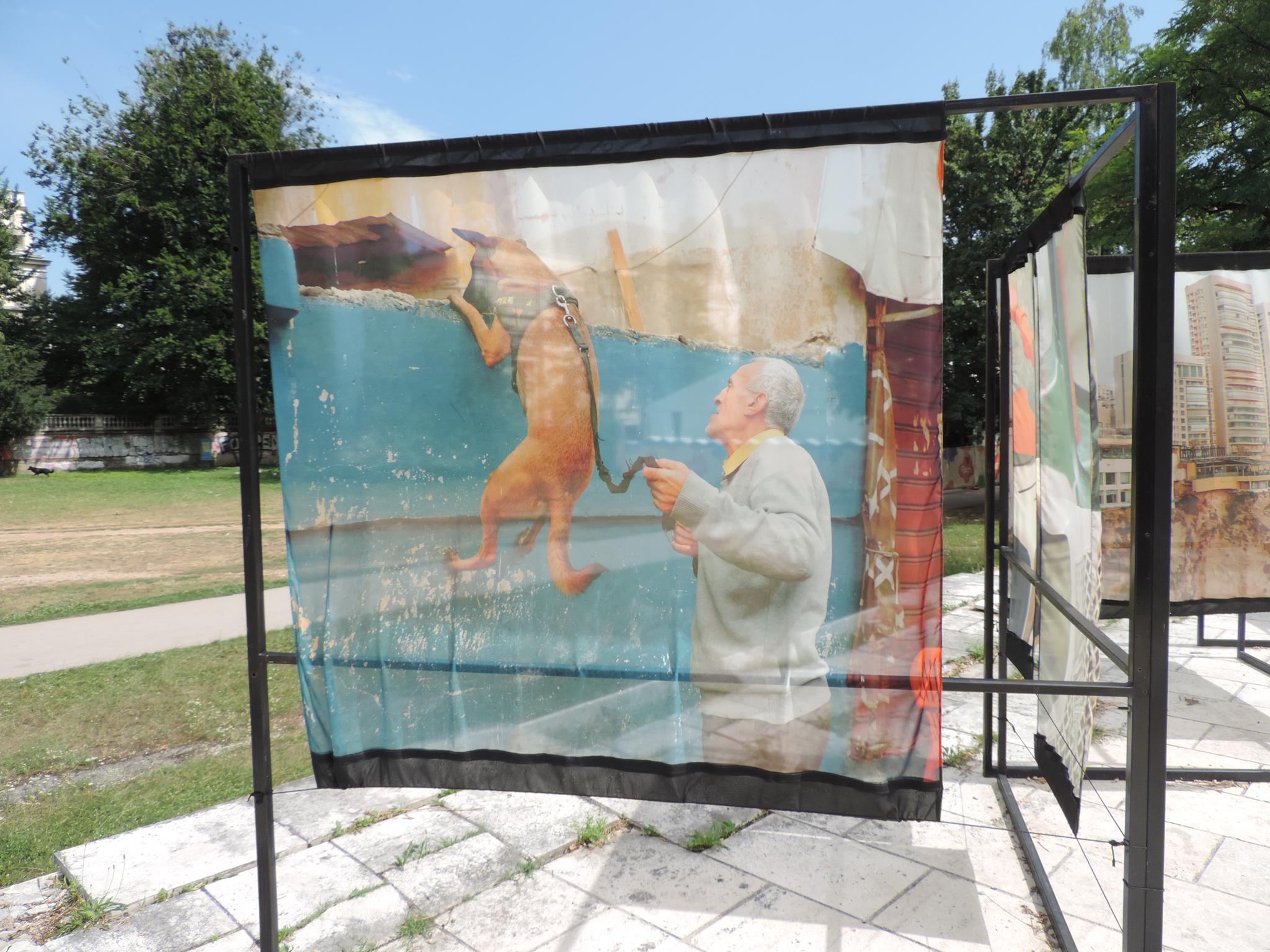
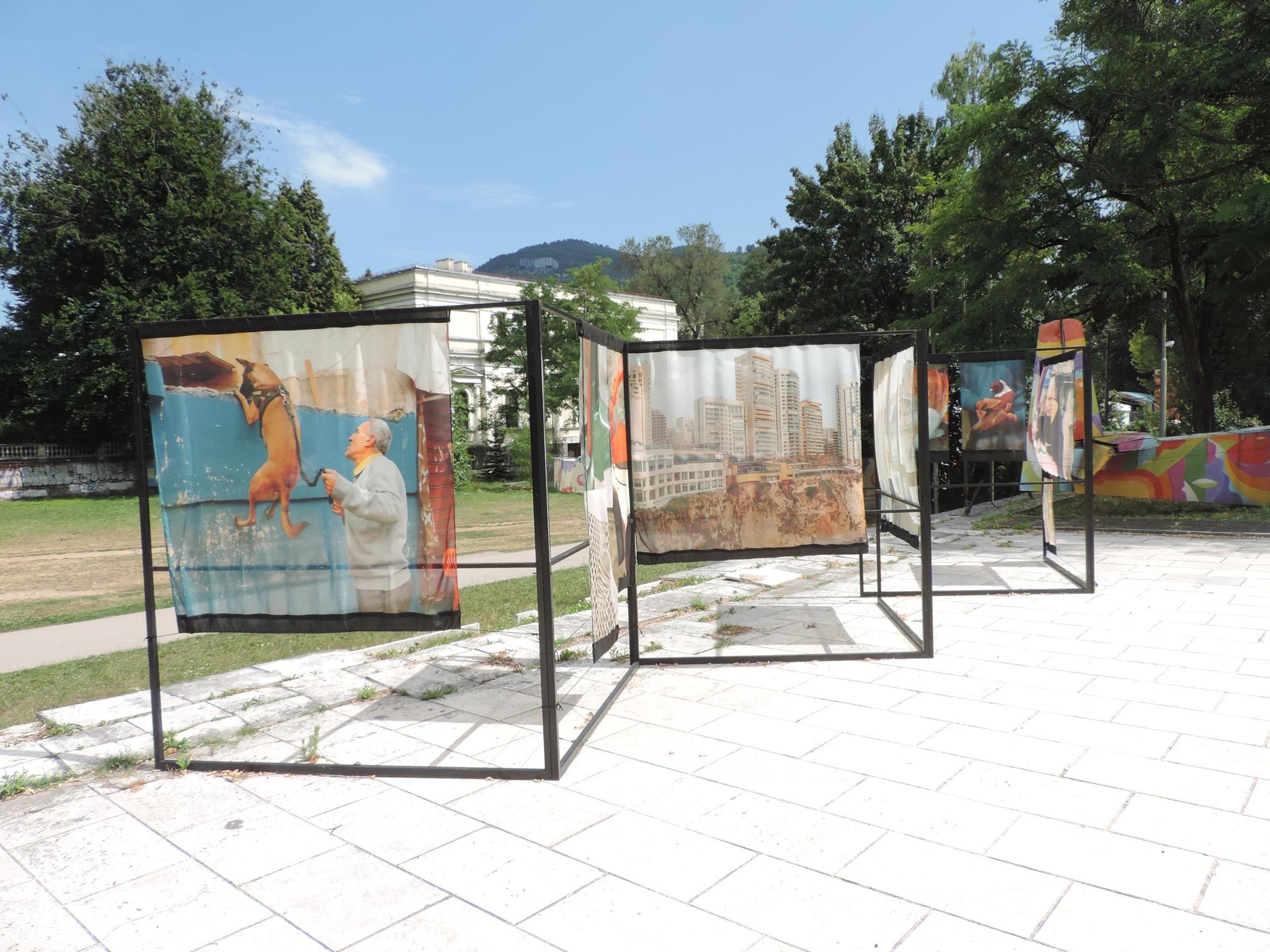
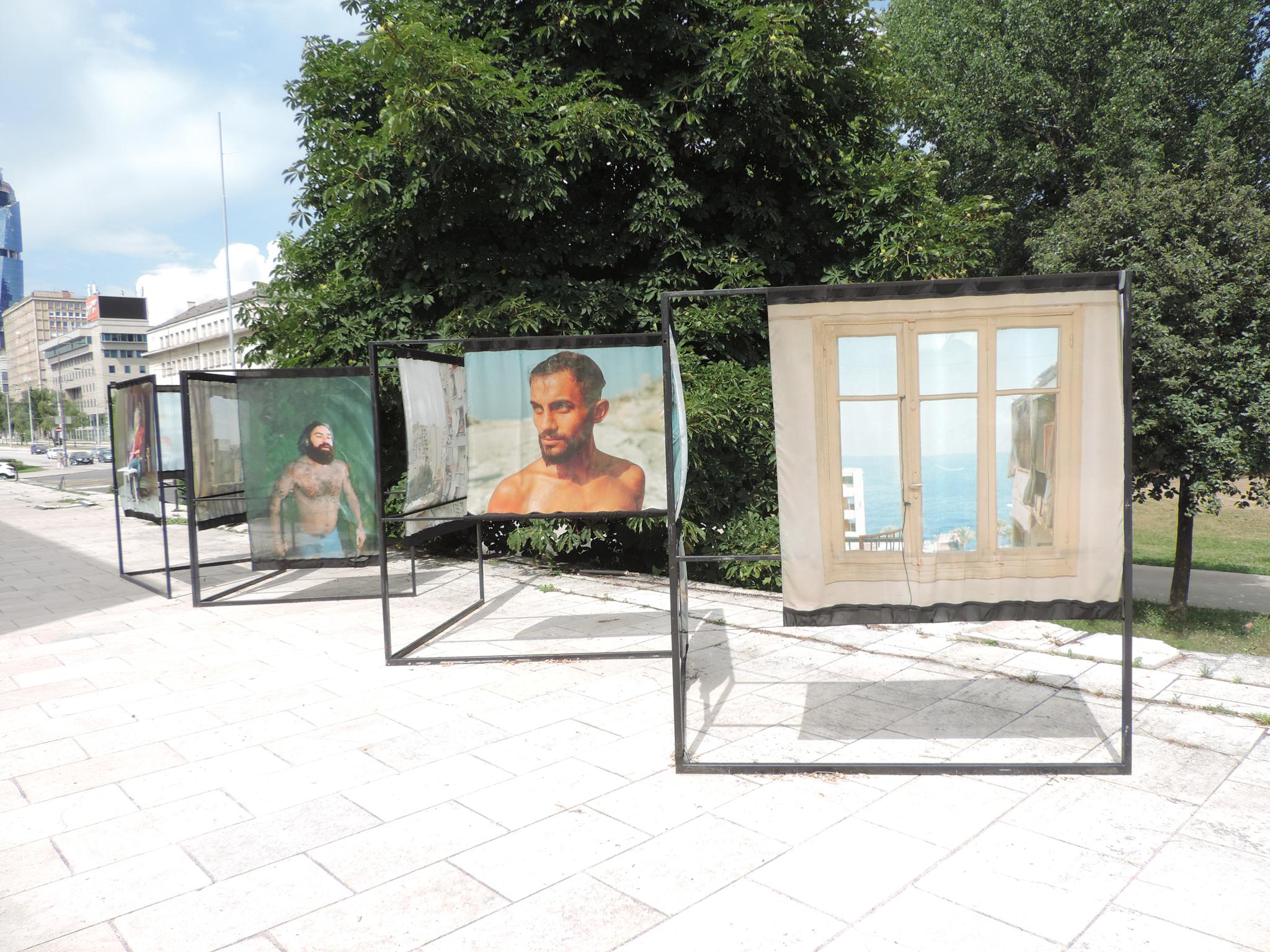
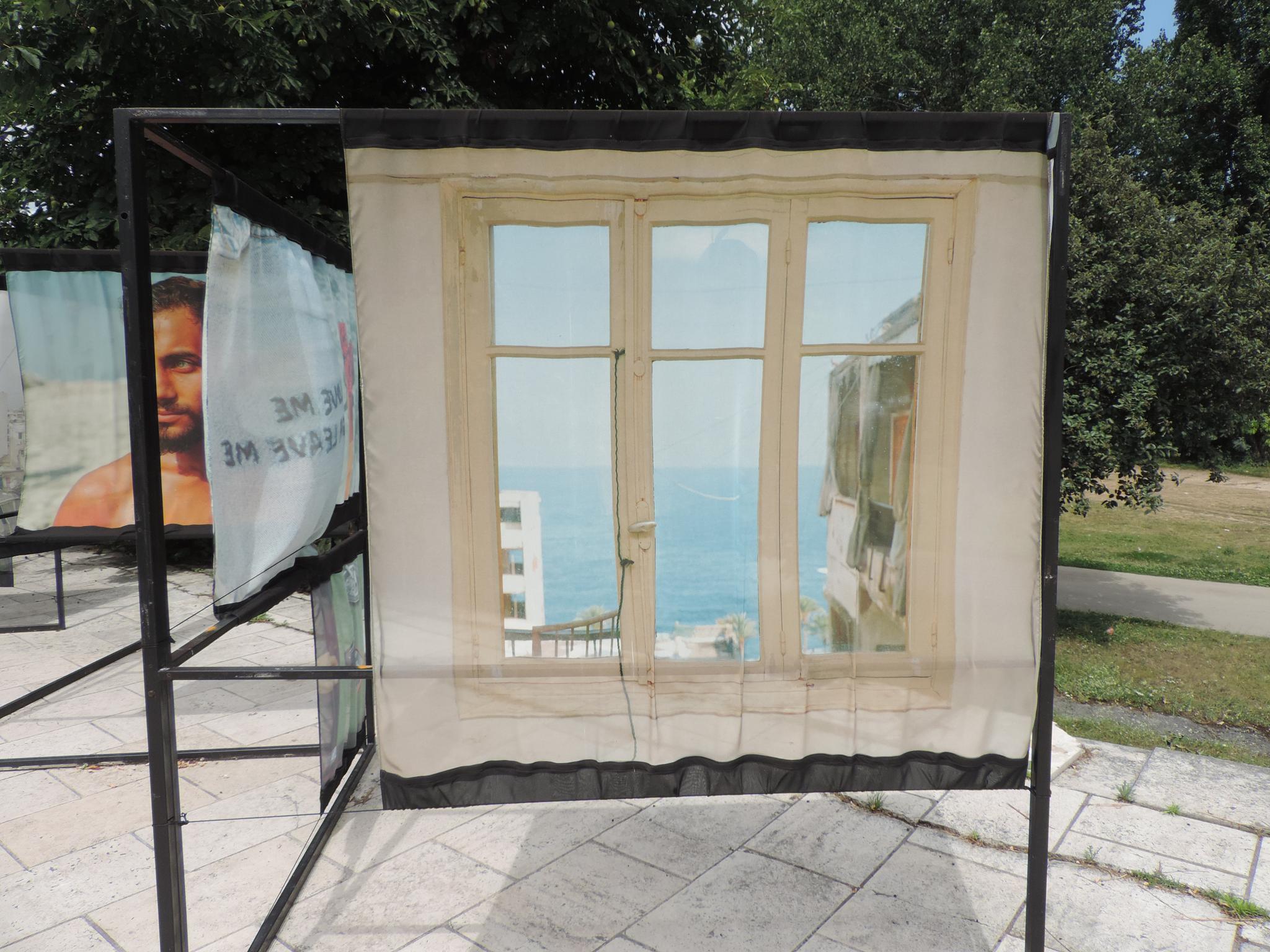
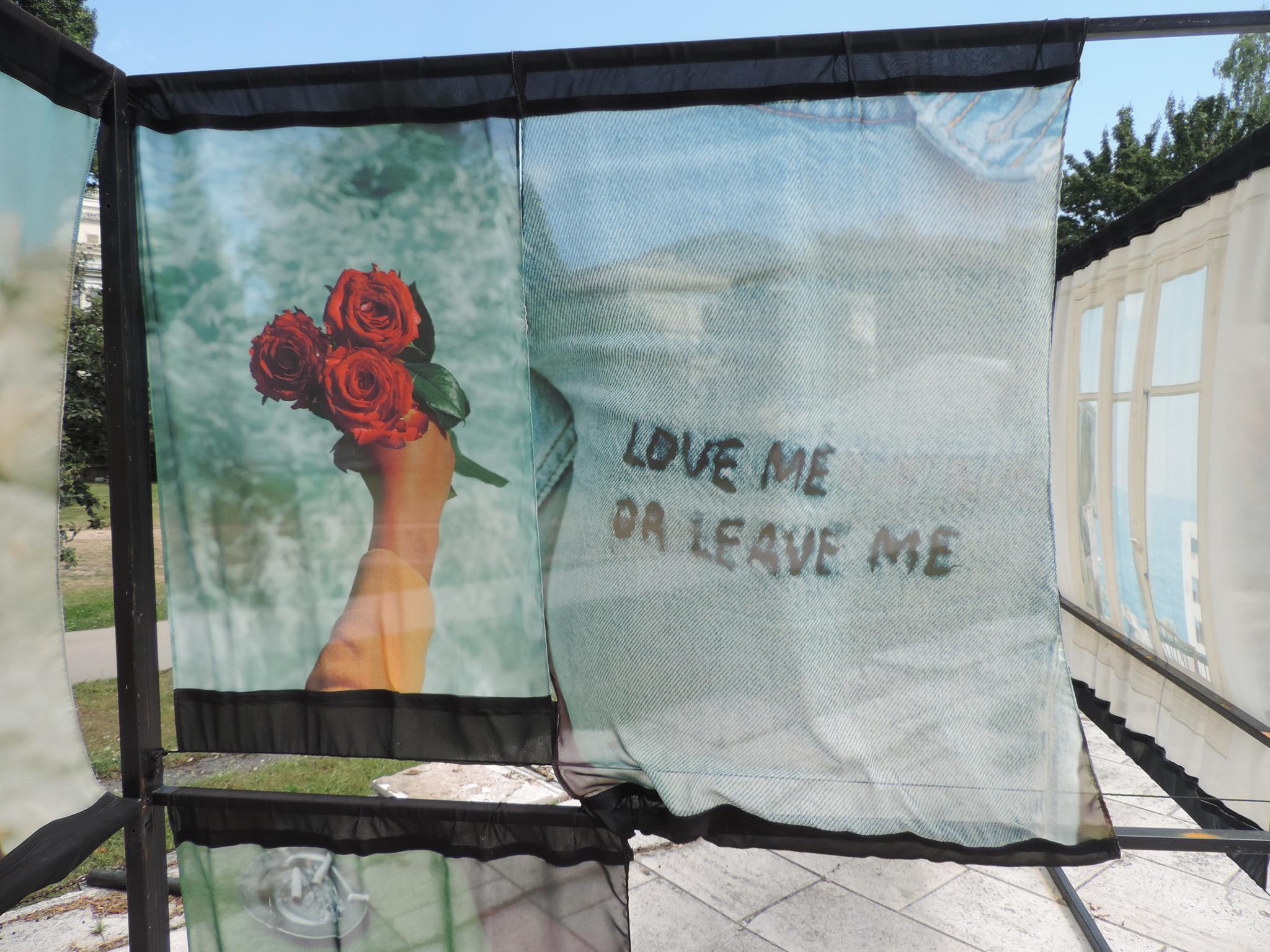
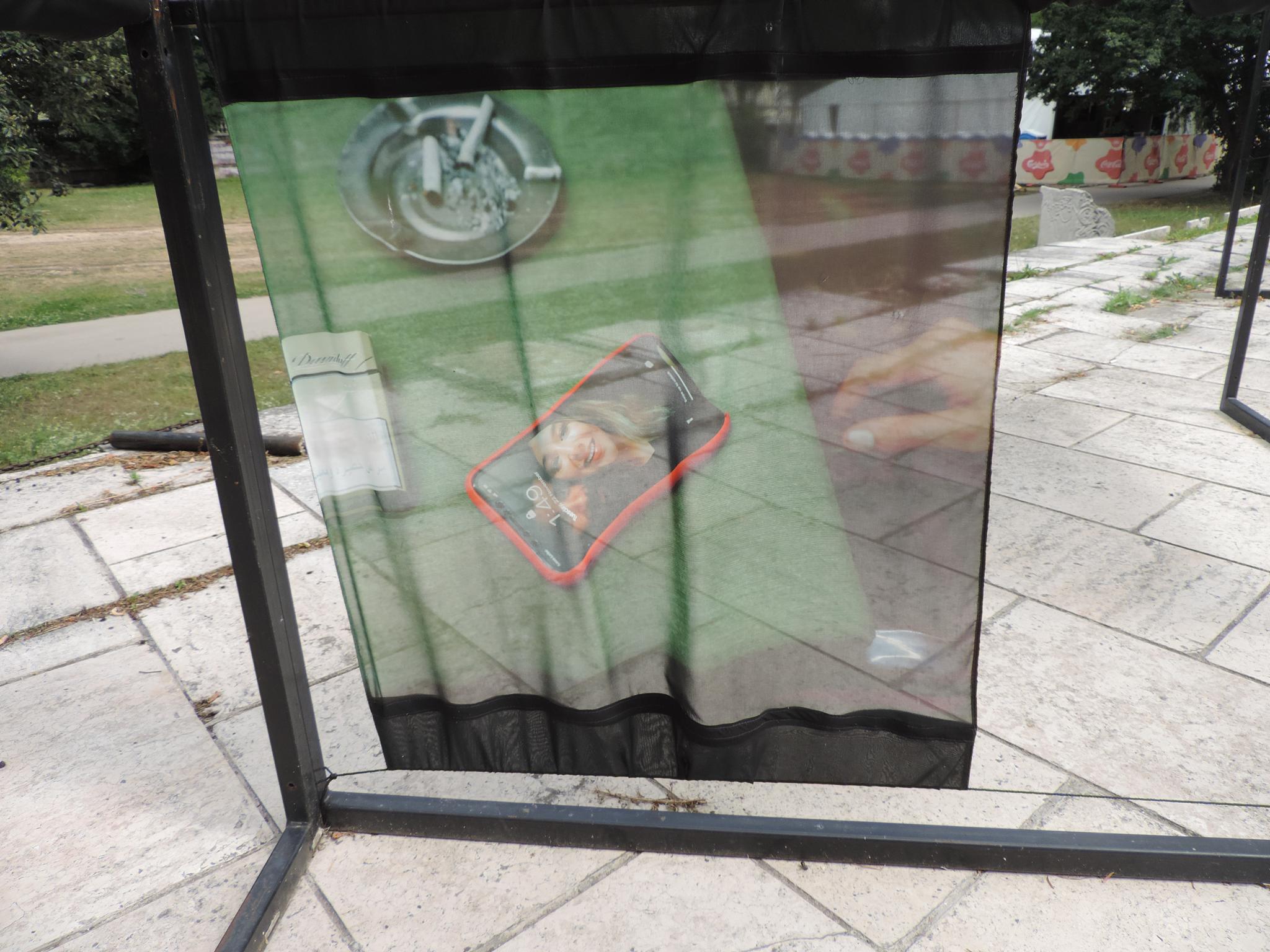
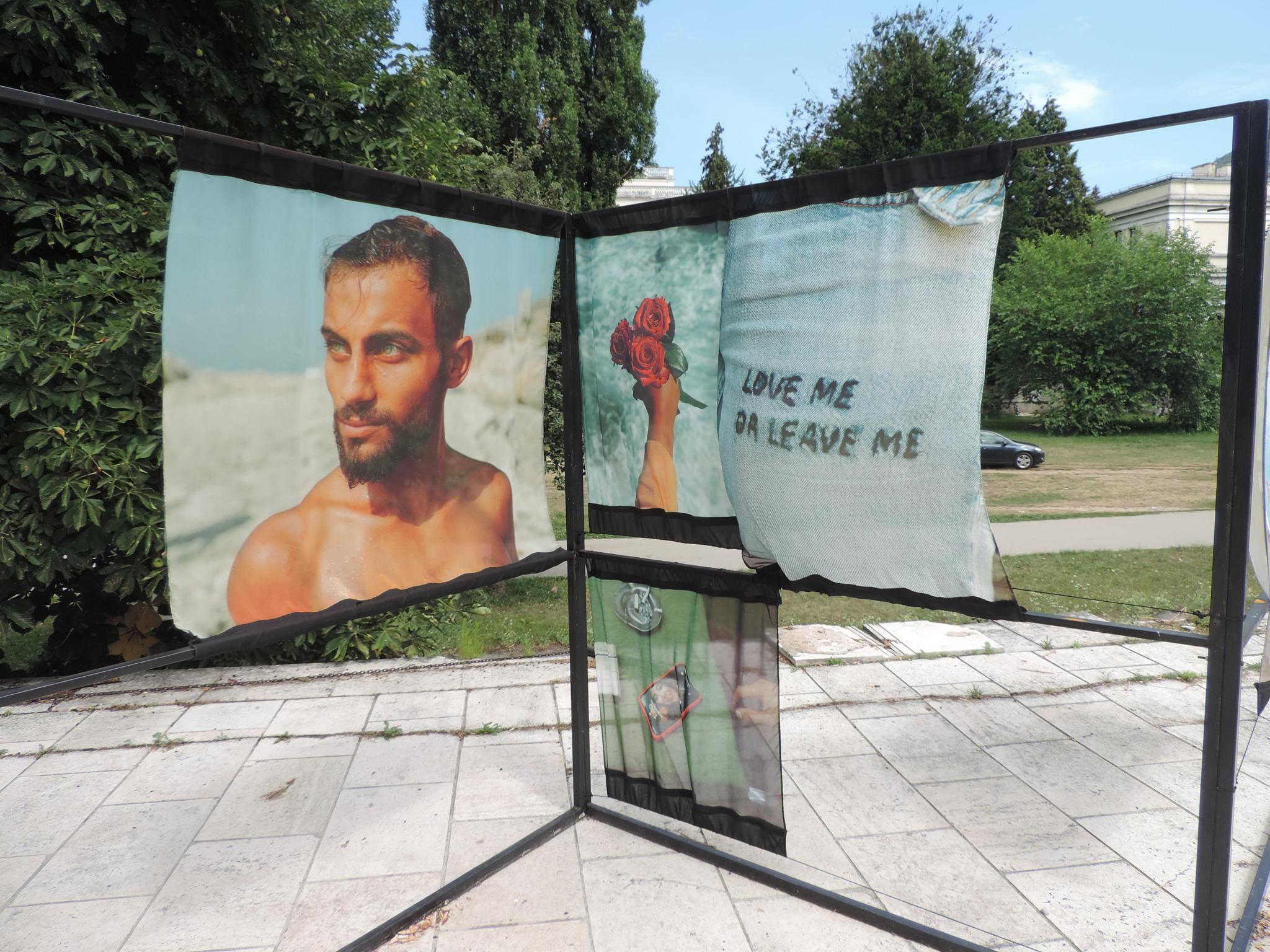
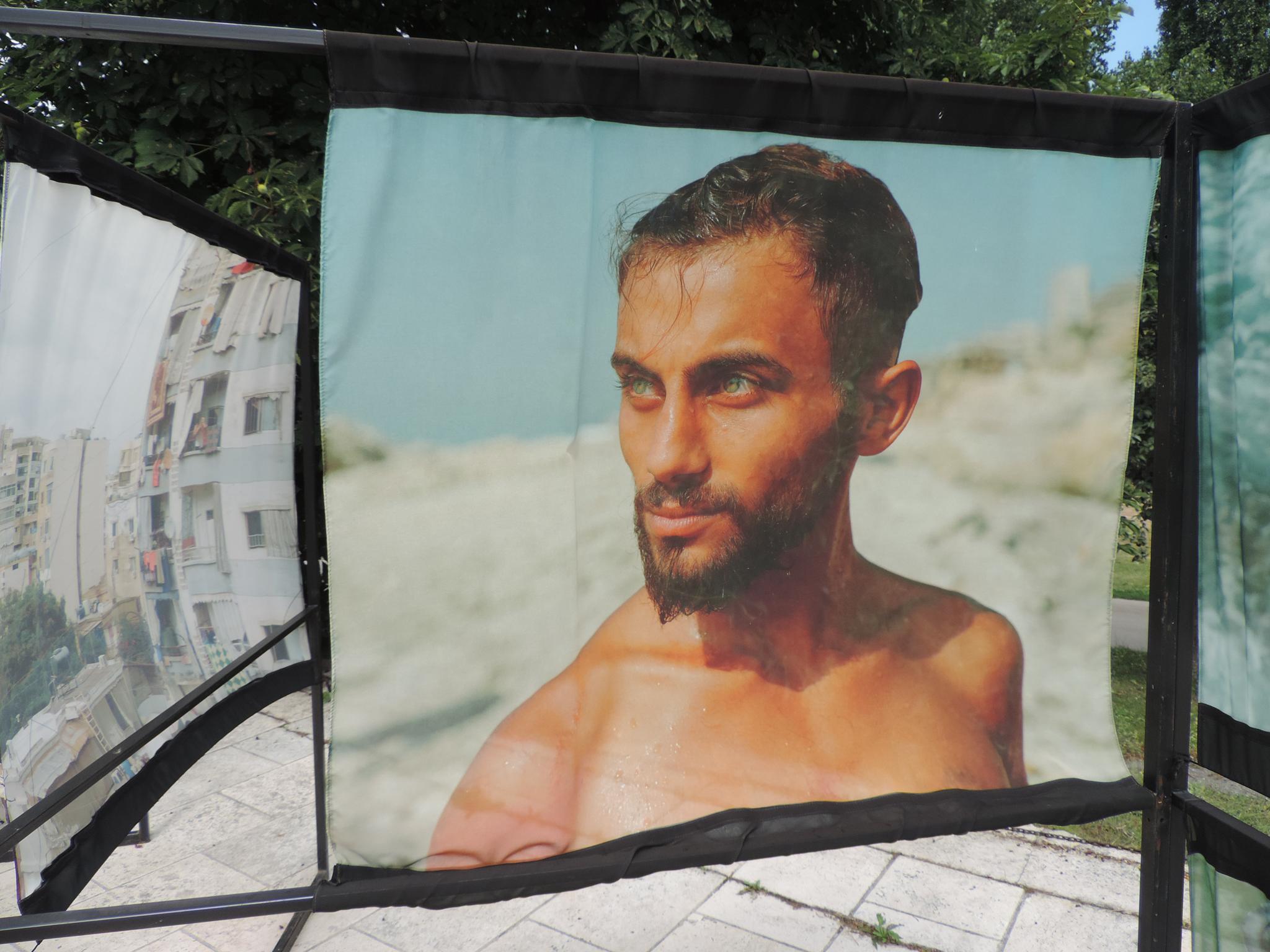
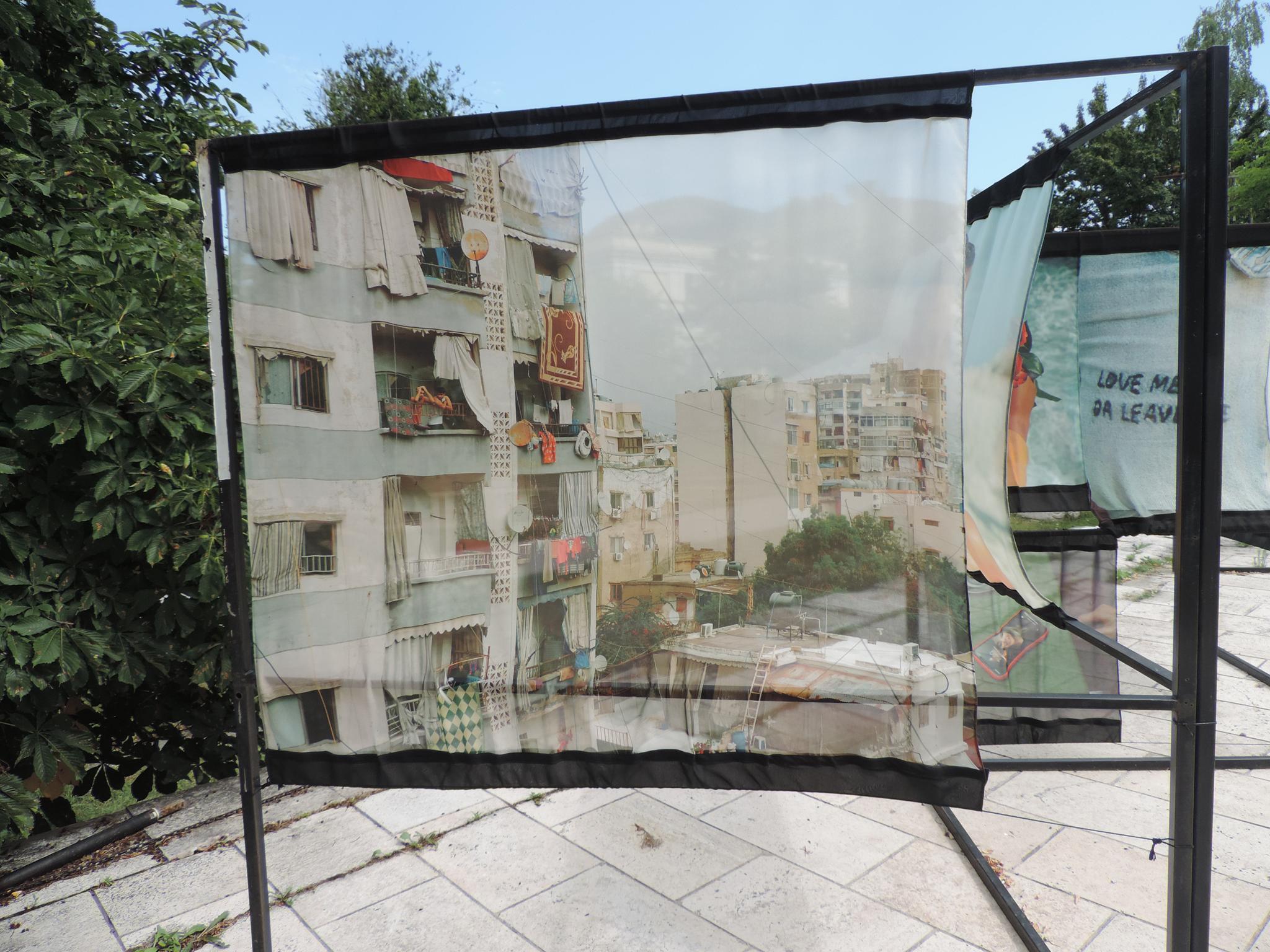
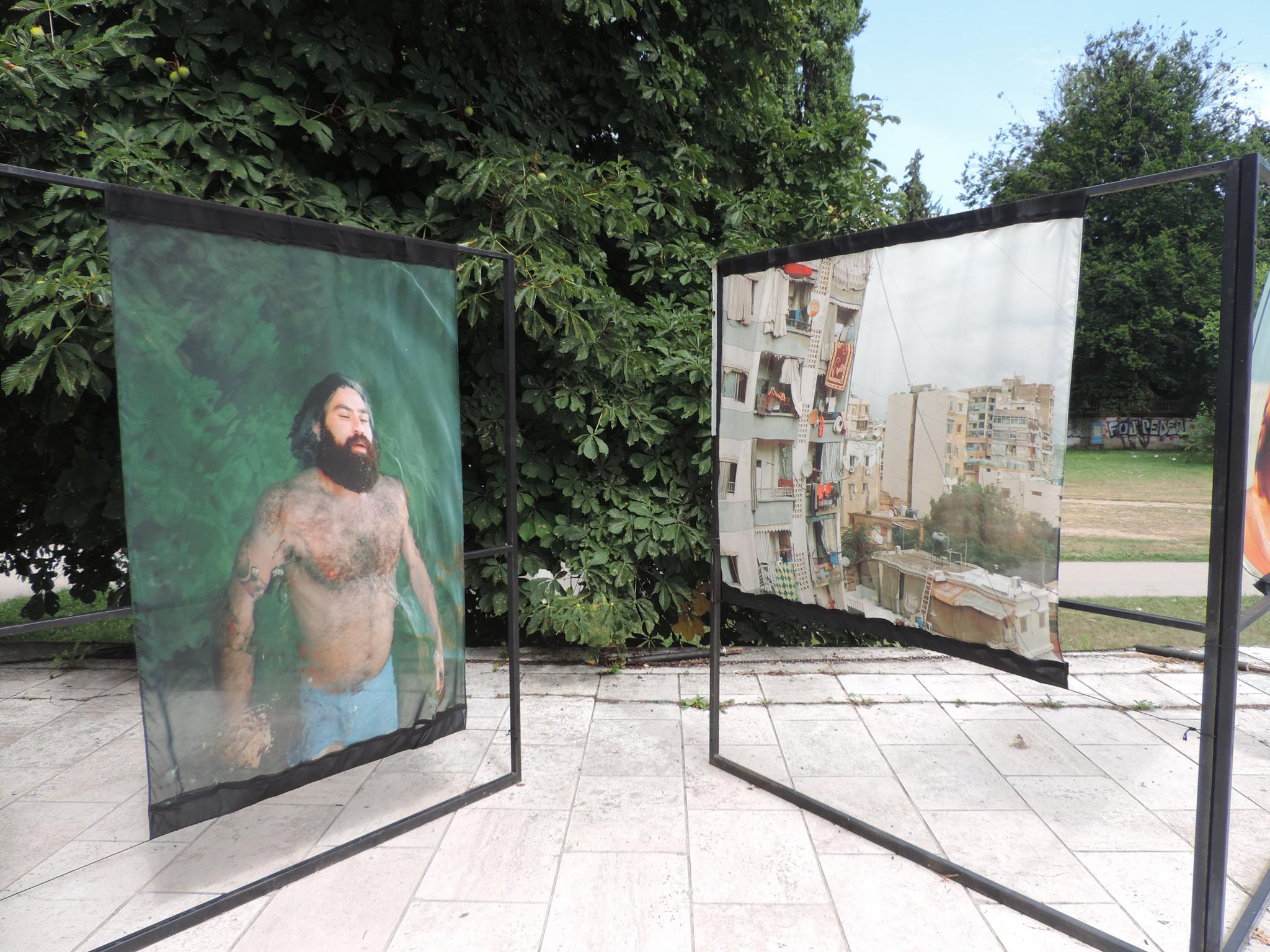
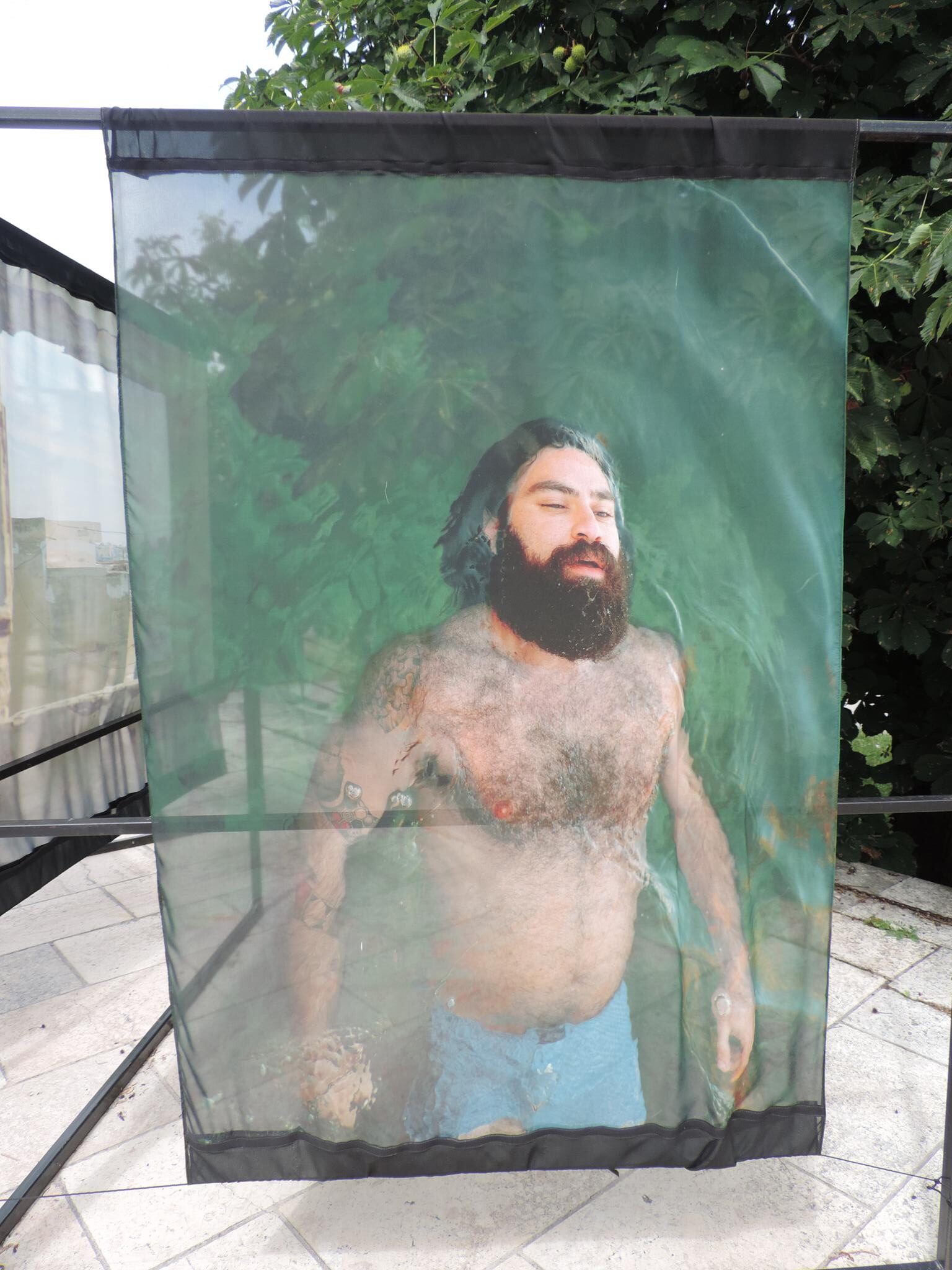
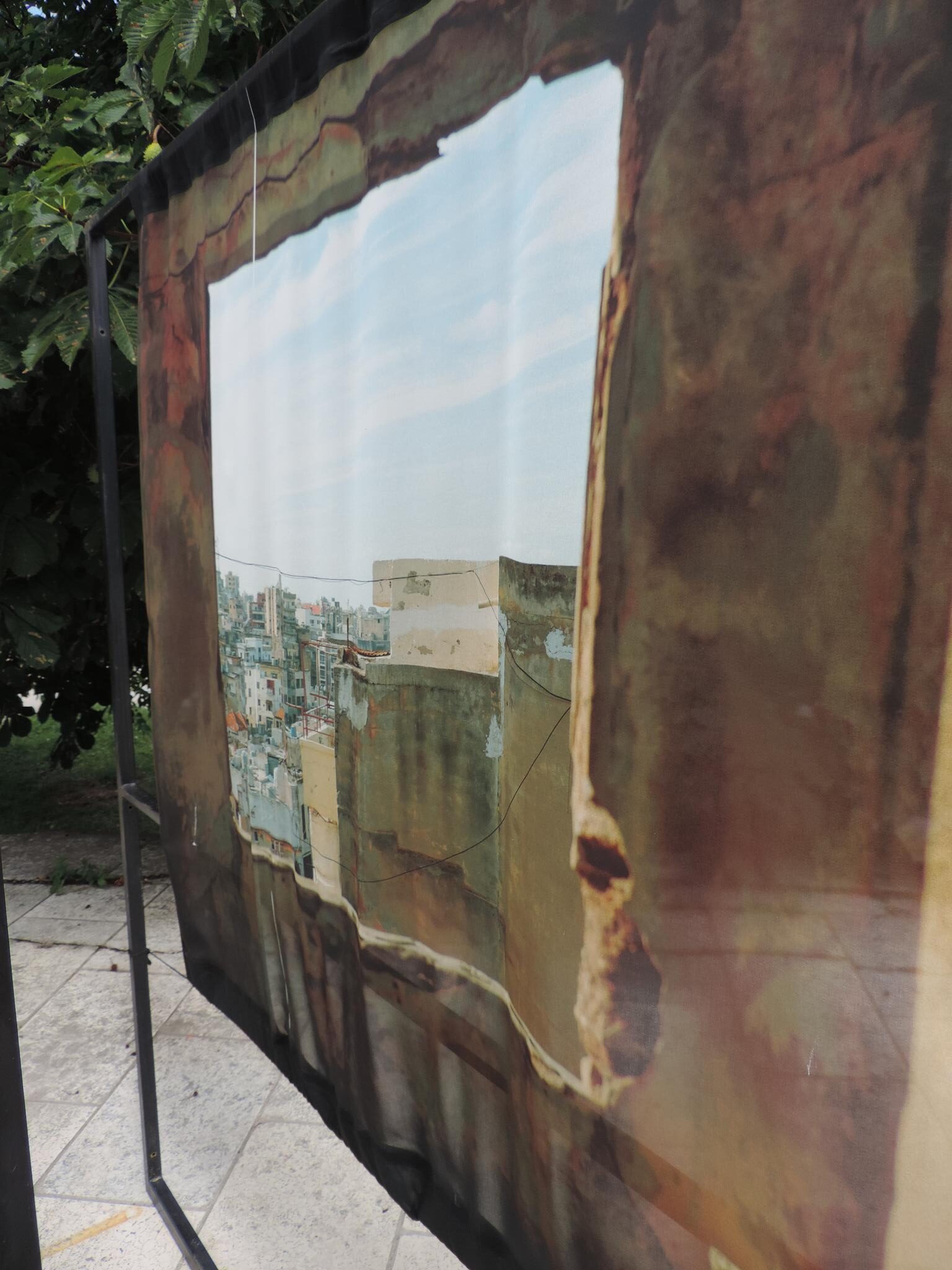
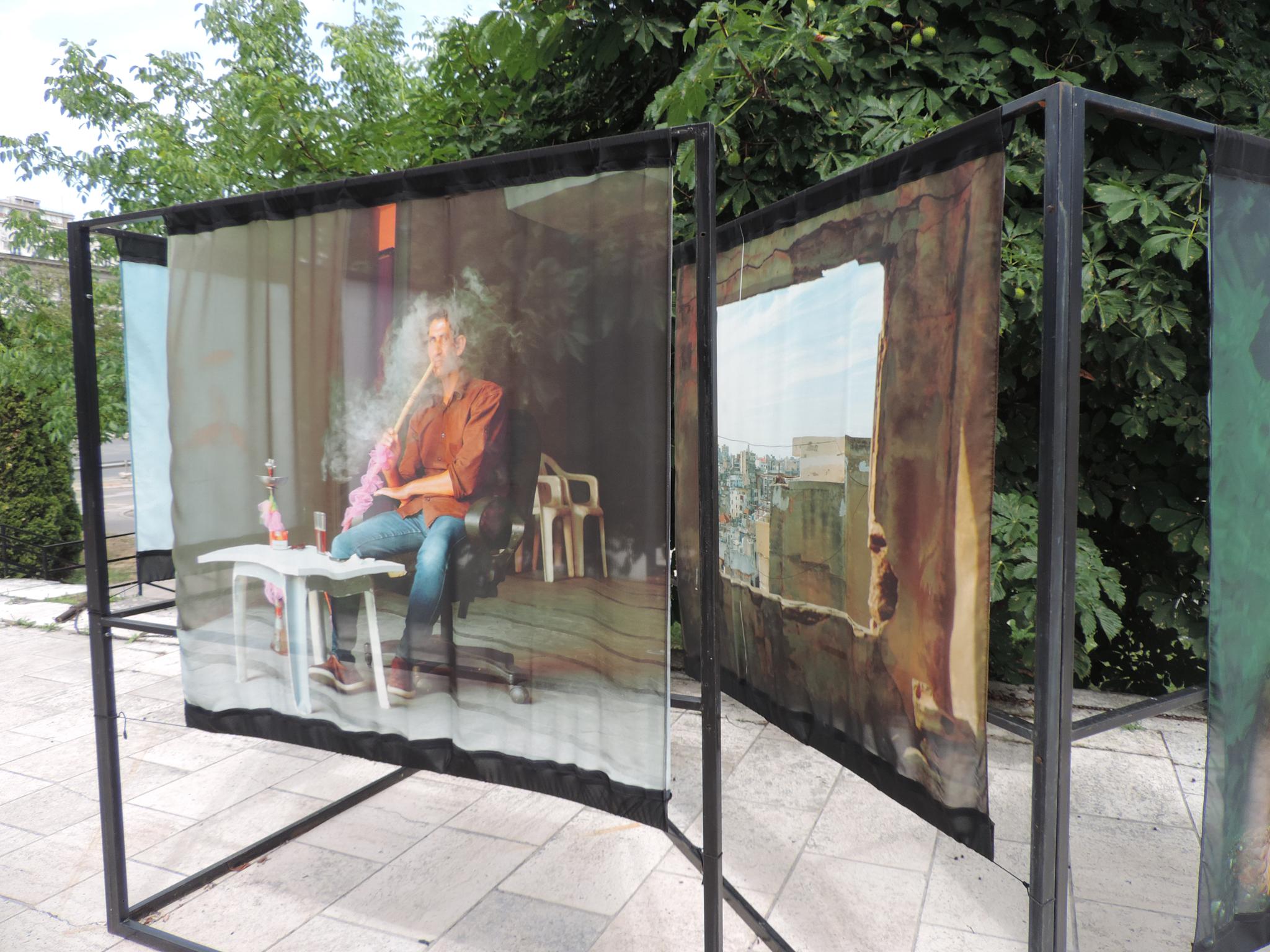
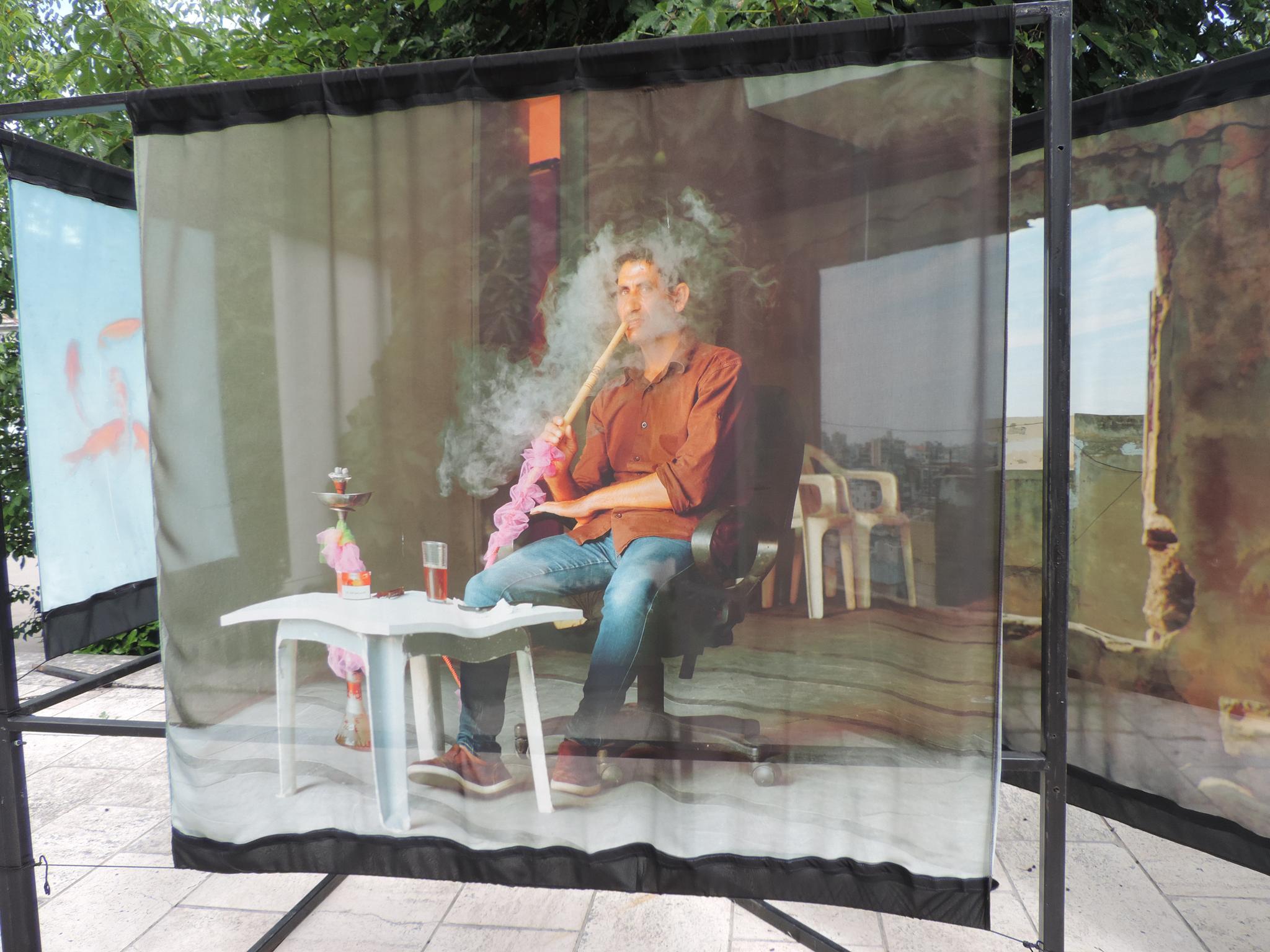
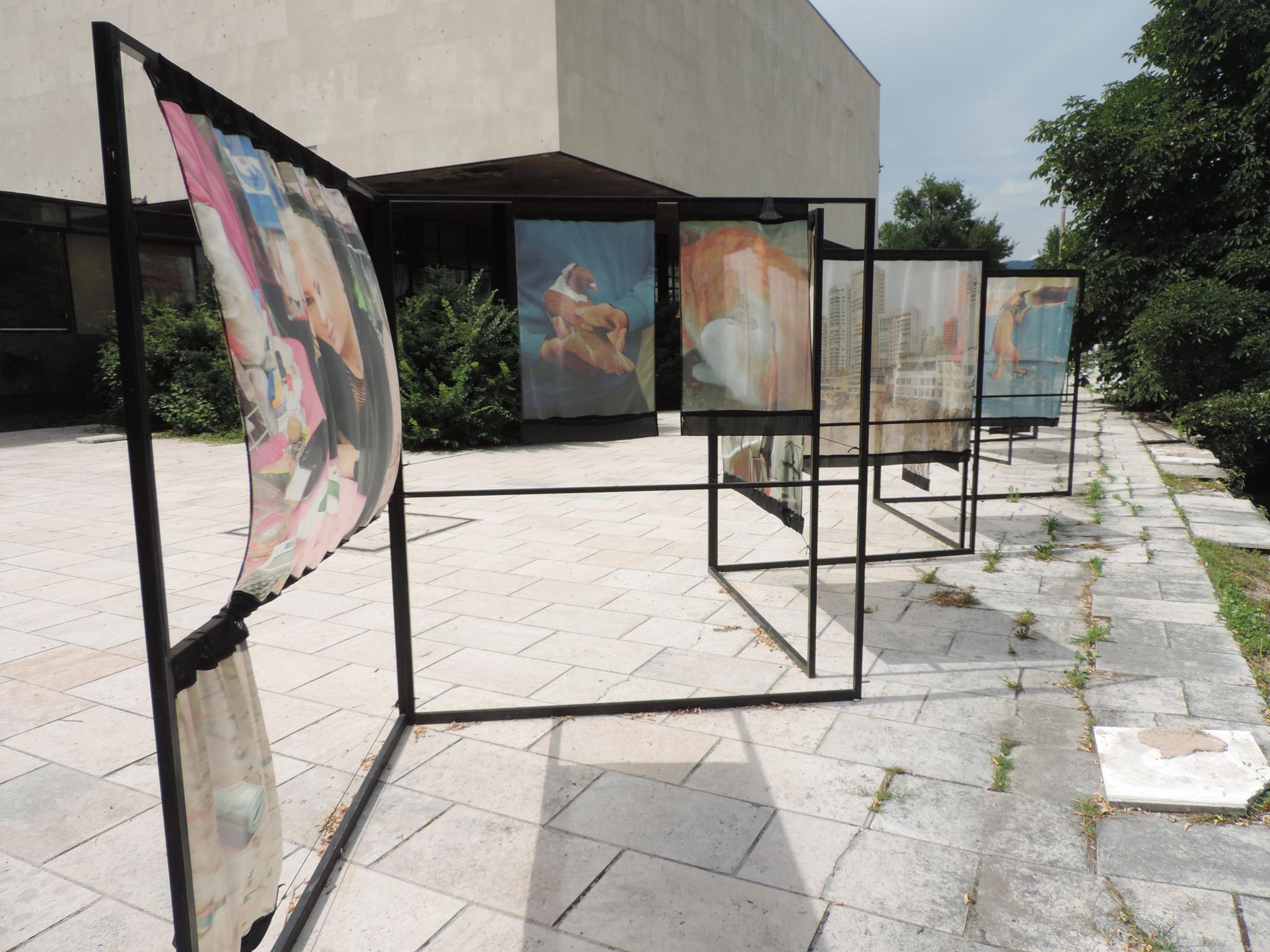
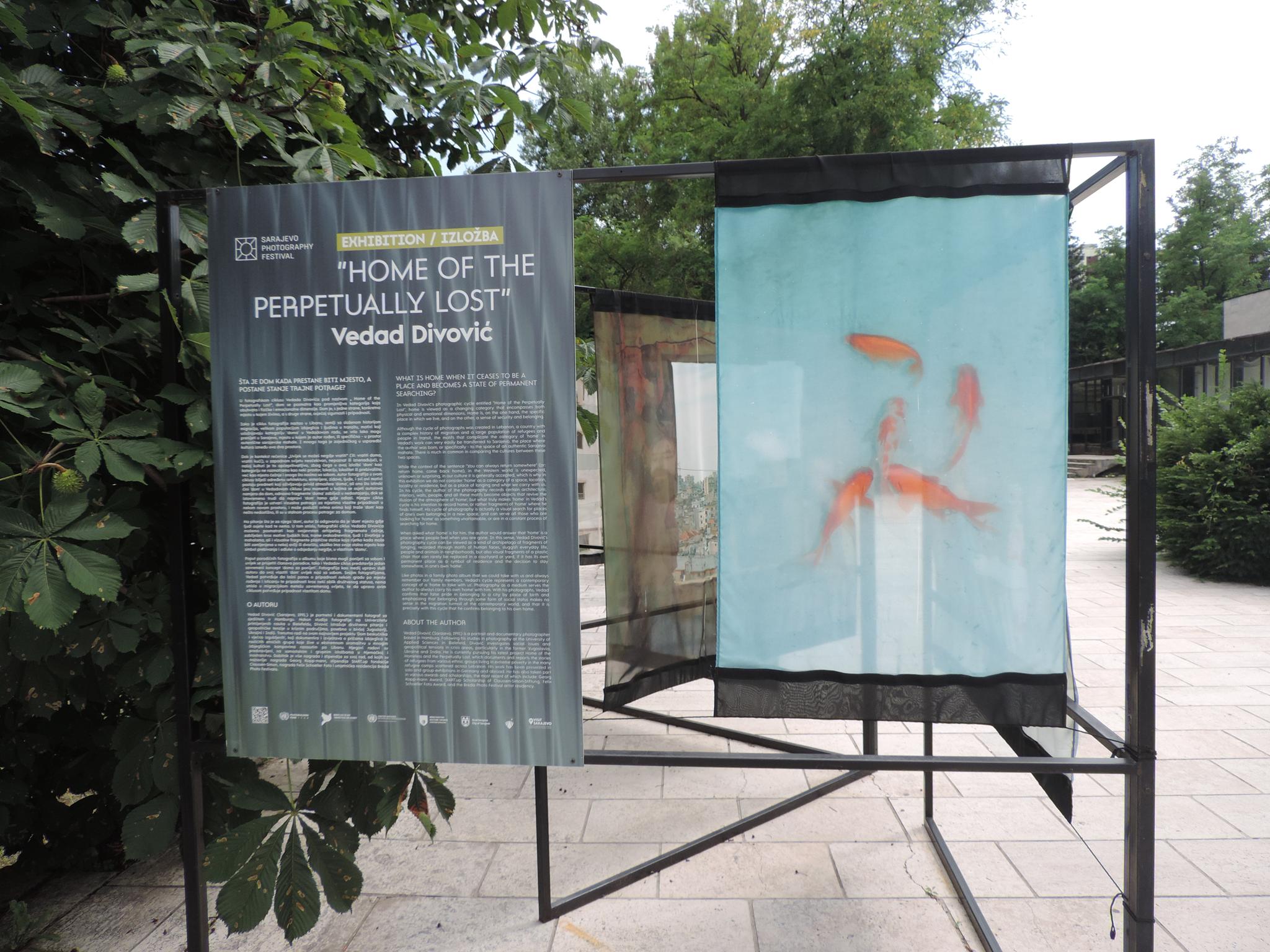
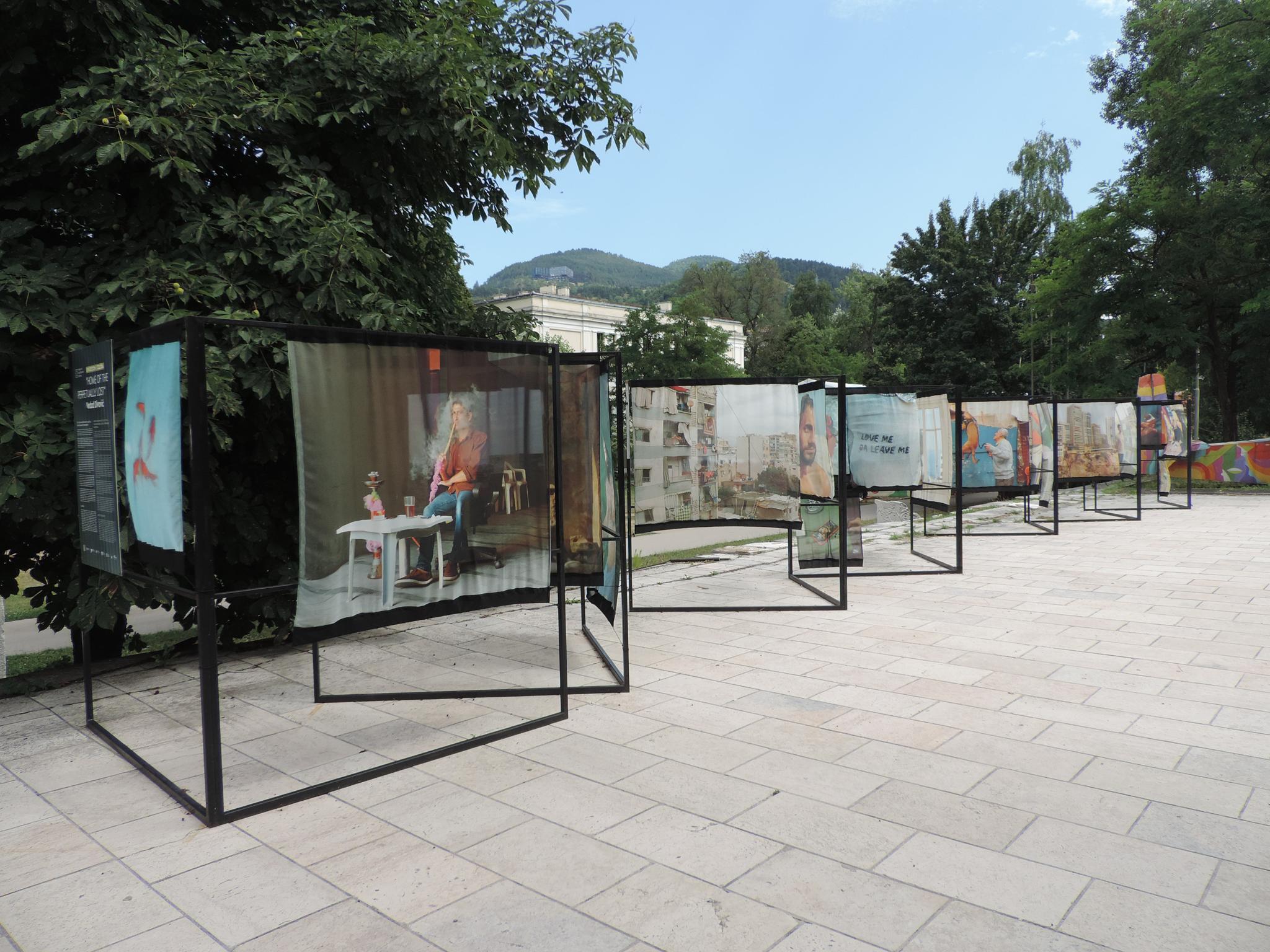
On the small plaza in the front of the History Museum you can find outdoor exhibitions, like the one by VEDAD DIVOVIĆ around July 2026. It asks the question: „What is home when it ceases to be a place and becomes a state of permanent searching?“ A selection of his fantastic photographic works was printed on cloth and hung as installations, which gave the pieces an added special effect as they moved in the breeze.
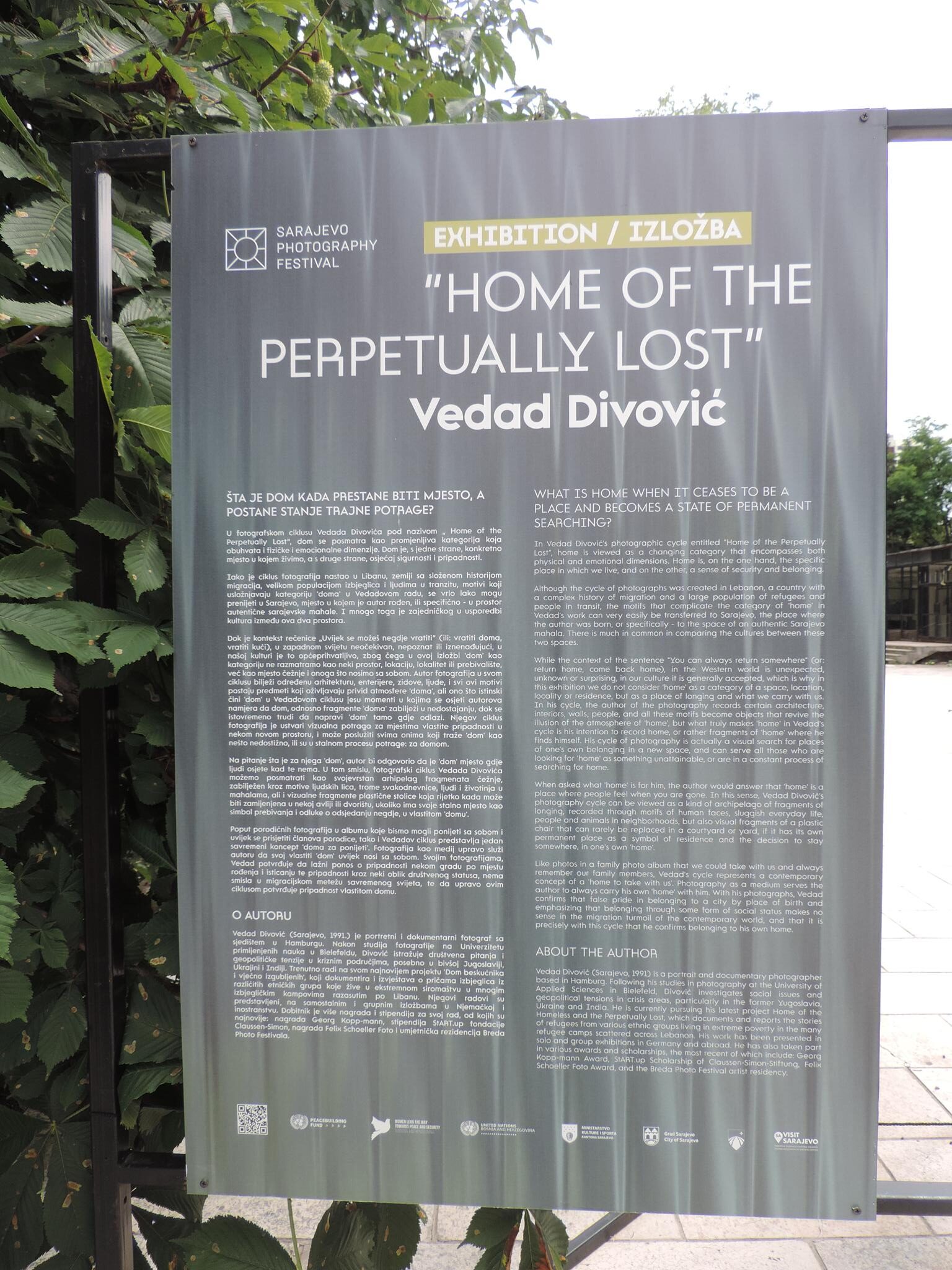
In VEDAD DIVOVIĆ’s photographic cycle entitled „Home of the Perpetually Lost“, home is viewed as a changing category that encompasses both physical and emotional dimensions. Home is, on the one hand, the specific place in which we live, and on the other, a sense of security and belonging. Although the cycle of photographs was created in Lebanon, a country with a complex history of migration and a large population of refugees and people in transit, the motifs that complicate the category of ‚home‘ in Vedad’s work can very easily be transferred to Sarajevo, the place where the author was born, or specifically to the space of an authentic Sarajevo mahala. There is much in common in comparing the cultures between these two spaces.
While the context of the sentence „You can always return somewhere“ (or: return home, come back home), in the Western world is unexpected, unknown or surprising, in our culture it is generally accepted, which is why in this exhibition we do not consider ‚home‘ as a category of a space, location, locality or residence, but as a place of longing and what we carry with us.
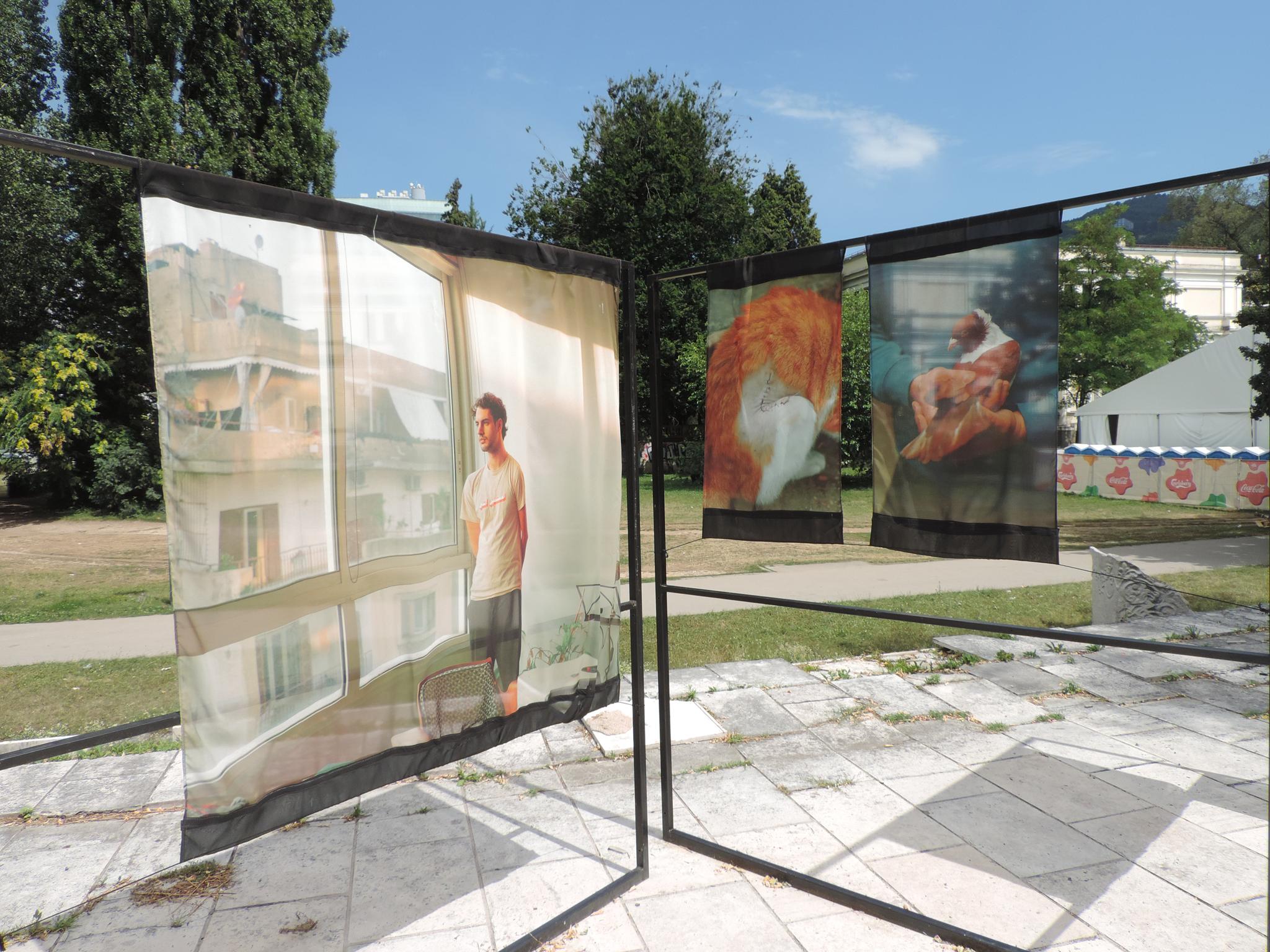
In his cycle, the author of the photography records certain architecture, interiors, walls, people, and all these motifs become objects that revive the illusion of the atmosphere of ‚home‘, but what truly makes ‚home‘ in Vedad’s cycle is his intention to record home, or rather fragments of ‚home‘ where he finds himself. His cycle of photography is actually a visual search for places of one’s own belonging in a new space, and can serve all those who are looking for ‚home‘ as something unattainable, or are in a constant process of searching for home.
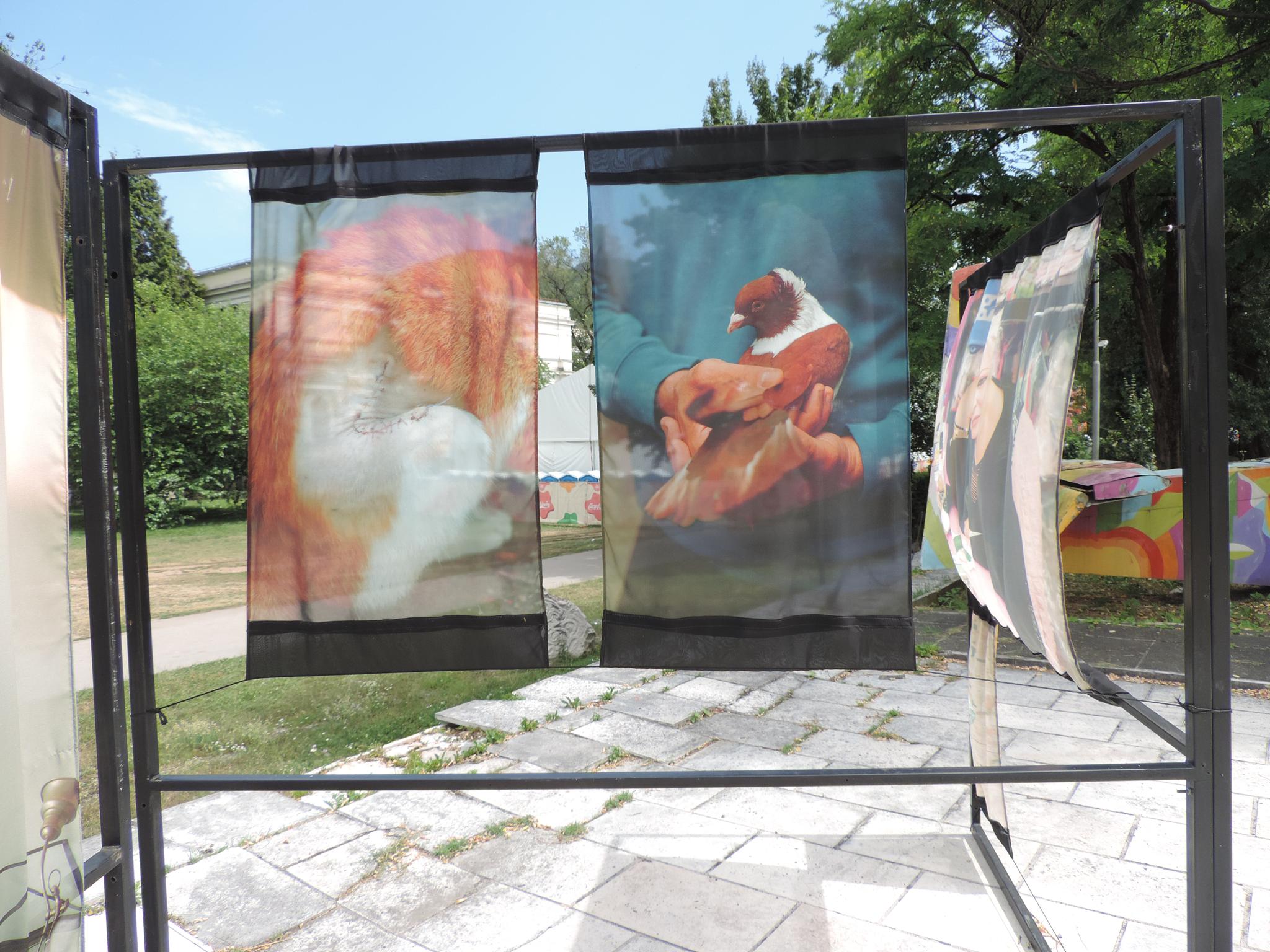
When asked what ‚home‘ is for him, the author would answer that ‚home‘ is a place where people feel when you are gone. In this sense, Vedad Divović’s photography cycle can be viewed as a kind of archipelago of fragments of longing, recorded through motifs of human faces, sluggish everyday life, people and animals in neighborhoods, but also visual fragments of a plastic chair that can rarely be replaced in a courtyard or yard, if it has its own permanent place as a symbol of residence and the decision to stay somewhere, in one’s own ‚home‘.
Like photos in a family photo album that we could take with us and always remember our family members, Vedad’s cycle represents a contemporary concept of a ‚home to take with us‘. Photography as a medium serves the author to always carry his own ‚home‘ with him. With his photographs, VEDAD DIVOVIĆ confirms that false pride in belonging to a city by place of birth and emphasizing that belonging through some form of social status makes no sense in the migration turmoil of the contemporary world, and that it is precisely with this cycle that he confirms belonging to his own home.
VEDAD DIVOVIĆ was born in Sarajevo in 1991 and is a portrait and documentary photographer meanwhile based in Hamburg, Germany. Following his studies in photography at the University of Applied Sciences in Bielefeld, He investigates social issues and geopolitical tensions in crisis areas, particularly in the former Yugoslavia, Ukraine and India. He is currently pursuing his latest project „Home of the Homeless and the Perpetually Lost“, which documents and reports the stories of refugees from various ethnic groups living in extreme poverty in the many refugee camps scattered across Lebanon.
His works have been presented in solo and group exhibitions in Germany and abroad. He has also taken part in various awards and scholarships, the most recent of which include: Georg Kopp-mann Award, StART.up Scholarship of Claussen-Simon-Stiftung, Felix Schoeller Foto Award, and the Breda Photo Festival artist residency.
You can combine your visit with the Historical Museum or the free open air war vehicles exhibition at Cafe Tito just around the corner. Check out as well the pages for the artworks in front of the museum by BO JONZON and VLADIMIR ZORIN, for the War Victims Memorial, for the Antifa Artwork by NIJAZ GOJAK, for the Painted Airplane by RIKARDO DRUŠKIĆ, and for the Graffiti Wall facing the park to the east.
INFOTHEK
 Artist: VEDAD DIVOVIĆ
 Website: https://divovic.com
 Facebook: https://www.facebook.com/vedad.divovic
 Instagram: https://www.instagram.com/vedad.divovic
History Museum: HISTORIJSKI MUZEJ BOSNE I HERCEGOVINE
Website: https://muzej.ba
Facebook: https://www.facebook.com/histmuzbih
Instagram: https://www.instagram.com/historijski.muzejbih

RECOMMENDABLE SPOTS IN SARAJEVO
>>> Fasada Festival <<<
>>> Trebevic Bobsleigh <<<
>>> Manifesto Galerija <<<
>>> Zetra Hall of Fame <<<
>>> Latička Graffiti Hall <<<
>>> Ice Rink Walls <<<
>>> Skatepark Hall <<<
>>> Bačići Train Tunnel Hall <<<
>>> Bačići Ruins Spray Space <<<
>>> Asim Ferhatović Stadion <<<
>>> Film Academy Spray Space <<<
>>> Radiceva Art Tunnel <<<
>>> Basketball Court Vijecnica <<<
>>> Davorin Popović Mural <<<
>>> Stencil Collection <<<
>>> Sticker Section <<<

MORE ARTICLES ABOUT BOSNIA-HERZEGOVINA
>>> Streetart Mostar <<<
>>> Streetart Prijedor <<<
>>> Trebevic Bobsleigh Graffiti <<<
>>> Streetart Banja Luka <<<
>>> Streetart Jezero Klinje <<<
>>> Streetart Višegrad <<<
>>> Streetart Novi Grad <<<