ddd
ddd
ddd
Hello listeners, interested travelers, and art fans. We have a super cool interview for you from Nepal. At the moment, I’m in Patan, and I’m going to talk to KIRAN MAHARJAN. His artist name is H11235, and he creates vibrant, colorful streetart works, including huge murals. He’s also part of the collectives and crews TAG THEORY and KOR ART COLLECTIVE, and was a part of ART LAB. So yeah, he’s very busy. There are a lot of interesting things to discuss, and he will tell us more about his art and how everything came together. So first tell us, how did you start with art in general? When did it all begin?
It started a long time ago. Like many people, I’ve been interested in art from an early age. As a kid, I used to draw a lot of cartoons – that’s how I got started. I had this habit of watching a cartoon and trying to draw a character from memory, capturing a glimpse of them in a pose and then completing the figure myself. I did this quite a lot, even during my school years, and I always enjoyed drawing and painting. When I was around 14 or 15, I met a very interesting art teacher at a new school I had moved to. He completely changed my perspective on what art could be. For me, art had always been about creating an image, but his approach was much more philosophical — art is more than just an image. That idea intrigued me a lot. Because of him, I decided at around 17 to seriously pursue becoming an artist, and I’ve been following that path ever since.
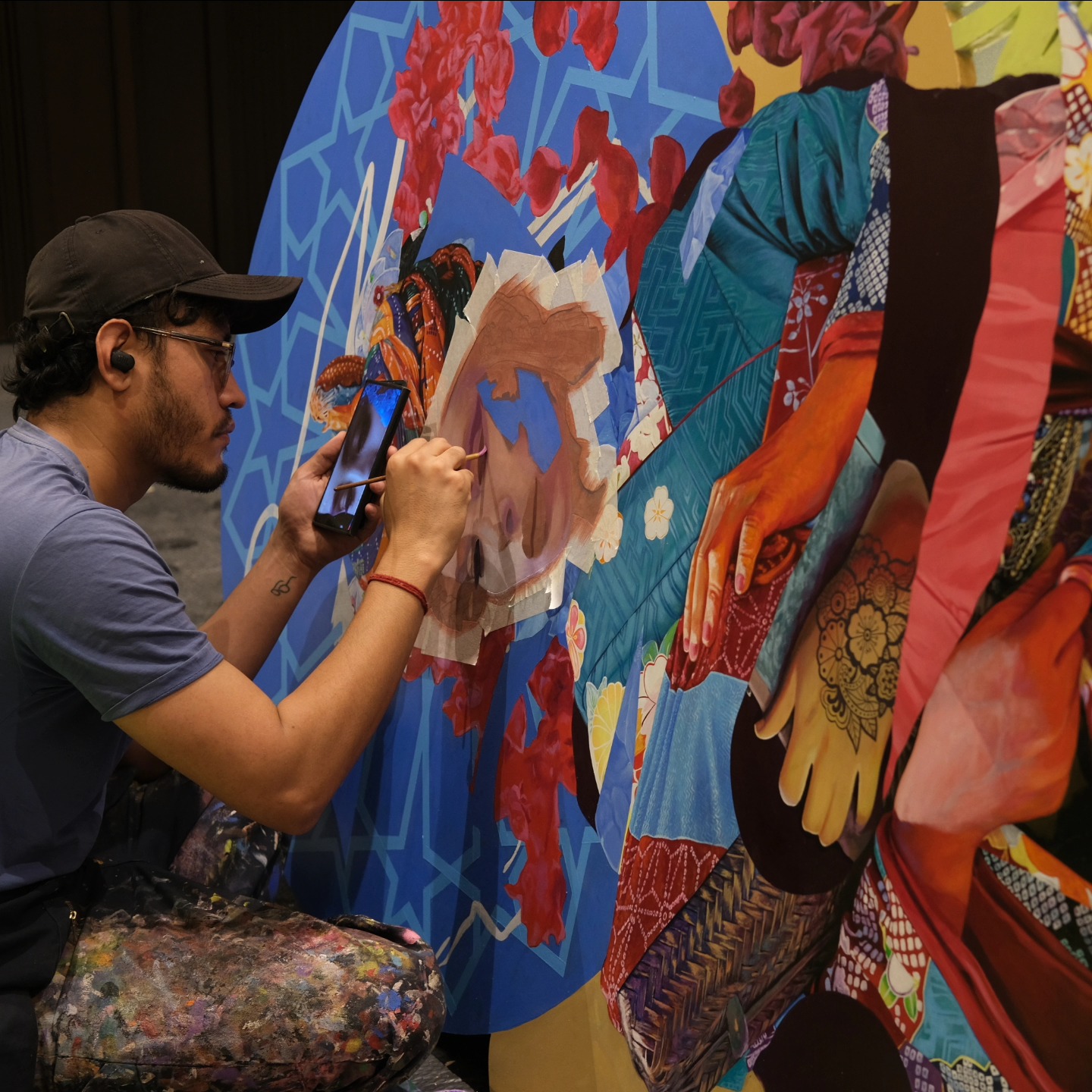
So he showed you that art has a deeper meaning than just a picture. It can impact people, convey a message, inspire, and even change someone’s mood, especially if it’s large and visible on the street.
Exactly. That was really interesting because the way he approached art was very different. But I never wanted to be just a graffiti artist. I was into street art and murals at first, but originally, I wanted to be a gallery artist — the stereotypical type, doing exhibitions and working on canvases. I did street art and graffiti on the side. Around age 18, I was introduced to graffiti through skateboarding. I started researching it online, exploring what people were doing around the world. It fascinated me, though I didn’t take it seriously at first. Later, when I tried to exhibit my own works in galleries, there was a lot of rejection. Despite that, I continued researching and practicing graffiti alongside pursuing gallery work.
Just to clarify – at that time, what kind of work were you showing?
Mostly realistic drawings of human figures and landscapes, things I found interesting. I focused on human figures, but not stereotypical Nepali images — not old women in traditional dress, for example. Also portraits, but more expressive and contemporary in style. I worked on drawing paper and canvases. I mainly worked with charcoal on paper, but I also painted on canvas using acrylics. I experimented with watercolors and practically every medium available at that time. At the same time, I was exploring graffiti. Eventually, I realized that to show my work, I didn’t actually need permission. Graffiti allowed me to create freely, without asking anyone. That realization marked a shift: my traditional artwork became secondary, and graffiti started becoming my main focus. I began taking it more seriously, exploring how I could create without seeking approval. Now, interestingly, some galleries approach me and I can choose whether or not to exhibit with them. It’s come full circle — I no longer have to ask galleries to show my work; they come to me.
It’s fascinating looking back. Sometimes things have to develop a certain way for you to truly understand your path. Initially, you might have thought you had to follow a traditional route, but in reality, galleries often want artists who are already established. If you’re just starting, how are you supposed to begin without that?
I actually think the rejections were beneficial. They pushed me toward a completely different path and allowed me to explore what I really wanted to do. Had I been accepted into galleries early on, I might have ended up doing work dictated by others’ expectations. That could have left me feeling unfulfilled and unhappy.
Maybe it would have also made your work repetitive. So, after these rejections, how did your process evolve? You were doing graffiti on the side, but eventually it became more significant. For larger pieces, did you ask permission to paint on walls, or how did that scale up?
At first, I started with stickers and a little tagging. I also experimented with stencils because I was interested in graffiti. But I quickly realized that stickering and tagging alone weren’t enough for me.
Did you make your own stickers?
Yes, I made my own stickers. I found sticker paper and created many of my own designs. I also did small stencils around town. But none of it satisfied me completely. Watching other artists create massive murals with freehand spray paint inspired me. I wanted to learn that style because it felt like the right medium for me. I experimented constantly in my small home studio, practicing different strokes and styles, exploring how to achieve various effects with spray paint. I layered paint repeatedly, refining my technique. At the same time, I would go out and paint on walls without asking for permission. If I liked a spot, I would start painting right there – essentially, creating graffiti freely.
But when you started doing bigger works, that takes more time. How was it with art in general in Kathmandu and Patan? Did people like it when you painted?
When we started around 2010–2011, there weren’t many people doing graffiti or street art. You might spot a piece here or there, in Patan or a few places in Pokhara, but mostly it was visiting artists tagging and experimenting. When we began, street art was very new. For legal walls, we would approach the owner, explain what we wanted to do, and persuade them to let us paint. It was strange at first because people would ask, “What are you advertising?” In Nepal, walls had traditionally been used for commercial hand-painted advertisements — for cigarettes, cement, and other products. So our artistic approach was unfamiliar to them.
So when did you came up and got more dedicated with what you’re promoting, like freedom, hope and creativity for everybody.
It would be so confusing for people because they were so used to political graffiti. So we, as young people, came and created weird imagery, and people would ask, „What are you advertising?“ We were not advertising anything. Then they would ask, „Who pays you?“ Nobody pays us. „And how did you buy the materials?“ From our own money. And they would ask, „Why are you using your own money to buy materials and spend time painting something that nobody is paying attention to?“ That was quite amazing for people because it felt so out of the general convention.
It’s very idealistic. And your deeply believe in it. You want to do it, and you also believe that it will have an effect beyond everything that is capitalistic or commercial. It’s another level, even philosophical.
Yeah. From that point on, nowadays, if you are painting somewhere, people won’t ask, „What are you advertising?“ They ask, „What’s the concept behind this?“ The perspective has changed regarding public art and what it means. People understand that it can exist outside the commercial aspect. They see it as a way of beautification, but also as a conversation starter. People like to sit around and watch things happen, which is very common in South Asia. If there’s an excavation, ten people might just sit and watch. If you’re outside painting, a crowd will come, watch, and talk to you, which is the best part about painting in public spaces.
Connection to the neighborhood.
Yes, that’s the main thing I really like about painting in the streets. Painting alone in a room on a small canvas feels sterile. But painting on the street feels like a dance with the world. You become part of the city’s ecosystem. People give honest feedback, raw and energetic, which is very motivating. I could paint twelve hours on the street, but five hours on a canvas indoors would feel very difficult by comparison.
And you also mentioned being lucky that your first attempt in a gallery didn’t work. Looking back, you see the differences clearly. The gallery experience seems small and distant from people. Now, painting in the neighborhood connects you to life itself. Other artworks might feel disconnected and outdated, but yours has life and closeness to people.
Creating murals and streetart in public spaces is significant. Once painted, it becomes part of the landscape. People live with it, and that connection is something a canvas or gallery cannot provide. While painting, it’s your work; after finishing, it belongs to the community. The community decides what to do with it. Sometimes, we paint in derelict areas, and the community starts cleaning and planting flowers, changing their perception of the space.
That’s one of the strongest points of street art. Galleries and museums have barriers: interest, exclusivity, cost. Street art is for everyone – free, open, and accessible to all ages.
Yes, art for everyone. I’ve participated in standard gallery exhibitions, and it often feels pretentious. People pretend to be someone they’re not, interacting artificially. Street art exhibitions are open, raw, and honest. People give feedback without judgment. Since participating in these, I rarely attend standard gallery exhibitions. They feel like networking hustles rather than being about art.
And in the end, you think a lot of people didn’t even come to see the real artworks, they came for networking and money habits. Not for connecting with others.
Exactly. And that’s a commercial way of thinking. In other events, you realize, “Okay, these people really like to be here. They like to hang around, have a good time. Maybe there’s a cool DJ, some music.” It’s completely different.
Back about yourself, you describe the situation nicely – how streetart and graffiti became the priority. During this process, before you had these rejections in galleries, you tried more and more on the streets, and I’m sure you met like-minded people. There are also these several awesome collectives. So which one was first?
It was ART LAB. I was part of ART LAB from 2010. It was a group of people I knew beforehand, and they discovered me because I was doing a lot of spray-painted realistic imagery. At that time, nobody else was doing realistic spray-paint work with the low-quality, watery spray paints usually meant for automotive use. I had trained myself, and that became my thing—portraits and realistic imagery with spray cans.
And at this time, on a huge scale
Yeah. The size kept increasing. Meeting these people affirmed that I was on the right path. I truly believed Nepal could have a big street art scene. Historically, Nepal has a long tradition of public art and culture. Galleries are relatively recent, so it made sense to focus on public artworks. Artlab was the starting point where we began doing a lot of things together.
Did ART LAB exist before you joined?
A few years before me. They were experimenting with streetwear and street art, but when I joined, they were focusing on murals and public artworks. We had a studio space with a long stretch of road across from it. We started painting that area, and after a couple of years, that street was completely covered with our work. The first wall was difficult to get permission for, but by the 10th or 15th mural, people said, “This is my house, my world; you can paint whenever you want.” Eventually, some people even asked us to paint their houses. Initially, it was cafés or restaurants, but now in the Kathmandu Valley, it’s common for most cafés and restaurants to have a designated wall for murals. This has become a good financial support for many artists, encouraging them to paint walls instead of only canvases.
That’s a good development. It shows you don’t need a gallery. You can also get projects, commisions and jobs just by going your way. You just need yourself and your own inspiration, but keep on going.
Yes. Galleries can offer advice, but you are the artist. I didn’t like galleries thinking they were more important than the artist. Often, galleries would reject artists, saying, “You don’t have this education, so you’re not an artist.” That can be discouraging, but it’s possible to succeed with creativity and perseverance. I’m not very extroverted, but I’ve taught myself to talk about my work and journey. It’s important for younger kids to see someone from the same area succeed through hard work and perseverance. In Kathmandu, identity politics can make it difficult for young people to find space to express themselves, so seeing examples matters.
You were first-generation street artists who brought it to the next level. You gained popularity, did more work, and now cafés, bars, and clubs actively seek murals because it’s cool and hip.
Yes, it’s very new, but it has opened opportunities. Young artists don’t need formal academic training—they just need creativity and persistence. They can start by painting walls of local cafés or nearby spaces. It’s important for young people to understand that perspective. Many kids get contacted for murals, but there are nuances: pricing, clients, and the risk of being underpaid. I always advise young artists to be conscious of pricing to avoid exploitation. Street art can also be used for gentrification, which is something to watch out for.
So young artists from Nepal, Bhutan, or Kathmandu can contact you about pricing advice?
Yes, absolutely. I’m happy to guide them on pricing and best practices.
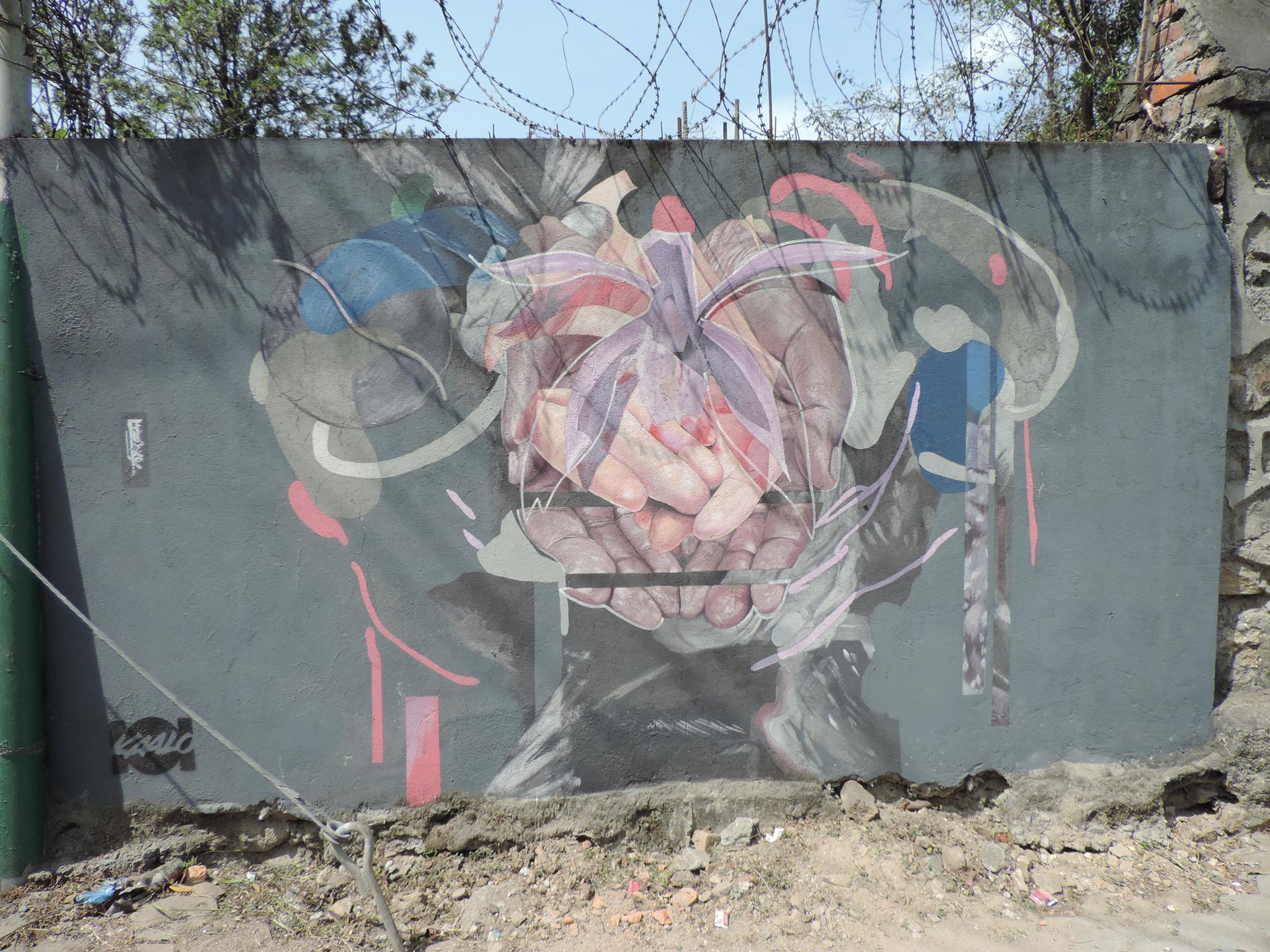
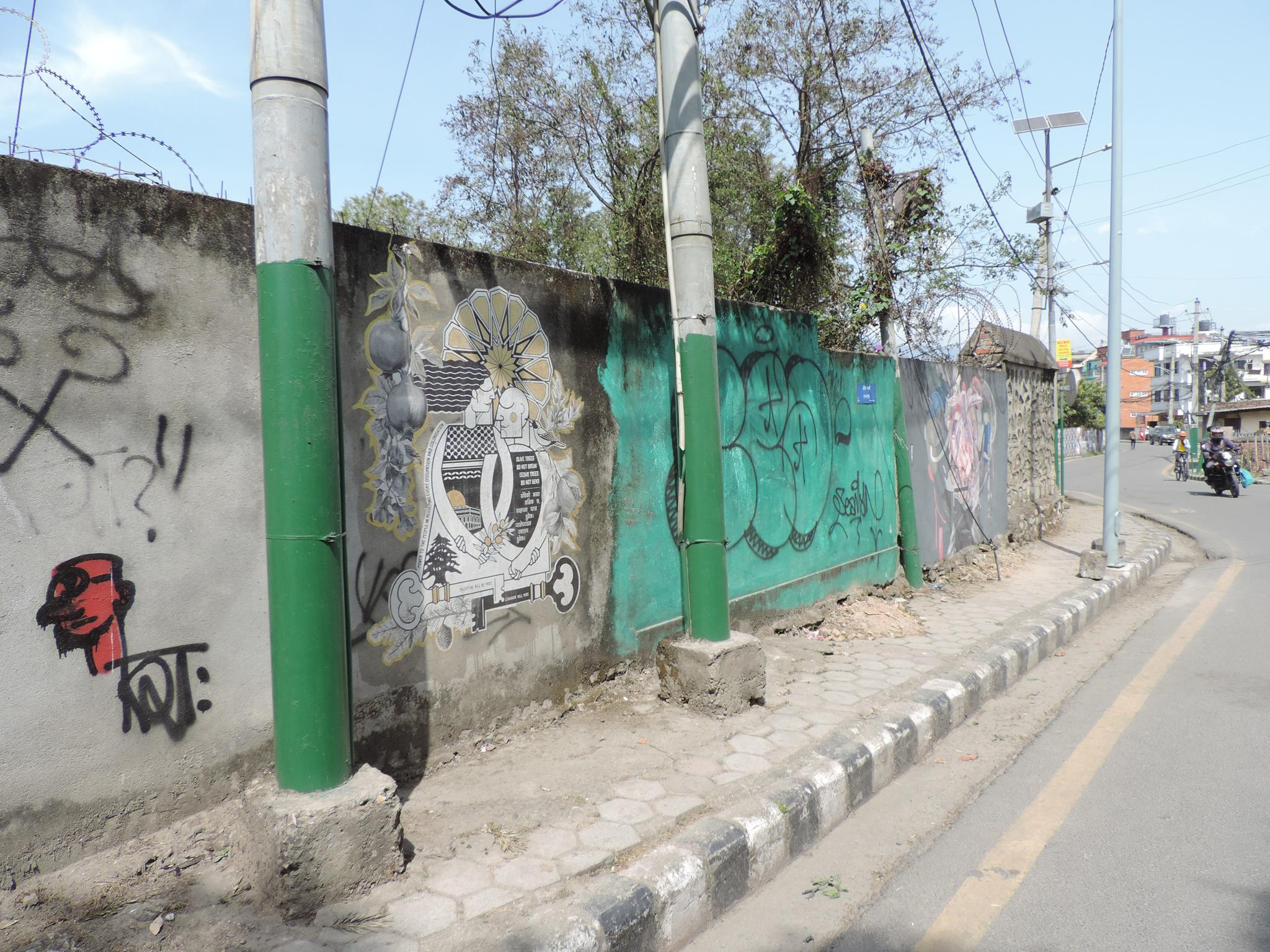
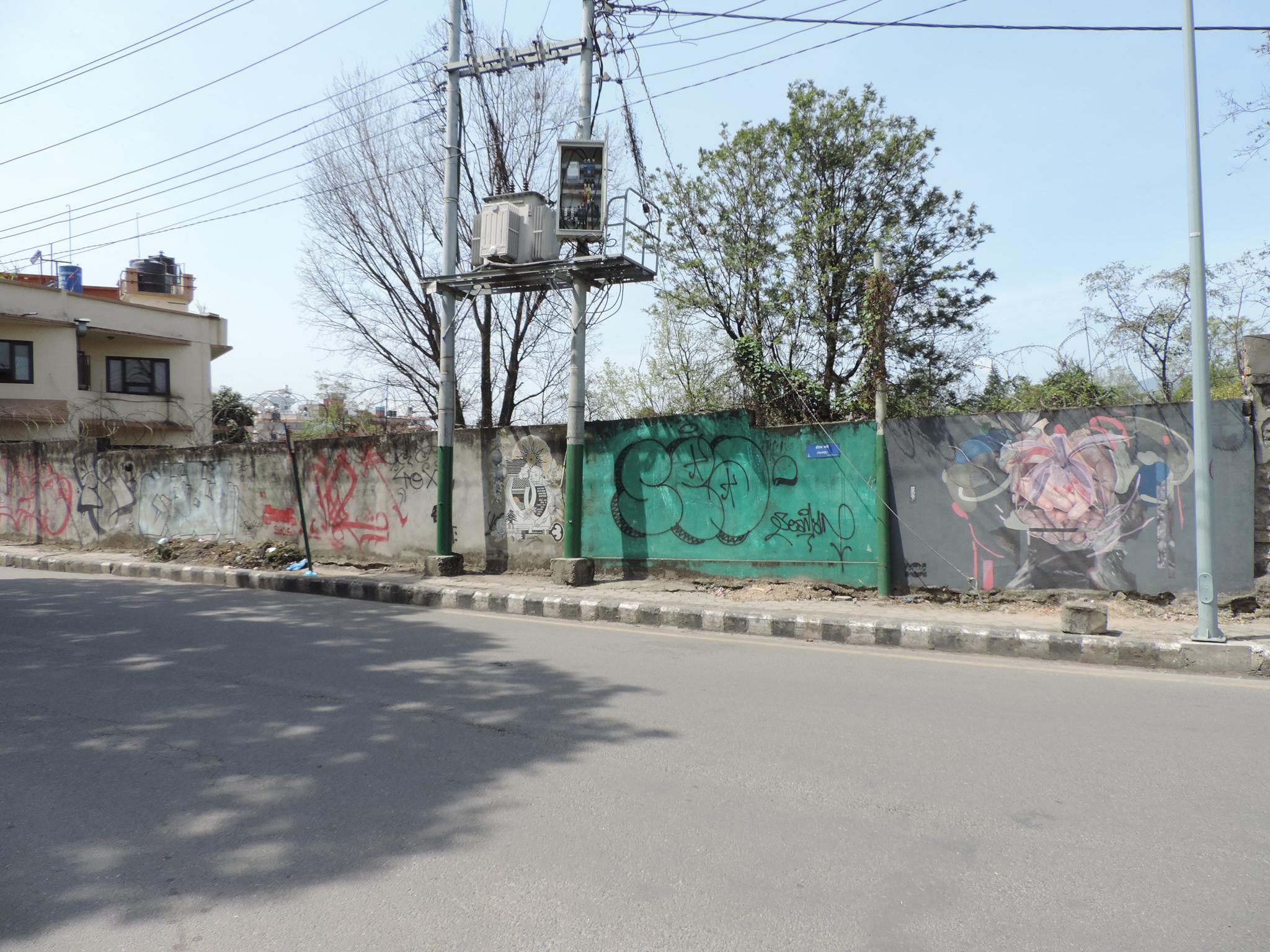
After ART LAB, what came next? TAG THEORY or KOR ART COLLECTIVE?
KOR ART COLLECTIVE was the next project. It started with seven artists from ART LAB. We left ART LAB and formed KOR ART COLLECTIVE , a cooperative of artists sharing similar agendas. Like making street art accessible, addressing environmental protection, society, and culture. For example, we protested against a massive airport in Nijkot, which threatened thousands of trees and wildlife. We created street works to spark conversation and put pressure on the government.
Power to the people – we fight with art!
Exactly. Environmental consciousness is central to my work. After school, I had two paths: artist or hepatologist. Hepatology wasn’t accessible, so I chose art.
Now you are a creative, teacher, activist, artist, educator, and neighborhood connector – doing much more than just making art.
Yeah, and that’s very important. I’ve always been interested in wildlife and nature. As a kid, I watched a lot of documentaries about wildlife. One of my favorite people was Steve Irwin. I cried when he died. He made a lasting impact. So every work I do naturally leans toward the environment or animals in some way. I feel it’s very important to keep talking about that. Plus, I love meeting animals, so it works out for me as well.
And then came TAG THEORY. Tell us more about this crew. Obviously the name comes from tagging.
Yes. Tagging. TAG THEORY became a space where we realized we couldn’t just be participants; we wanted to create change for the next generation. One main goal is to connect graffiti artists, and we also provide them with the supplies they need. We realized that in our early days, we had terrible spray paint. Whenever a foreign artist brought Montanas or other good paint, it was rare. We understood that good work requires good resources. So we partnered with a spray paint company in India. It is called „Banna“ spray cans. We are now the official distributors in Nepal. The paint has perfect consistency, a wide range of colors, and a good price for Nepali artists. This is crucial to help the next generation grow.
Importing from Europe would be harder, right?
Exactly. It’s easier from a neighboring country. It’s also specialized graffiti paint, not car paint. The price is good—800 rupees, less than $10. We don’t aim for high profit; we just maintain enough margin to keep the project running.
So when you grow older, you naturally have responsibility for the next generation.
Exactly. You go through it, reach a point, and have the obligation to support the next ones. “Each one teach one” is part of graffiti culture.
When you do a graffiti jam, are there official spaces? Does the municipality support you?
Not really. Municipalities view public works differently: murals are acceptable; graffiti – throw-ups, wild styles, tags – often isn’t. They want beautification, but don’t see the connection between murals and graffiti. You can’t have one without the other. I tell people: you have to do it to understand. It’s like saying, “I want jazz music, but no one can play saxophone.” We did a graffiti jam in Pokhara last year. Six to eight artists participated. We handled transportation, hotel, and all logistics. There was a supportive spot owner who believed in the power of graffiti. We painted a long alleyway on both sides, with musicians, DJs, and b-boys. Everything related to street culture was included. It was very special, especially since we hadn’t done something like that in a long time. Seeing young people come in was inspiring. We’re trying to do something similar in Kathmandu, but funding and space are challenges. We need a location for 10–15 people that’s accessible and interactive.
You’ve already done amazing work; I’m sure it will happen again.
When we were part of Art Lab, we ran a two-year project called Fassad, traveling all over Nepal, teaching graffiti and street art techniques. We discussed youth migration and brain drain with participants, showing them that it’s possible to stay in Nepal and achieve things locally. We identified “local heroes”—musicians, athletes, writers, or other inspirational figures in each city—and worked with kids in workshops. They learned stenciling, graffiti, spray painting, and then participated in a large collaborative mural. Some of the kids continued with Core Art Collective or Tag Theory; some pursued independent careers. Others left to work abroad, but the workshops sparked awareness: it’s possible to return and contribute to their home country. From 2014 to 2016, we traveled to five to seven cities. We also taught workshops on how to earn income from art. At the end, we held a massive exhibition in an abandoned orphanage damaged by the earthquake. Fifteen to twenty Nepali and international artists participated. Each artist got a room in the building, so visitors could experience the artist’s perspective in each space. They could paint walls, break walls, create sculptures, landscapes, or canvases—anything. Free of cost. The curatorial goal was to bring the essence of street art indoors while keeping its core values. We also held a big party. This was at the end of 2016. We collaborated with fashion designers to print graffiti on sarees and held fashion shows. Artists also gave talks and courses. Funding made all this possible. Without it, none of this could have happened.
Amazing works over the past ten years. One more question about your artist name. It is „H11235“. What does it mean?
Most artists choose names they can stylize in graffiti. For me, it’s about merging general art aesthetics with my identity. H11235 represents order and chaos. The numbers 1, 1, 2, 3, 5 are Fibonacci numbers – the golden ratio, a universal growth pattern. H represents Hyde, from Strange Case of Dr. Jekyll and Mr. Hyde, symbolizing chaos. So the name combines chaos and order. Also about my comic history. I’m like a massive geek in that house. Yeah, I mean! It’s a combination of order and chaos. My art practice and general perspective in life are all about balance. There has to be order, but there has to be chaos at the same time – one cannot exist without the other. That balance, that aesthetic, that philosophy keeps coming into my work subconsciously over and over again. I think it also generally represents how I approach my artwork and my life philosophy.
We’ll stay in touch, and we will follow what’s coming next from your art and your projects. To the rest of the listeners: we’ll add all the contact details so you can follow KIRAN and his work. Thank you very much for this interesting interview.
Thank you so much for having me. It was absolutely a pleasure! Absolutely a great pleasure.
INFOTHEK
 Artist: H11235 – KIRAN MAHARJAN
 Website: https://maharjankiran.wordpress.com
 Facebook: https://www.facebook.com/H11235
 Instagram: https://www.instagram.com/h11235
panels
Crew: TAG THEORY
Instagram: https://www.instagram.com/tagtheory
Collective: KOR ART COLLECTIVE
Instagram: https://www.instagram.com/kor_art_collective
Collective: ART LAB – (no longer exists)
Website: https://artlablife.wordpress.com
Facebook: https://www.facebook.com/artlablife
Instagram: https://www.instagram.com/artlab_life
 Youtube: https://www.youtube.com/@artlabkathmandu8524
Urban Art Project: PRASAD
Website: https://prasadproject.wordpress.com
MORE ARTICLES ABOUT NEPAL
>>> Thanka Arts School – Kumar Lama <<<
>>> Lalitpur – Mitra Graffiti Wall <<<
>>> Kathmandu – Snooker Graffiti Wall <<<
>>> Pokhara – Rolling Stones Graffiti <<<
>>> Dasarath Rangasala Mural Wall <<<
>>> Dharahara Concept Wall <<<
>>> Sauraha – Chitwan Streetart <<<
>>> Sanepa – Streetart & Graffiti <<<
>>> Amrit Marg Graffiti Wall <<<
>>> Thamel – Streetart & Characters <<<
>>> Thamel – Graffiti & Styles <<<
>>> Thamel – Throw Ups & Bombings <<<
>>> Thamel – Tags & Signatures <<<
>>> Painted Shop Shutter Collection <<<
>>> Wax & Wick Candles <<<
>>> Suresh Gandhari – Sarangi <<<