„Saborni Hram Hristovog Vaskrsenja“ – „Cathedral of the Resurrection of Christ“
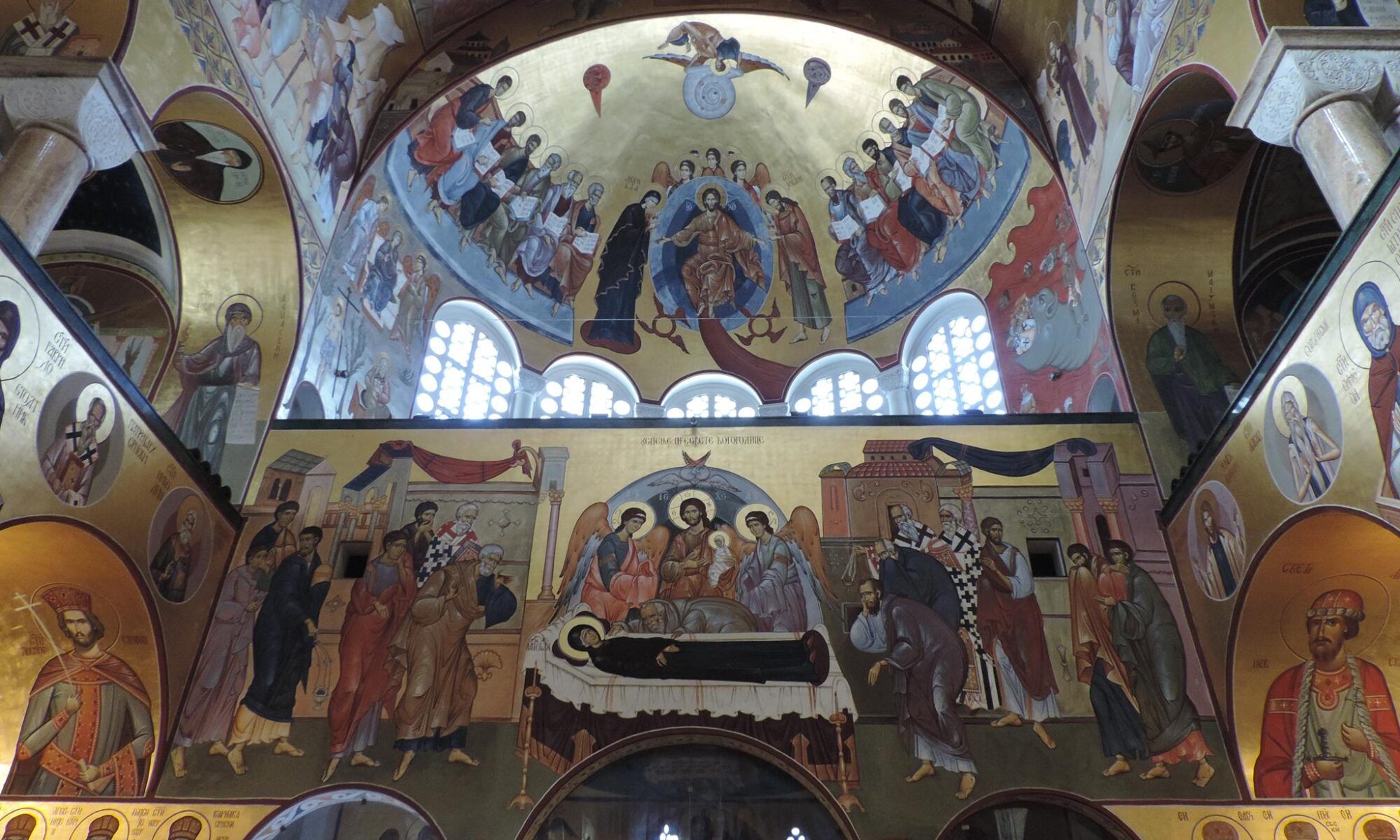
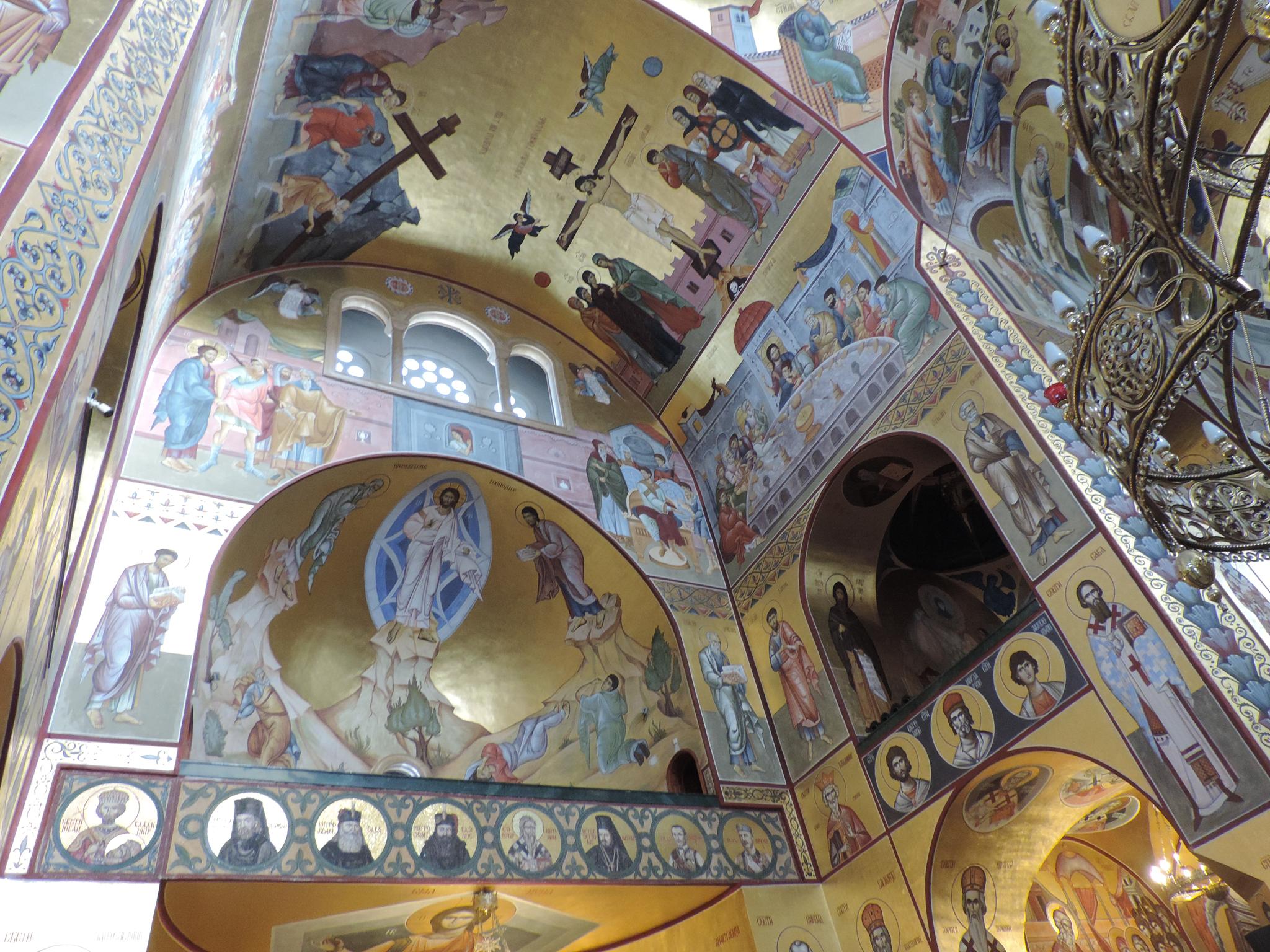
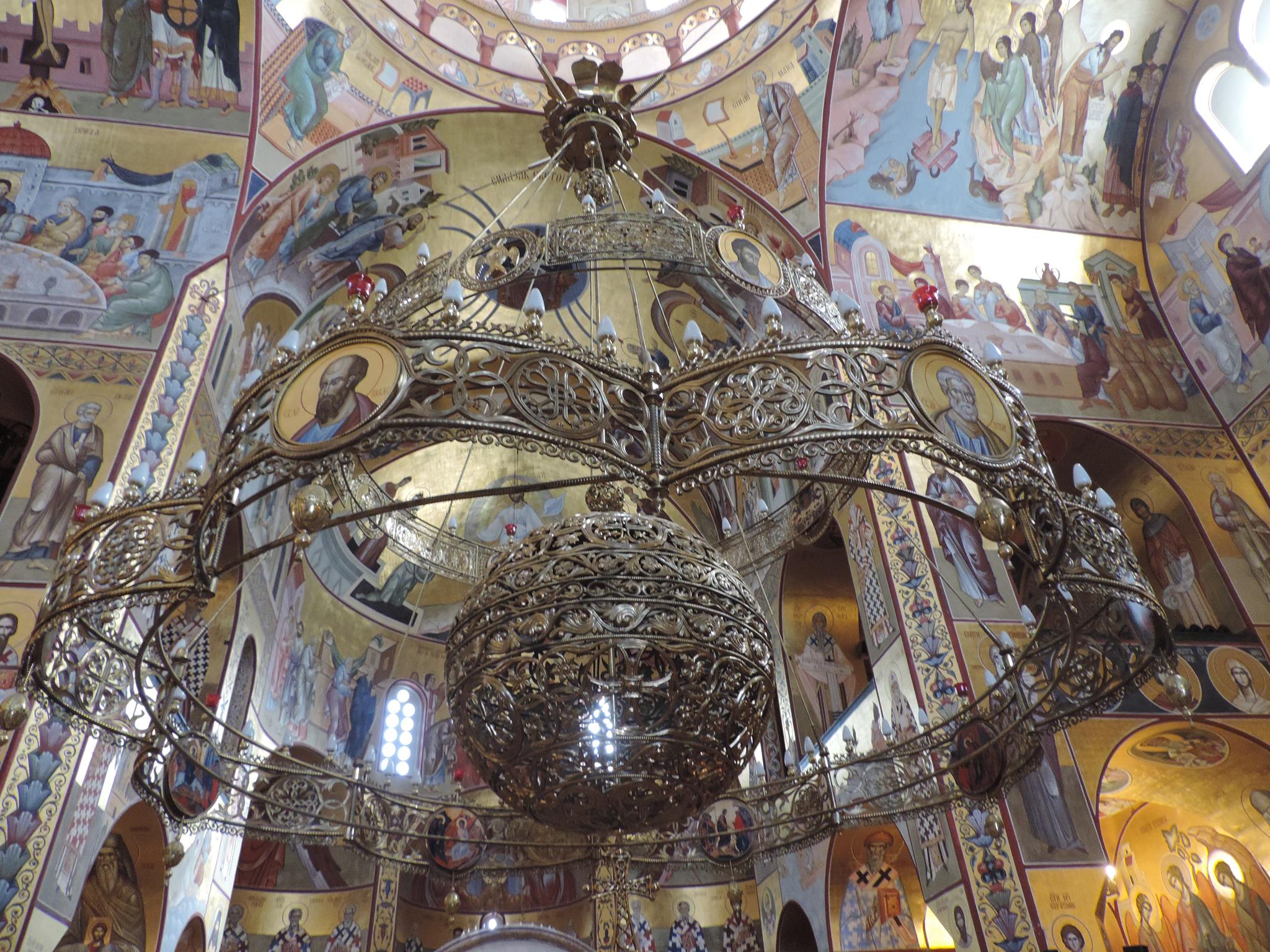
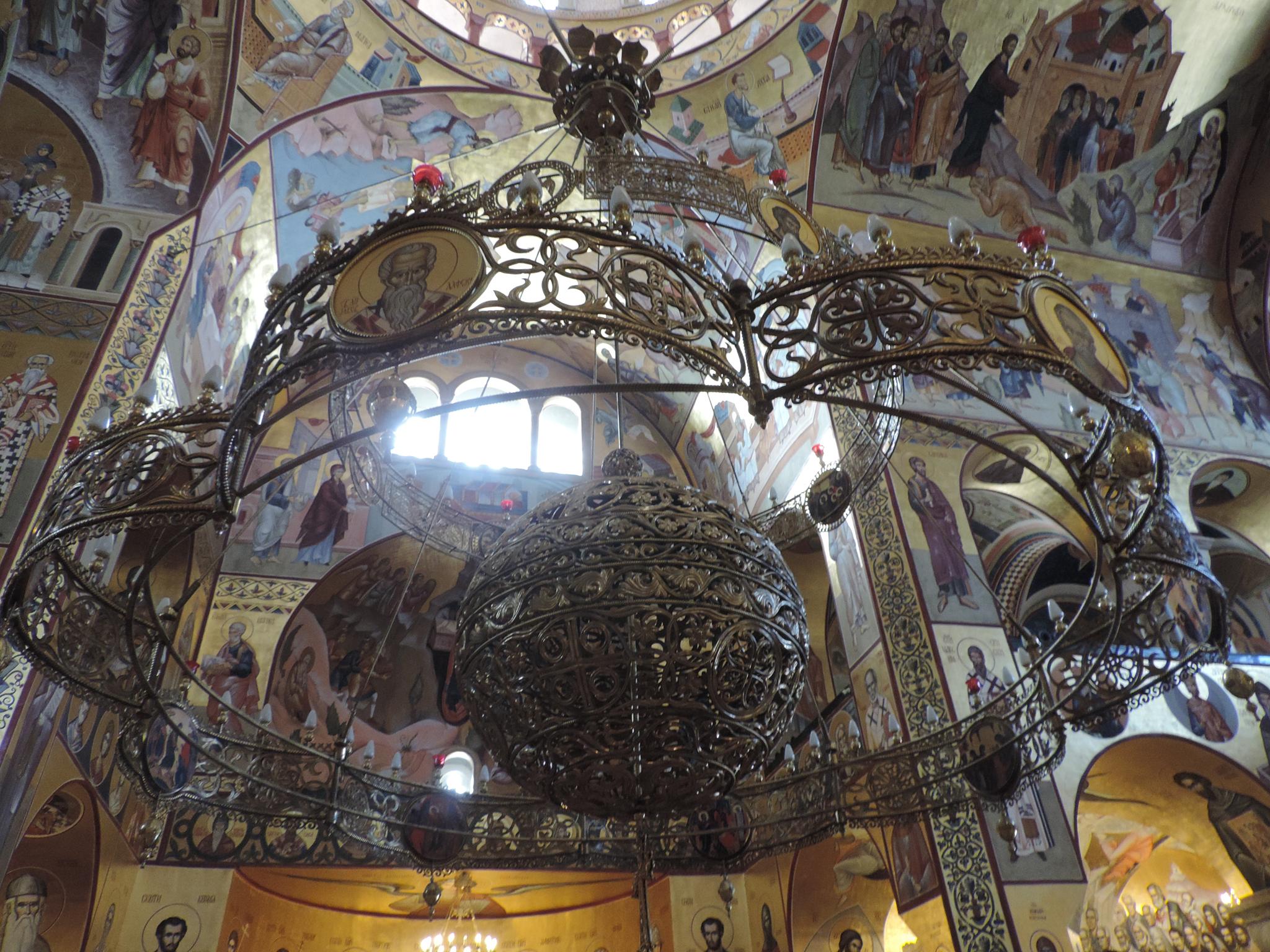
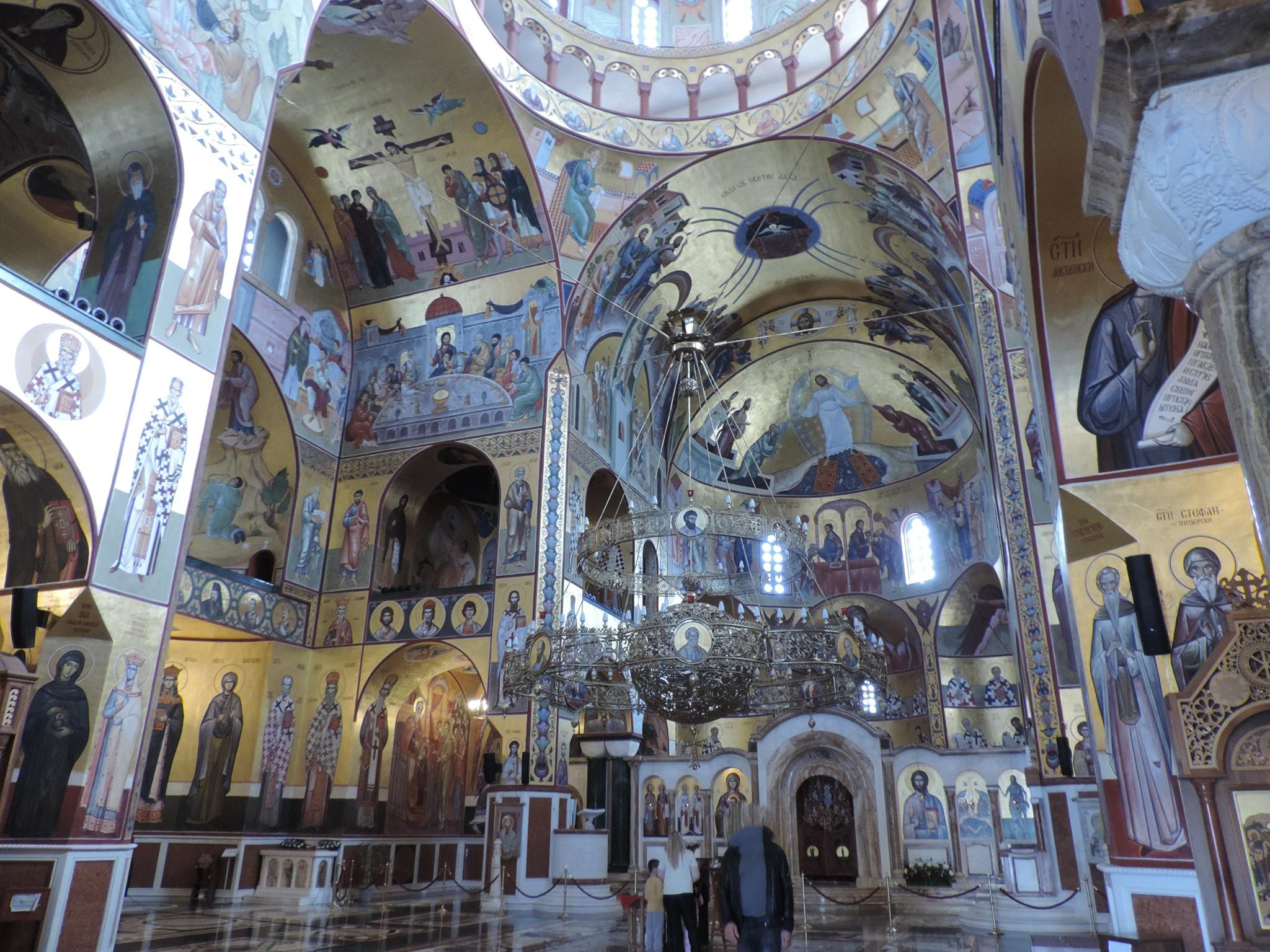
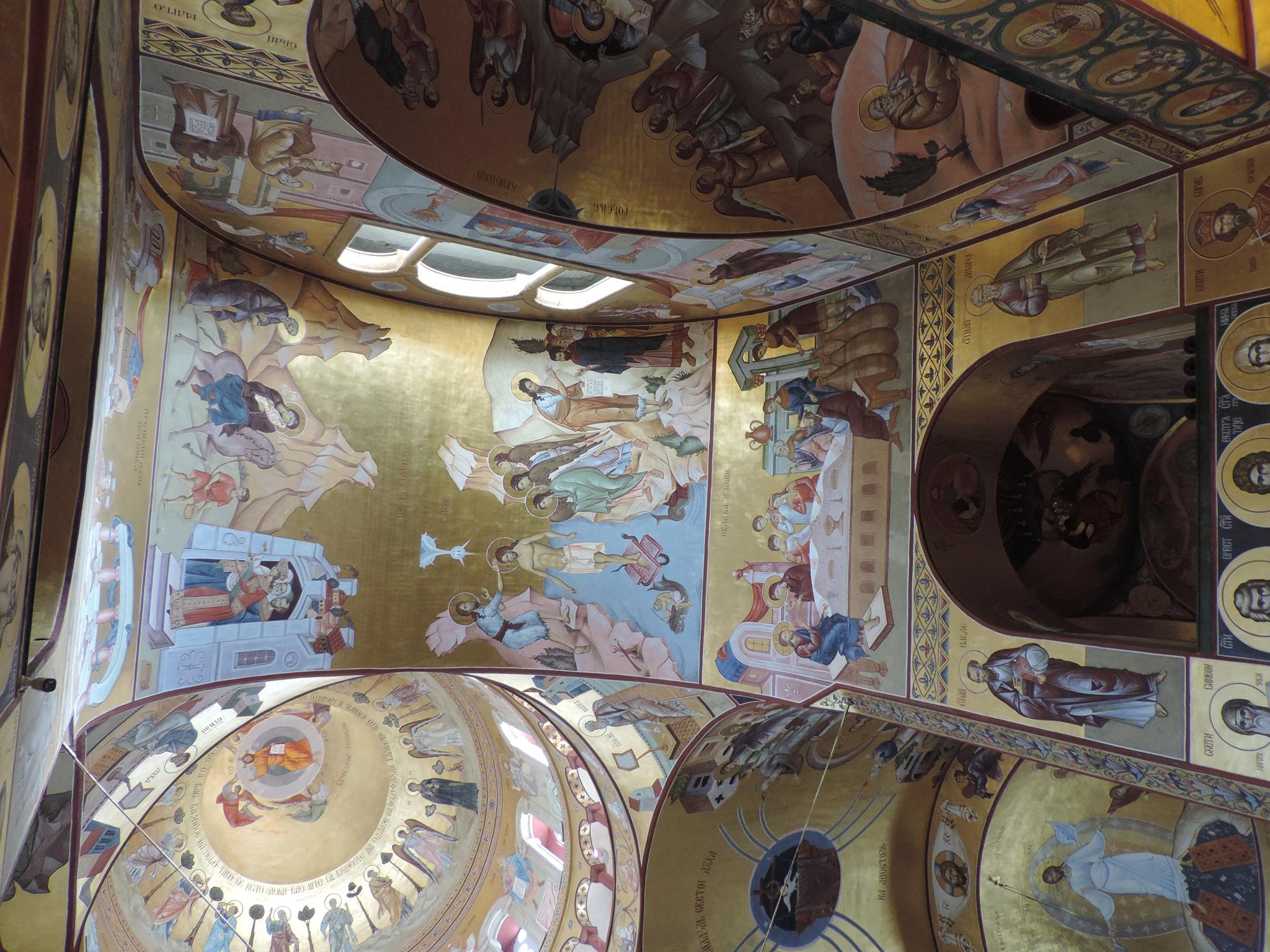
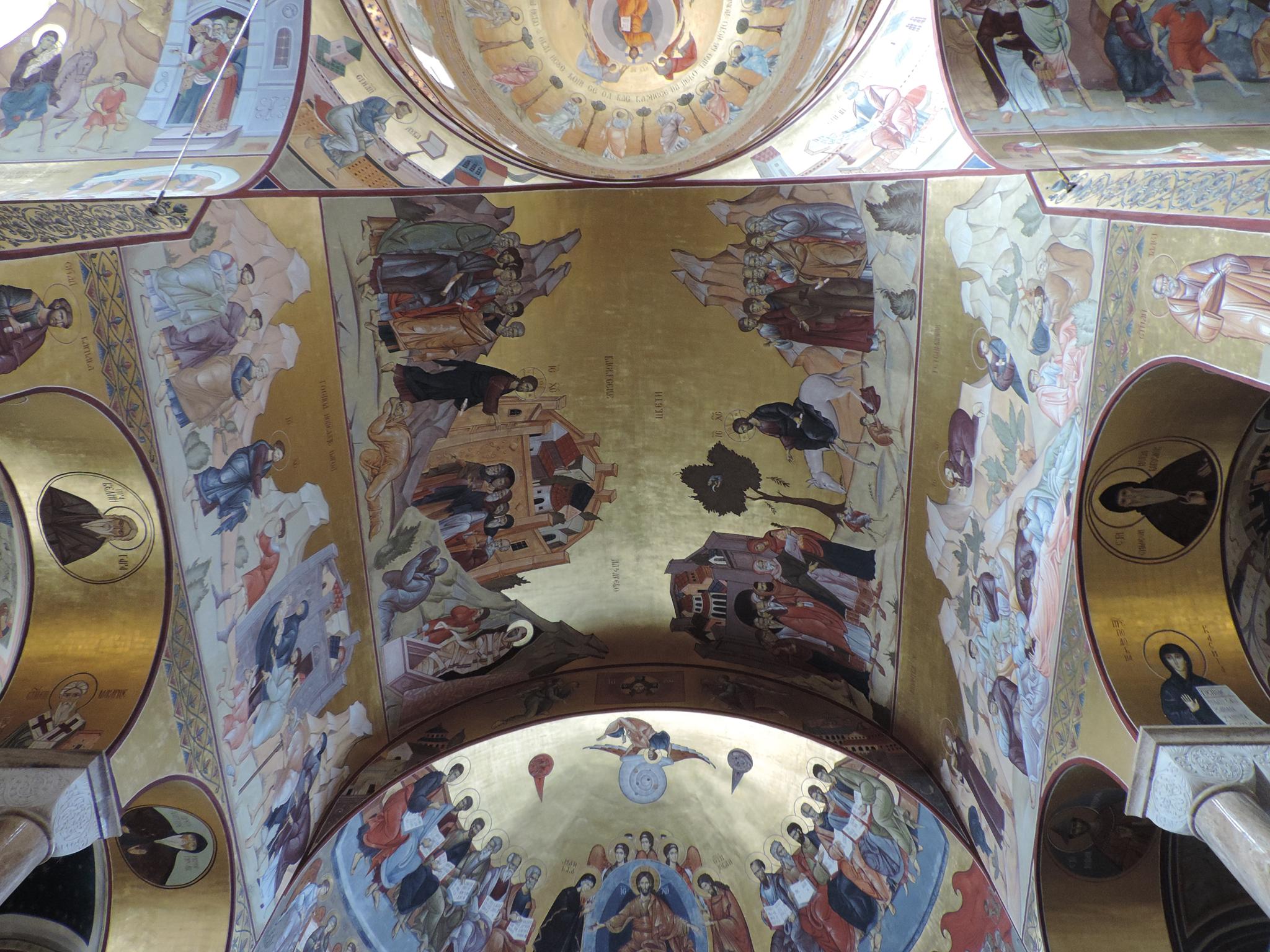
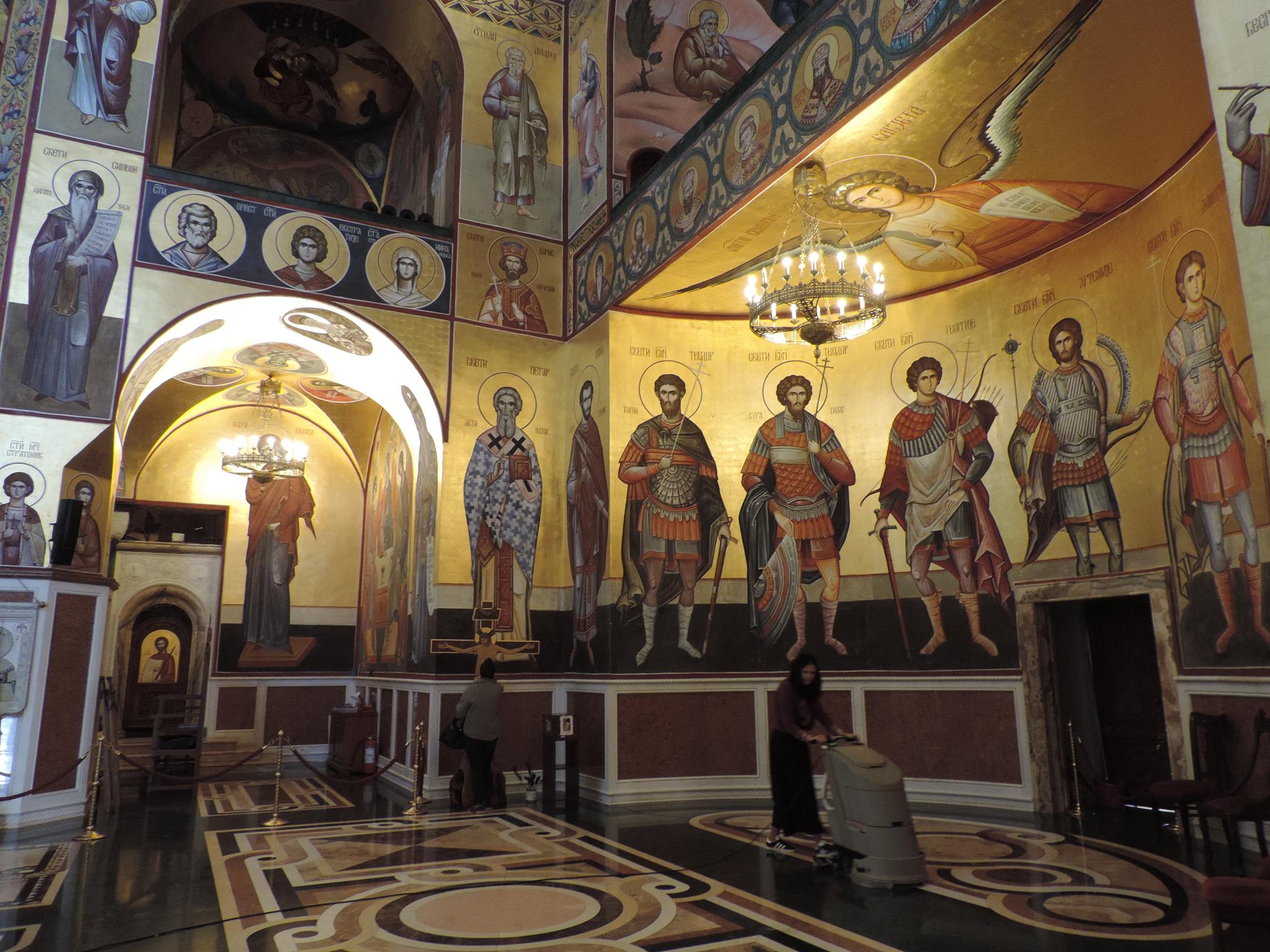
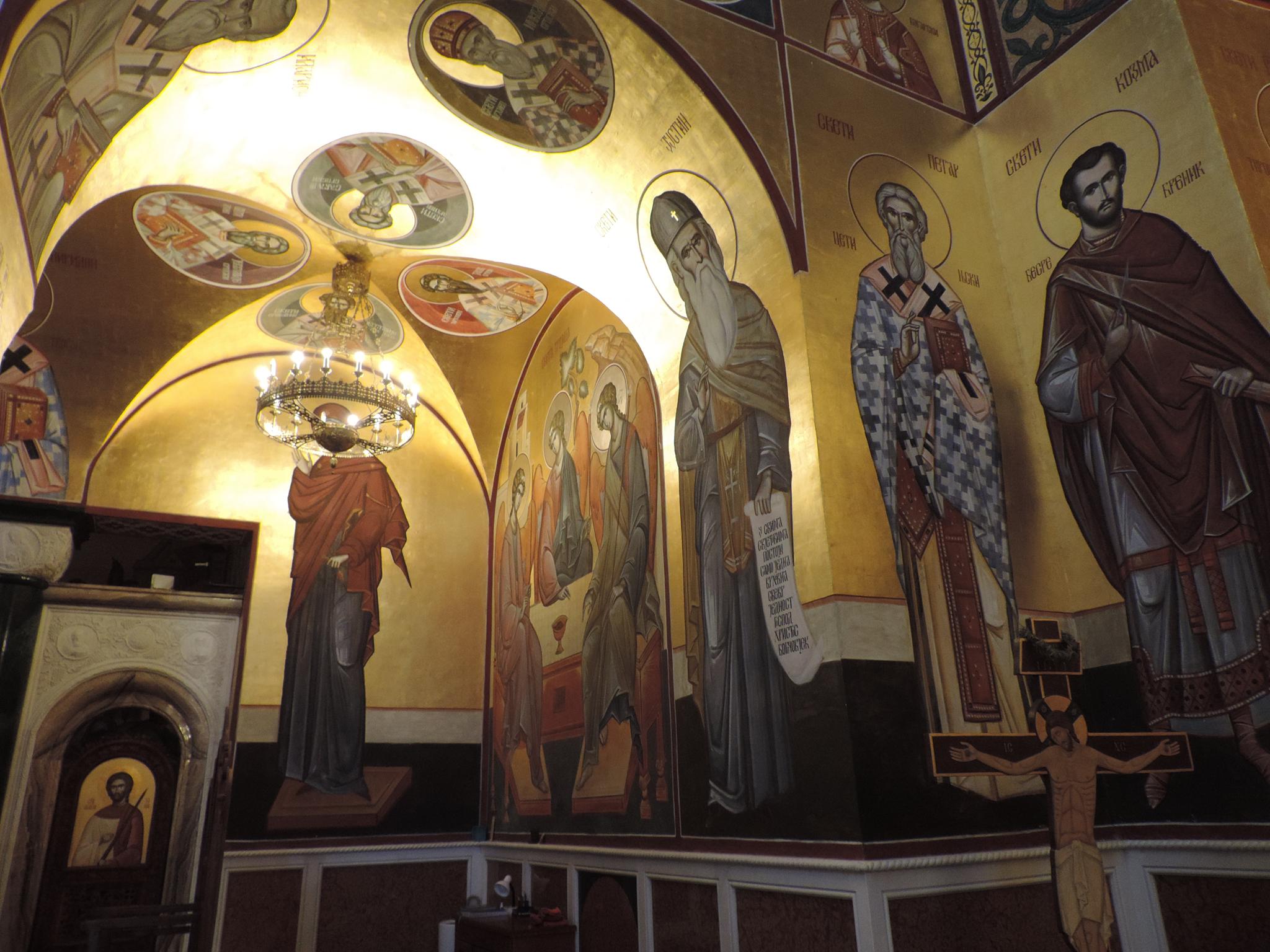
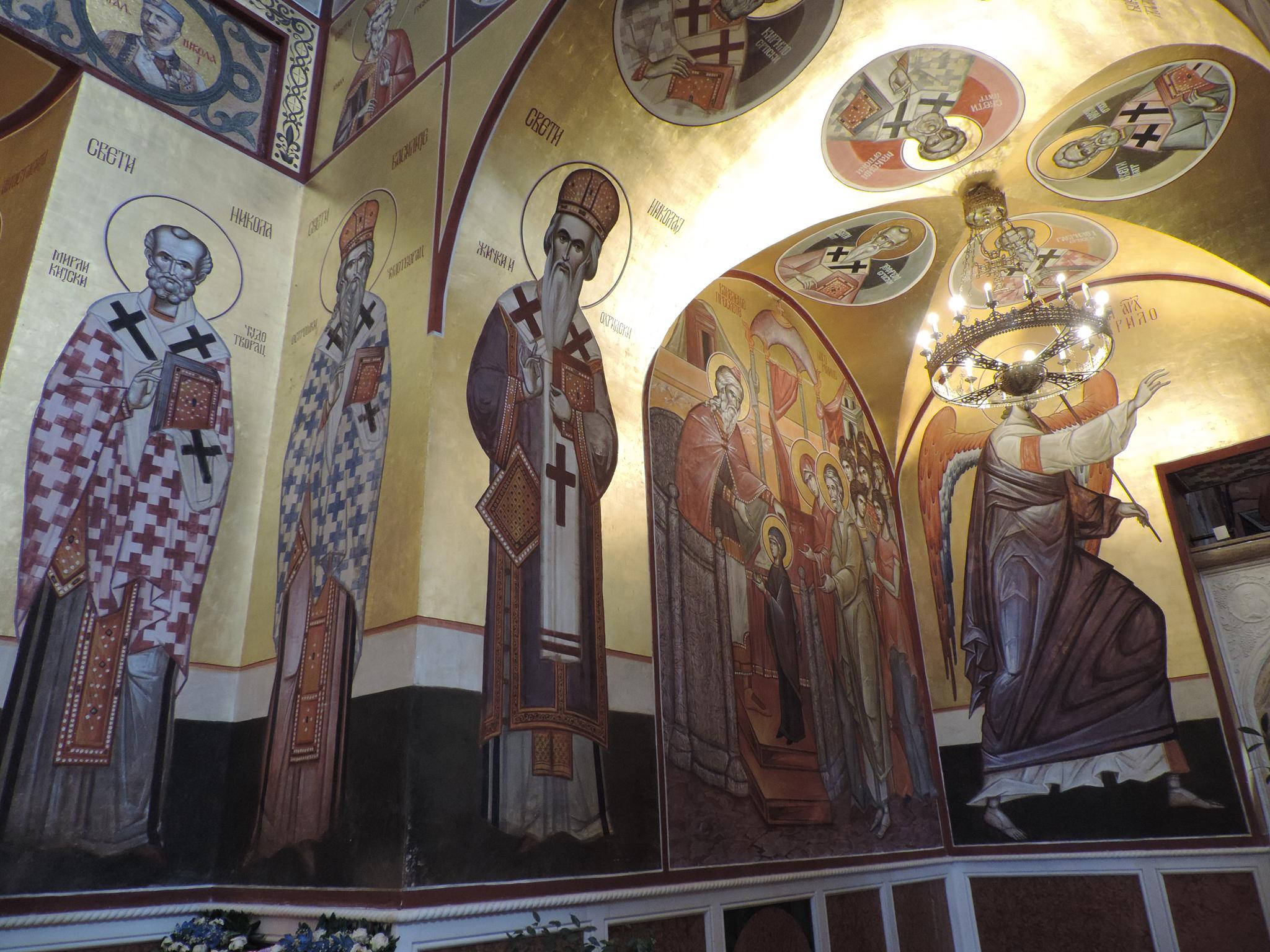
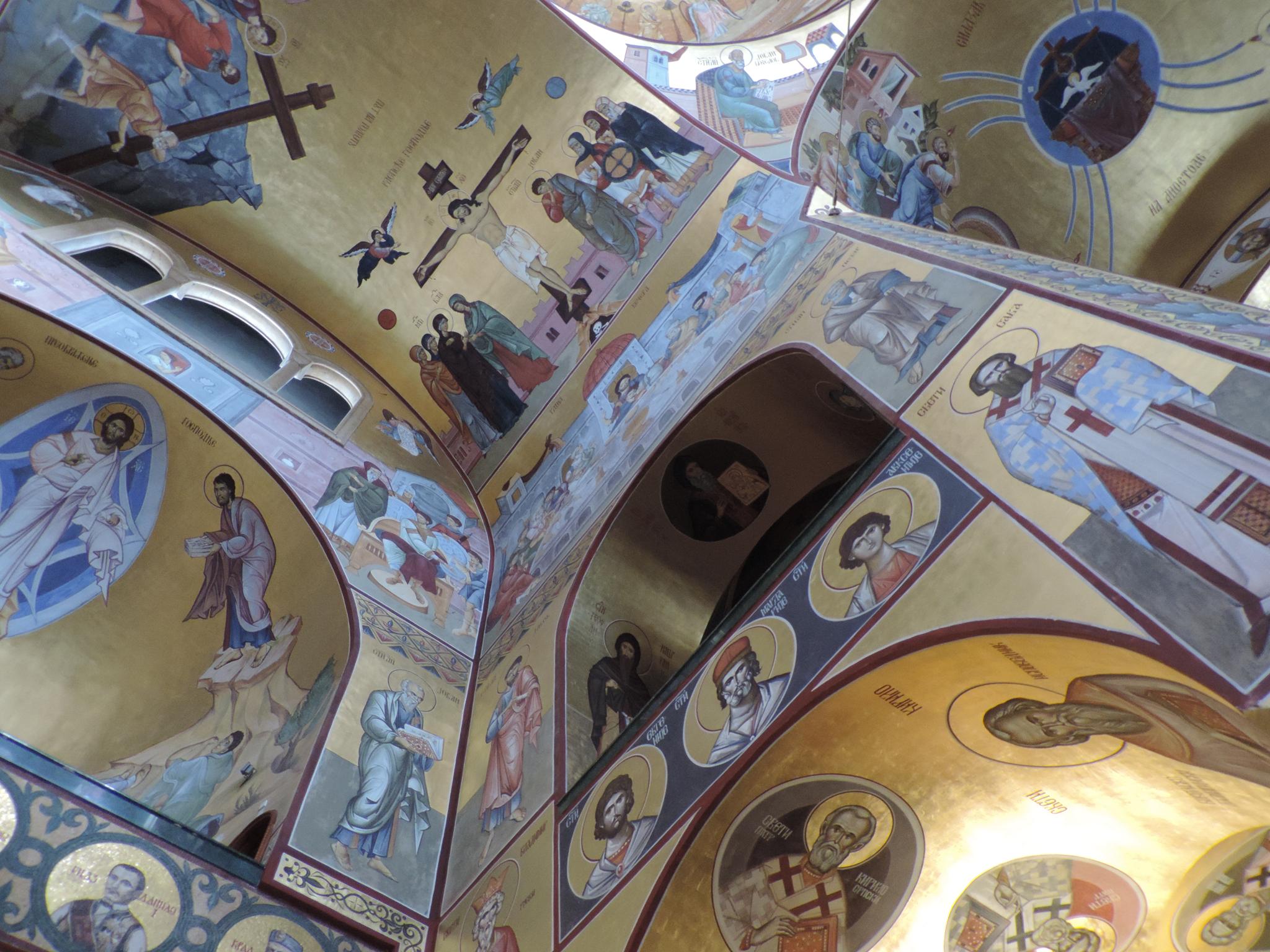
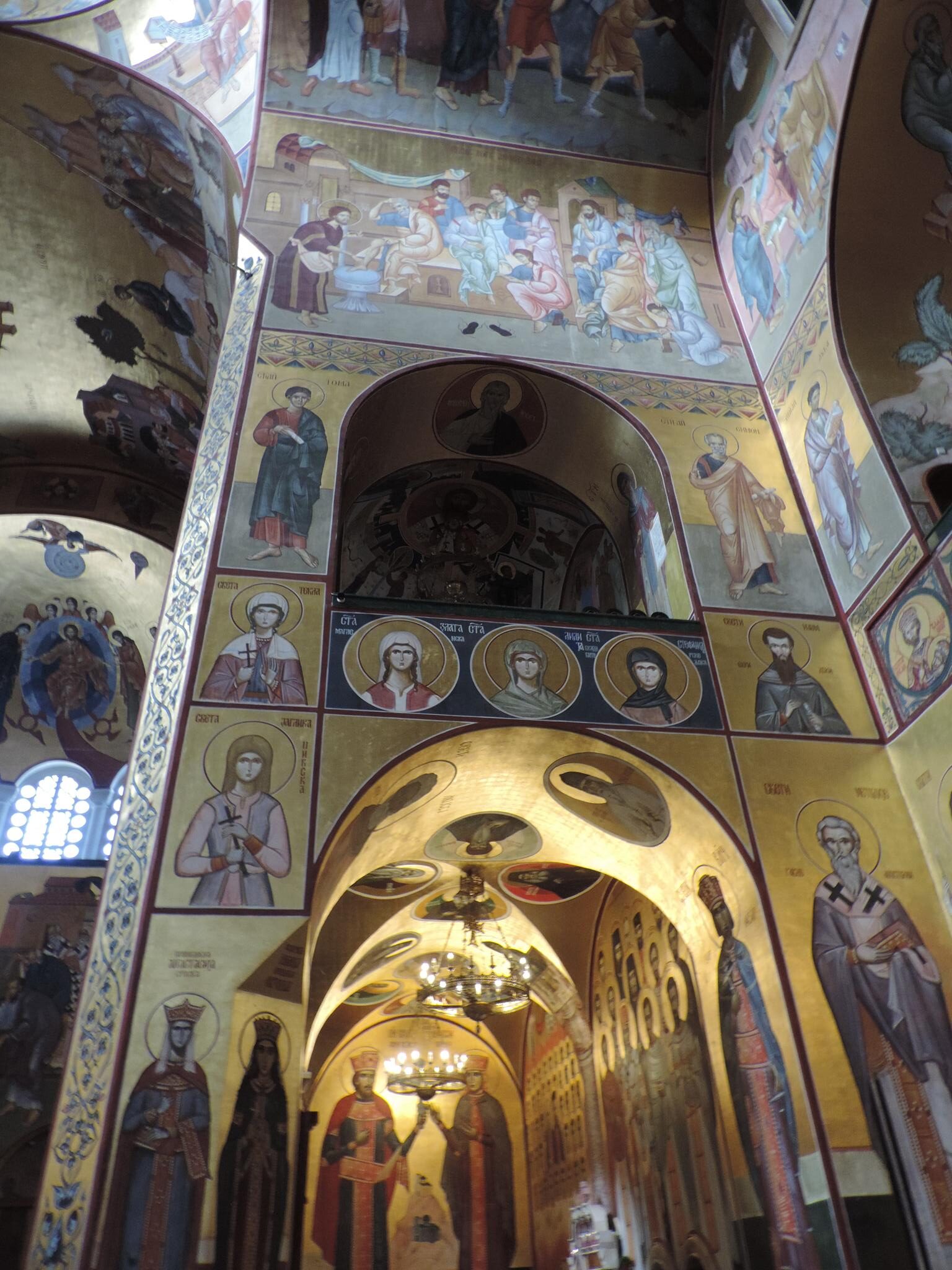
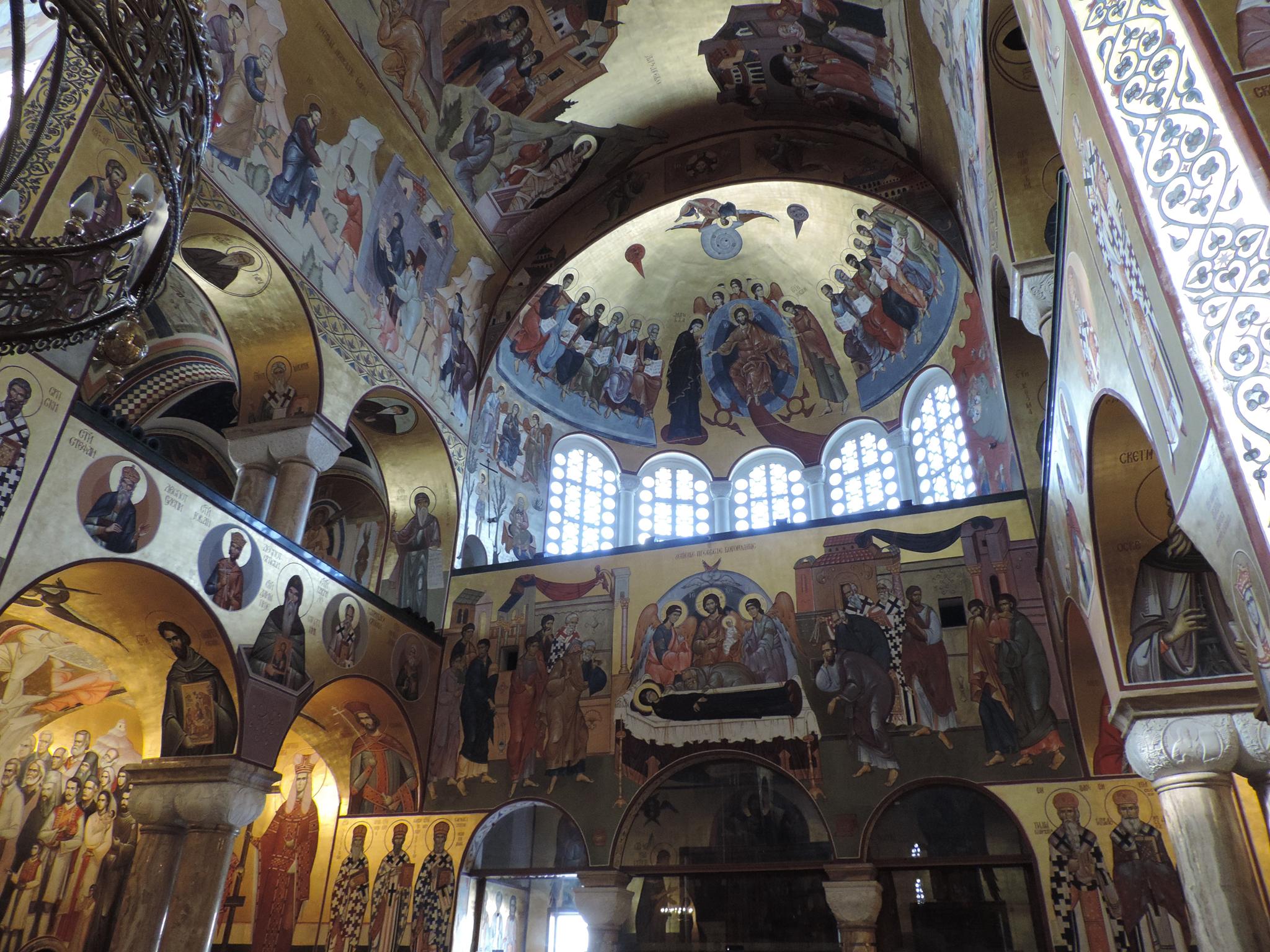
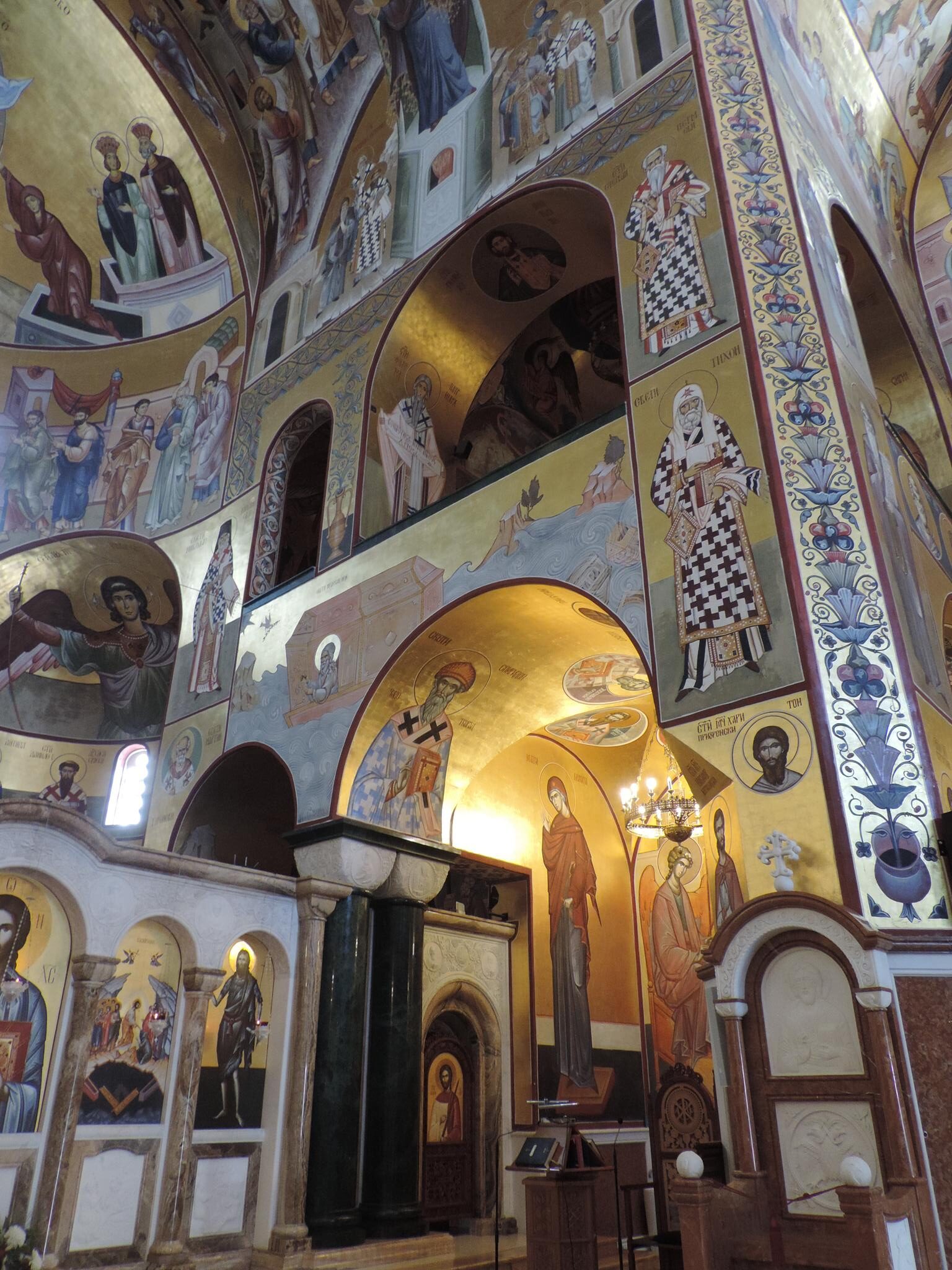
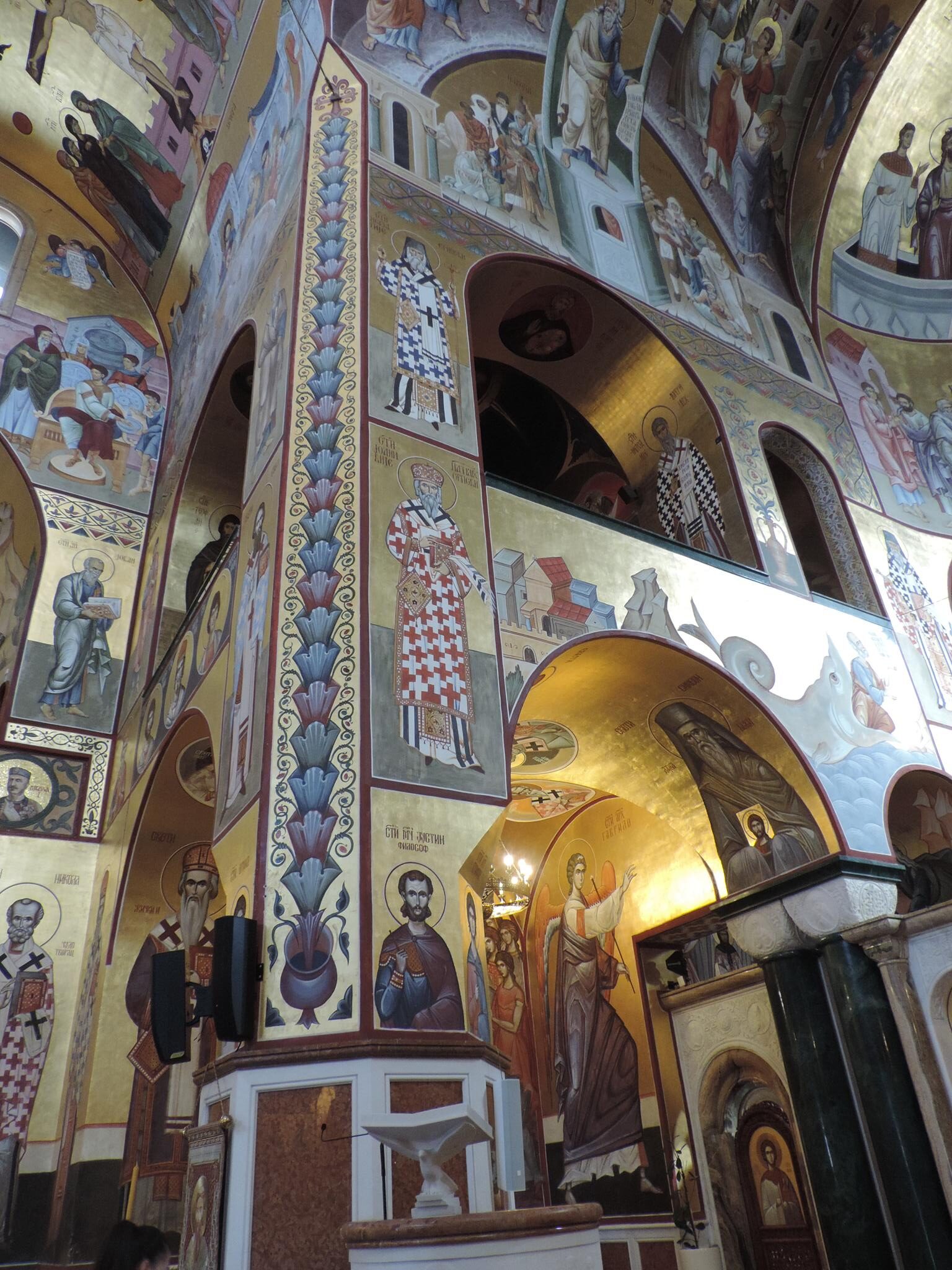
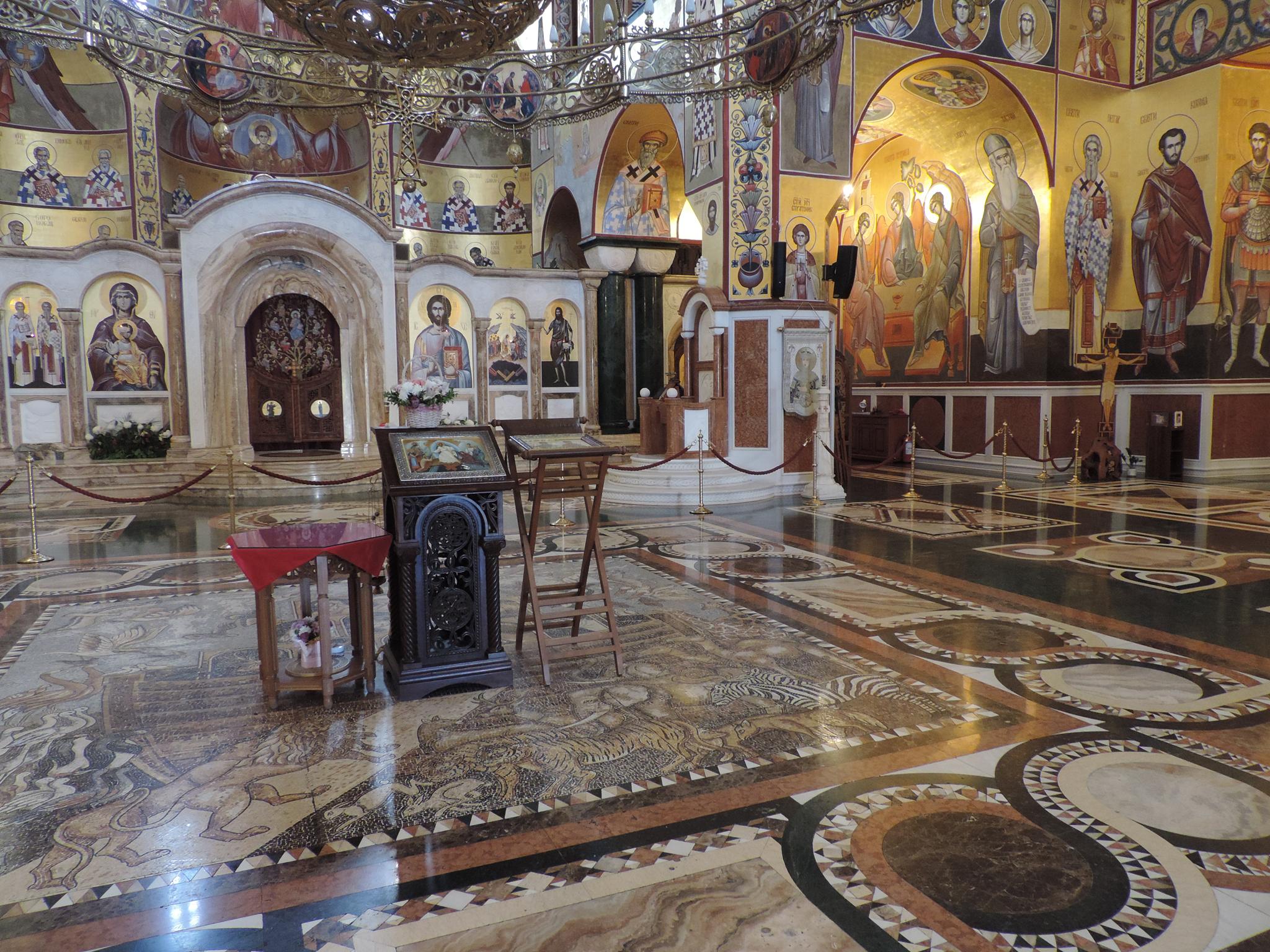
In the heart of Podgorica stands a impressive building that is far more than an Orthodox place of worship. The „Saborni Hram Hristovog Vaskrsenja“, or in English „Cathedral of the Resurrection of Christ“, is a monumental work of art combining architecture, fresco painting, mosaics and stone sculpture. Its interior is particularly impressive, with an almost overwhelming visual world: golden backgrounds, depictions of saints, biblical narratives and historical figures cover the walls, columns, vaults and domes. From an artistic perspective, the cathedral is especially fascinating because it combines centuries-old Orthodox visual traditions with contemporary political and social statements.
The building’s history began in 1993. On 9th August the cornerstone was laid in the presence of high-ranking representatives of the Orthodox Church, including the then-Serbian Patriarch Pavle and the Metropolitan of Montenegro, Amfilohije Radović. The latter was one of the driving forces behind the project. The cathedral was designed by Serbian architect Predrag Ristić. After about twenty years of construction, the ceremonial consecration took place on 7th October 2013. The date was deliberately chosen to coincide with the 1.700th anniversary of the Edict of Milan of 313, which established religious freedom in the Roman Empire.
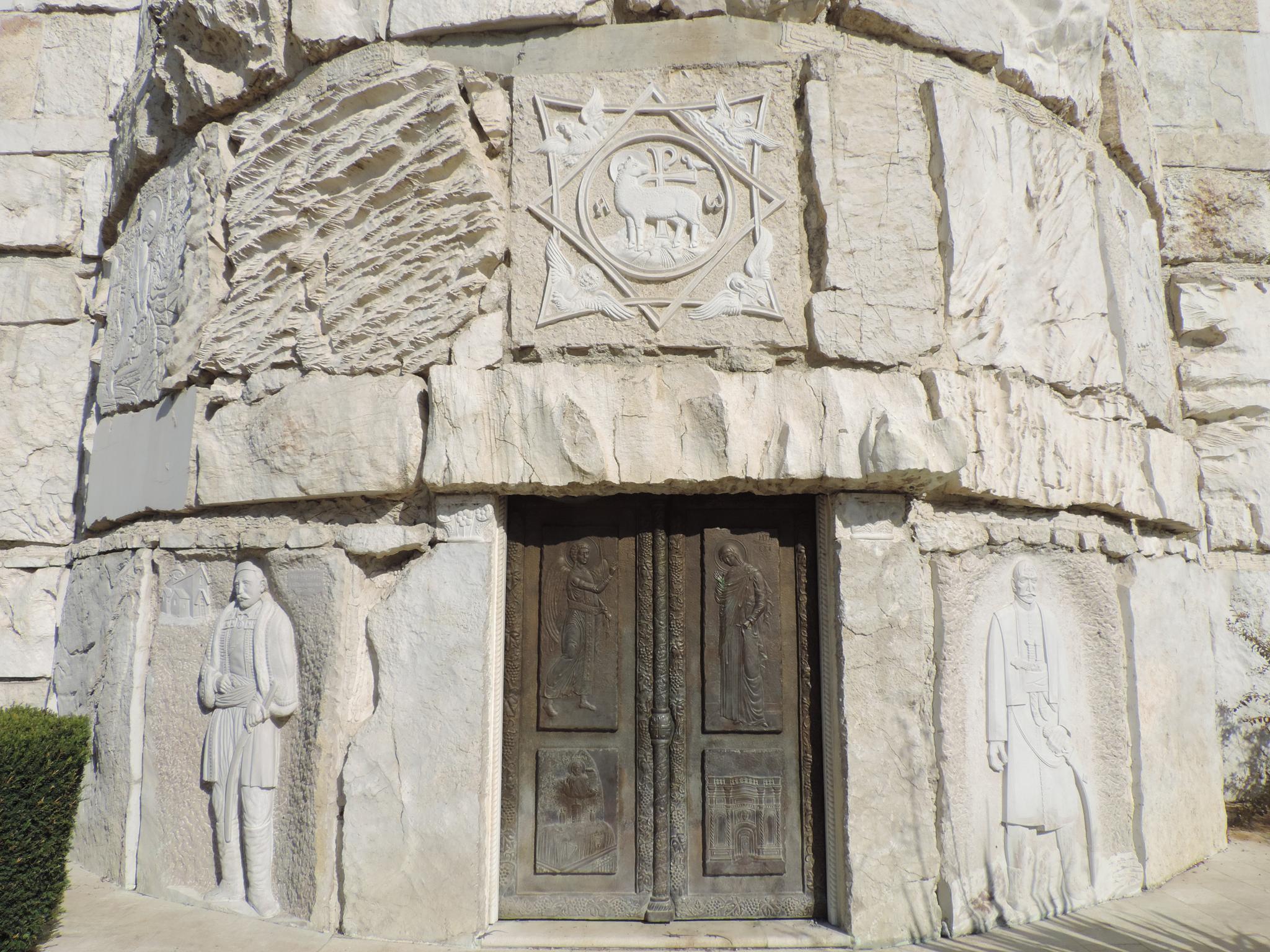
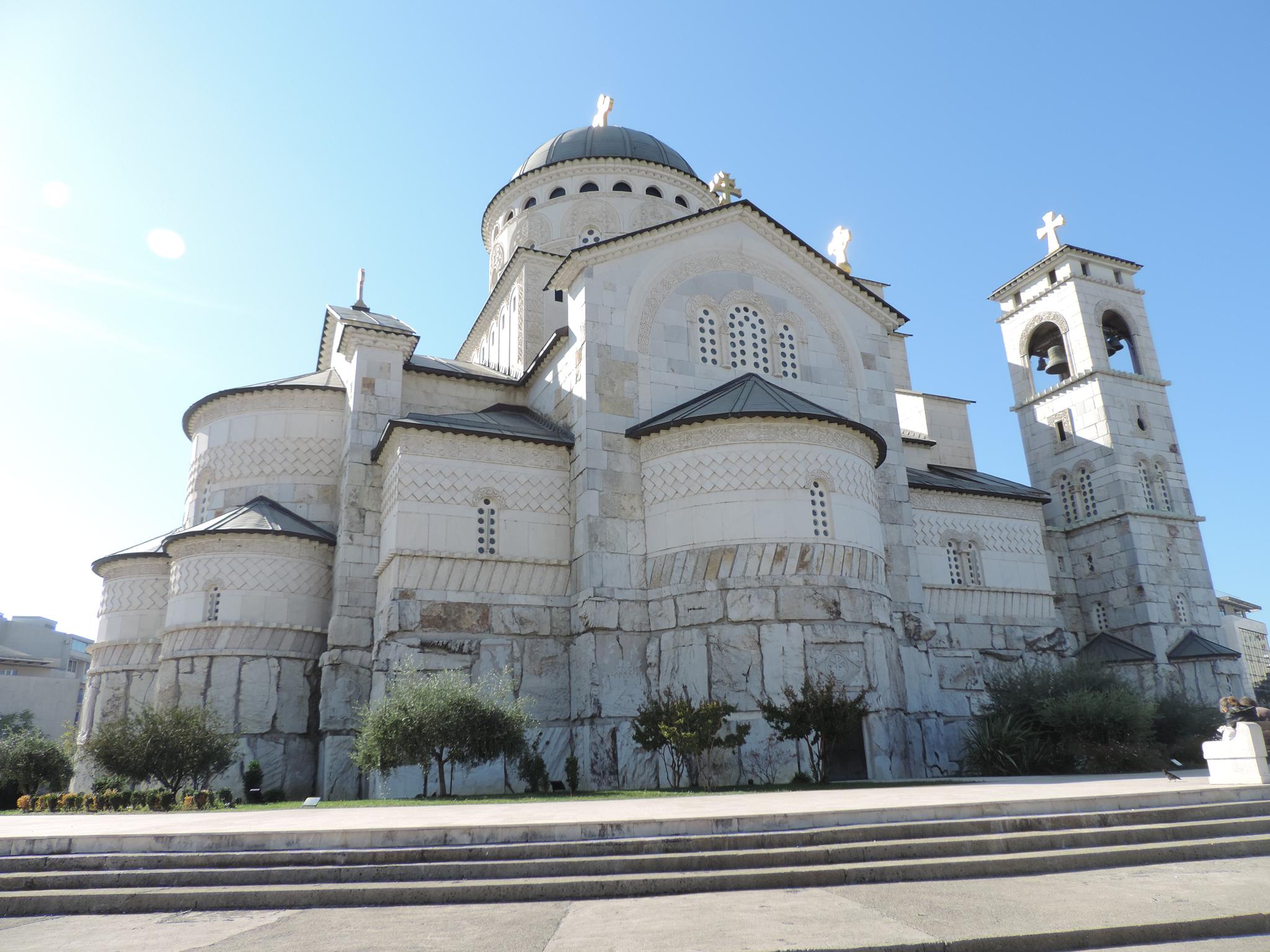
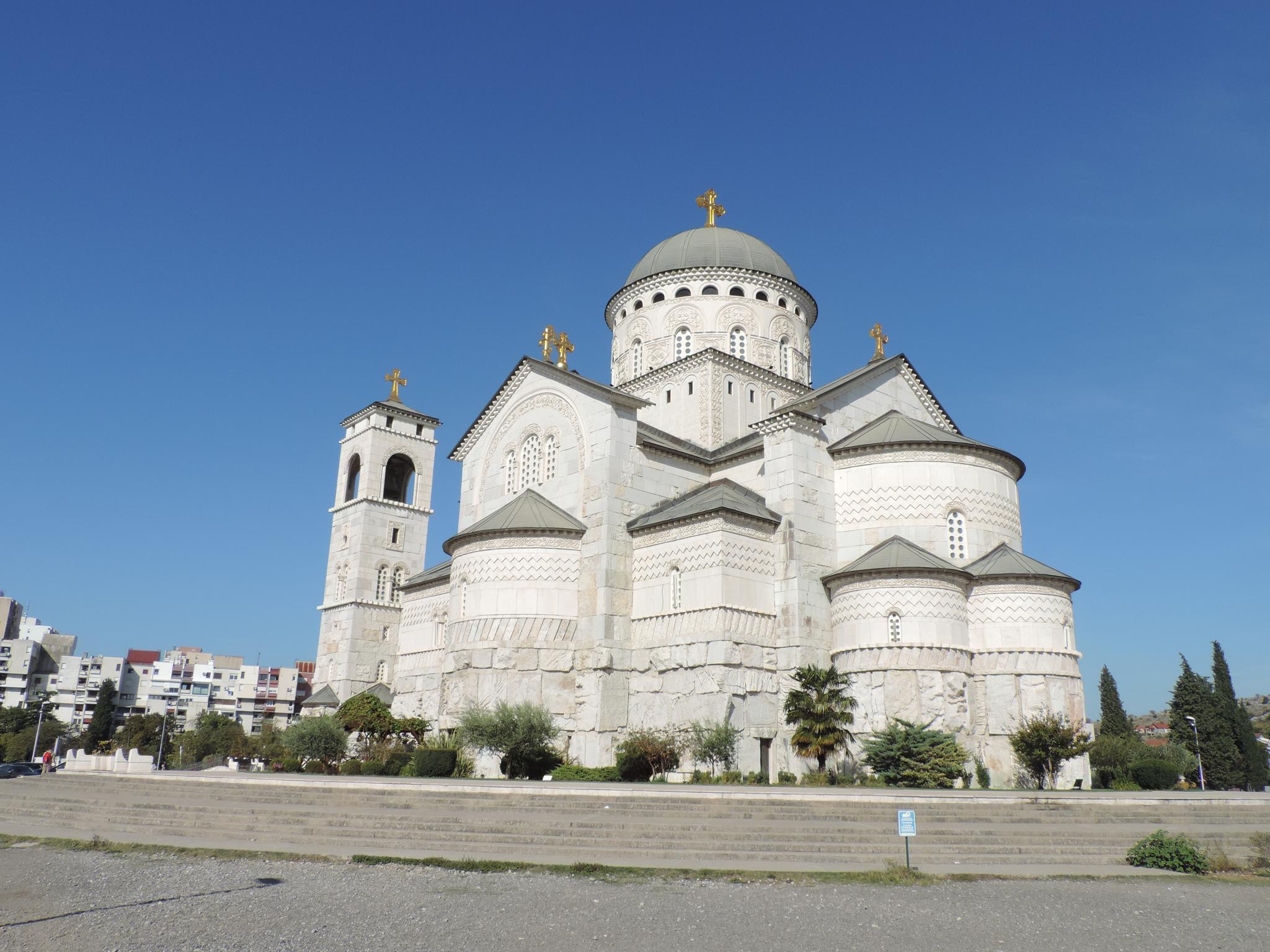
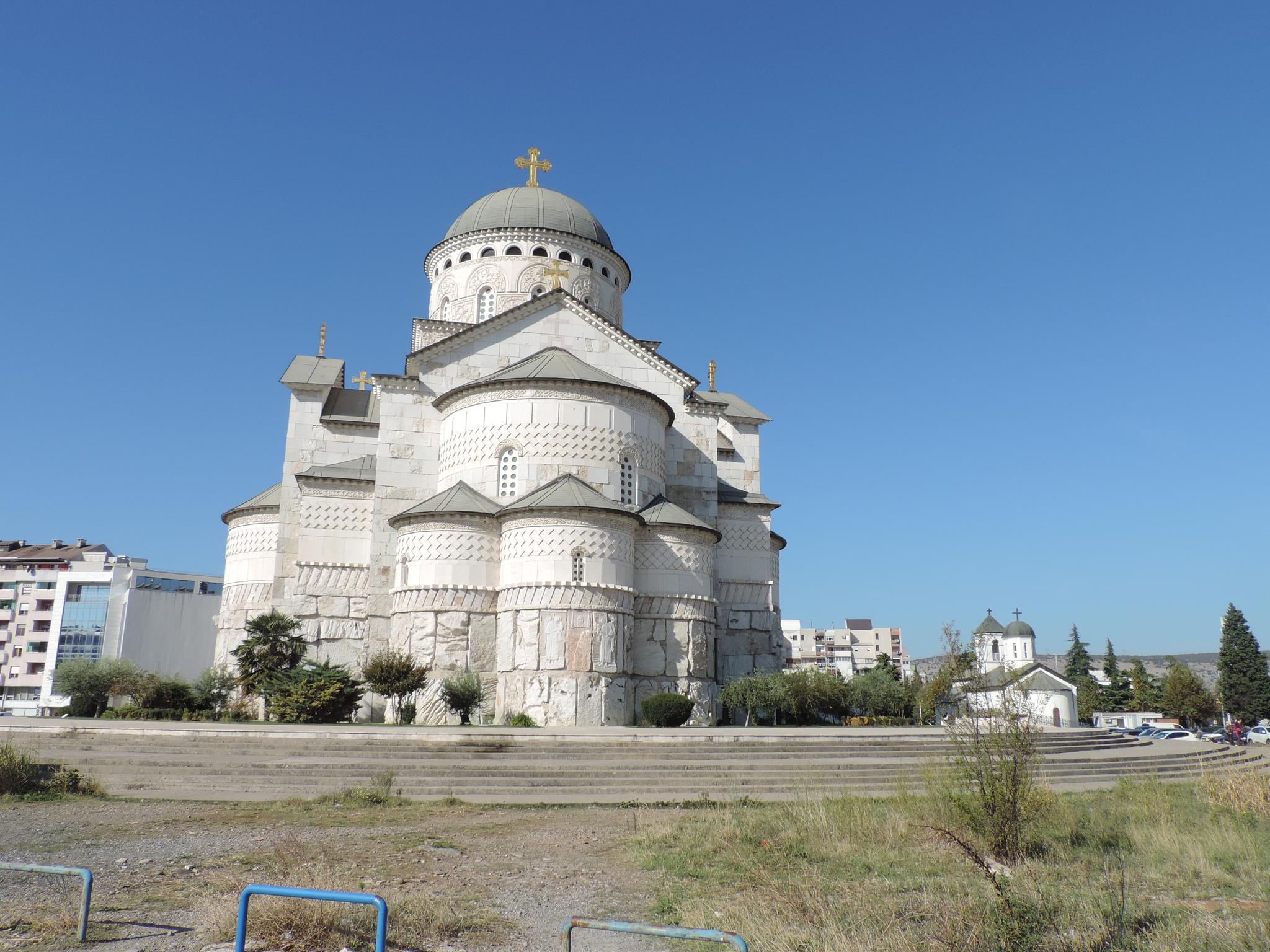
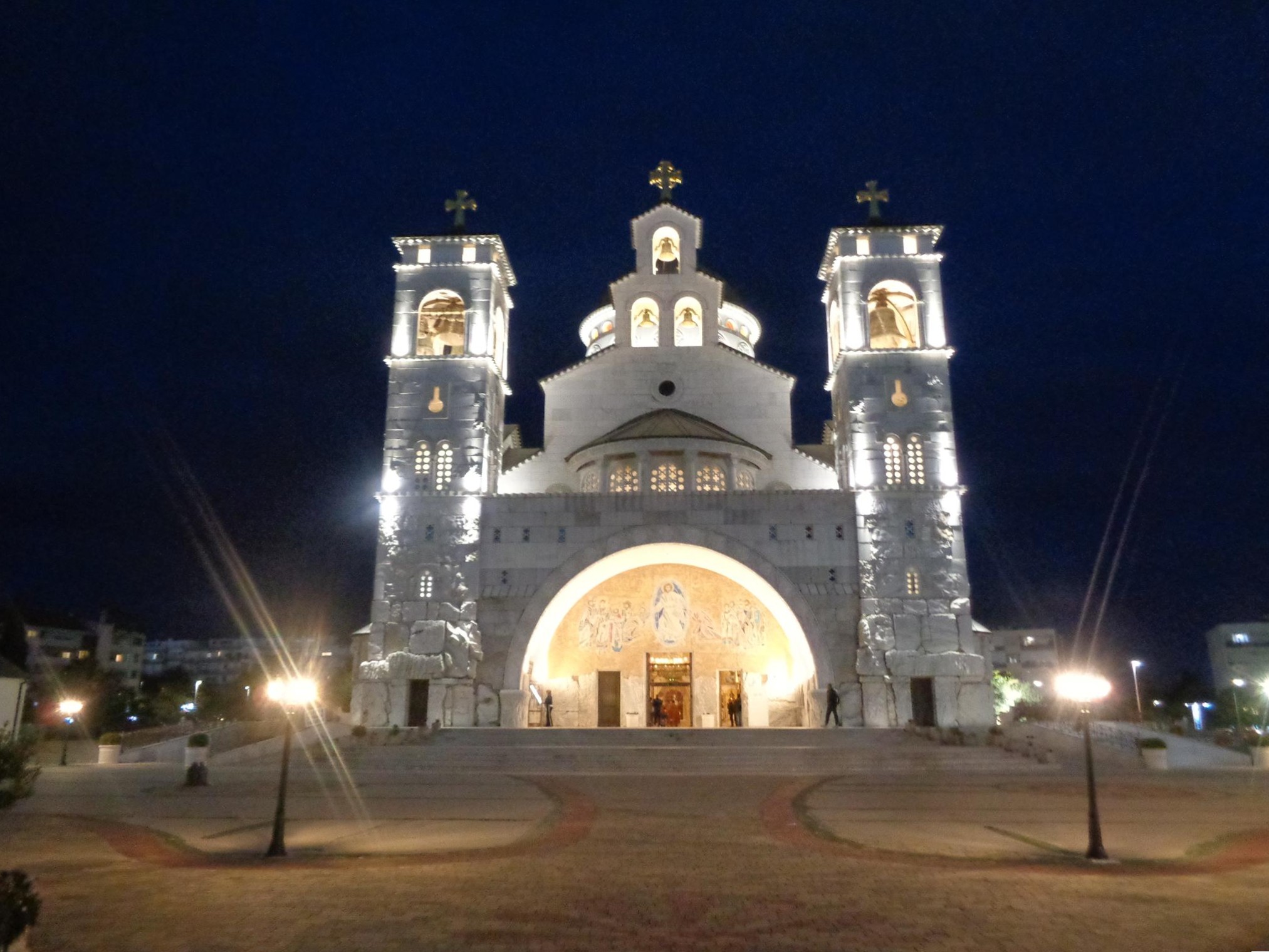
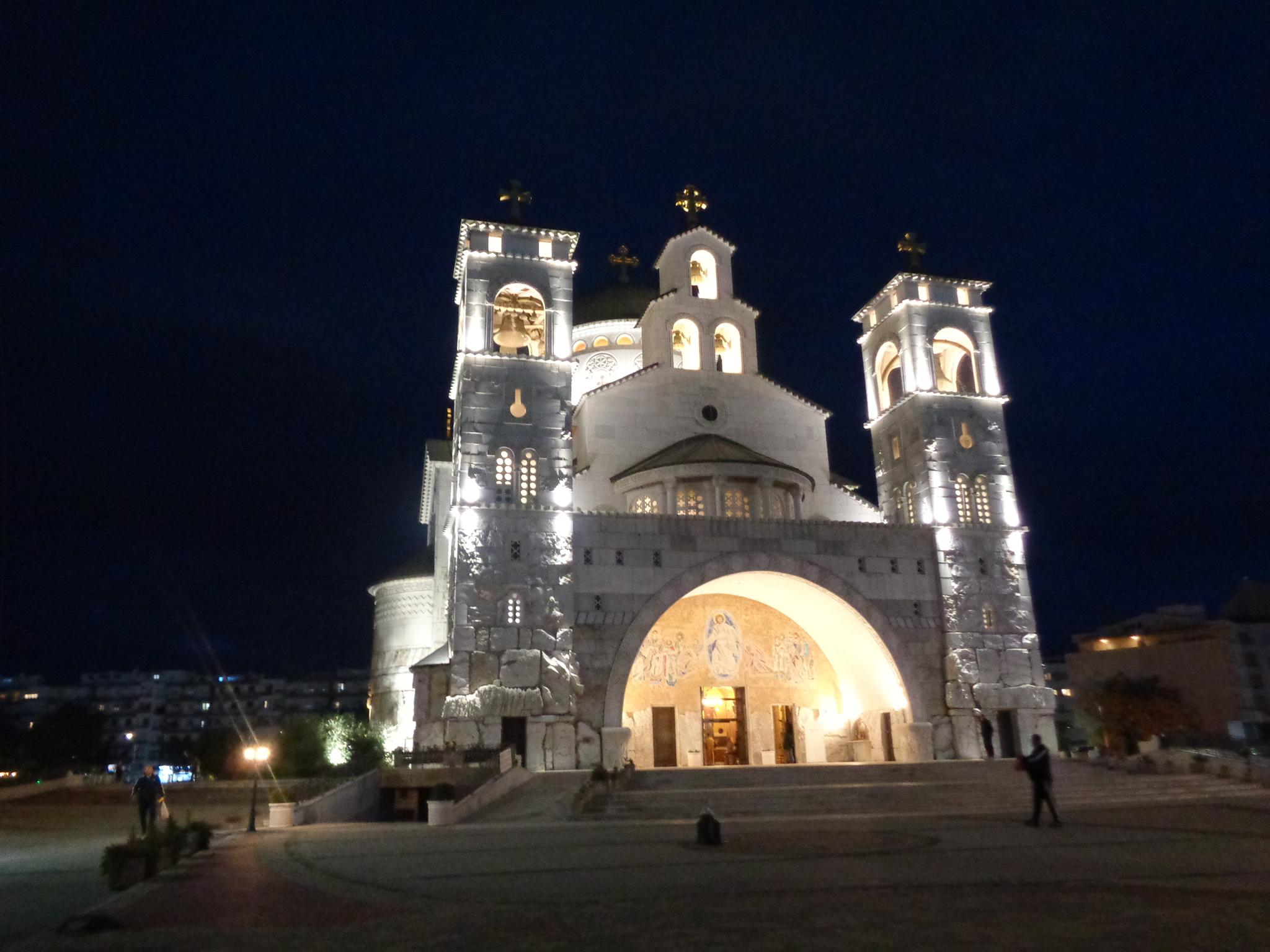
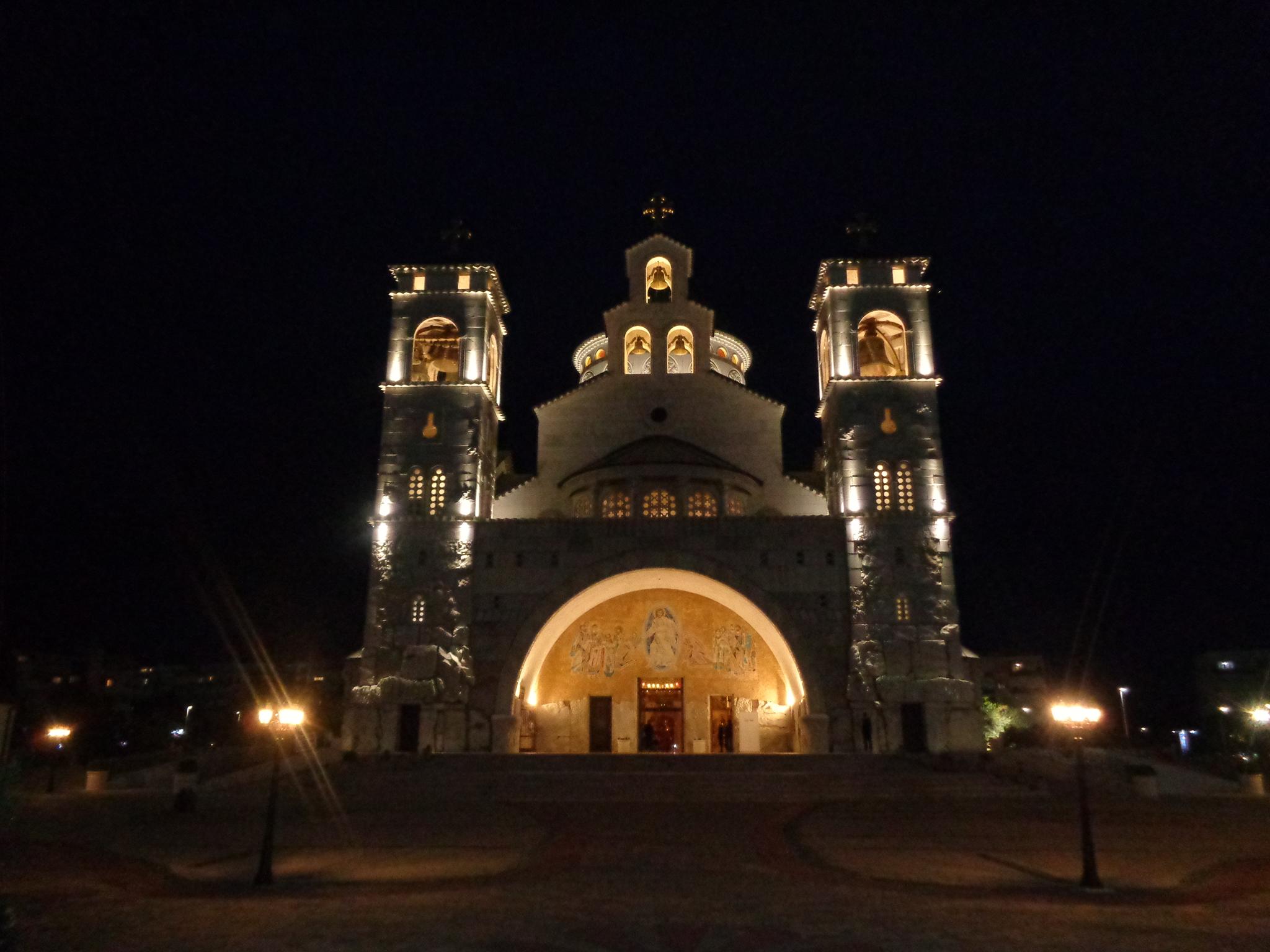
Architecturally, the building draws on Serbian-Byzantine sacred architecture but also incorporates Romanesque and Mediterranean elements. The two bell towers are each 26.7 meters high and house a total of 17 bells. The central dome reaches a height of approximately 35.5 meters. Particularly striking is the massive stone architecture, for which large stone blocks from the Podgorica area were used. This creates a blend of historical design language and modern monumentality.
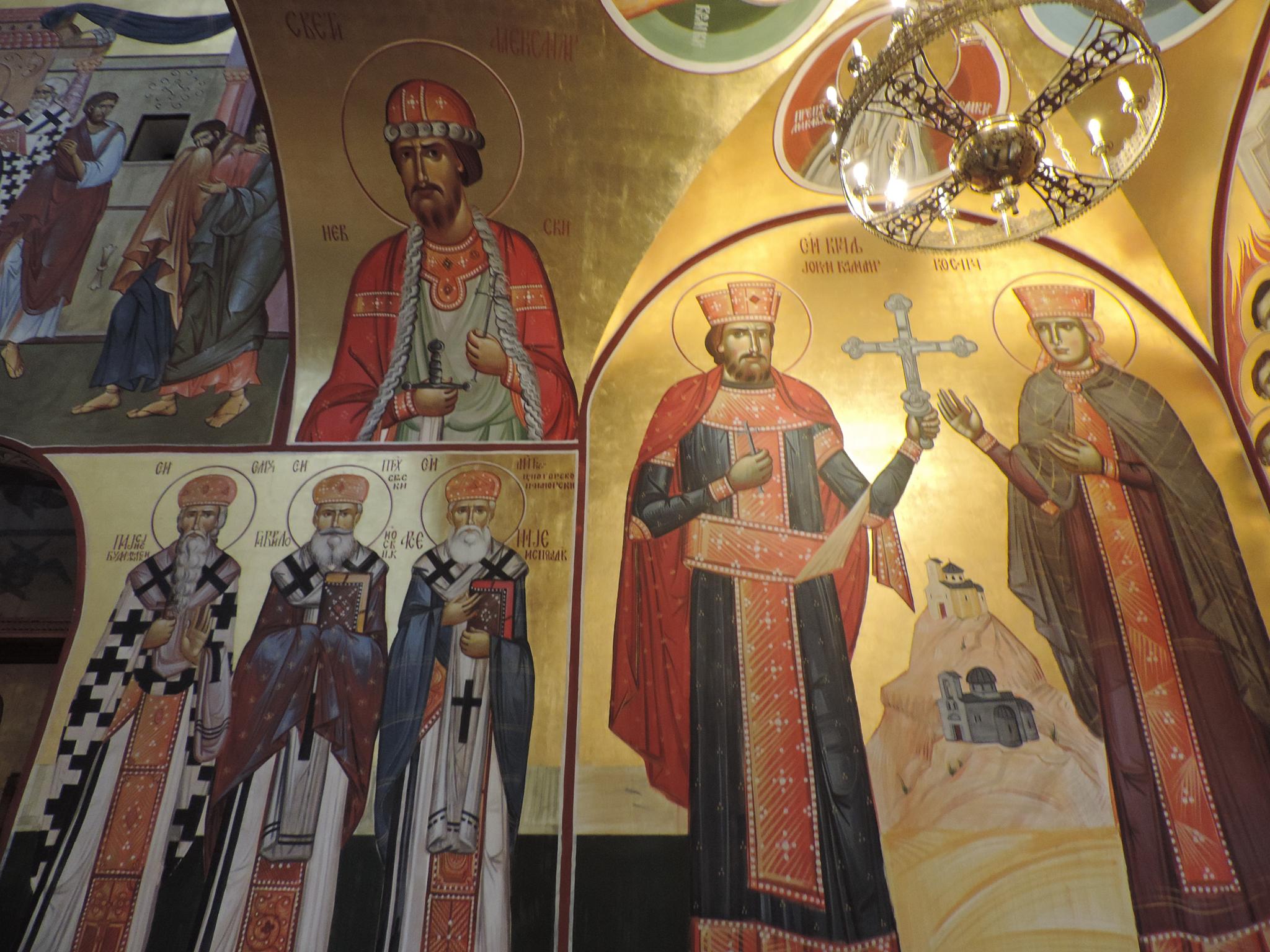
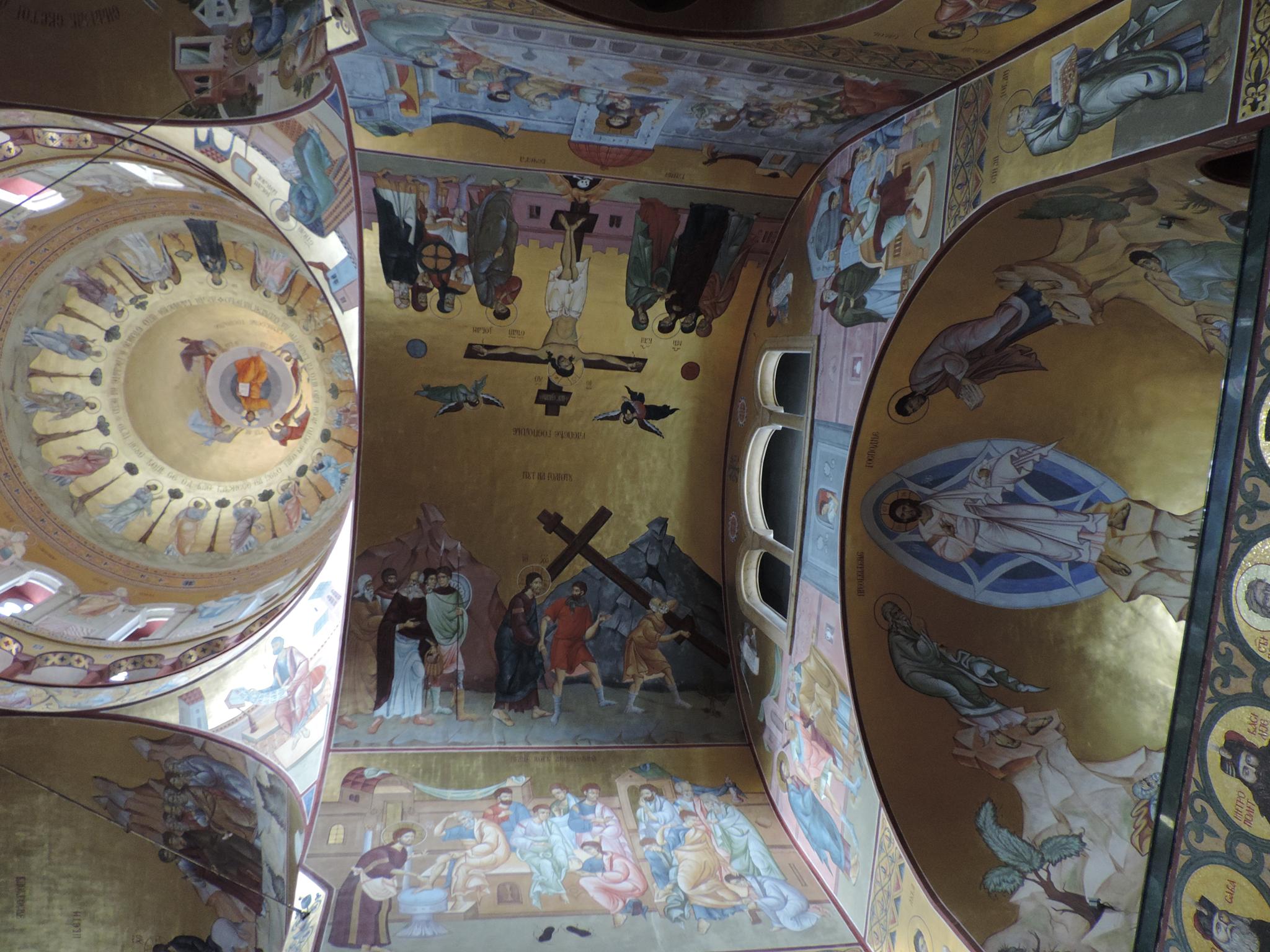
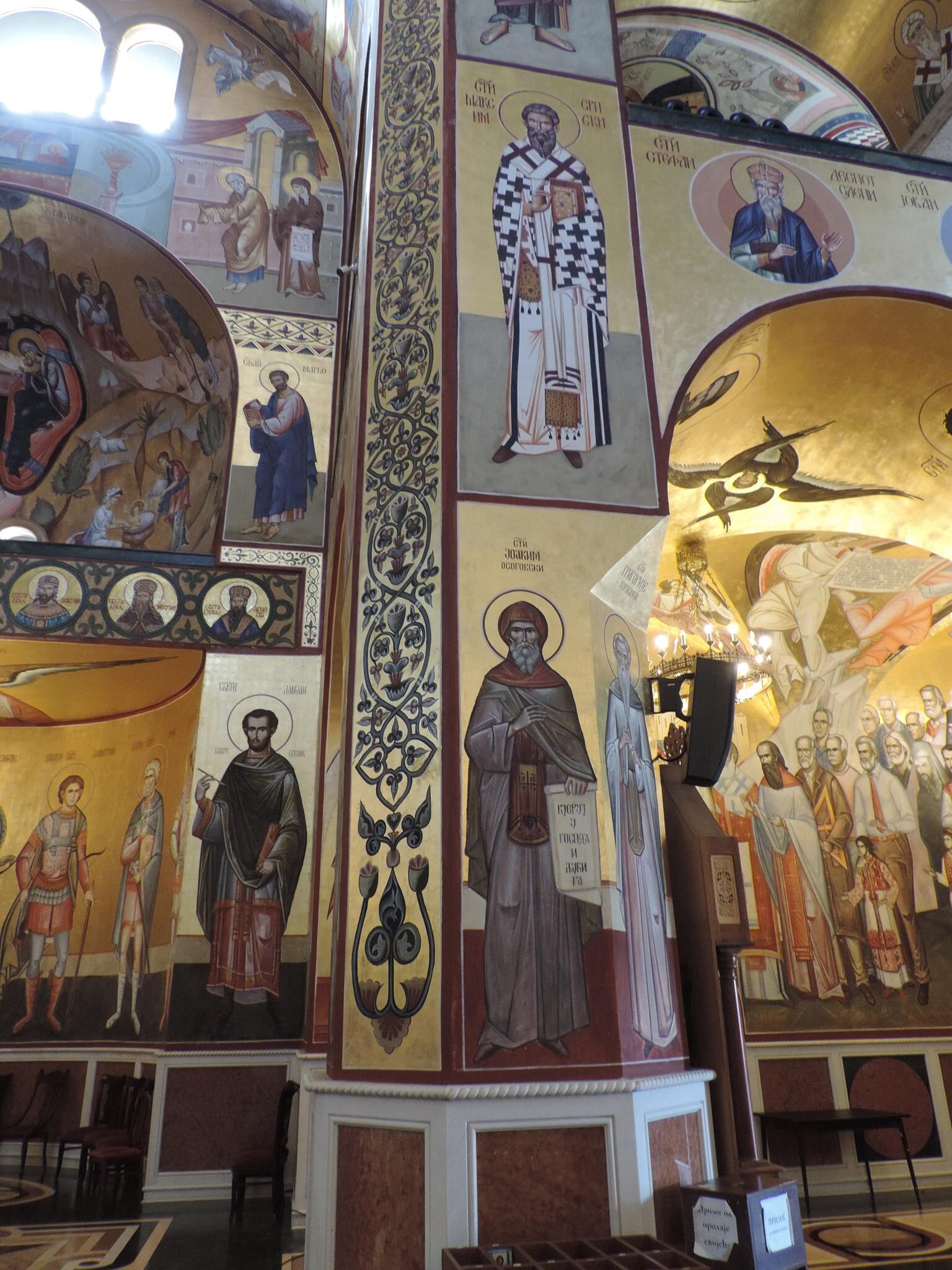
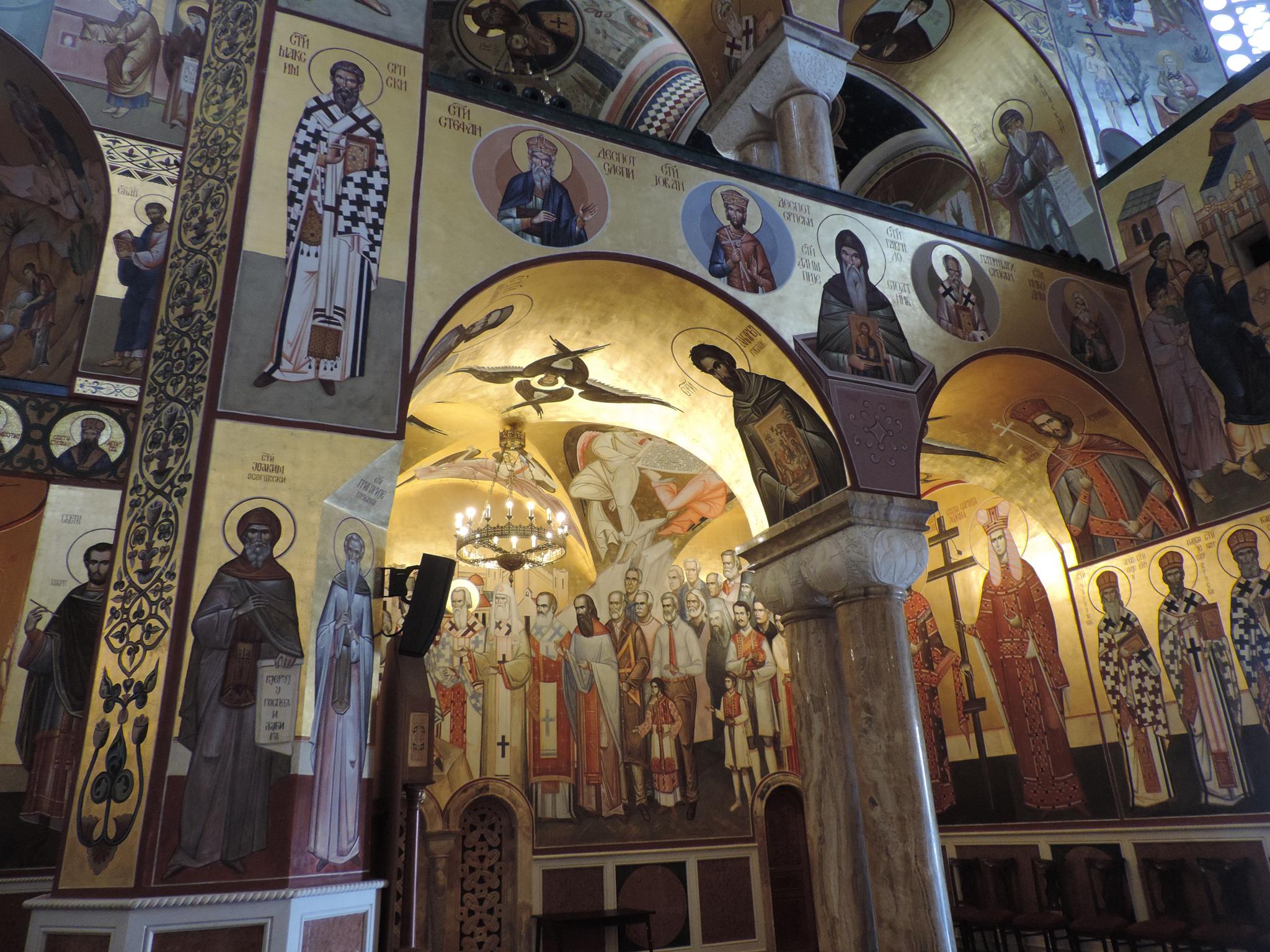
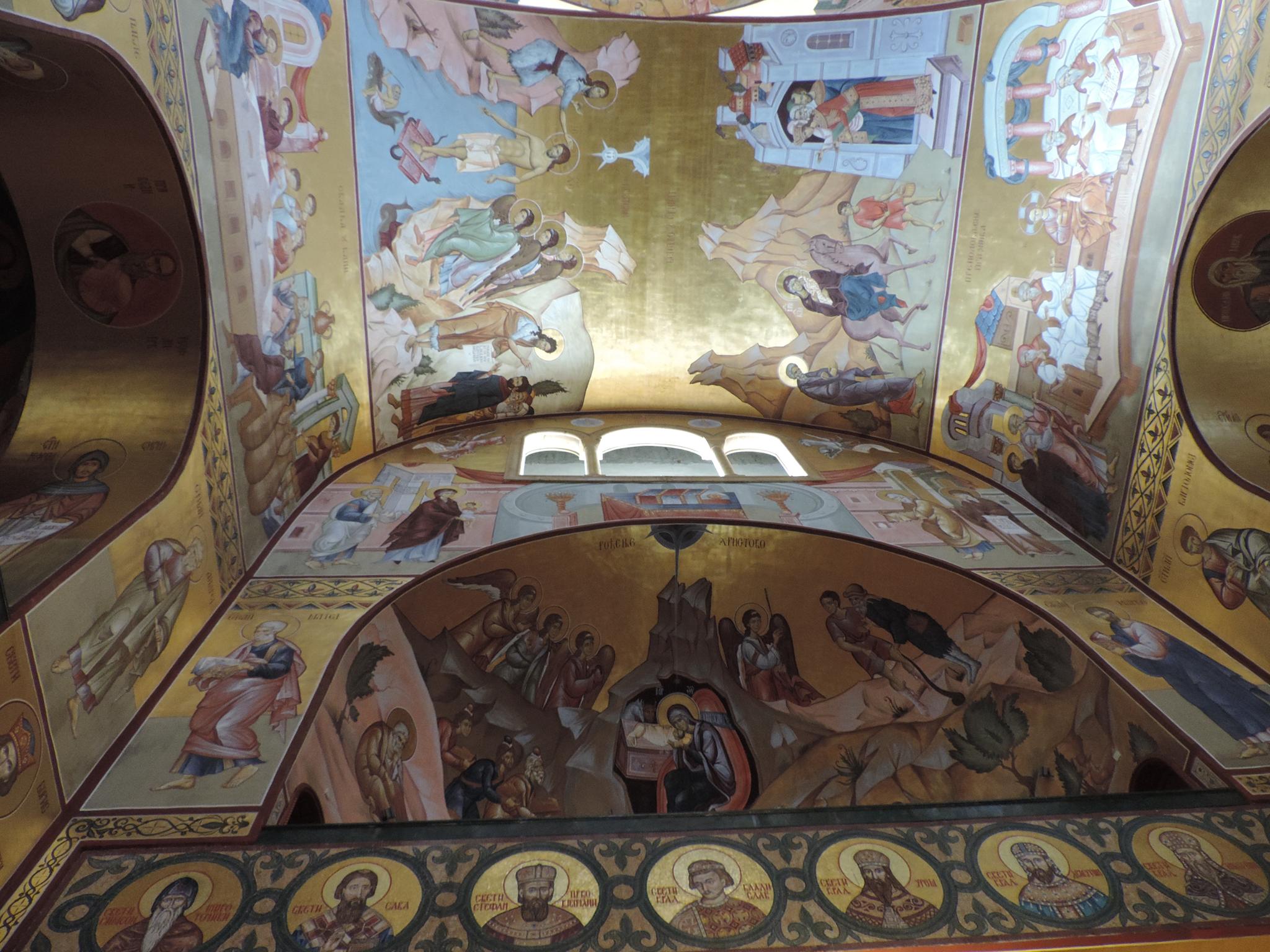
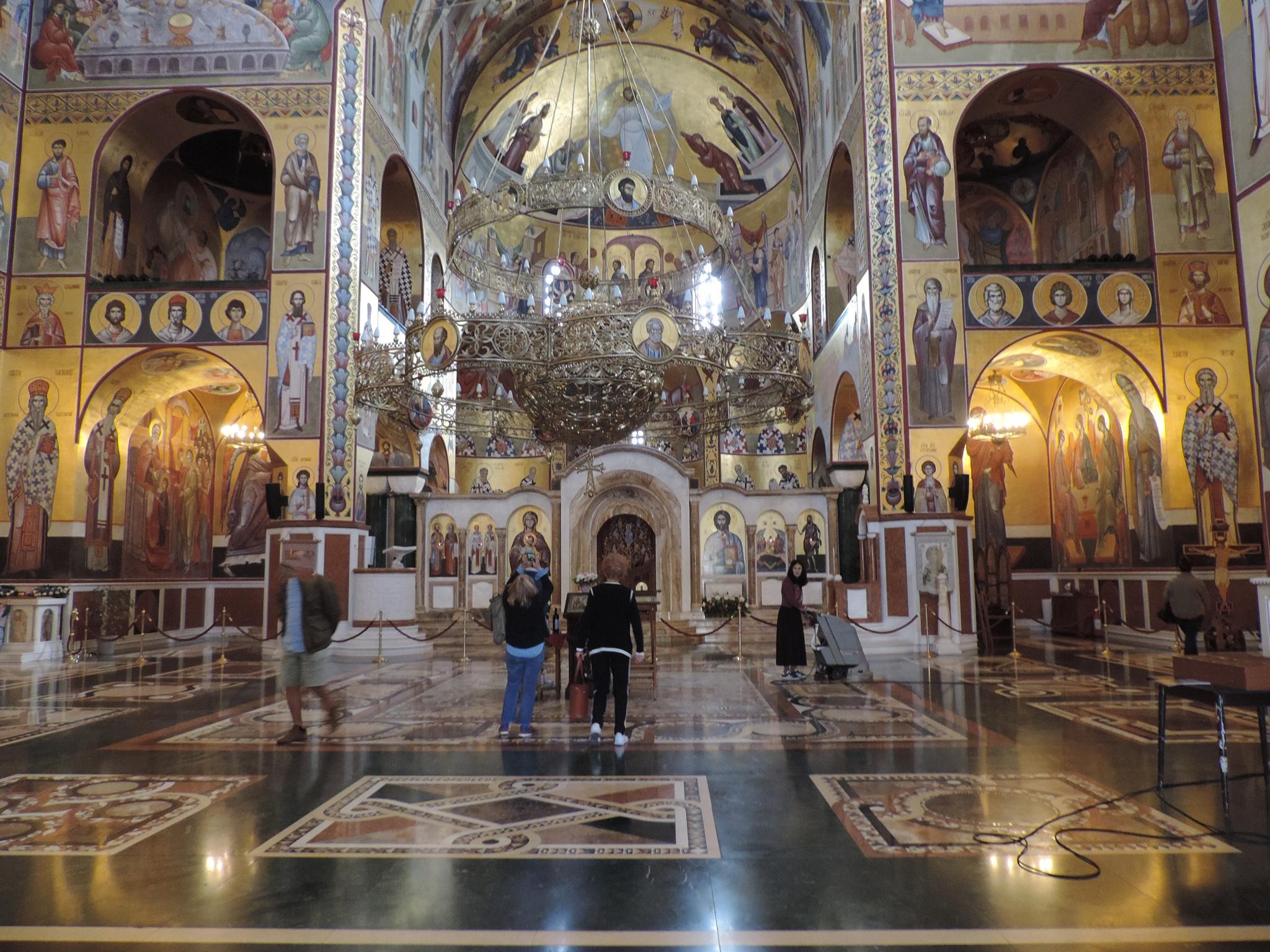
The true centerpiece, however, is the interior decoration. Approximately 6,200 square meters of frescoes cover the church interior and the crypt. The paintings were created between 2006 and 2013 and follow an overarching iconographic concept. Bishop Metropolitan Amfilohije Radović was responsible for its theological and artistic direction. The work was carried out by several specialized fresco painters from Montenegro, Serbia, and Belarus.
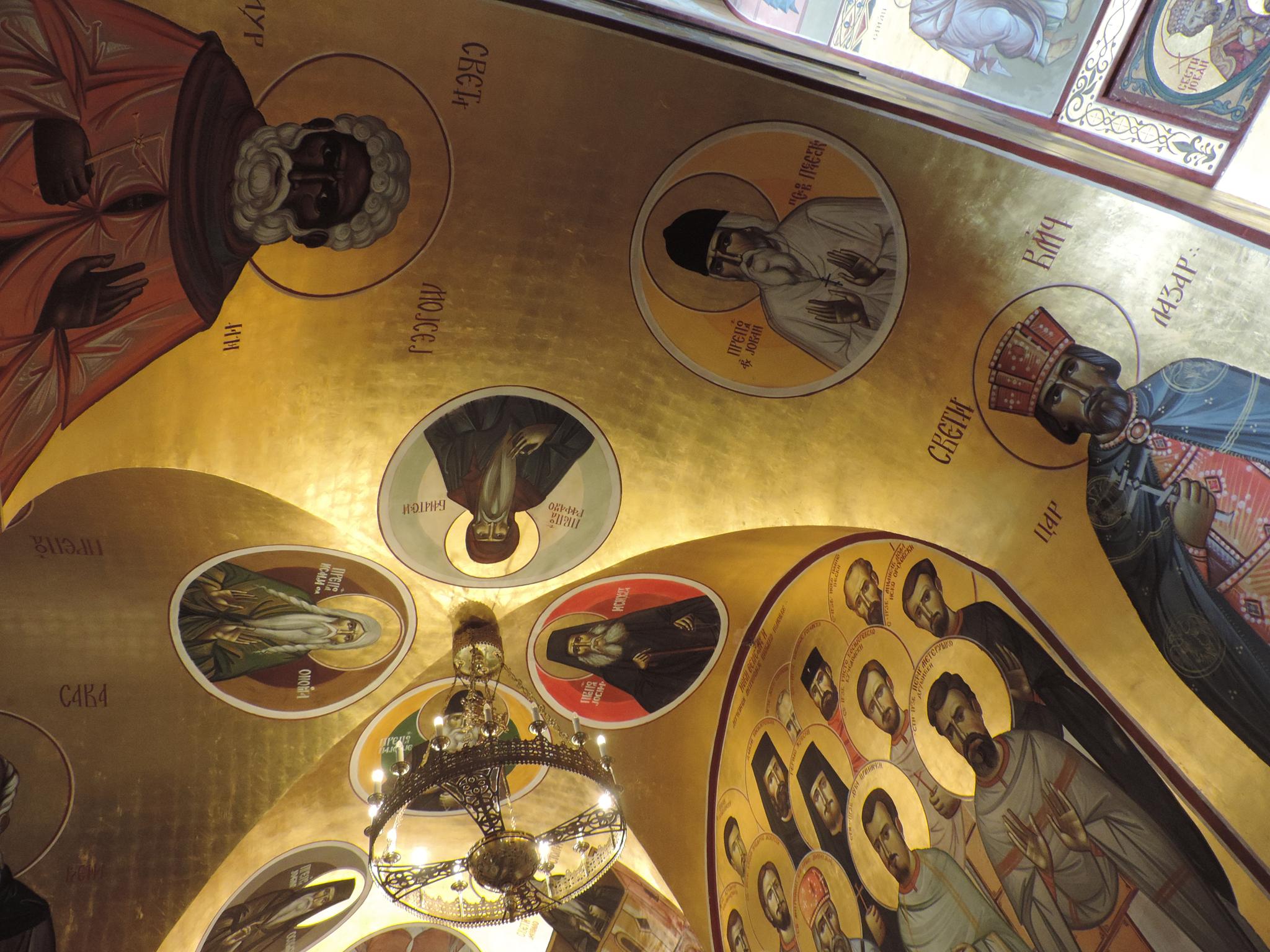
Covering an area of approximately 6.200 square meters, including the crypt, an extensive pictorial program was created that draws on the Byzantine tradition and depicts biblical scenes, saints, and central motifs of the Orthodox faith. Among the first artists to begin the painting was LAZAR STOJKOVIĆ, a monk and abbot of the Zagrađe Monastery. He began work on the frescoes in the crypt in 2006. His works include, among others, the depiction of the Resurrection of Lazarus.
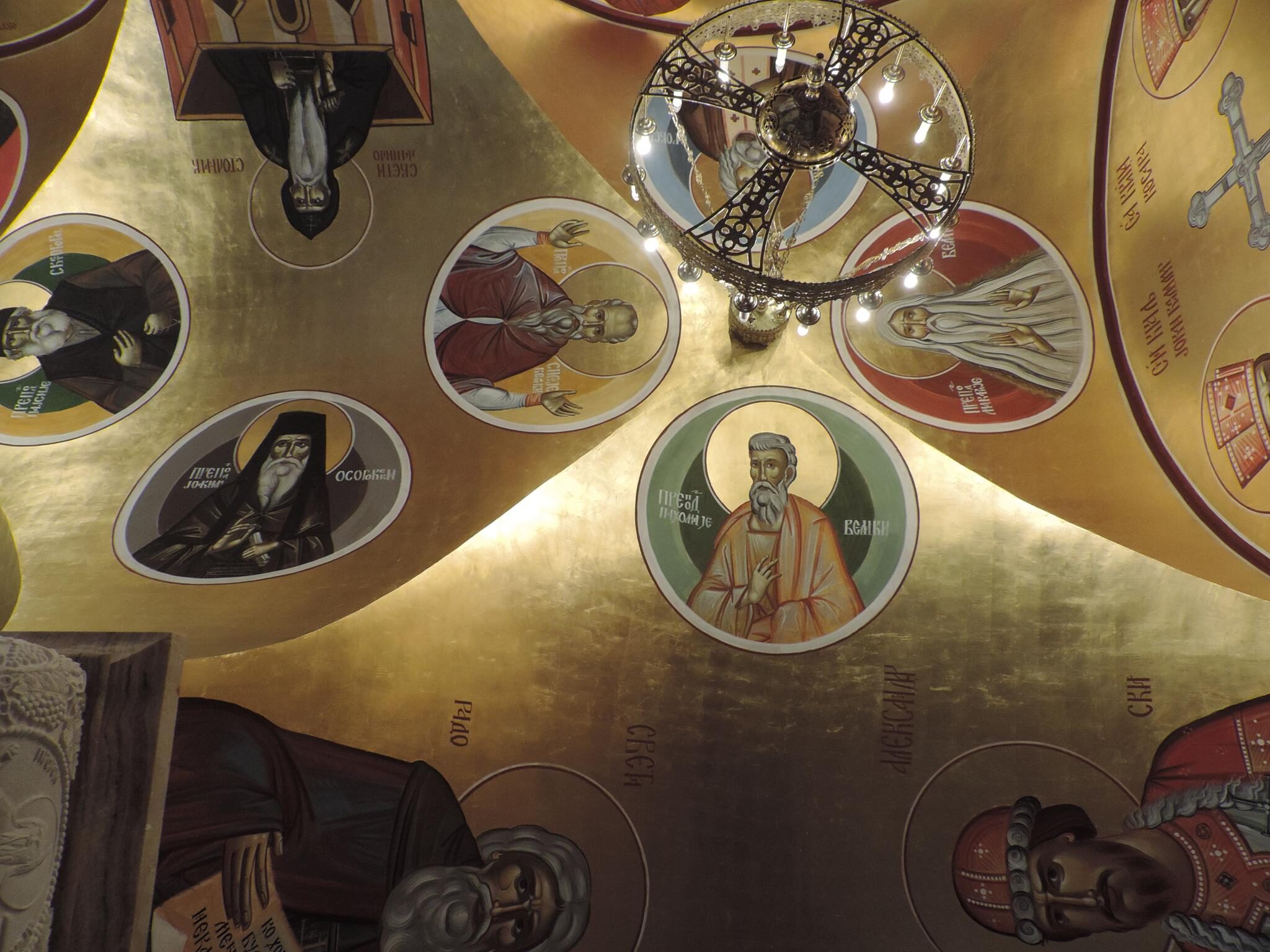
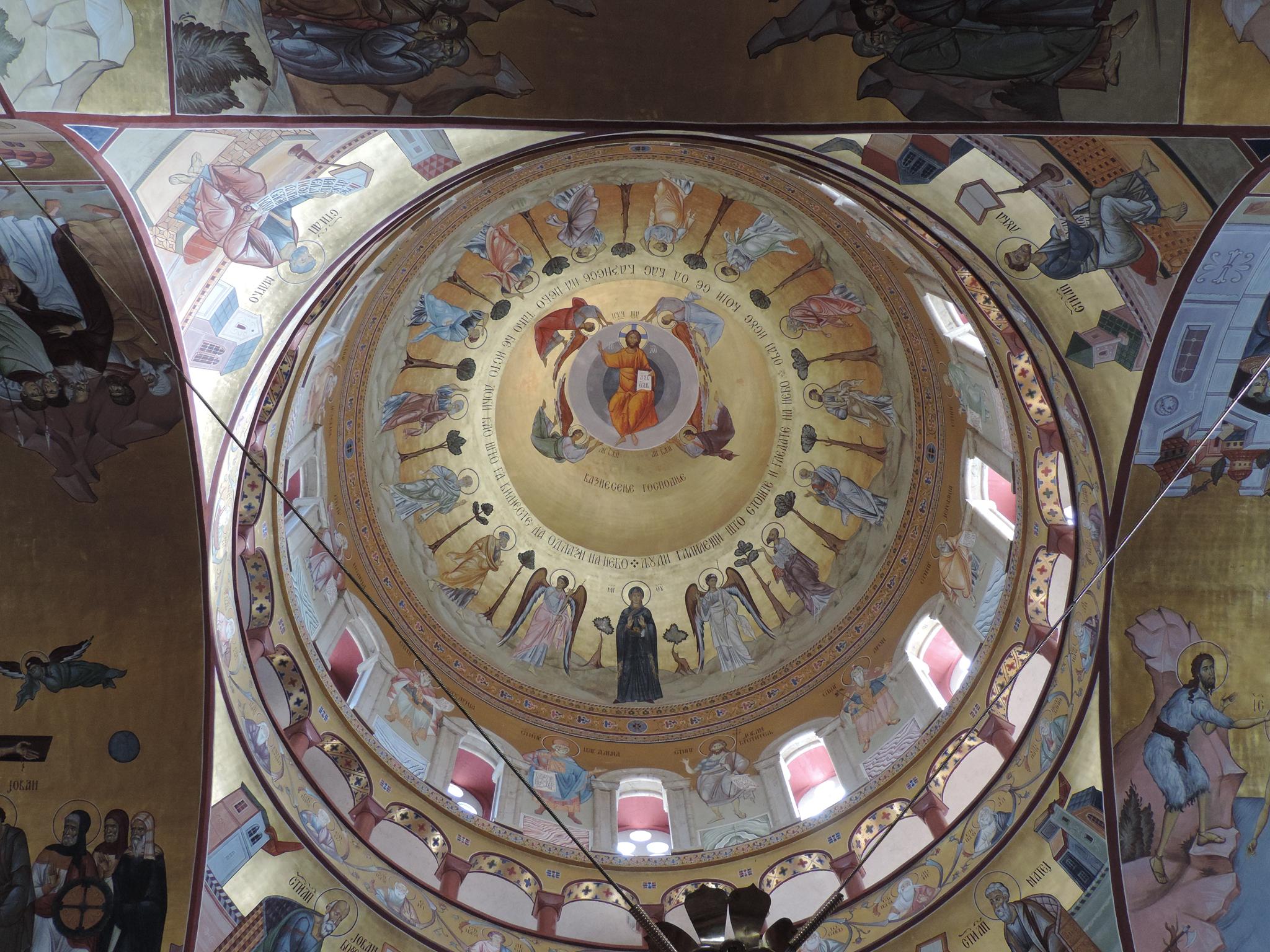
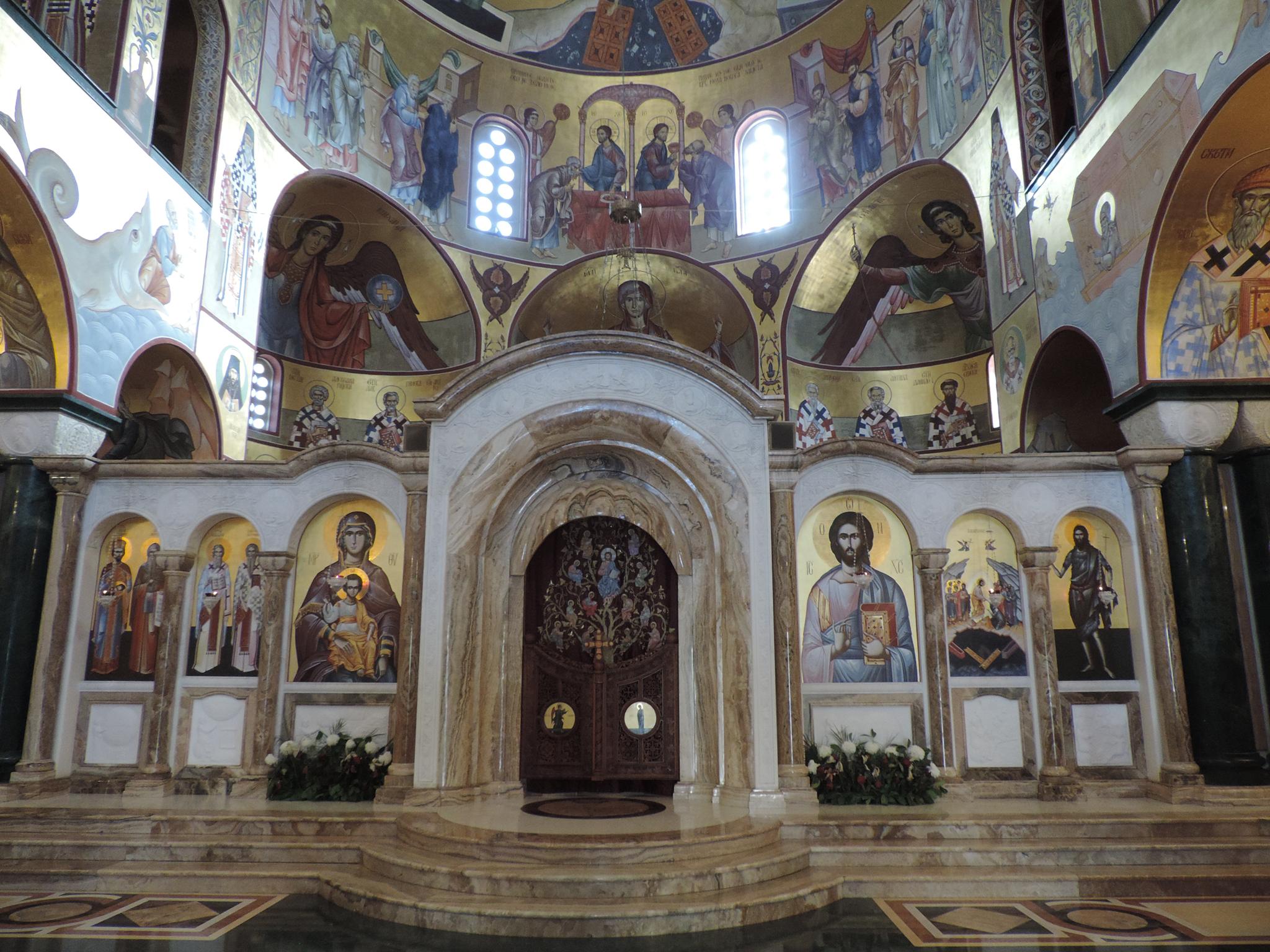
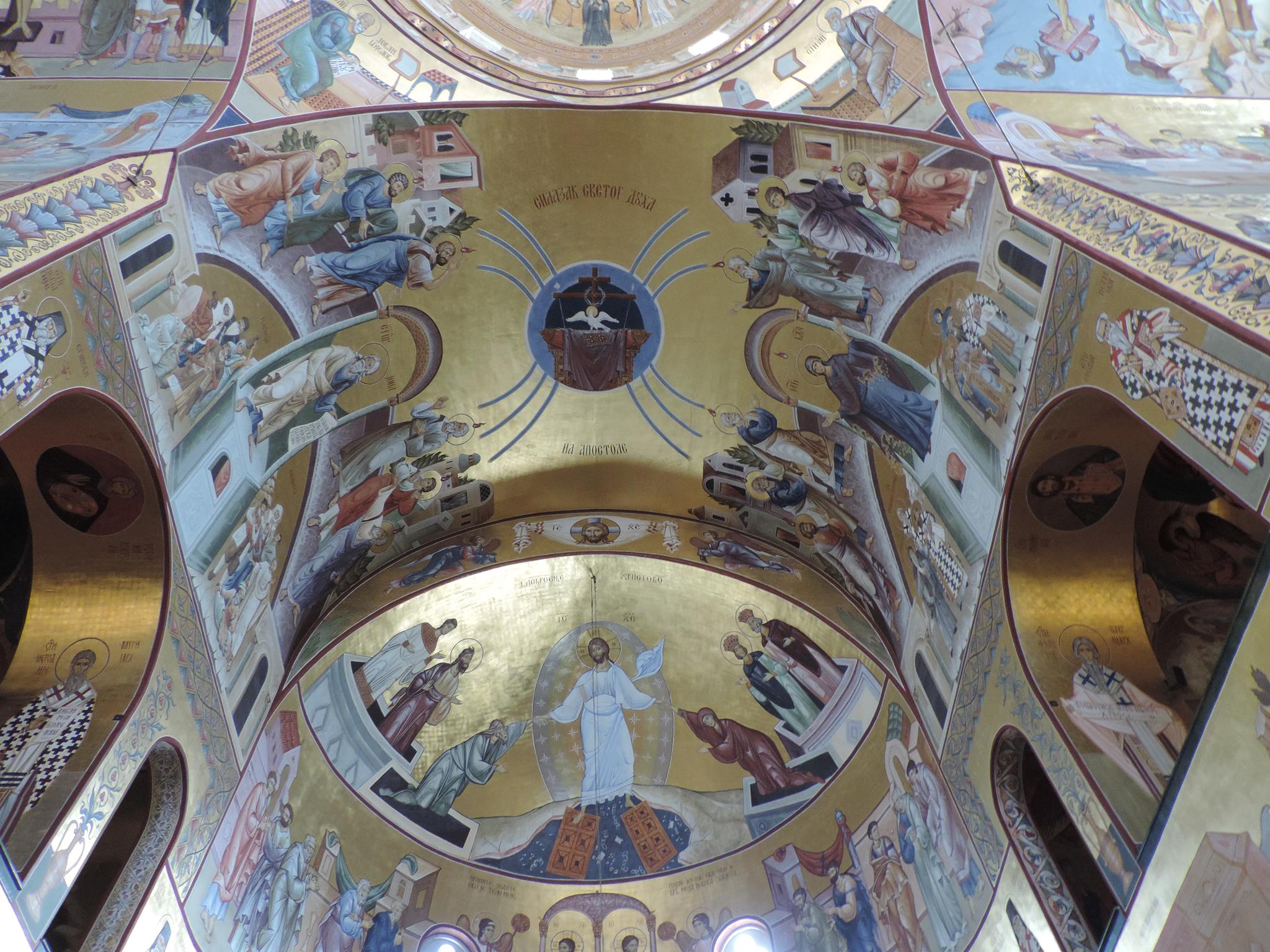
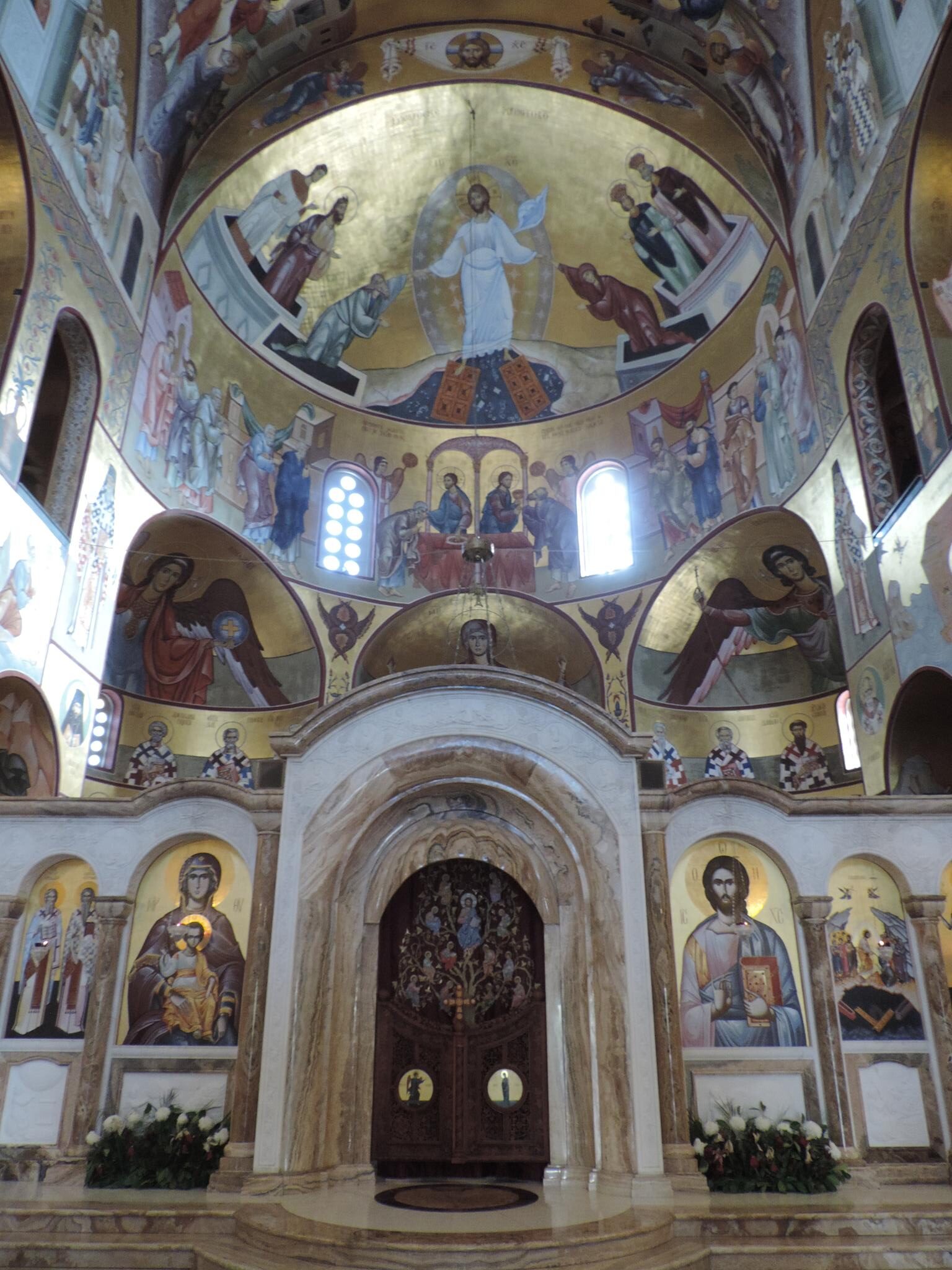
MILOŠ JANIĆIJEVIĆ RAŠKI played a central role in the artistic design. He was involved in painting the large vaulted niches and the dome. His works are characterized, among other things, by the use of a gold ground, which lends the depictions a special luminosity and a sacred aura. ANASTASIJE RADOVIĆ MORAČKI created numerous depictions of saints on the lower sections of the walls as well as the icons on the iconostasis. The Belarusian artist VIKTOR DOVNAR also contributed to the design. Among his works and Pentecost frescos is the depiction of the Descent of the Holy Spirit upon the Apostles and all the peoples of the earth, covering approximately 320 square meters.
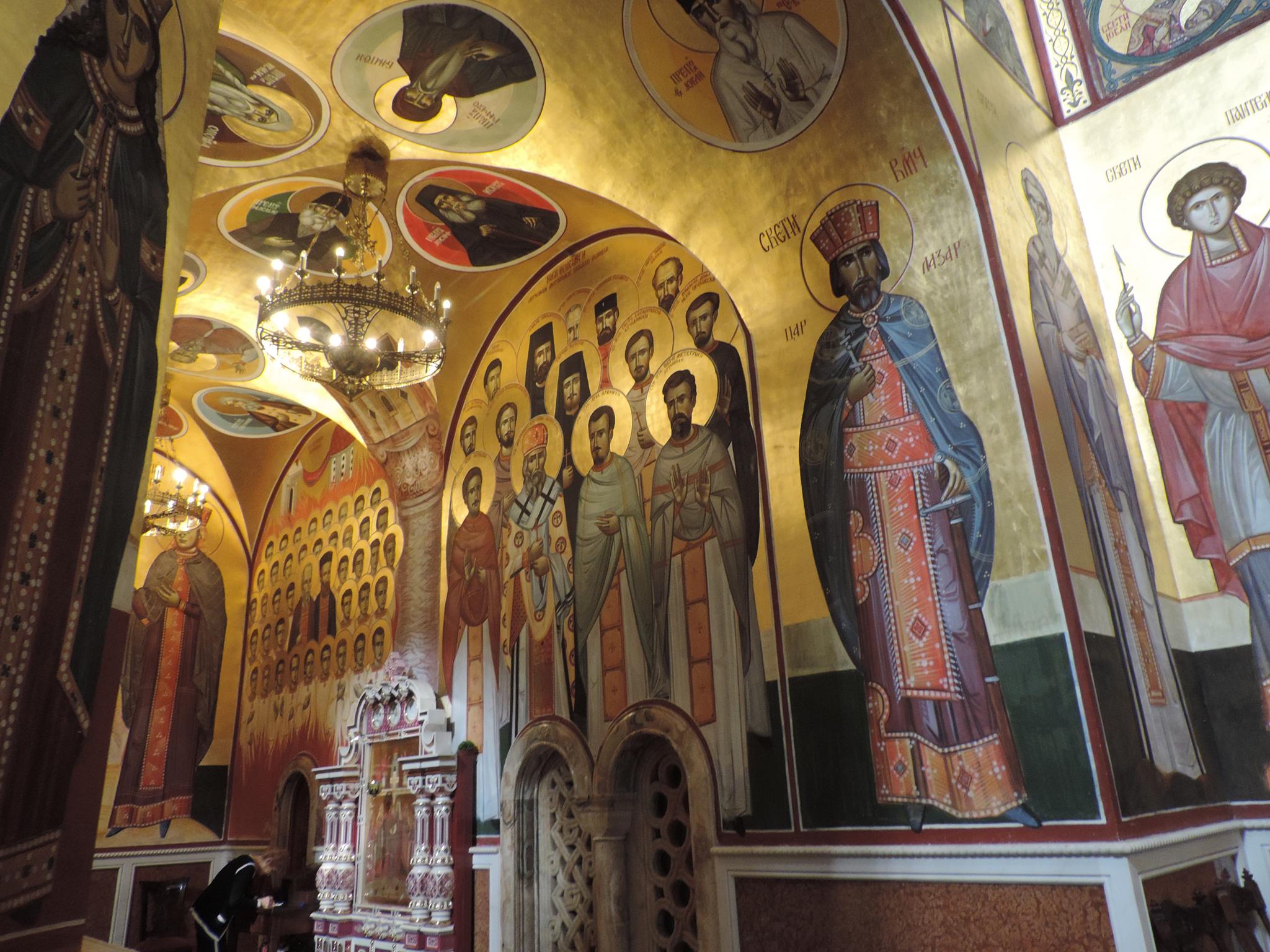
Other artists who contributed to the painting included DAMIR MLADENOVIĆ and monk GAVRILO MARKOVIĆ, who worked primarily on the frescoes in the galleries. BORIS MARKUŠ created, among other things, the paintings in the northwestern vaulted area and in the baptistery of St. Simeon’s Tower. Reports on the creation of the frescoes also mention VUK DABETIĆ, NIKOLA RADOVIĆ, LIDIJA TIJANIĆ, and RADE SARIĆ as additional contributors.
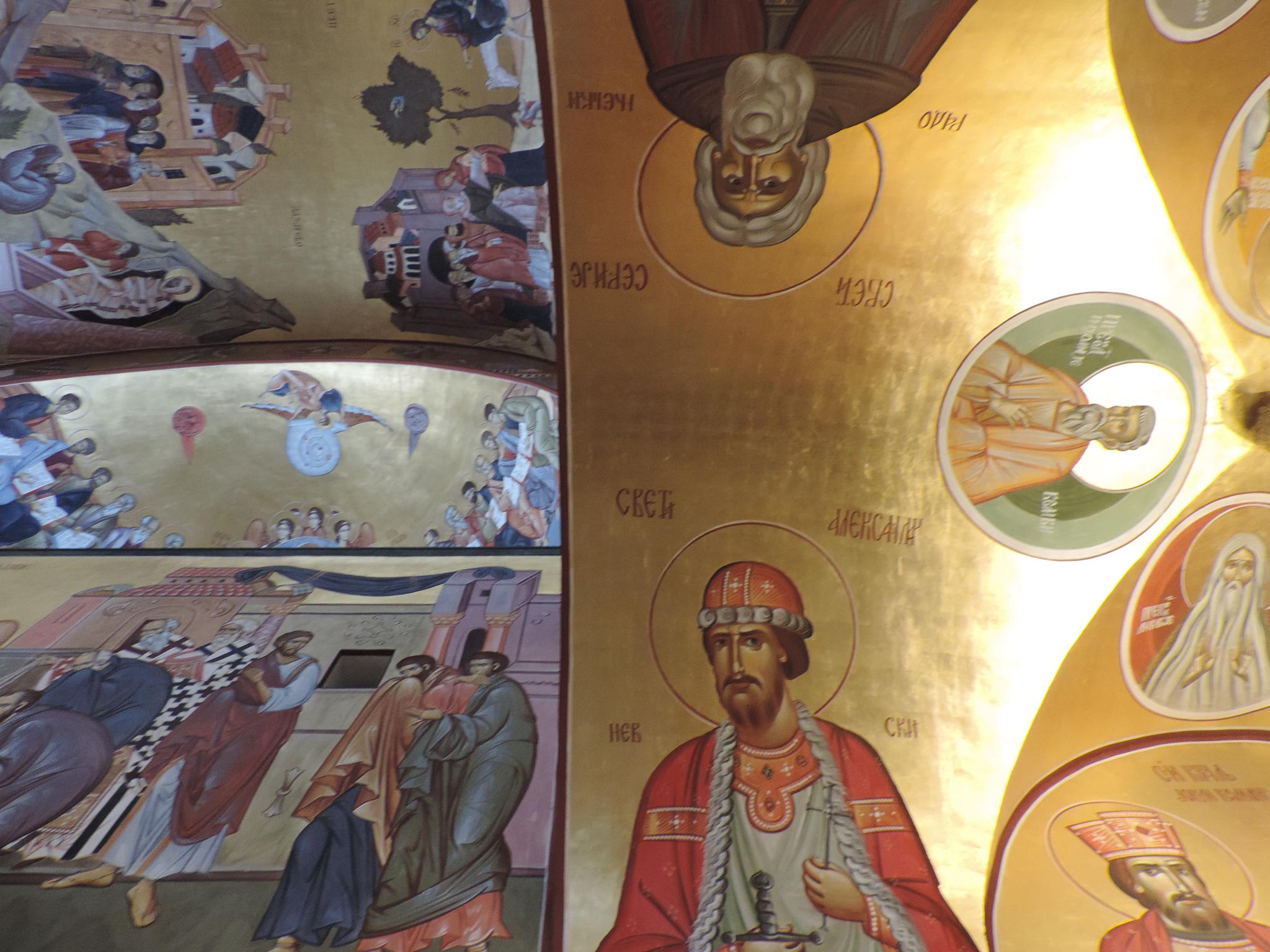
The overall artistic concept was developed with the significant involvement of Metropolitan Amfilohije Radović, who established the theological and spiritual framework. Archimandrite LUKA ANIĆ, who was also well-versed in art history, contributed to the development of the concept as well. The result is not a random juxtaposition of individual murals, but a cohesive theological pictorial program in which the individual depictions are interconnected and convey central themes of Orthodox Christianity.
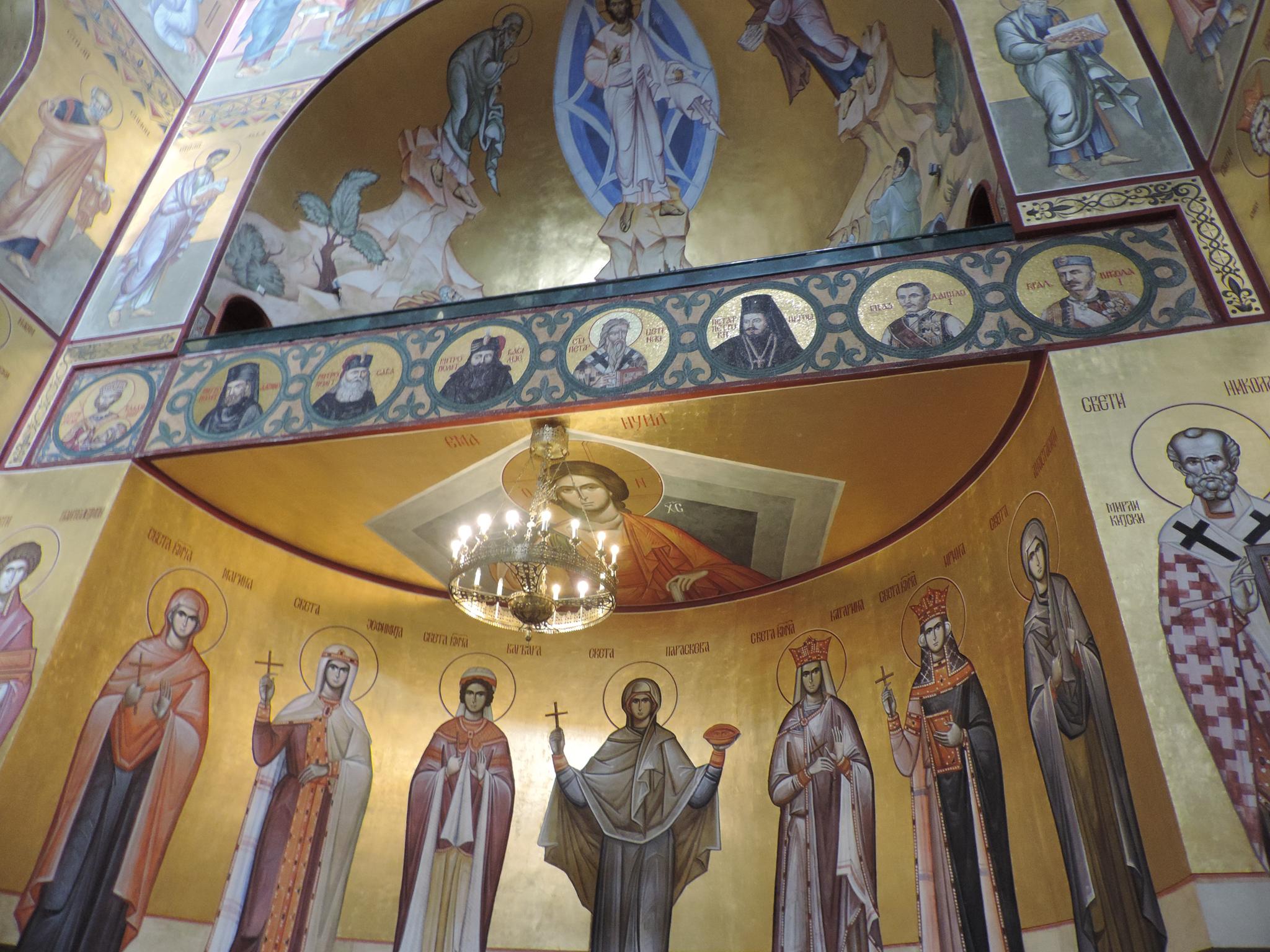
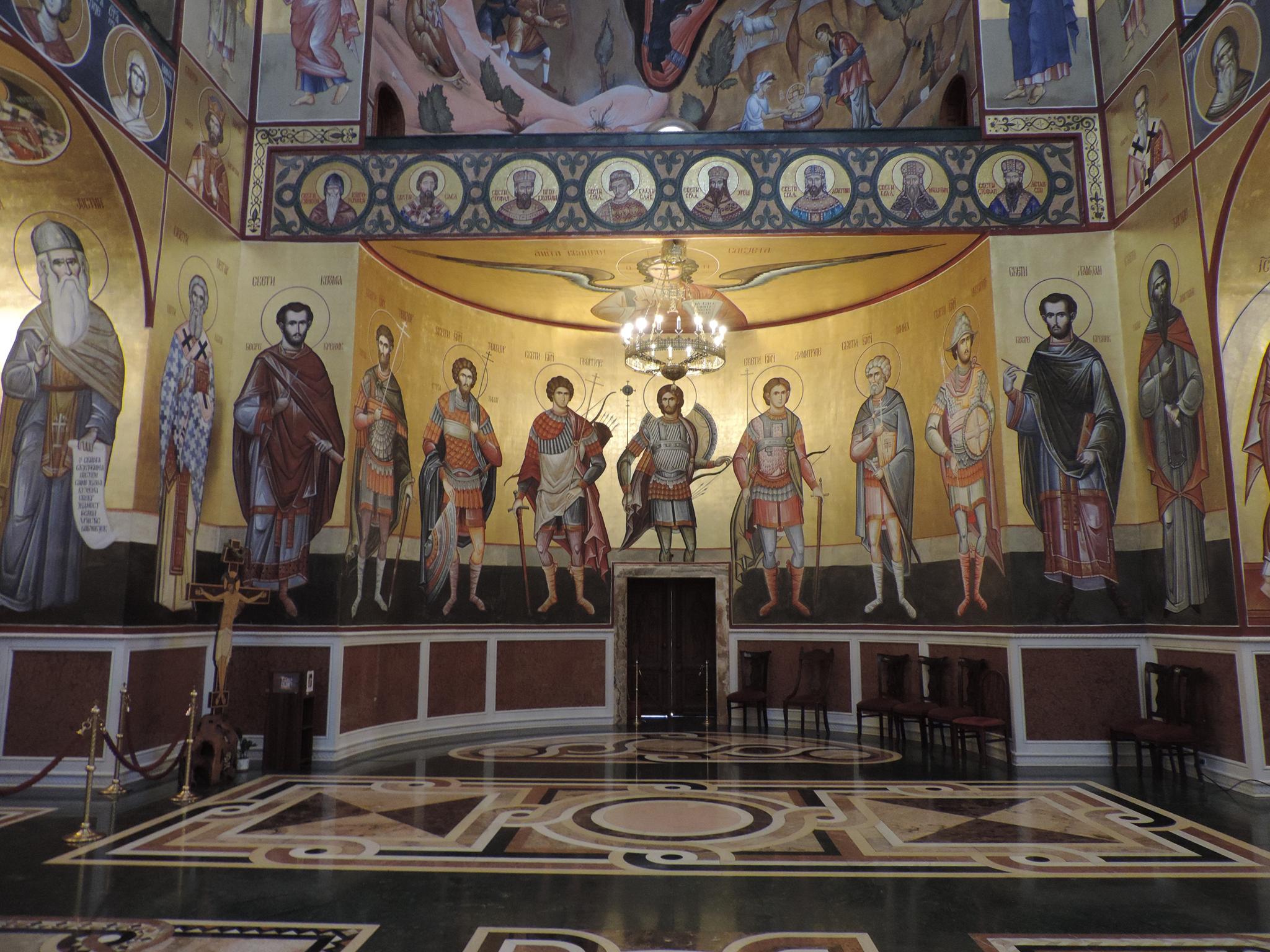
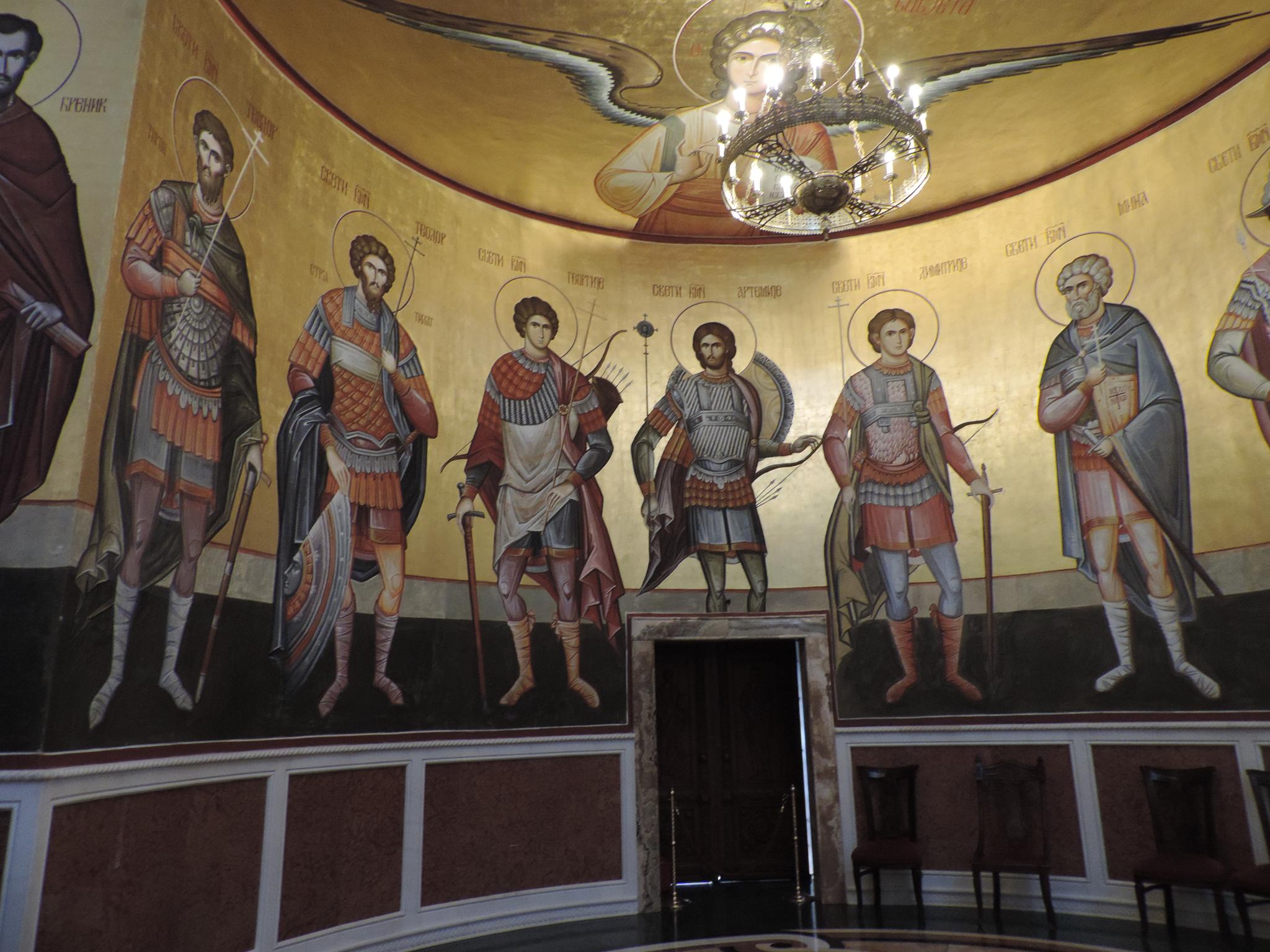
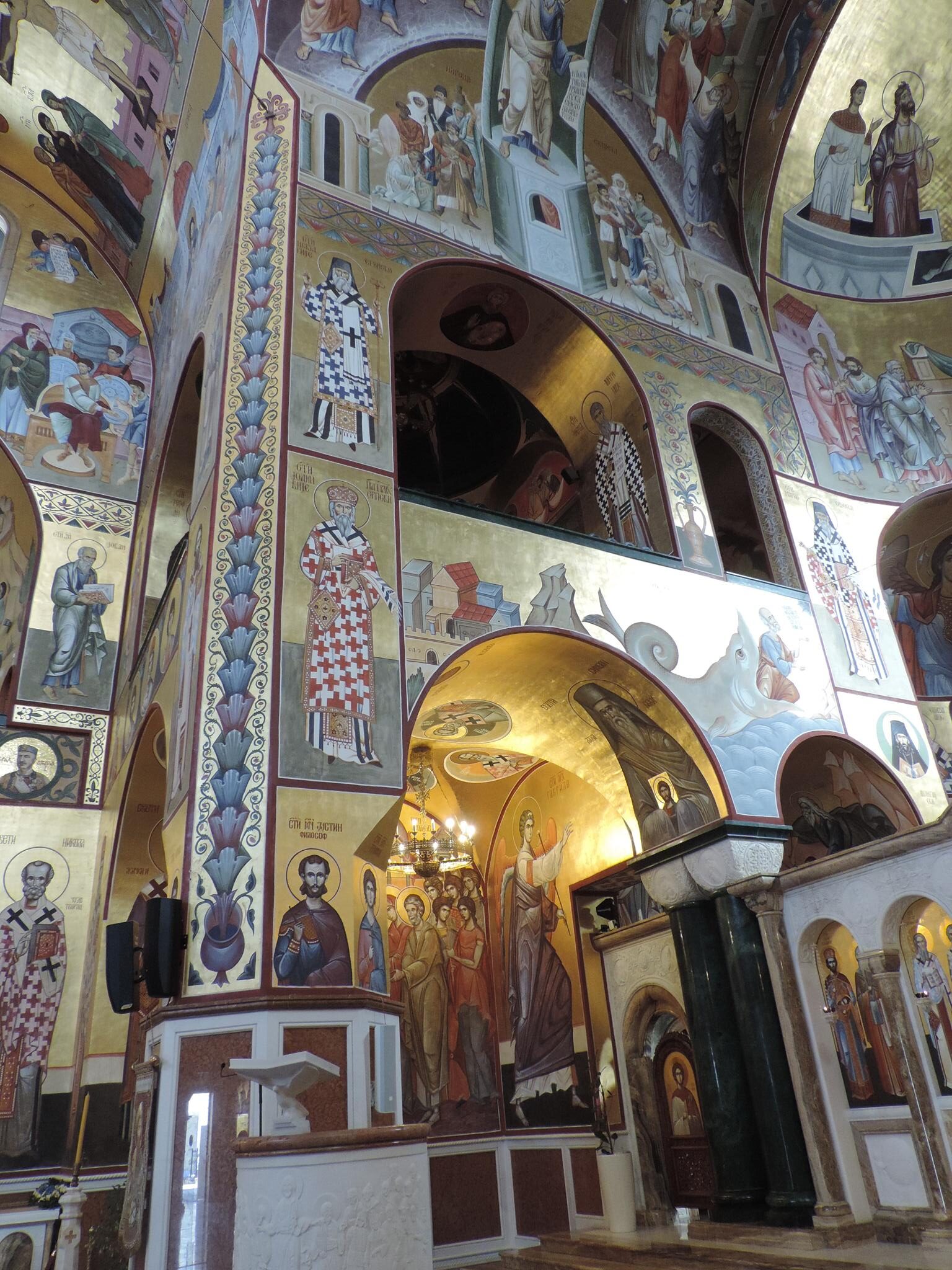
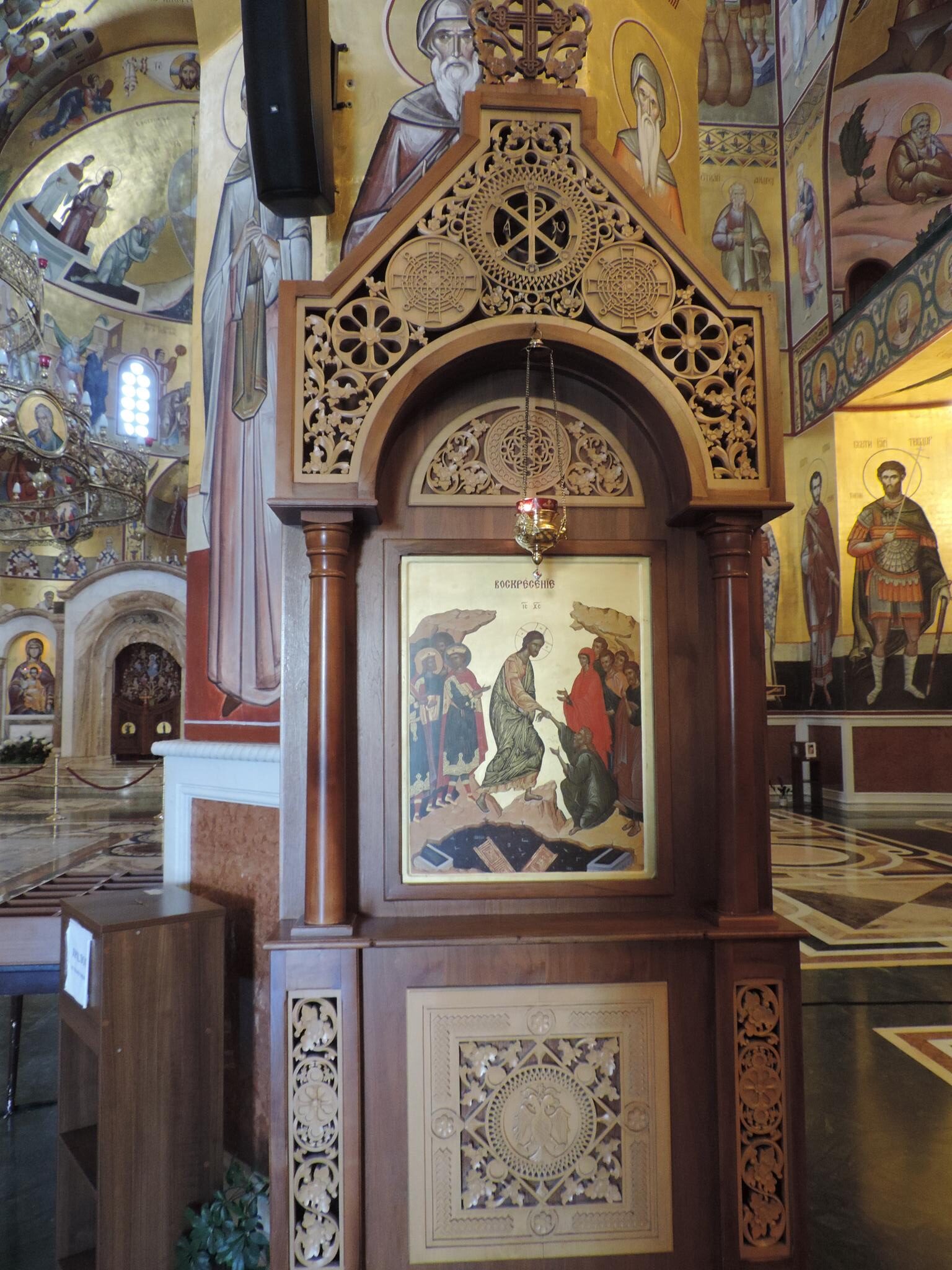
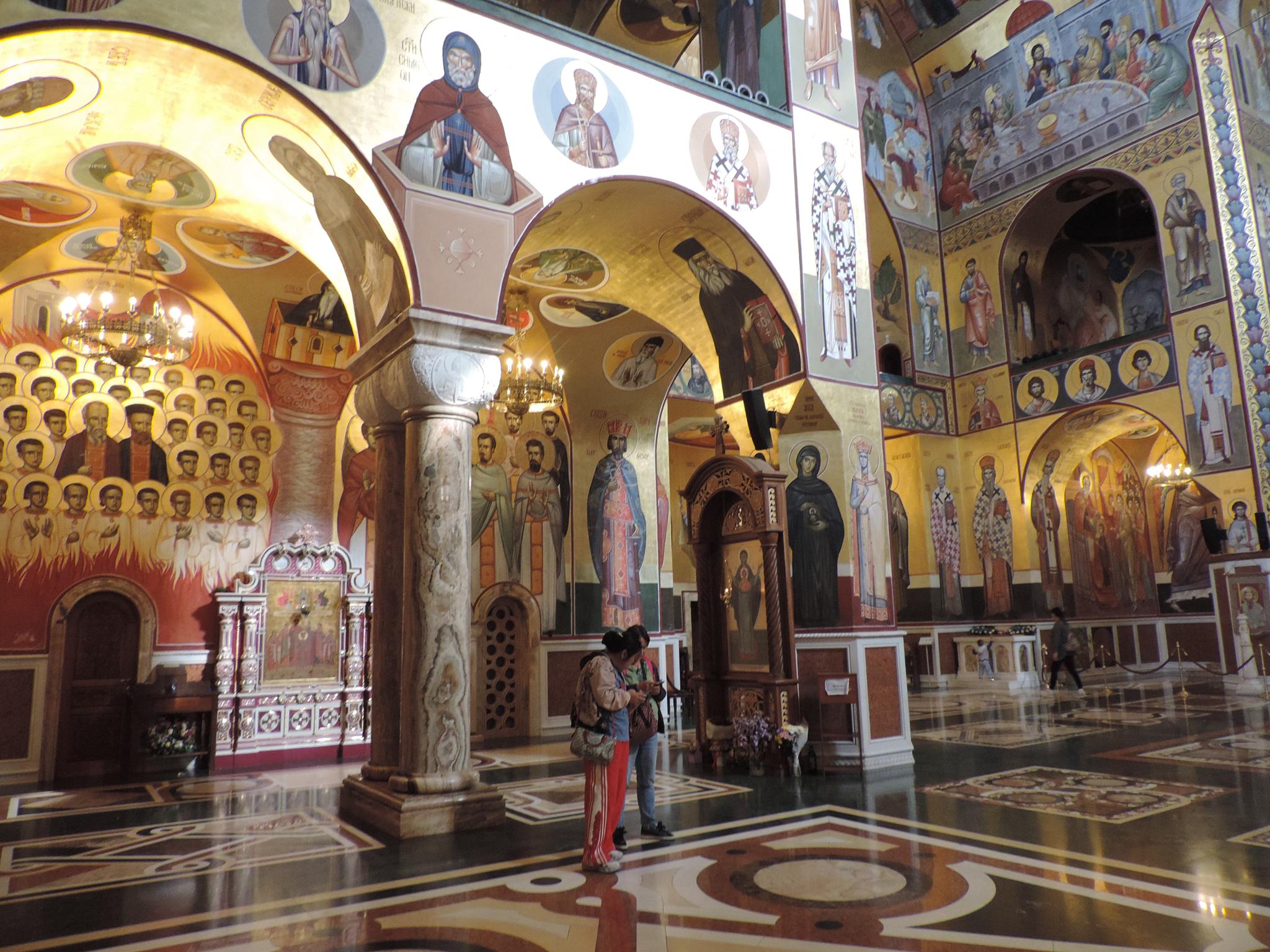
Particularly striking is the use of gold in the frescoes. The golden backgrounds draw on older Byzantine traditions and lend the church interior an extraordinary atmosphere. Approximately 2,800 square meters were gilded. The reflective gold causes the figures and scenes to appear differently depending on the angle of the light, lending the interior an almost otherworldly effect. The technique draws on Byzantine icon painting, in which gold is not merely a decorative element but symbolizes the divine and the timeless. Artistically, this creates a fascinating contrast between the strictly composed, two-dimensional figures and the lively effect of the reflective surfaces.
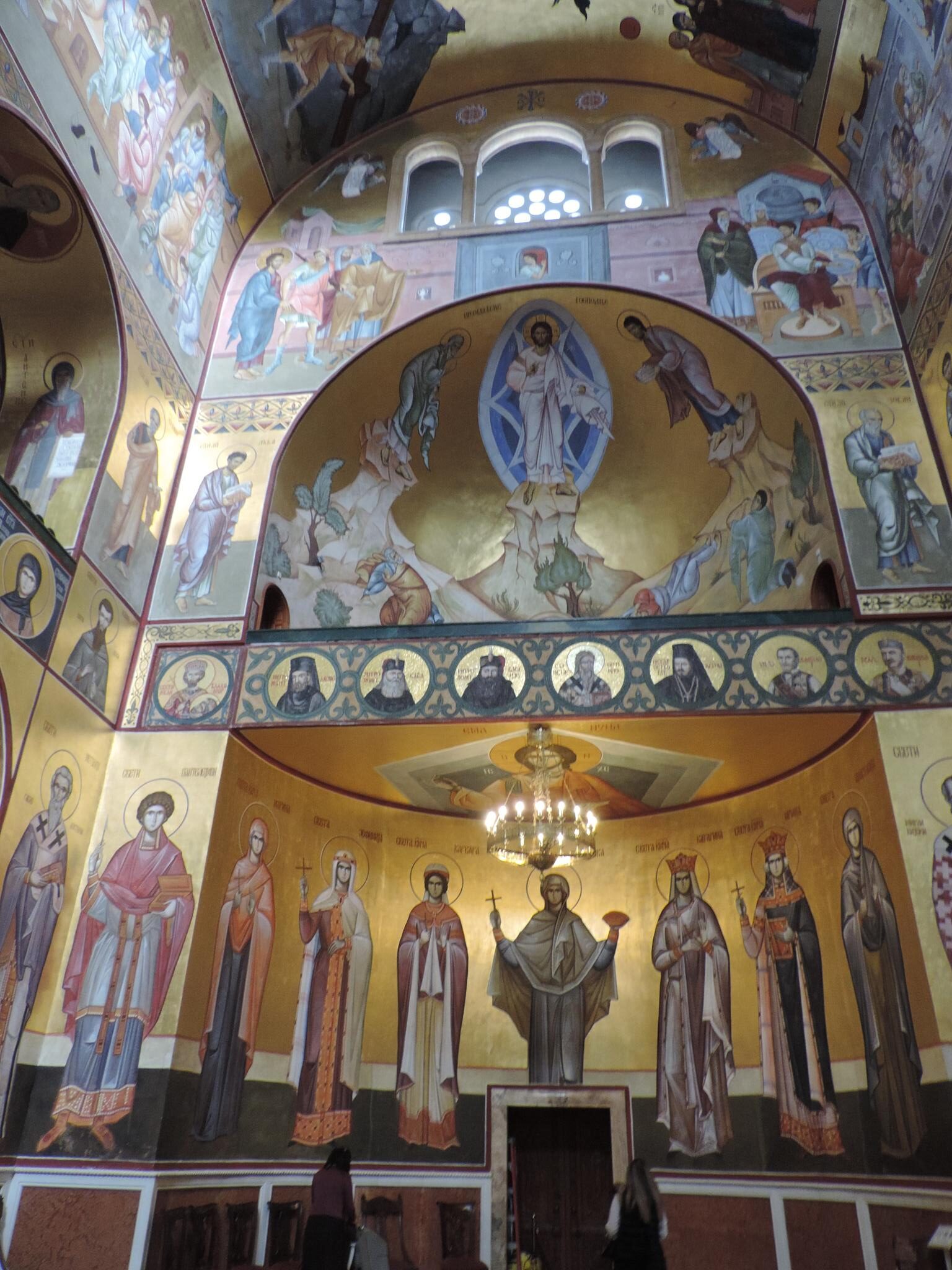
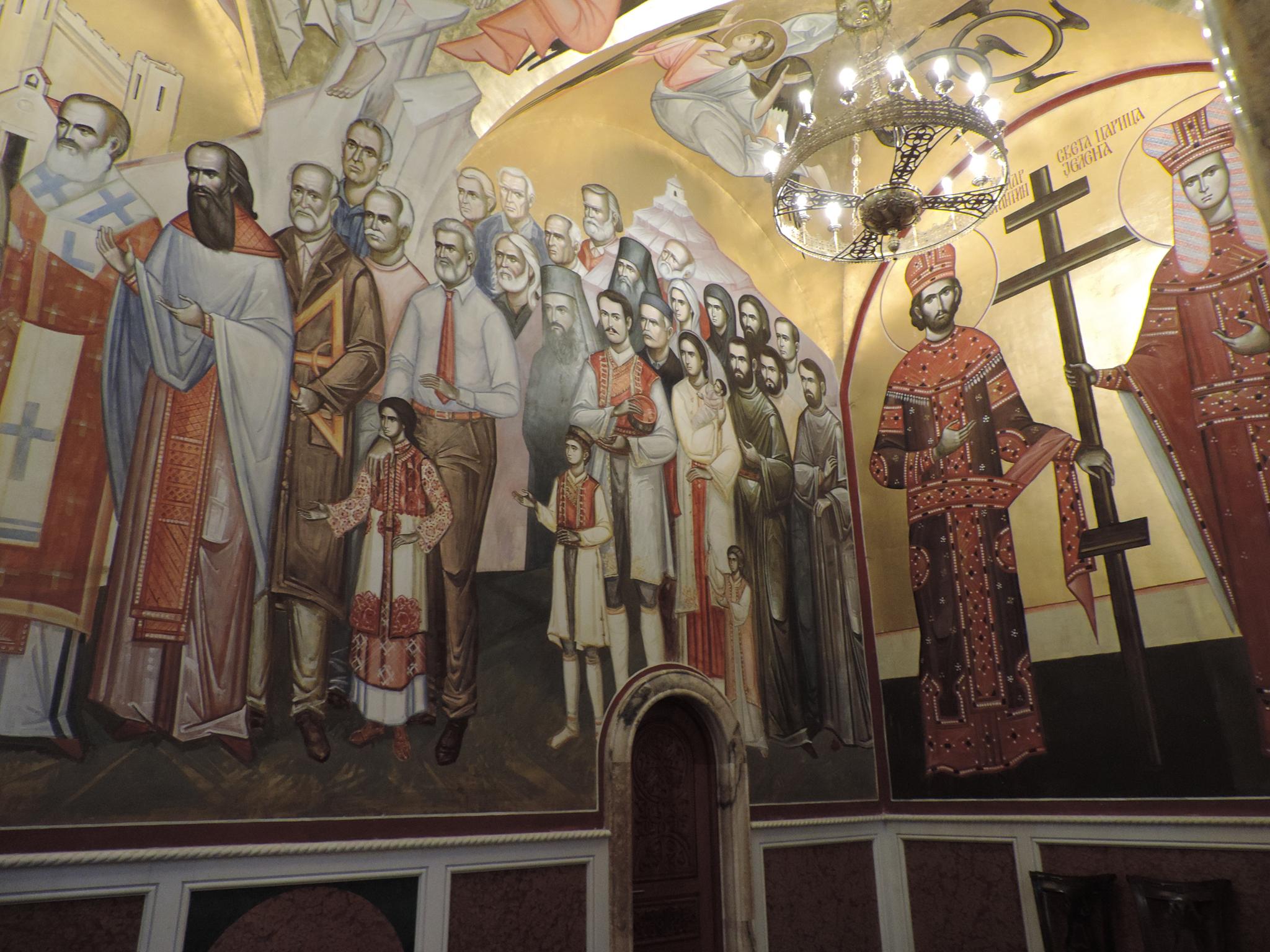
In the central dome and the adjacent vaults, a hierarchically arranged visual world unfolds, featuring depictions of Christ, the apostles, angels, and saints. Noteworthy is the depiction of different peoples and ethnic groups, which points to the universal message of Christianity. The numerous figures are integrated into a large-scale composition that extends beyond the architecture, making the church interior itself part of the narrative.
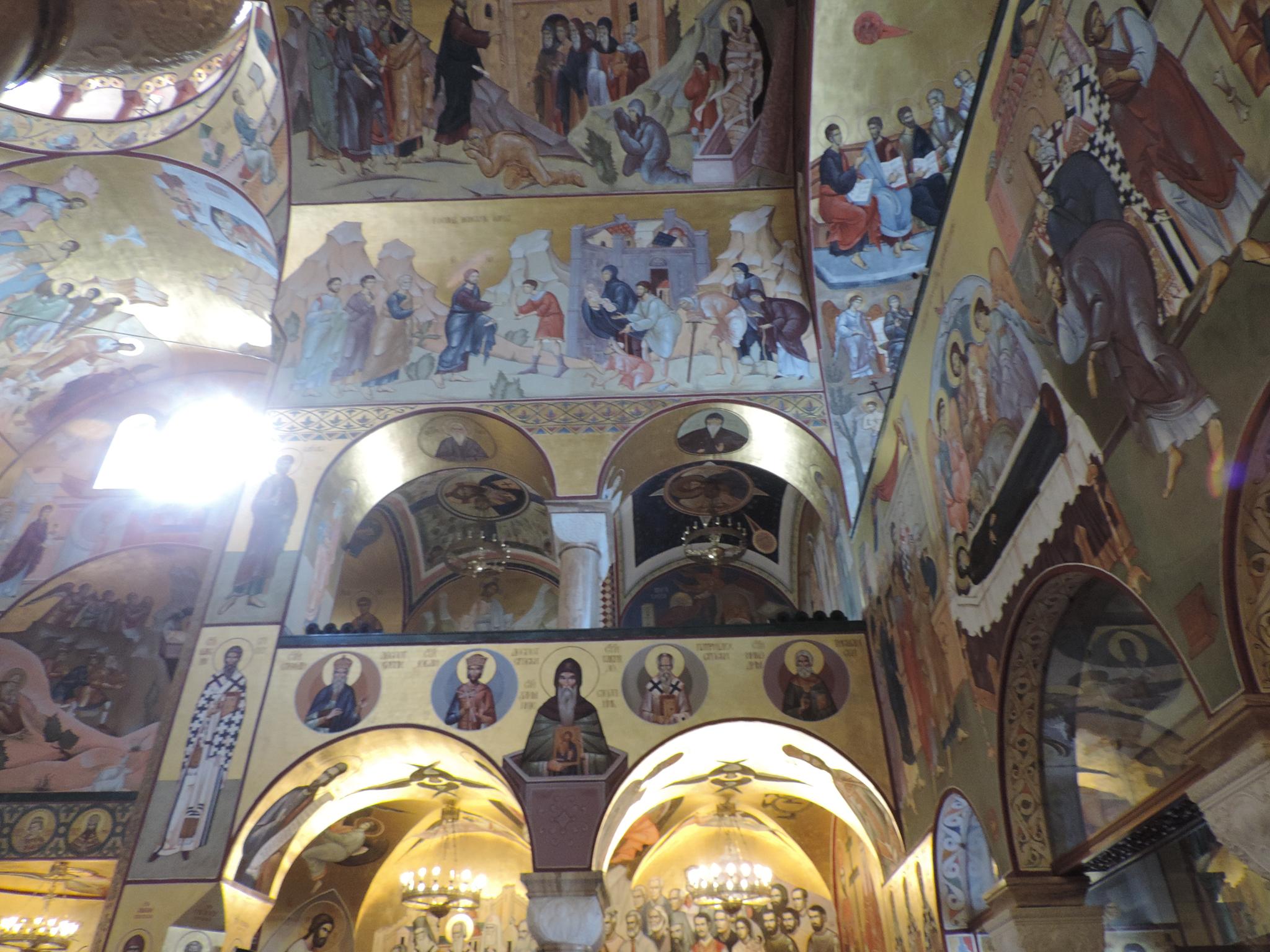
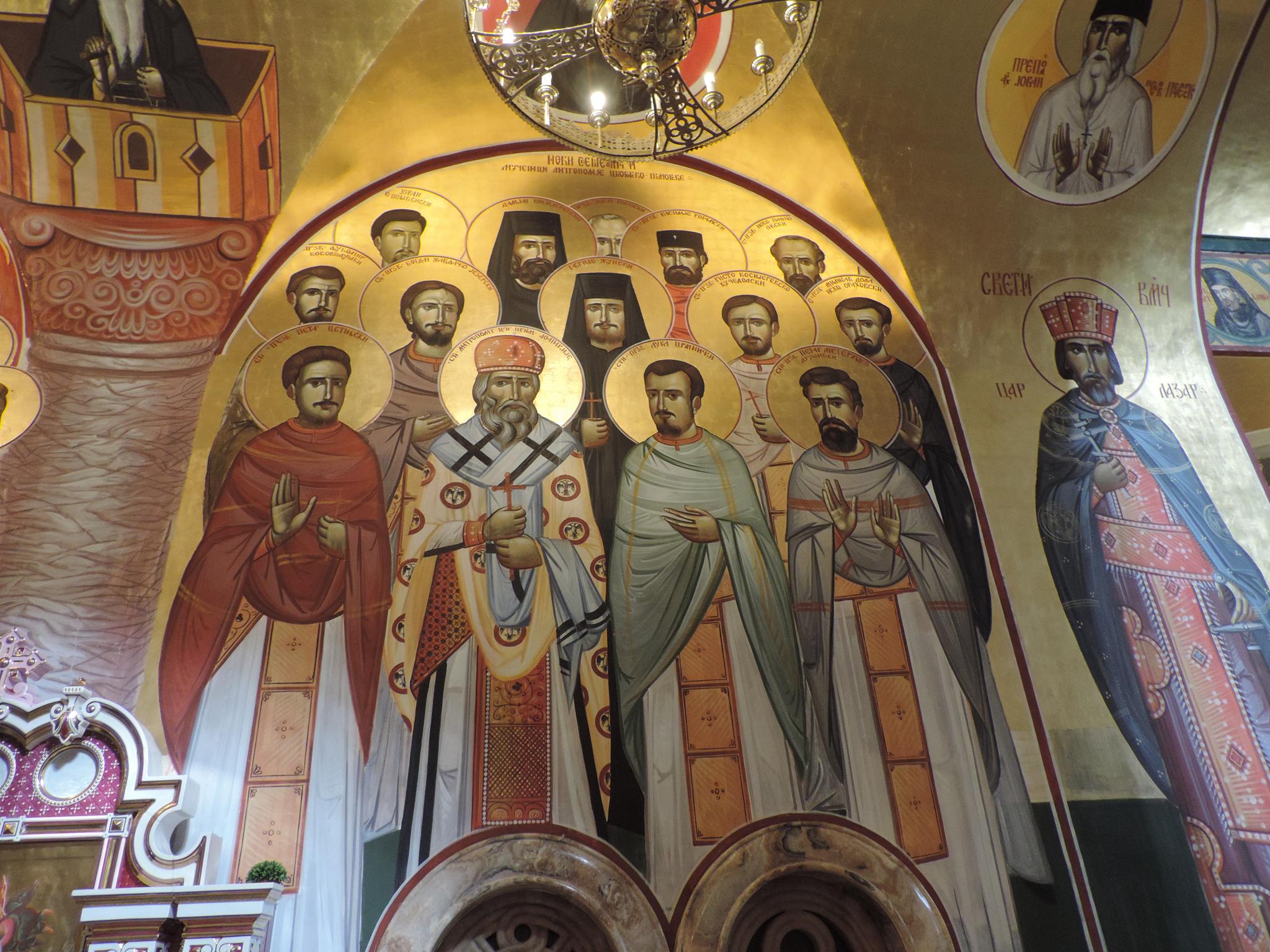
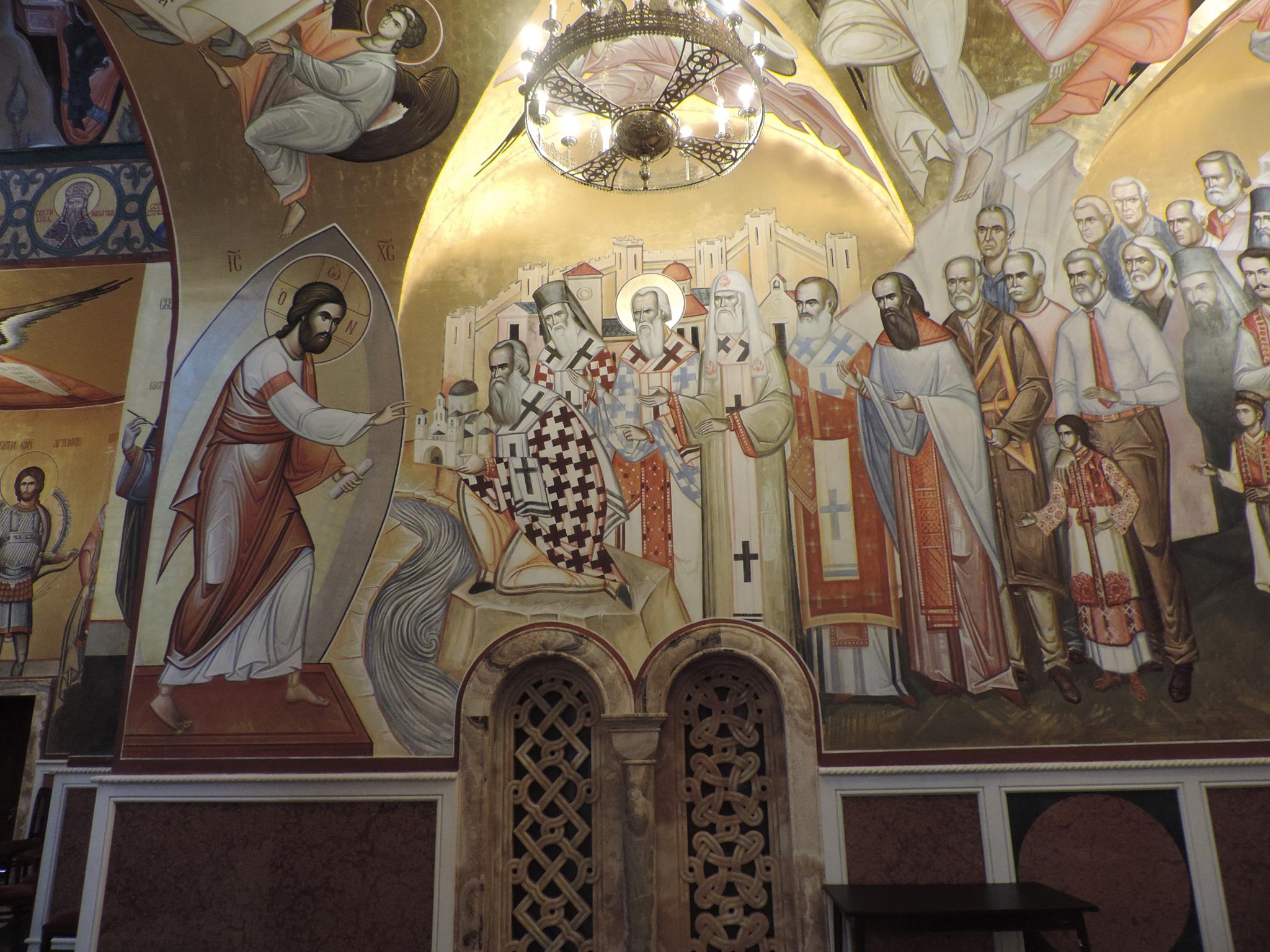
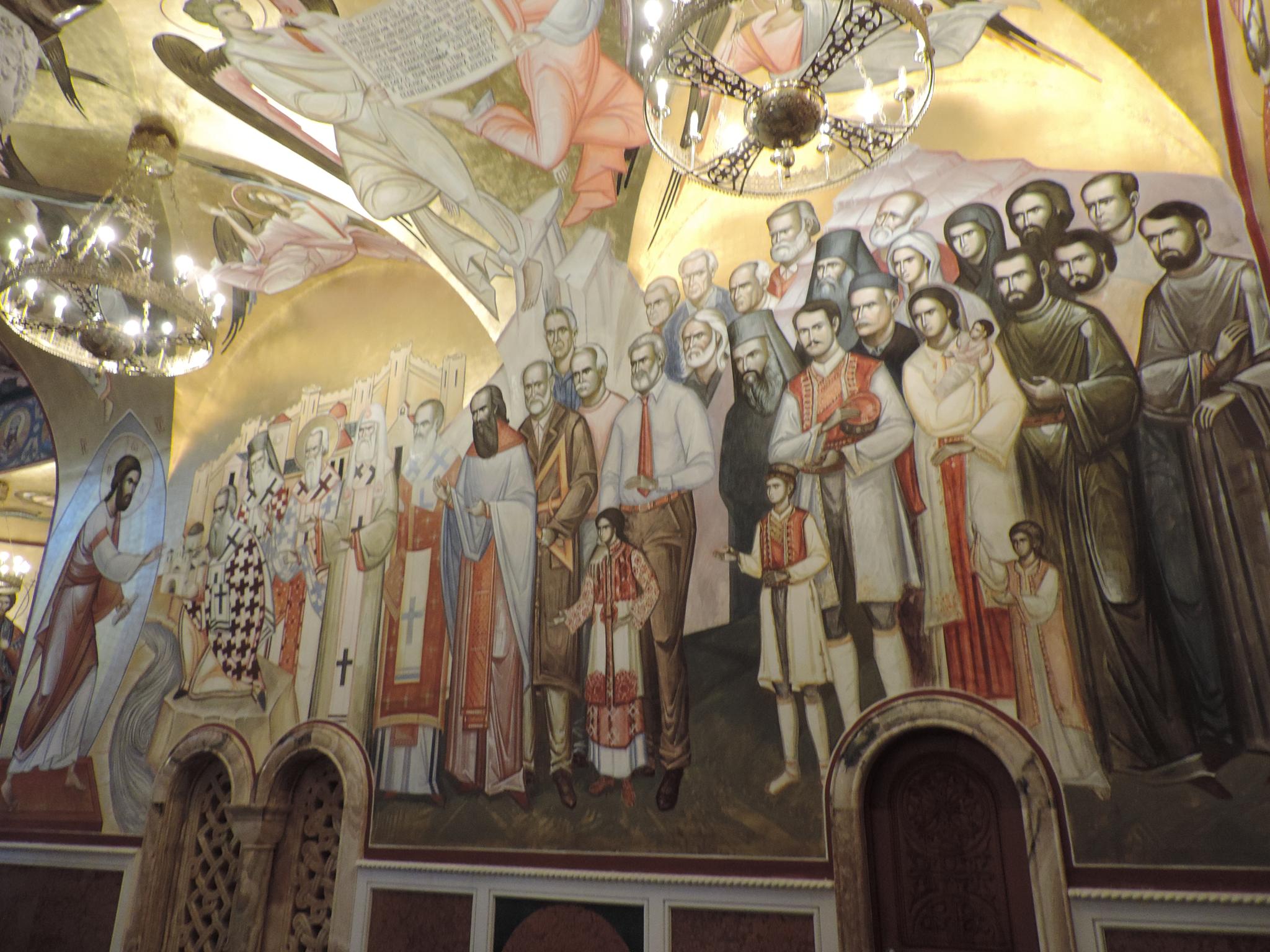
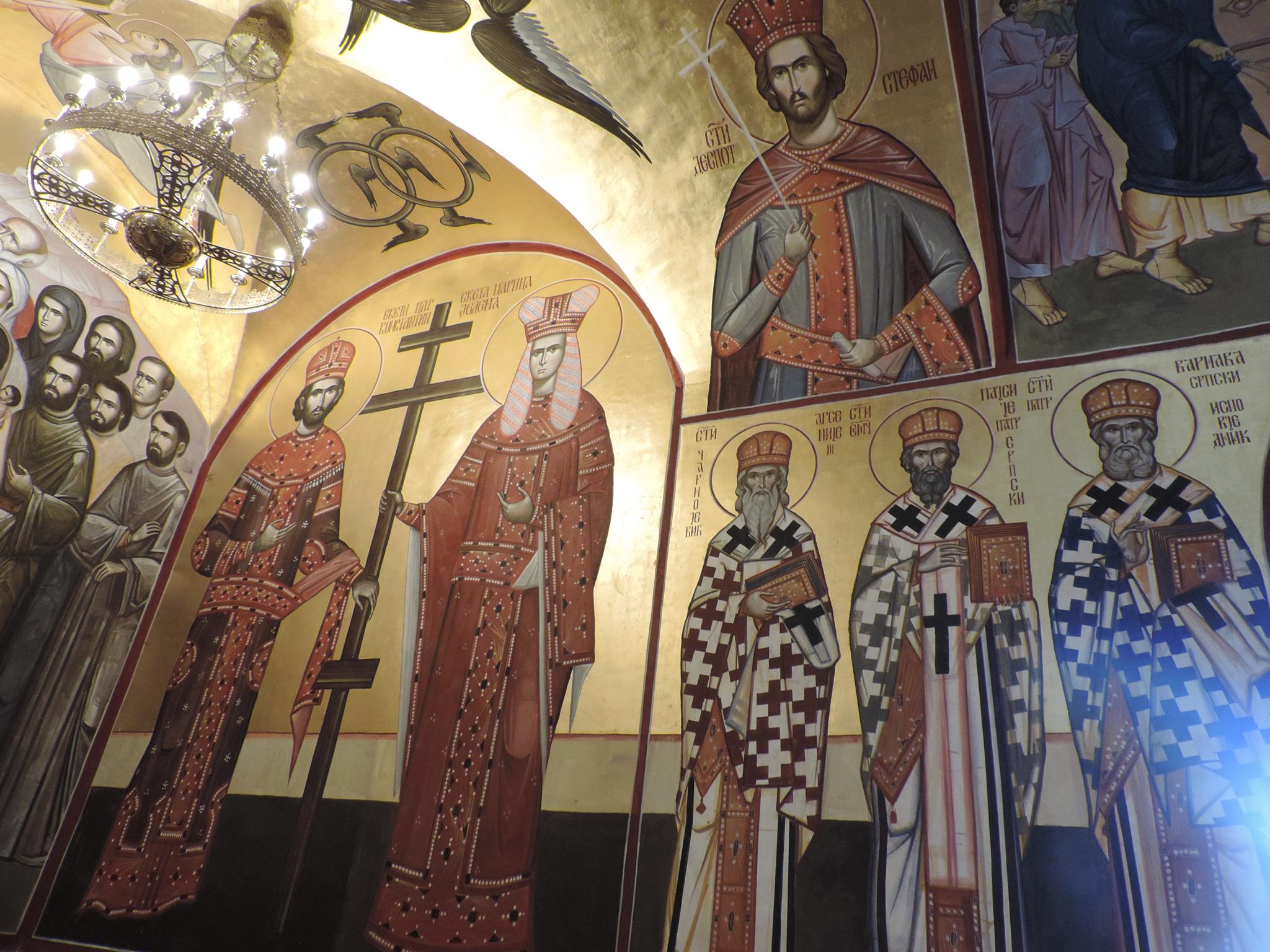
The remaining wall surfaces are also densely covered with religious and historical motifs. In addition to apostles, Church Fathers, martyrs, and scenes from the life of Christ, the cathedral features prominent figures from Montenegrin and Serbian history, including representatives of the medieval Nemanjić dynasty and the later Petrović dynasty. The cathedral thus also functions as a visual historical archive in which religious tradition and regional identity merge. A particularly significant depiction is the dedication scene, in which Metropolitan Amfilohije presents the cathedral to Christ. Behind him appear, among others, the architect PREDRAG RISTIĆ and other individuals involved in its construction.
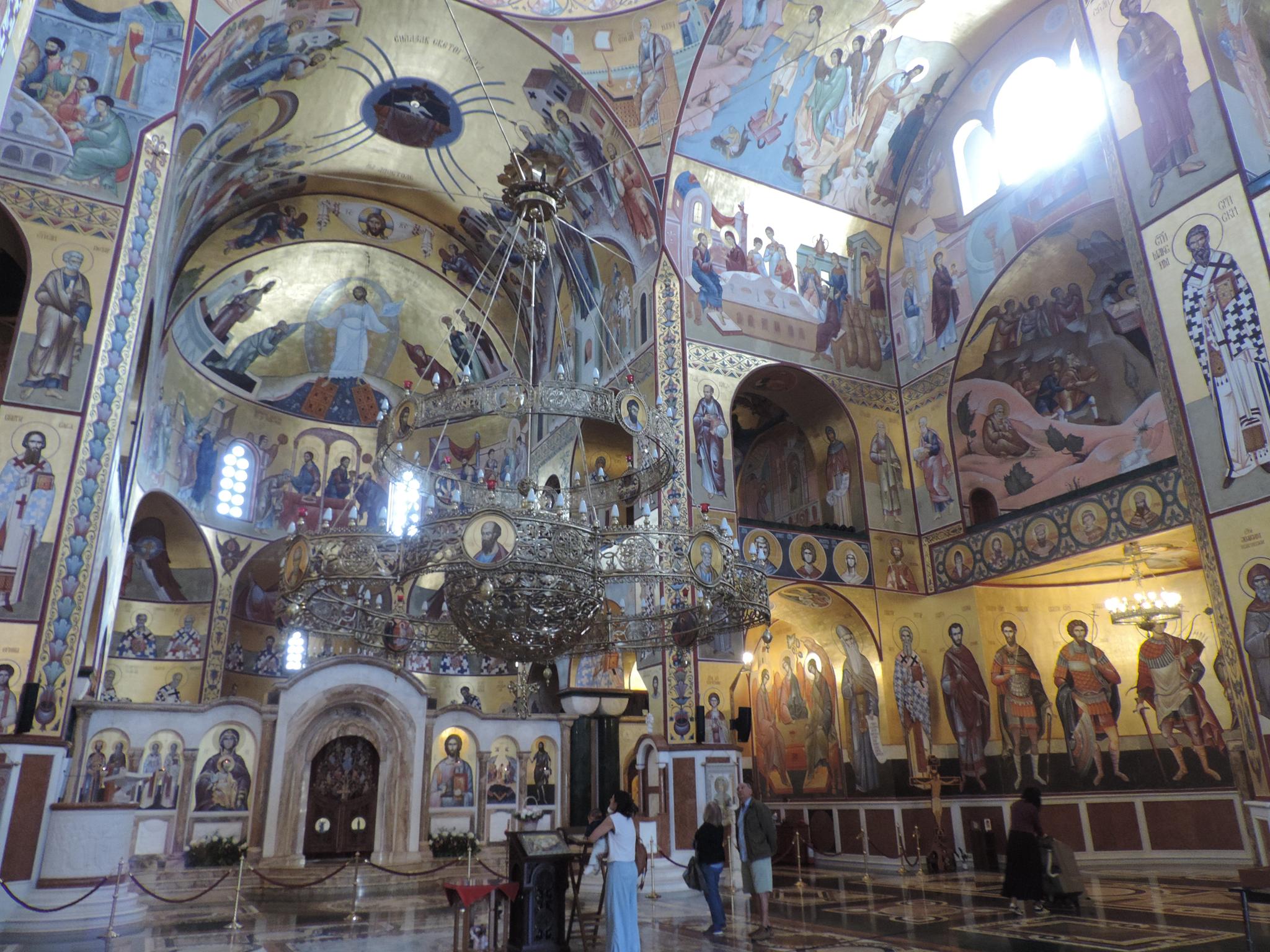
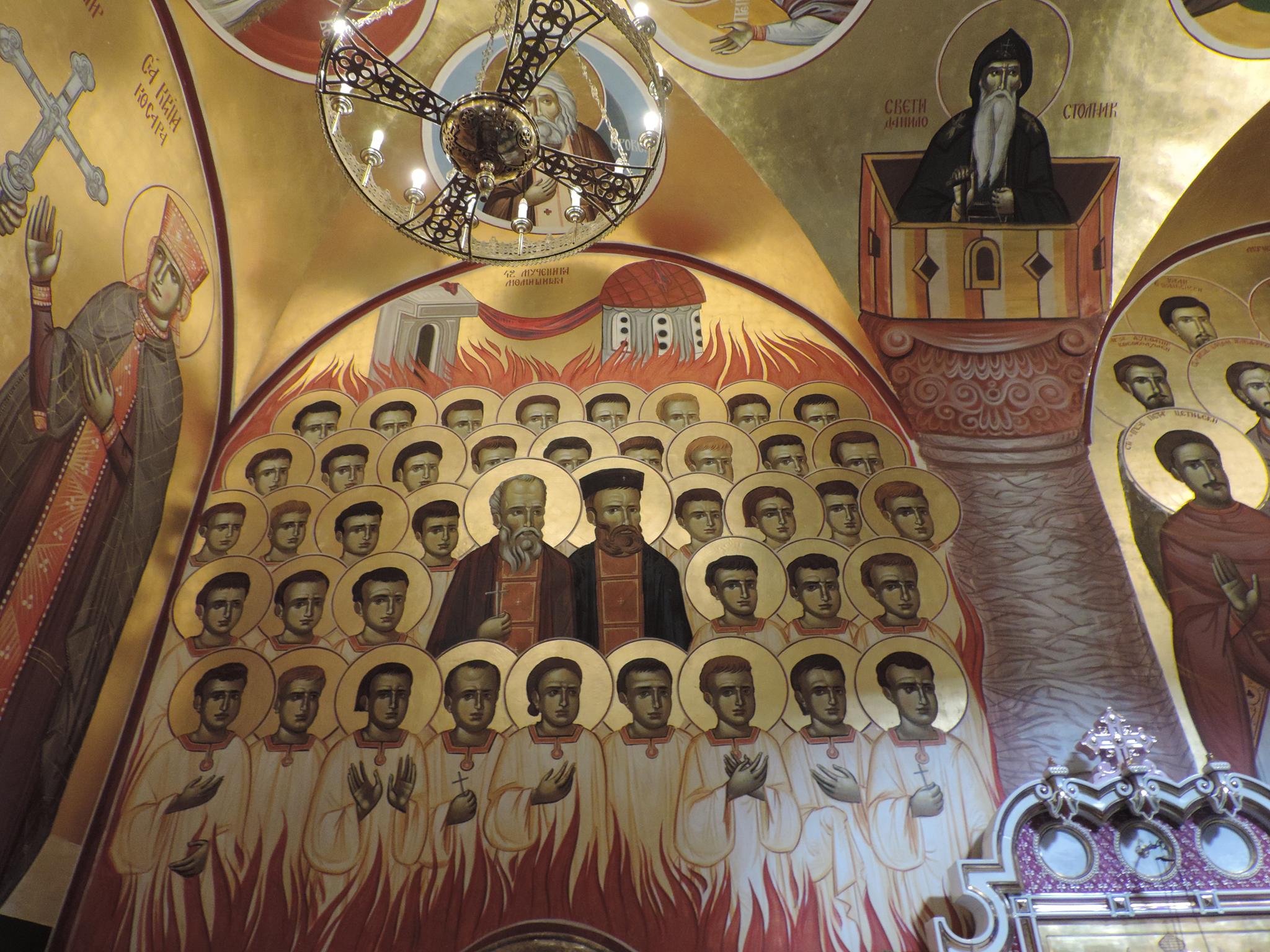
One of the most unusual depictions appears in an apocalyptic scene depicting hell. Amid demons, flames, and damned souls, the figures of Josip Broz Tito and the communist philosophers Karl Marx and Friedrich Engels can be recognized. The fresco sparked international debate in 2013 and 2014. The three men are depicted as symbols of an ideology that, from the perspective of the Orthodox Church, stands for the suppression of faith and the persecution of clergy. Tito’s depiction, in particular, is politically charged in Montenegro, as his historical legacy remains a source of polarization to this day.
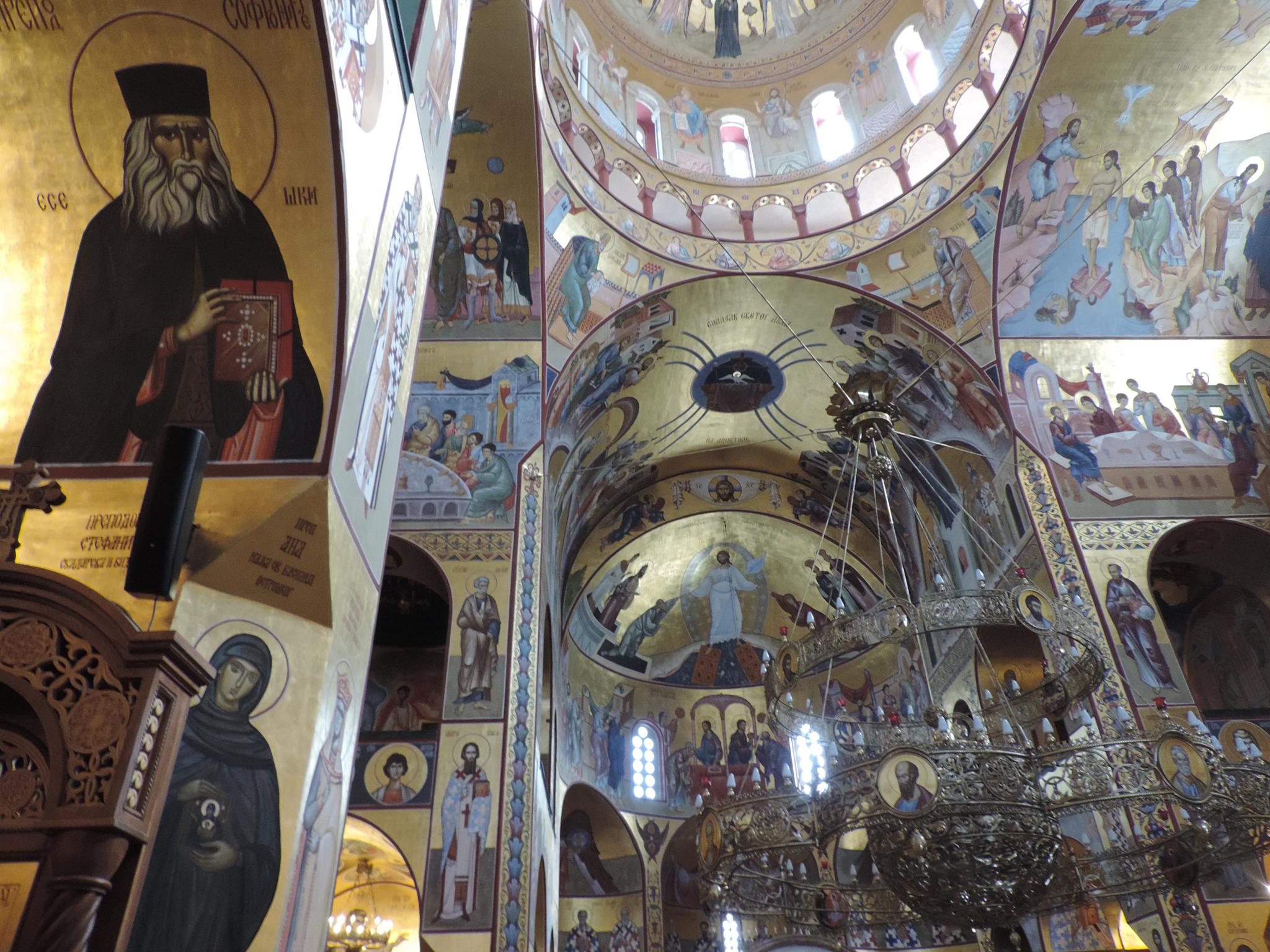
From an artistic perspective, this scene is particularly interesting: a traditional religious visual form is used here to convey a very specific political message. Hell becomes the setting for a historical reckoning, and fresco painting becomes a medium for social commentary. This is especially remarkable from the perspective of a street art magazine. For even though Orthodox church painting and modern street art are fundamentally different in function and technique, both use large-scale wall surfaces to tell stories, shape identity, and make messages publicly visible.
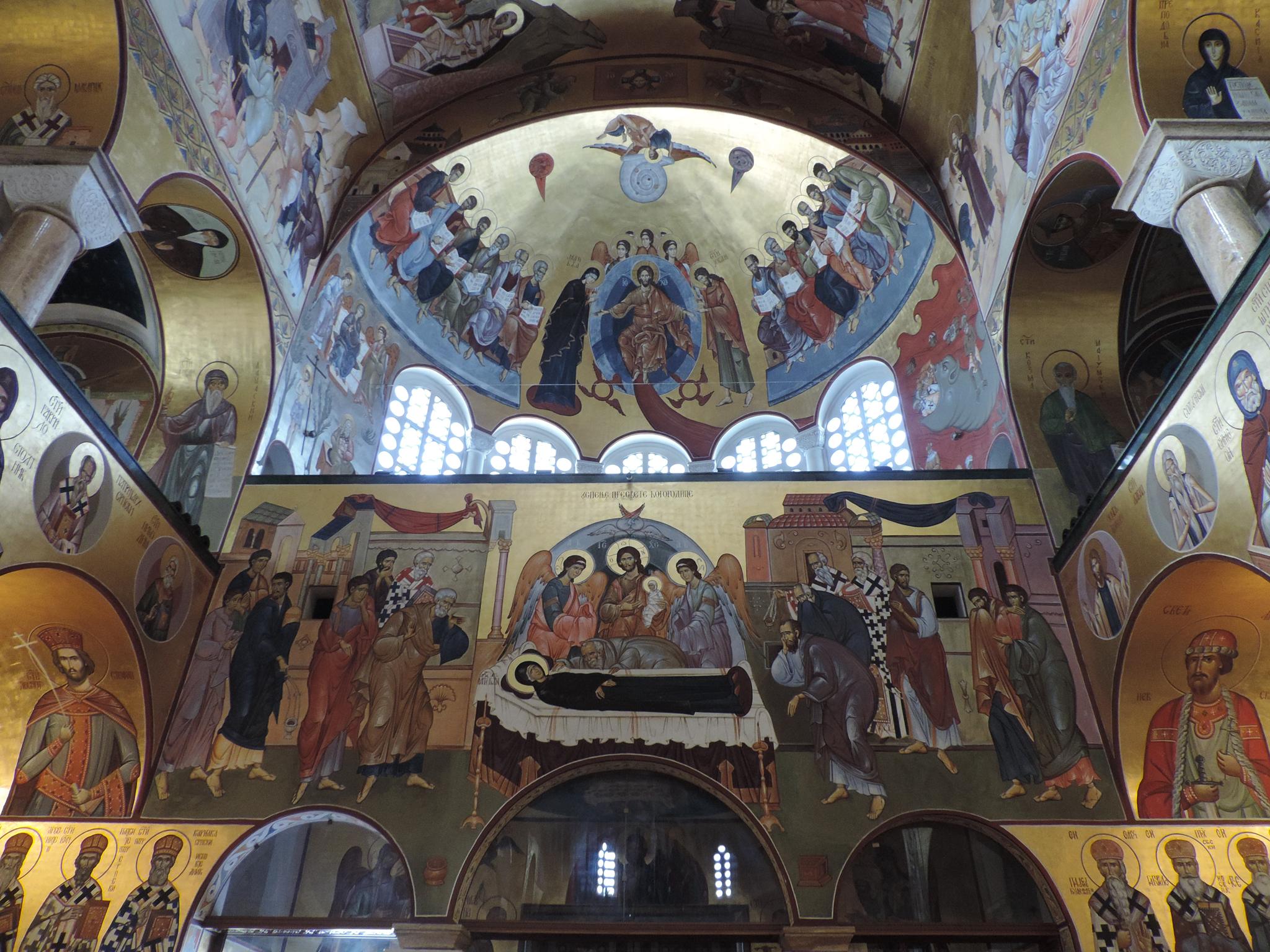
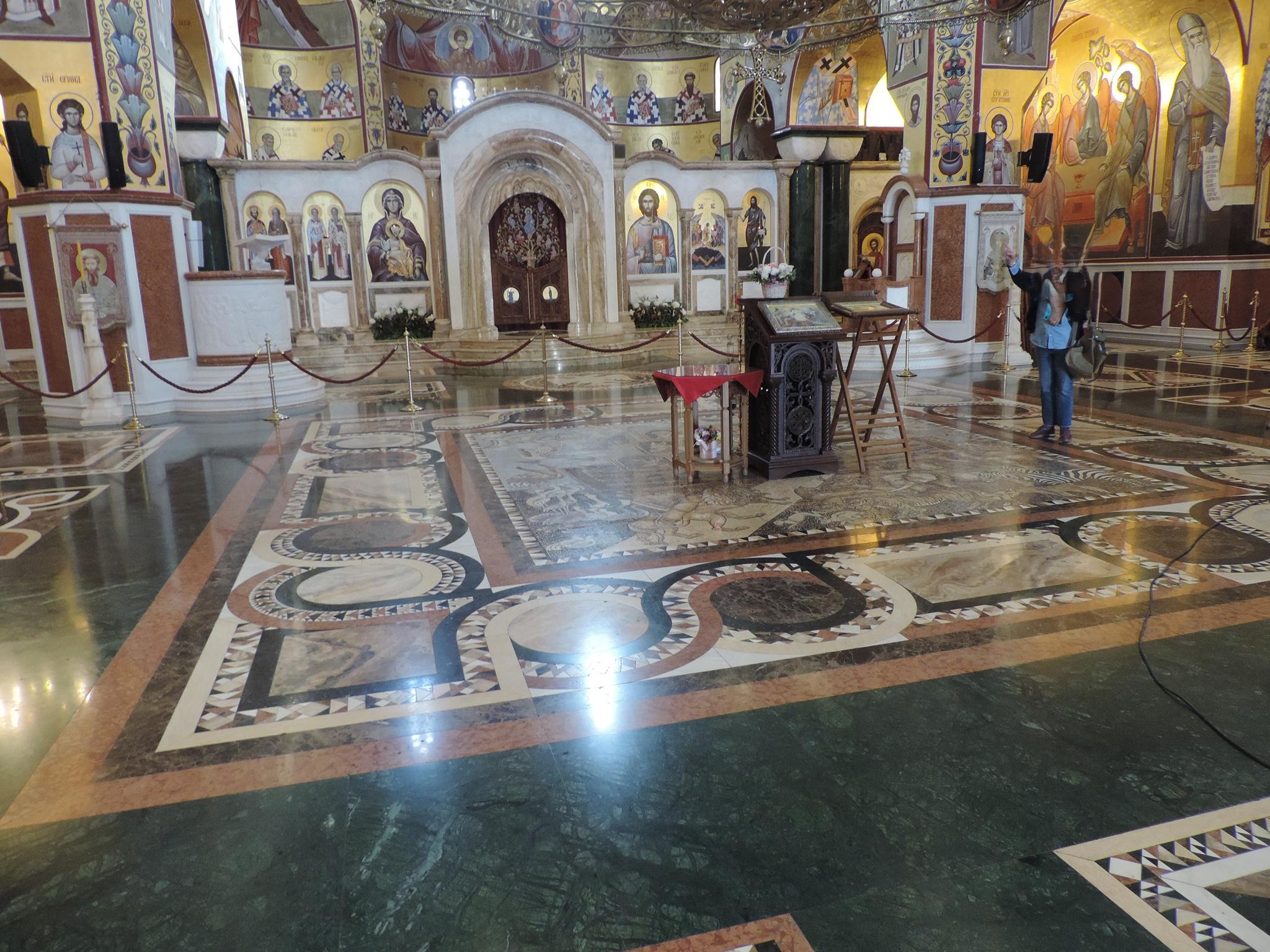
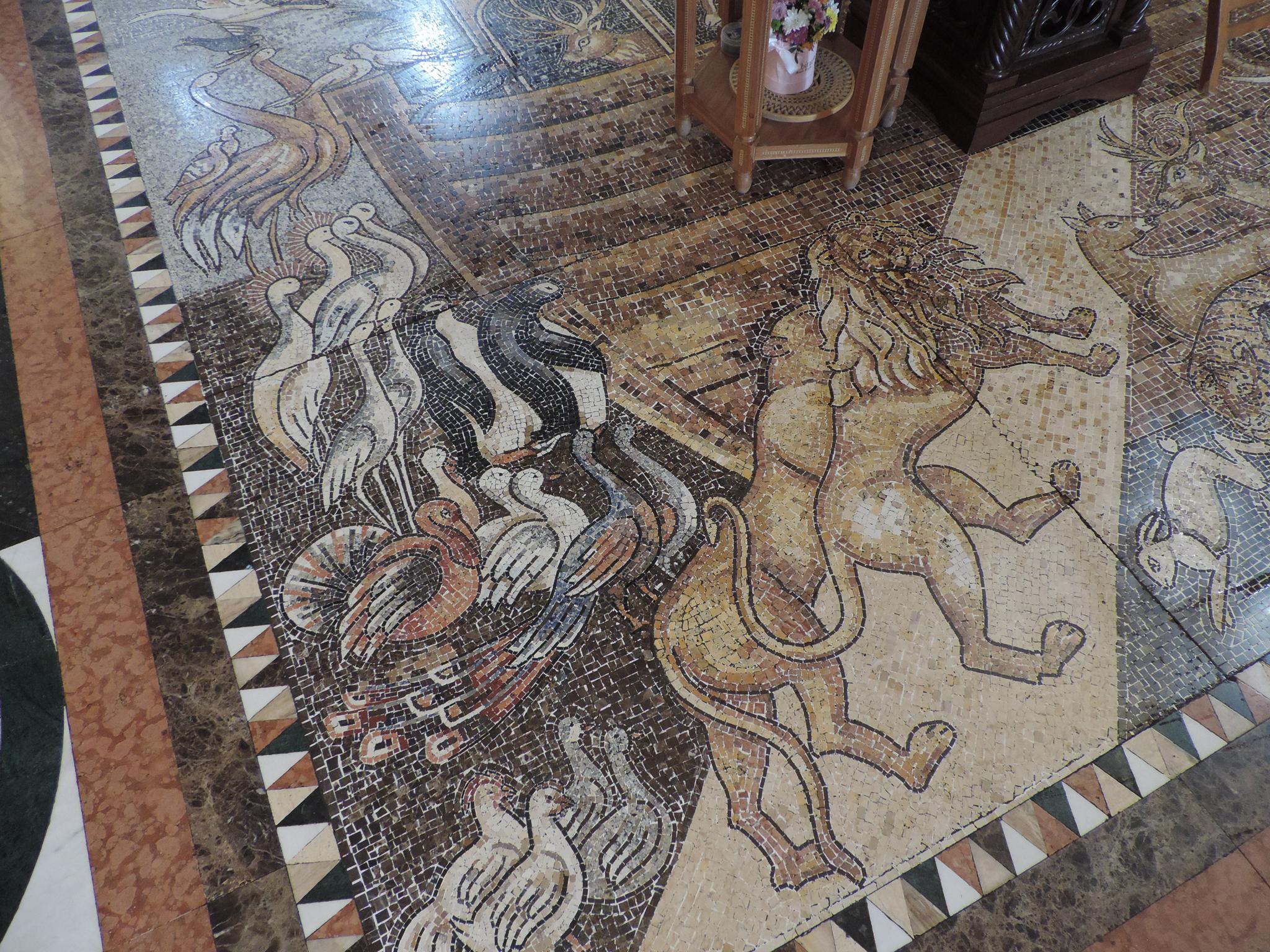
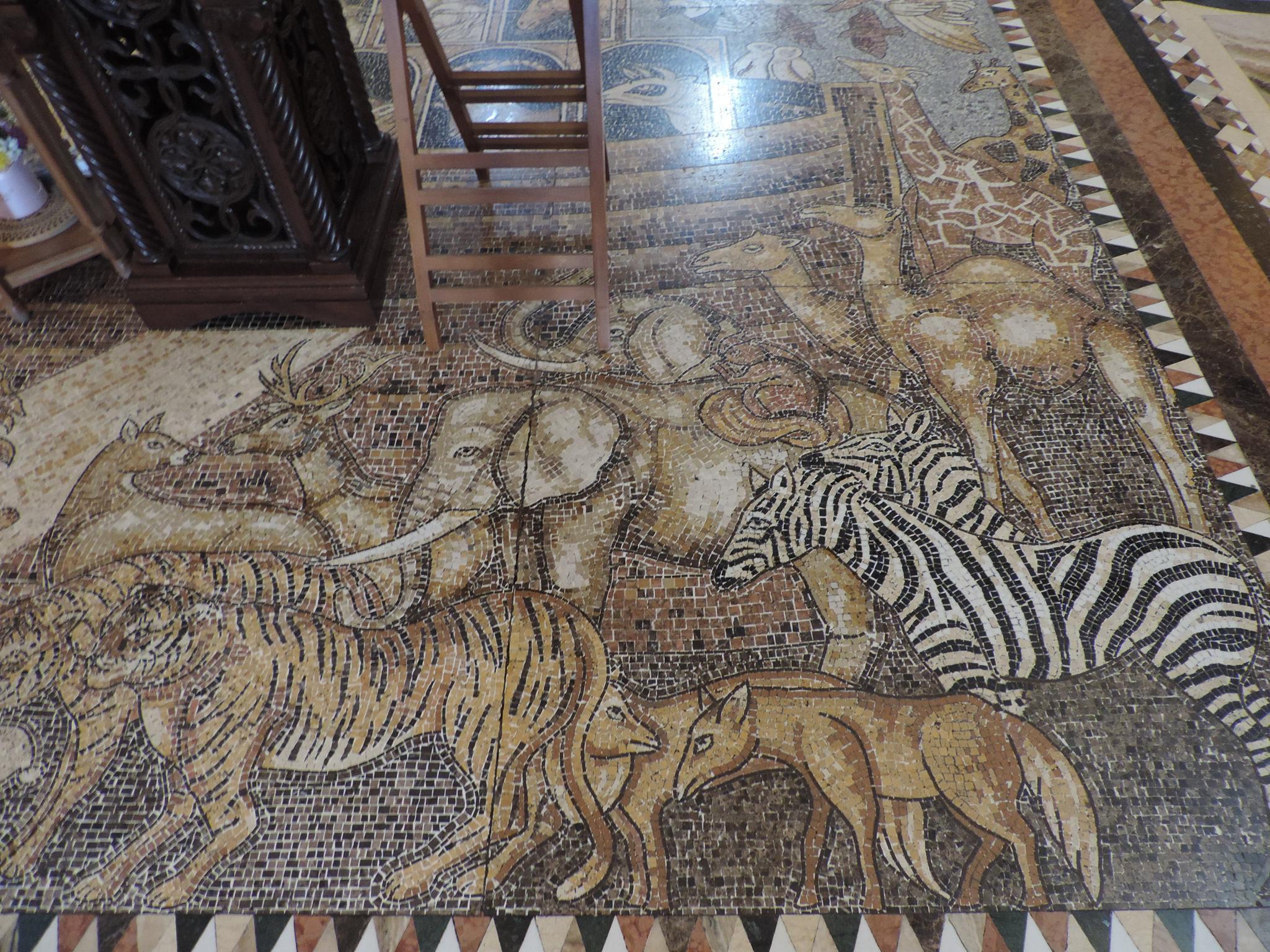
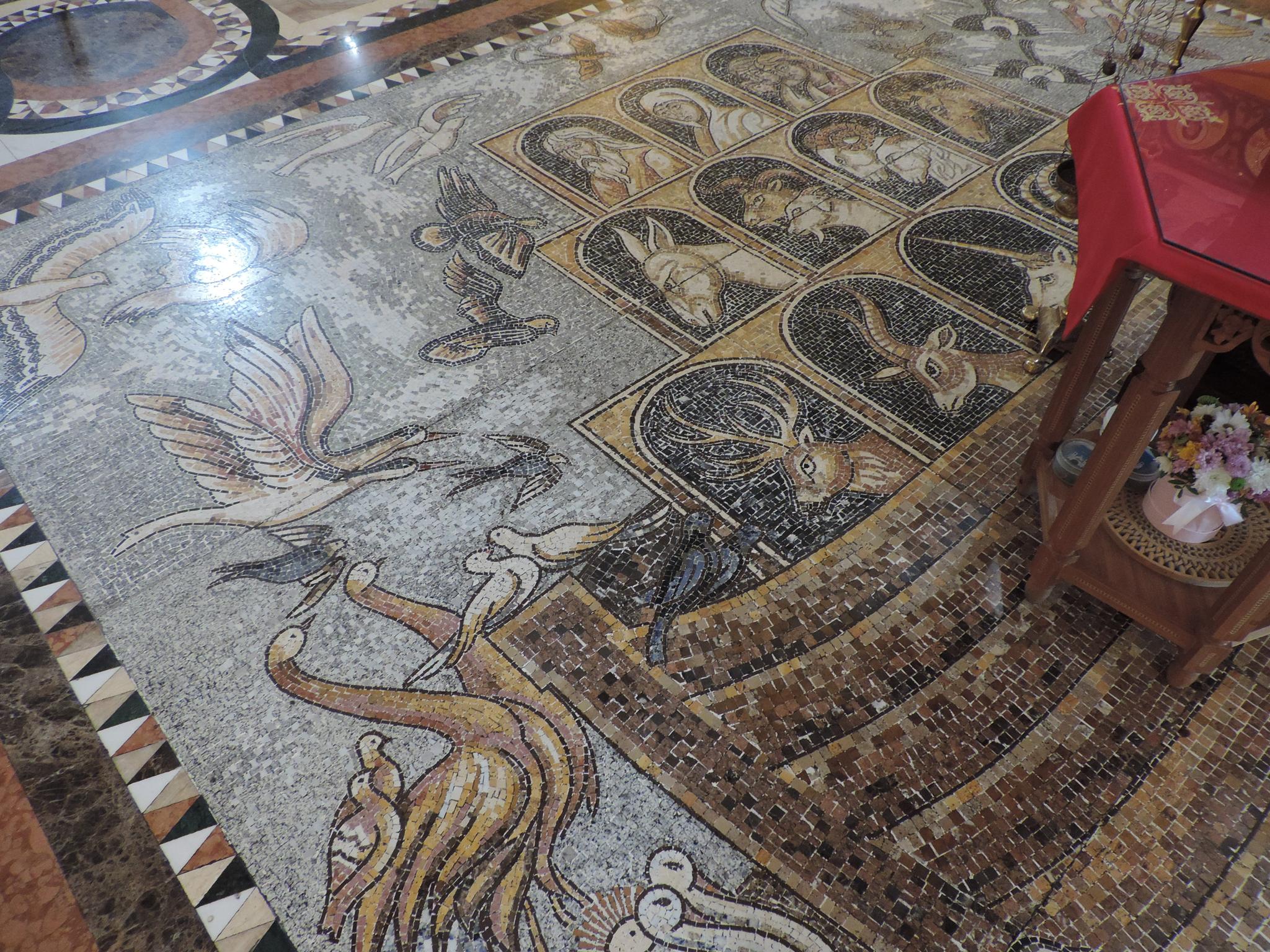
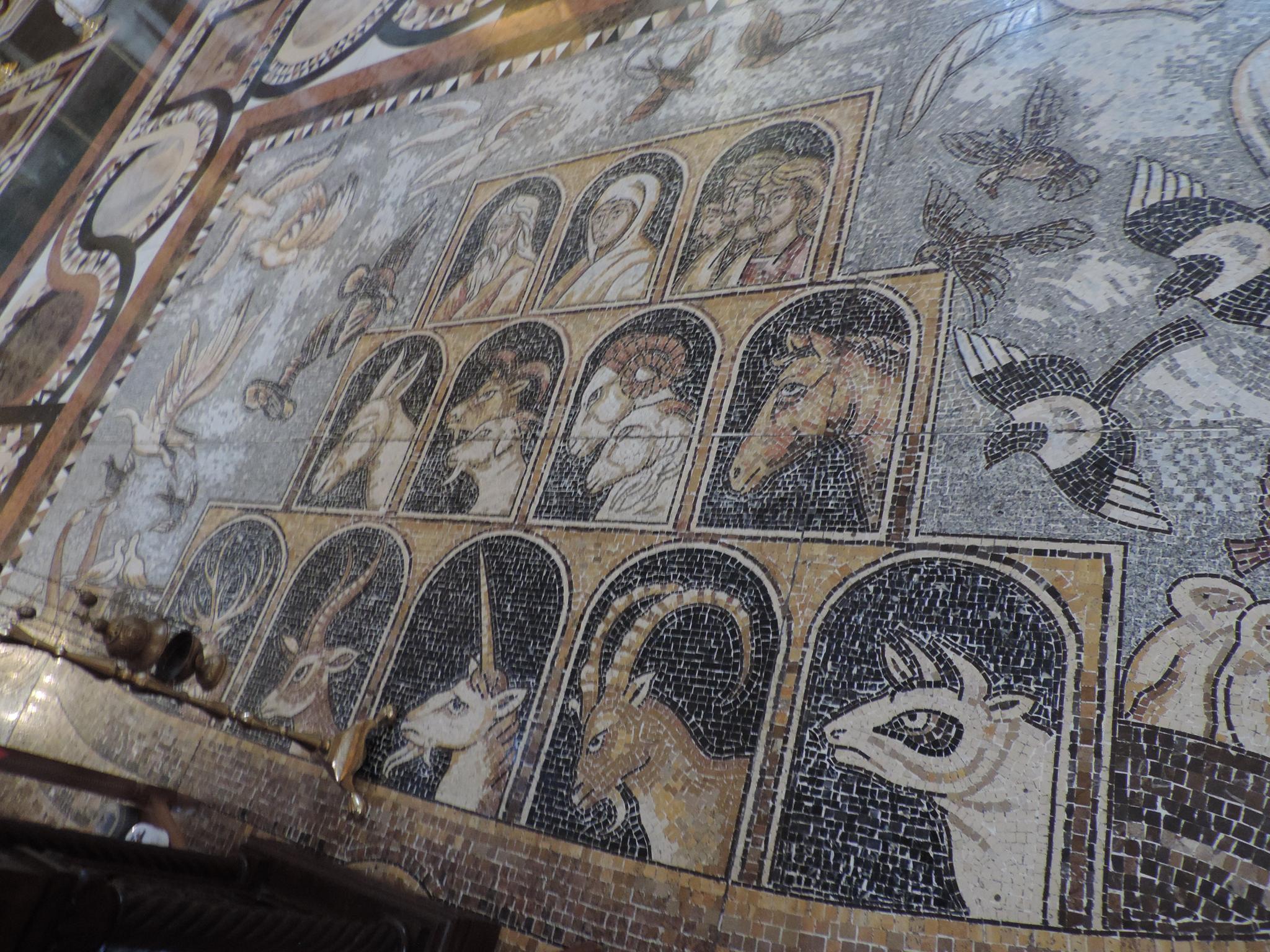
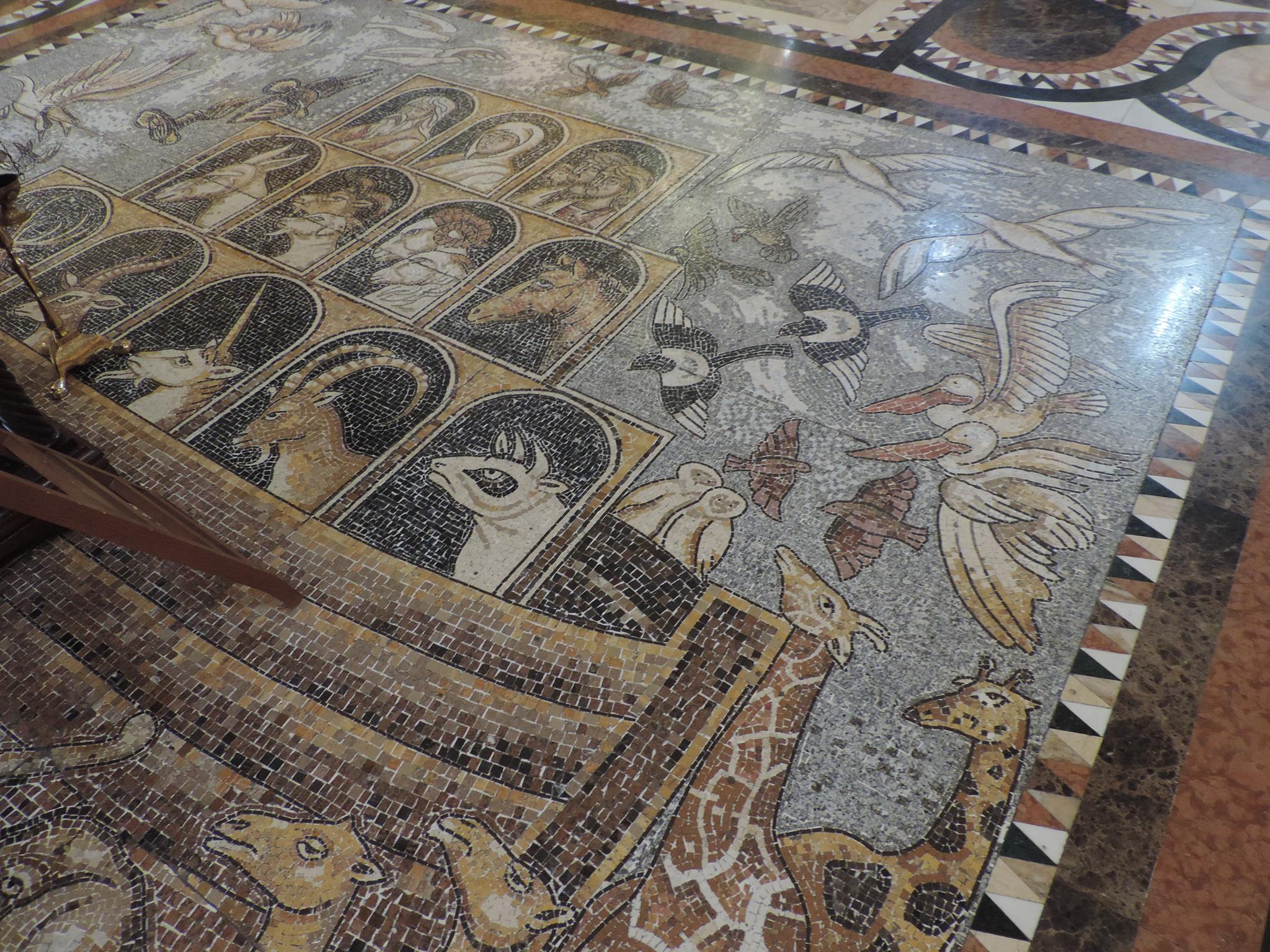
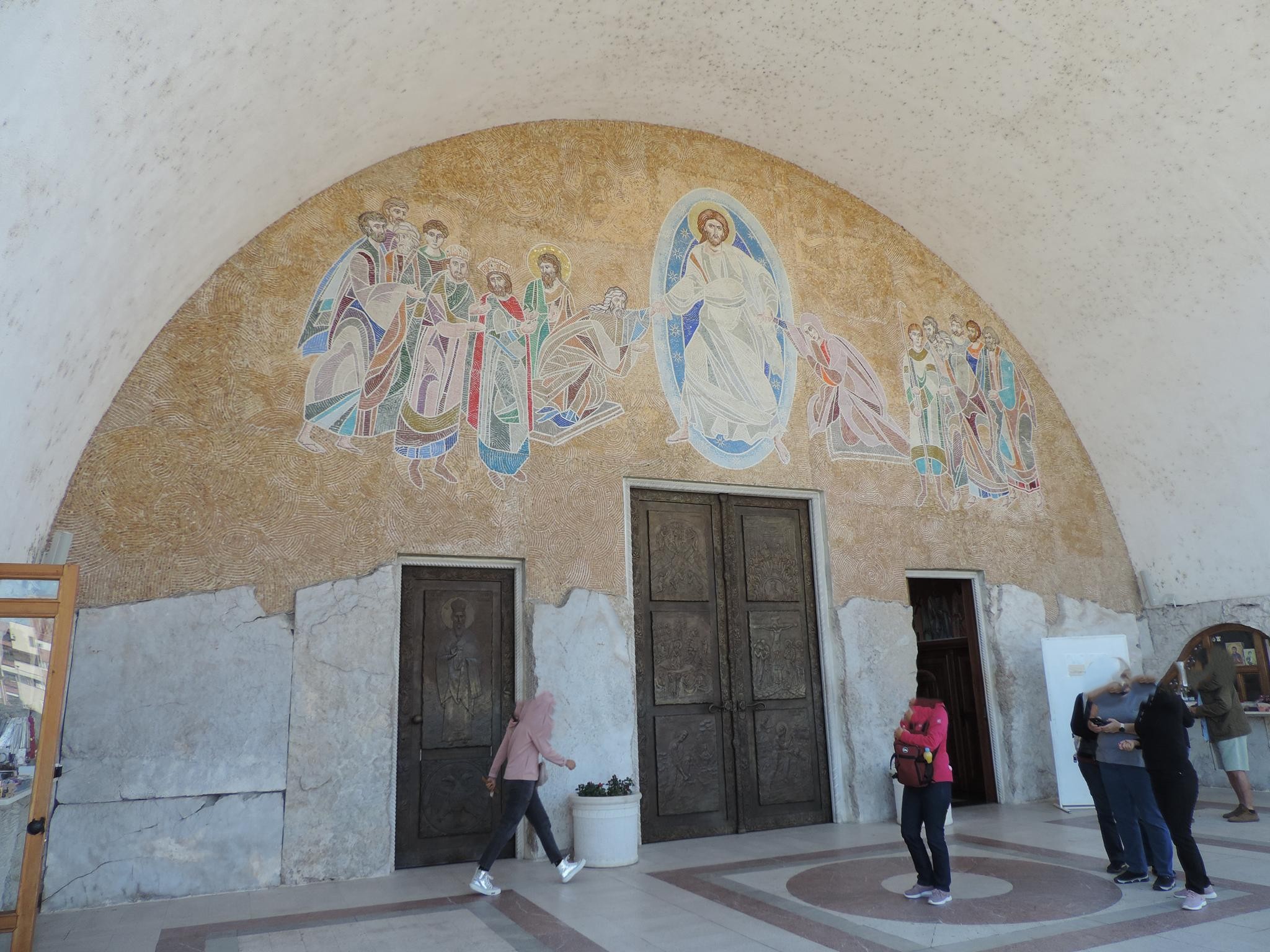
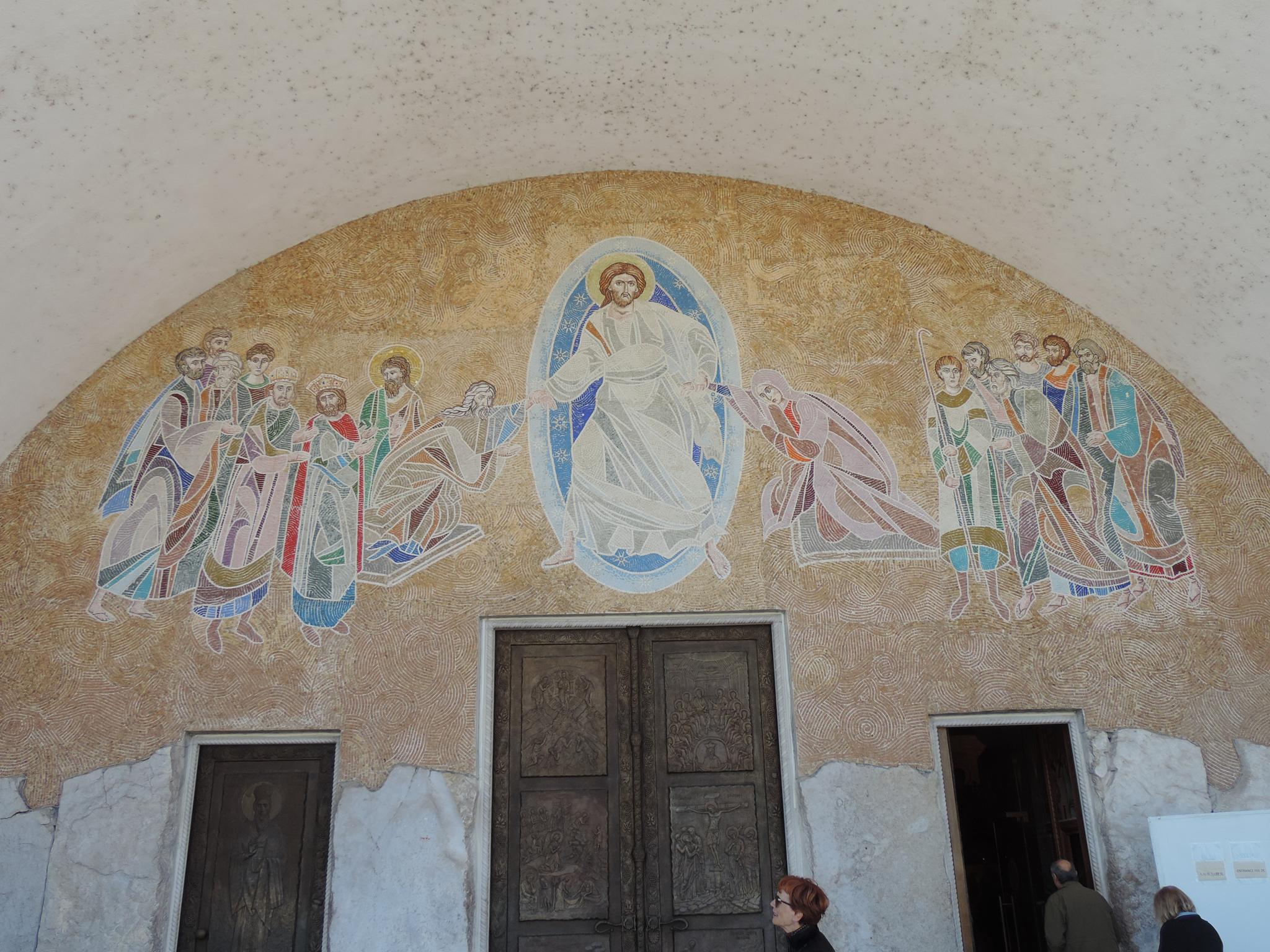
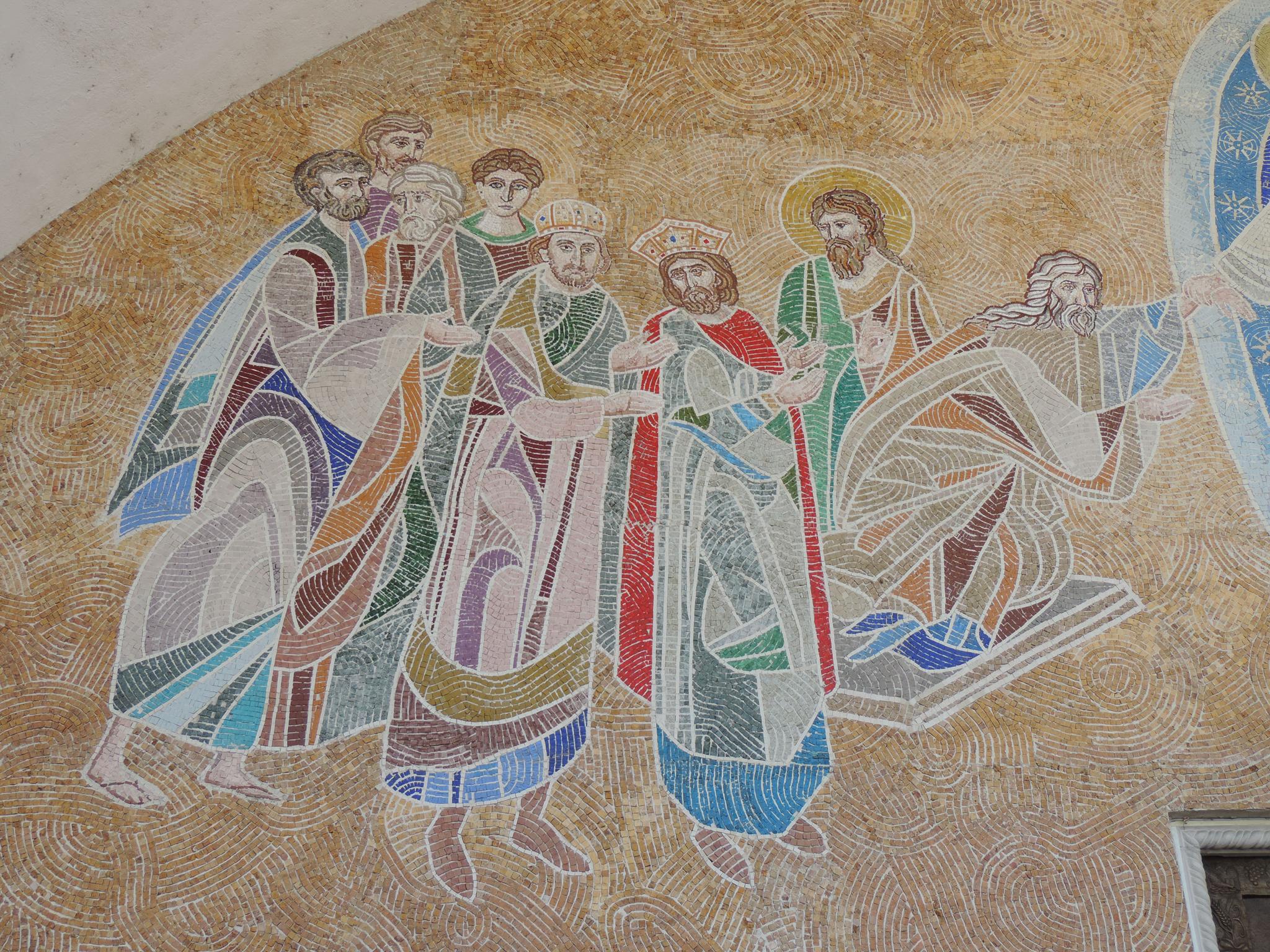
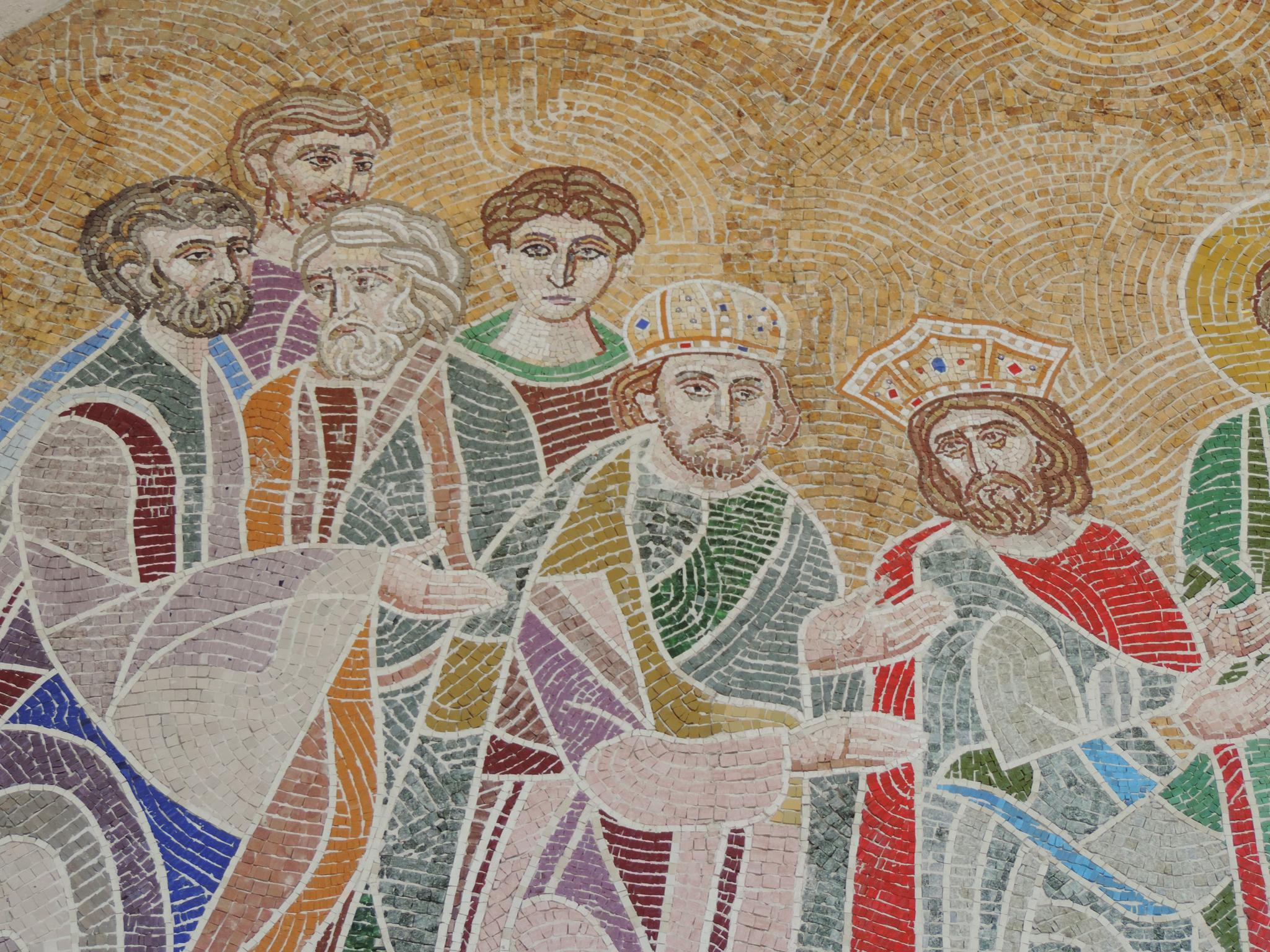
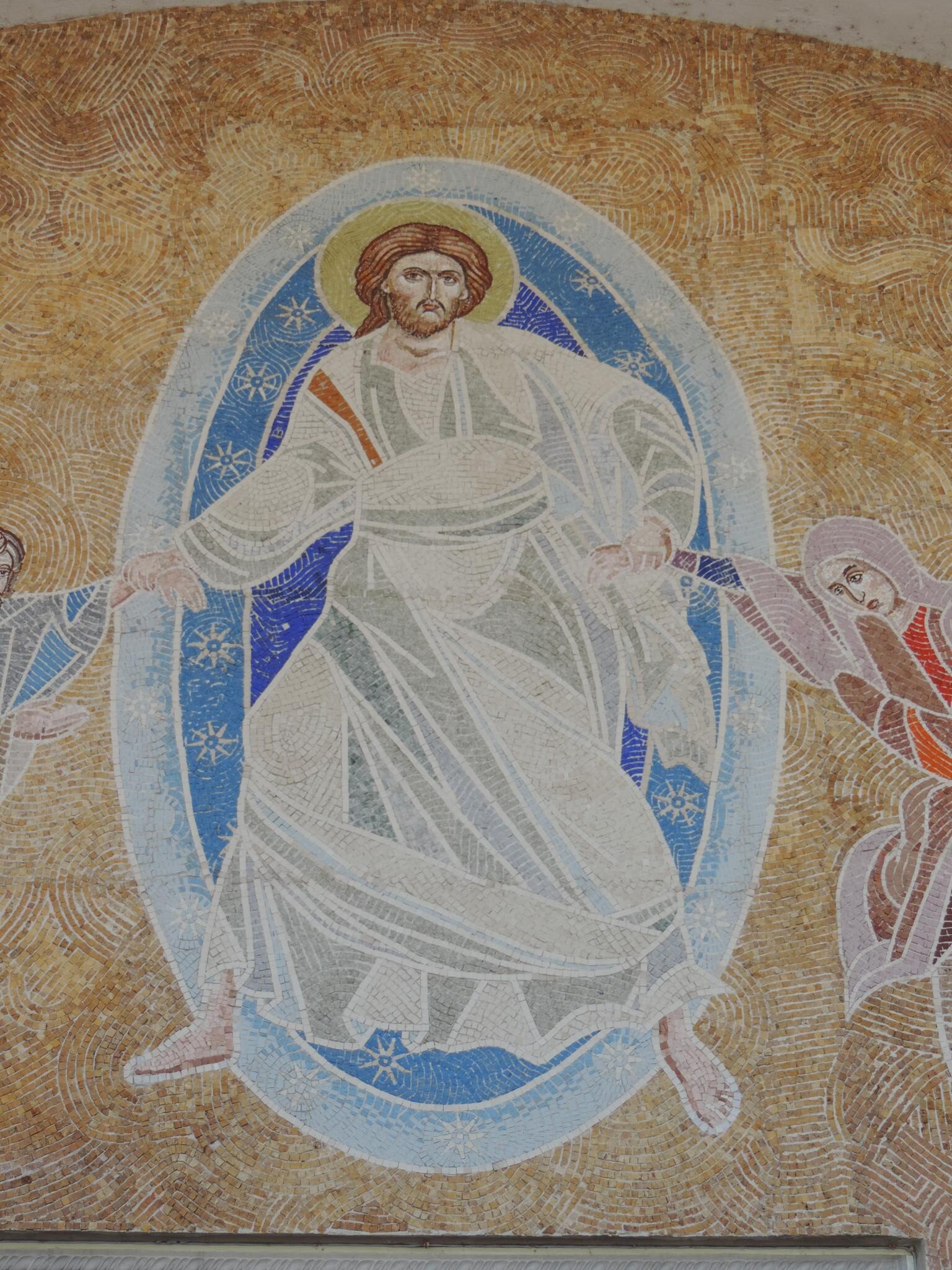
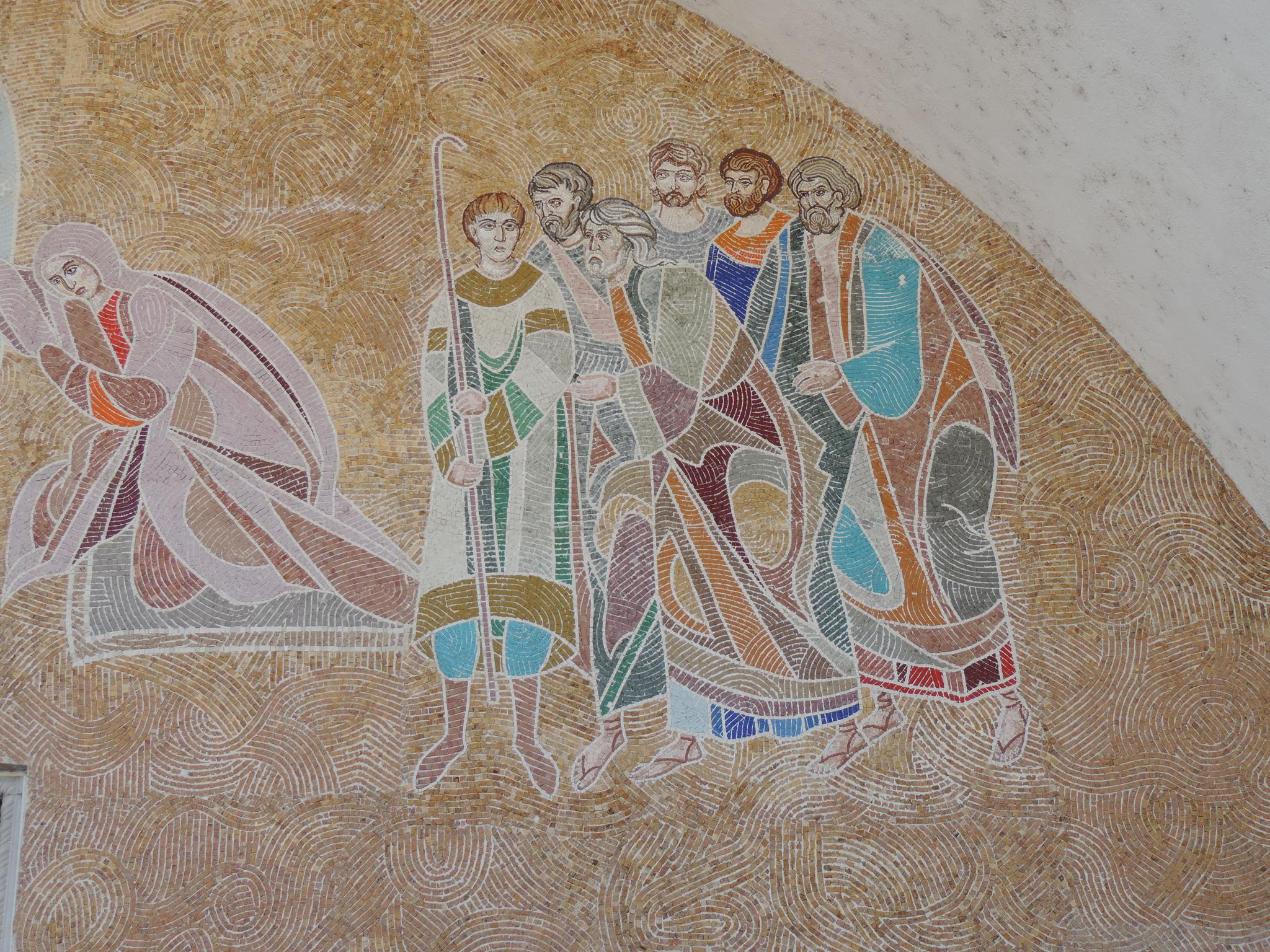
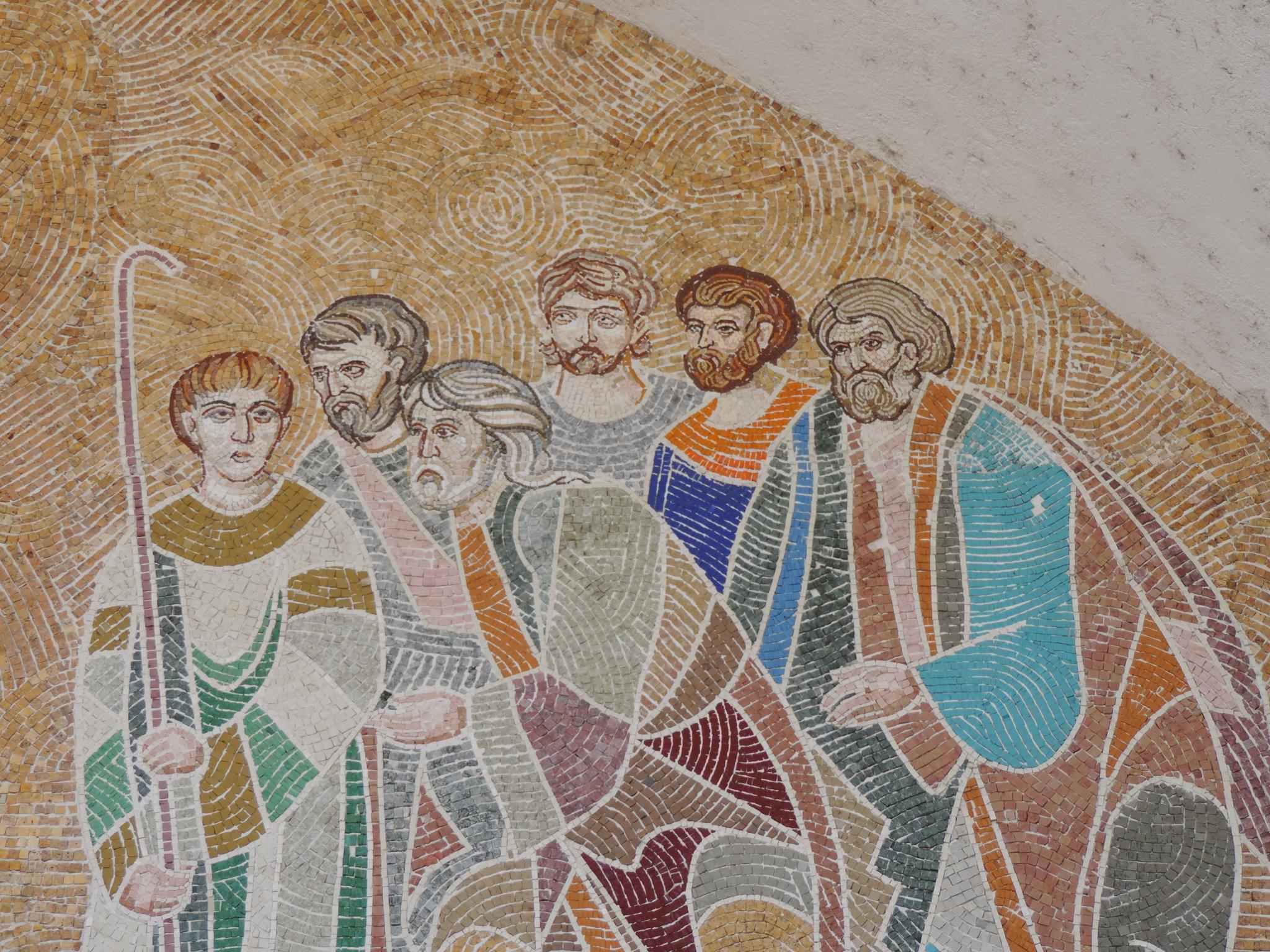
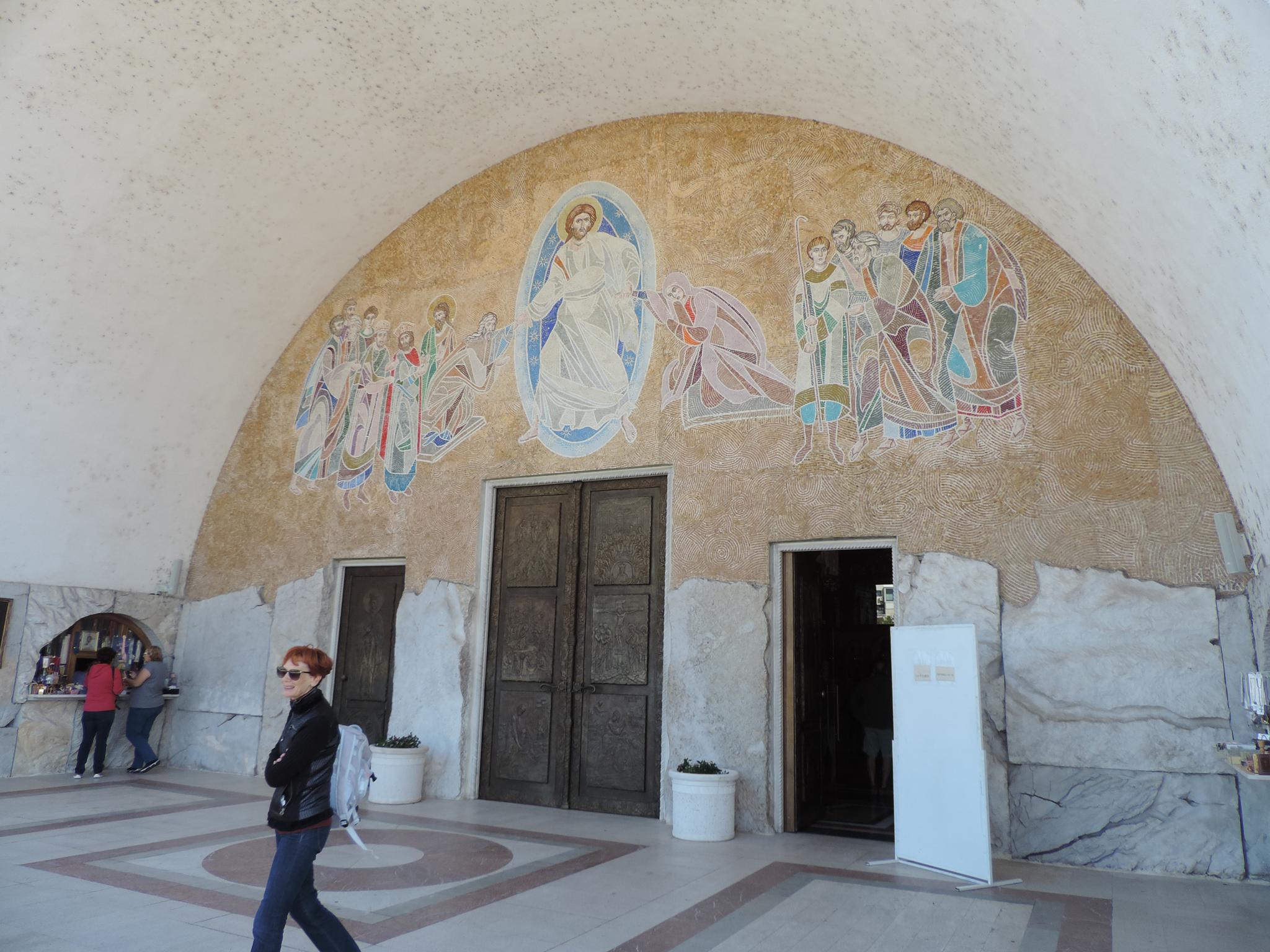
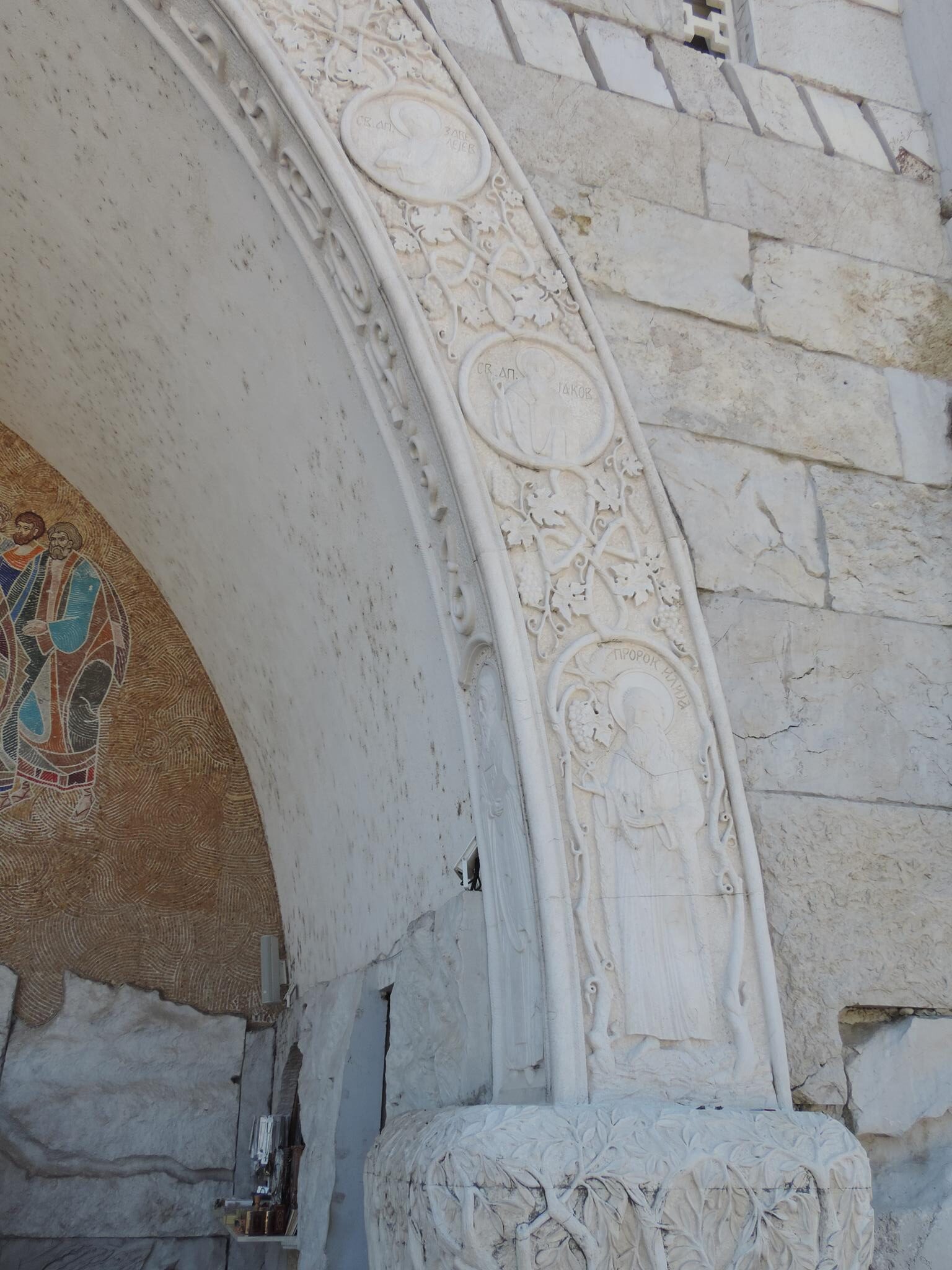
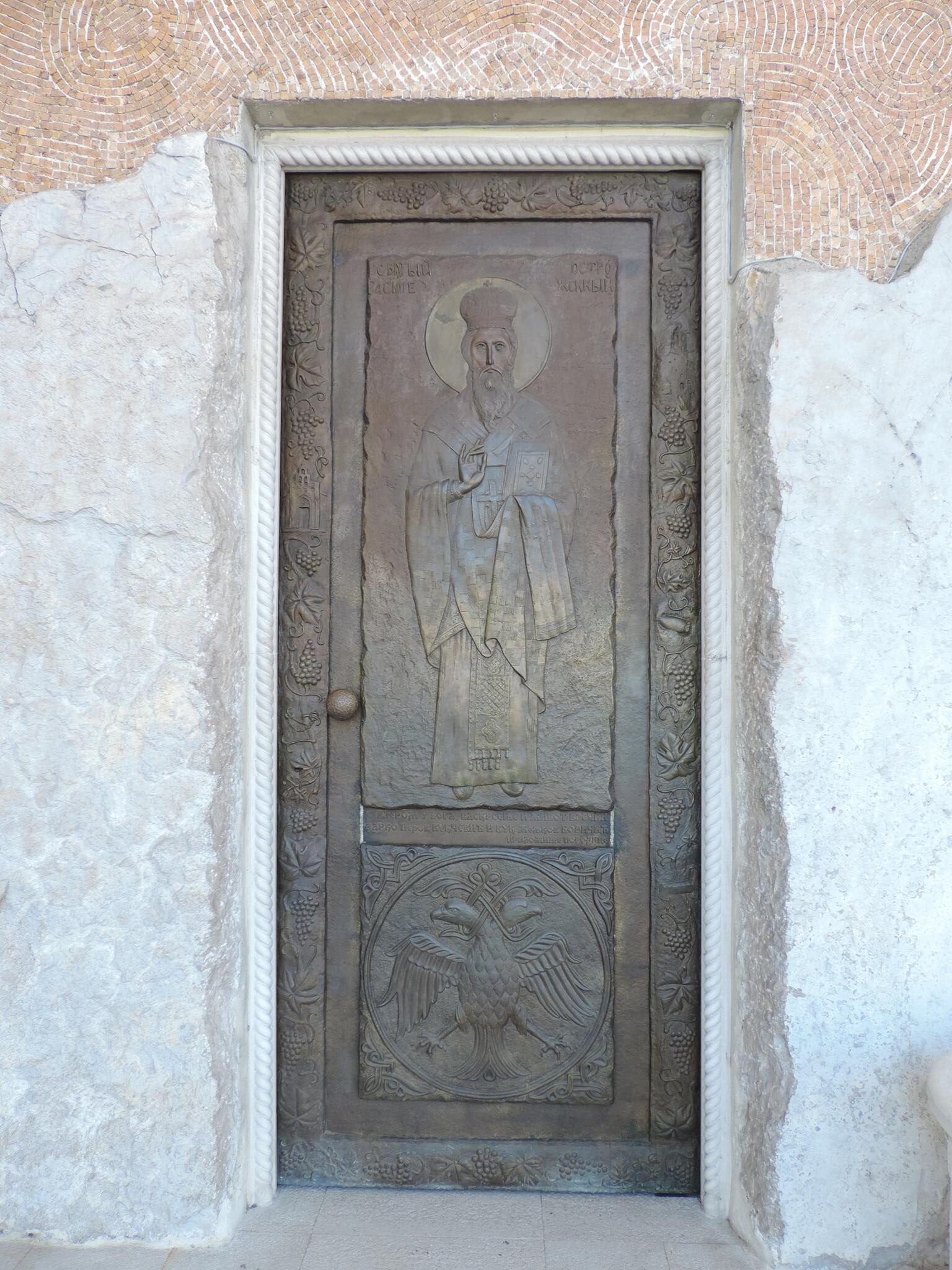
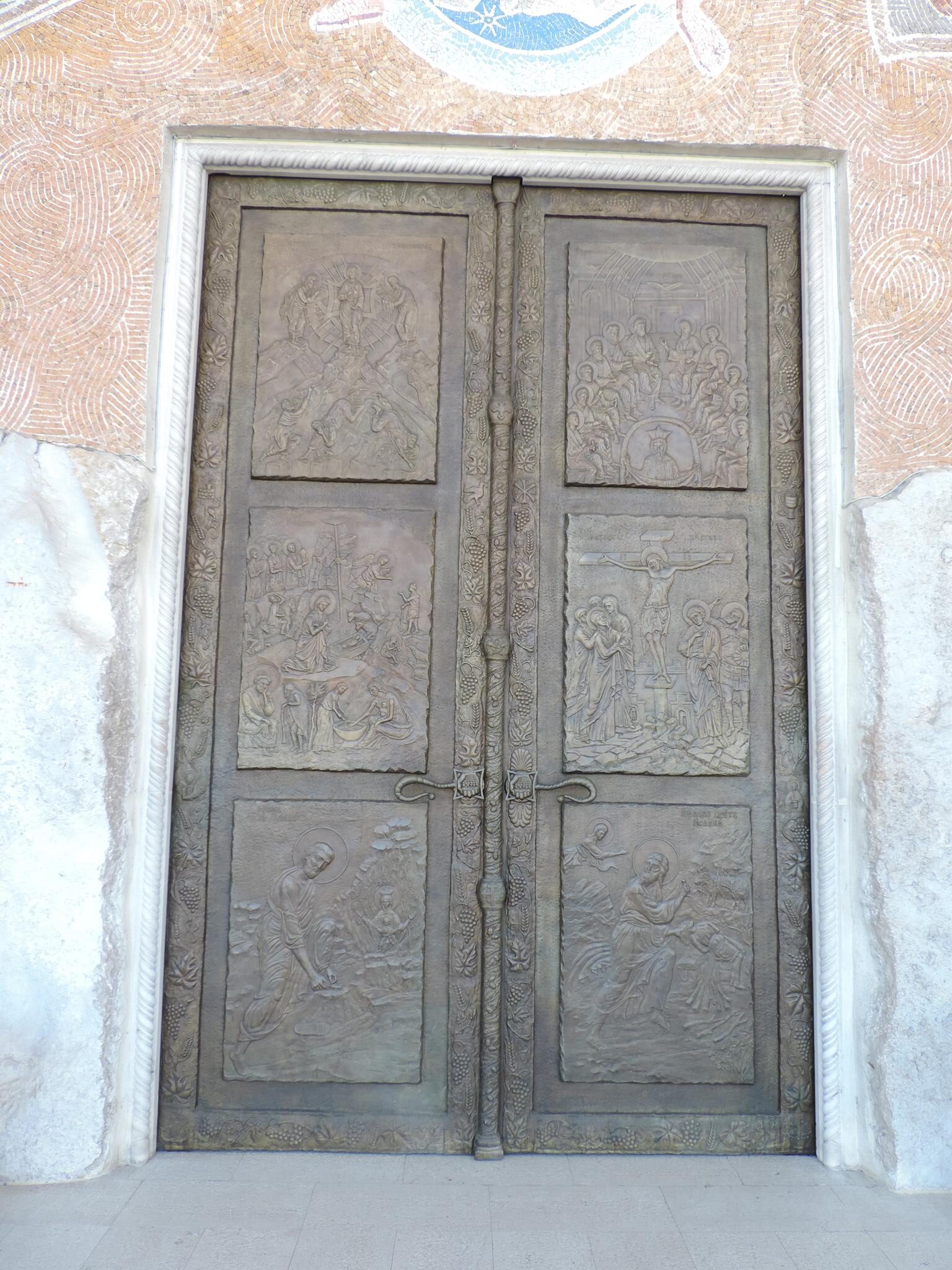
In addition to the frescoes, mosaics and sculptural works also characterize the interior. Above the main entrance is a monumental depiction of the Resurrection of Christ. Inside, there is, among other things, a floor mosaic depicting Noah’s Ark that measures approximately 14 square meters. The floor mosaics cover a total area of about 1.872 square meters. Columns, portals, and door leaves are also adorned with historical ornaments and reliefs that allude to early Christian sites and significant eras in Montenegrin history.
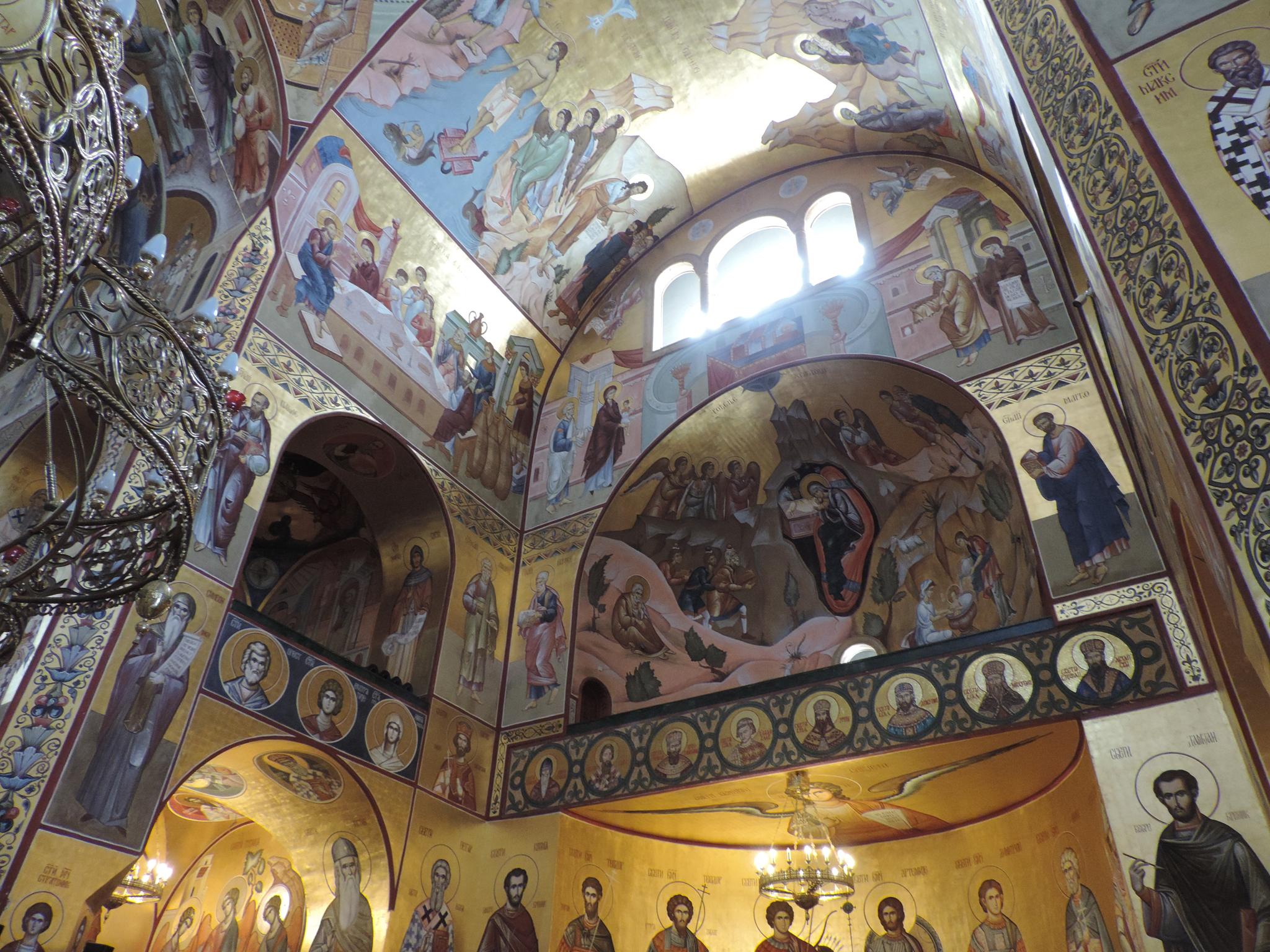
The crypt continues the artistic concept beneath the main nave. Here, among other things, there is a Deesis scene depicting Christ, Mary, and John the Baptist, as well as scenes such as the raising of Lazarus and Job on the dungheap. The visual language explores suffering, faith, and human existence, adding another theological dimension to the overall concept. What ultimately makes the Podgorica Cathedral so extraordinary is the juxtaposition of different visual languages. It follows a centuries-old Orthodox tradition while simultaneously integrating political conflicts, regional history, and contemporary questions of identity. The golden frescoes and monumental depictions of saints evoke Byzantine sacred spaces, while the portrayal of communist politicians establishes a direct connection to recent history.
The cathedral is thus far more than a religious monument. It is a monumental gallery of images where spirituality, politics, history, and craftsmanship converge. For anyone interested in mural painting, it offers an unusual example of how a centuries-old art form can be carried forward into the present and imbued with new, thoroughly controversial content.
North Entrance Fresco
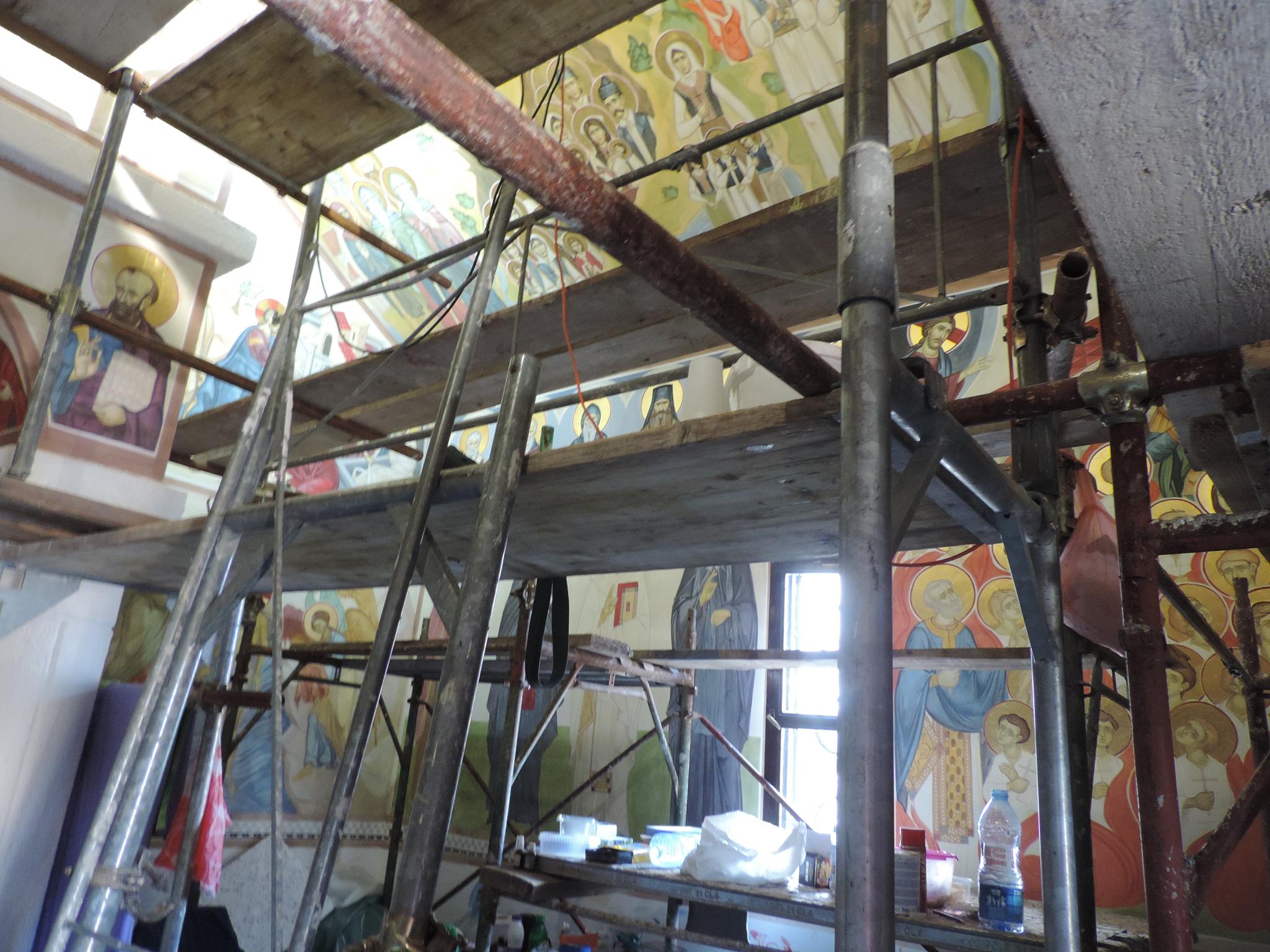
Small Side Chapel – (Construction Work at the Moment)
Outside Area of the Cathedral
The Cathedral at Night
Walkaround Video – by Charisdocumentaries
Drone Video from the Sky – by Travelaizer
INFOTHEK
 Artist: ANASTASIJE RADOVIĆ MORAČKI
 LinkedIn: https://me.linkedin.com/in/anastasije-radović-26b781ba
Artist: BORIS MARKUŠ
 Facebook: https://www.facebook.com/borismarkush
 Pinterest: https://www.pinterest.com/borismarku
LinkedIn: https://me.linkedin.com/in/boris-markuš-08422b119
Artist: DAMIR MLADENOVIĆ
Facebook: https://www.facebook.com/damir.mladenovic.750
 Flickr: https://www.flickr.com/photos/archaicart
Pinterest: https://www.pinterest.com/archaicartt
Artist: GAVRILO MARKOVIĆ
LinkedIn: https://www.linkedin.com/in/gavrilo-markovic-6b9ba097
Artist: LAZAR STOJKOVIĆ
Artist: LIDIJA TIJANIĆ
Artist: LUKA ANIĆ
Artist: MILOŠ JANIĆIJEVIĆ RAŠKI
 Webpage: https://www.decani.org/en/news/frescoing-the-monastery-trapeza
Artist: NIKOLA RADOVIĆ
Architect: PREDRAG RISTIĆ – [ 17th January 1931 to 5th August 2019 ]
IMDb: https://www.imdb.com/de/name/nm0728442
Artist: RADE SARIĆ
Artist: VIKTOR DOVNAR
Website: https://www.ikonique.org
Facebook: https://www.facebook.com/viktor.dovnar.7
Facebook: https://www.facebook.com/ikonique.studio
 Instagram: https://www.instagram.com/ikoniquestudio
Pinterest: https://www.pinterest.com/izografby
 Youtube: https://www.youtube.com/@studioikonique8036
Artist: VUK DABETIĆ
RECOMMENDABLE SPOTS IN PODGORICA
>>> Itaka Library Spray Bridge <<<
>>> Morački Graffiti Hall <<<
>>> Đurovića Barracks Graffiti <<<
>>> Kružni Tok Kulturni Centar <<<
>>> Club Haustor Art Space <<<
>>> FK Zabjelo Fan Art Corner <<<
>>> Children of Palestine – MIŠO JOSKIĆ <<<
>>> Train Writing Collection <<<
>>> Stencil Collection <<<
>>> Sticker Collection <<<
MORE ARTICLES ABOUT MONTENEGRO
>>> Streetart Map Podgorica <<<
>>> Grafiti Fest Nikšić <<<
>>> Šavnik – Mural Lab & Dva Sunca <<<
>>> Olivera Eraković – Out of Scale <<<
>>> Nikšić – Murals & Streetart <<<
>>> Nikšić – Sculptures & Statues <<<
>>> Budva – Graffiti & Writing <<<
>>> Budva – Hide Spray Wall <<<
>>> Budva – Murals & Streetart <<<
>>> Budva – Old Town Urban Art <<<
>>> Budva – Stari Grad History <<<
>>> Budva – Sculptures & Statues <<<
>>> Kotor – Graffiti & Writing <<<
>>> Kotor – Streetart & Characters <<<
>>> Kotor – Sculptures & Statues <<<
>>> Kotor – Stari Grad – Old Town <<<