„Il état une fois… Archiver la Voie rapide“ – „Once upon a time… Archive Fast Lane“ – Le Quartier Saint-Étienne
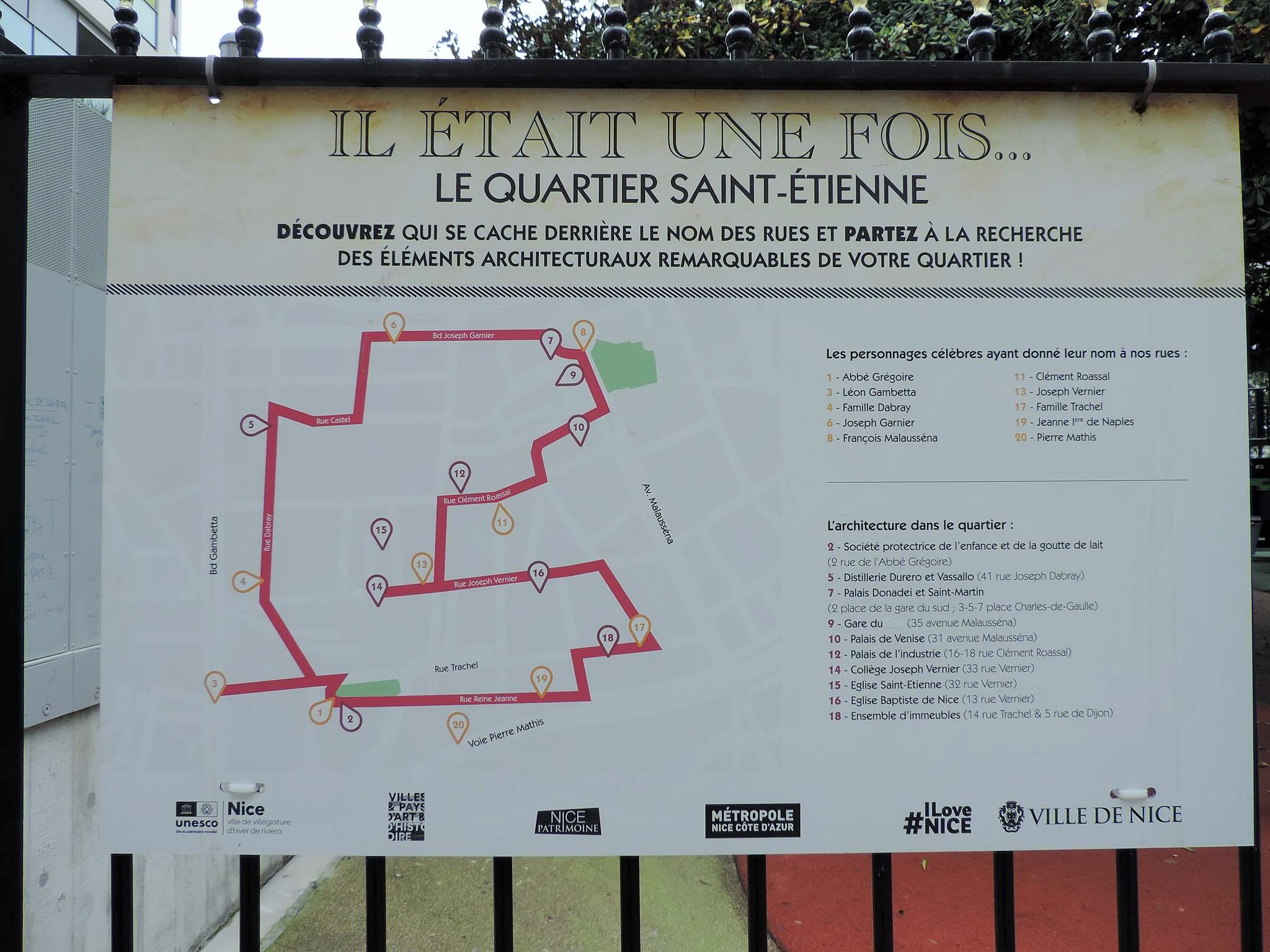
From November 22nd 2022 to April 28th 2023, the exhibition „Archiver la Voie Rapid“, by the photographer, book author and city landscape researcher JORDI BALLESTA, took place at the ARCHIVES NICE COTE D’AZUR. In English it would mean „Archiving the Expressway“. The artist presents a photographic portrait of the Pierre-Mathis Road, a traffic artery crossing the city of Nice from east to west. Focusing on the contemporary, the exhibition presented a photographic portrait, developed over a period of 18 months. Its subject: the urban highway, its detachment from the ground, and the houses facing the traffic. As part of this exhibition, 20 panels were installed along the north side of the park Square Colonel Jean-Pierre, providing information about the architecture and notable figures from the neighbourhood Quartier Saint-Étienne. They also include a map with precise location and a suggested walking route.
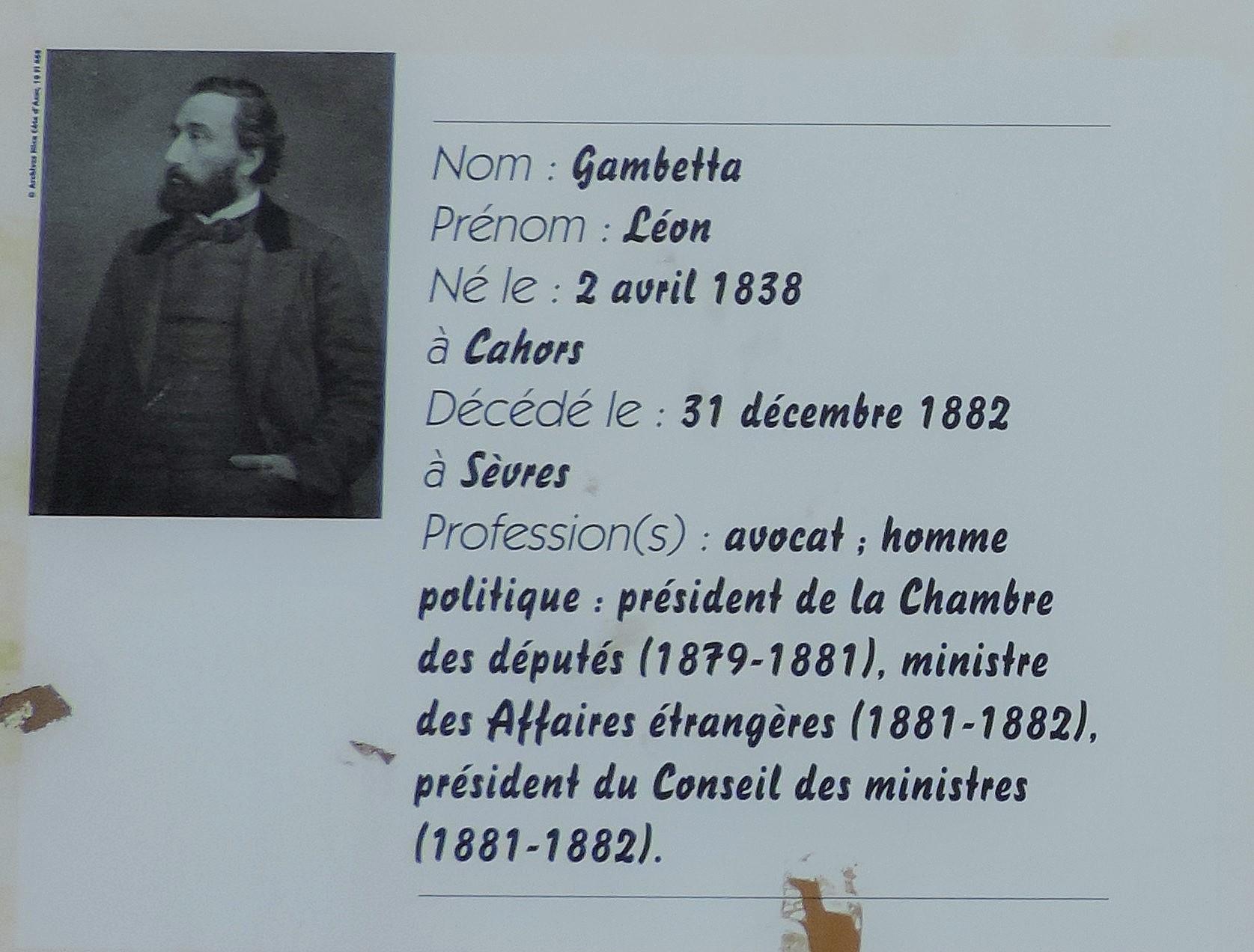
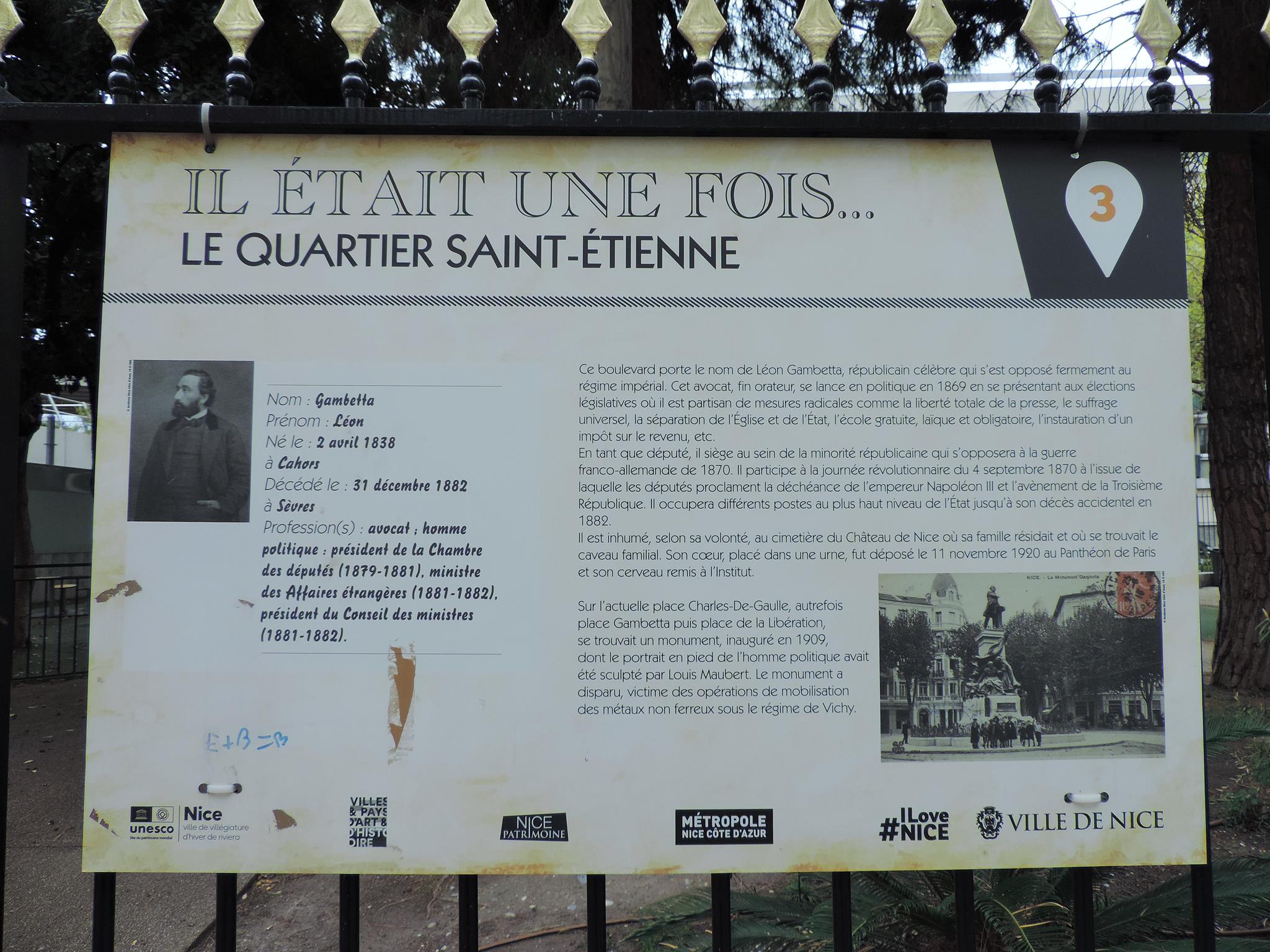
Léon Gambetta – Spot (3)
Léon Gambetta was born on April 2nd 1838 in Cahors and died on December 31st 1882 in Sèvres. He was a lawyer, politician, President of the Chamber of Deputies (1879-1881), Minister of Foreign Affairs (1881-1882) and President of the Council of Ministers (1881-1882).
This boulevard is named after Léon Gambetta, a famous republican who strongly opposed the imperial regime. This lawyer, a skilled orator, entered politics in 1869 by running in the legislative elections, where he advocated radical measures such as total freedom of the press, universal suffrage, the separation of church and state, free, secular, and compulsory education, the introduction of an income tax, etc. As a member of parliament, he sat within the Republican minority that opposed the Franco-German War of 1870. He participated in the revolutionary day of September 4, 1870, at the end of which the deputies proclaimed the deposition of Emperor Napoleon III and the advent of the Third Republic. He held various positions at the highest level of government until his accidental death in 1882.
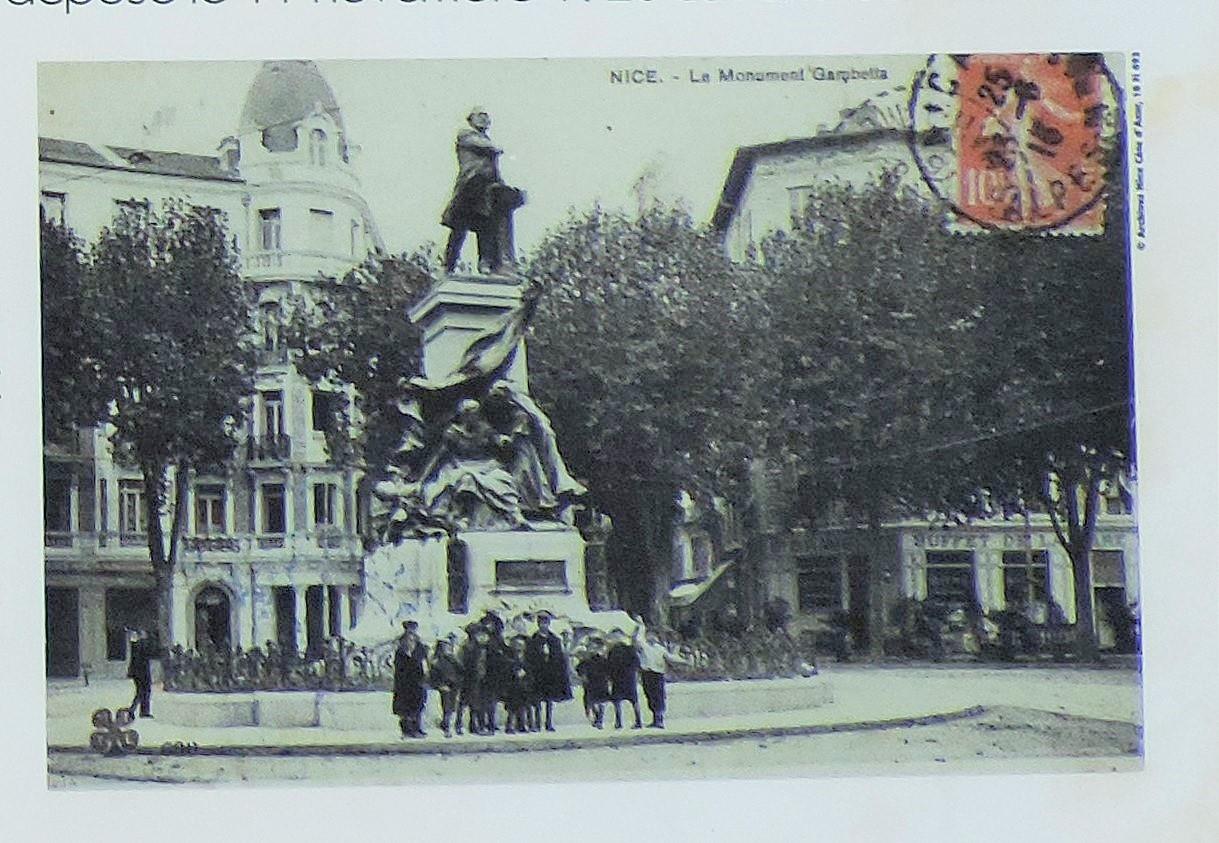
He was buried, according to his wishes, in the Château de Nice cemetery, where his family resided and where the family vault was located. His heart, placed in an urn, was placed on November 11th 1920, in the Panthéon in Paris, and his brain was donated to the Institute. On what is now Place Charles-De-Gaulle, formerly Place Gambetta and then Place de la Libération, there was a monument, inaugurated in 1909, with a full-length portrait of the politician sculpted by Louis Maubert. The monument has since disappeared, a victim of the mobilization of non-ferrous metals during the Vichy regime.
Dabray Family – Spot (4)
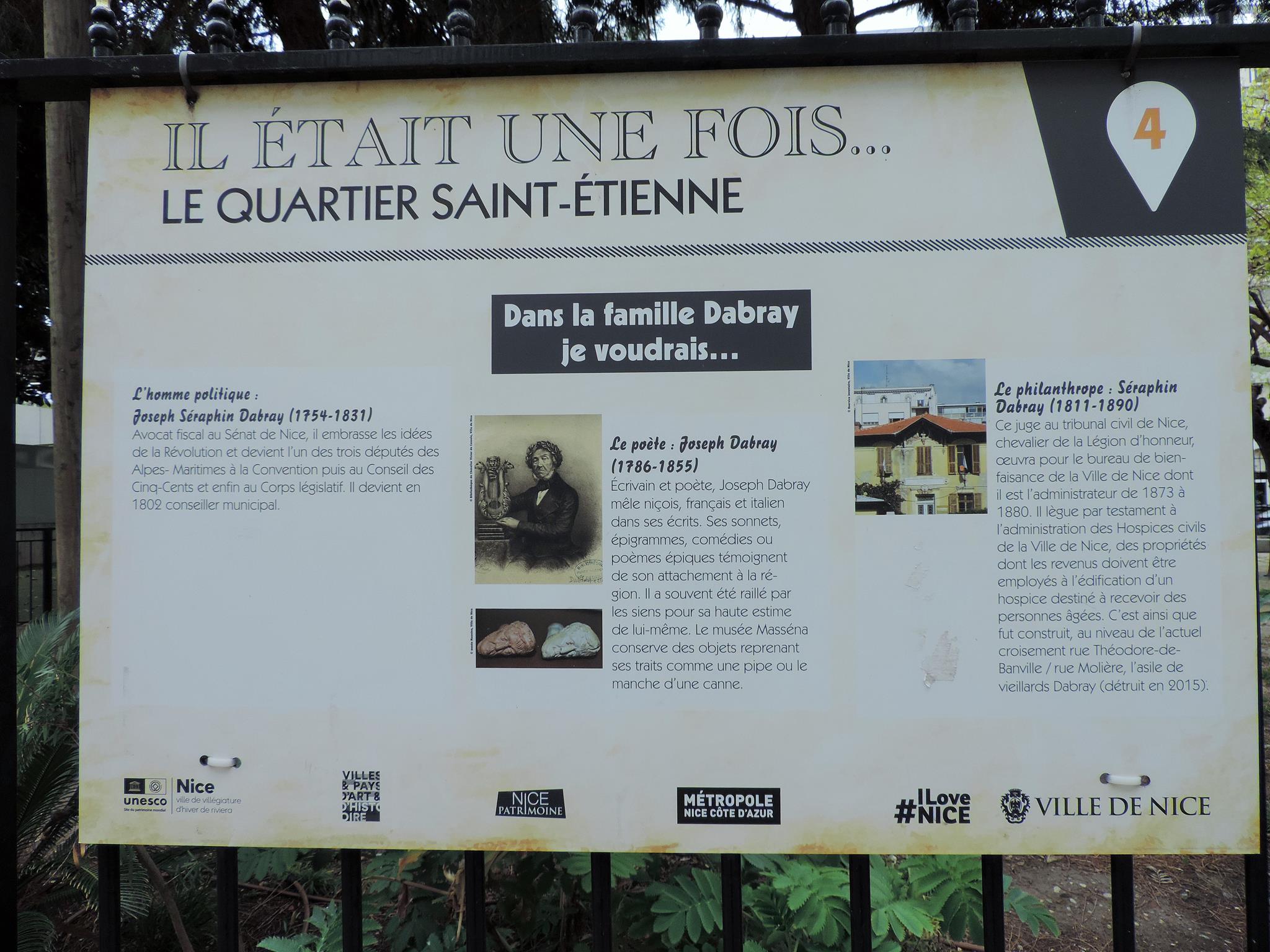
The Politician: Joseph Séraphin Dabray (1754-1831). A tax lawyer in the Senate of Nice, he embraced the ideas of the Revolution and became one of the three deputies from the Alpes-Maritimes to the Convention, then to the Council of Five Hundred, and finally to the Legislative Body. He became a municipal councilor in 1802.
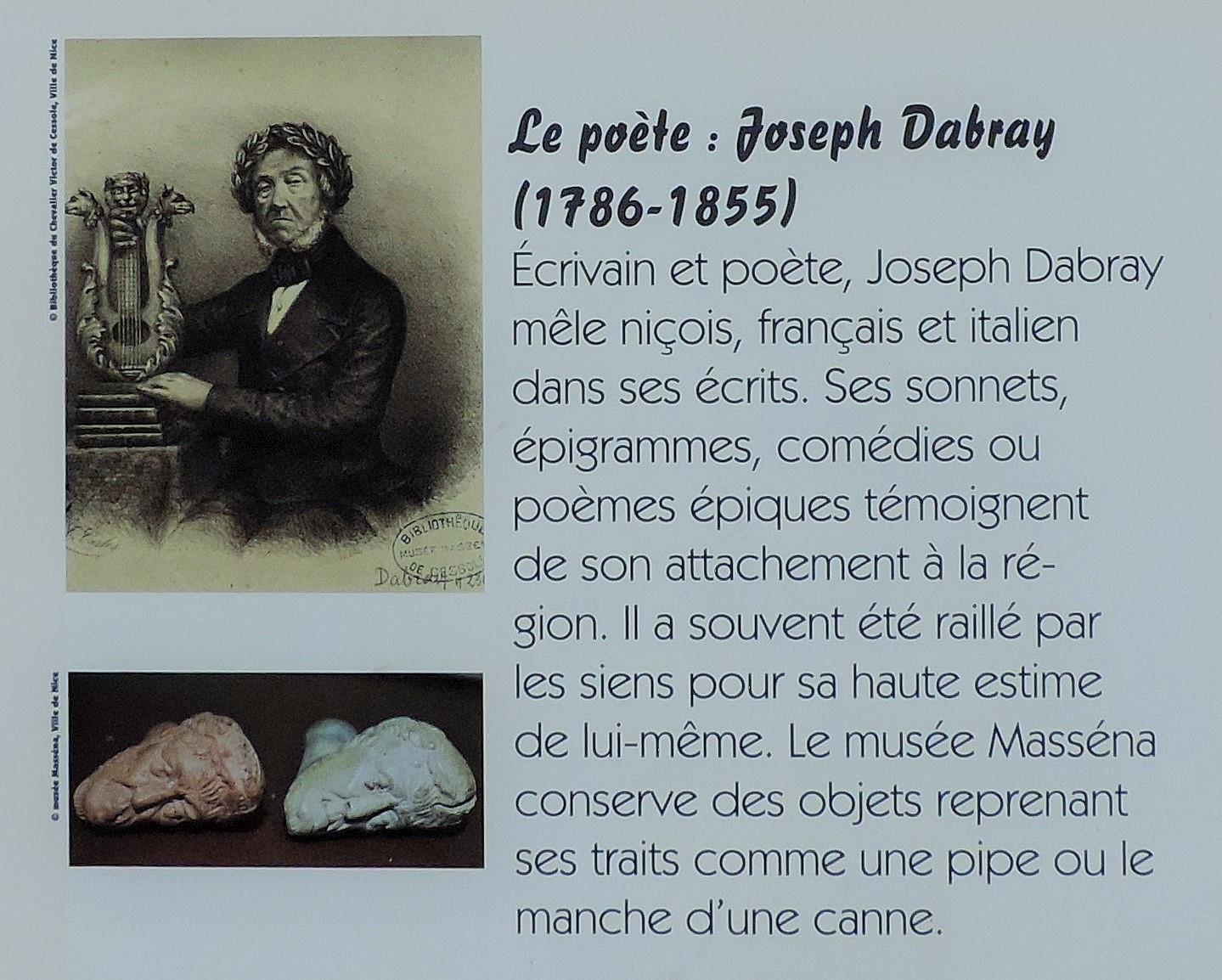
The Poet: Joseph Dabray (1786-1855). Writer and poet, Joseph Dabray blended Niçois, French, and Italian in his writings. His sonnets, epigrams, comedies, and epic poems testify to his attachment to the region. He was often mocked by his own people for his high self-esteem. The Masséna Museum preserves objects depicting his features, such as a pipe and the handle of a cane.
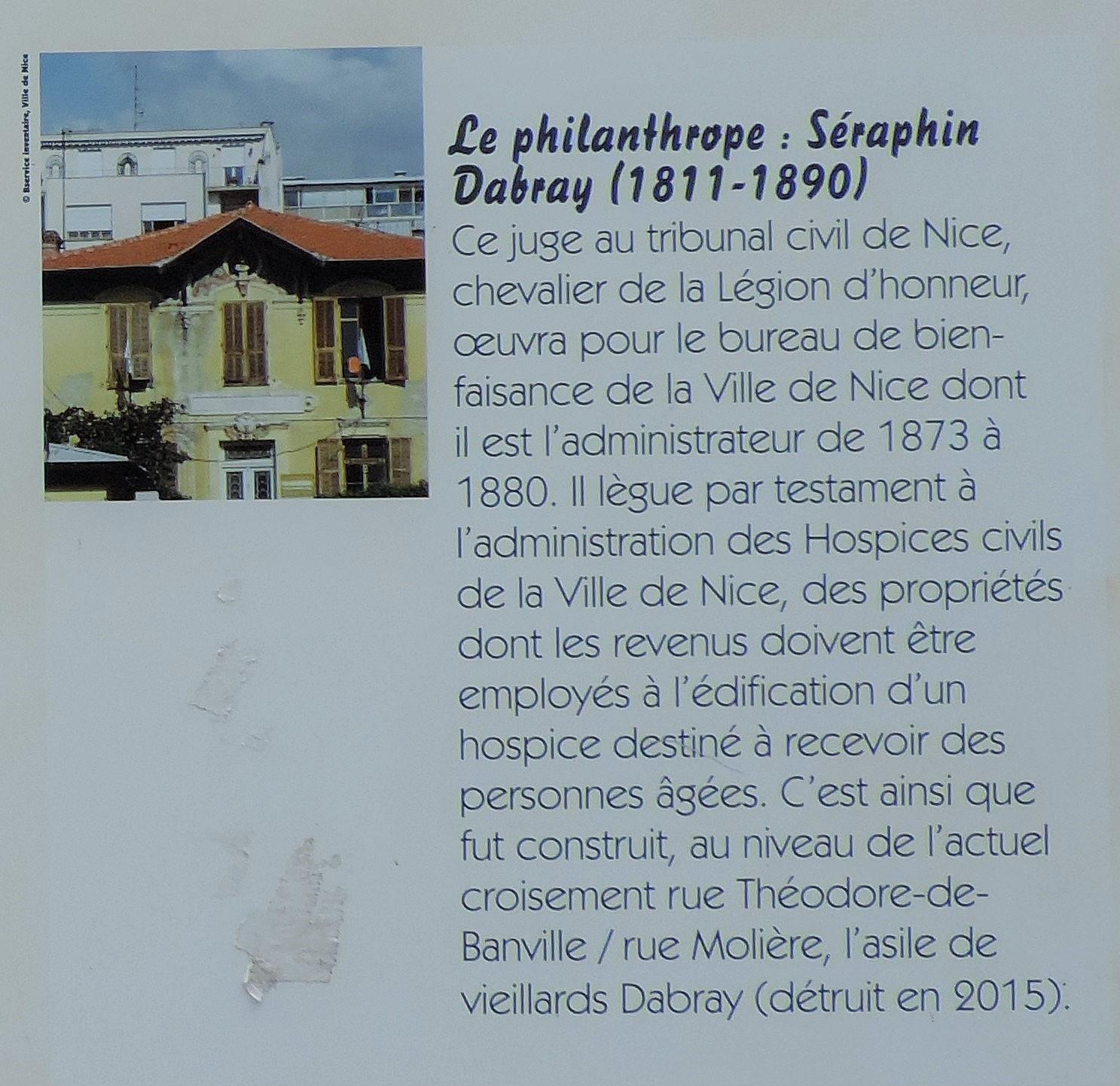
The Philanthropist: Séraphin Dabray (1811-1890). This judge at the Civil Court of Nice, a Knight of the Legion of Honor, worked for the Charity Office of the City of Nice, of which he was administrator from 1873 to 1880. In his will, he bequeathed properties to the administration of the Hospices Civils de la Ville de Nice, the income from which was to be used to build a hospice for the elderly. Thus, the Dabray old people’s home was built at the current intersection of Rue Théodore-de-Banville and Rue Molière (demolished in 2015).
Distillery Durero and Vassallo – Spot (5)
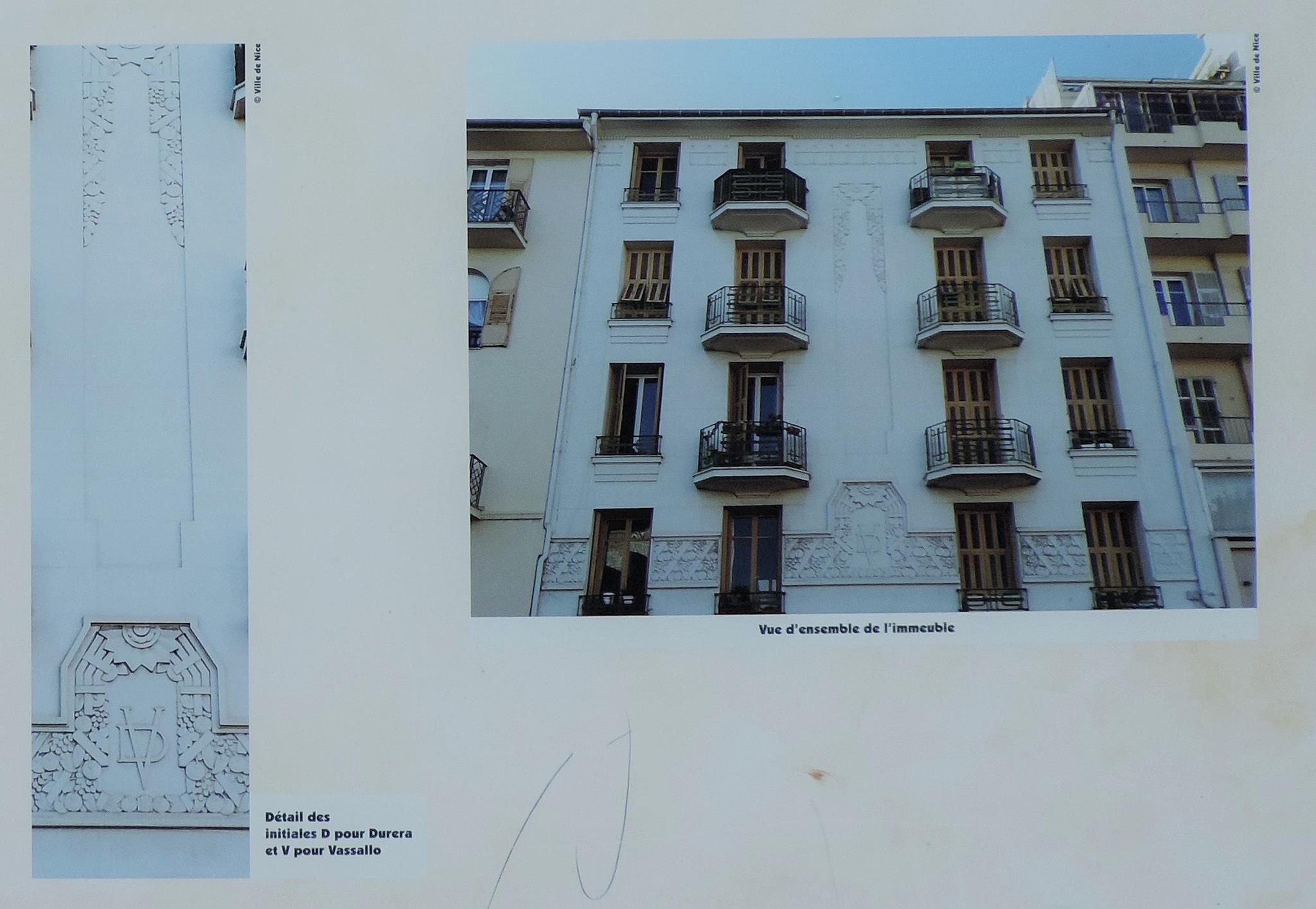
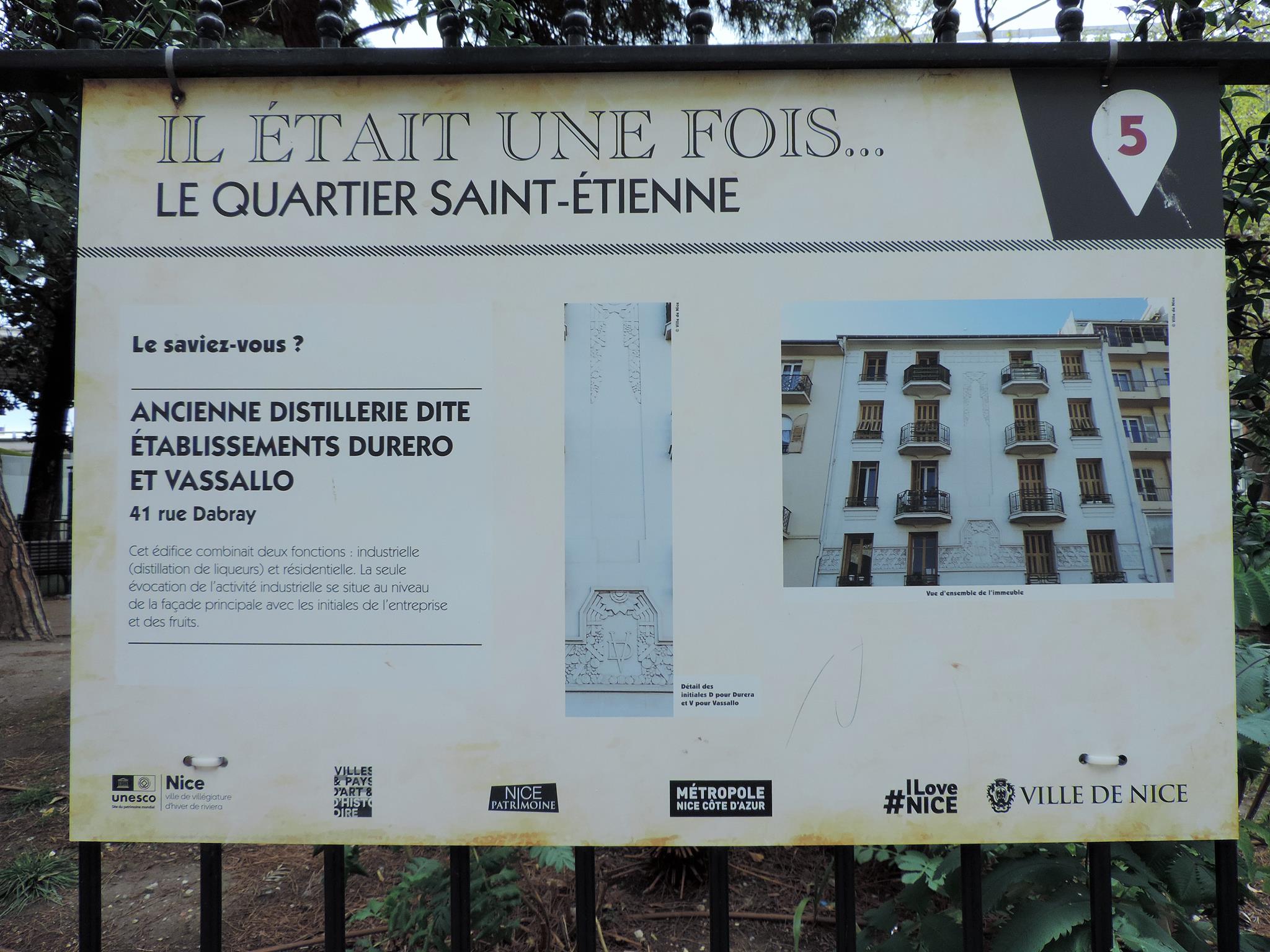
The former distillery known as Establishments Durero and Vassallo is located at 41 Rue Dabray. This building combined two functions: industrial (distilling liqueurs) and residential. The only reminder of industrial activity is found on the main façade, with the company’s initials and fruit.
Joseph Garnier – Spot (6)
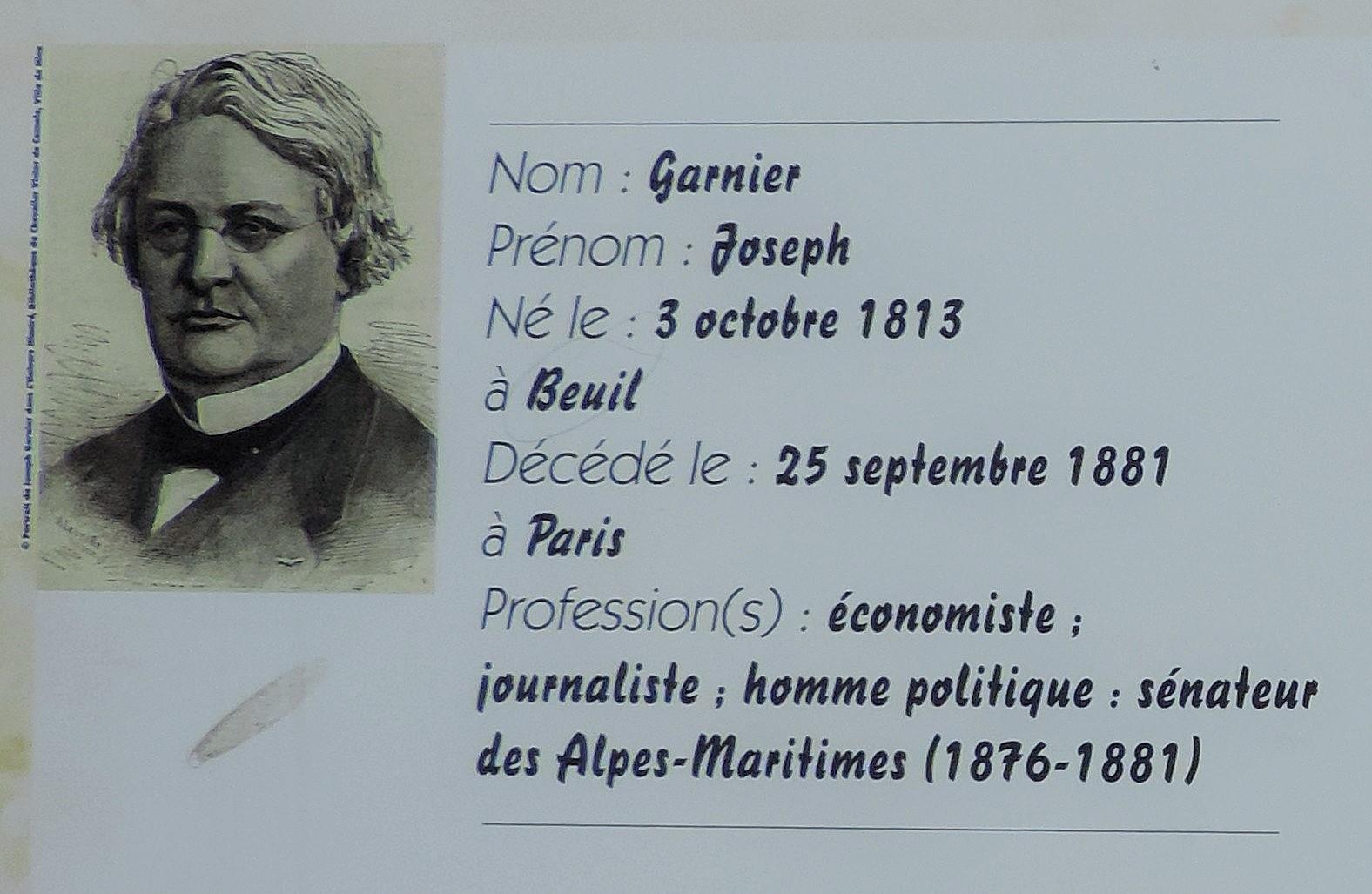
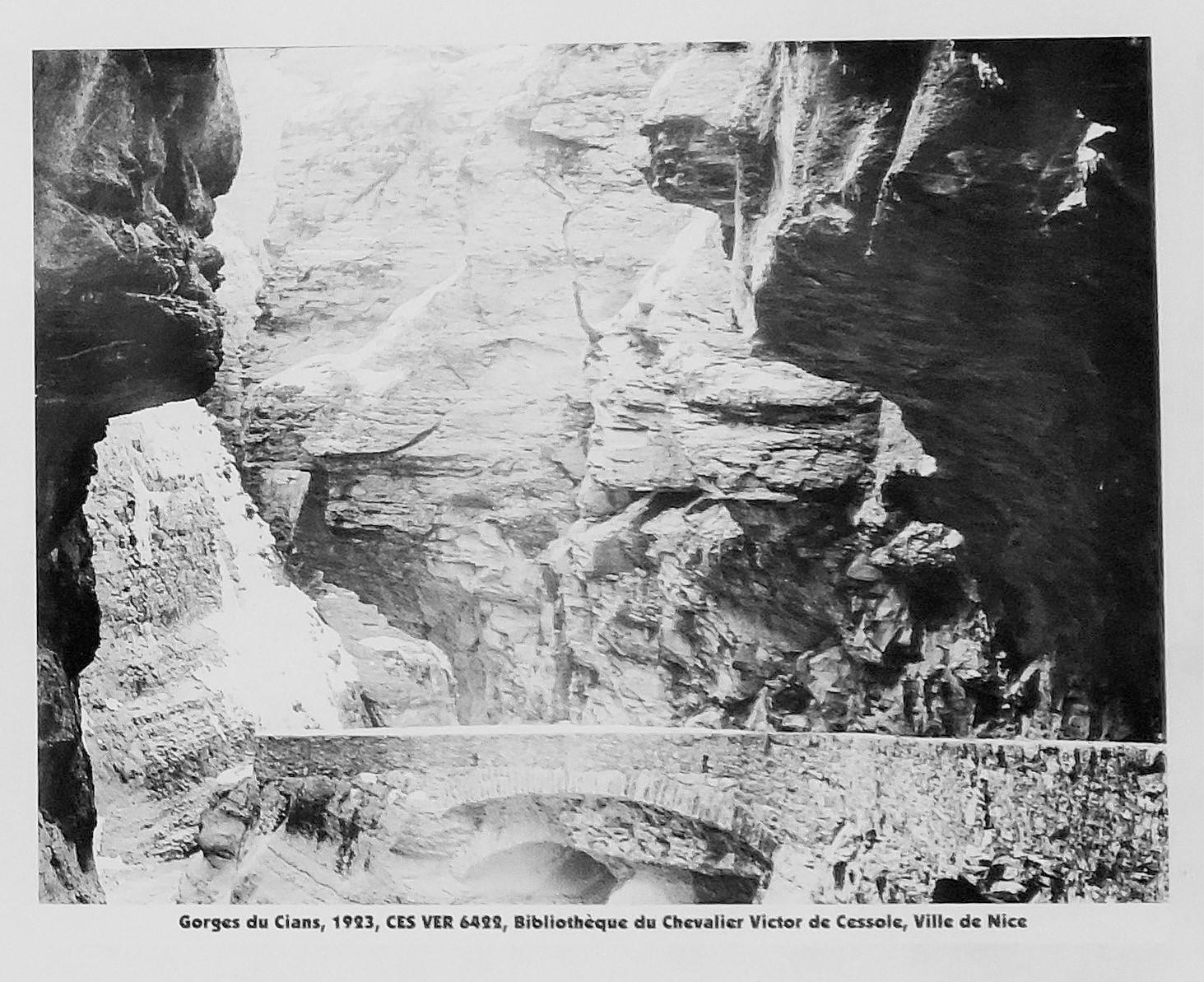
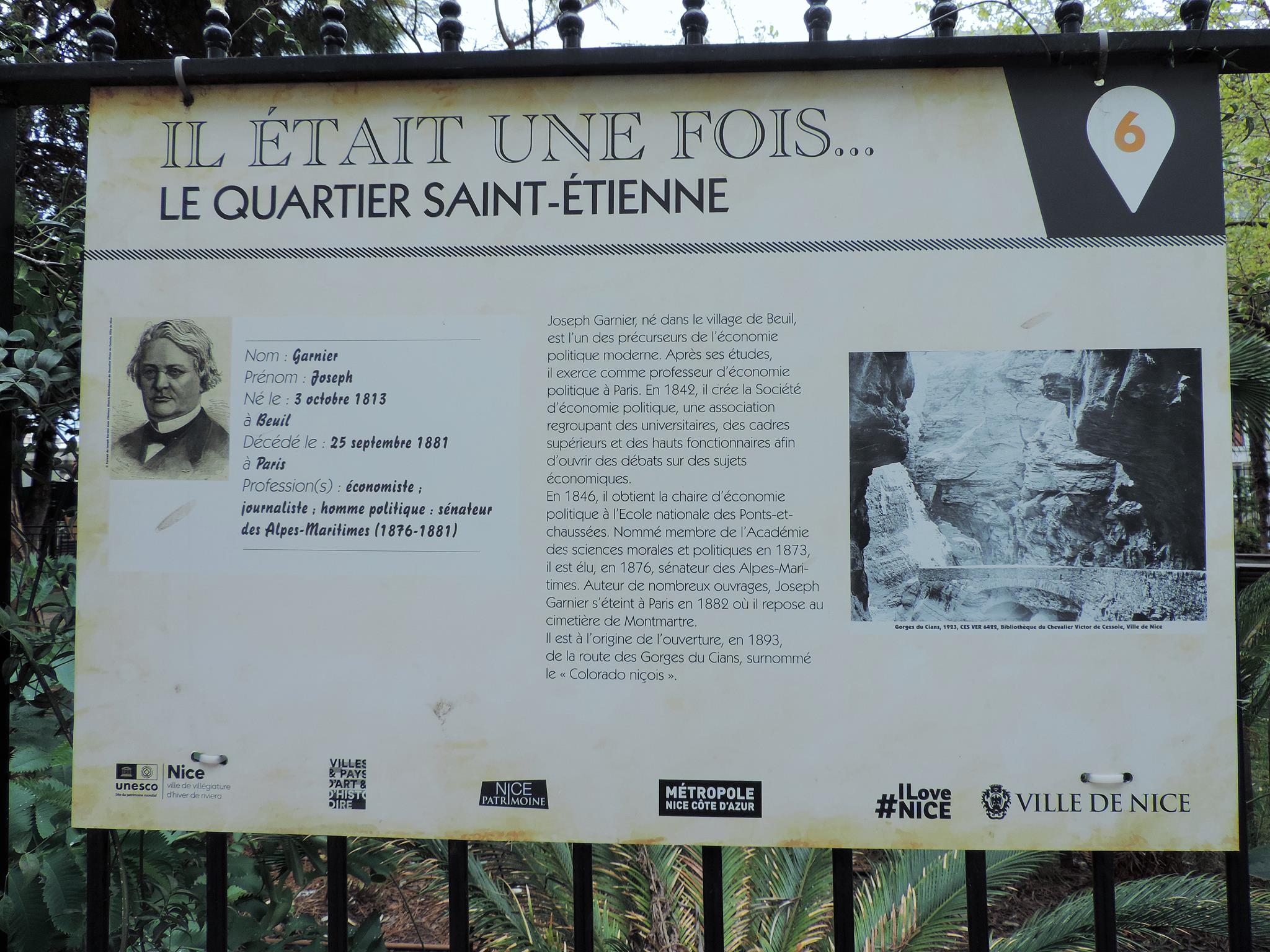
Joseph Garnier, born in the village of Beuil, was one of the pioneers of modern political economy. After his studies, he worked as a professor of political economy in Paris. In 1842, he founded the Société d’économie politique, an association bringing together academics, senior executives, and senior civil servants to initiate debates on economic topics. In 1846, he was appointed chair of political economy at the École nationale des Ponts-et-chaussées (National School of Bridges and Roads). Appointed a member of the Academy of Moral and Political Sciences in 1873, he was elected Senator for the Alpes-Maritimes in 1876. Author of numerous works, Joseph Garnier died in Paris in 1882, where he is buried in the Montmartre Cemetery. He was responsible for the opening, in 1893, of the Gorges du Cians road, nicknamed the „Colorado of Nice.“
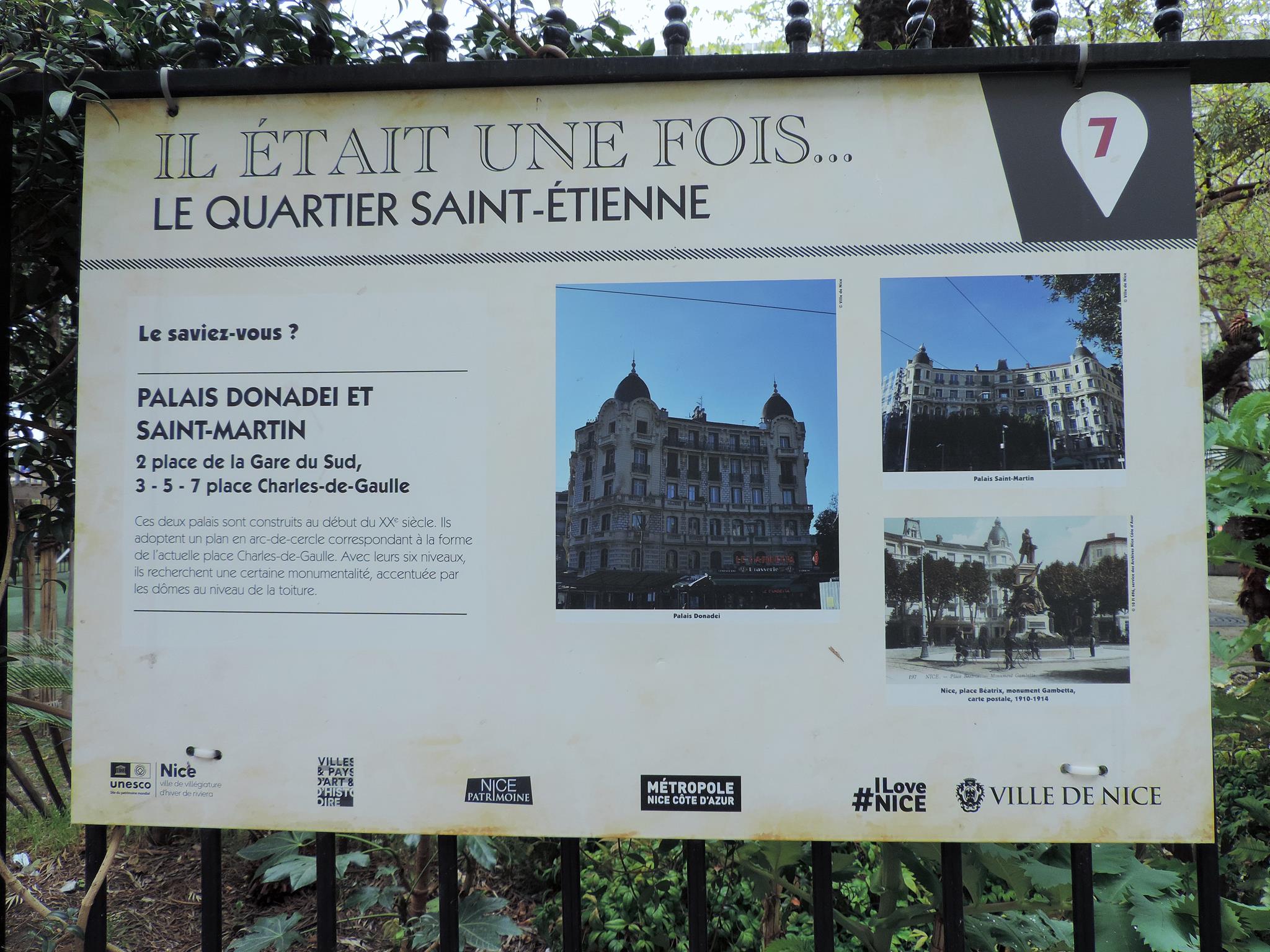
Palais Donadei & Palais Saint-Martin – Spot (7)
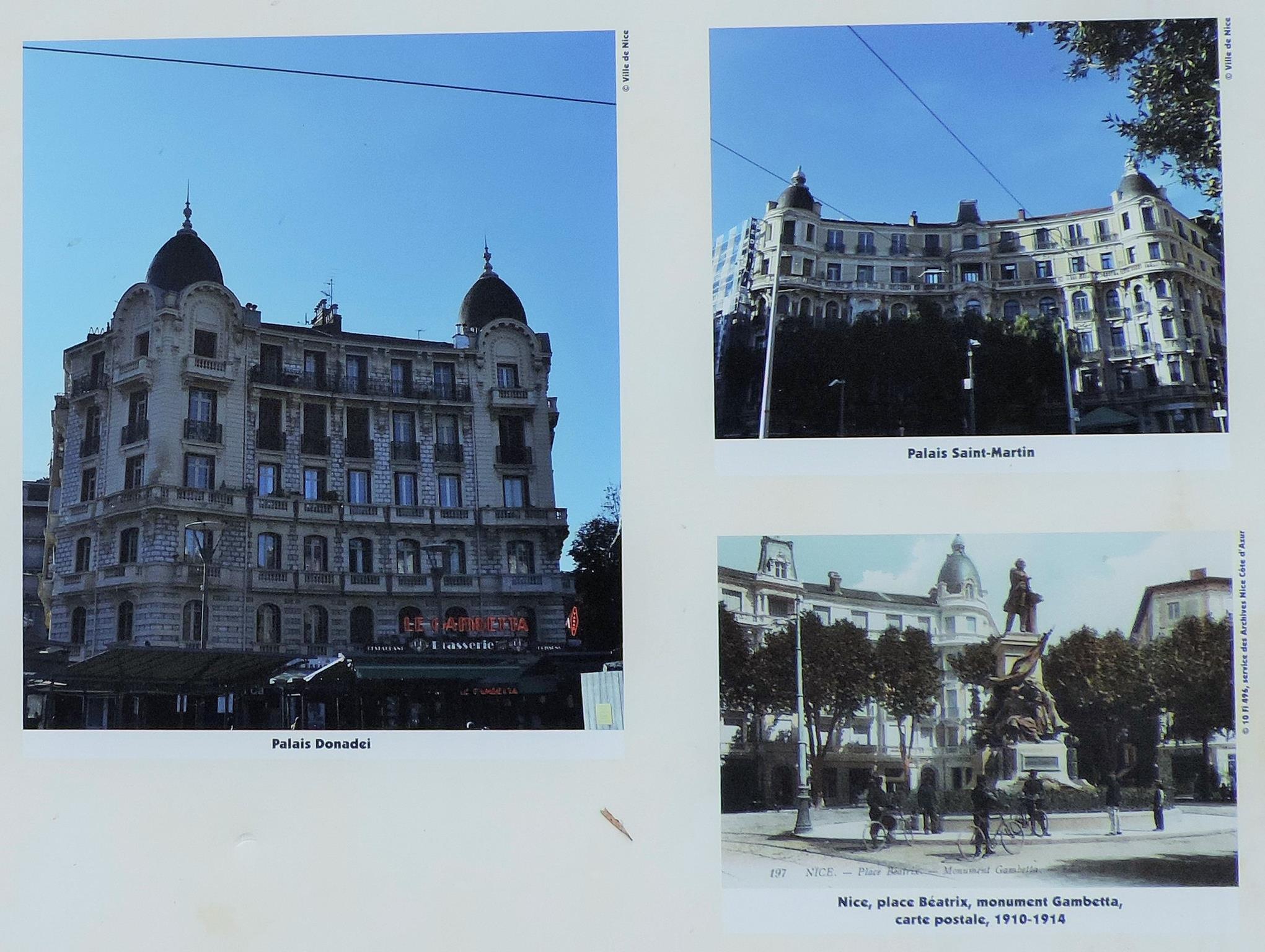
The Palais Donadei is located at 2 Place de la Gare du Sud and the Palais Saint-Martin can be found at 3-7 Place Charles-de-Gaulle. These two palaces were built in the early 20th century. Their arched plan corresponds to the shape of today’s Place Charles-de-Gaulle. With their six storeys, they have a certain monumentality, accentuated by the domes on the roof.
François Malausséna – Spot (8)
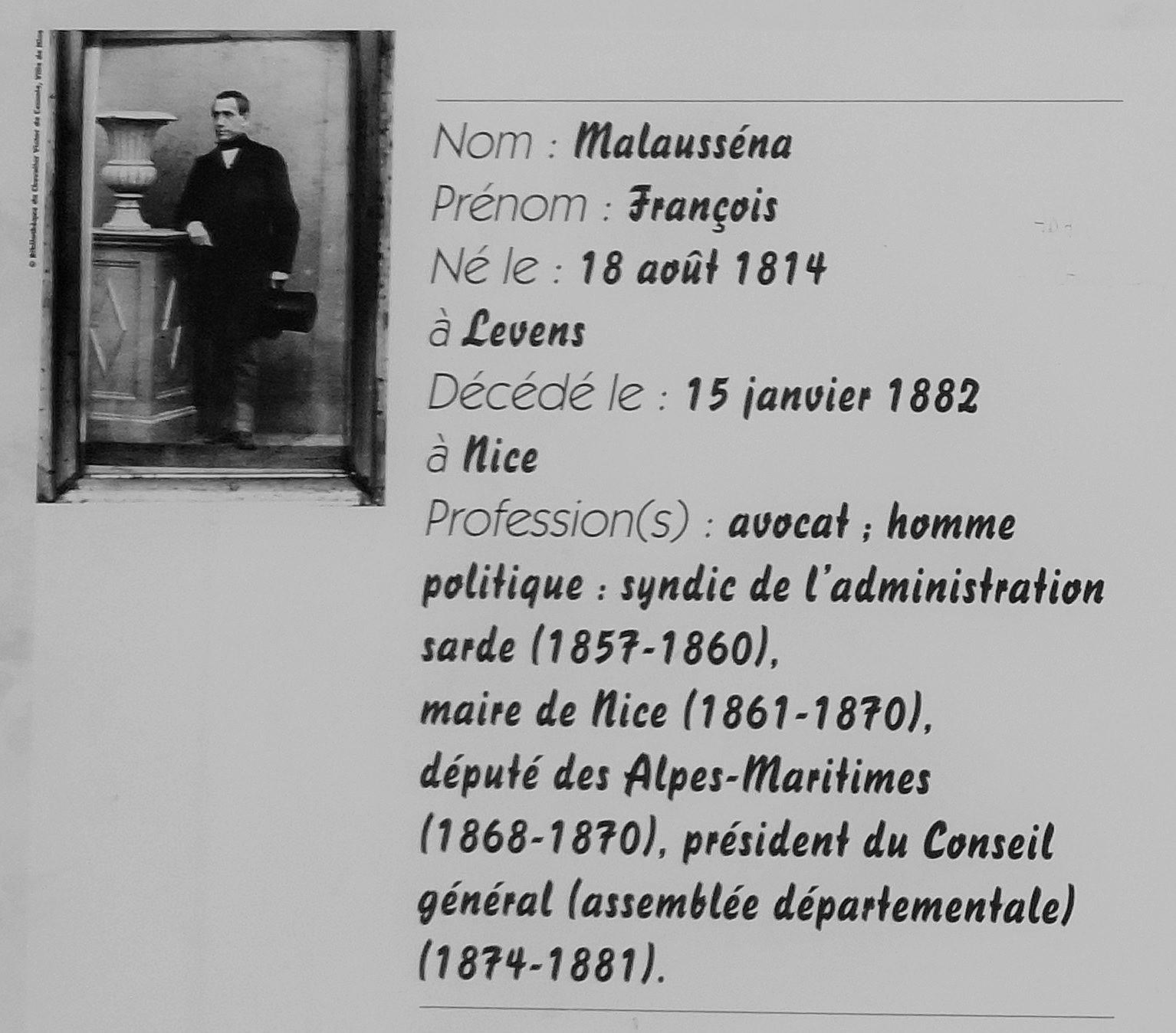
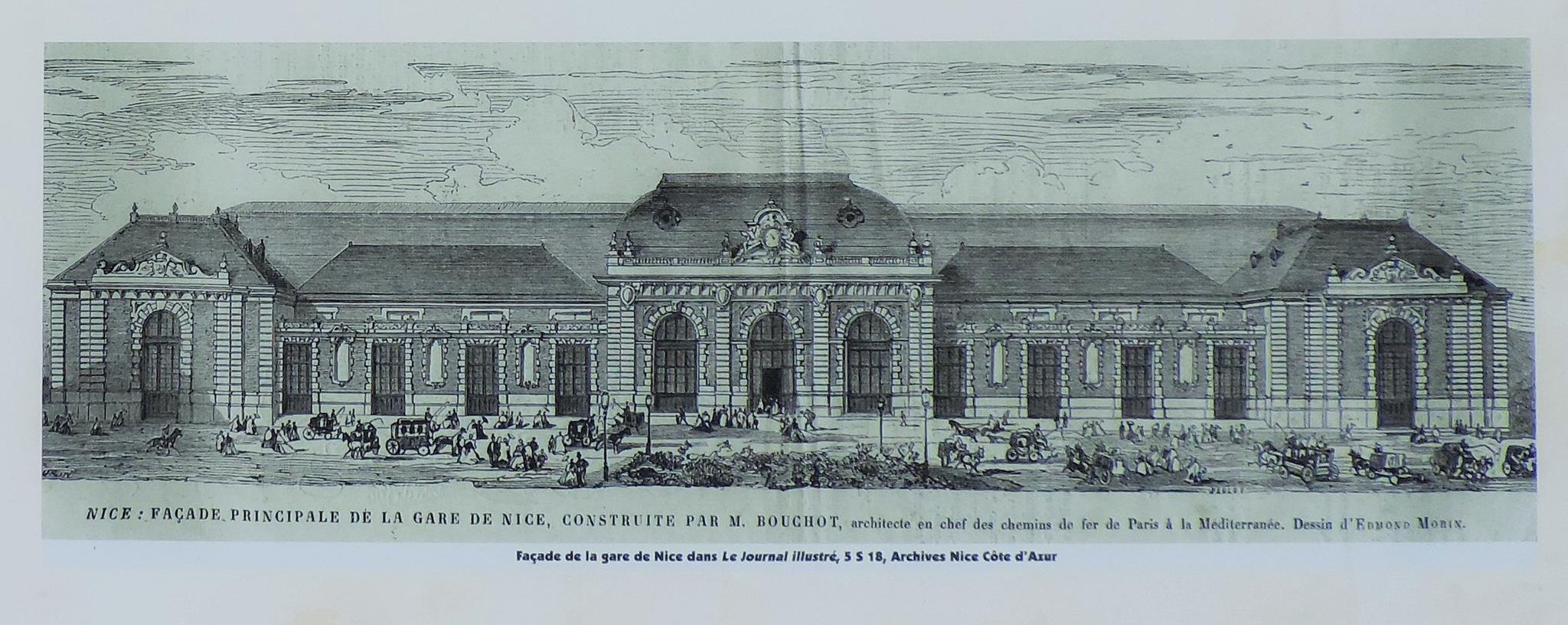
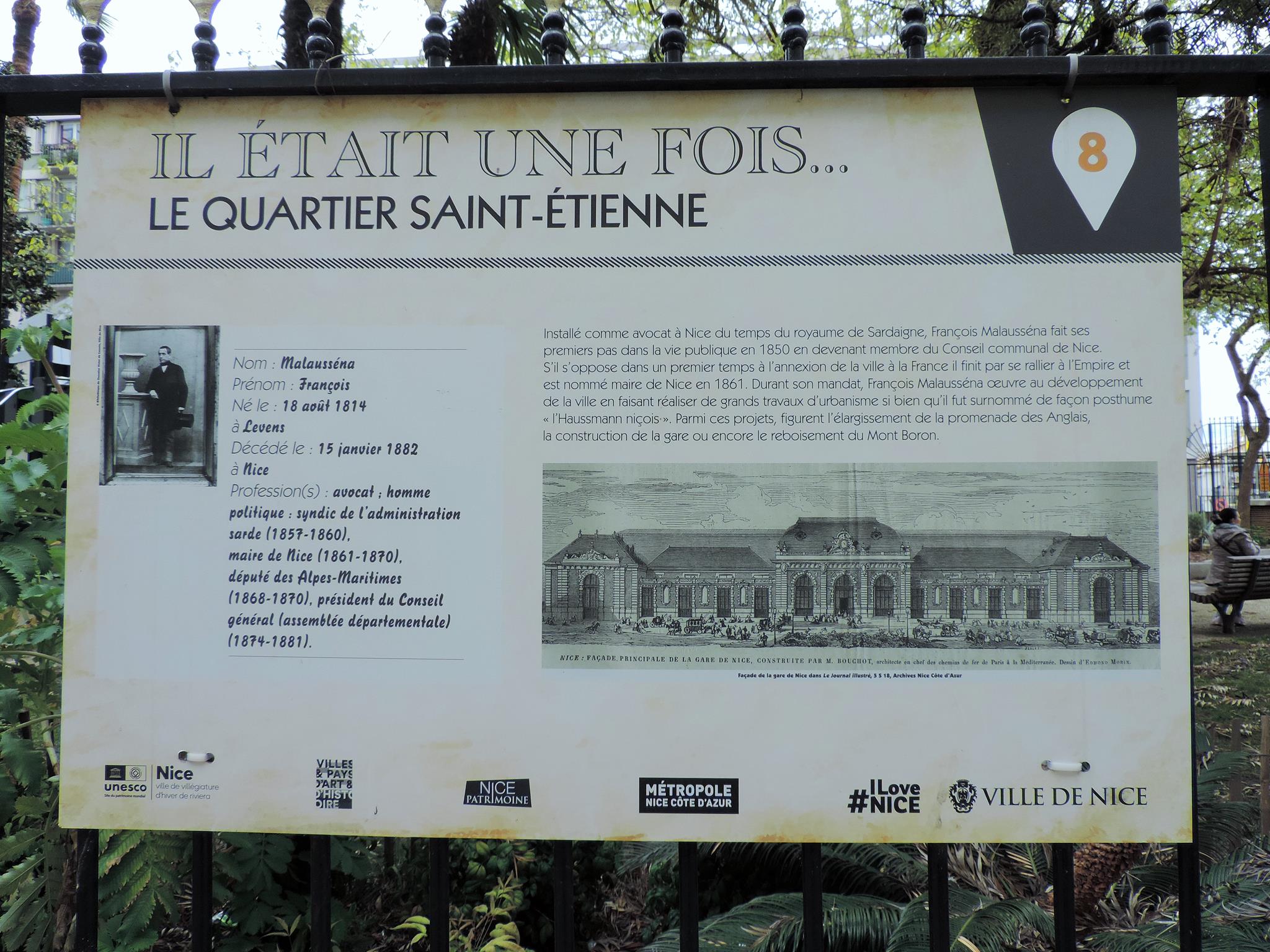
François Malausséna was born on August 18th 1814 in Levens and died on January 15th 1882 in Nice. He was a lawyer, a politician, the syndic of the Sardinian administration (1857-1860), mayor of Nice (1861-1870), deputy of Alpes-Maritimes (1868-1870) and president of the Conseil général (departmental assembly) (1874-1881). François Malausséna settled in Nice as a lawyer during the time of the Kingdom of Sardinia, and took his first steps in public life in 1850 when he became a member of the Nice town council. Although initially opposed to the city’s annexation to France, he eventually rallied to the Empire and was appointed mayor of Nice in 1861. During his term of office, François Malausséna worked on the city’s development, carrying out major urban planning projects to such an extent that he was posthumously dubbed the „Haussmann of Nice“. His projects included widening the Promenade des Anglais, building the railway station and reforesting Mont Boron.
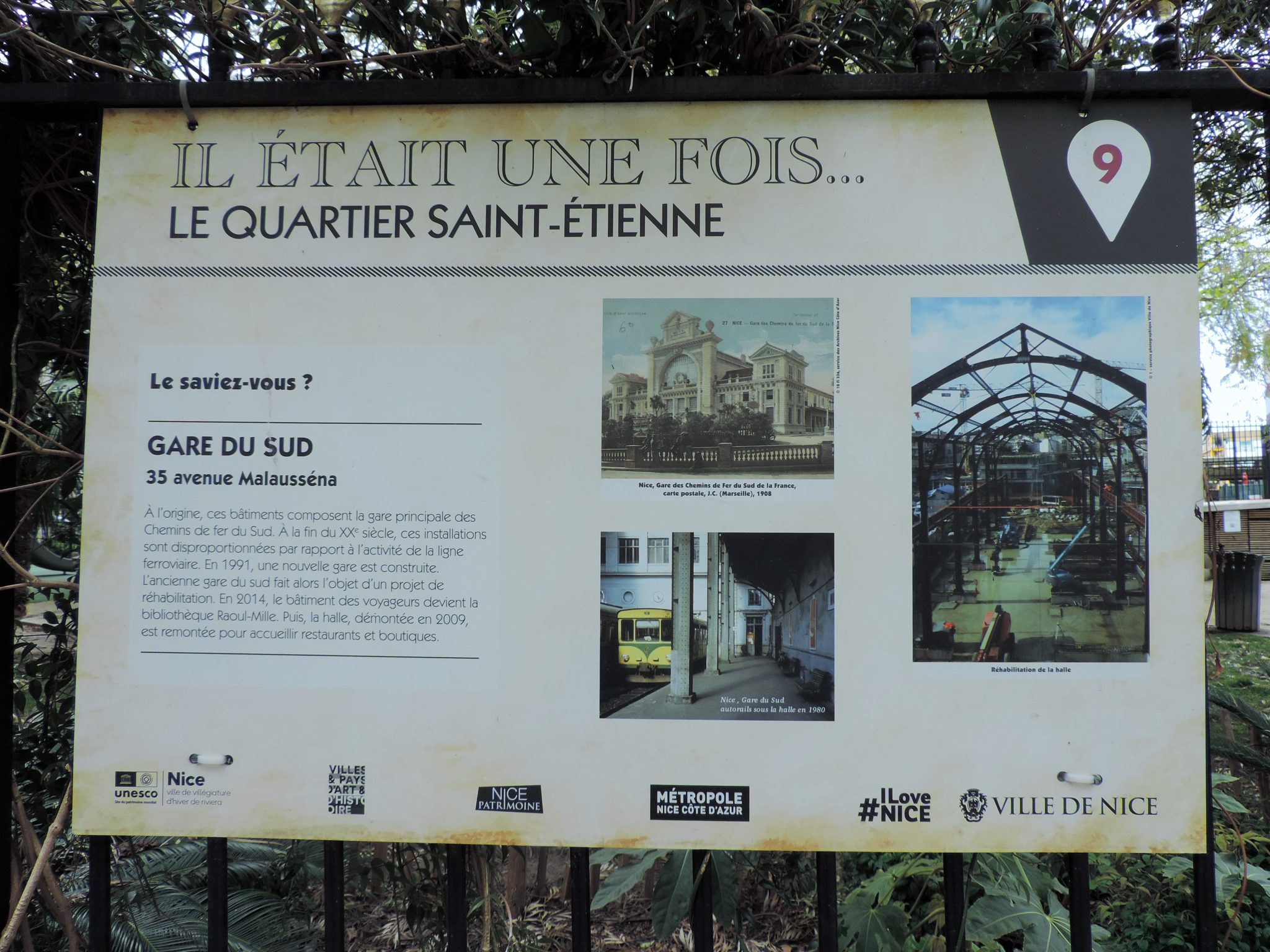
Gare du Sud – Spot (9)
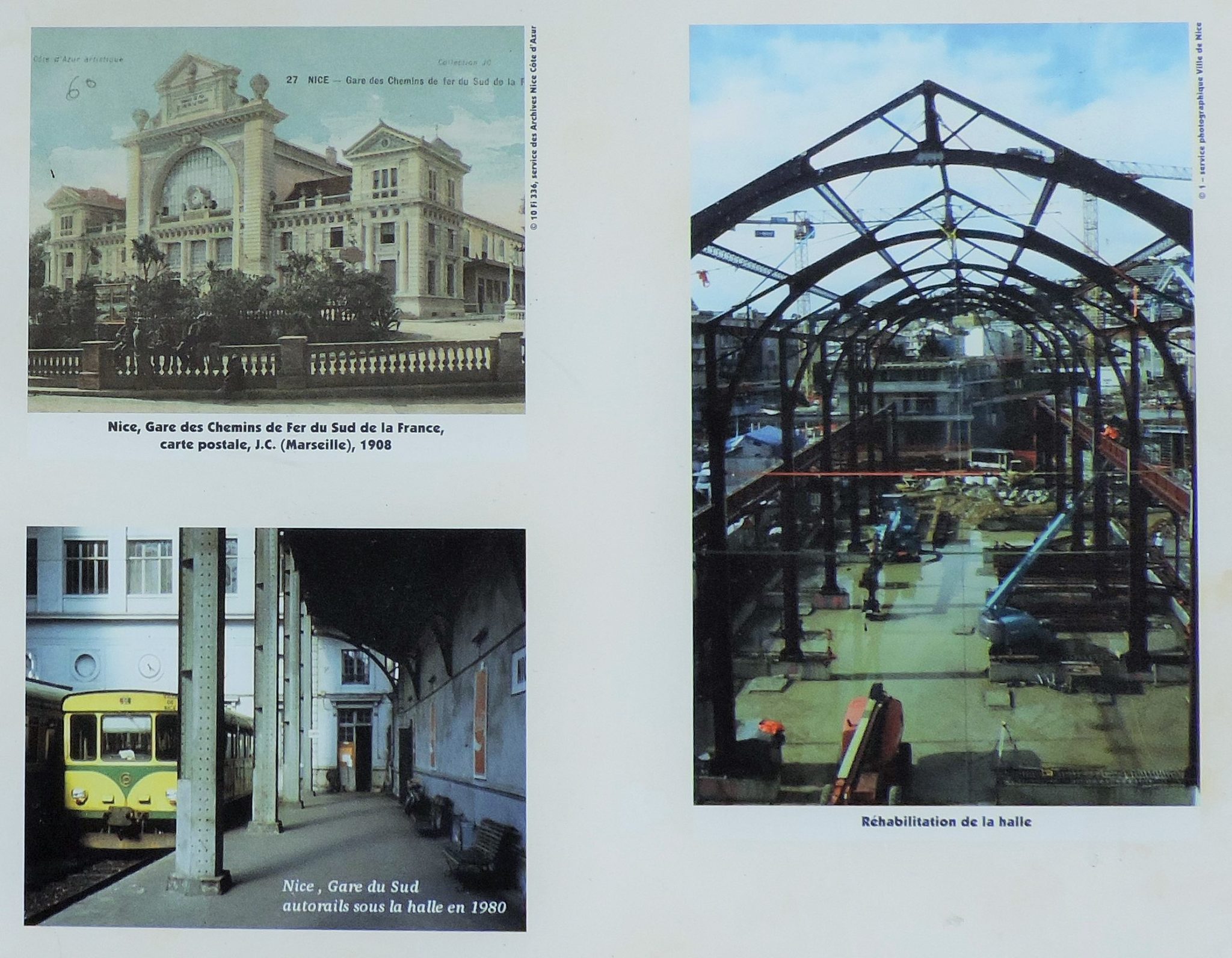
The south station Gare du Sud is located at 35 Avenue Malausséna. Originally, these buildings formed the main station of Chemins de fer du Sud. By the end of the 20th century, these facilities were out of proportion with the activity of the railroad line. In 1991, a new station was built. The old southern station was then the subject of a rehabilitation project. In 2014, the passenger building became the Raoul-Mille library. Then, the hall, dismantled in 2009, was reassembled to house restaurants and stores.
Palais de Venise – Spot (10)
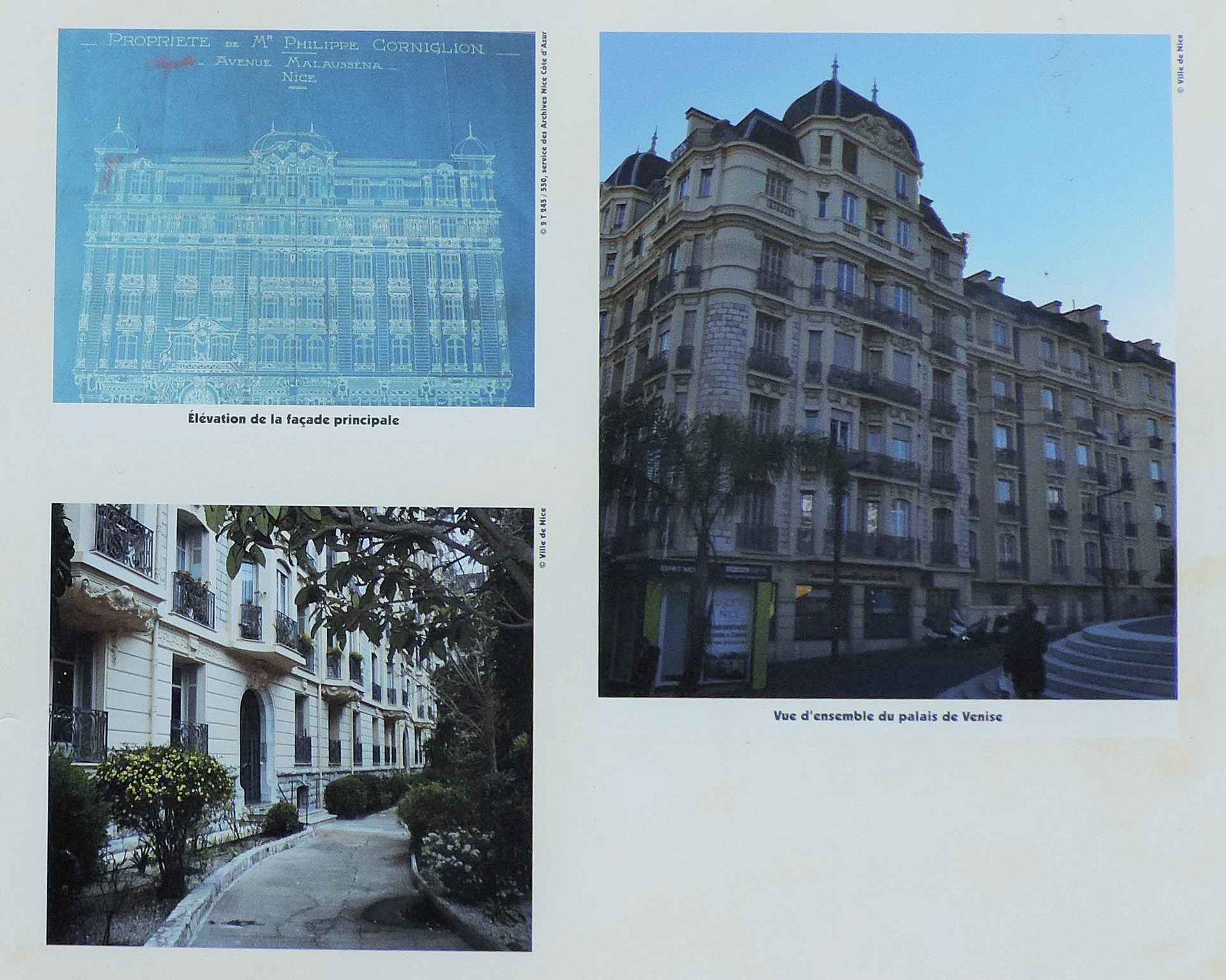
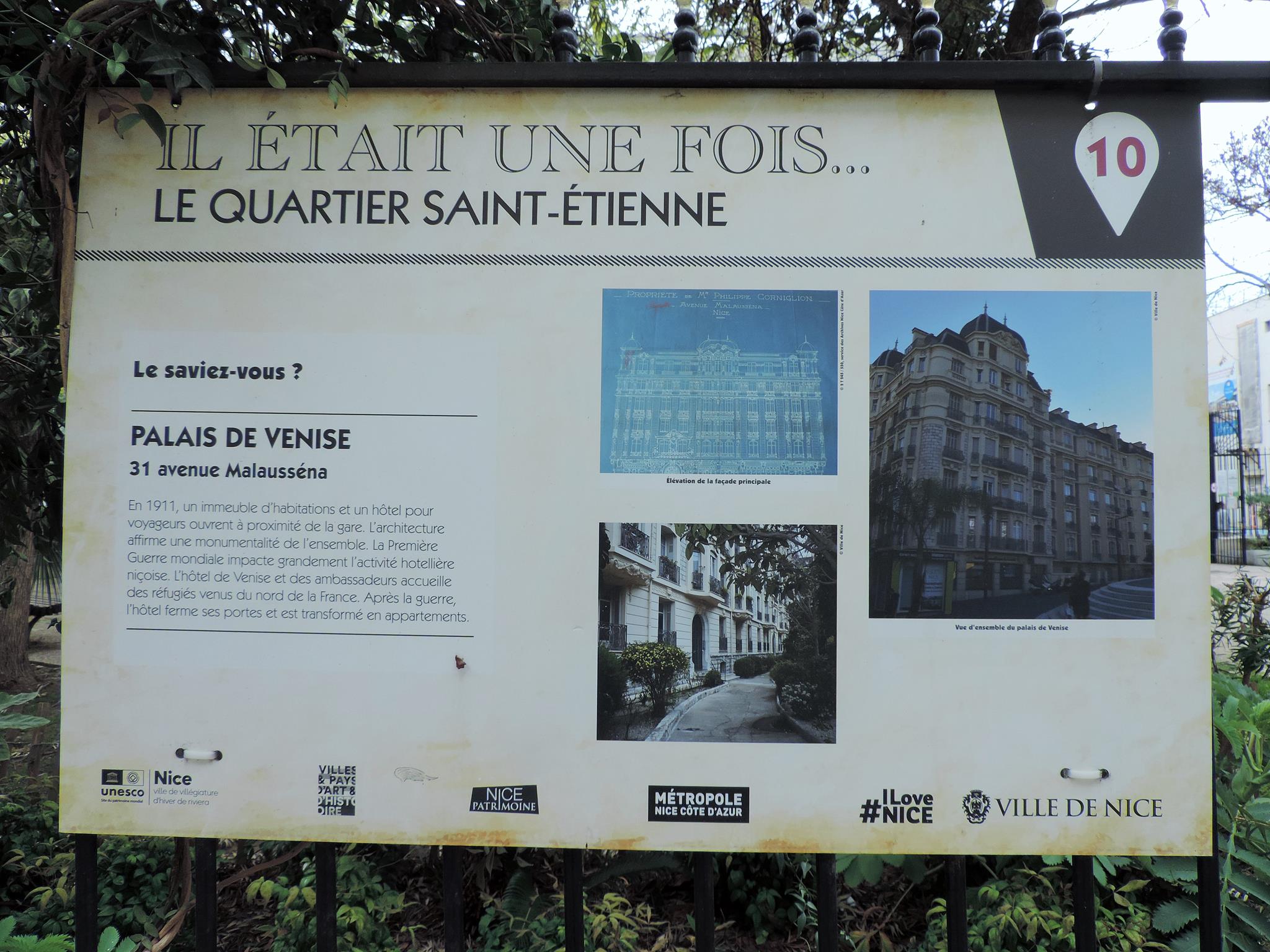
The Palais de Venise is located at 31 Avenue Malausséna. In 1911, a block of flats and a hotel for travelers opened near the station. The architecture asserts the monumentality of the whole. The First World War had a major impact on the hotel business in Nice. The Hotel de Venise et des Ambassadeurs welcomed refugees from northern France. After the war, the hotel closed and was converted into apartments.
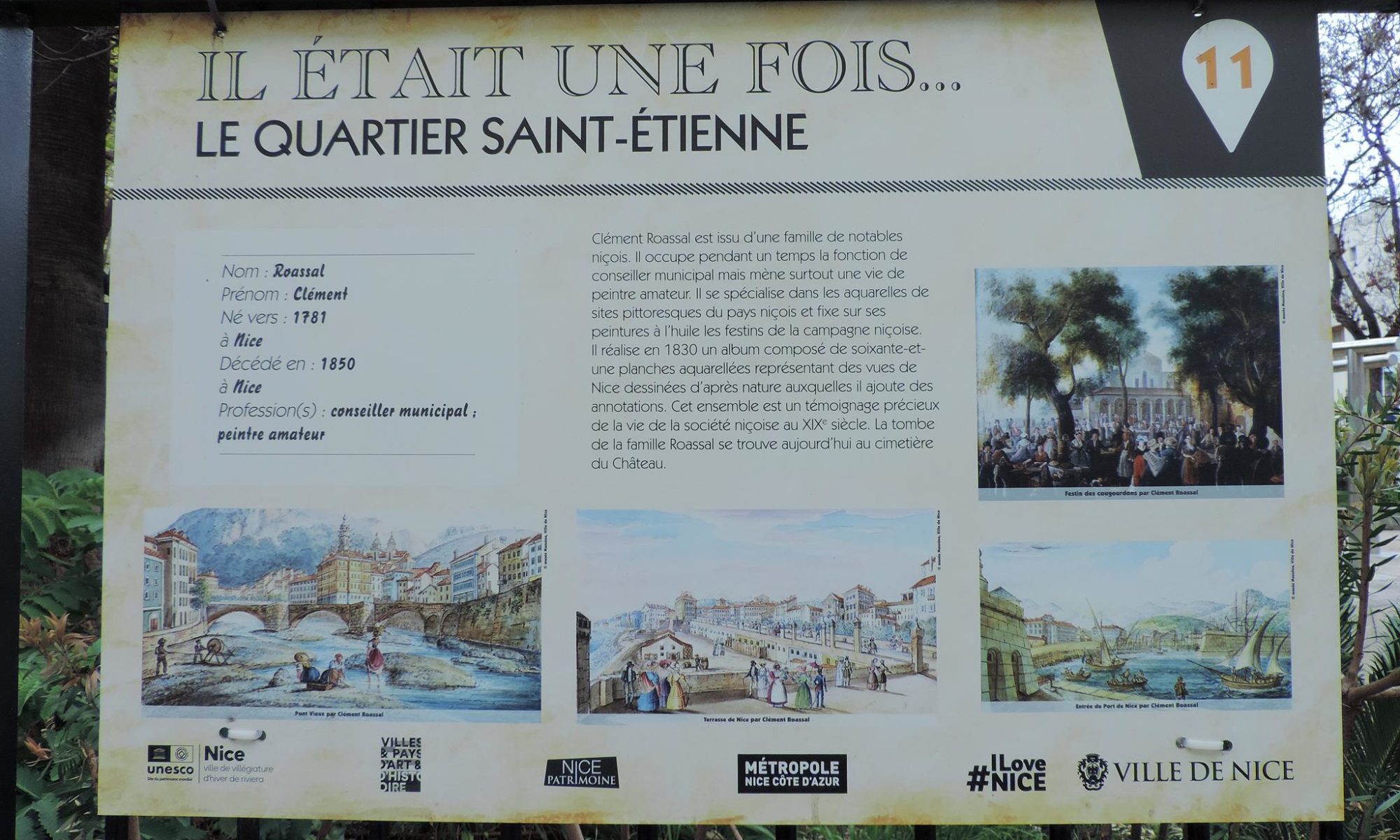
Clément Roassal – Spot (11)
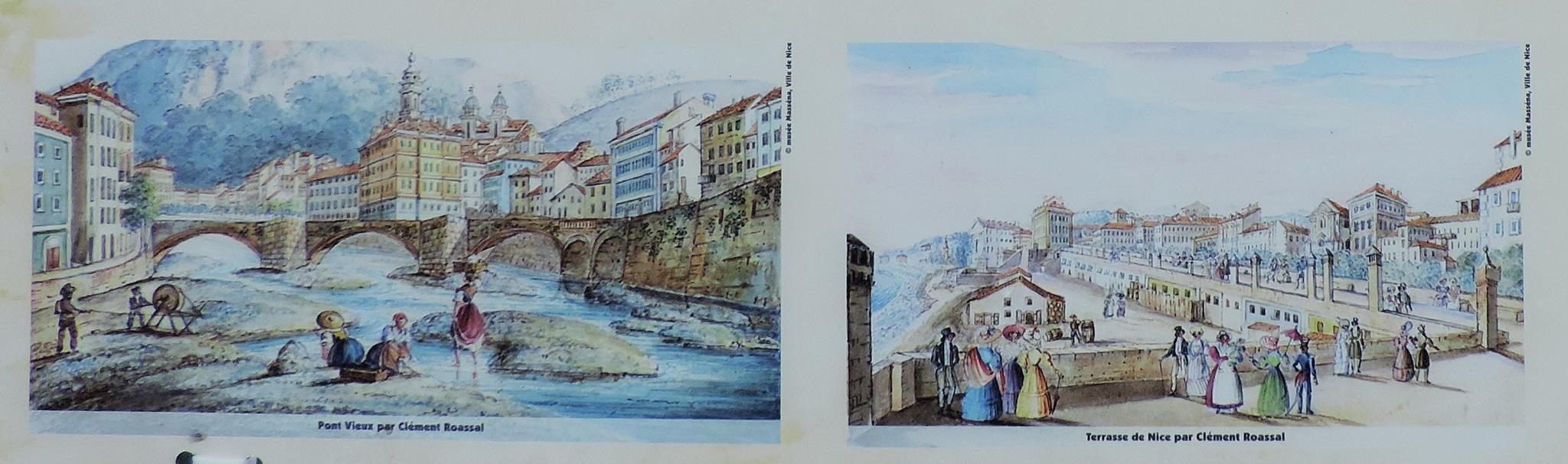
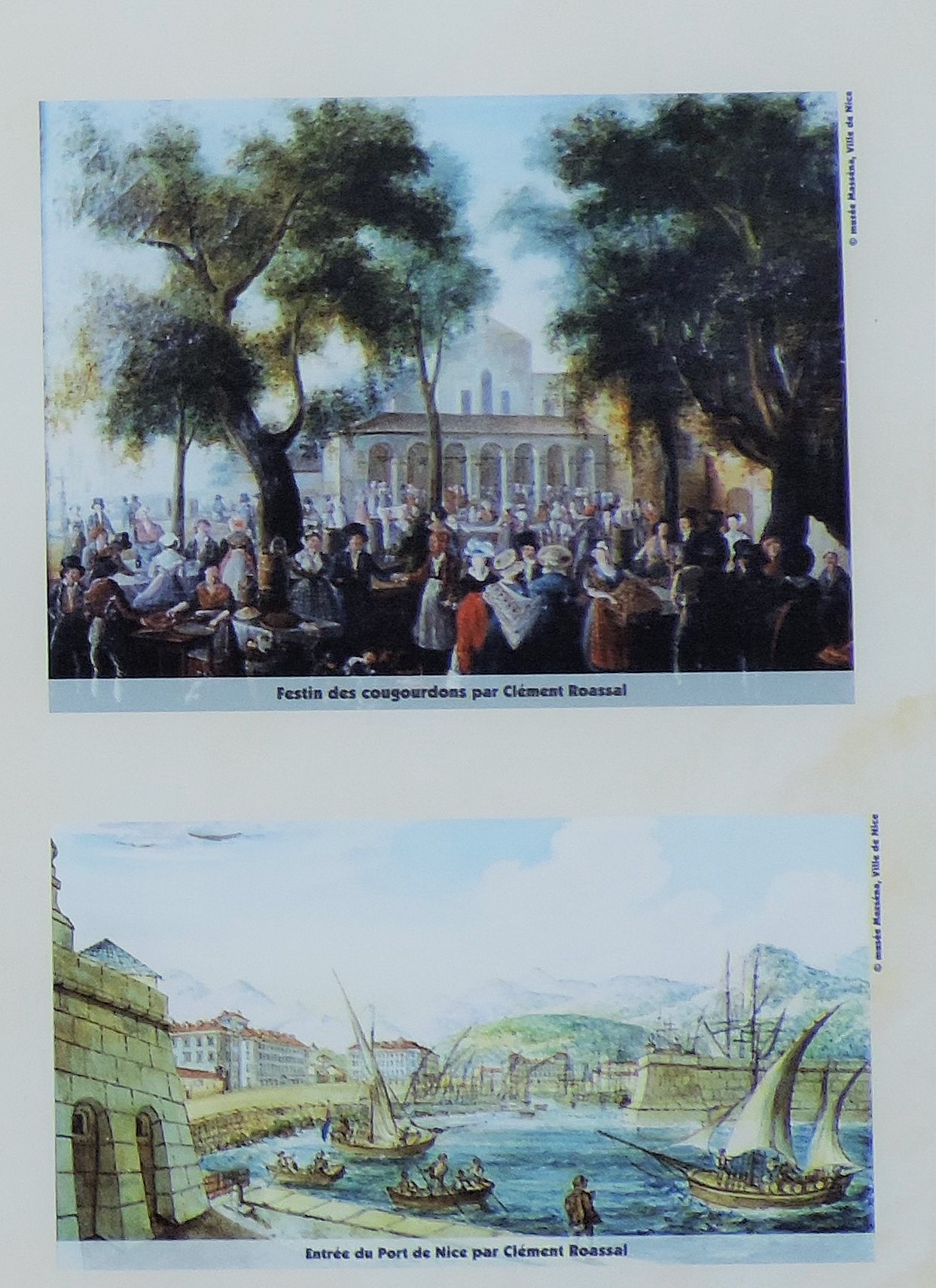
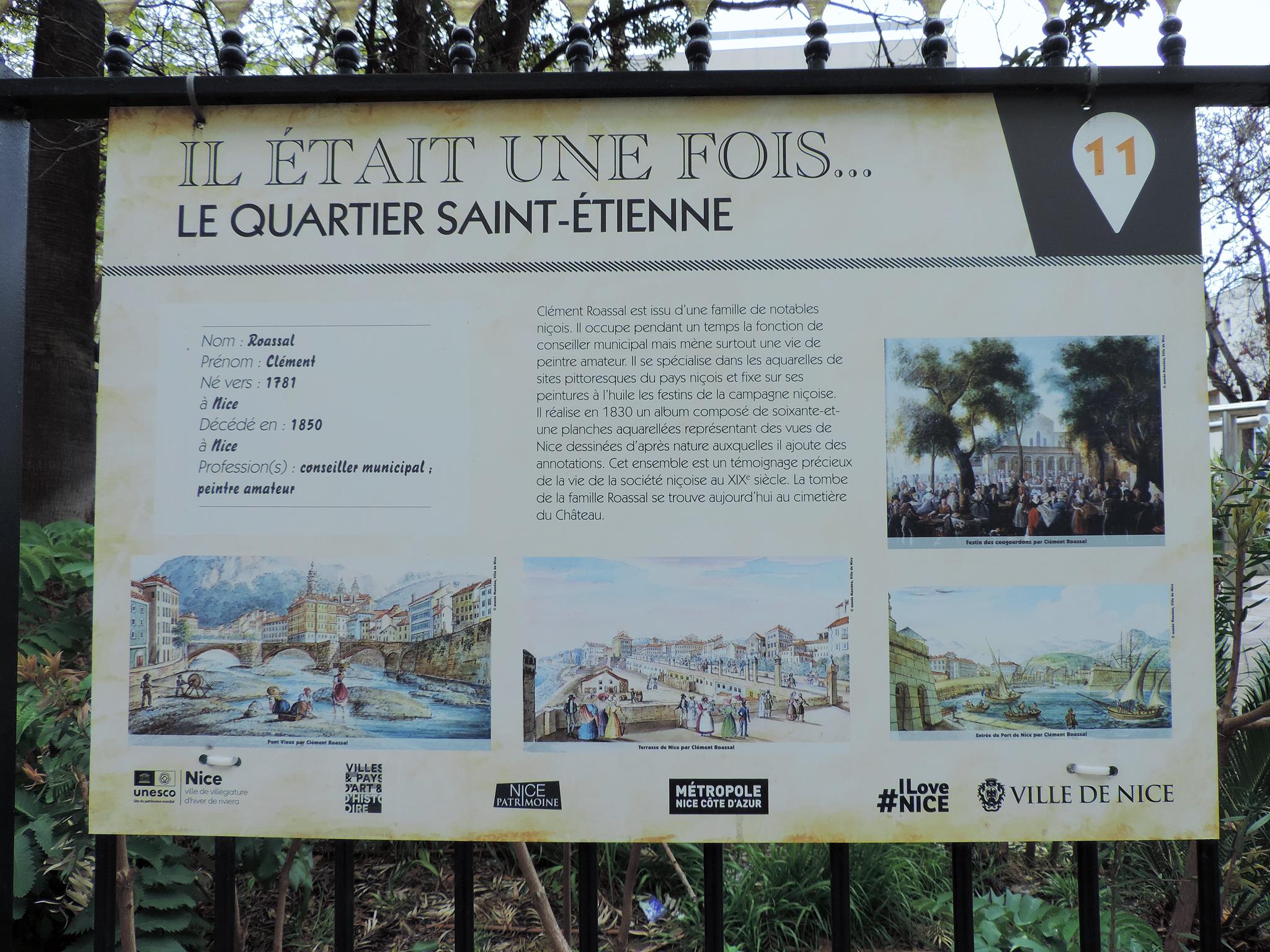
The artist Clément Roassal came from a family of Nice notables. For a time, he was a town councillor, but his main occupation was as an amateur painter. He specialized in watercolors of the picturesque sites of the Nice region, and captured the feasts of the Nice countryside in his oil paintings. In 1830, he produced an album of sixty-one watercolor plates depicting views of Nice drawn from life, to which he added annotations. This collection is a precious testimony to the life of Nice society in the 19th century. The Roassal family tomb is now in the Château cemetery.
Palais de l’Industrie – Spot (12)
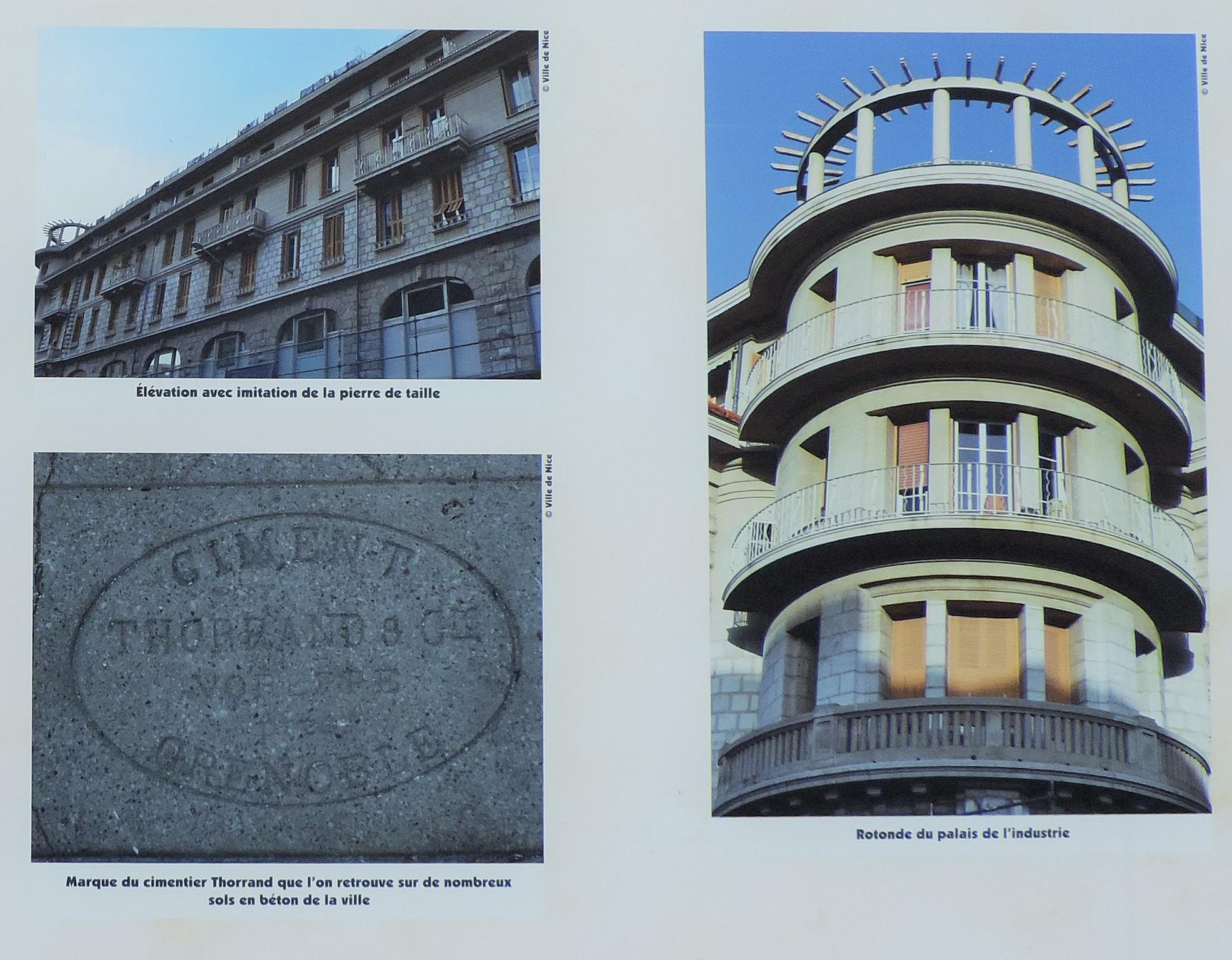
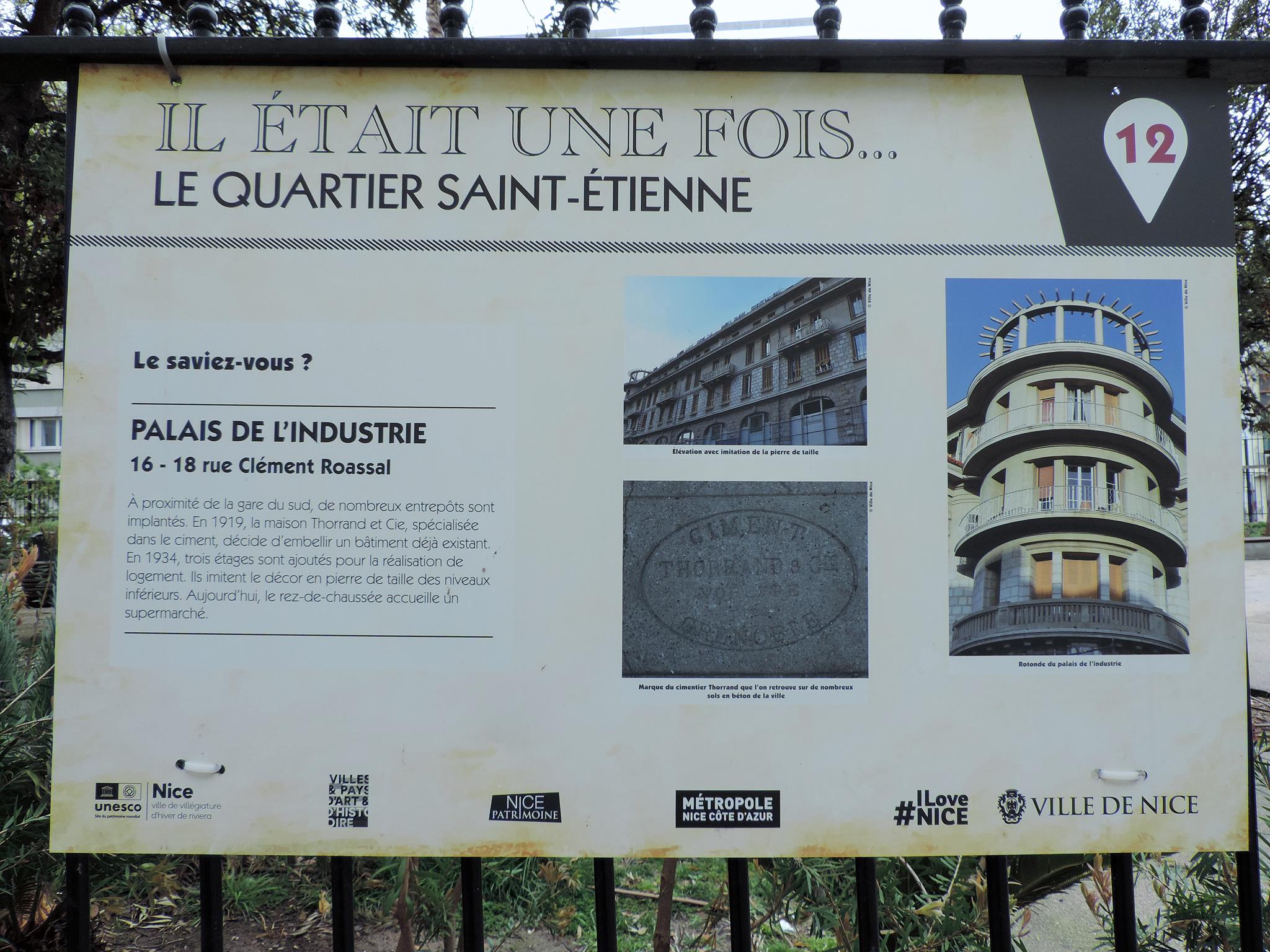
The Palais de l’Industrie is located at 16-18 Rue Clément Roassal. A number of warehouses were built near the Gare du Sud train station. In 1919, cement specialist Thorrand et Cie decided to embellish an existing building. In 1934, three floors were added for housing. They imitated the ashlar decor of the lower levels. Today, the first floor houses a supermarket.
Rue Vernier – Spot (13)
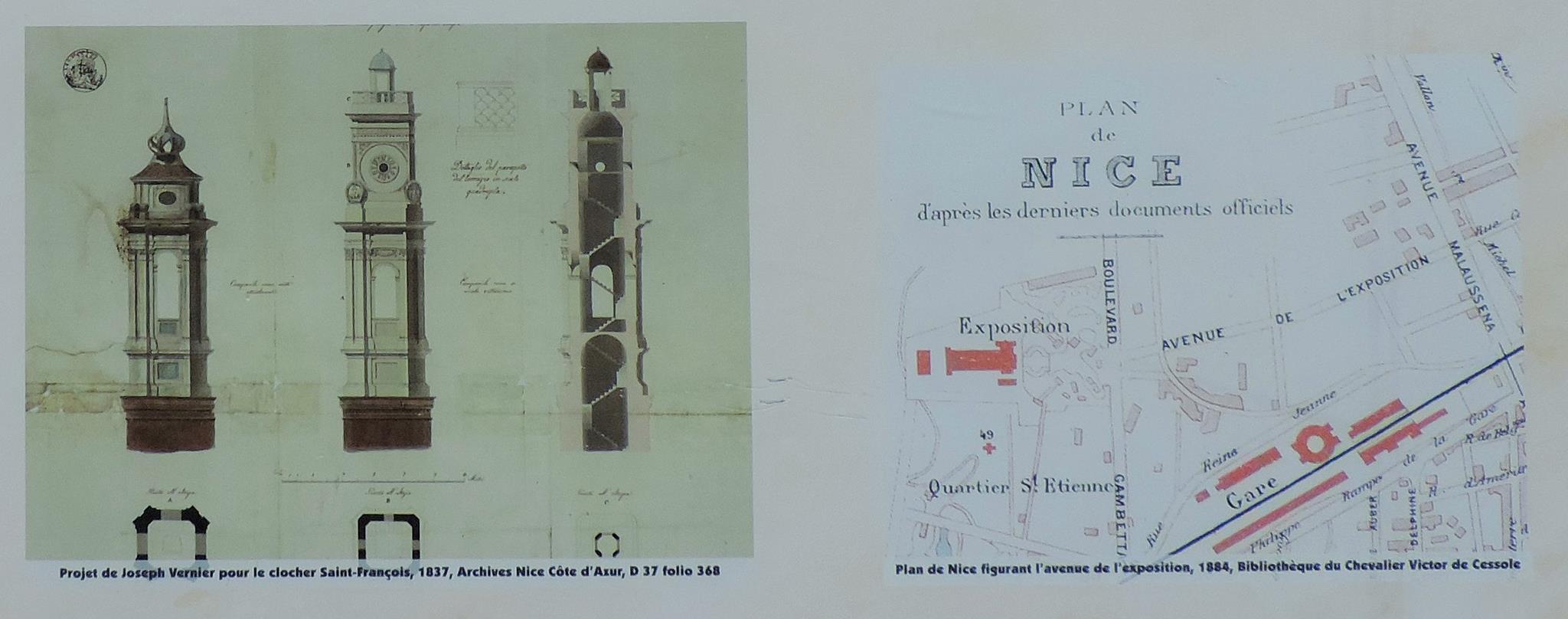
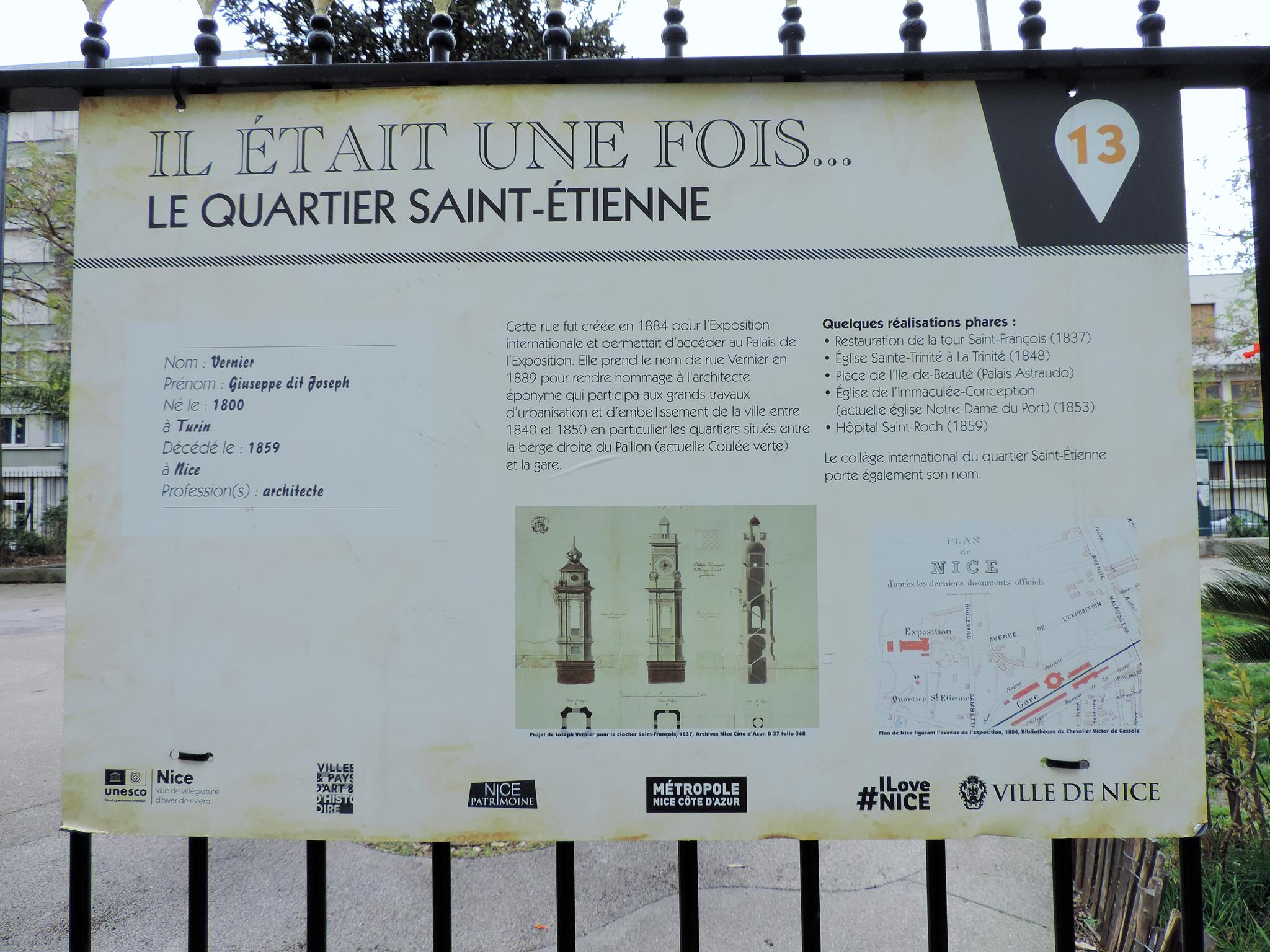
This street was created in 1884 for the Exposition Internationale, providing access to the Palais de l’Exposition. It was renamed rue Vernier in 1889 to pay homage to the eponymous architect Giuseppe dit Joseph Vernier, who took part in the major urbanization and beautification of the city between 1840 and 1850, in particular the districts between the right bank of the Paillon (now known as the Coulée verte) and the railway station. A few key achievements were the restoration of the Saint-François tower (1837), the Église Sainte-Trinité in La Trinité (1848), the Place de l’Ile-de-Beauté (Palais Astraudo), the Église de l’Immaculée-Conception, which is today the Notre-Dame du Port church (1853) or the Hôpital Saint-Roch (1859).
Collège Joseph-Vernier – Spot (14)
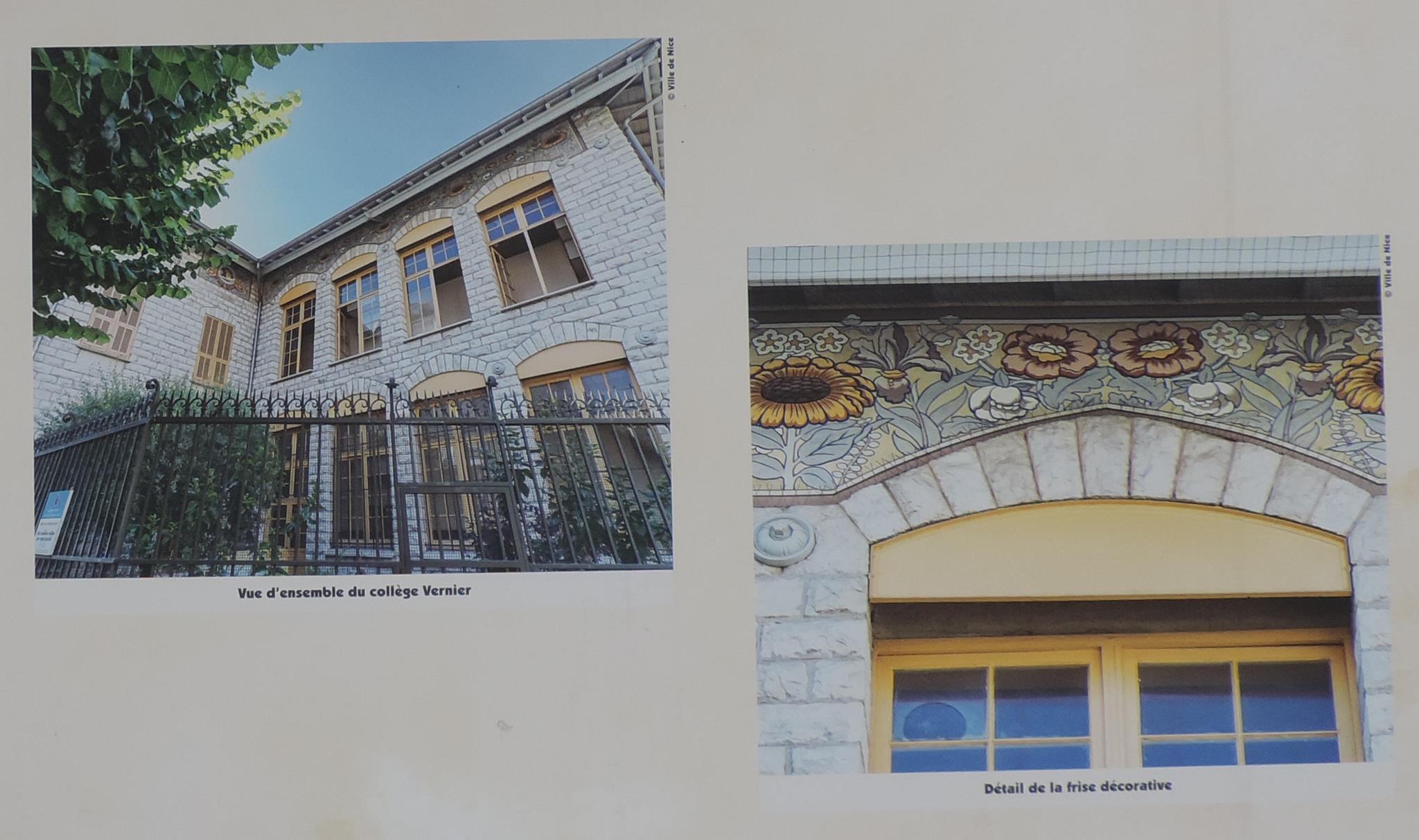
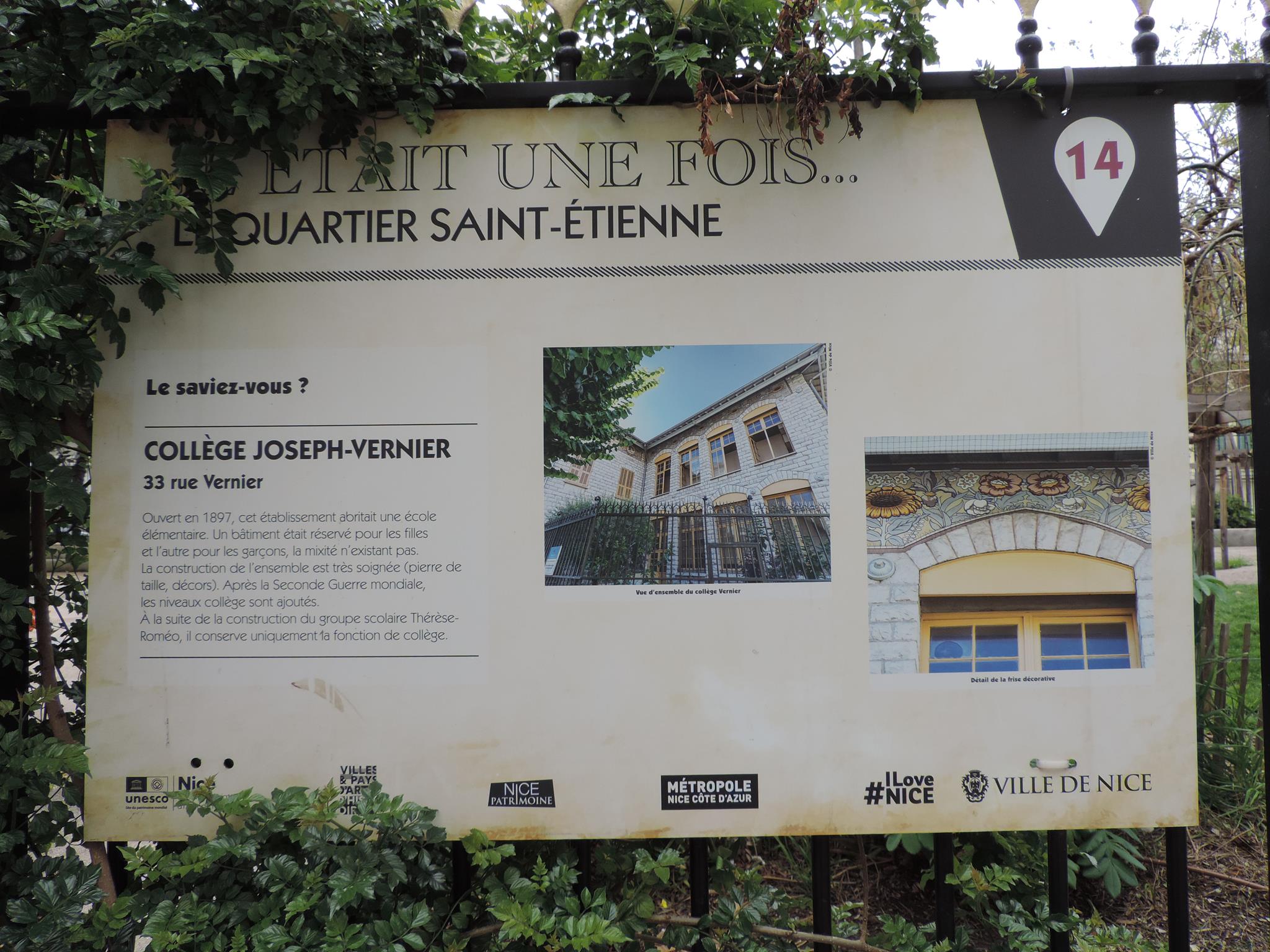
The Collège Joseph-Vernier is located at 33 Rue Vernier. Opened in 1897, this establishment housed an elementary school. One building was reserved for girls and the other for boys, as co-education did not exist. The building’s construction was very well thought-out, with ashlar and decorative elements. After the Second World War, middle school levels were added. Following the construction of the Thérèse-Roméo school complex, the building retained its middle-school function.
Église Saint-Étienne – Saint-Étienne Church – Spot (15)
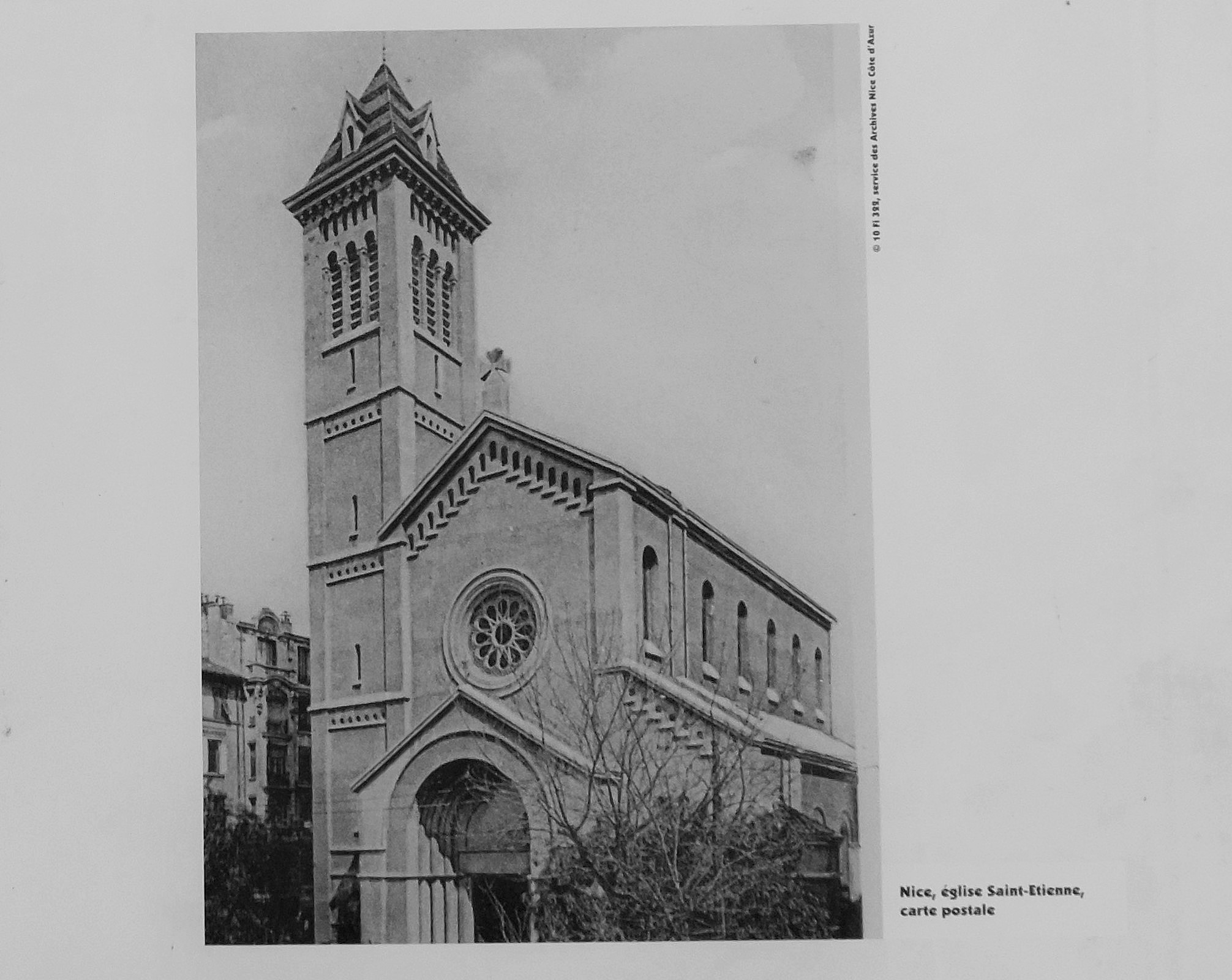
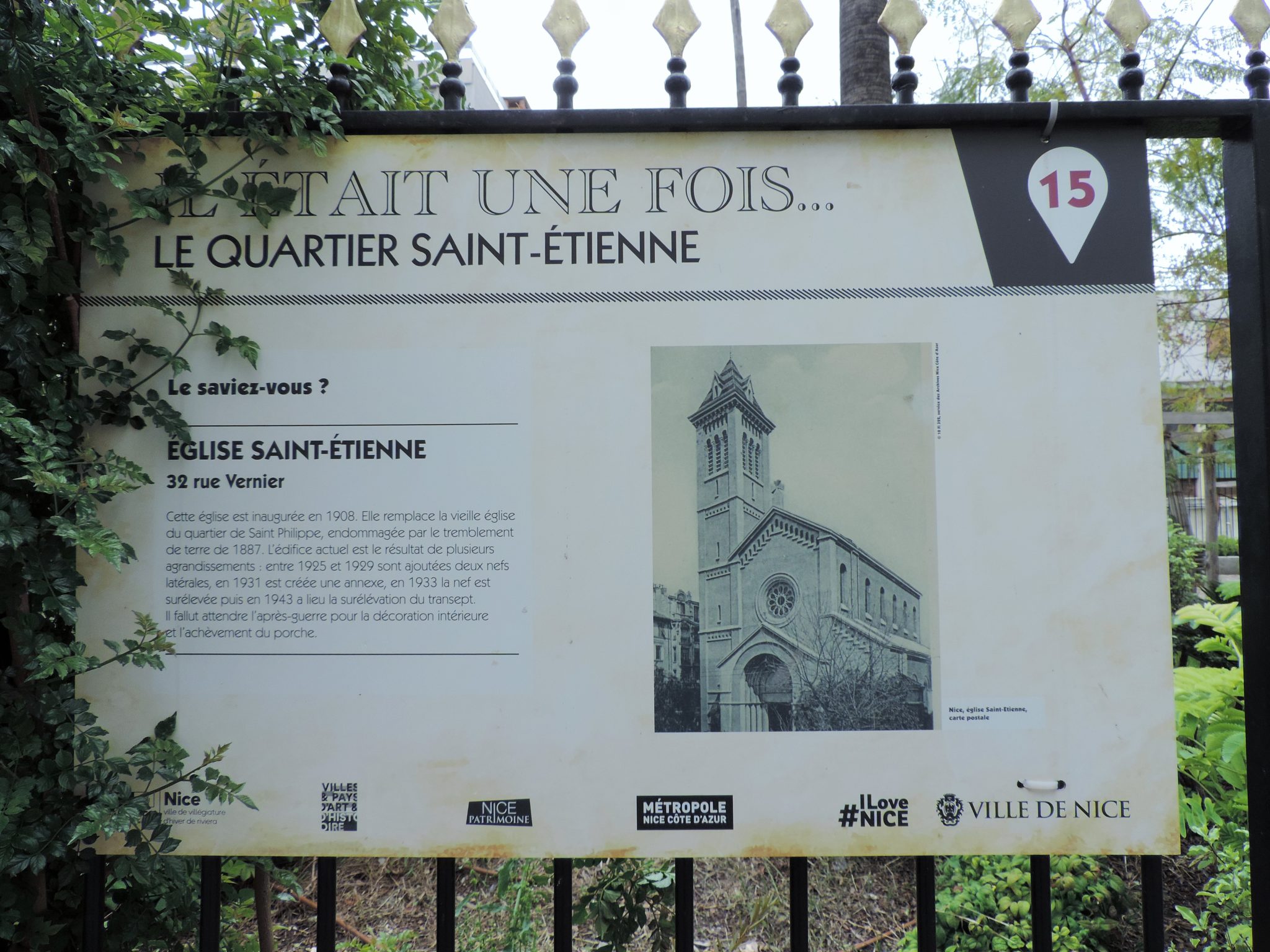
The Saint-Étienne Church is located at 32 Rue Vernier This church was inaugurated in 1908. It replaced the old church in the Saint Philippe district, damaged by the earthquake of 1887. The current building is the result of several extensions: two side aisles were added between 1925 and 1929, an annex was added in 1931, the nave was raised in 1933, and the transept was raised in 1943. It was not until after the war that the interior was decorated and the porch completed.
Église Baptiste de Nice – Nice Baptist Church – Spot (16)
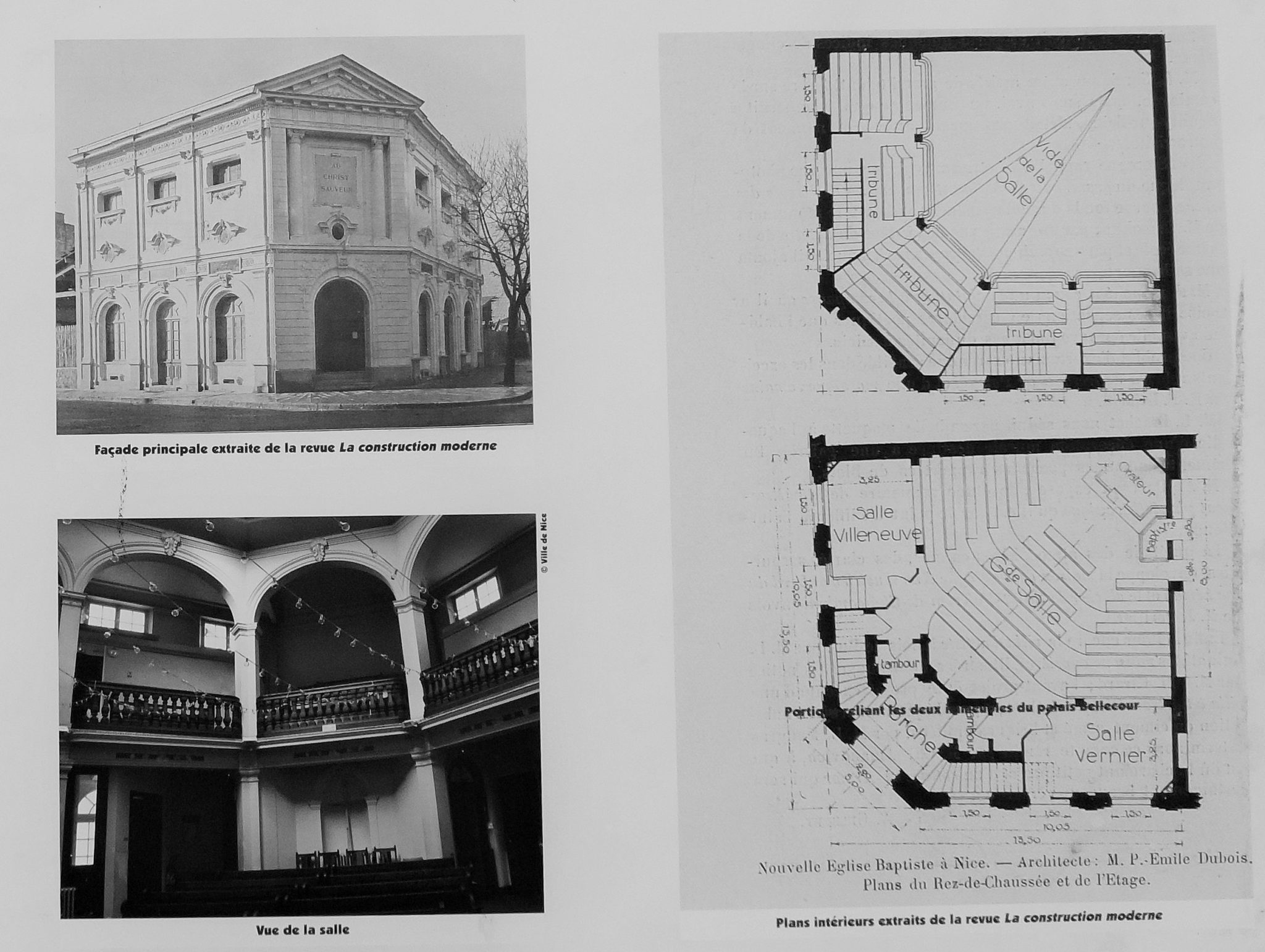
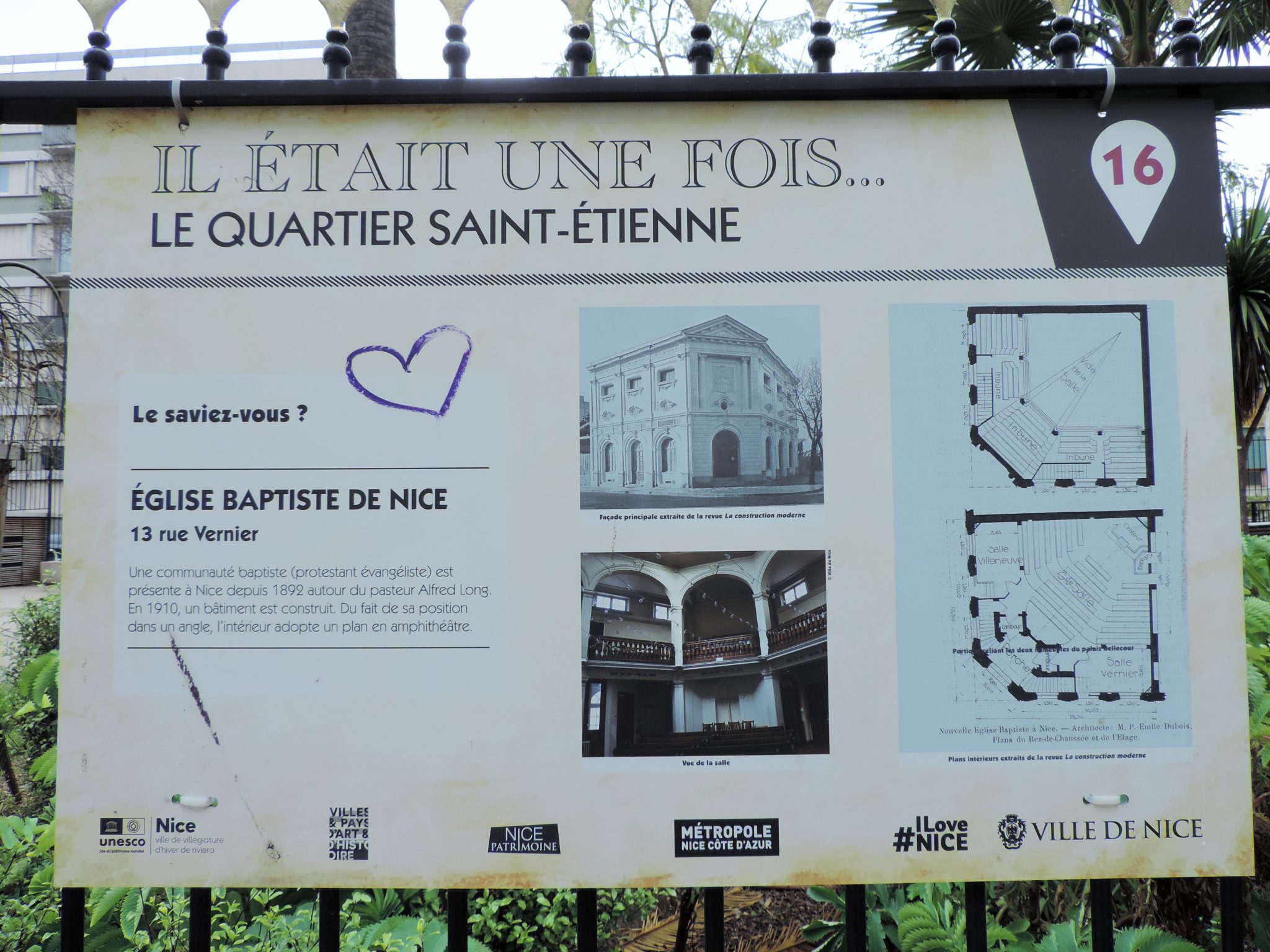
The Nice Baptist Church is located at 13 Rue Vernier. A Baptist or evangelical Protestant community has been present in Nice since 1892, led by Pastor Alfred Long. In 1910, a new building was erected. Due to its corner position, the interior adopts an amphitheatrical layout.
Trachel Family – Spot (17)
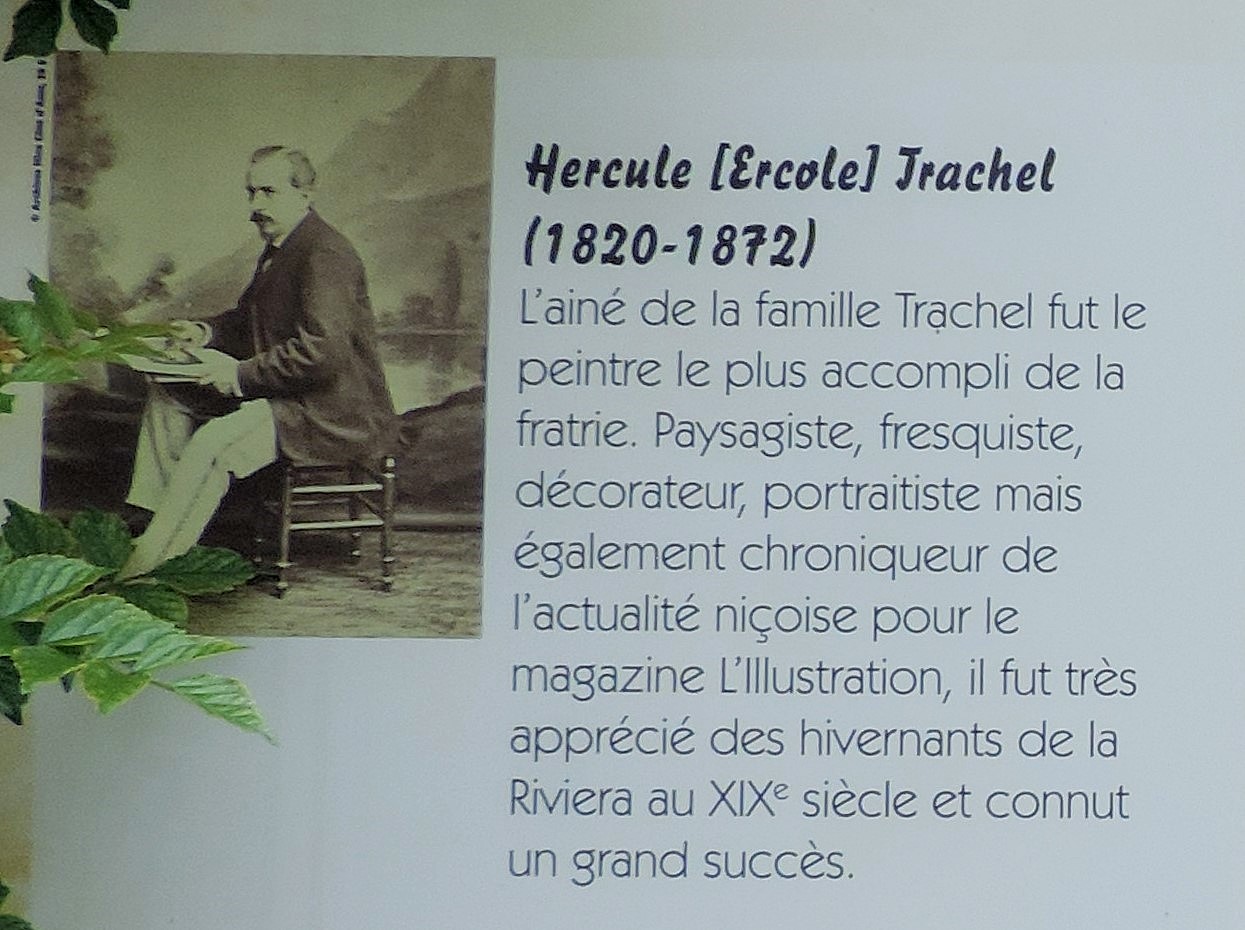
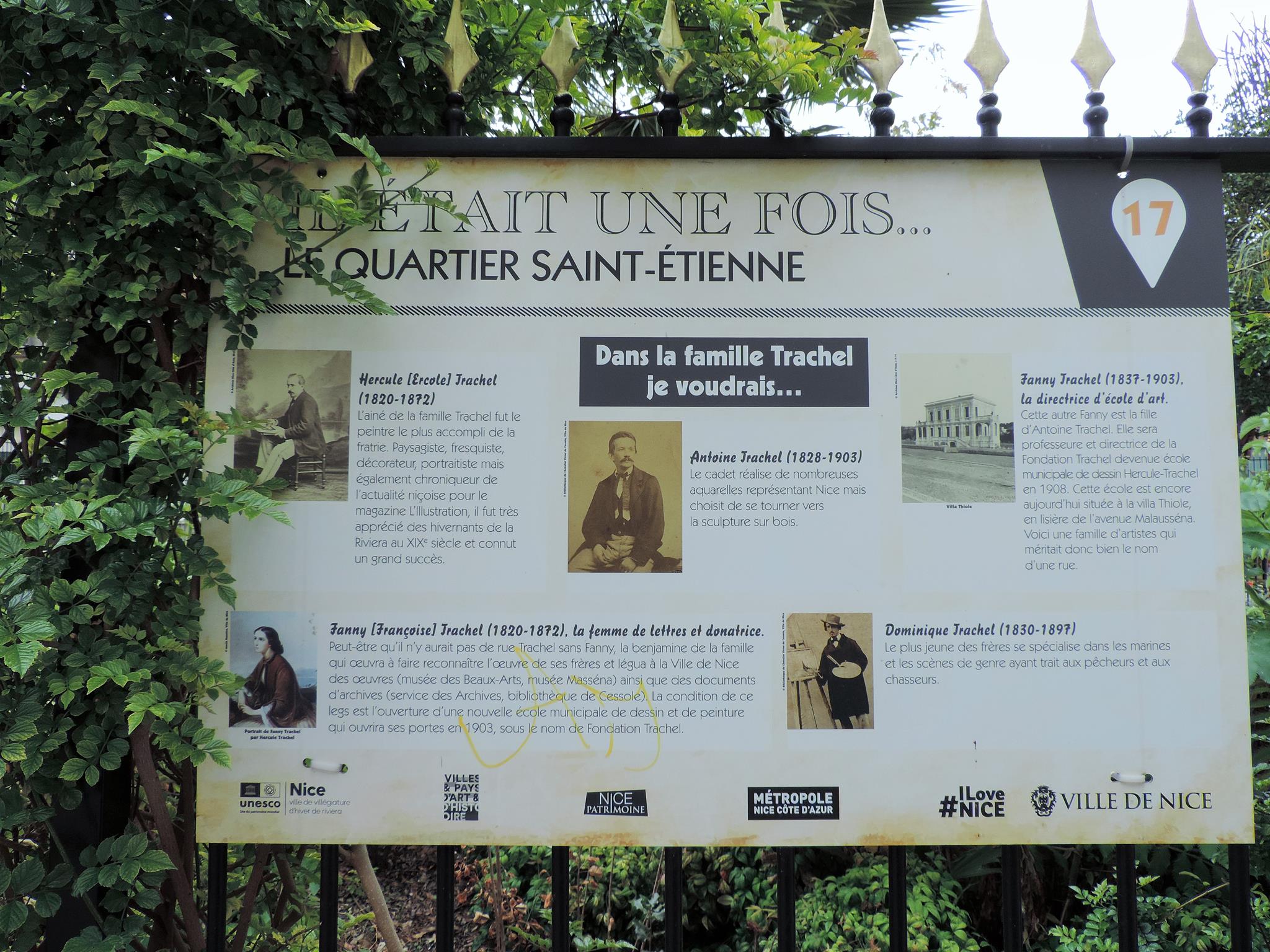
Hercule [Ercole] Trachel (1820-1872). The eldest member of the Trachel family was the most accomplished painter of the siblings. Landscape painter, fresco artist, decorator, portraitist and also chronicler of current events in Nice for the magazine L’Illustration, he was much appreciated by winter visitors to the Riviera in the 19th century and enjoyed great success.
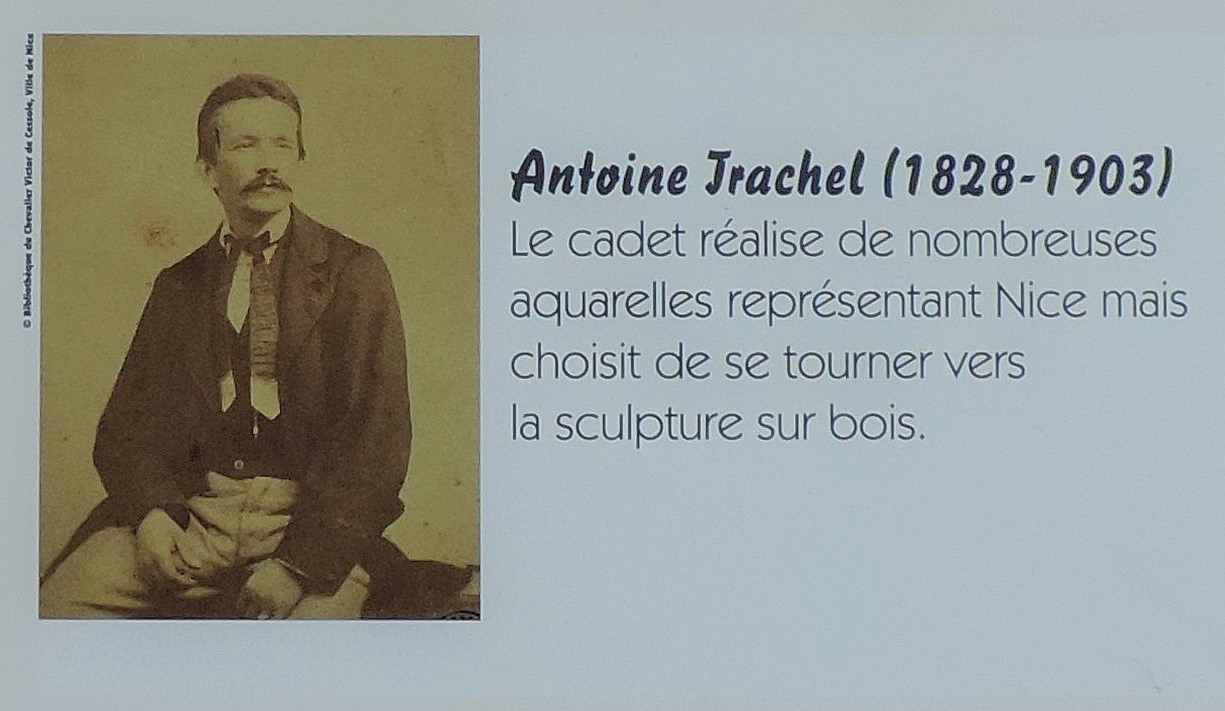
Antoine Trachel (1828-1903). The younger Antoine Trachel produced numerous watercolors of Nice, but chose to turn to woodcarving.
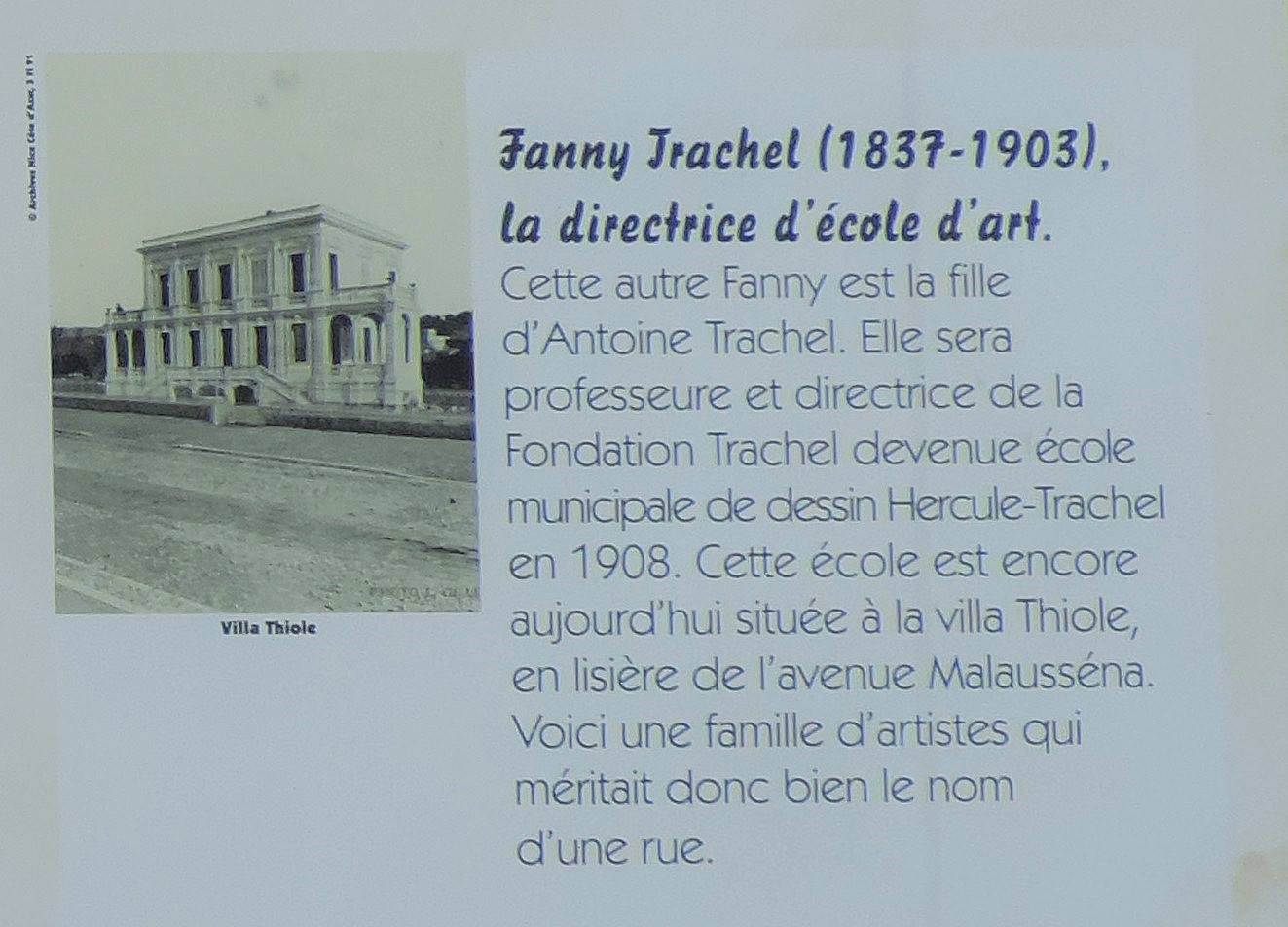
Fanny Trachel (1837-1903), the art school director. This other Fanny was Antoine Trachel’s daughter. She taught at the Fondation Trachel, which became the Hercule-Trachel municipal art school in 1908. This school is still located today in the Villa Thiole, on the edge of avenue Malausséna. A family of artists well deserving of a street name.
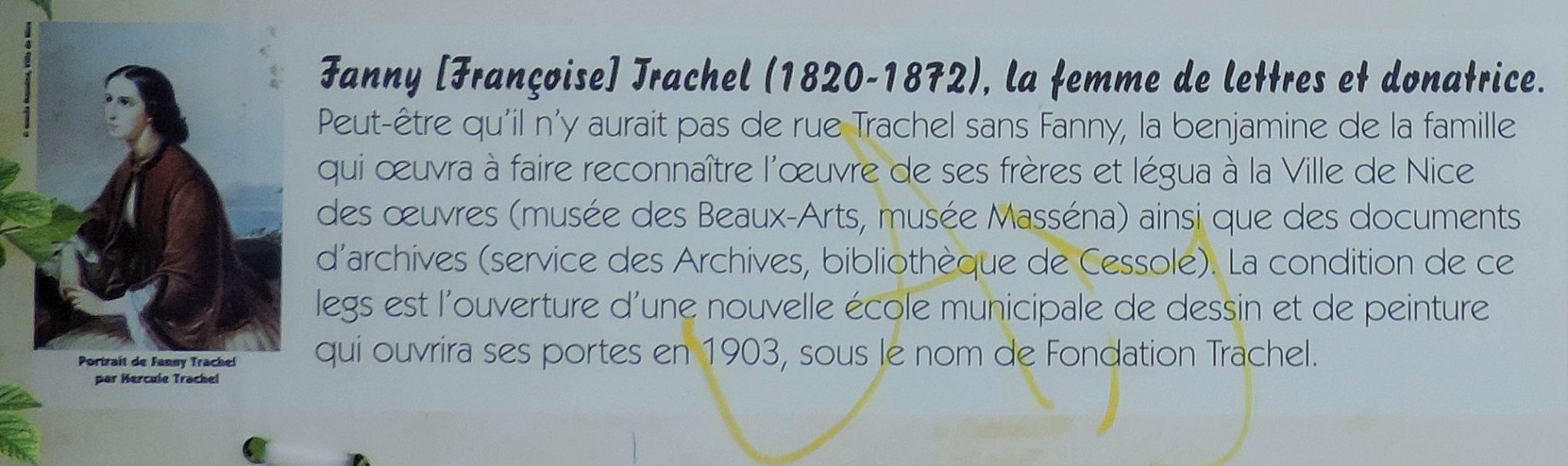
Fanny [Françoise] Trachel (1820-1872), the woman of letters and donor. Perhaps there would be no rue Trachel without Fanny, the youngest daughter of the family, who worked to gain recognition for the work of her brothers and bequeathed works of art (Musée des Beaux-Arts, Musée Masséna) and archival documents (Service des Archives, Bibliothèque de Cessole) to the City of Nice. The condition of this bequest was the opening of a new municipal drawing and painting school, which opened in 1903, under the name of Fondation Trachel.
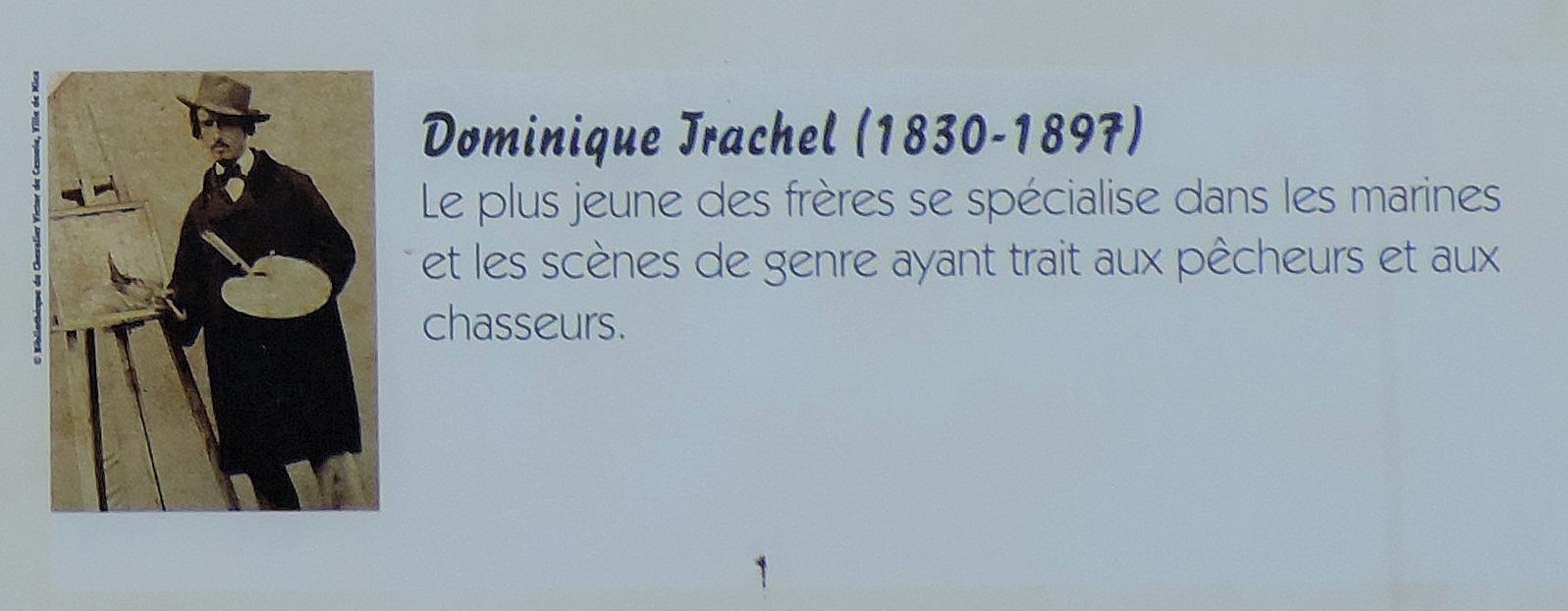
Dominique Trachel (1830-1897). The younger brother specialized in seascapes and genre scenes of fishermen and hunters.
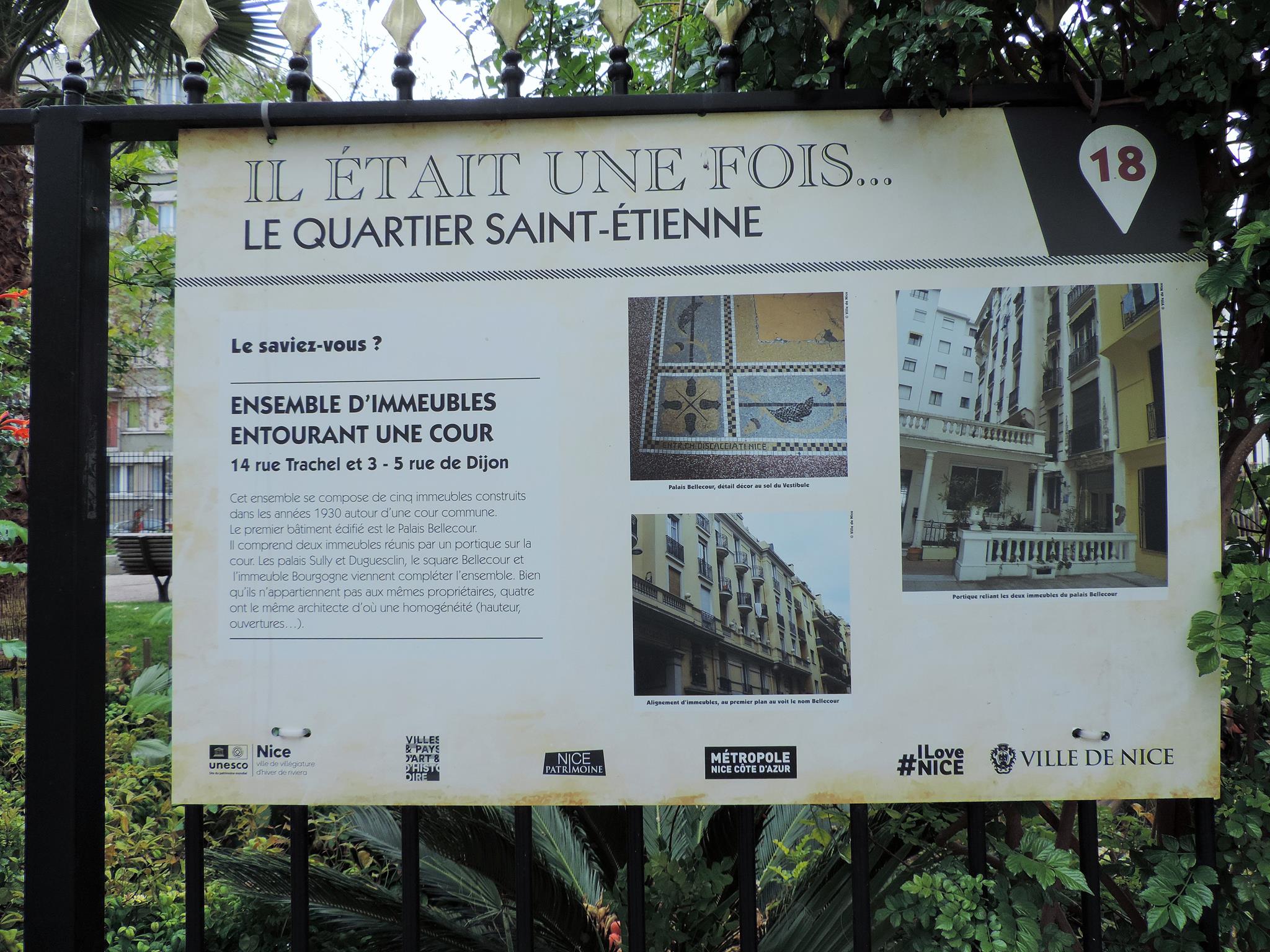
Courtyard Surrounding – Spot (18)
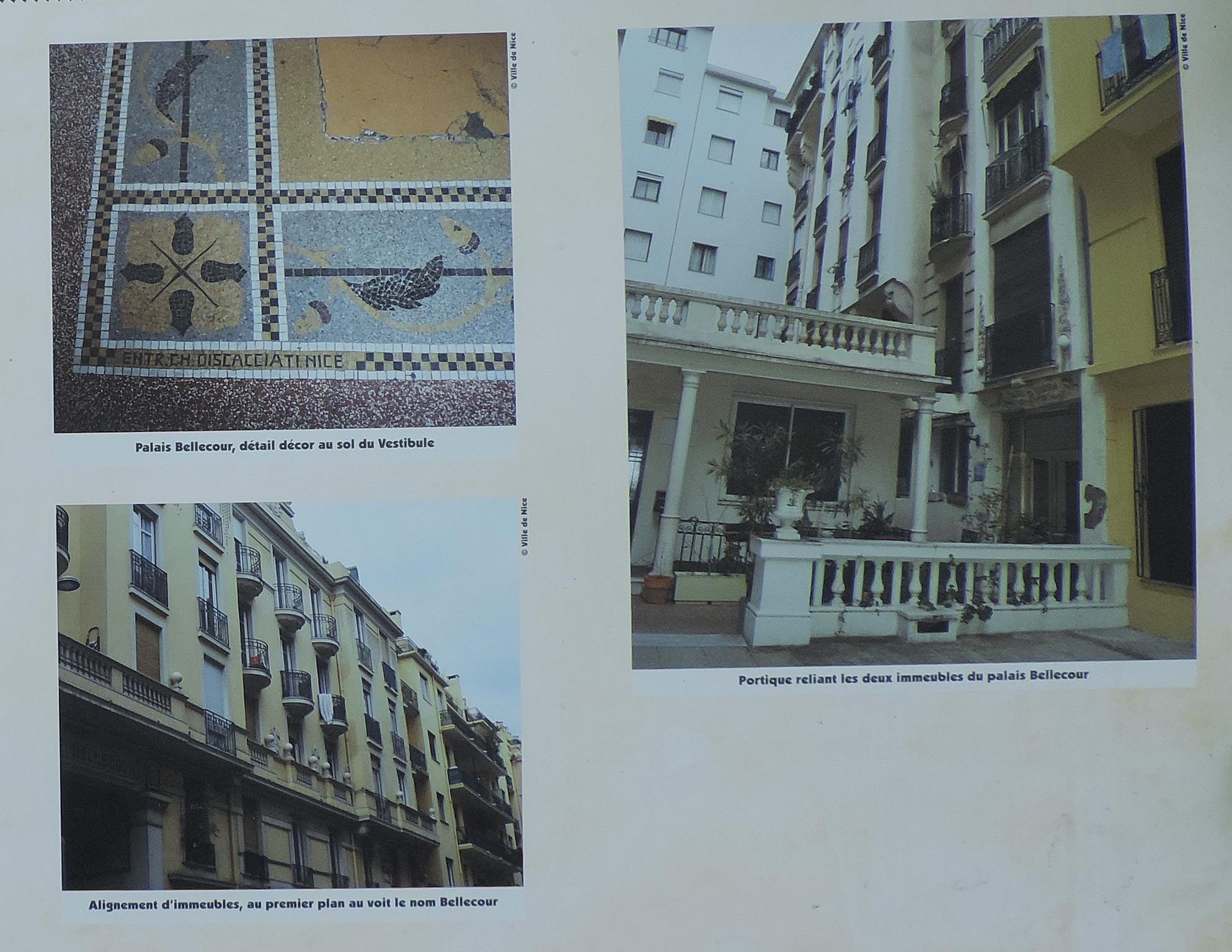
A group of buildings surrounding a courtyard at 14 Rue Trachel and 3 till 5 Rue de Dijon. This complex comprises five buildings erected in the 1930s around a shared courtyard. The first building is the Palais Bellecour. It comprises two buildings joined by a portico over the courtyard. The Palais Sully and Palais Duguesclin, Square Bellecour and the Bourgogne building complete the ensemble. Although they don’t belong to the same owners, four of them were designed by the same architect, resulting in a uniformity of height, openings and other features.
La Reine Jeanne – Queen Jeanne – Spot (19)
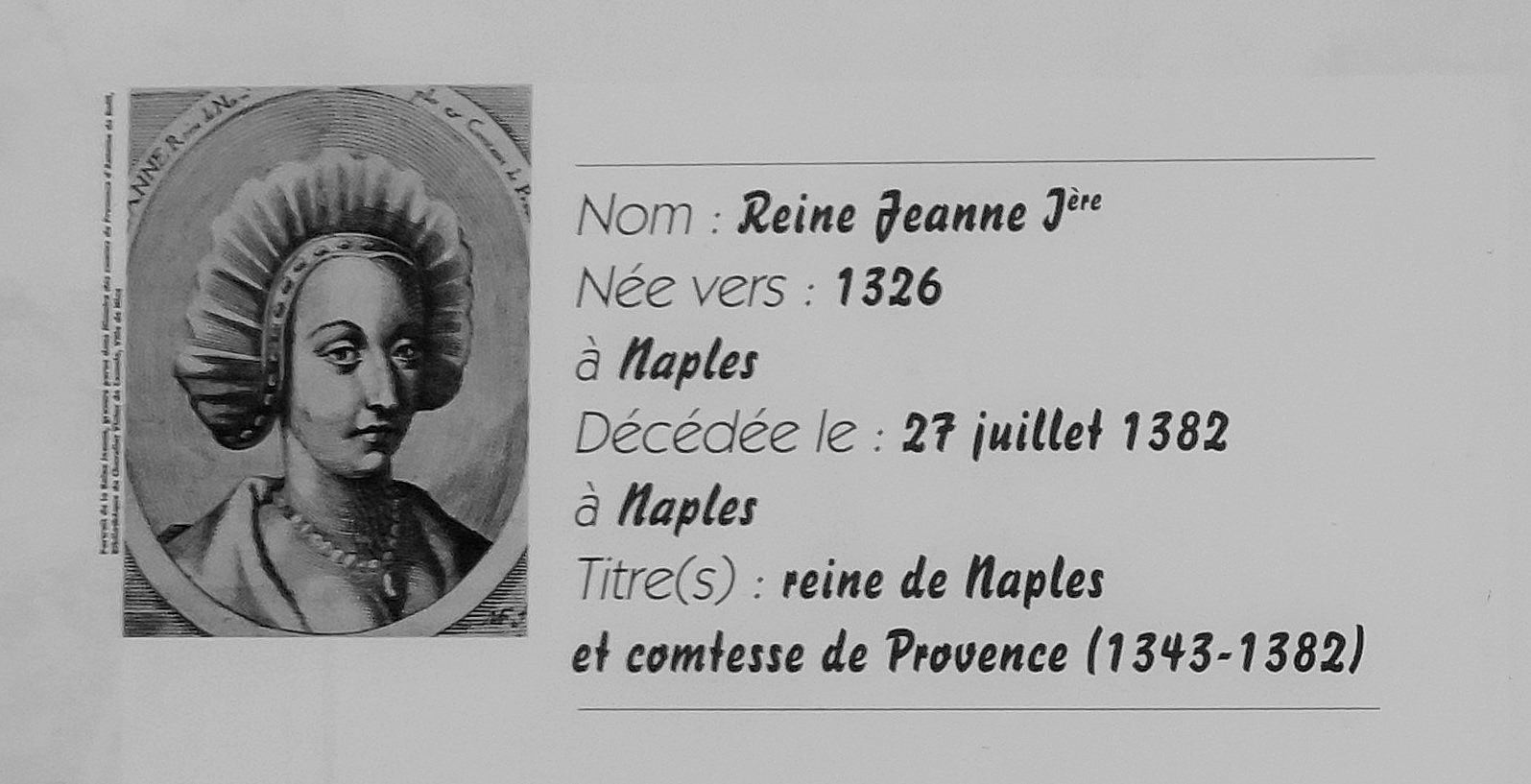
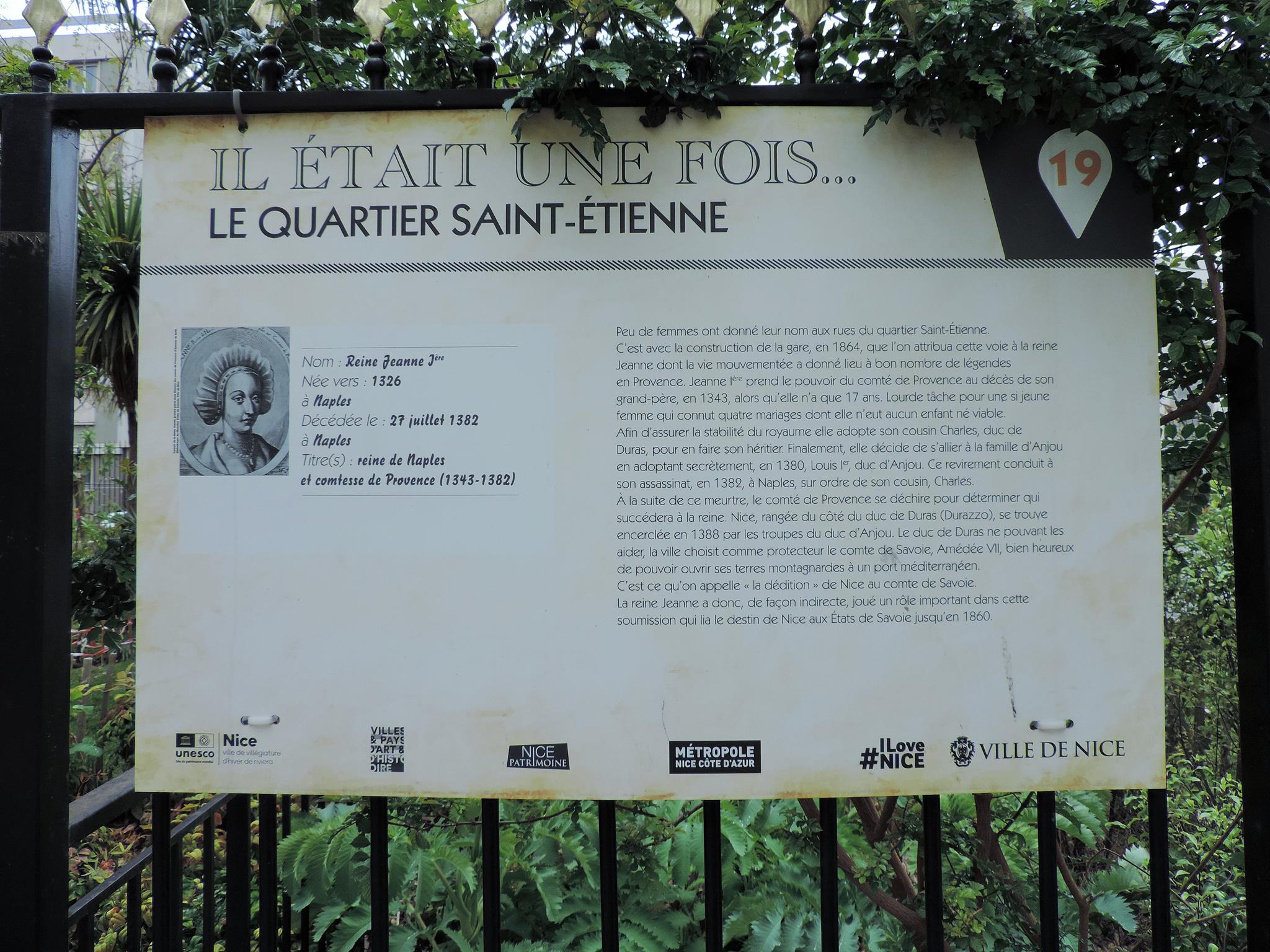
Few women have given their names to streets in the Saint-Étienne district. When the railway station was built in 1864, the street was named after Queen Jeanne, whose eventful life has given rise to many legends in Provence. Jeanne lère took control of the County of Provence on the death of her grandfather in 1343, when she was just 17 years old. This was a daunting task for such a young woman, who was married four times and had no viable children. To ensure the stability of the kingdom, she adopted her cousin Charles, Duke of Duras, as her heir. Finally, in 1380, she decided to ally herself with the Anjou family, secretly adopting Louis I, Duke of Anjou. This change of heart led to his assassination in Naples in 1382, on the orders of his cousin Charles. Following this murder, the county of Provence was torn apart to determine who would succeed the queen. Nice, siding with the Duke of Duras (Durazzo), found itself surrounded in 1388 by the Duke of Anjou’s troops. As the Duke of Duras was unable to help them, the town chose as its protector the Count of Savoy, Amédée VII, who was delighted to be able to open up his mountainous lands to a Mediterranean port. This is known as the „surrender“ of Nice to the Count of Savoy. Queen Jeanne indirectly played an important role in this submission, which linked Nice’s destiny to the Savoy states until 1860.
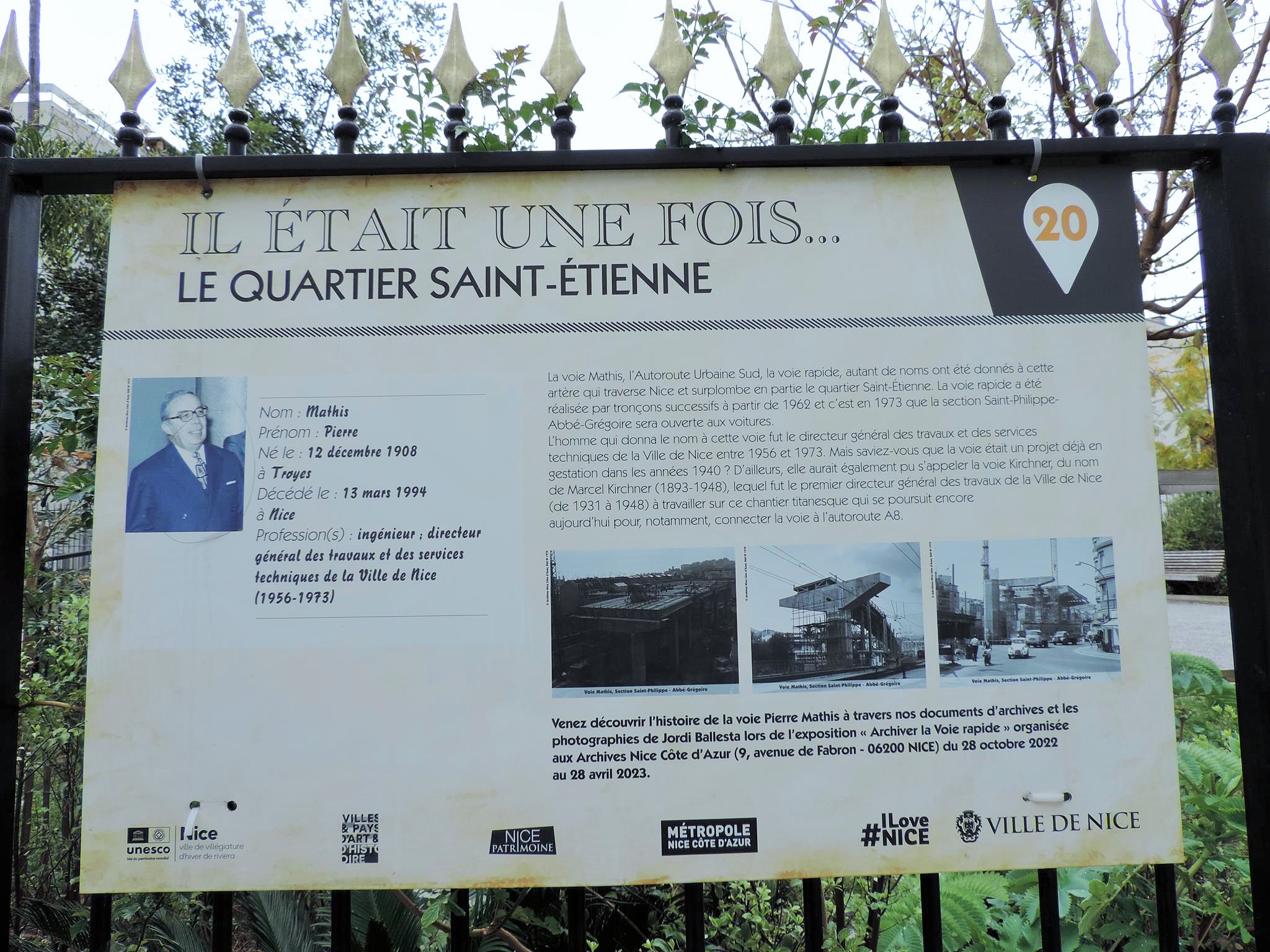
Via Mathis – Spot (20)
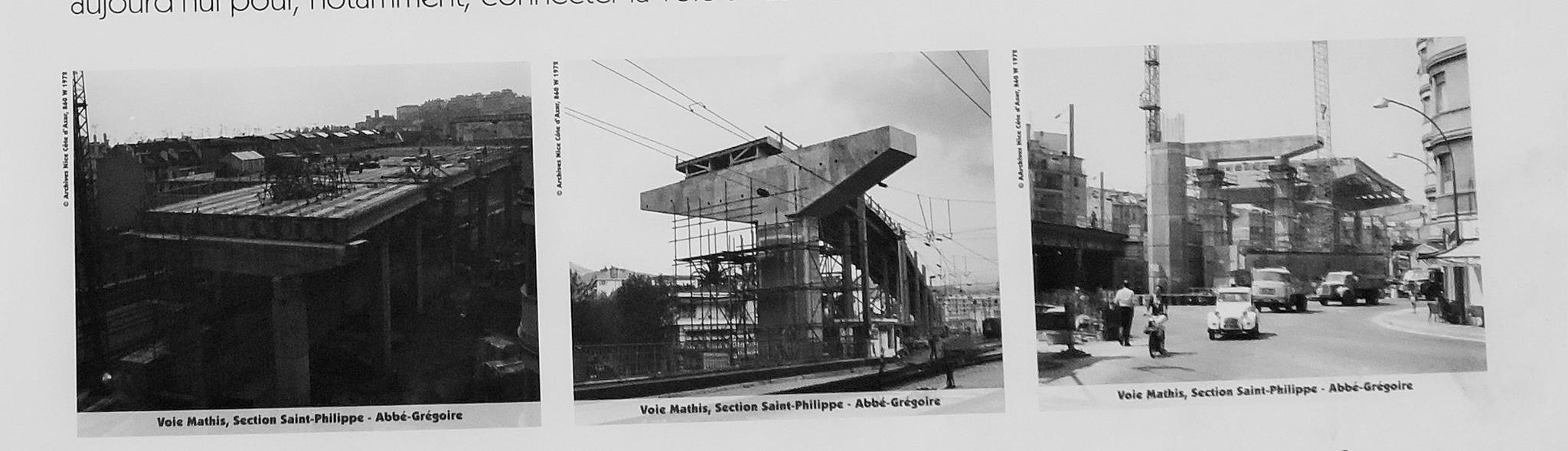
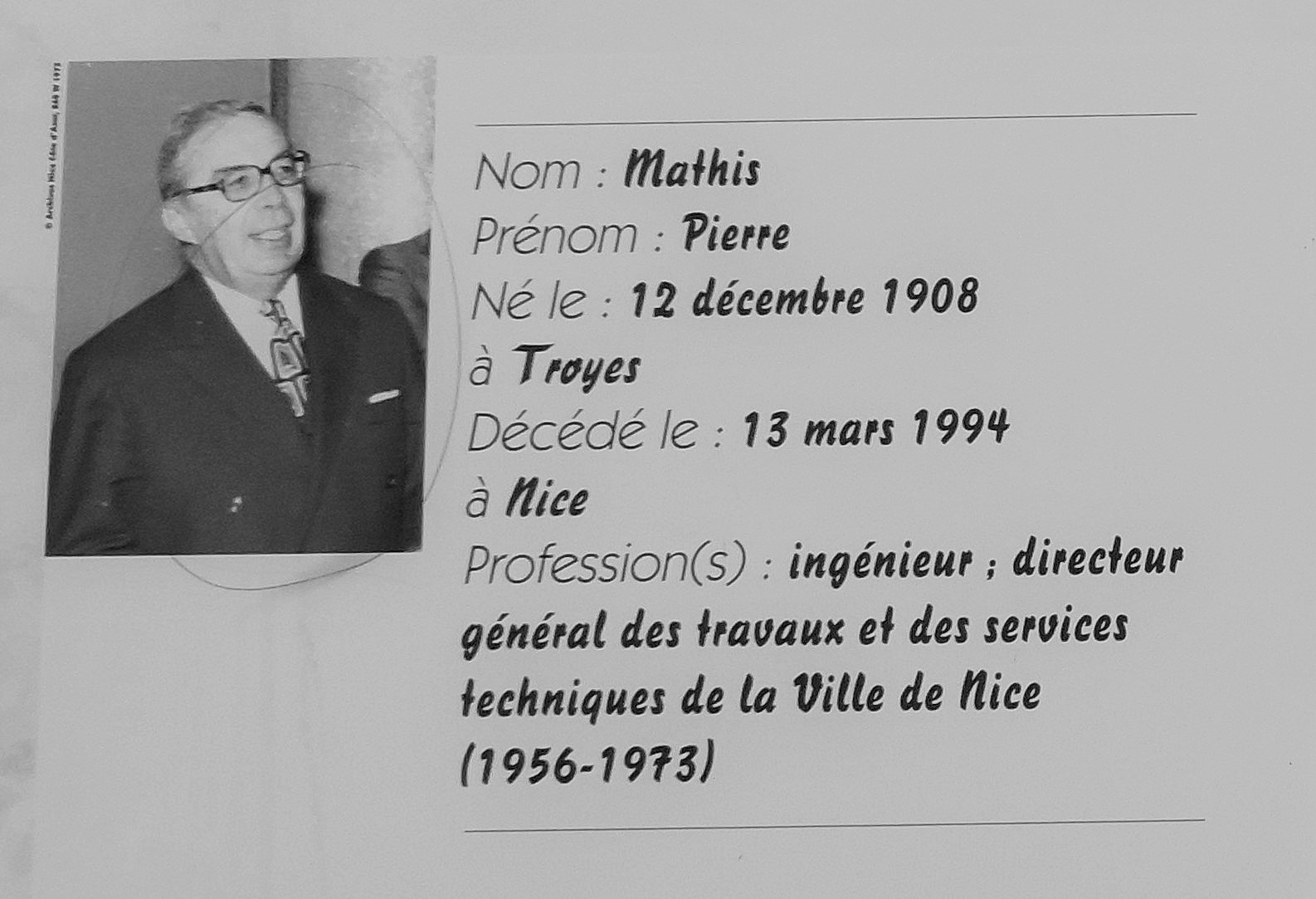
Via Mathis, Autoroute Urbaine Sud, voie rapide – these are just some of the names given to the arterial road that crosses Nice and partly overlooks the Saint-Étienne district. The expressway was built in successive sections from 1962 onwards, and it was not until 1973 that the Saint-Philippe- Abbé-Grégoire section was opened to cars. The man who gave the lane its name was the Director General of Works and Technical Services for the City of Nice between 1956 and 1973. But did you know that the lane was already in the works in the 1940s? In fact, it could also have been called the Kirchner Way, after Marcel Kirchner (1893-1948), who was the first Director General of Works for the City of Nice (from 1931 to 1948) to work on this titanic project, which continues to this day, notably to connect the road to the A8 freeway.
INFOTHEK
 Photographer, Author & City Landscape Researcher: JORDI BALLESTA
 Portfolio: http://www.revue-urbanites.fr/vm-ballesta
 Exhibition: ARCHIVER LA VOIE RAPIDE
Event Page: https://archives.nicecotedazur.org/exposition/jordi-ballesta-archiver-la-voie-rapide
Archive & Historic Exhibitions: ARCHIVES NICE CÔTE D’AZUR
Website: https://archives.nicecotedazur.org
ARTIST INTERVIEWS
>>> OTOM <<<
>>> FABEN <<<
>>> JENNIFER MILLER – PXL <<<
>>> YANNICK DAINELLI <<<
>>> ARTMOR1 <<<
>>> NICOLAS MARVEL <<<
RECOMMENDABLE GRAFFITI SPOTS IN NICE
>>> Le 109 – Art Space <<<
>>> Le 109 – Graffiti Hall <<<
>>> Marianne Mural Series <<<
>>> Fuon Santa Graffiti Channel <<<
>>> Bermont & Fils Art Space <<<
>>> Regards – Portrait Tunnel <<<
>>> XVème Corps Graffiti Hall <<<
>>> Ocean Electricity Series <<<
>>> Tour de France & OGC Tribute <<<
>>> Abandoned Health Center <<<
>>> Les Puces – Urban Art Space <<<
>>> Village Ségurane – Urban Art Space <<<
>>> Saint Charles Graffiti Wall <<<
>>> Abattoirs Riverbed Hall <<<
>>> Sticker Collection <<<
MORE ARTICLES ABOUT FRANCE
>>> Streetart Map Paris <<<
>>> Streetart Map Toulouse <<<
>>> Spot 13 – Paris Graffiti Hall <<<
>>> International Jam <<<
>>> Geraud Delteil – Spray Portraits <<<
>>> Milau K. Lutumba aka Delutu <<<
>>> The Eiffel Tower <<<
>>> MAUSA Vauban <<<
>>> Le Gurp – Bunker Graffiti <<<
>>> Rennes – Graffiti & Streetart <<<
>>> Streetart Fort-de-France – Martinique <<<
>>> Strasbourg – Graffiti & Streetart <<<
>>> Strasbourg – Stencil Collection <<<
>>> Bordeaux – Graffiti & Streetart <<<
>>> Montpellier – Graffiti & Streetart <<<
>>> Montpellier – Street Life <<<
>>> Cap Ferret – Graffiti & Streetart <<<
>>> Streetart Paris Central <<<
>>> Paris – Exquisit Car Parade <<<
>>> Paris – Monuments Visit <<<
>>> Les Orres – Hautes-Alpes <<<
>>> Les Sybelles – Snow Smurfs <<<