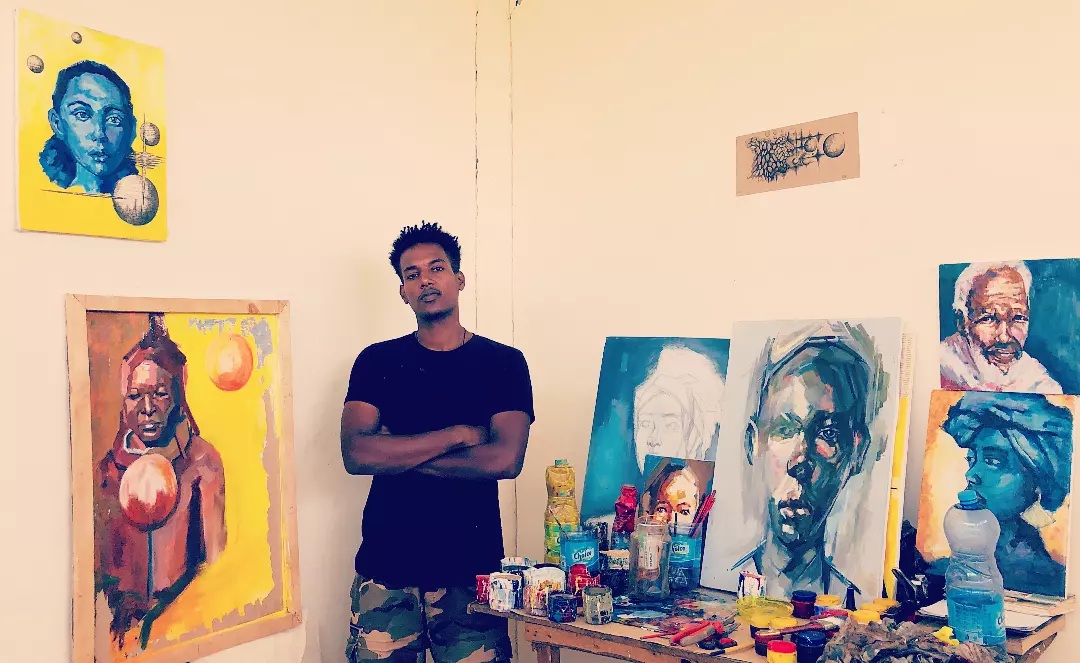
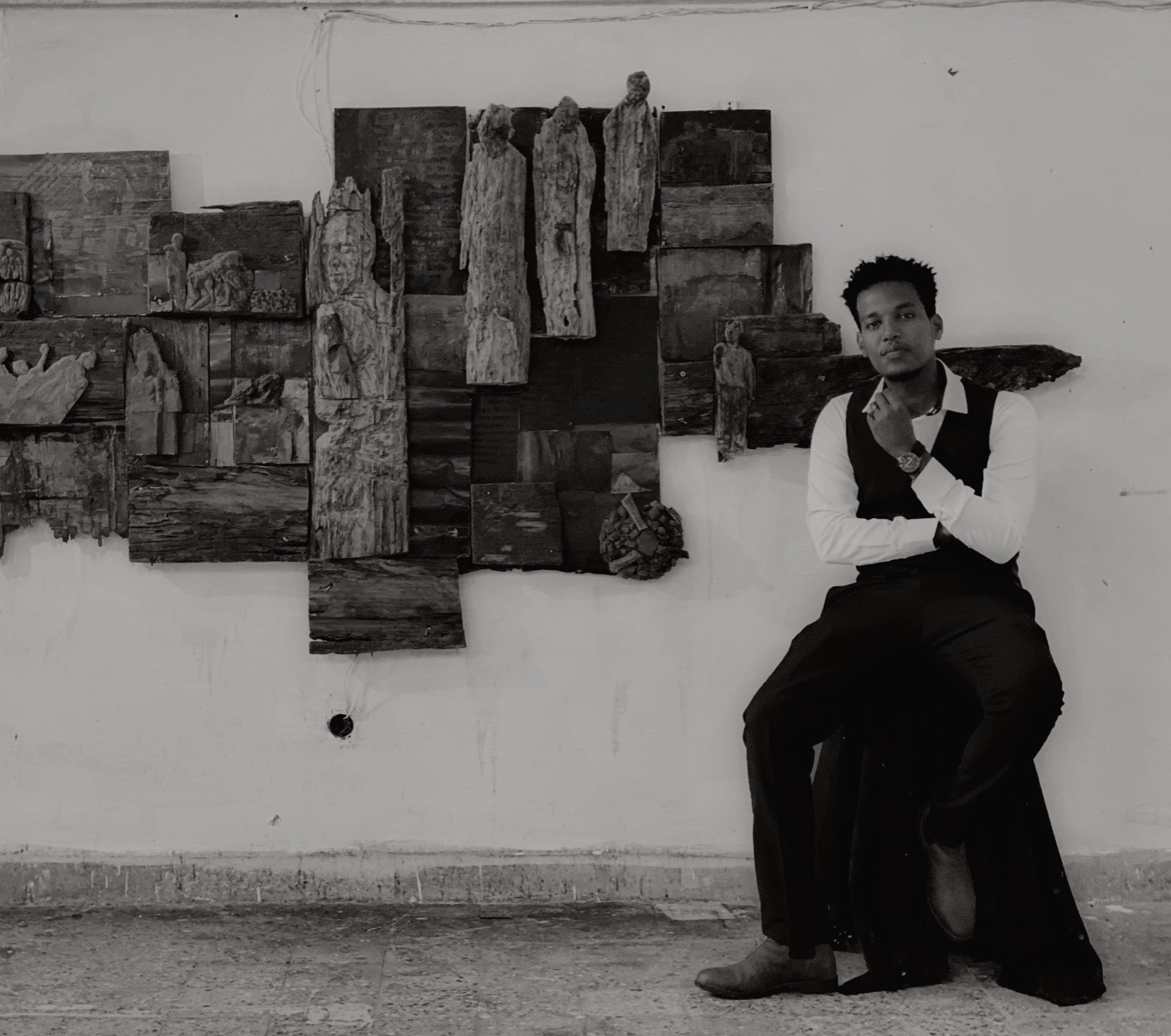
The fantastic artist YABSRA AYELE from the Ethiopian capital Addis Ababa works across multiple disciplines, combining various materials and techniques. It’s hard to categorize him because he does everything from canvases to wood or metal, including sculptures, and he combines all these materials, piecing them together into a new collage. Beneath the surface and behind the scenes, there are always deeper underlying themes and socially critical messages.
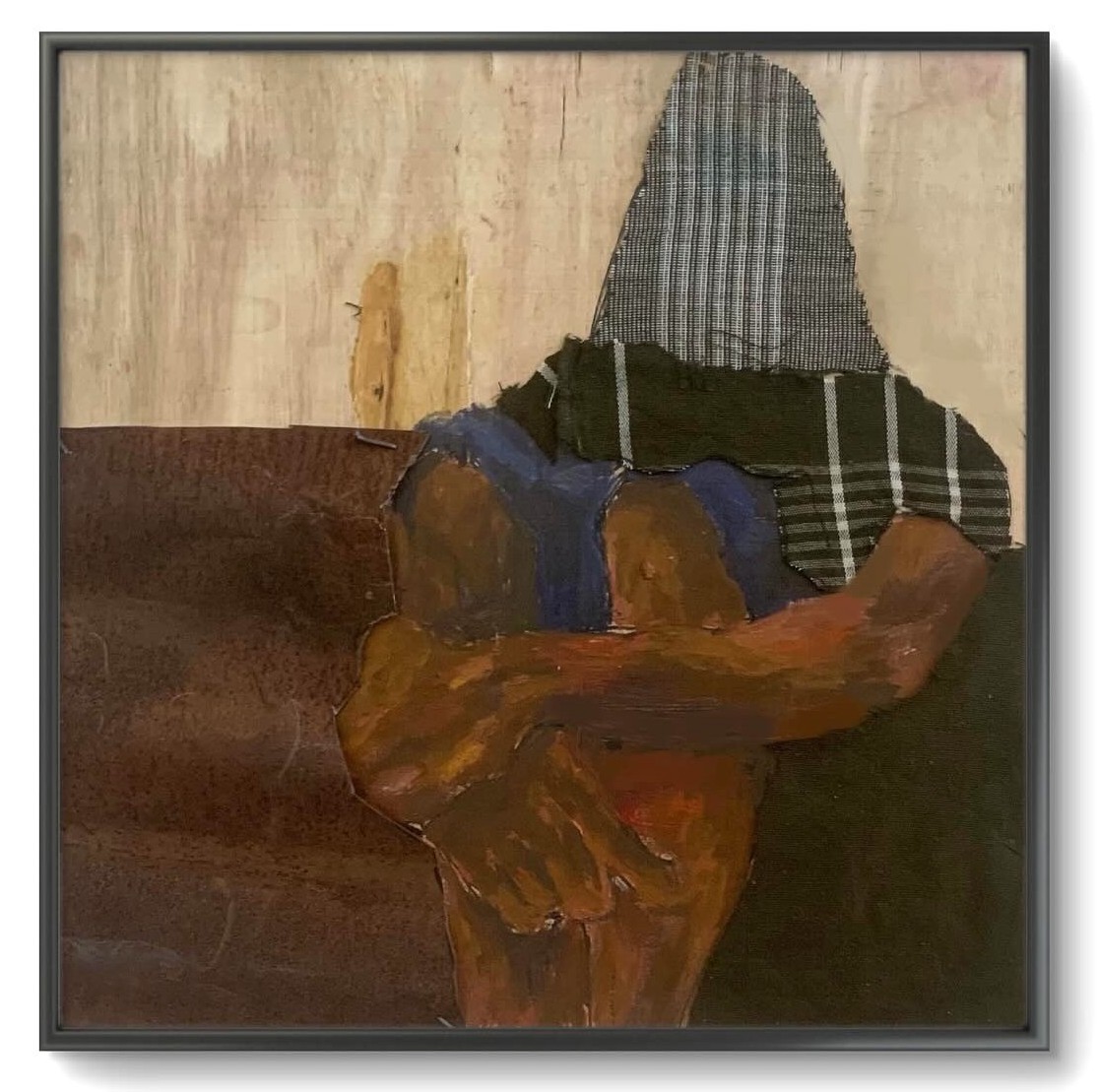
In an interview with the artist, we talked about his background, the development as a creative person, and his numerous ideas. He describes his techniques and role models to us and offers art enthusiasts a glimpse into the art scene of Addis Ababa. Throughout the article, you’ll find a lot of photos showing YABSRA AYELE’s magnificent works.
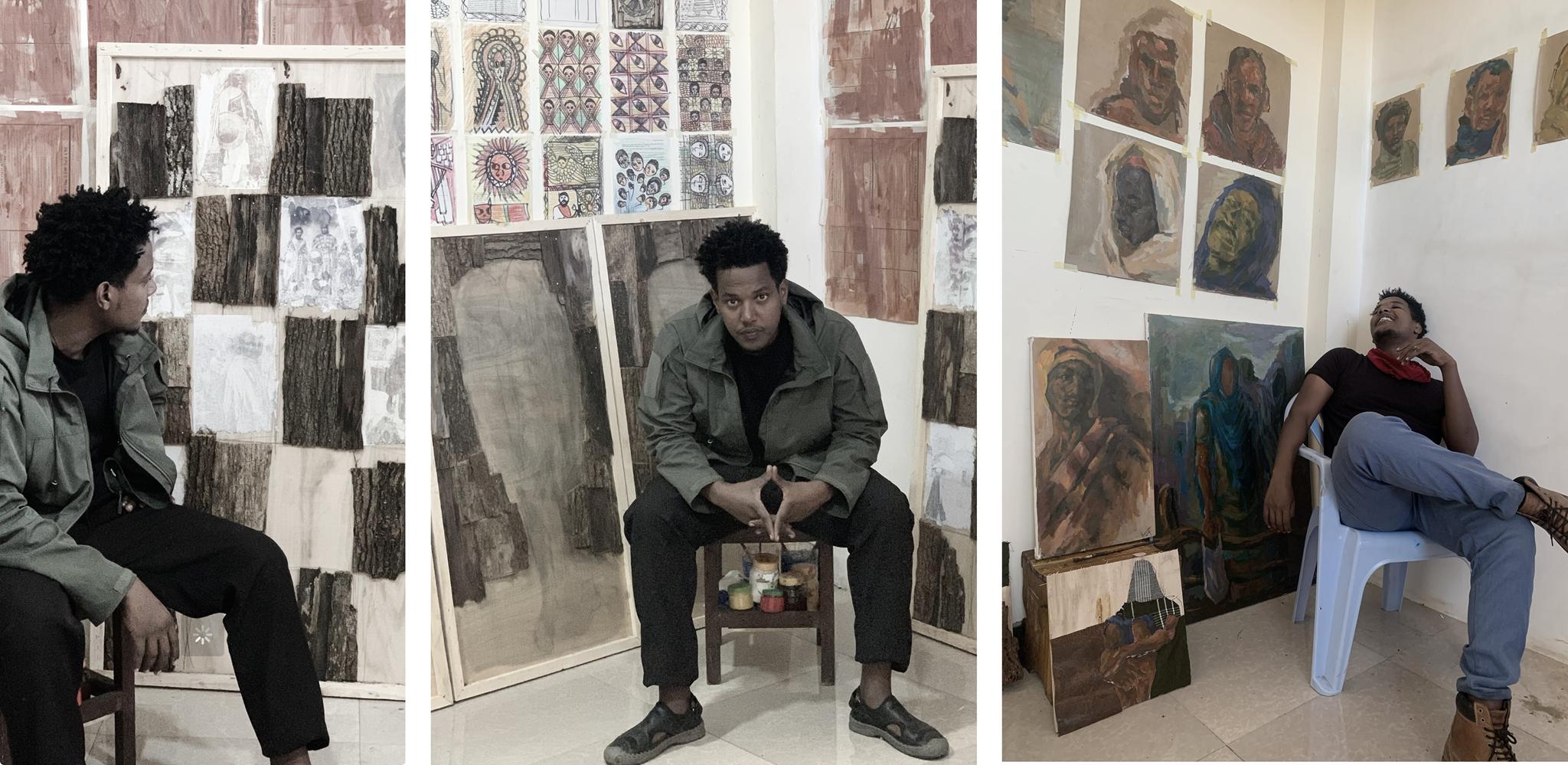
First tell us how you found your way to art and how it developed in the beginning. Also tell us a bit about the art school you attended.
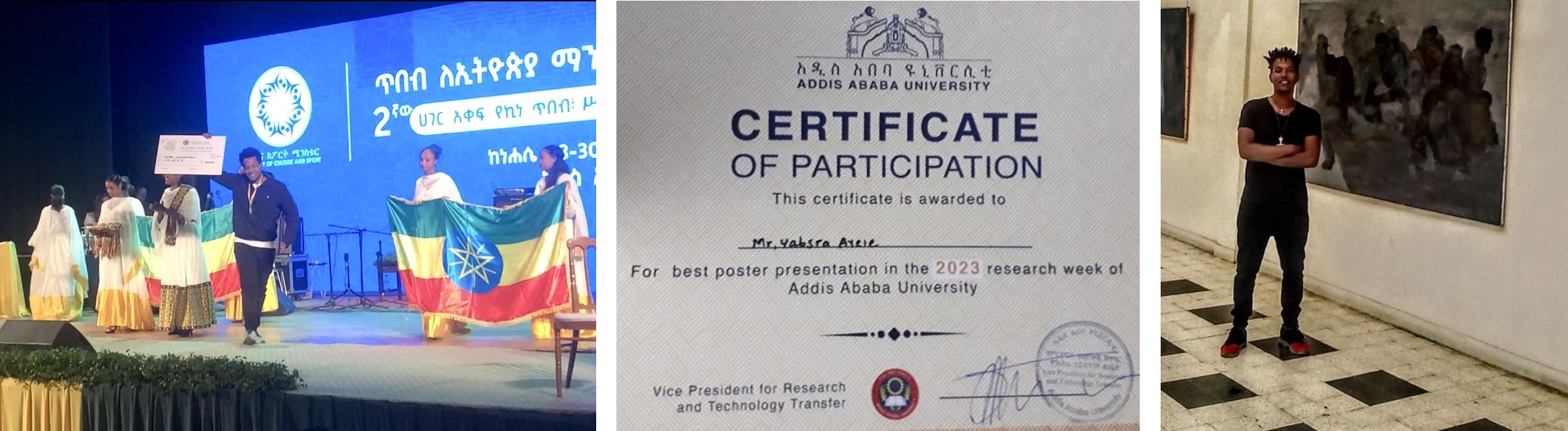
My journey into art started from early experiences growing up in Bahir Dar. I was surrounded by strong visual and spiritual environments, especially through church spaces I visited often as a child. At that time, I felt something deeply, but I didn’t have the language to express it. Later, this feeling led me to study art formally. I attended the Allé School of Fine Arts and Design at Addis Ababa University, where I graduated in 2024 with a bachelor’s degree in fine art and design from the sculpture department. The school helped me understand both traditional and contemporary approaches, and it gave me space to develop my own direction as an artist.
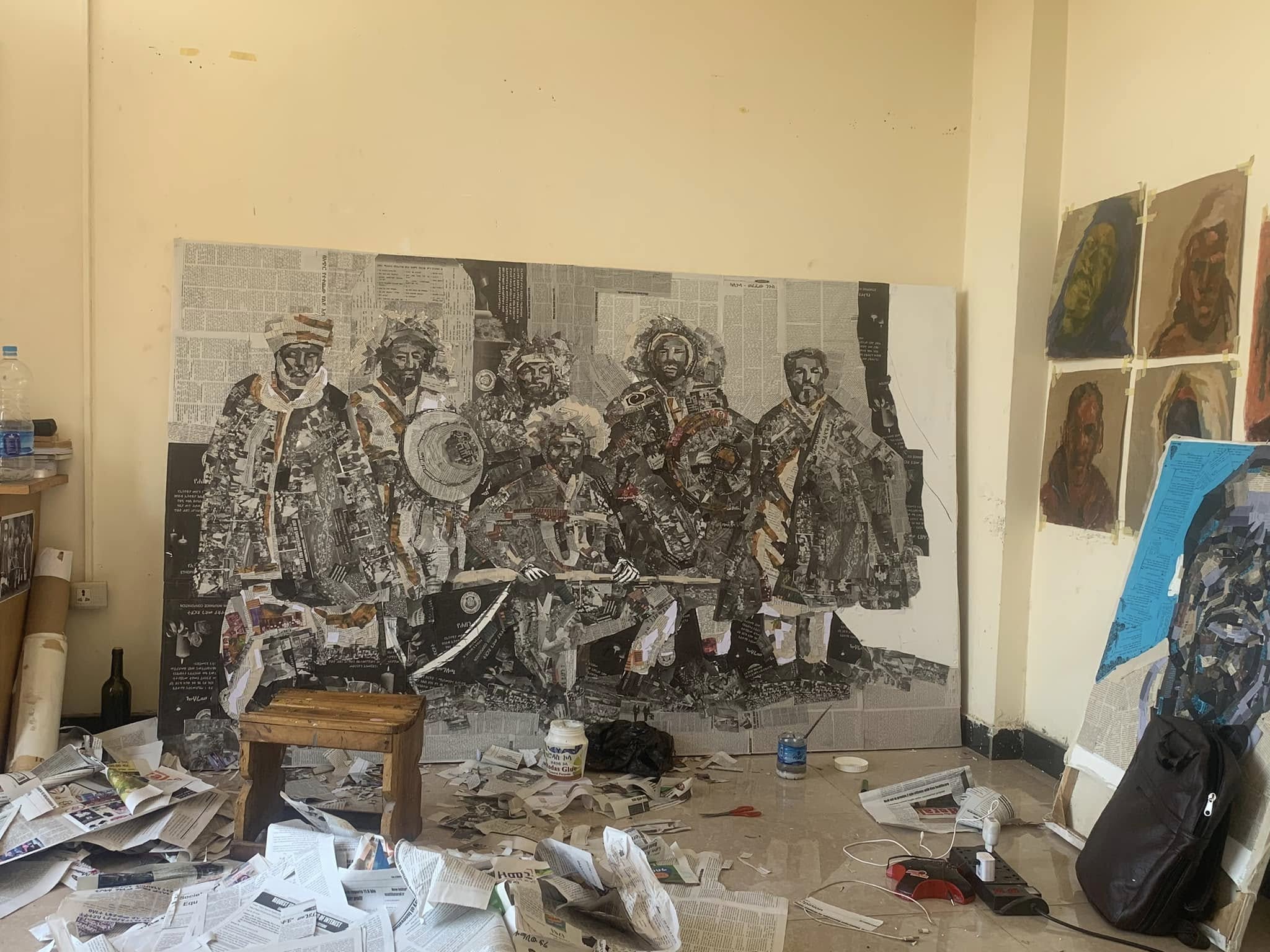
Definitely you found your way to art, and not just one path, but several. You paint, make collages, and also create sculptural forms from various materials. Tell us more about that. How do you see your own work?
I don’t see my practice as limited to one medium. I work across mixed media, sculpture, installation, and surface-based work. For me, it’s about the idea and the feeling first, then the material follows. I see my work as material-based and conceptual. I explore transformation, memory, and decay – how materials, like societies, carry time, belief, and change. My work is about creating a presence, not just an image.
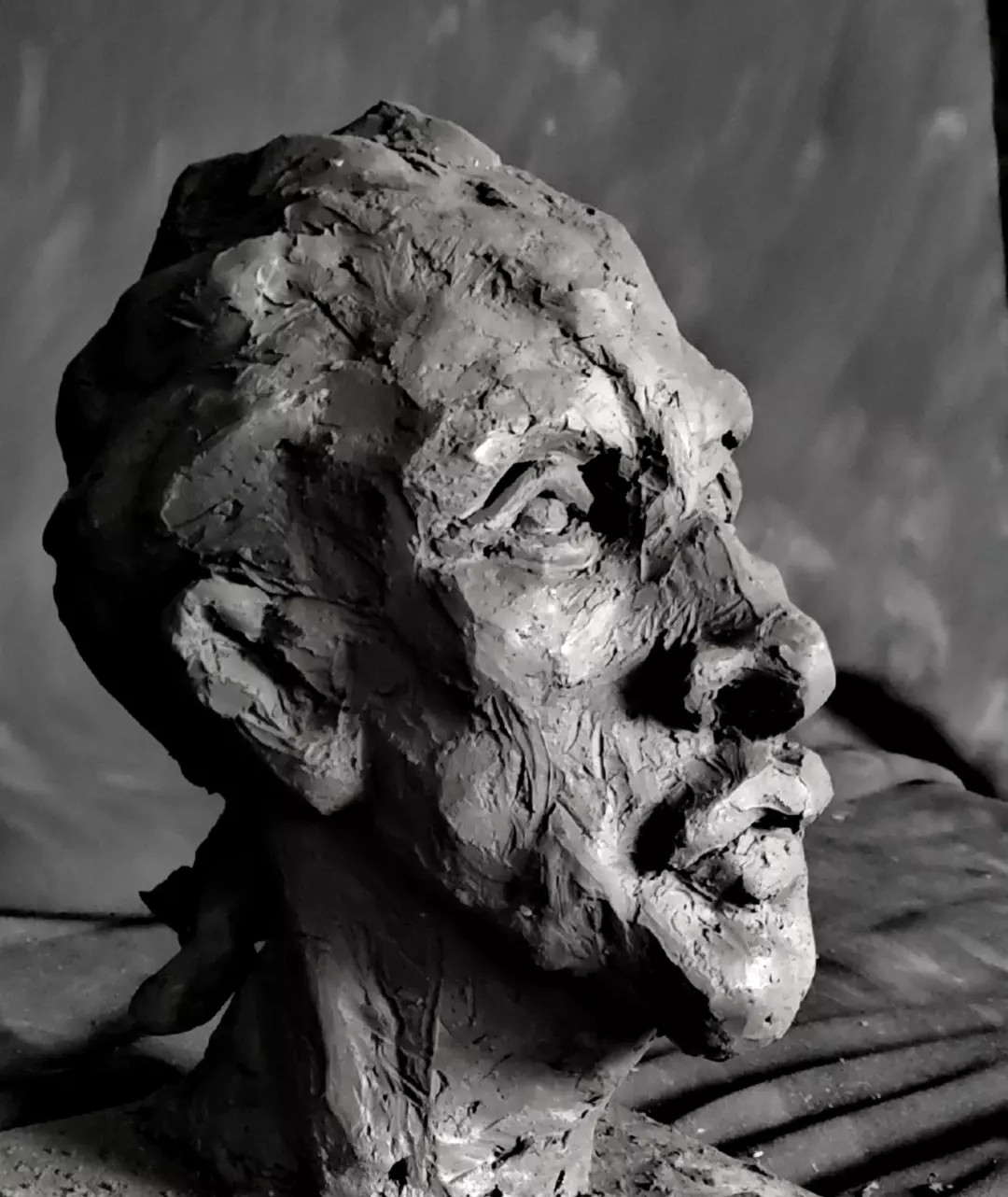
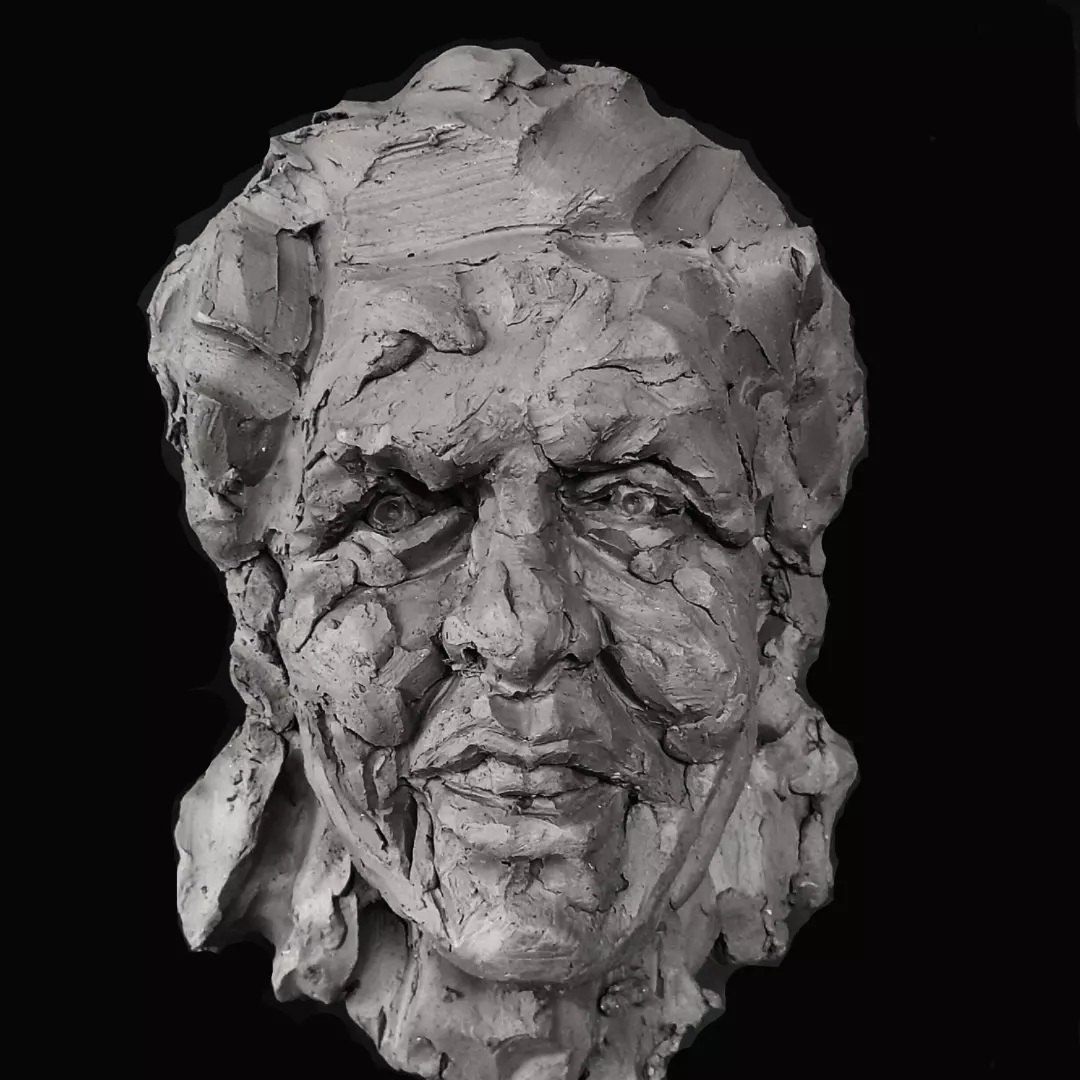
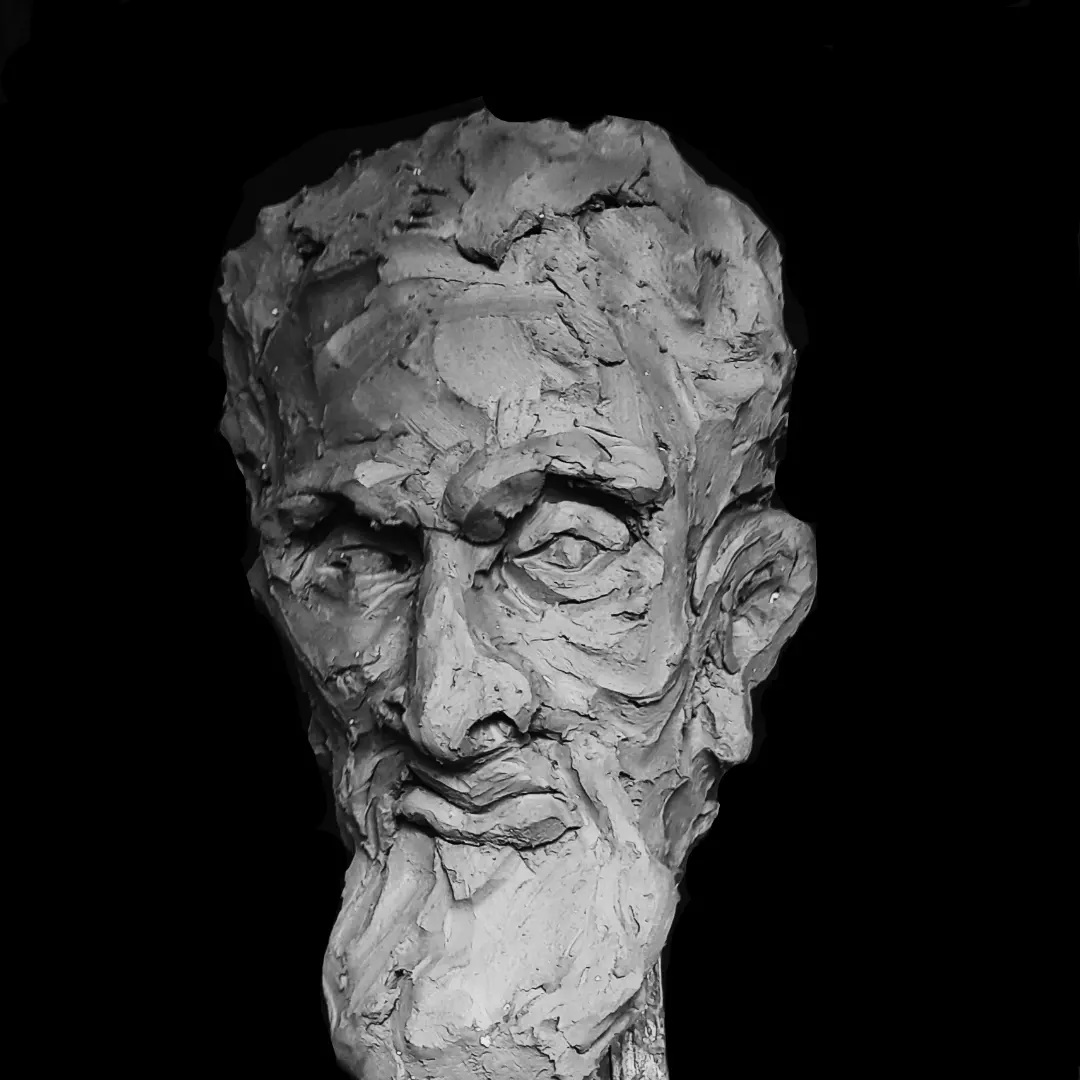
Let’s talk a bit more specifically about your individual works. Tell us a few words about the sculptural heads. How did you make them, what materials did you use, and what was your idea behind them?
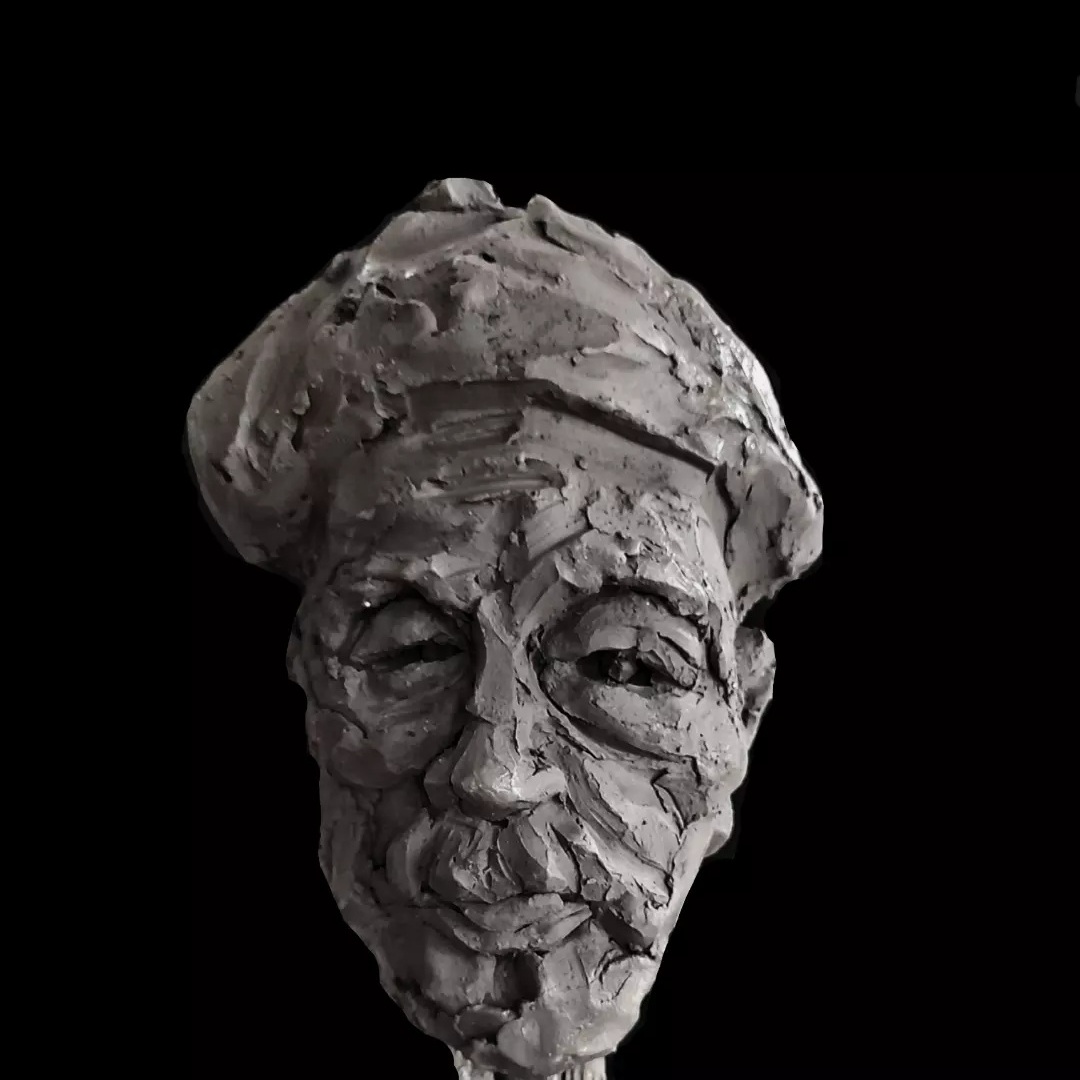
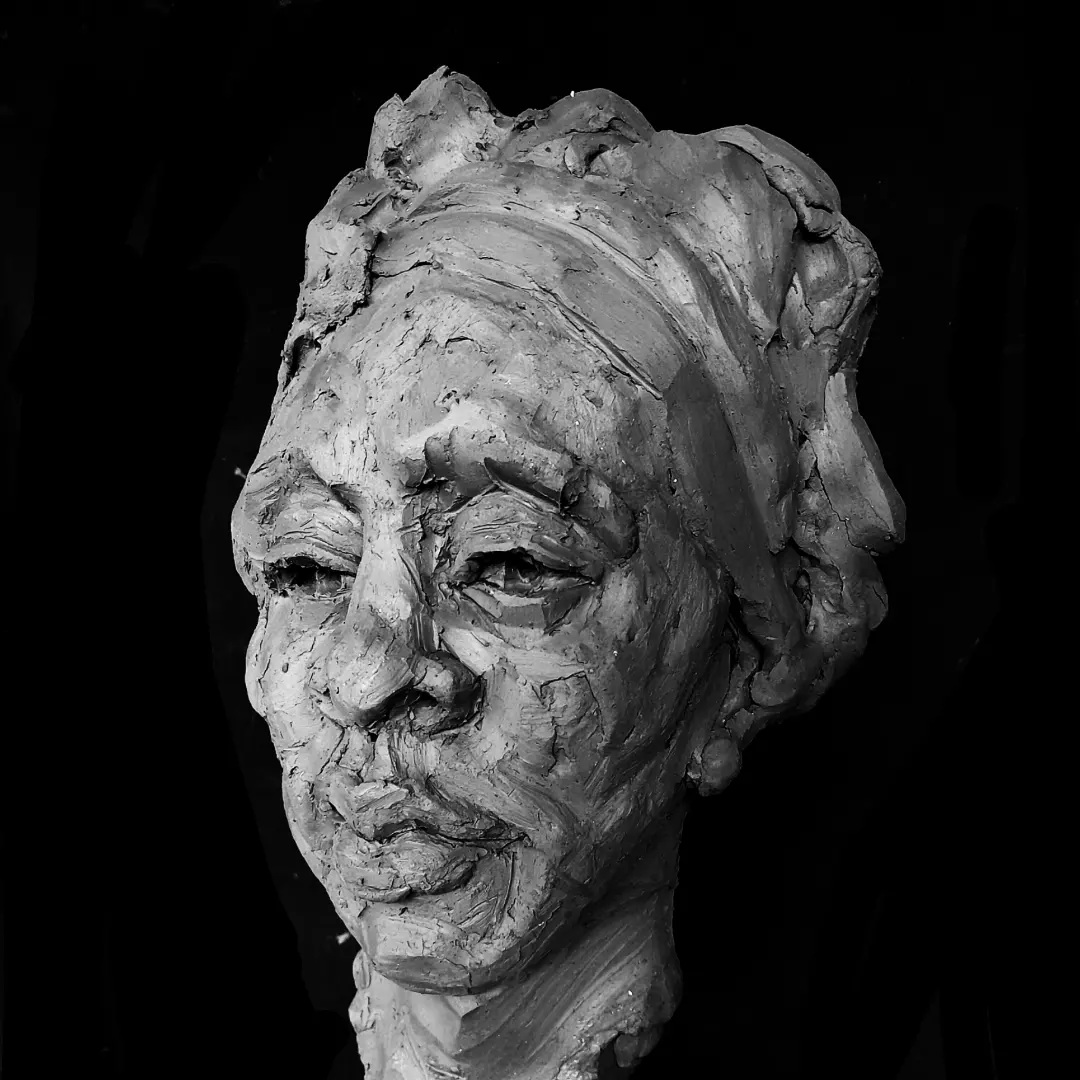
The sculptural heads started during my third year at university, in a concept development class. At that time in Addis Ababa, I was observing many homes being demolished and changes happening in the city. This affected me deeply, especially thinking about older people and lower-income communities who were being displaced. I tried to express these emotions through the series titled “Faces of Addis”- The heads are not just portraits – they represent feelings of memory, loss, and social reality. The forms carry emotional weight rather than realistic identity.
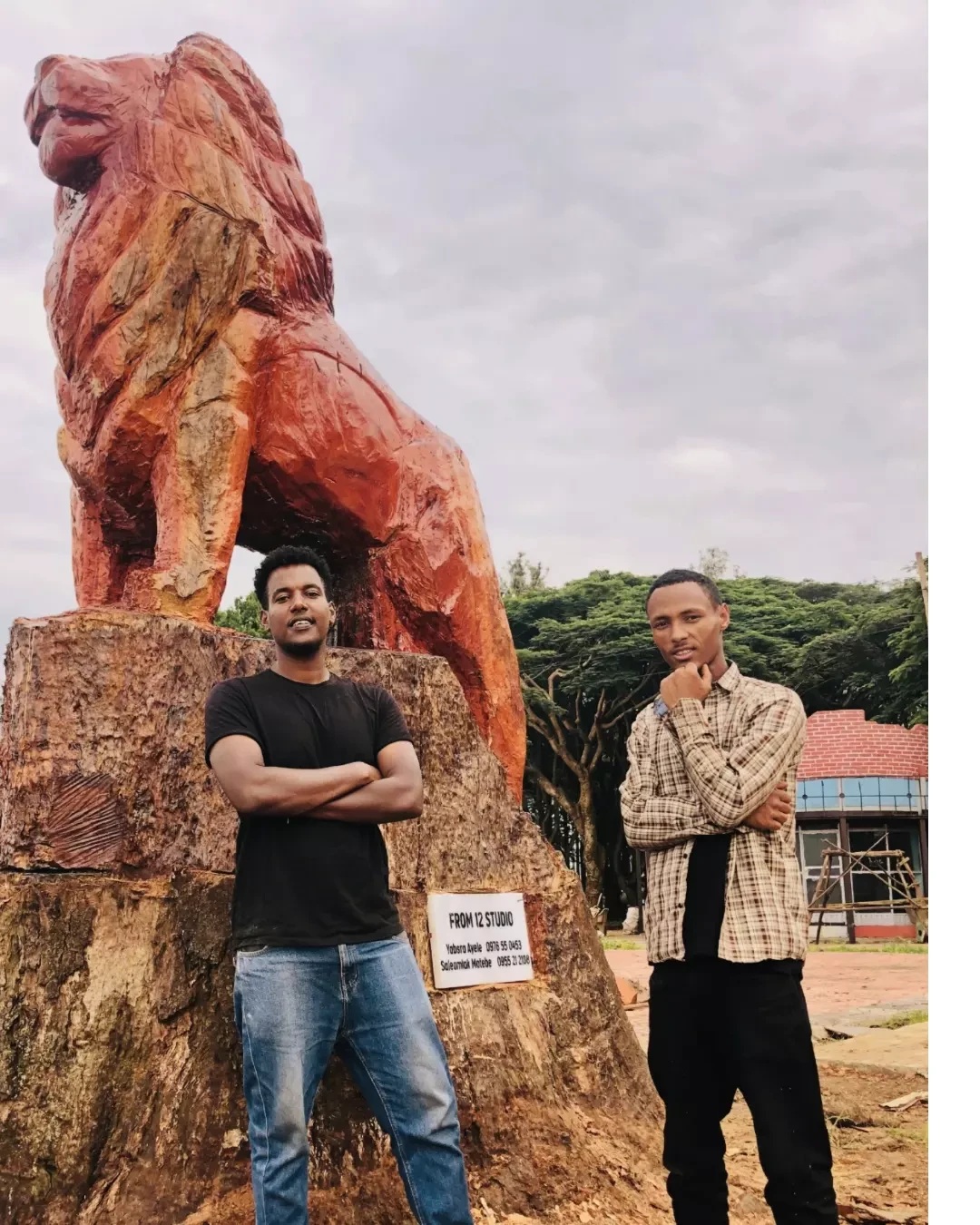
The next material is wood. You’ve already created artworks with it. That’s a whole different type with a different texture and different techniques. Tell us more about it.
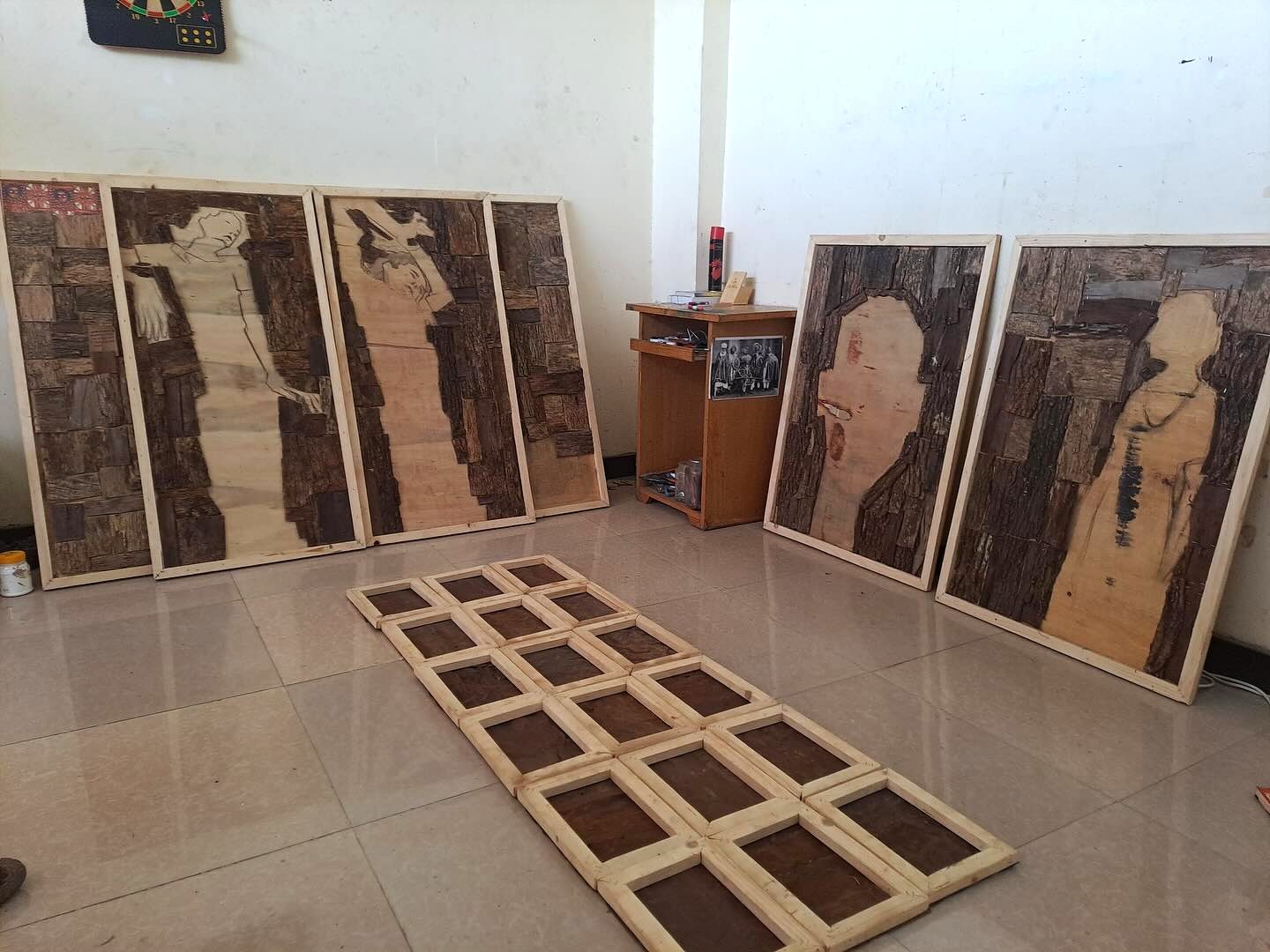
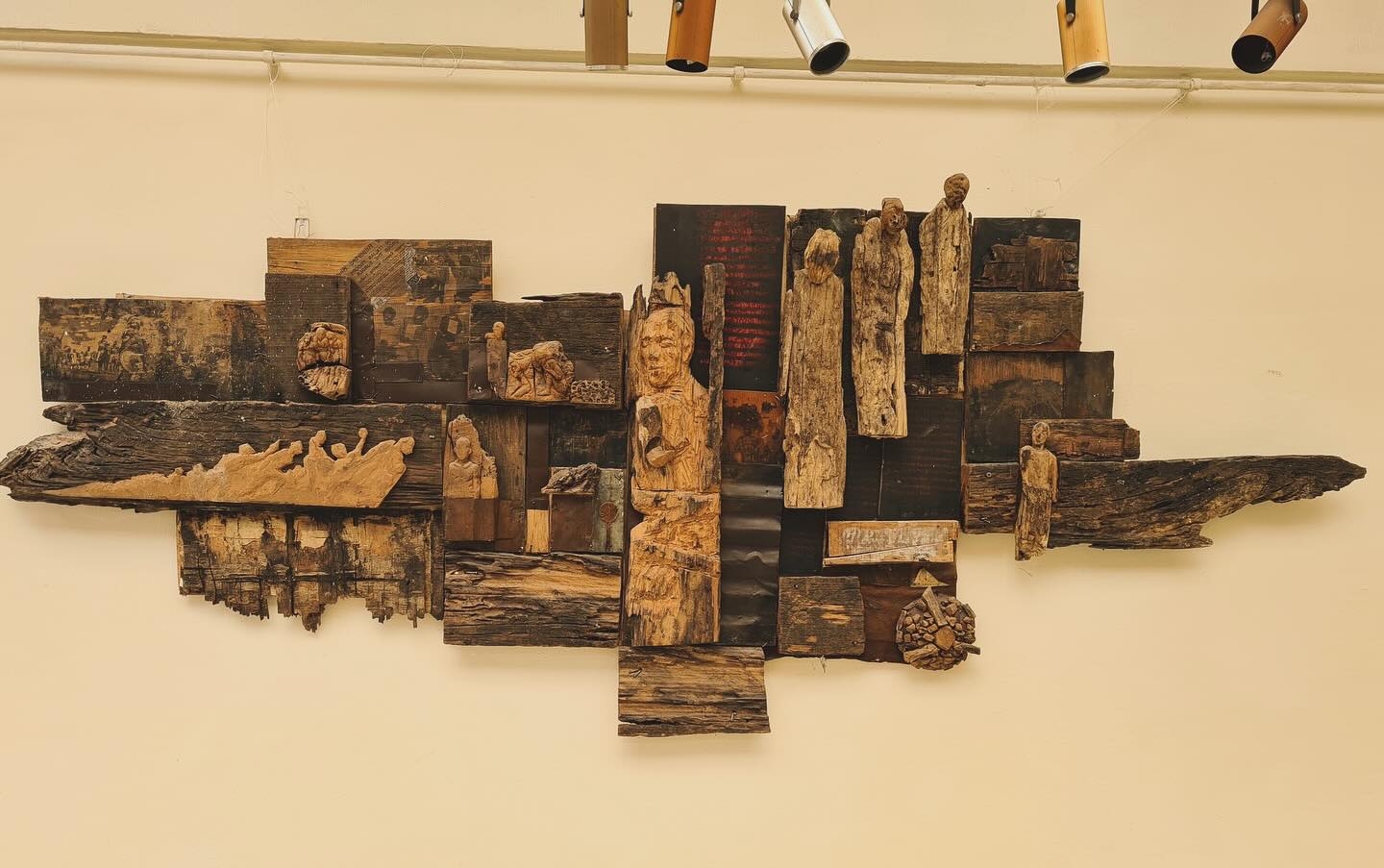
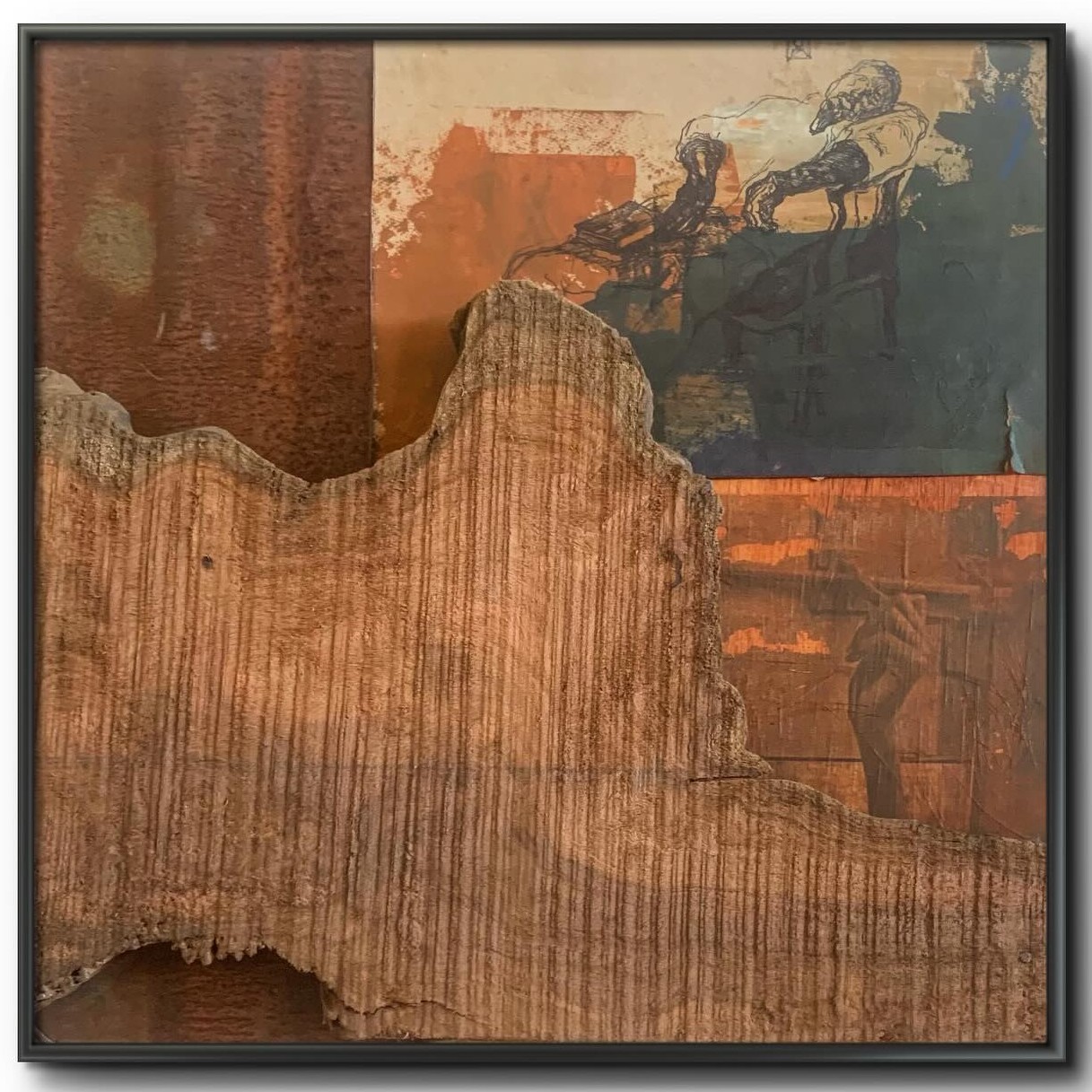
Wood introduced me to another level of texture and time. Especially when I work with damaged or aged wood, it already contains a history. I don’t try to control it completely – I work with its condition. Cracks, marks, and decay become part of the composition. It connects strongly with my interest in transformation and natural processes.

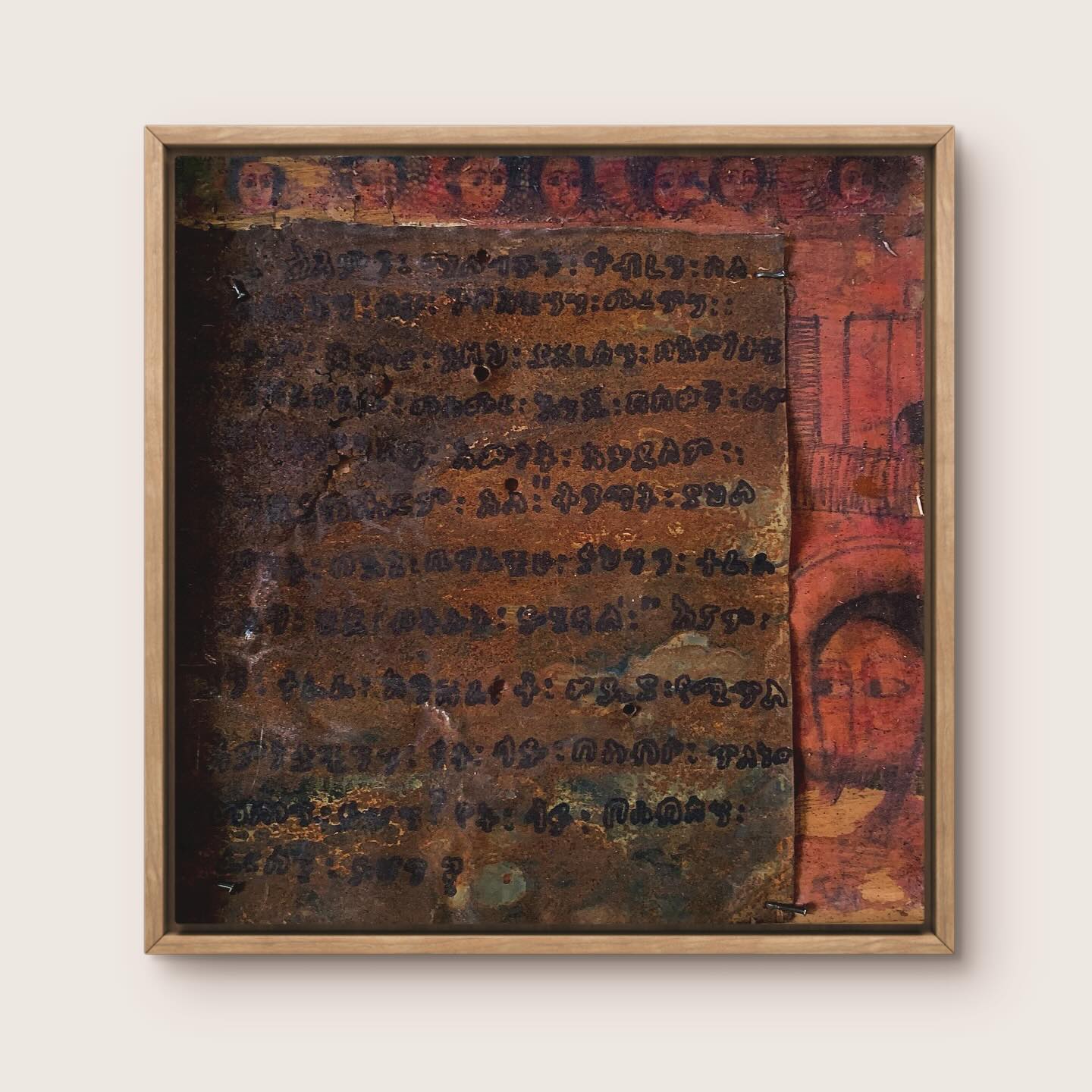
Let’s have a look on all the materials, you even use metal. How is it to combine all those different things? And why do you want to do that? The results are awesome!
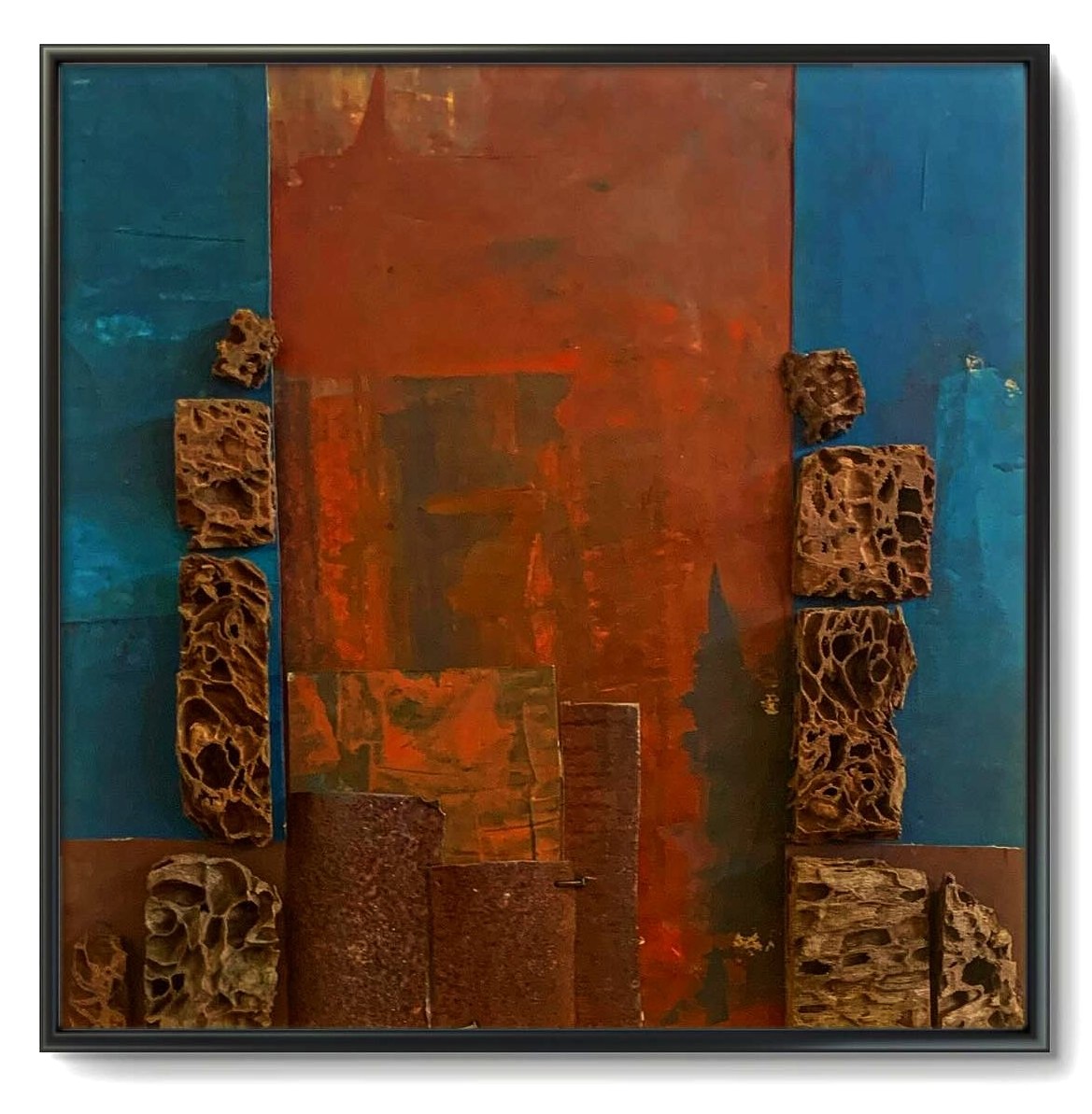
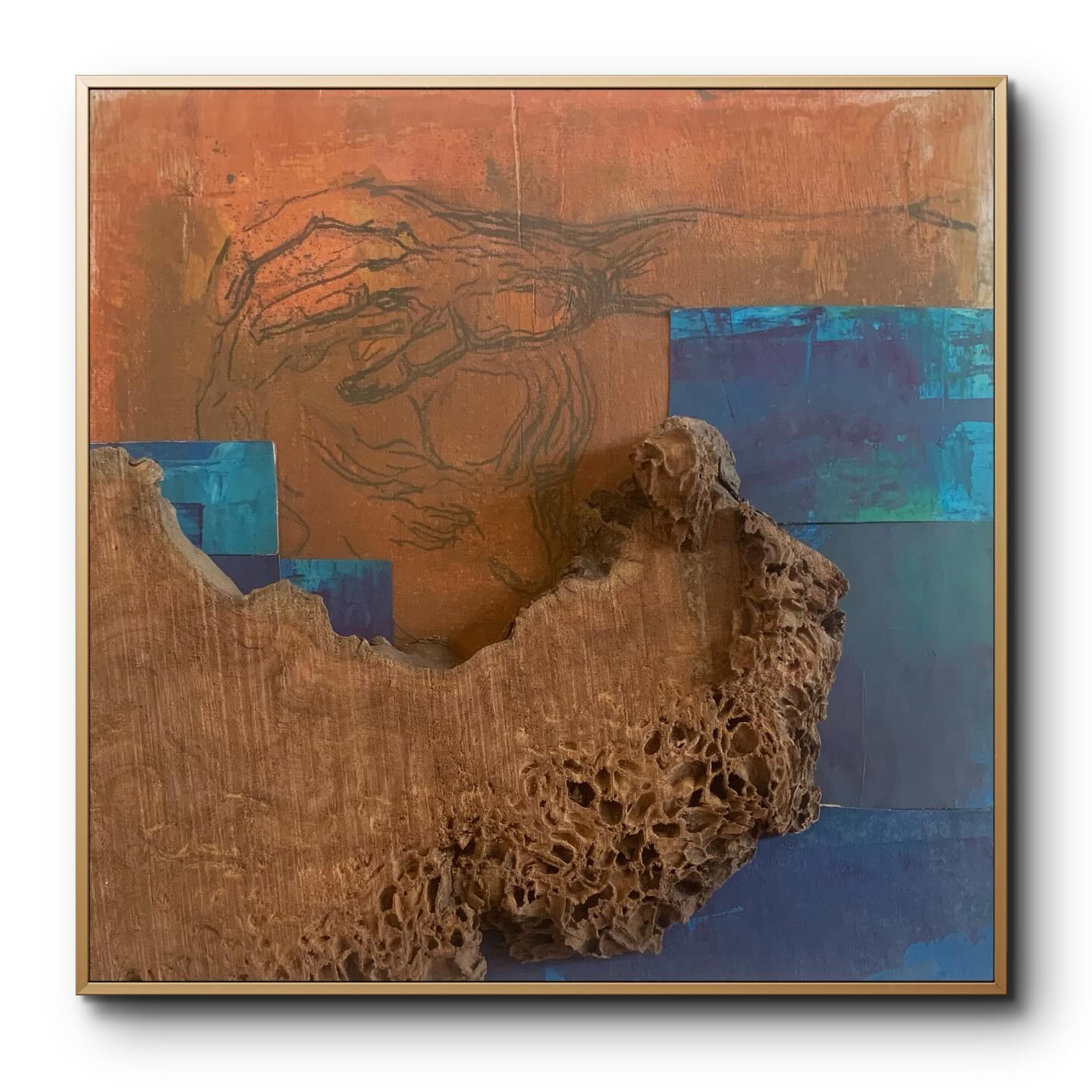
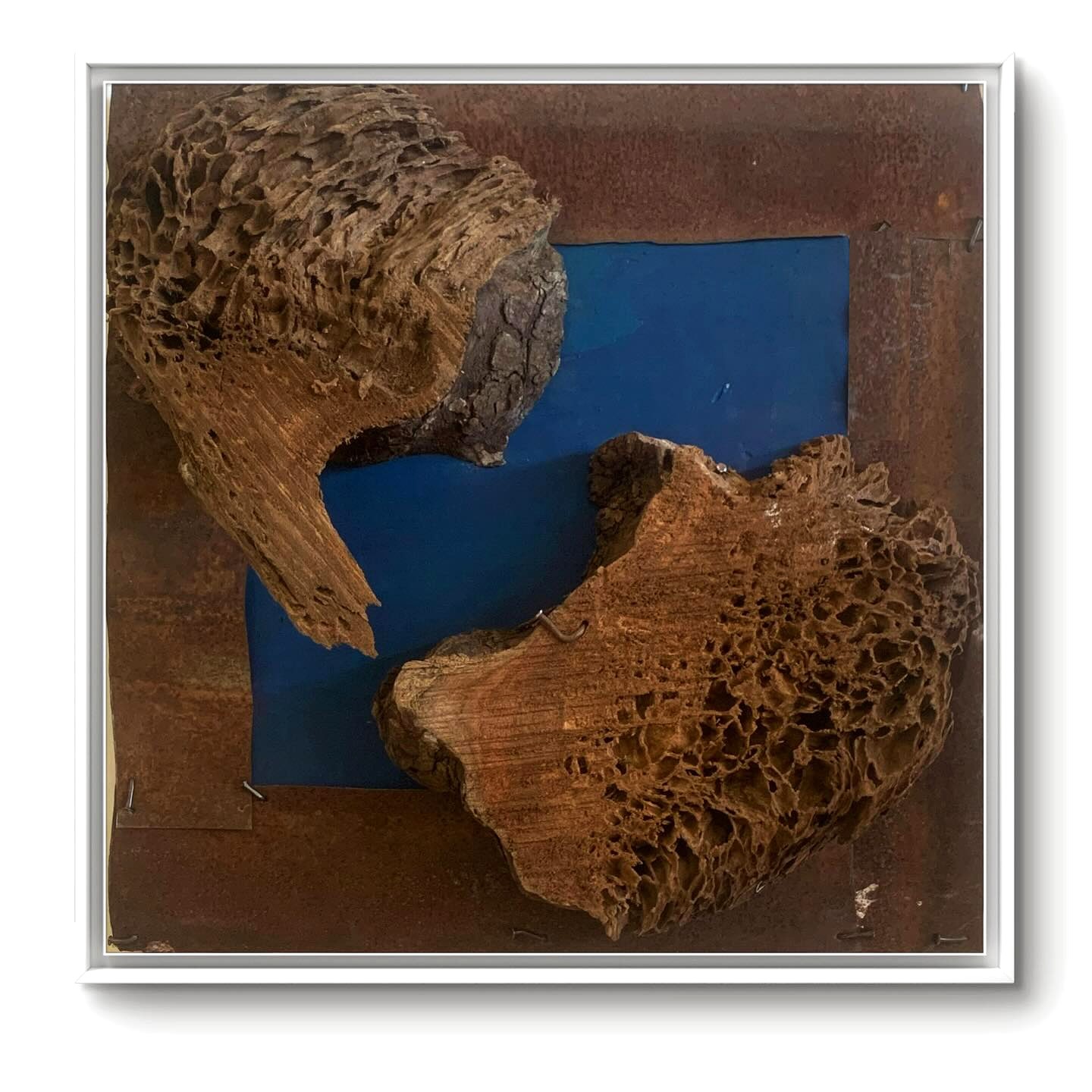
Working with materials like decayed wood, termite-damaged surfaces, rusted metal, and found objects is more about feeling than just visual form. They give me a spiritual and surreal sensation. It’s not only about how they look – it’s about how they feel through touch. Sometimes it feels like the material catches my hand and pulls me into its own rhythm, holding me inside a certain energy. It connects deeply with my inner emotions. The process becomes intuitive and almost like entering another state of awareness.
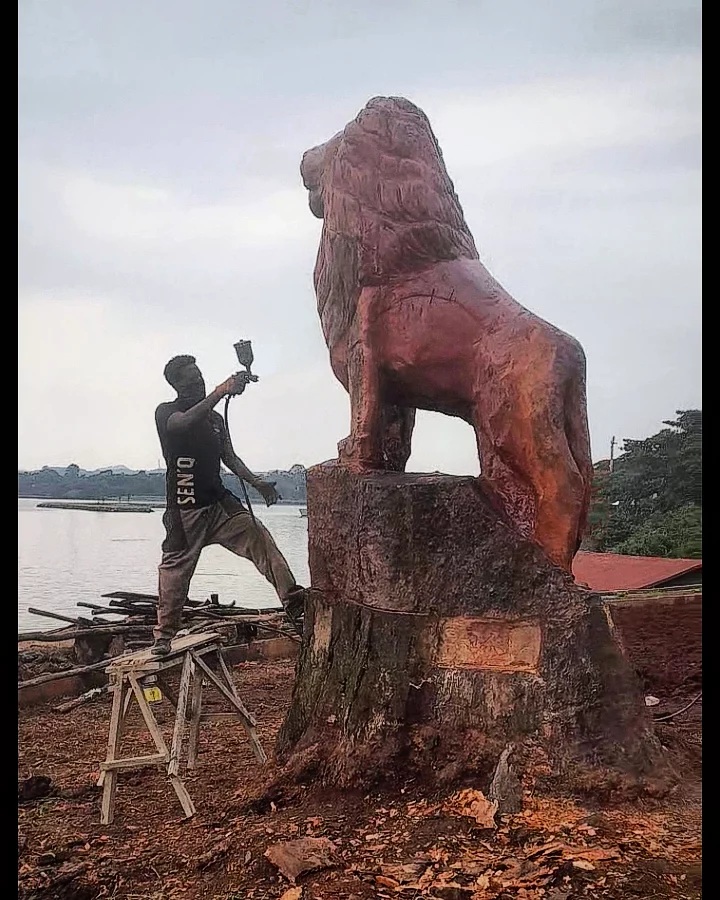
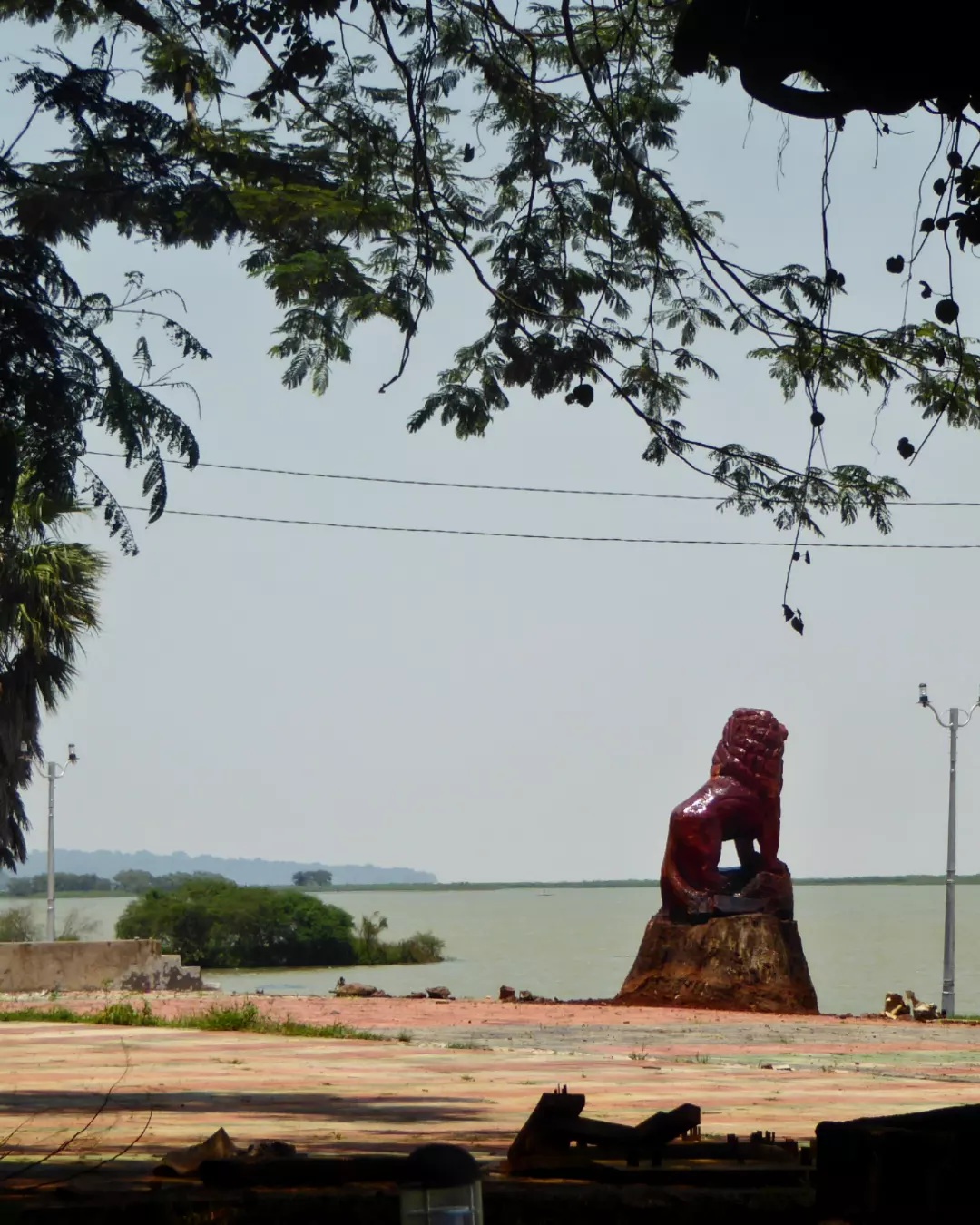
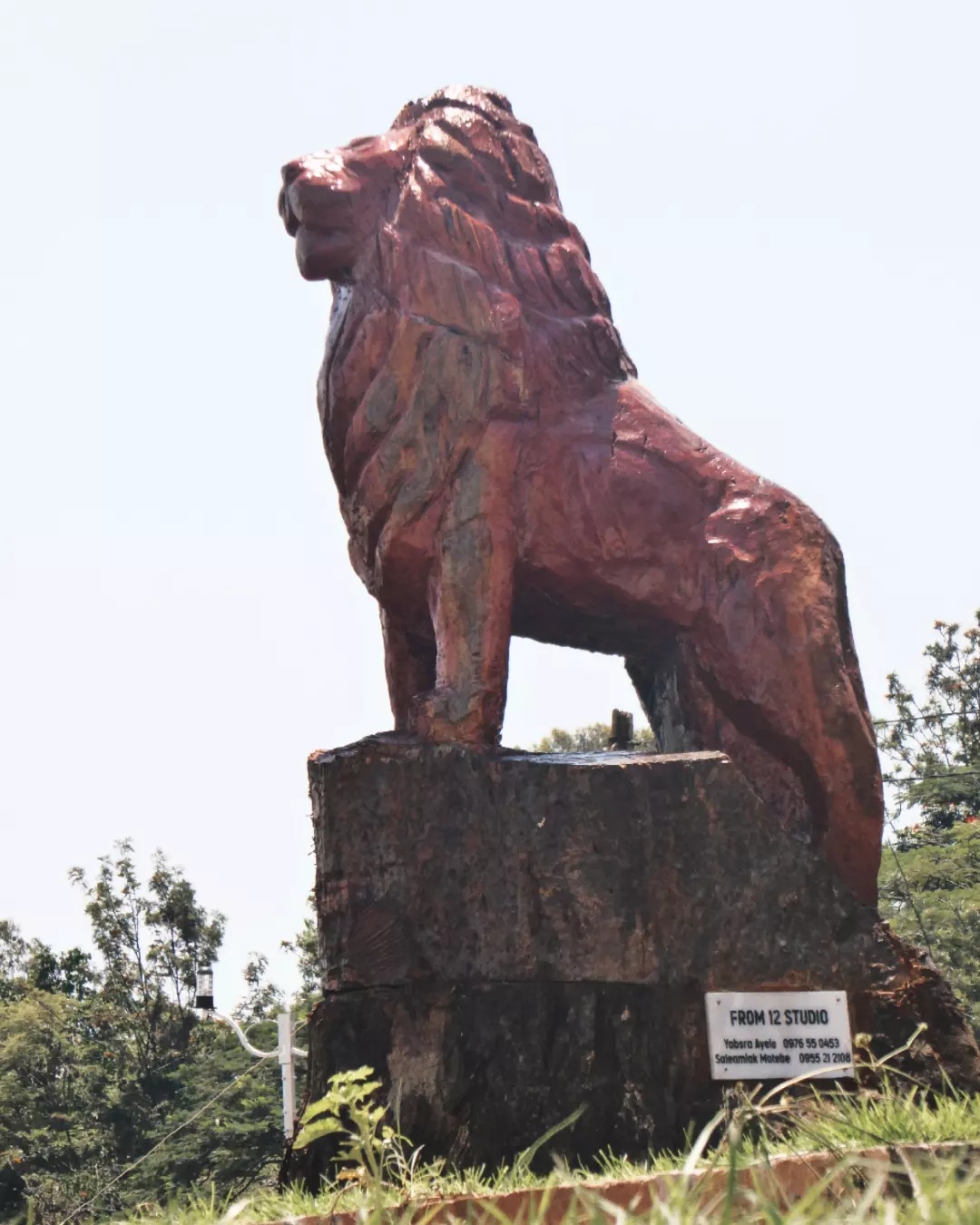
So when you have all those options, which one do you choose? And how? I think it is very connected to your feelings?
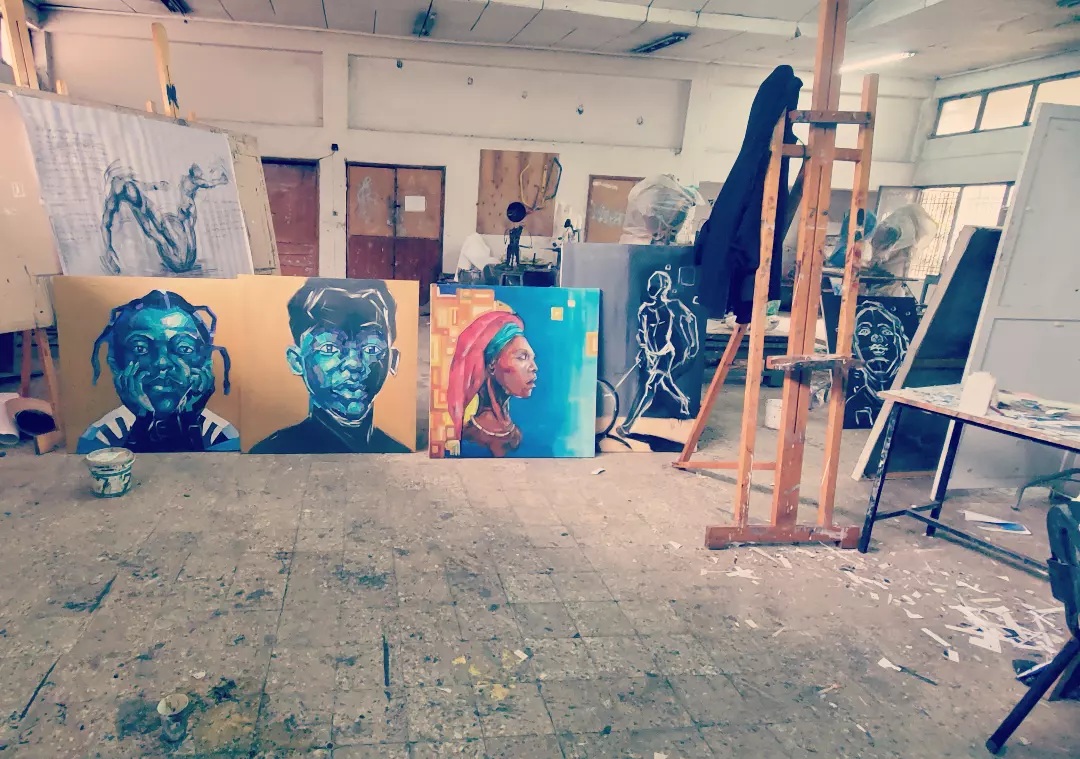
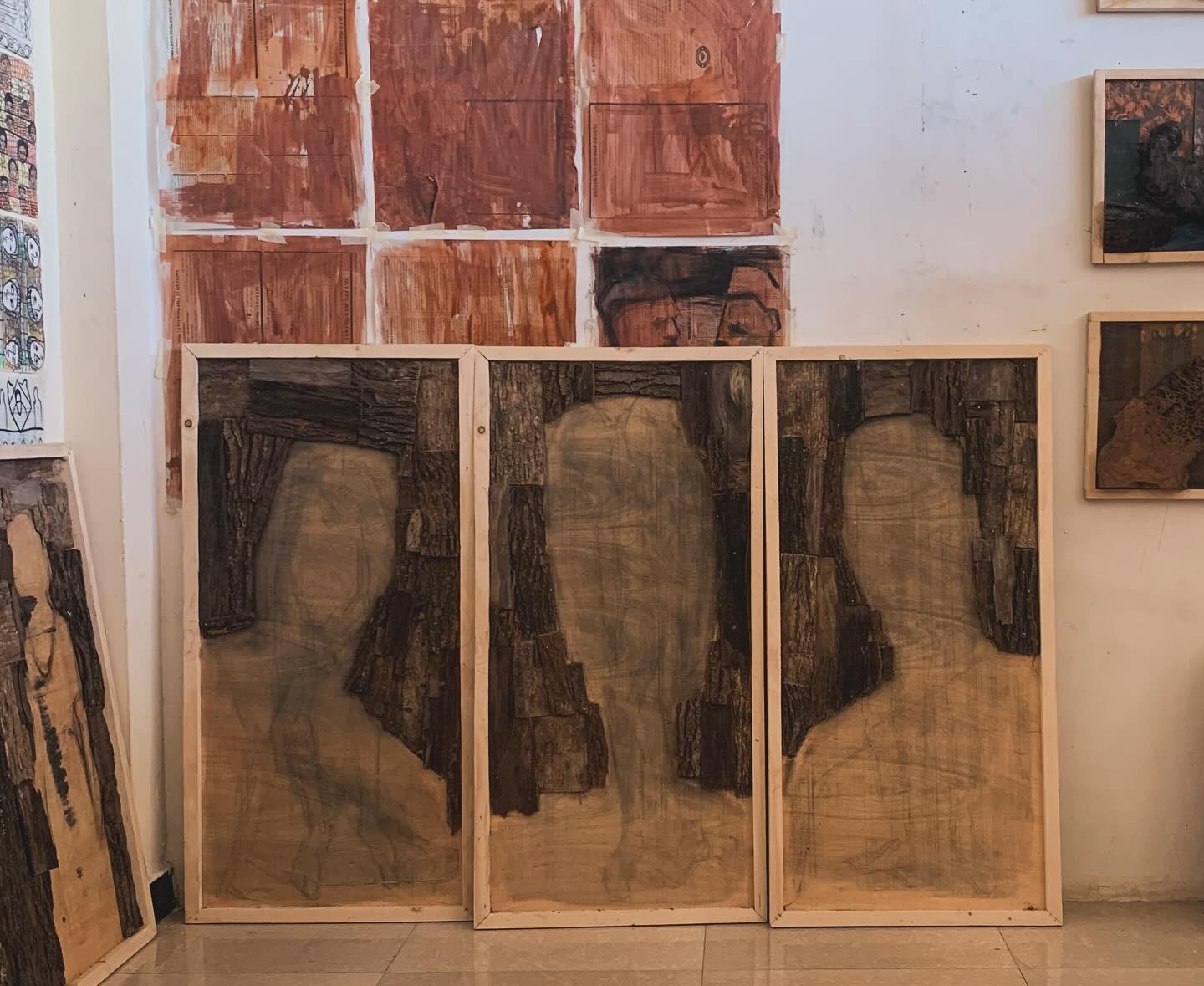
When I enter the studio, I first give my feeling to the space. I stay in silence and try to sense everything. What I feel inside my body, my mind, and my heart. I don’t usually sketch. I begin directly by composing with materials. It becomes a dialogue between me and the work. While choosing, moving, layering, and responding. It’s difficult to describe, but it feels like a spiritual journey. I focus on the vibe, the atmosphere, and the presence of the work, not only the visual outcome.
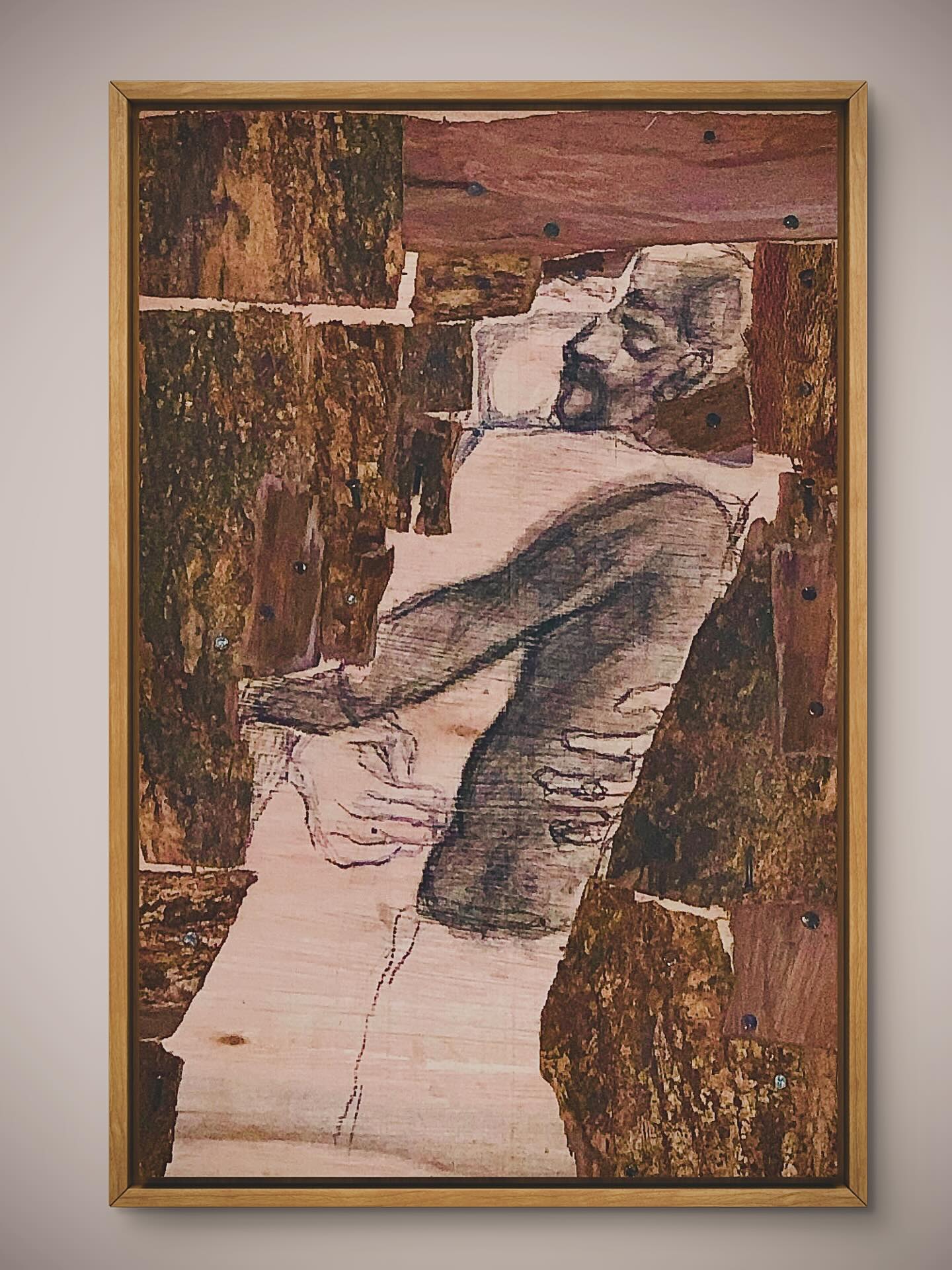
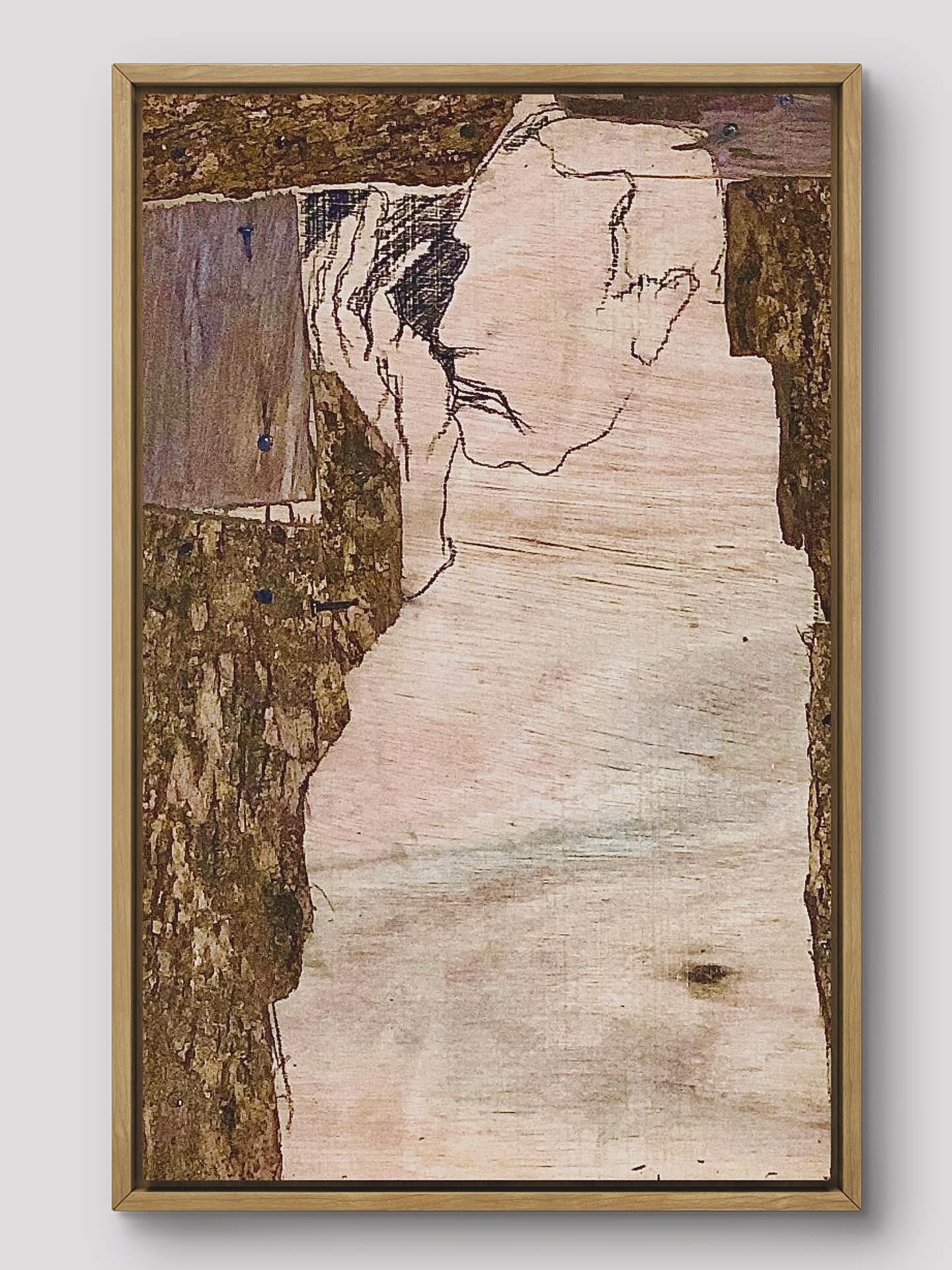
Your main focus right now is painting and visual art. On the one hand, it’s painting, but it also involves piecing together different parts of other works, like a puzzle. This allows you to create very interesting artworks. Tell us more about this idea and technique.
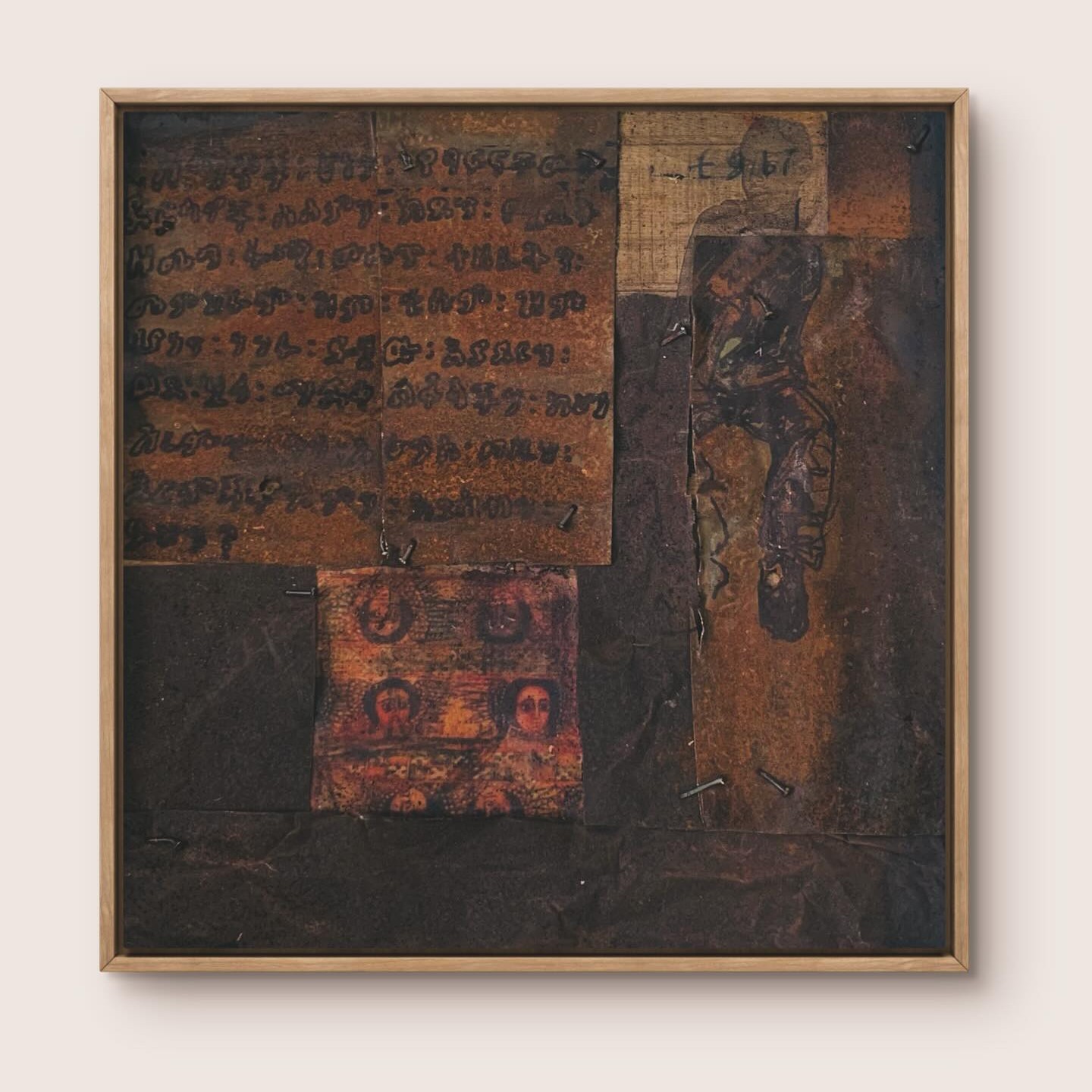
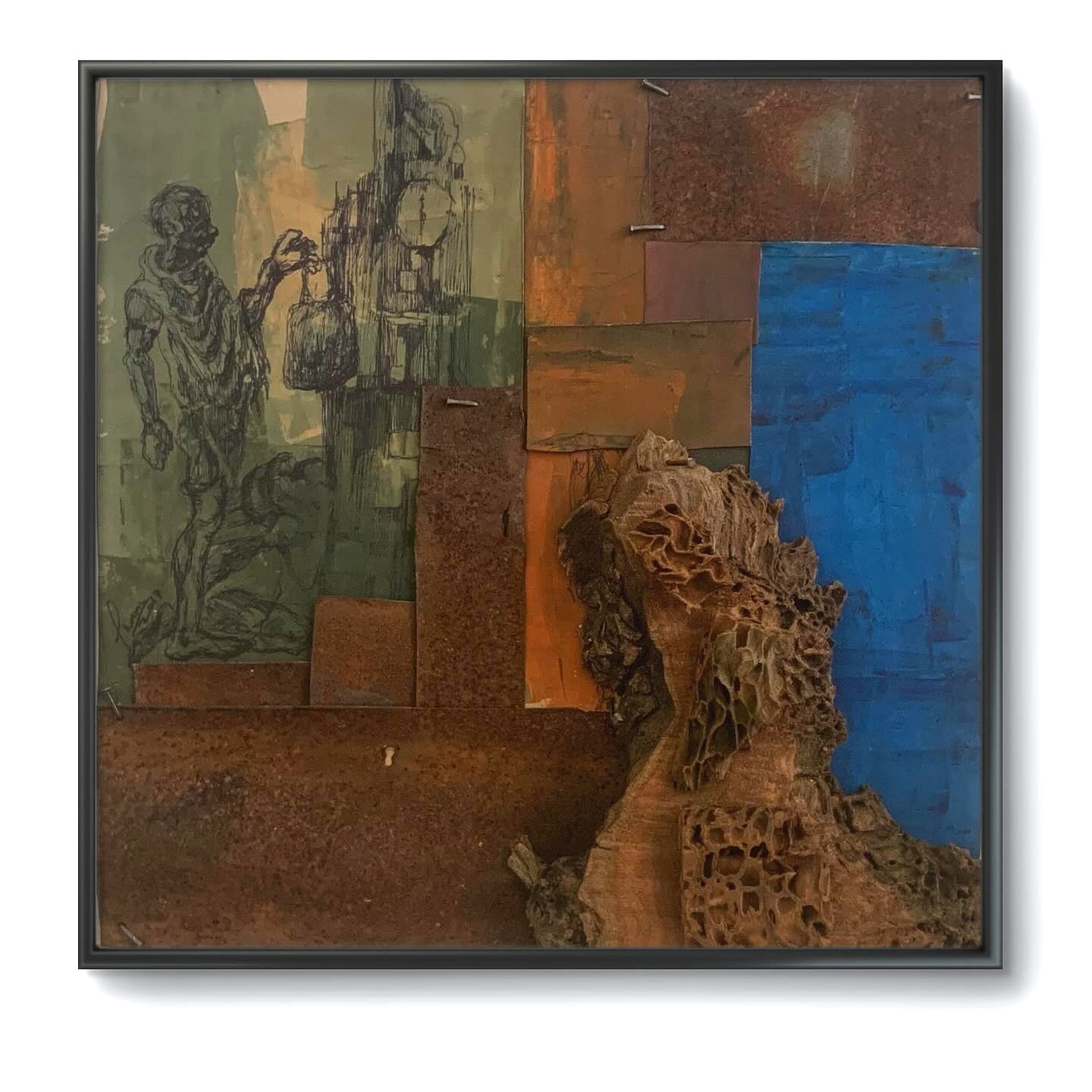
My work is not traditional painting. It’s more about constructing surfaces. I combine materials – paper, pigment, found elements – and build compositions through layering. It’s like assembling fragments, almost like a puzzle, but guided by feeling rather than a fixed plan.
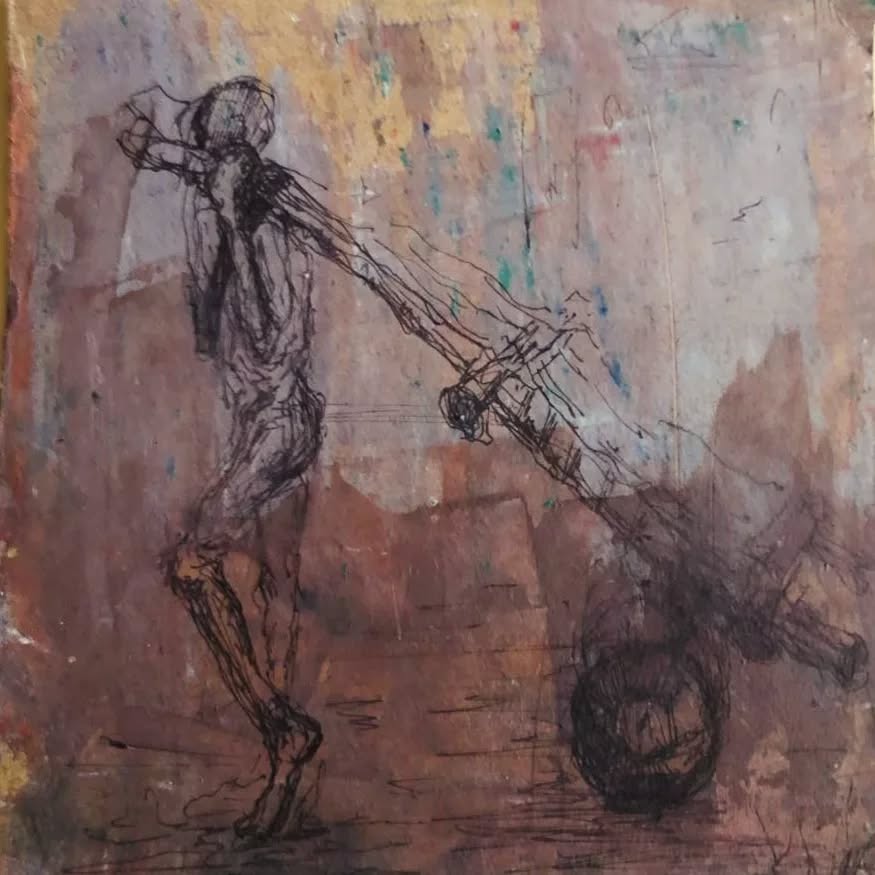
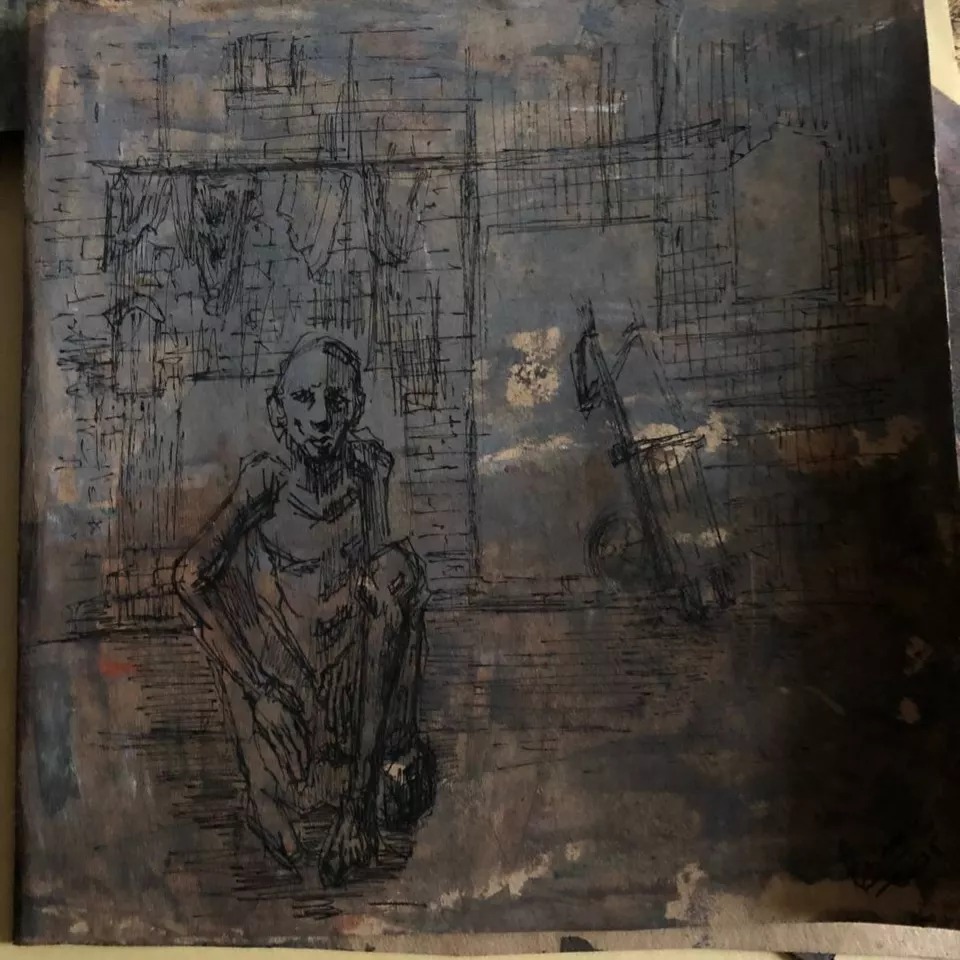
In many of your works, there are iconographic elements. Sometimes carved into wood, or placed on top like a plaque. What’s the story behind that?
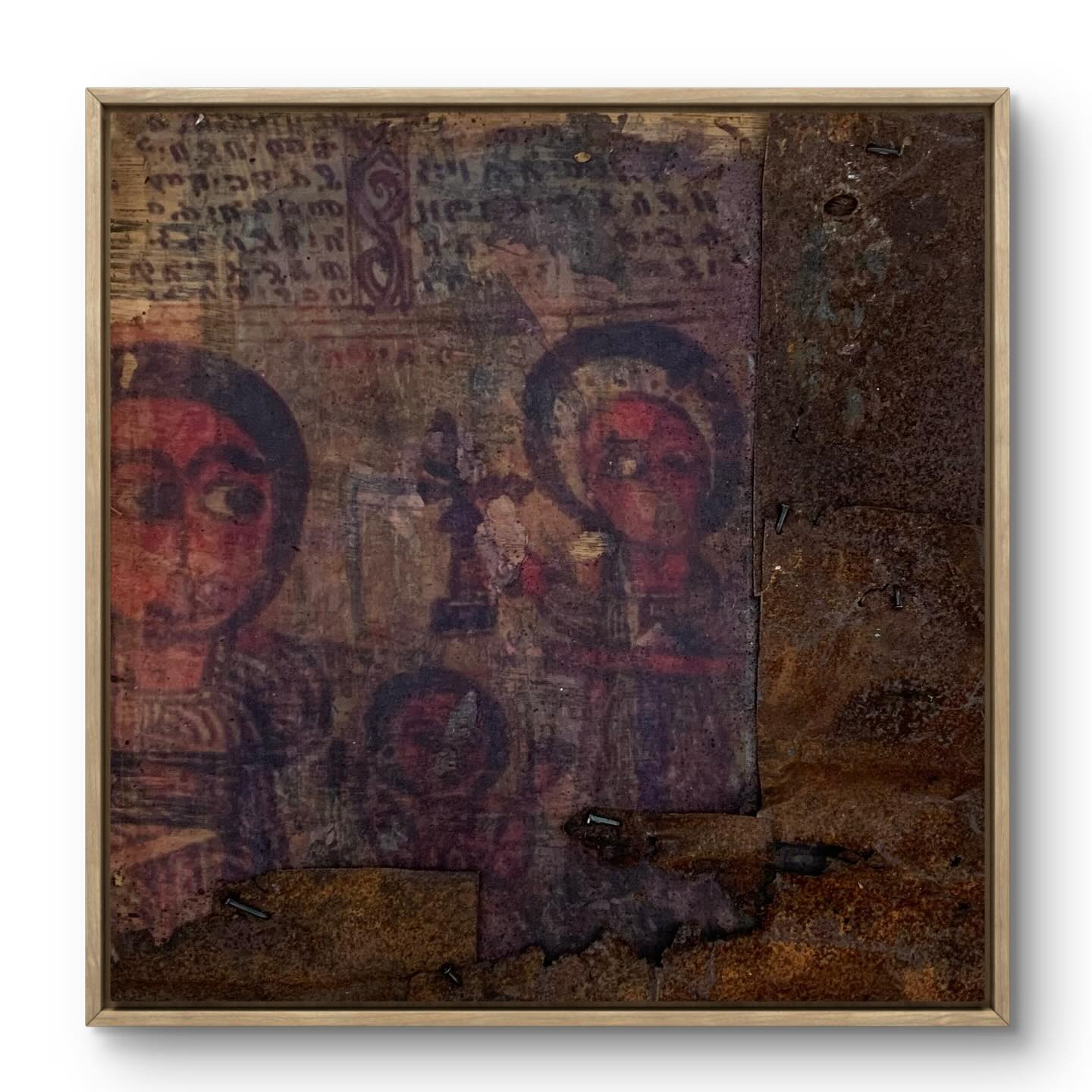
The symbols and icon-like forms in my work come from cultural and spiritual references, especially from Ethiopian visual traditions and church imagery. They are not direct copies, but interpretations. I use them to connect memory, belief, and identity with contemporary expression.
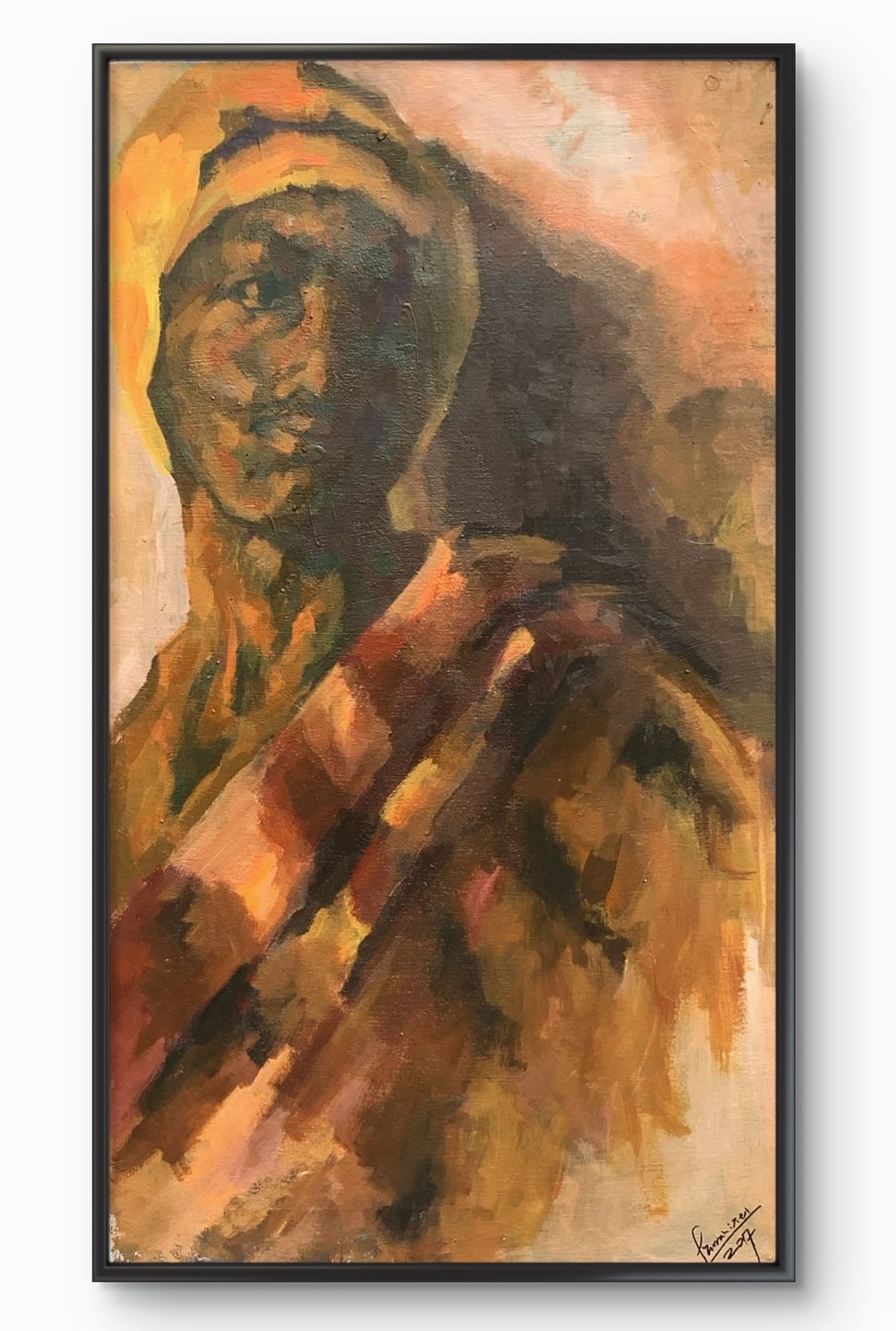
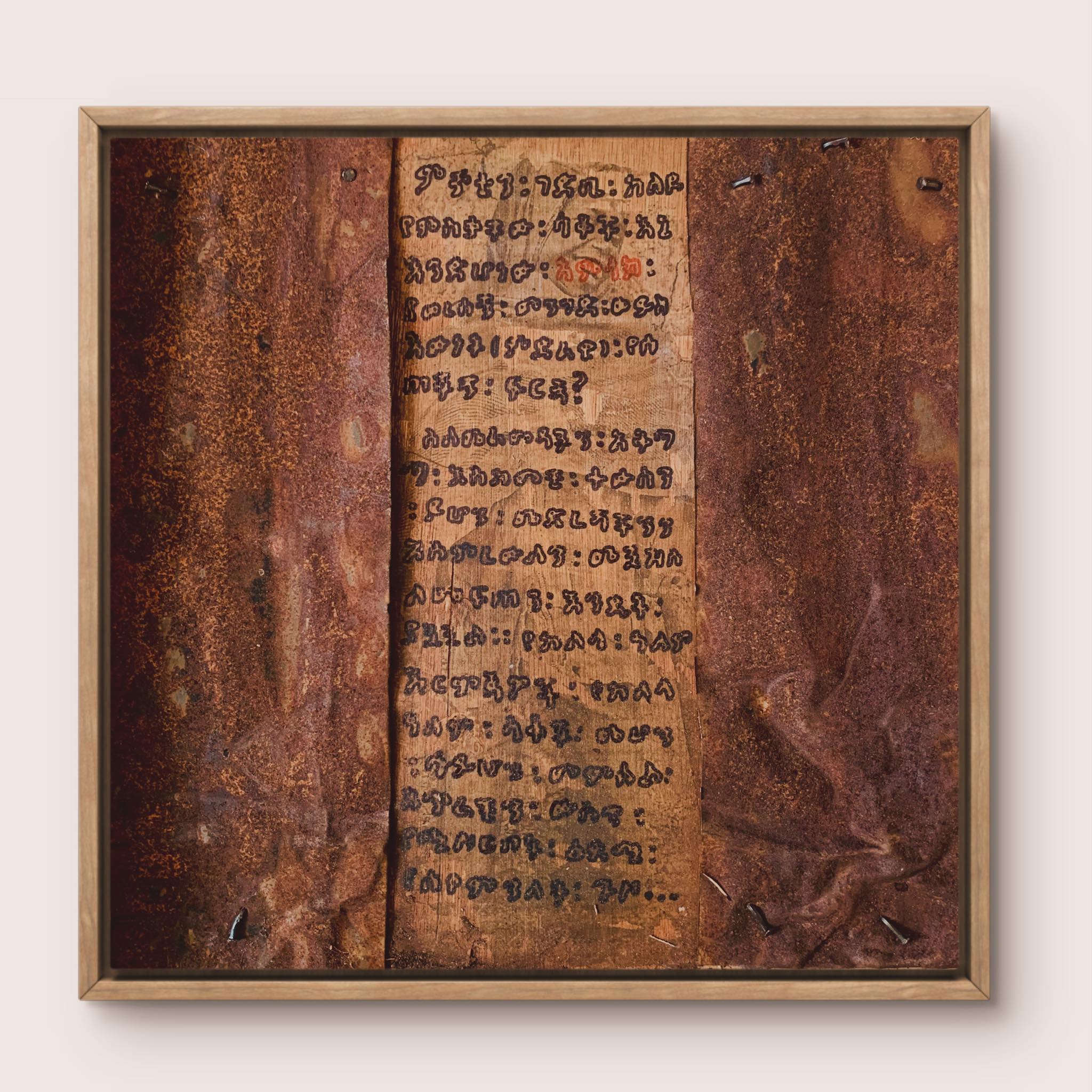
You’ve titled one of your series “Decaying Fences”. It’s a mix of corrosion, metal, and fence parts. Tell us more about the concept and the series.
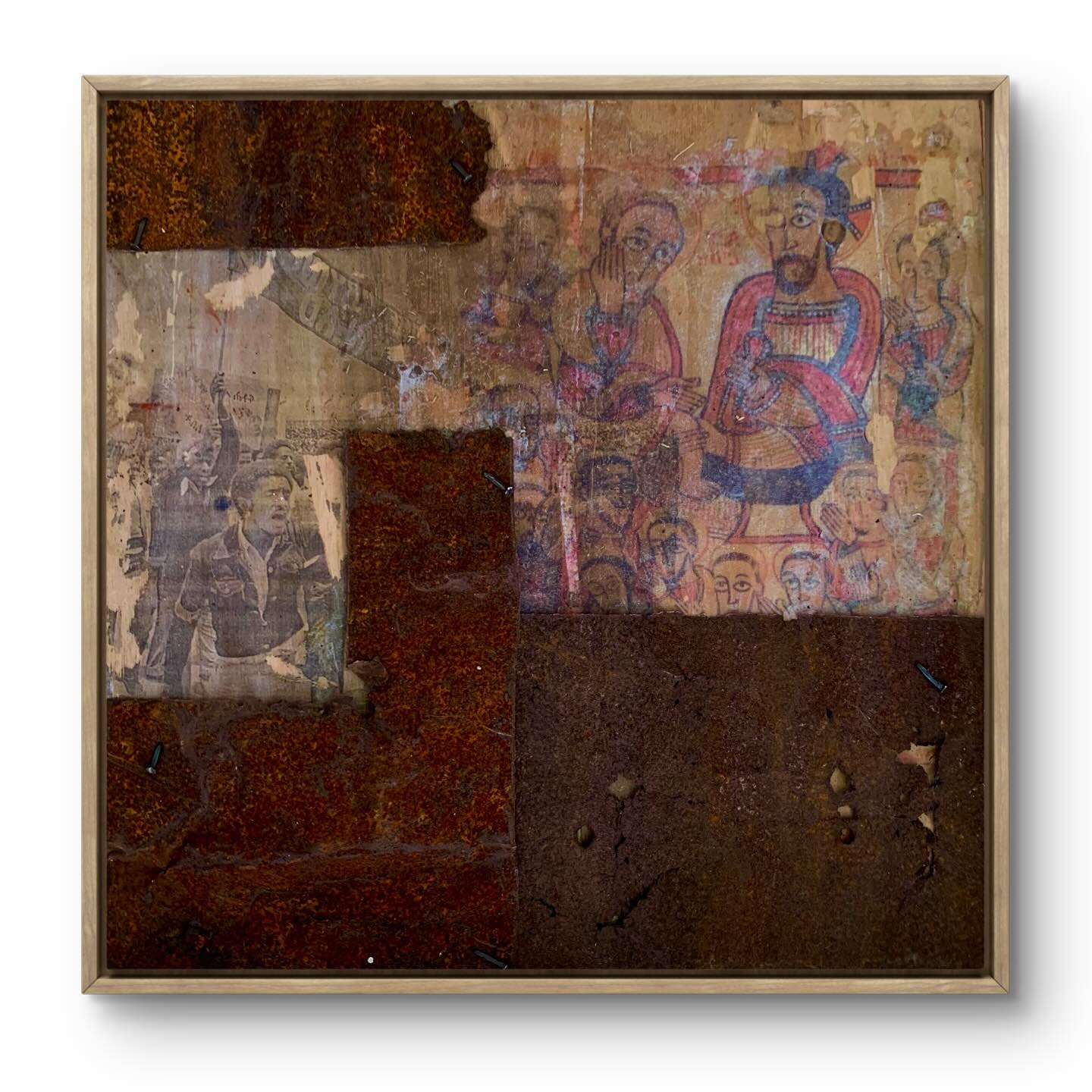
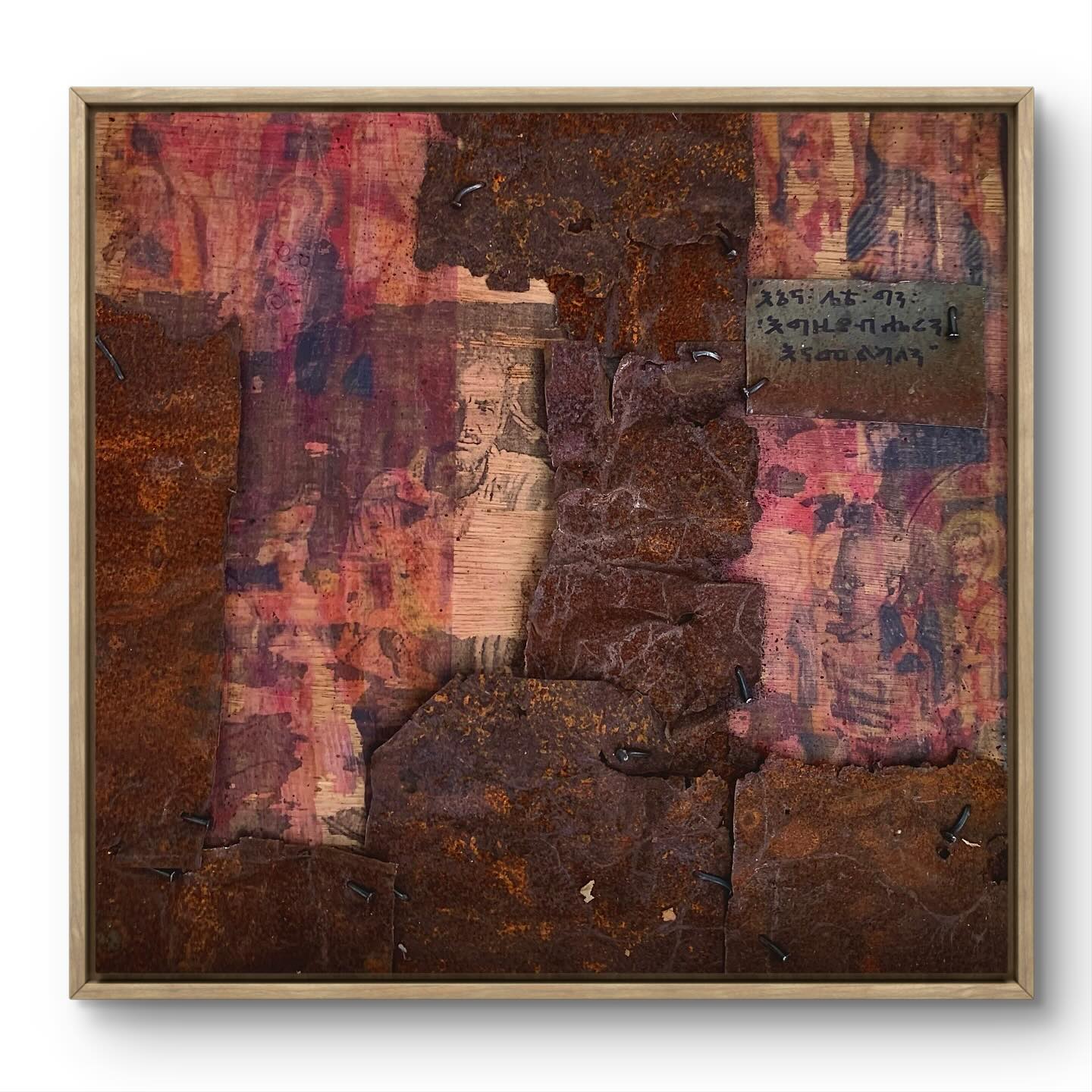
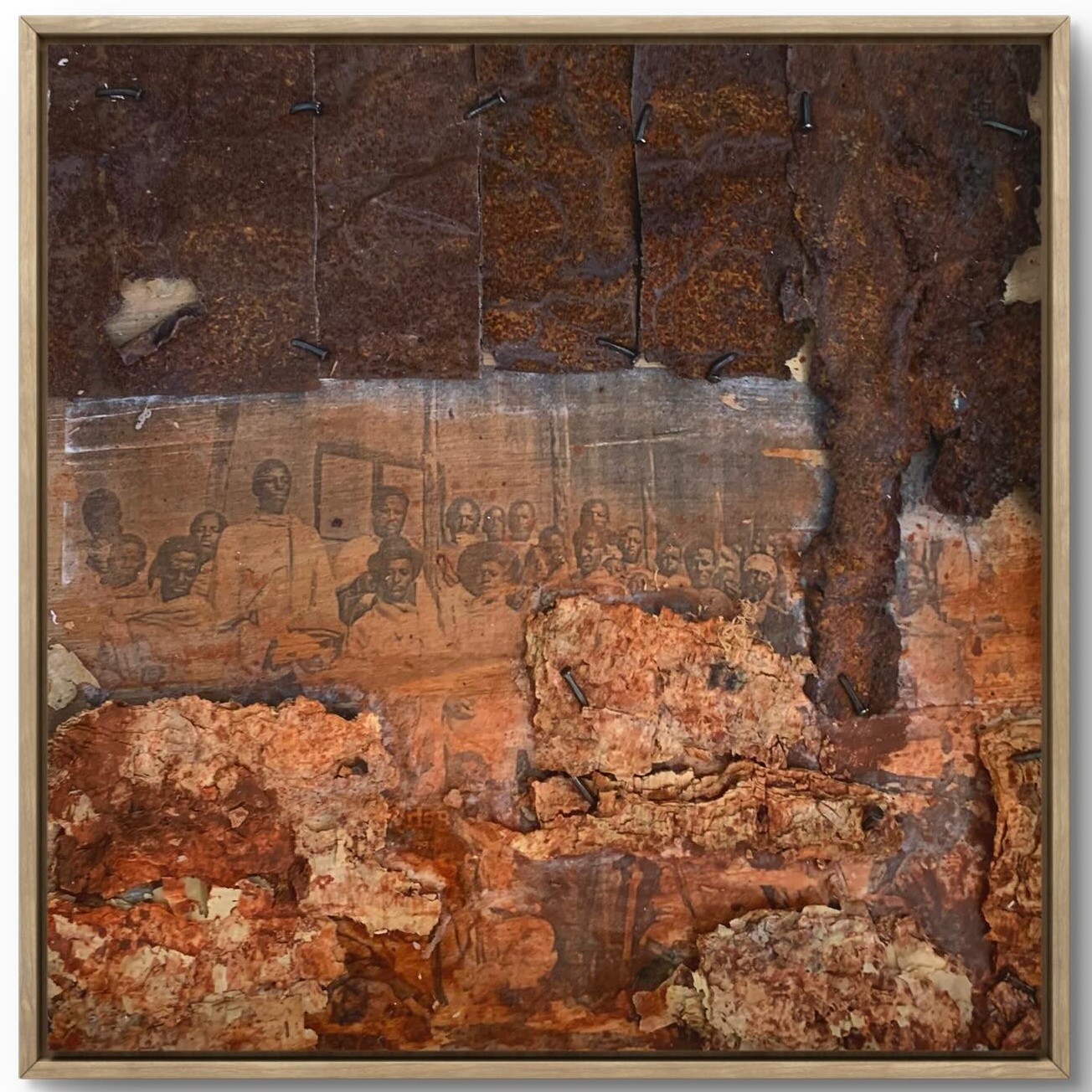
A fence is built to divide or protect, yet when it decays, it reveals connection. Rust, cracks, and collapse become symbols of time’s quiet democracy -showing that even barriers dissolve into the same earth. Through layering, dismantling, and text interventions, I transform discarded fragments into reflections on fragility, belonging, and passage. My process is not about reconstruction, but about listening – to what time erases and what it leaves behind. In this way, decay becomes language, the boundary becomes memory, and the fence becomes a mirror of human transformation.
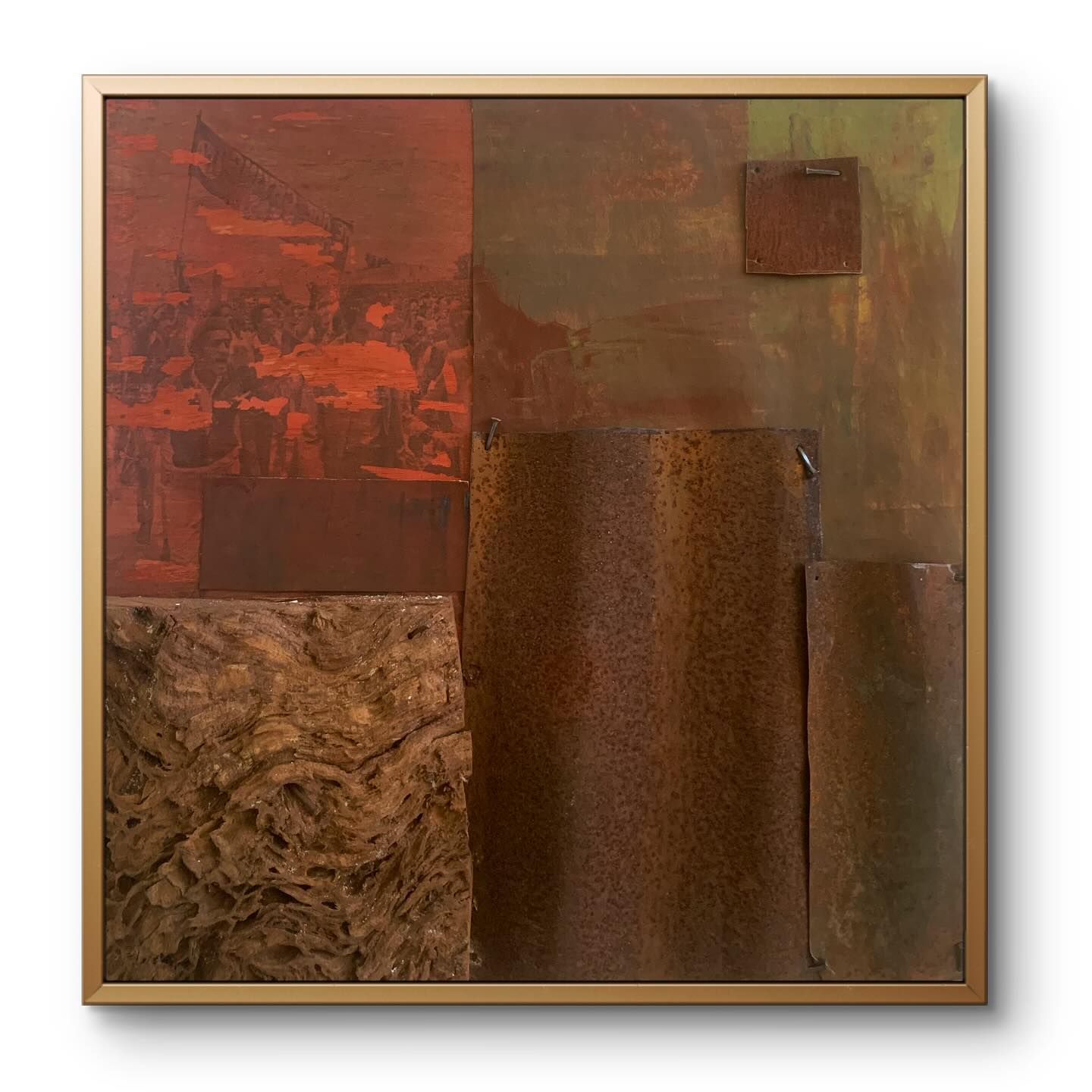
There’s an article about you in Black Art Review, which is a great journal. There you also said, that your work tends to question the world, truth, freedom, racism, division. Tell us more about the messages and also criticism behind your works.
In my view, an artist is someone who sees outside the track while the world is running. In my work, I always try to raise questions: What is truth? Where does unity go? What is our “fence”? Who divides the world? Is a fence protection or a system of control? In today’s world, through social media, technology, urbanization, and globalization, there are many systems that shape how we think. I question whether we are also inside invisible fences, seeing only in one direction without fully understanding the world. I also think about deeper questions – our purpose, our destiny, and what responsibility we carry as human beings.
Which other artists serve as role models for you? Which artists have influenced you in your developement and in your thinking? Tell us especially about the people from your country and your neighborhood.
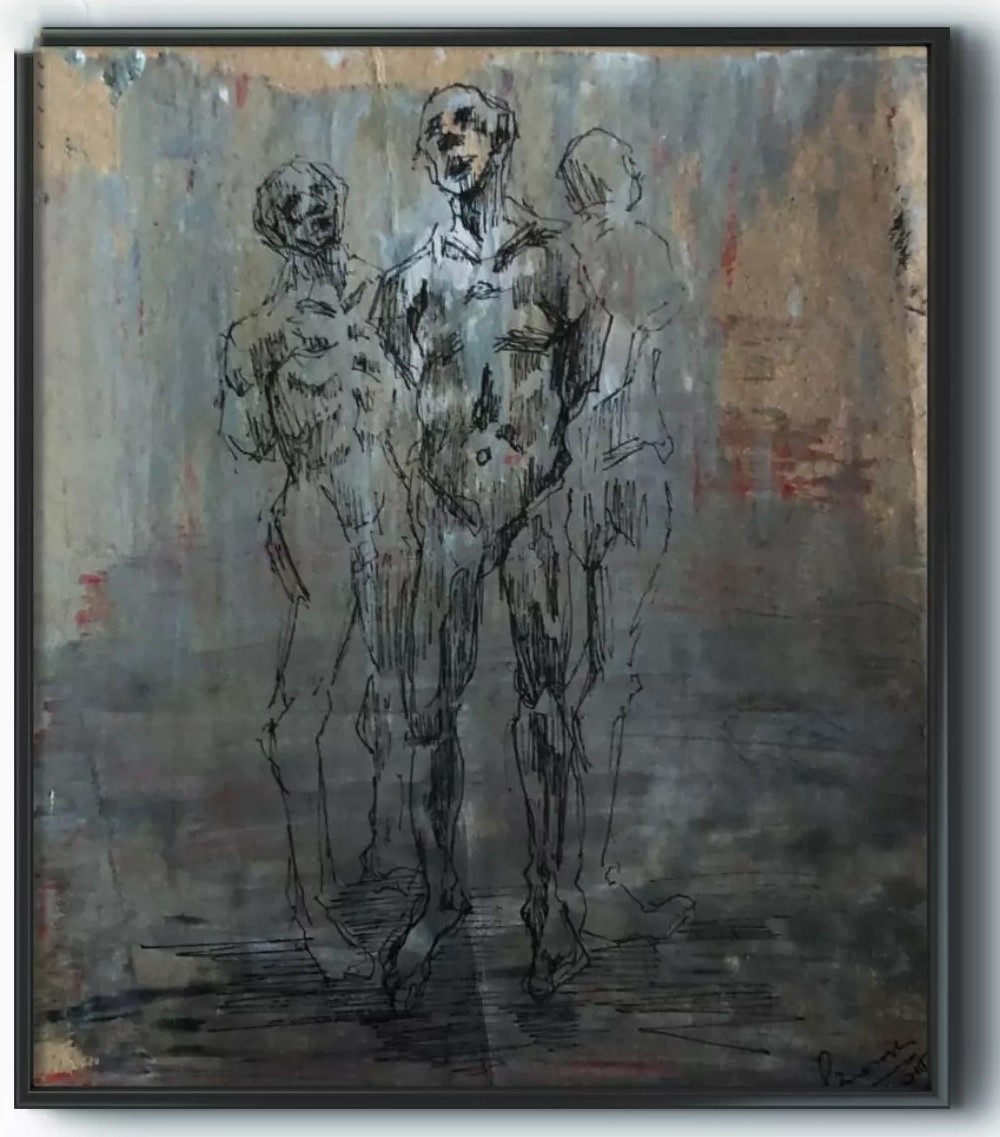
I’m influenced by many artists, both locally and internationally. From my country and my surroundings, I’m especially inspired by artists who work with strong identity and storytelling. The environment around me also plays a big role – people, daily life, and local culture. These influences shape how I think and how I approach my work. From Ethiopia definitely to name: Elias Sime, Wondimagegnehu Bellete, Behailu Bezabih and Melaku Ayele. Internationally: El Anatsui and Ibrahim Mahama. These artists influence me especially in their material approach and conceptual thinking.
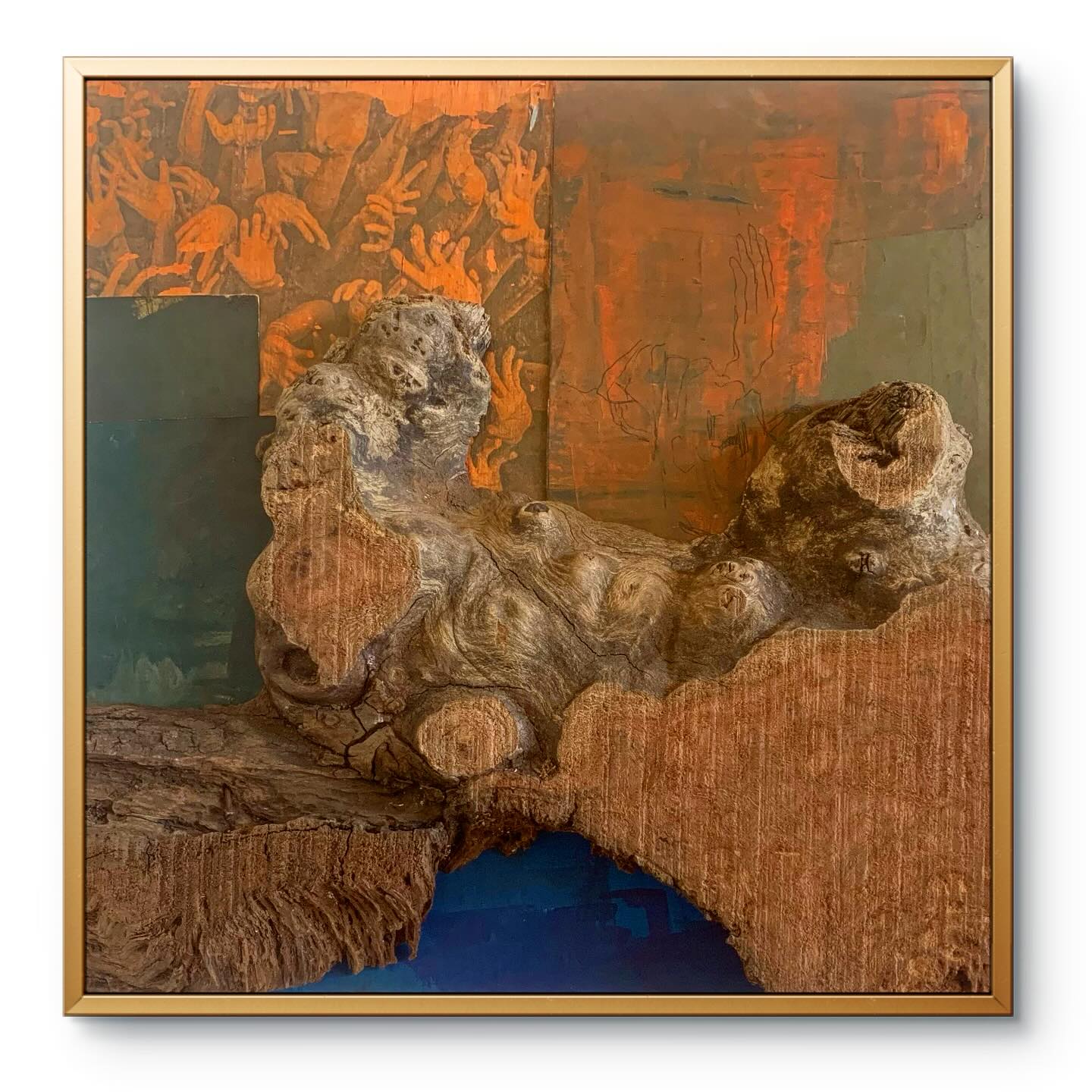
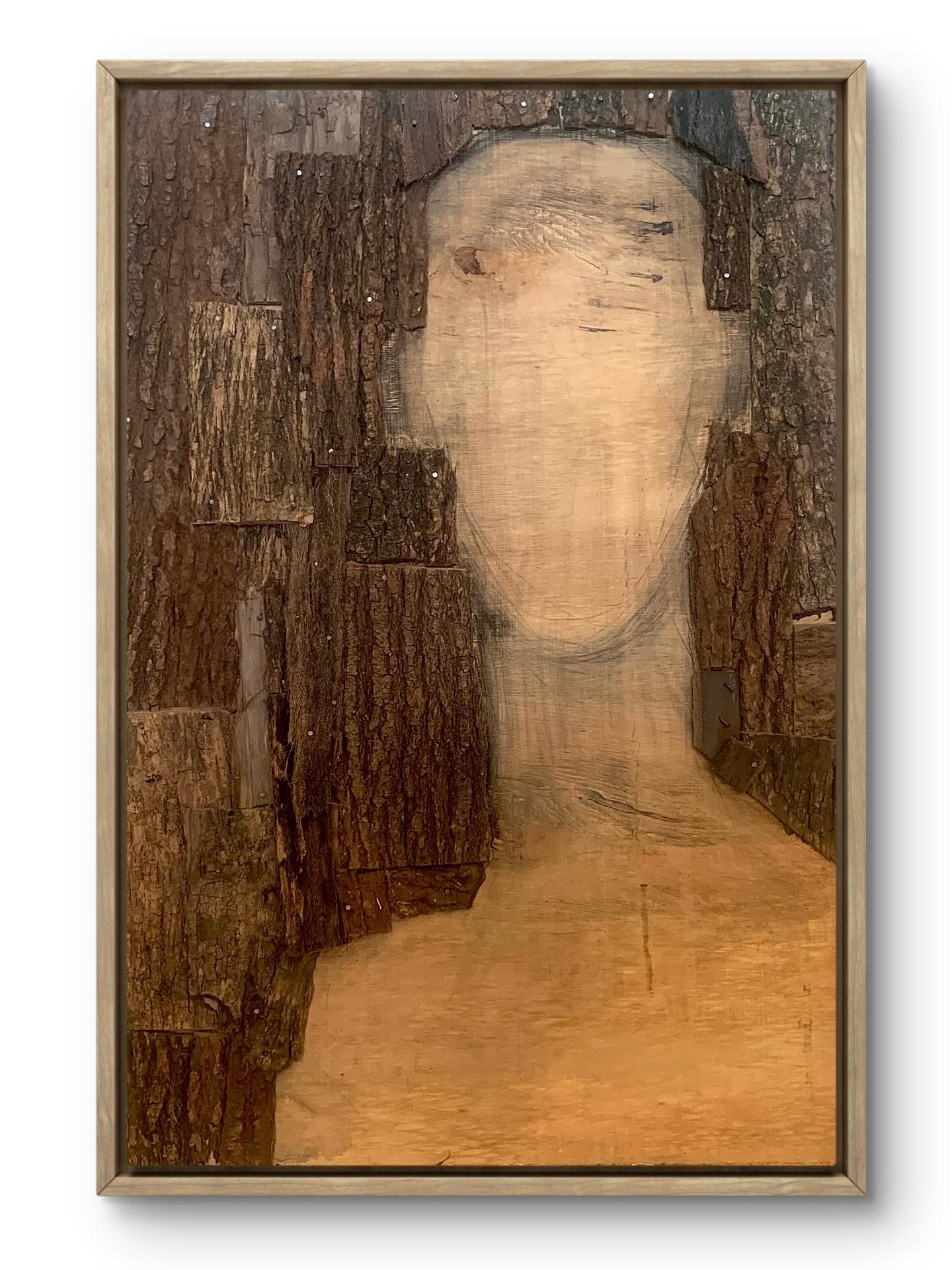
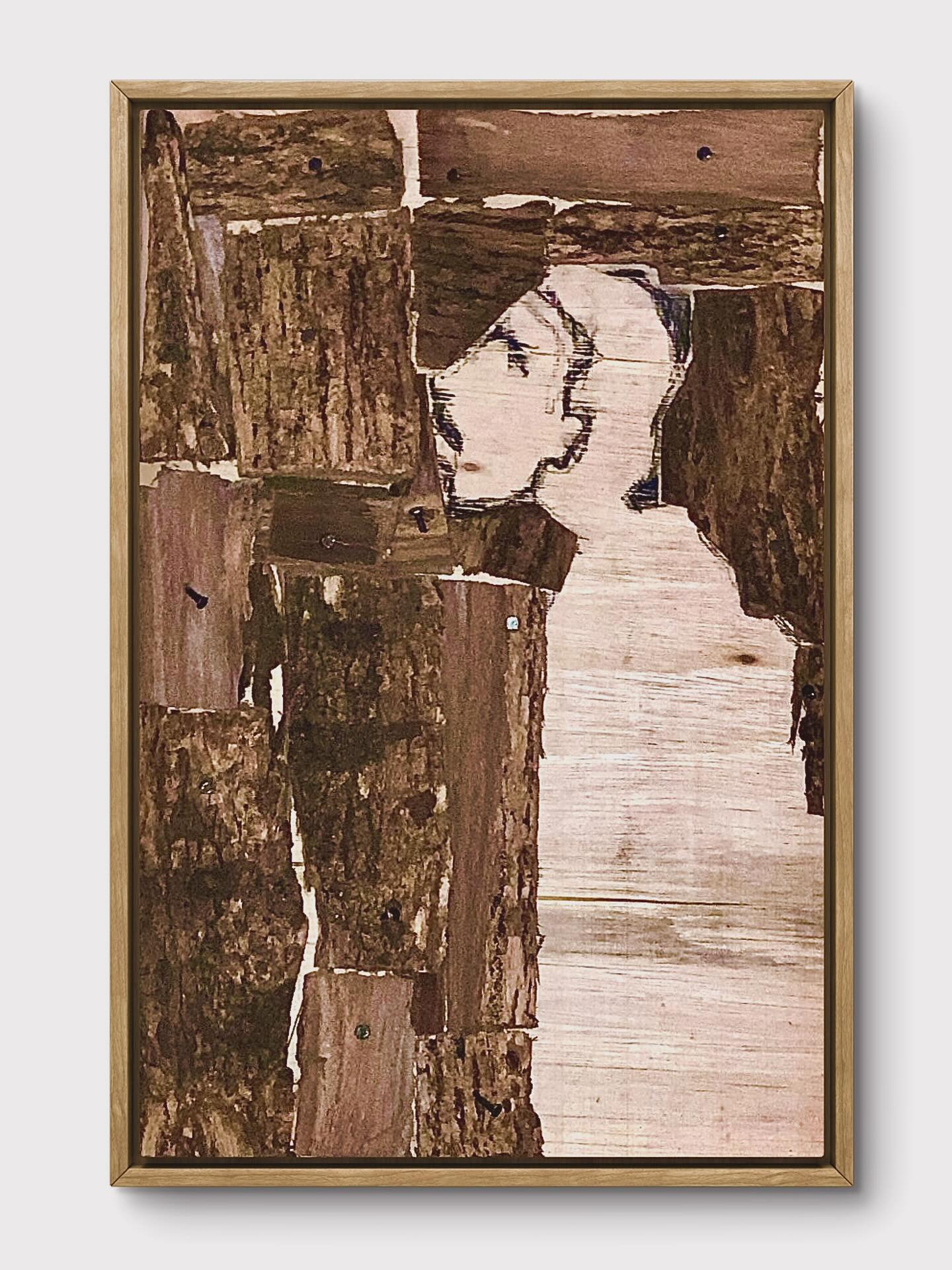
Your latest works have focused on a specific color tone. Everything is kept very brown. The atmosphere of the images also reminds of earth or rock formations in the desert. It’s very maroon, presenting everything in an antique style. But then again, it’s abstract. Tell us more about this idea and what your thoughts are on it.
The brown tones come from my interest in earth, decay, and time. It relates to rust, soil, and aging surfaces. I use these tones to create atmosphere—something that feels both ancient and contemporary. It also removes distraction and allows the viewer to focus on texture and presence.
You’ve already had exhibitions and various art projects. Tell us a few words about your exhibitions. What was that like for you? And do you have any more planned?
I have participated in group exhibitions at Bahir Dar National Museum, Bahir Dar University, and Addis Ababa University. These experiences helped me understand how my work exists in public space and how audiences engage with it. I continue to develop new projects and look forward to future exhibitions.
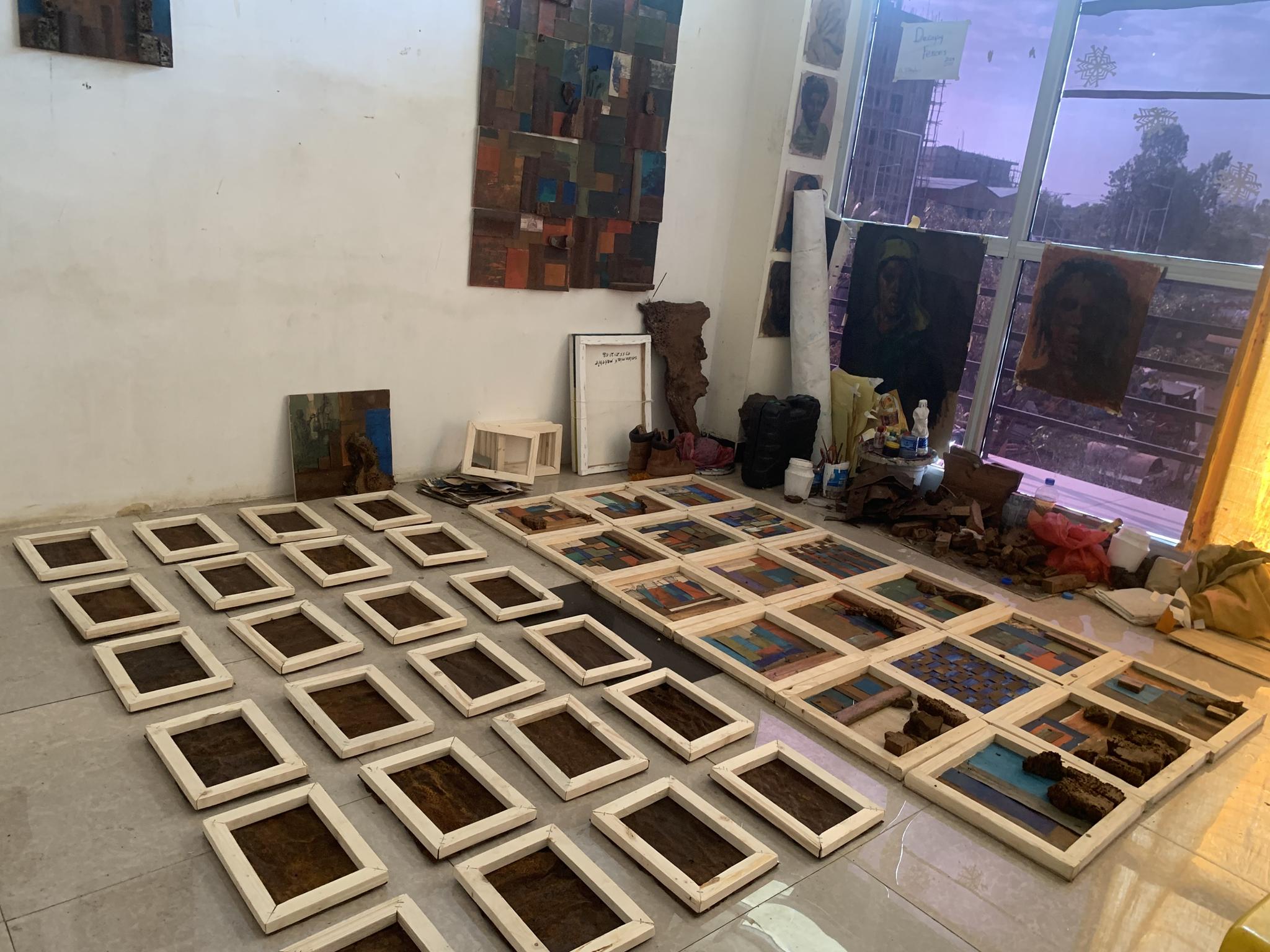
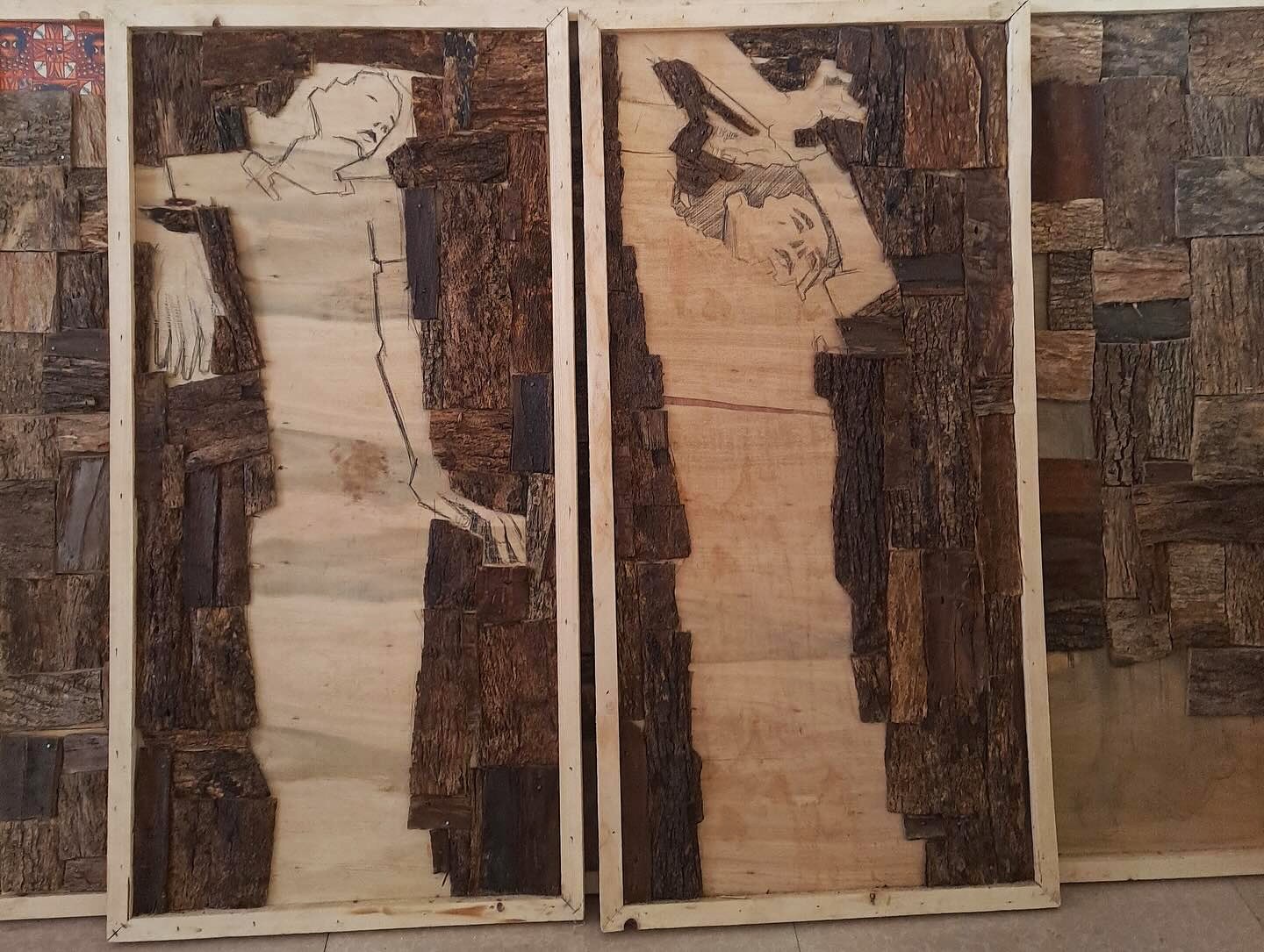
Your artworks have also been presented in other countries around the world. For example you had an exhibition at VI Galeri in Fortaleza, Brazil.
Yes, my works were shown at VI Galeri in Fortaleza, Brazil through an international connection and interest in my work. I wasn’t physically there, but it was an important opportunity to expand my audience and connect my practice to a wider global context.
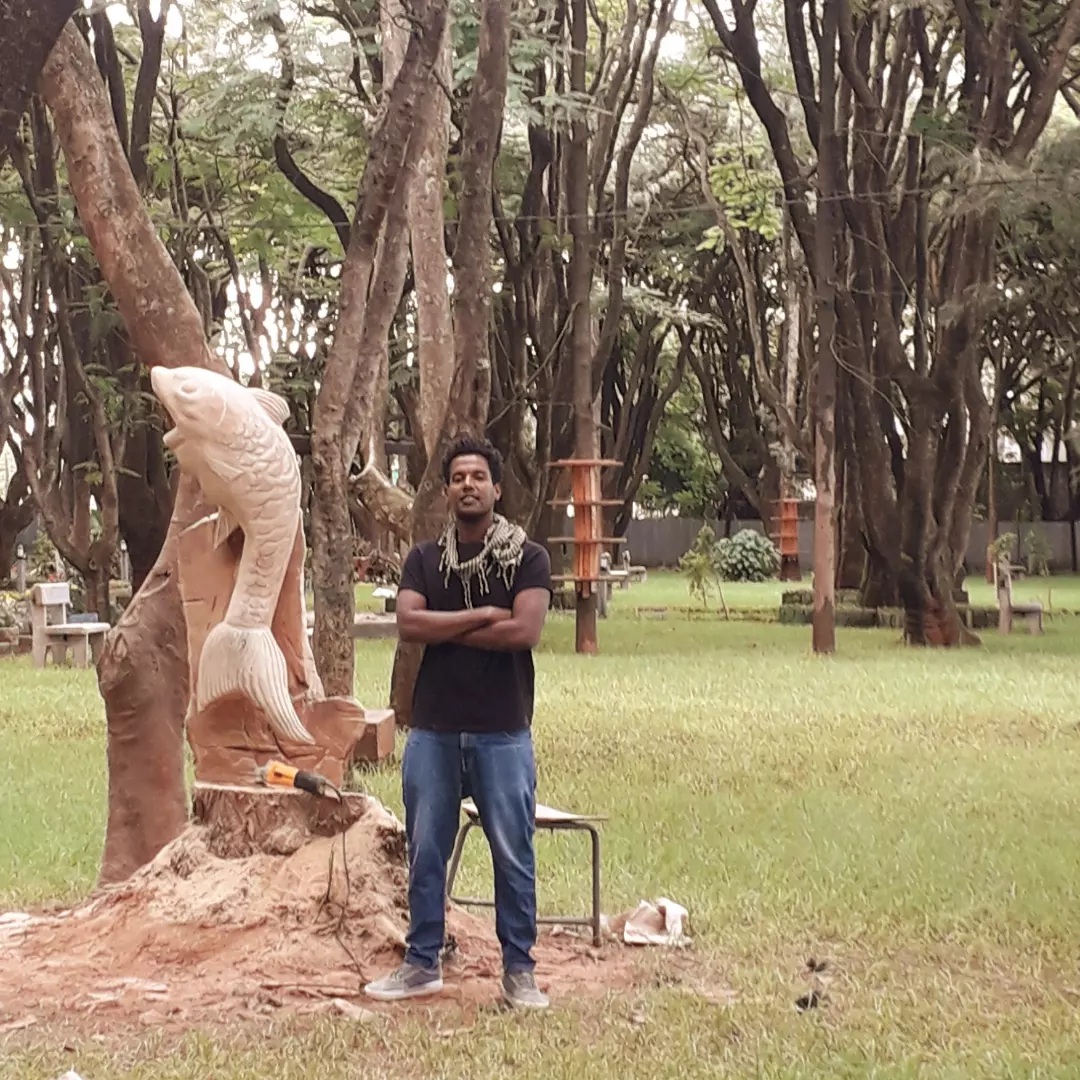
You live in Addis Ababa, the capital of Ethiopia. Tell us a little more about the city and the art scene there. What’s it like for you there as an artist?
Addis Ababa is a very dynamic city with a growing contemporary art scene. There are challenges, but also many opportunities. For me, it’s a place of contrast – tradition and modernity exist together, and that influences my work a lot.
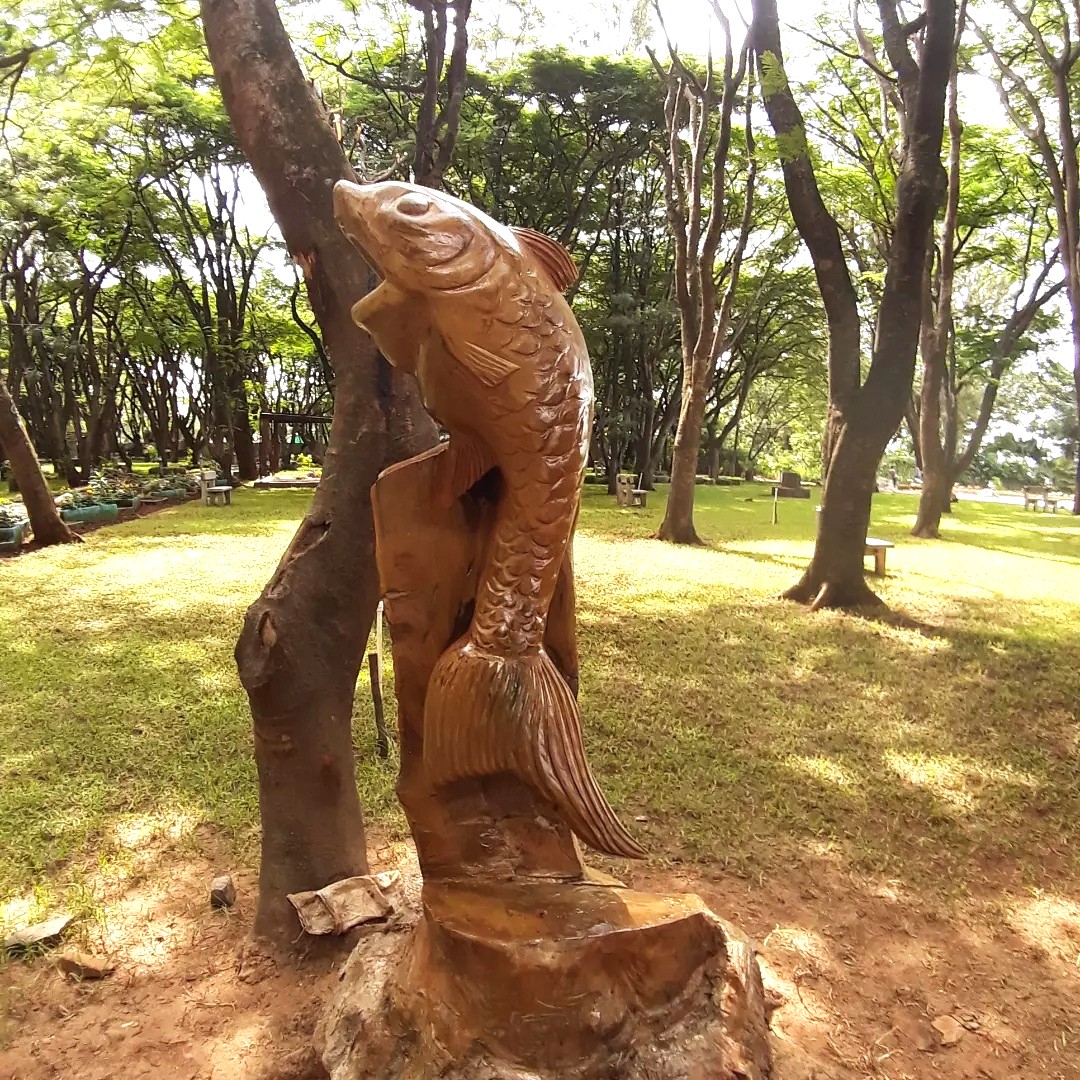
If someone interested in art is coming to Addis Ababa, what places would you recommend? Galleries, museums, sights, street life?
I recommend places like Addis Fine Art, Zoma Museum, Gebre Kristos Desta Center, Makush Gallery, LeLa Gallery, Abyssinia Gallery, and Entoto Art Gallery. These spaces show strong contemporary work and reflect the diversity of the scene.
Our platform is very connected to graffiti and streetart. So of course we have to ask about that. What can you tell us about urban art at your place? Is there graffiti? Of course, everywhere is graffiti. But how is it in Addis Abeba? Do you have cool graffiti jams or streetart events? And about you, did you do art on the walls as well?
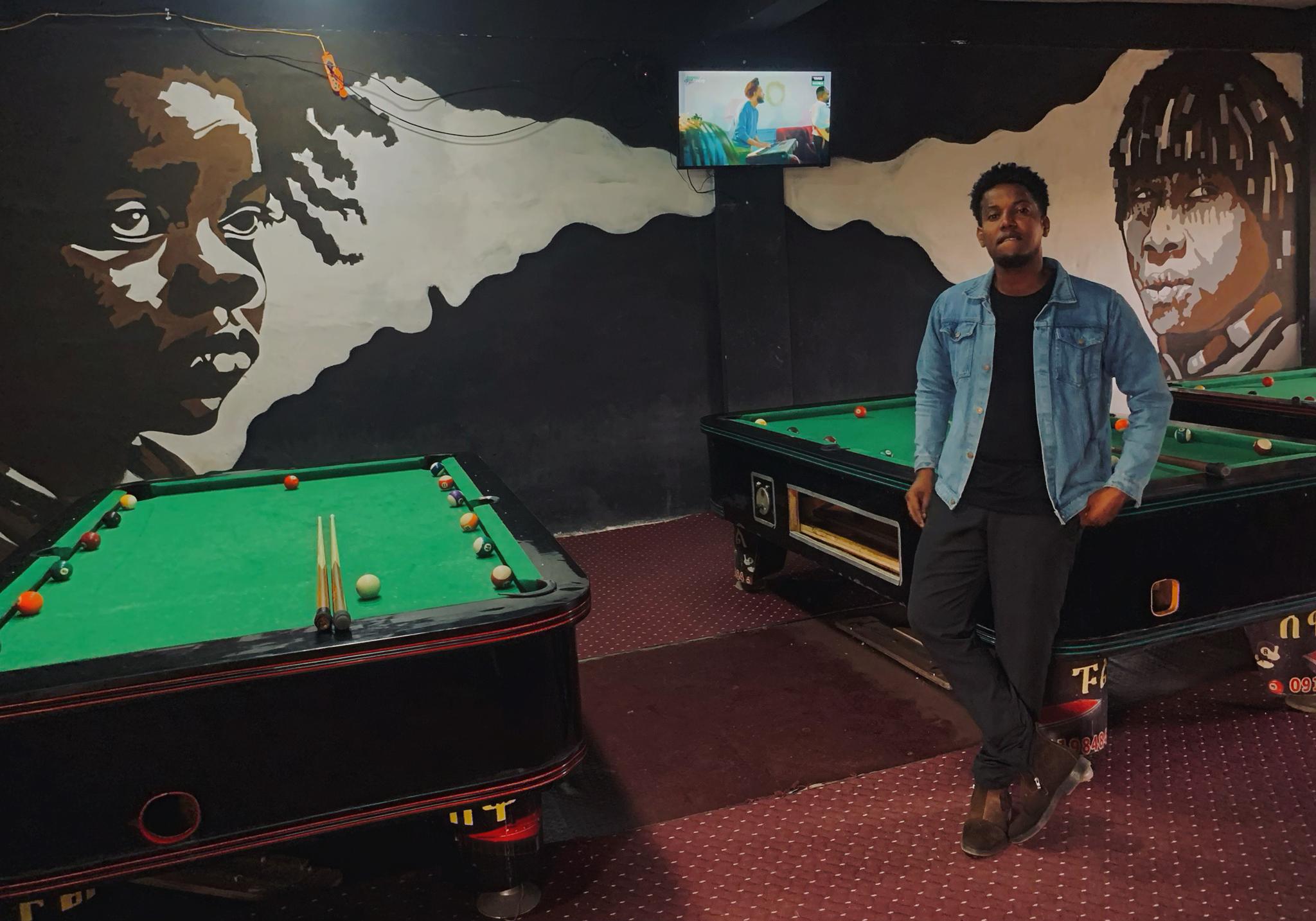
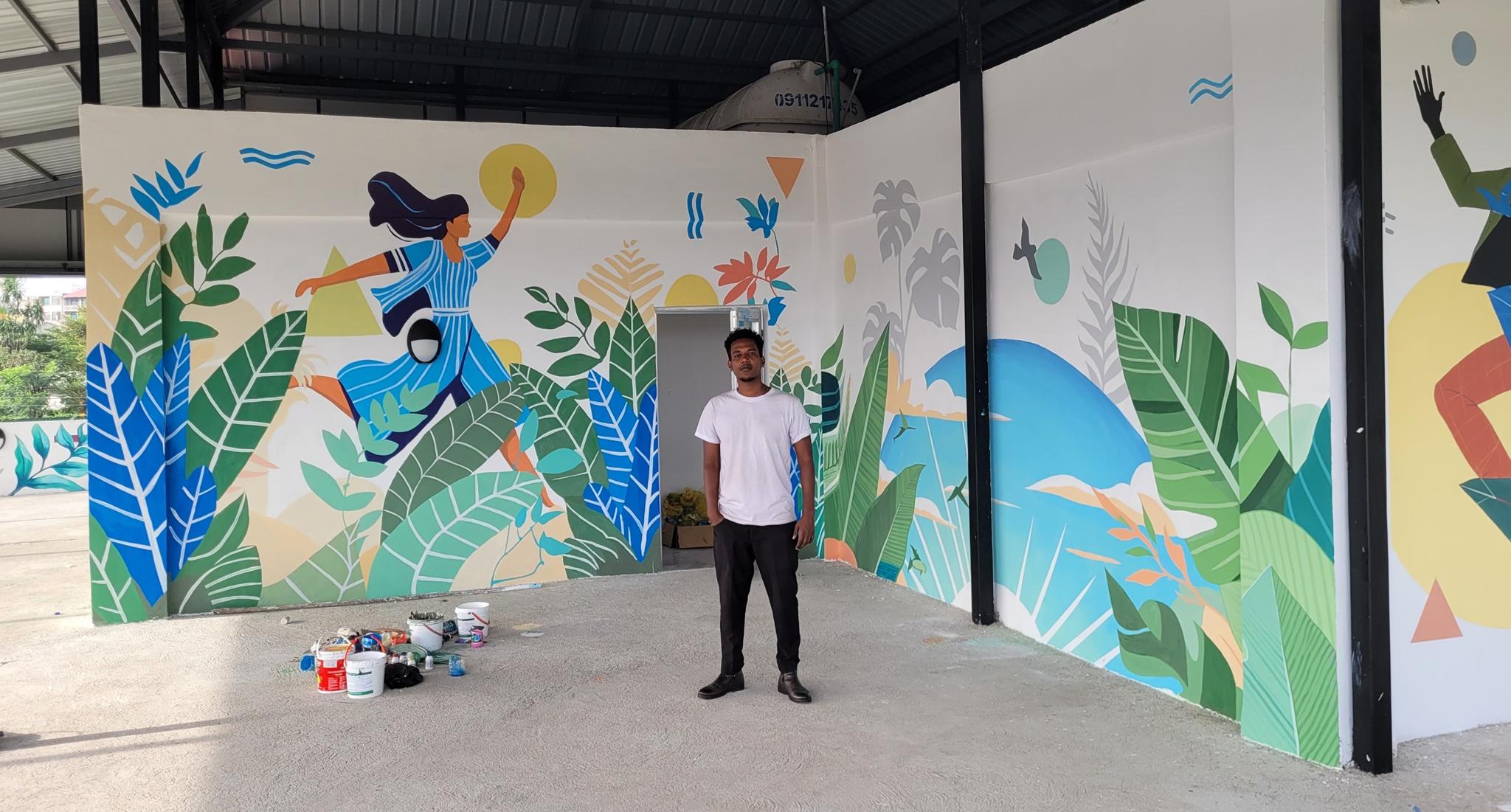
There is street art in Addis Ababa, especially around Kazanchis, Piassa, Mexico Square, Bole, and Sidist Kilo. It’s not as organized as in some cities, but there are interesting expressions, often with political or social messages. Personally, my work is more studio-based.
INFOTHEK
 Artist: YABSRA AYELE
 Facebook: https://www.facebook.com/yabsra.ayele.2025
 Instagram: https://www.instagram.com/yabsra_12
 Pinterest: https://www.pinterest.com/yabsraayele
 LinkedIn: https://et.linkedin.com/in/yabsra-ayele-331650375
MORE ARTICLES ABOUT ETHIOPIA
>>> Painter & Sculptor Yabsra Ayele <<<
>>> Streetart Bahir Dar <<<